Monthly Archives: May 2024

NEA Baptist Urgent Care Plus opens imaging center

Delta Digital News Service

By Brayden Morse | Contributor

Wednesday, May 1, 2024

JONESBORO, Ark. – The Northeast Arkansas Baptist Urgent Care Plus Clinic opened an outpatient imaging center March 4, providing computed tomography scans, magnetic resonance imaging, ultrasound, X-ray and lab testing in the urgent care setting. 

The outpatient imaging center, located in the middle of the building, right off I-555 and Red Wolf Boulevard. The urgent care side of the building, located on the north side of the building.

Andrea Simpson, executive director at NEA Baptist, provided what stands out with the new outpatient imaging center. 

“What stands this building apart from our other urgent cares in our community today, is our advanced lab equipment and our high-tech imaging. Hopefully this will keep those patients from having to go to our emergency room setting, and free up our ERs for true emergent patients,” Simpson said. “We really want to take care of those sicker patients, more than just flu-type symptoms that we treat today in urgent care. Like lacerations, belly pain, appendicitis, sports injuries, minor fractures, things like that we want to be able to treat in this setting.”

Urgent Care Plus creates a higher level of care for citizens than their typical urgent care setting. Treatment for more serious, yet non-life-threatening illness and injury will be provided. 

Urgent Care Plus staffed by emergency trained physicians and open from 8 a.m. to midnight seven days a week. Nurses, lab staff, imaging technologists and ER-trained physicians provided, with extended hours for added convenience. 

The building took about 18 months to complete because of staffing positions, installing imaging equipment, and tearing down a pharmacy and the old medical building. 

The advanced imaging equipment needed American College of Radiology accreditation to use on patients in the clinic setting, taking an extra 90 days to complete. As mentioned earlier, sports injuries will be treated as well.

Simpson shared the importance of having the ability to treat sports injuries. 

“We are there and available to treat sports injuries much faster than an emergency room can,” Simpson said.

Ty Jones, director of marketing at NEA Baptist, expressed how this clinic impacts the community.

“It’s going to provide a side of town that has to travel to get their healthcare. This is us putting a higher level of care back on that side of town for our patients who may have to travel from the Harrisburg area or from the Valley View side of Jonesboro,” Jones said. “Something as simple as an imaging service, that’s going to be much more convenient for you if you’re on that side of our service area, to pop in that imaging center rather than having to come all the way to the hospital.”

Simpson also shared her thoughts on finally opening new parts of the clinic. 

“The construction took about 18 months, but I’ve been planning this for about two and a half years. Finally opening the Urgent Care Plus side is very exciting and kind of a checkbox for me. I’m excited for our community to be able to use it,” Simpson said.

The family practice side of the building, known as the Red Wolf Clinic of 47 years, will continue to function. New equipment and technology added to that side of the building as well. 

“New Imaging Technology in Naples” by U.S. Navy Medicine/ CC0 1.0

-30-


Mental health: where the gym comes in handy

Delta Digital News Service

Monday, May 1, 2024

By Brayden Morse | Contributor

JONESBORO, Ark–Beyond the weights and treadmills lies a place not just for physical health, but for mental health too. 

Many people tell wonderful stories about how they got into the gym and how it benefited their mental health, along with work life. A citizen of Craighead County, Elizabeth Almanza, explained what got her into the gym as well as how her mental health was affected because of the gym.

“I started going to the gym mainly to lose weight, and I was already on antidepressants and anxiety medicine. I started getting better as far as physically and mentally it has helped me. I’m not on any of those medicines (antidepressants and anxiety medicine) anymore. It’s definitely a stress reliever. I love the physical aspect of it, but it’s mainly mental for me,” Almanza said.

She went on to discuss how the gym impacts her work life.

“It definitely helps me stay focused at work because I do let out a lot of stress at the gym. If things are bothering me at work, I come to the gym. I work out then go back to work and it’s better,” Almanza said.

According to an article by KARK, Arkansas ranks fifth as most overweight & obese state in study | KARK and Most Overweight and Obese Cities in the U.S. in 2024 article by WalletHub in 2024, Arkansas ranks fifth as most overweight and obese state in the United States. 

Heidi Rigsbee, a health, physical education and sports sciences professor from Arkansas State University with a master’s and bachelor’s degree in exercise science, bachelor’s in dietetics and certified exercise physiologist, explained how people can set realistic goals and maintain their goals once achieved.

“Exercise is a use it or lose it concept. If you’re not going to continue to do the behaviors that got you to the point you wanted to be, then you will regress or your body will go back to its previous self. I think reminding people that it takes long-term consistency to have the positive adaptations that take place in exercise is the key,” Rigsbee said. 

She also explained how the gym benefits your mental health.

“Exercise is probably one of the most underutilized and under prescribed antidepressants and anti-anxiety medicine. That goes all to the endocrine system and what’s happening with your endorphins and your dopamine. Exercise releases all of those feel good hormones, just like a drug would do. It’s a natural way to help mental health,” Rigsbee said.

Lots of people who are new to the gym or do not know how to work out properly, rely on a personal trainer to help achieve their goals. Without the trainer’s help, people can lose motivation and a sense of direction within their fitness goals. 

A 10 Fitness personal trainer and former Arkansas State and NFL tight end, Darion Griswold, explained how he keeps his clients motivated to reach their goals.

“Making sure everybody is seeing the gains. Making sure I’m tailored to what my clients want and members want. Getting feedback from them. Making it a safe environment for everybody. Going to the gym is already hard enough. Finding 30 minutes out of the day (to workout) is important for overall health and for the mind in general. Showing people that gym time will pay off over time,” Griswold said. 

Griswold also shared his thoughts on citizens of Arkansas setting realistic goals to achieve, when there is a high obese rate in the state. 

“Everybody wants the fast results. I’m not saying that can’t happen but you have to put in the work, eat right, hydrate your body right and get enough sleep. The average person in Arkansas works a lot of hours so gym is something that is in the back of their mind. Everybody has kids and priorities. Once you make that gym life a priority of yours, that’s when you’ll notice the gains and difference in weight loss. It’s giving people more to look forward to,” Griswold said.

-30-


NOTE: Feature photo by Sven Mieke on Unsplash

Mama 2 Mama, a local nonprofit organization and podcast, provides free diapers and shelter to needy mothers

Delta Digital News Service

Wednesday, May 1, 2024

By Avery Jones | Editor

JONESBORO, Ark. – Mama 2 Mama, a new nonprofit organization in Jonesboro, recently celebrated their one year anniversary. They were officially established in 2023 on International Women’s Day, March 8. 

Mama 2 Mama provides services, advice, and connection for mothers, especially those who struggle financially. They also host a podcast in which they discuss the struggles of motherhood and promote resources for mothers.

“Mama 2 Mama was established to lift the physical, psychological, and financial wellbeings of mothers,” said Brionna Palmer, the executive director. “Regardless of their hardship, we are aiming to help with their development and create a path to motherhood success. We want to lift those barriers and be able to provide services and supplies for immediate and long-term needs.”

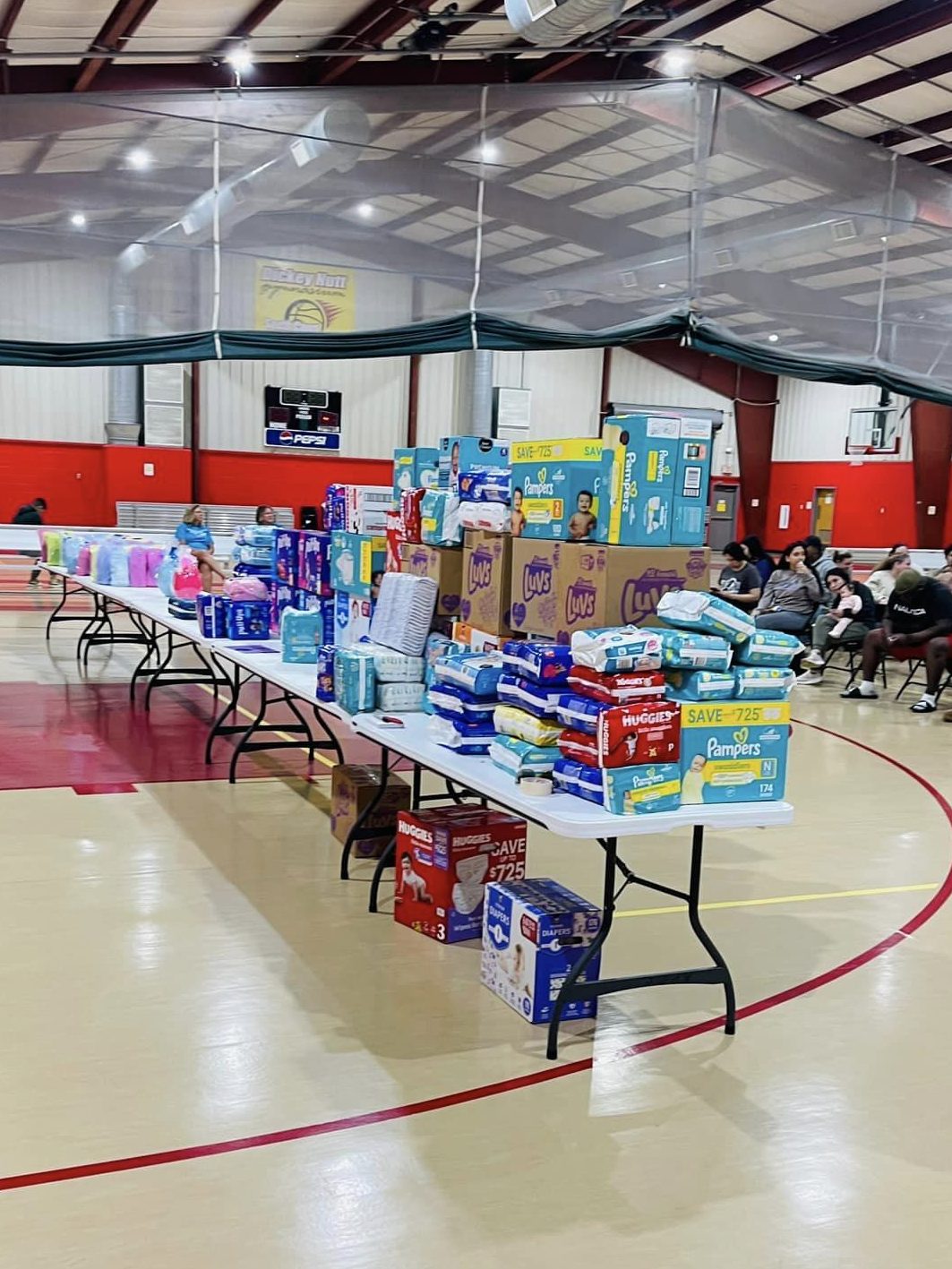
Diaper drive on March 30.

Currently, Mama 2 Mama has a diaper assistance program and a rapid rehousing rental assistance program. The diaper assistance program provides free diapers to those who need them, and the rehousing assistance helps to get struggling mothers a place to live.

The diaper assistance program began as a diaper drive in which they collected donations to provide free diapers to the local community, which they still do frequently. Palmer wanted to not only alleviate the need, but also spread awareness about it.

According to Palmer, one in two U.S. families struggle to afford diapers. The cost of diapers has increased from $80 to $100 per month for most families. She wants to eventually be able to provide enough diapers for up to three months at a time for each family that needs it.

At their most recent diaper drive on March 30, they were able to provide diapers for over 66 families. Altogether, from their first diaper drive, they have been able to serve 154 families.

Their rehousing assistance program aims to help mothers get their own place to live. Most of their participants rent, not own, so it can sometimes be a struggle to stay stably housed, especially considering inflation. 

“It’s always a mother’s dream to have a room set aside and decorate it for her child,” Palmer said.

Palmer (left) with Ms. Garza (right), the mother who they rehoused.

The program provides the deposit and the first month’s rent to allow the mother to find her bearings. It’s a very new program, so they’ve only had one beneficiary so far. The mother, who has three children, was staying with a relative. Mama 2 Mama partnered with Cox-Wortham Real Estate to help her find affordable housing.

“Staying on someone’s couch was not appropriate for her family,” Palmer stated. 

Mama 2 Mama started out with a podcast, of which they still periodically release episodes. Palmer launched the podcast with her cohost and current business partner, Jada Alloway. They collaborated with KLEK, a local radio station. 

“We just started inviting other local business owners, entrepreneurs, women, mothers that are out serving the community of Northeast Arkansas,” Palmer said. “We just bring them all to uplift and encourage other mothers that it is possible to obtain your dreams and be around like minded women, individuals in Jonesboro and other counties as well.”

On the podcasts, they typically discuss the daily life of being a mother, their dreams, their faith, ways to network, and their upcoming events. They also bring awareness to other organizations, businesses, and resources for mothers.

Palmer was inspired to start Mama 2 Mama because she was feeling overwhelmed herself due to her career and her job as a mother. Palmer previously worked for another nonprofit organization at which she began to feel overloaded.

“I just felt like I was limited to the resources here,” Palmer said. “I started doing some research and trying to find some mom groups and some organizations that help mothers…I saw that there wasn’t too many.”

From here, she branched out and researched the diaper need as well. She realized that this was something she could do herself; she had the skills from her previous job and didn’t see any reason why she couldn’t found her own organization for mothers.

She wanted for mothers like her to feel connected and appreciated, regardless of their financial situation or employment status. As a mother, she knows that motherhood is a full-time job in itself. Her goal is to help mothers reach their best life.

Currently, Mama 2 Mama is funded primarily by banks and other local businesses and organizations that engage in community reinvestment. They haven’t received any grants as of yet, but hope to soon and are preparing to be grant-ready.

Palmer’s future vision for Mama 2 Mama is to have their own facility, which will be called a “community hub.” She wants to offer childbirth education, therapy and counseling services especially for postpartum depression, financial literacy courses, and a computer lab for mothers to do research and apply for jobs.

-30-


Note: Featured image shows Jada Alloway (left) and Brionna Palmer (right).

Brent Floating Farms aims to “revolutionize agriculture”

Brent Floating Farms, a local agricultural initiative started by a husband-and-wife duo, is the beginning of a dream to discover more sustainable methods of farming

Delta Digital News Service

Monday, May 13, 2024

By Avery Jones | Editor

PARAGOULD, Ar. — Brent Floating Farms, a company headquartered in Paragould, is experimenting with sustainable agricultural methods. Headed by husband-and-wife duo Frank and Cinda Brent, the goal is to grow food in a way that is environmentally conscious and organic while at the same time profitable and accessible.

According to Frank Brent, their method is aquaponics, which he describes as “hydroponics and aquaculture mixed together.” 

Frank (right) and Cinda (left) Brent.

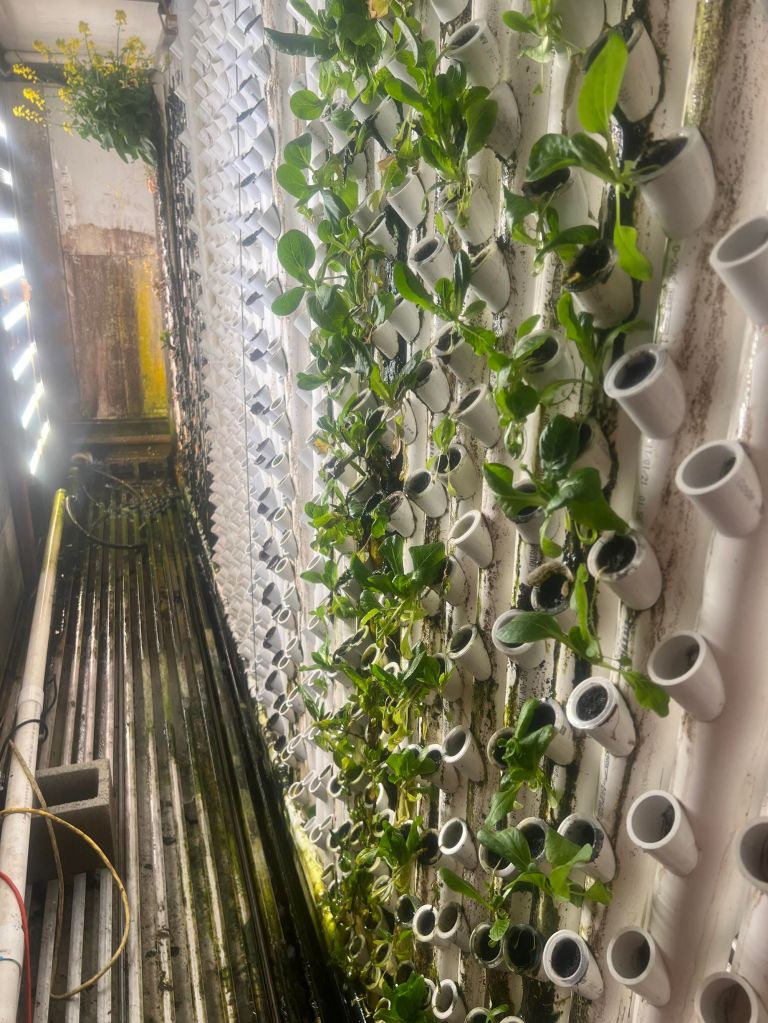
Essentially, they grow plants in repurposed shipping containers, and the plants are grown in water without soil which is fertilized by fish. The water is cleaned by the plants. This results in a “closed-loop” system.

The Brents have been studying this method for at least 25 years. When they first started, they were living in Marianna, Arkansas, and were “avid gardeners.” They decided to move their garden inside a greenhouse to do aquaponics because they didn’t want to use pesticides anymore. 

They also researched and worked for 7 years at University of Arkansas Pine Bluff on aquaponic methods, where their systems are still in use. They did many tests, including on what to feed the fish and how this affects plant growth.

Frank Brent has been a farmer since 1979, so he has much experience with traditional farming methods. He says that he “gave up” on row crop farming because he didn’t think it was very profitable due to the equipment costs. Less conventional methods of growing food offered a new perspective.

“I really enjoyed the symbiotic relationship…and circular agriculture,” Frank Brent said.

Chemical drift, also known as pesticide drift, became a problem for them. Pesticide drift happens when pesticides negatively or unintentionally affect humans, environment, and crops.

They decided to expand their operation by moving to Paragould and buying a 100-acre farm. However, they knew that pests would always be an issue and wanted a way to circumvent that. 

The Brents don’t believe in using chemicals for growing plants. They want their crops to be organic. However, it can be difficult to grow this way and remain profitable.

According to Frank Brent, commercial farms produce about 40% waste but organic farms produce 70% waste. This is why organic produce can be so expensive. 

“So I decided that, what would be better than taking it inside a container and taking it to sea?” Frank Brent said.

This was how the idea of Brent Floating Farms was born. Growing plants inside a container using only water and fish works well to prevent pests, and the temperature-controlled containers have the added bonus of allowing the growth of off-season crops.

However, there can still be issues with unintentionally letting insects inside the container when the door is opened. Furthermore, air still needs to be provided for the plants, and pests come with that as well. Their first year at Paragould, their plants were completely wiped out due to these issues. 

1 week old test crop with the Brents’ new design.

“Everything was perfect, it was beautiful, it was huge. We grew so much more per square foot than…any other method of farming,” Frank Brent said. “It was a pretty sore and sad moment to watch our produce all go down the tubes.”

“Everything was perfect, it was beautiful, it was huge. We grew so much more per square foot than…any other method of farming…It was a pretty sore and sad moment to watch our produce all go down the tubes.”

— Frank Brent

Brent had another idea for their farm which would avoid the problem of pests altogether. He used to work in the Navy and noticed that there were no pests at sea. By putting the aquaponic farms in the shipping containers on ships at sea, they would have no more problems with pests.

Of course, neither aquaponics nor “floating farms” are a new concept. Both of these methods can be traced back to the Aztecs who practiced an early form of this type of agriculture, called “chinampas.” Currently, this method has been revived in Mexico City, and the world’s first large-scale floating farm was conceived in the Netherlands.

The Brents, however, hope to eventually take their operation to a larger scale. They used to be set up in Louisiana, but when they were finally starting to gain traction, the COVID-19 pandemic and Hurricane Ida took them out.

They’re still working on rebuilding. They recently purchased another farm called Chicken Town Egg Farm, which was in trouble financially, and are in the process of doubling that operation. 

When they’re able to get Brent Floating Farms back on track, their goal is to manufacture 350 containers for their crops on land in Louisiana and eventually put some containers at sea as well. 

On land, their hope is that waste will be at 15% while at sea, expected waste will be between 3% to 5%. Aquaponics also uses 90% less water than traditional soil and irrigation methods. The Brents recognize that energy usage can be an environmental issue, but they have looked into alternative energy methods.

Furthermore, their method doesn’t have to just use water and fish. With the use of black soldier fly larva, they can use any type of organic waste, and the insects will break that down. Insects that are beneficial to plants rather than pests can also be introduced inside the container.

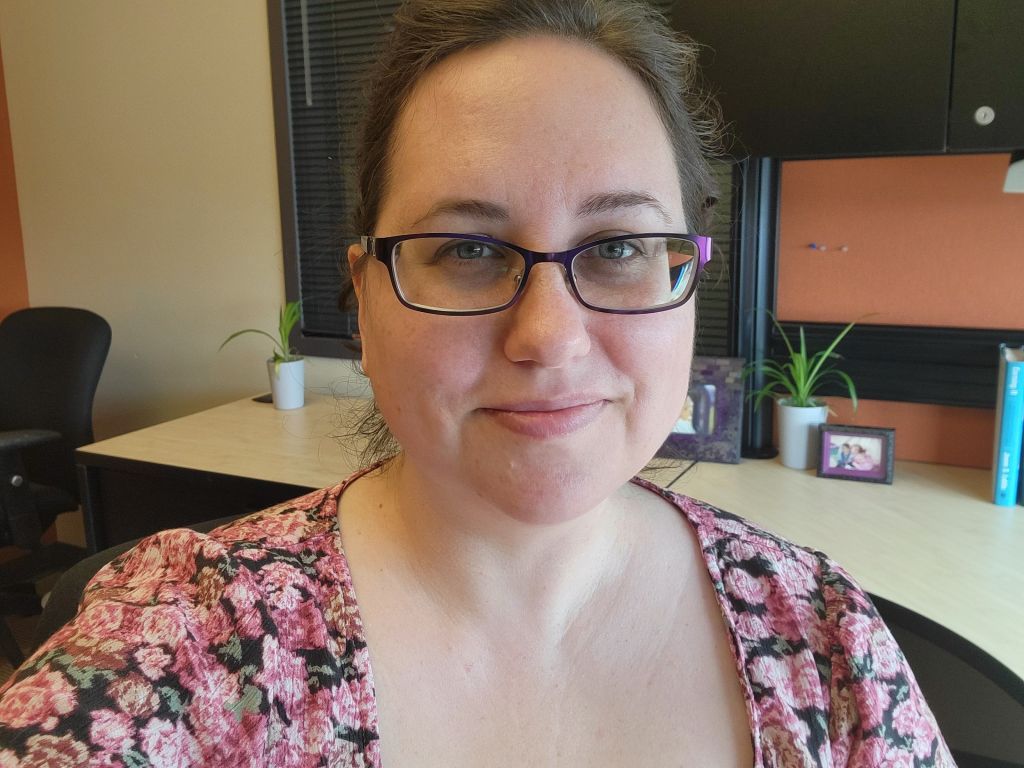
Leigh Ann Weidner, CEO of Brent Floating Farms.

Because the crops won’t be subject to the environment, they will be able to produce a higher yield as well. According to Frank Brent, they can produce 12,000 heads of lettuce in 30 days in an average container.

The team behind Brent Floating Farms includes co-founders Frank and Cinda Brent as well as Leigh Ann Weidner, their CEO. Frank is the COO, and his focus is the technical, agricultural aspects while Cinda is the CAO and focuses on marketing. Weidner, who is working remotely from Wisconsin due to another job, specializes in sales.

-30-


Note: Featured image provided by Shutterstock.

Medicaid unwinding affects over 13,000 Jonesboro residents

Delta Digital News Service

Wednesday, May 1, 2024

By Brayden Morse | Contributor

JONESBORO, Ark. – Since Medicaid began unwinding in a year ago, 13,147 Jonesboro residents lost coverage, including 4,693 children.


After a long hiatus of no doctor’s visits, families might take their children to get their once-a-year wellness check or physical and realize they are no longer covered. Families might not understand how they are no longer covered and may not understand how the unwinding process began.


Anna Strong, executive director of the Arkansas Chapter American Academy of Pediatrics, explains what factors led to the unwinding.


“During the COVID-19 public health emergency, state Medicaid agencies received enhanced federal funding to keep people from losing their coverage during the pandemic. After the public health emergency ended, states had to re-evaluate the eligibility for everyone on the Medicaid roster. Because individuals may have moved, changed phone numbers, divorced, married, had children, or otherwise changed their circumstances, they may have missed efforts to reach them to update information and renew their eligibility. After a period of time, Medicaid had to remove them from the program if they had not received updated information,” Strong said.


Families and children have been impacted in many ways. According to the Arkansas Department of Health, nearly 1 in 3 children ages 3-17 have reported one or more mental, emotional, developmental or behavioral health problems. Identifying and treating these issues such as depression, anxiety, and addiction requires specialist treatment.

Healthy children are more likely to attend school regularly and more likely to reach the cognitive, social and emotional milestones needed to ensure success in the classroom and beyond.

Jonesboro pediatrician at The Children’s Clinic, Dr. Jane Sneed, details some challenges she has seen people face.

“Raising kids is difficult enough, but thinking you have medical coverage and then finding out that you don’t is a major stressor for families. Insurance is really important for those unpredictable moments. You never know when you’ll break an arm, step on a piece of glass and need stitches, or something worse that you never saw coming,” Sneed said.

Sneed also explained how people and the profession have been impacted.

“We have done a lot of legwork since the unwinding began, sending text messages, making calls sending portal reminders to people who were going to be affected. We wanted to make sure our patients were able to re-enroll as quickly as possible in Medicaid or find another option. Still, we lost about 30 percent of our Medicaid patients. That’s certainly affected our clinic, but you really worry about the patients,” Sneed said.


Fortunately, Arkansans can still find affordable options for healthcare coverage. Applications for Arkansas Medicaid, ARHOME, and ARKids First are accepted year-round, and those impacted by coverage losses when their Medicaid eligibility is ending has an extended open enrollment period through the My Arkansas Insurance marketplace.


The Arkansas Chapter American Academy of Pediatrics made a few notes on why families need insurance coverage. Medical debt is the No. 1 cause of bankruptcy in the U.S., which causes lots of financial stress for families. Families may find it difficult to maintain their standard of living and their savings due to the rapidly rising cost of medical coverage.

When parents know their children are covered by medical insurance, it reduces stress and anxiety about medical bills and unplanned medical emergencies. Coverage lets parents focus on their child’s health and well-being instead of constantly worrying about the finances. In the long run, having health insurance translates to a healthier, more fulfilling life. Re-enrollment enables parents to guarantee that their kids get the healthcare they require, resulting in happier, more cohesive families and communities.


NOTE: Feature photo by Markus Frieauff on Unsplash