Category Archives: Audio

DeltaYou: EMTs Serve the Community
by Miranda Reynolds
Delta Digital News Service
Andrea Yates

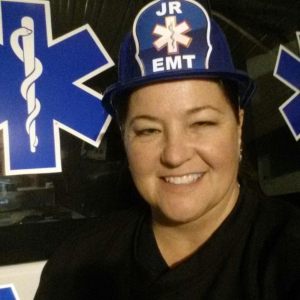
Angela Yates at work. Yates first became interested in becoming an EMT while working in Wynne. Photo courtesy of Angela Yates.

AUGUSTA, Arkansas – When medical emergencies arise in rural areas, Emergency Medical Technicians are responding to the life-threatening calls.

EMTs certifications depend on their level of education. A Basic EMT requires the least amount of schooling, whereas Intermediate EMT and a Paramedic EMT require more. Angela Yates, a Basic EMT,  received her certification at East Arkansas Community College, located in Forrest City. Yates said her certification prepared her for real-life emergencies.

“I think for the most part it did. But — also because I’m older than most people who enter this field — I did it when I was already turning 40 and most people are doing this in their 20s,” Yates said. “I had more life experience behind me already.”

Yates said paramedics and EMTs working in the Wynne hospital influenced her with their exciting stories of helping people. Yates said she believes being a woman is not a challenge in her line of work.

Yates said within rural areas, emergency airlift systems are something to consider.

“Because of my standpoint in EMS, I know it’s important to have (an emergency airlift system),” Yates said. “Being rural, we have different helicopter services available, and not everybody will accept the other’s insurance or the other’s coverage. It’s not feasible to have a membership with every service, but you never know what service you are going to get.”

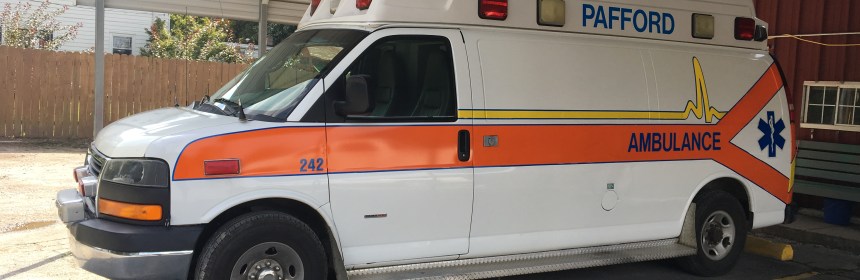
Emergency Medical Technicians are vital to all communities because of their role in the emergency response chain. Yates said a patient’s medical insurance does not impact the work she does. Members of Pafford Emergency Medical Service provide emergency care while the hospital collects information; insurance comes after that.

The duties of an EMT vary among its members. Yates explained her duties to provide a full understanding of her everyday tasks.

Recertification for all EMTs is inevitable. As a Pafford EMS employee, Yates’ re-certification can be completed online by entering in her numbers, information and amount of hours taken. As far as original certification goes, members of Pafford EMS must meet in hands-on classes or groups.

Yates said prevention of accidents in emergency vehicles is important to the certification process. During an emergency that requires lights and horns to be activated, Yates is only allowed to drive 10 miles per hour over the speed limit.

Jay Atkins, police officer for Augusta and McCrory, said drivers on the highway do not pull over when meeting oncoming traffic and even drive close behind vehicles in pursuit of an emergency.

Yates said she built an endurance for coping with traumatizing calls after six years in the field. Yates’ husband, in his 25th year in the EMT field, helps her cope. Yates said having someone to confide in and someone who can relate to what she goes through is helpful.

Atkins said he finds other methods of coping.

“Separate myself from that call or if it’s ending my day … when I’m off, I’m off. I do not have a radio on, I don’t associate with this place,” Atkins said.

 

Damphousse Seeks Community Ties

By Kimberely Blackburn
Delta Digital News Service

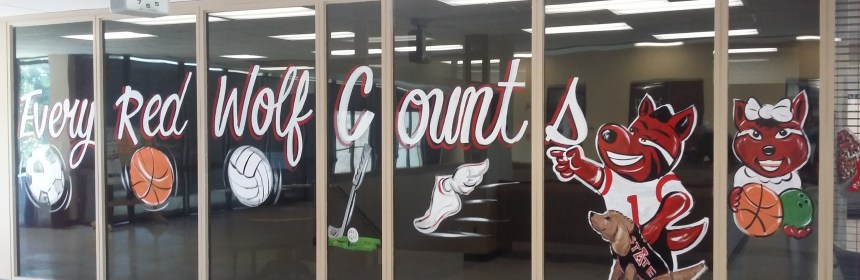
Damphousse Window Art

Window art featuring Kelly, Beth and Maple Leif Damphousse decorated the window of the Chancellor’s office. Damphousse became A-State’s chancellor on July 1. Photo by Kimberely Blackburn

JONESBORO – A native Canadian and Montréal Canadians fan, Arkansas State University’s new chancellor aspired to become either a goaltender for the NHL or a Mountie before coming to Northeast Arkansas by way of Oklahoma.

Chancellor Kelly Damphousse said he planned to stay at his last position as dean of the College of Arts and Sciences at the University of Oklahoma until retirement, but an email sent by A-State President Chuck Welch prompted him to apply. When he first visited the campus, Damphousse saw the challenges but viewed A-State as a diamond in the rough. He said he can impact a community as a chancellor in a much different way than he could as a dean.

“It’s important for us to have a relationship with the people on our campus. Sometimes it’s easy for someone who in administration to get removed from the reality of the world that they’re serving,” Damphousse said.

Damphousse explained why he creates relationships:

Campus and Community

Damphousse said his main concern will always be the students, faculty and staff. He said he understands he can only see a few students per day due to his position. Yet faculty and staff members interact with hundreds.

Damphousse said he wants to use his position to help bridge the gap between campus and community. He said there seems to be a strain between the two due to past events. He said he believes strains occur due to a lack of communication, meaning people do not truly know each other.

To remedy this, Damphousse said he speaks to any community club that extends an invitation, as well as local merchants and companies to see how A-State can help their business. Jonesboro Mayor Harold Perrin said he and Damphousse agreed to work together on several projects.

Perrin said he hopes to help get the word out of what A-State offers the community. He said A-State remains a driving force in the Craighead County community.

Perrin said A-State can help employers by providing both new employees and education for existing workers. Perrin said he believes A-State and the Jonesboro community can achieve this by fine-tuning programs already on campus.

“I’ve always learned in business, you build and become strong on what you have. If you’ll continue to build and to redefine what you’ve got, you’ll be highly successful,” Perrin said.

Damphousse explained his plans to keep A-State movng forward:

United Way

Damphousse recently announced on his Facebook account that The United Way of Northeast Arkansas named him and his wife, Beth, as co-chairs of Arkansas State University’s United Way Campaign.

Nanette Heard, executive director of United Way of Northeast Arkansas, said the Damphousses will encourage the A-State community to designate part of their salary to help fund projects throughout the eight-county region.

UWNEA covers residents of Clay, Craighead, Cross, Greene, Jackson, Lawrence, Poinsett and Randolph counties. Heard said the projects include shelters, after-school programs and programs that help feed the hungry.

Damphousse said the community matters to him and to A-State. Because the campus and community will always be tied together, he said if one rises, they both rise. Damphousse said he and Beth plan to be around for the long run.

He mentioned an analogy about planting trees you never get to sit under. But Damphousse said he wants to sit under the trees he plants. He said he wants to see the efforts that come from the changes he implements.

This is why, Damphousse said, the motto “Every Red Wolf Counts” truly encompasses everyone.

“Every Red Wolf Counts. That means every student, every faculty member, every staff member, every alumnus, every member of the Jonesboro community,” Damphousse said. “I see them all as Red Wolves because we’re all tied together.”

He even let students name the family dog:

Listen to the entire interview:

Vigorous Training Benefits K-9s, Handlers, Community

By Jorge Quiquivix
Delta Digital News Service

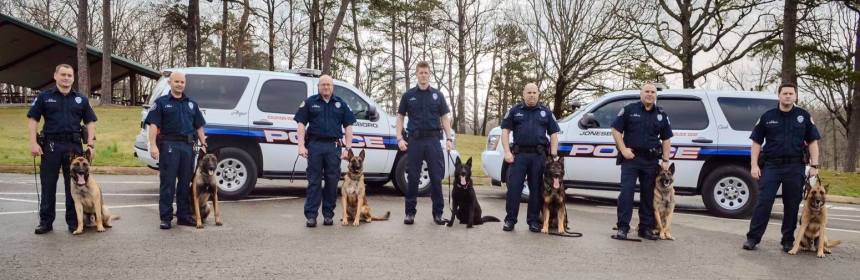
JONESBORO, Ark.- K-9s are part of several law enforcement agencies in the Delta. These animals even have a presence in smaller police departments.

Jonesboro Police Sgt. Cassandra Brandon spent five years as a canine handler and says these dogs help them sniff out drugs.

Her K-9’s name was Mick and she quickly found out this assignment was going to be different than being a patrol officer. Unlike patrol officers, canine handlers go home but they are technically still working.

“I had to pay not only attention to what was going on out there, but I had to pay attention to him too and make sure he was okay. That he was comfortable. That he didn’t need to go potty or anything like that. It’s just a lot of extra responsibility as a K-9 handler,” Brandon said.

She also had to train constantly as required by Case Law, which is what the police world operates by. Among the requirements is 16 hours of training a month.

“If there was not a whole lot going on, me and him would go out and we’d just train on our own,” she said. “Mainly that was for him to keep him fresh. Especially for the drugs. I know where they are. I just need to see where they could find him.”

Blake Bristow owns BlueStreak K9, a business where he trains and sells dogs to Delta police departments. He helps set up some of the training required by Case Law.

“Some of these agencies don’t have the time and manpower to be able to train all the time,” Bristow said. “They don’t have the people there that can help them so they come to us.”

One of the handlers struggled during the training, which he says happens when the K-9 and officer are not used to each other yet.

“They’re new. The dog’s good. The handler is figuring things out but we got to get them working together. So that’s what this is for. It’s a team deal,” Bristow said.

He also stressed how crucial the training is and what it means for hard-working citizens if these K-9 handlers don’t do what they are supposed to.

“When they go to court, it’s going to be hard to win that case,” he said. “The more they practice, the better they’re going to deploy in the streets and in a real-lifetime situation. So you know it could save the officer’s life.”

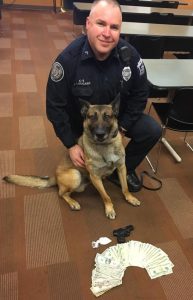
Officer Heath Loggains and his K-9 partner, Cash, pose with bounty from an arrest. (photo courtesy of Jonesboro PD)

The Jonesboro Police Department understands the importance of these dogs. Most of their K-9s sniff out drugs only, but they also have a bomb sniffing K-9. Brandon says she cannot overstate what the K-9s mean to the officers.

“They can go to a house we don’t want to send an officer into, or a building, or in the woods, or wherever they can go in and try to find a person. If we didn’t have the dogs, we would have to send a person and put that person in harm’s way,” she said.

Bristow said he agrees with Brandon.

Despite knowing they’re a tool for the department, these officers have developed a relationship with their canines.

“Of all the jobs I’ve done, this is one of the most rewarding to be able to see your dog come out and perform when it’s supposed to,” Bristow said.

“We know that’s what they are doing for us. That alone makes having the canine program worth having,” Brandon said.

BlueStreak K9 can be found on Facebook for anyone interested in purchasing a K-9.

Recent Entries »