Tag Archives: KASU

CORRECTION: In-crop Dicamba applications end May 25
By Camden Metheny
Delta Digital News Service

JONESBORO — Arkansas farmers must stop in-crop applications of dicamba pesticide no later than Saturday, May 25 or potentially face fines up to $25,0000.

The rule applies to all dicamba products registered for in-crop use in the state, which includes Engenia, Fexapan, Tavium Plus Vaporgrip, and Xtendimax. While the cutoff affects the vast majority of state farmers, farmers within the Mississippi River levee areas can apply for a special permit as they typically plant later due to high river levels in the spring, according to the Arkansas State Plant Board. The board changed usage rules in March, including:

  • A half-mile buffer zone required around all non-dicamba crops when dicamba is applied.
  • A one-mile buffer zone for university and USDA research stations, certified organic crops and commercially grown specialty crops between April 16 and May 25.
  • Prohibiting the mixing of dicamba with glyphosate between April 16 and May 25.
  • Requiring applicators to provide proof of training to pesticide dealers prior to purchasing dicamba in-crop products.

Controversy surrounds the use of dicamba due to the pesticide damaging non-resistant crops. An estimated 3.8 million acres of soybeans have shown symptoms of dicamba damage. Because of this, many farmers have complaints.

Dan Hosman, a farmer from Craighead County, is one of many in Arkansas who are opposed to using dicamba.

“As a steward of the land, after a good deal of research, it’s just too volatile to use,” Hosman said. “There’s different alternatives that we should employ before hurting someone else’s crops.”

The reason dicamba is so dangerous is due to its volatility, meaning it can vaporize instantly. This causes it to spread to more crops and without the genetic resistance it can cause serious harm to those plants.

However, dicamba isn’t just dangerous to plants.

Richard Coy, a bee farmer in Arkansas, is also affected by the use of dicamba. In 2017, he noticed a significant drop in honey production due to the use of the pesticide in fields where Coy’s hives are located. With the loosening of restrictions on the cutoff date for use of the pesticide, this puts several Arkansas beekeepers in jeopardy as the season moves forward. In an interview with KASU, Coy said dicamba wasn’t killing the bees but the plants they needed in order to pollinate.

“The plants that produce the honey that we were selling to the retail market are the plants that have been severely damaged and the honey that are our bees collect off of other vegetation is not as desirable and I did not want to put a product that is undesirable on the shelf,” he said

The use of dicamba has been a contentious topic in Arkansas to the point where one farmer was shot and killed over the use of dicamba. Mike Wallace, a farmer in Monette, died in a 2016 altercation with a farmhand due to the pesticide drifting into Wallace’s fields. He had always been a vocal opponent of dicamba, appearing in a Wall Street Journal describing how the chemical killed 40 percent of his soybeans.

EDITOR’s NOTE: A previous version of this article incorrectly stated that dicamba pesticide could be applied between May 26-Oct. 31 if a half-mile buffer was maintained between non-treated plants. Although DDNS does not knowingly publish inaccuracies, errors are corrected as soon as possible regardless of the source of the error.   

DeltaYou: A Public Radio Leader Retires

by Kimberely Blackburn
Delta Digital News Service

JONESBORO – A changing of the guard will soon occur at KASU, Jonesboro’s public radio station as its current station manager retires after 32 years of service and a decade of leadership.

KASU staff members reflected on their time with Station Manager Michael Doyle positivity. Mark Smith, development director, said Doyle served as his mentor for many years. He said he hopes the community joins him in celebrating Doyle and his work throughout the region.

“He has been a good leader for KASU and his natural charm has endeared him to so many in his public appearances for the station throughout the region,” Smith said.

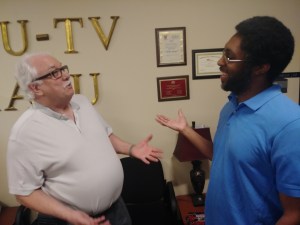
Doyle and Brandon Tabor

Michael Doyle (left) shares a laugh with KASU Morning Edition host Brandon Tabor. Doyle recently announced his retirement as KASU station manager. Photo by Kimberely Blackburn

Reflecting back on Doyle’s leadership in community involvement, June Taylor, KASU’s broadcast production specialist, said he understood the importance of connecting with the community. Doyle served the community in taking up the banner of both entertaining and educating the Jonesboro community. Concerts showcasing local acts include “Bluegrass Monday” in Paragould, “Bluesday Tuesday” in Newport and the Johnny Cash Heritage Festival in Dyess.

Helping local acts perform at the Johnny Cash Heritage Festival proved to be a source of pride for the station. Doyle said these acts performed on the concrete slab where the old commissary stood in Dyess. Cash’s childhood home — recently restored by Arkansas State University’s Heritage Sites — served as the backdrop during the concert.

Although local acts did not perform with headliners Rosanne Cash and Kris Kristofferson, Doyle said performing on that stage served as a source of inspiration and pride for these artists. Helping Arkansans find a sense of pride in the state proved to be important to Doyle. When Arkansas native Glen Campbell died, a social media post composed by Doyle noted while others portray Arkansans as ignorant hillbillies, the state’s rich musical heritage should be a source of pride.

Hear Doyle’s entire social media post and his thoughts on Arkansas music

Arkansas Roots

Doyle first considered a classical music program to fill the noon hour. But after brainstorming with KASU staff members, “Arkansas Roots” debuted. Program director Marty Scarbrough said Doyle shares his own personal knowledge of Arkansas musicians, resulting in the program greatly benefitting its listeners. He said those who tune into the program learn of pioneers who inspired not only Arkansans but many others.

“Without people like them, we wouldn’t have people like Bonnie Raitt or Sheryl Crow,” Scarbrough said. “There wouldn’t be a James Brown or a Ray Charles without people like Rosetta Tharpe or Louis Jordan.”

Not only does the show broadcast the state’s extensive musical history, it also plays current acts who make music for the love of making music. Taylor said the program quickly resonated with KASU’s listeners. Because the program focuses on the roots of Arkansas, people discover upcoming musical events and learn about their community. That, she said, fulfills the purpose of public radio.

Legacy

Doyle said he hopes he leaves KASU better because of his influence. He said 10 years ago, the station gave him an opportunity to do something other than teach four classes a day. This opportunity gave him a chance to make a difference.

KASU staff members said that change will be felt. Since Doyle established such a clear vision for KASU leadership, Scarbrough said he doesn’t foresee any large changes. Taylor agreed and said his leadership kept staff on the right track, continuing on to the goal. Smith said he plans to hold Doyle to his promise of continuing on working at the station as a volunteer.

Doyle told a story of a man he met while doing doctorate work at the University of Tennessee in Knoxville. After deciding to do something different for lunch one day, Doyle said he stopped in at the Wesleyan Center, a Methodist center for UTK students on campus. He said he found himself drawn to a man wearing a white shirt and tie and engaged him in conversation. After some time, Doyle learned the man served as the director of the center. Before the man’s tenure, very few students attended and the center appeared desolate and run-down.

The man worked to build the center up, performing repairs and engaging students in hopes they would visit. In doing so, the man’s doctorate work — the reason he first came to campus — fell by the wayside. Looking around, the man proclaimed the center became his doctorate. Doyle said he feels similarly about his work at KASU.

“I feel like I’ve left it better than I’ve found it,” he said. “So, this is my doctorate. I’ve never finished it, but I’m glad to have done something worthwhile. And I think this is it and I’m very appreciative of that.”

Kimberely Blackburn interviews Michael Doyle on NEA Expose’

A River of Bluegrass Runs Through Paragould

by Tristan Arquitt
Delta Digital News Service

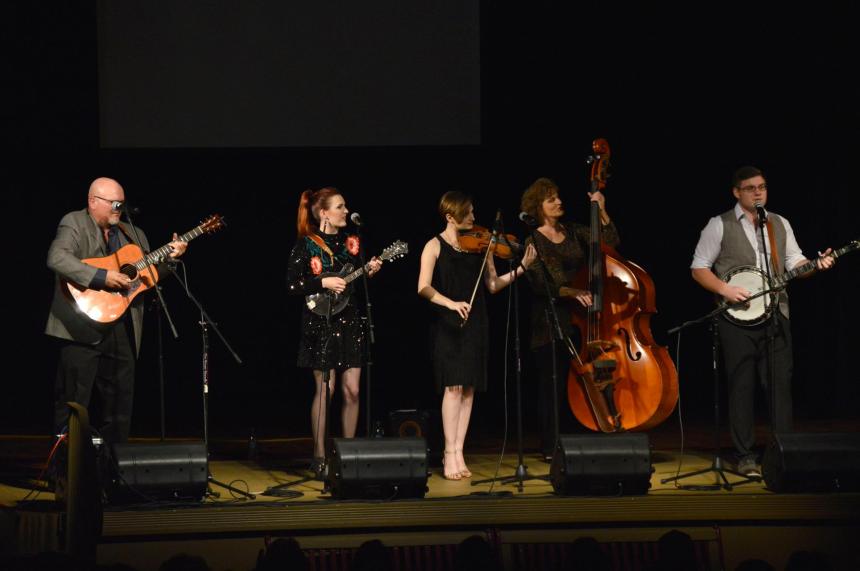
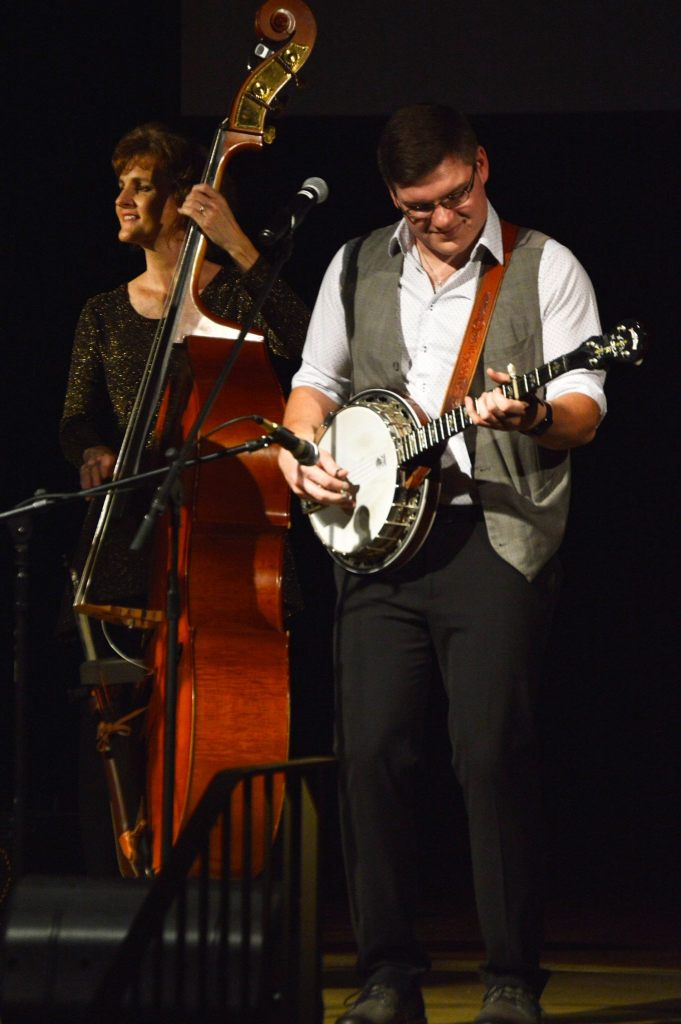
PARAGOULD, Ark. — The Trinity River Band performed May 21 in the Collins Theater as part of KASU’s Bluegrass Monday.

Known for appearing on the Duggar Mountain Show, the band started playing in 2007. Strictly Country magazine named their song, “A Sinner’s Prayer,” as Song of the Year.

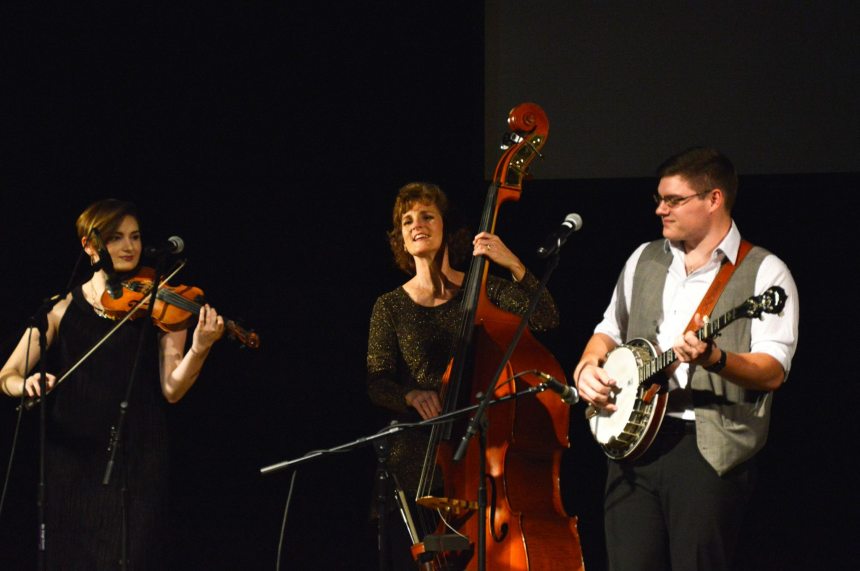
Joshua Harris leads the Trinity River Band in a song. Harris first asked his parents if he could learn the banjo at the age of 10.

Sarah Harris sings as Brianna and Lisa Harris back her up during The Trinity River Band concert. Sarah Harris also learned to play the mandolin in 2009.

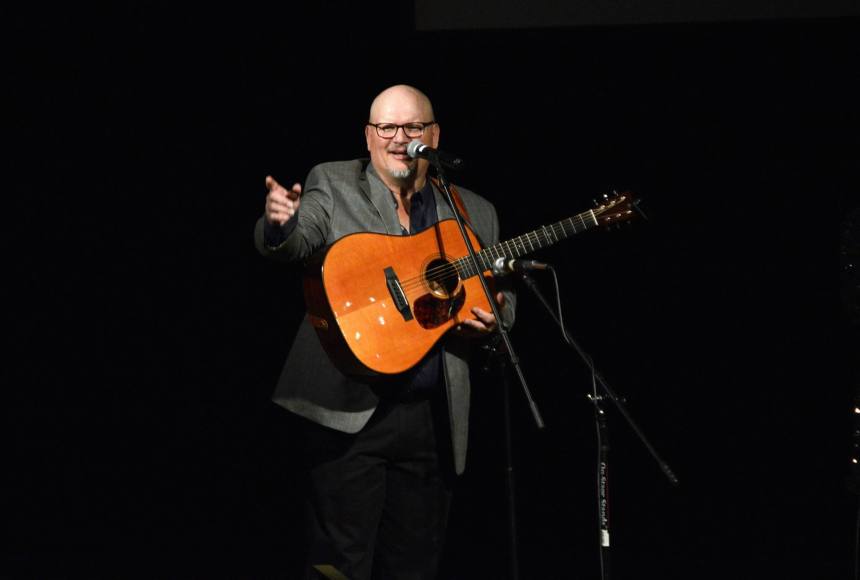
Michael Harris interacts with the audience at The Trinity River Band concert. Harris’ grandfather Herndon “Hunky” Jones taught him music at a young age.

Brianna, Lisa and Joshua Harris plays at Paragould’s Collins Theater. Brianna Harris began learning the fiddle at the age of six.

Lisa and Joshua Harris plays while performing with The Trinity River Band. Lisa Harris grew up playing music with her five siblings.

Bluegrass Monday concerts typically occur on the fourth Monday night of each month.

Roots Music Festival Entertains Jonesboro

by Tristan Arquitt
Delta Digital News Service

JONESBORO — The 2018 Arkansas Roots Music Festival entertained Northeast Arkansas residents Saturday, April 14 at the City Water and Light Park.

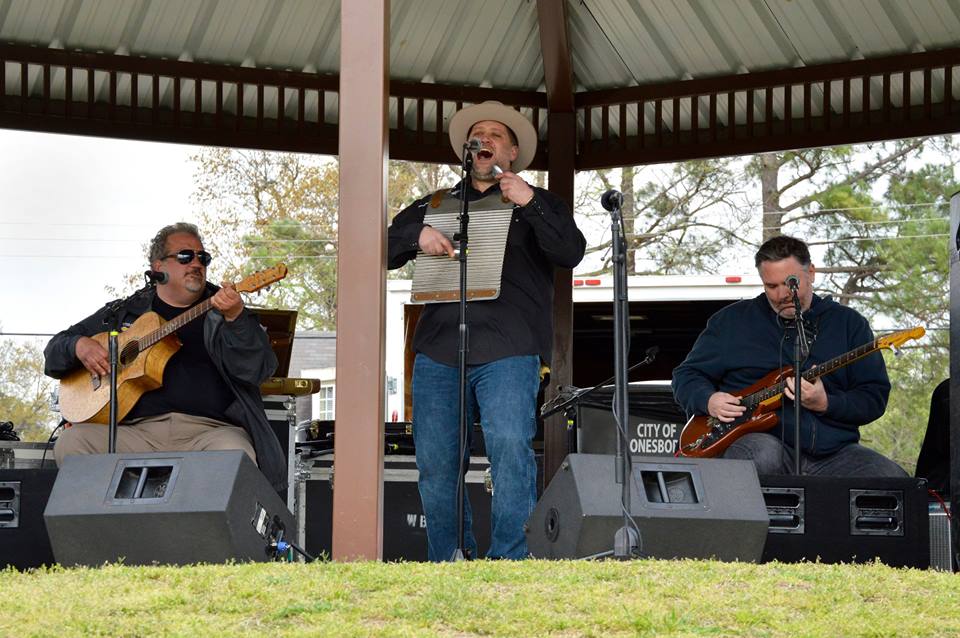
The festival coincided with Arkansas State’s Delta Symposium XXIV. Musical guests comprised The Spencer Brothers, Tito Deler: The Original Harlem Slim, Side Street Steppers, Wilkinson James, Rising Star Fife and Drum Band, and the Arkansas Brothers.

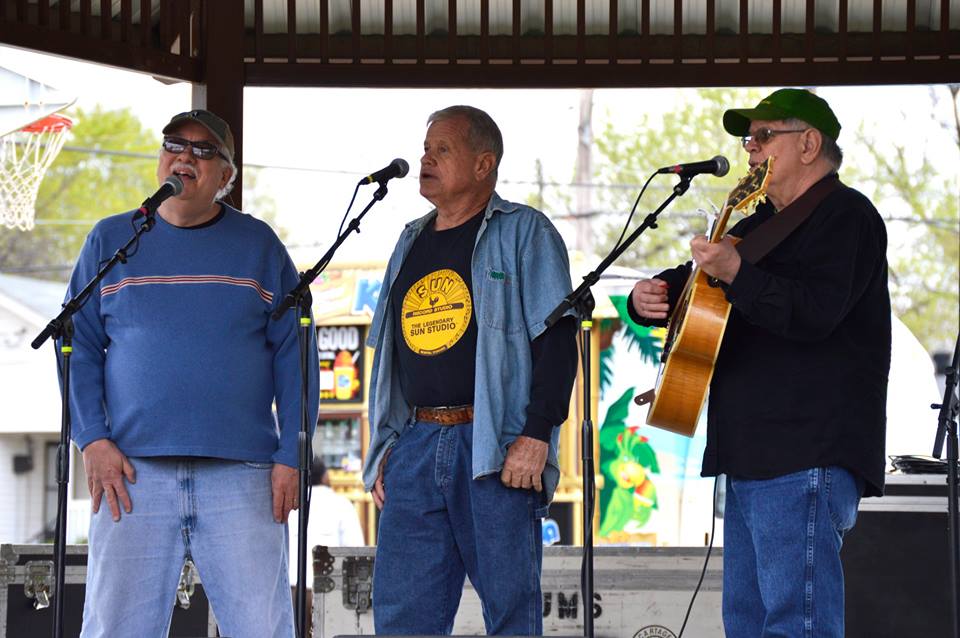
Mike Doyle and the Spencer Brothers

KASU Station Manager Mike Doyle sings with the Spencer Brothers following their request to him. The siblings sang duets of country music’s favorite hits from the 1950s through the ’70s.

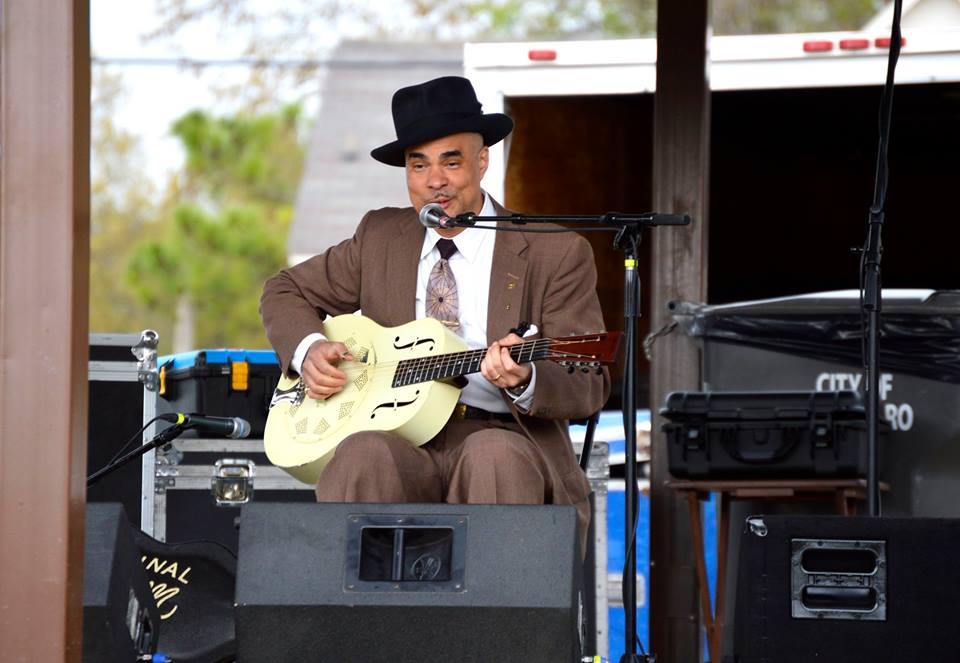
Tito Deler, the original Harlem Slim

Tito Deler, the original Harlem Slim, brought his blues to Jonesboro all the way from New York. Deler would travel to Baton Rouge, Louisiana, for his next show following the festival.

The Side Street Steppers

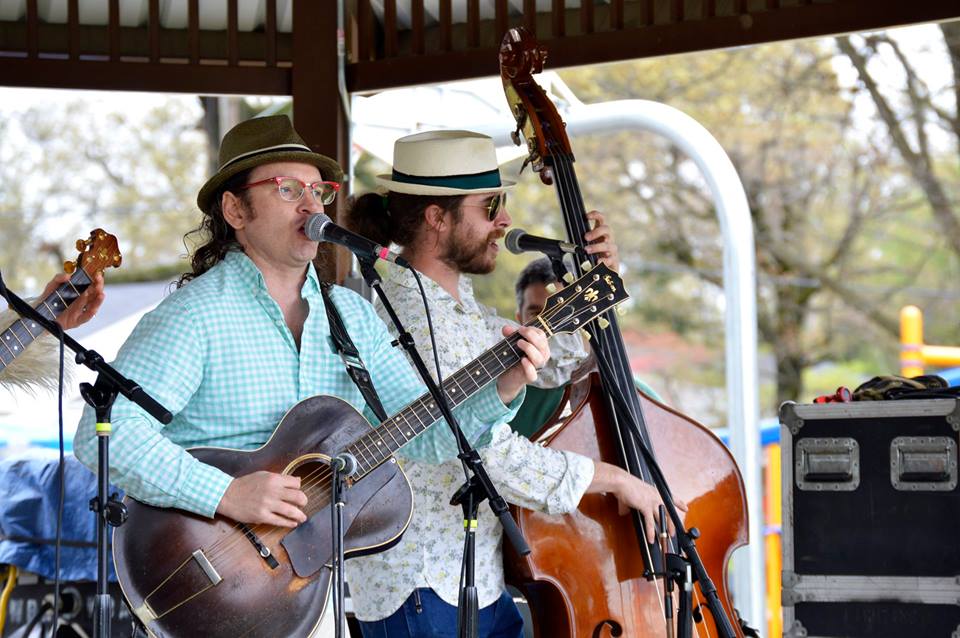
Christian Stanfield sings while playing guitar with backing from bassist Ben Walsh during a performance from the Side Street Steppers. The Memphis band brought a vintage feel to the festival with its 1920s and ’30s inspired music.

Mandy Martin and Vera Stanfield

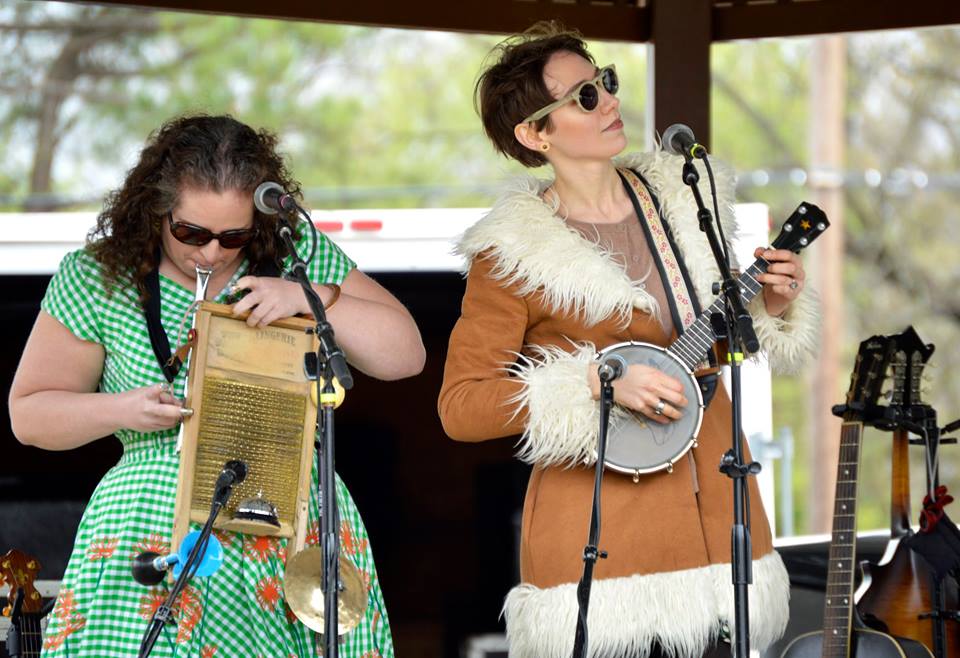
Mandy Martin plays washboard while Vera Stanfield plays her “Starry Uke.” Vera’s husband, Christian, helped make the banjo uke.

Liz Wilkinson and A.J. Schleber

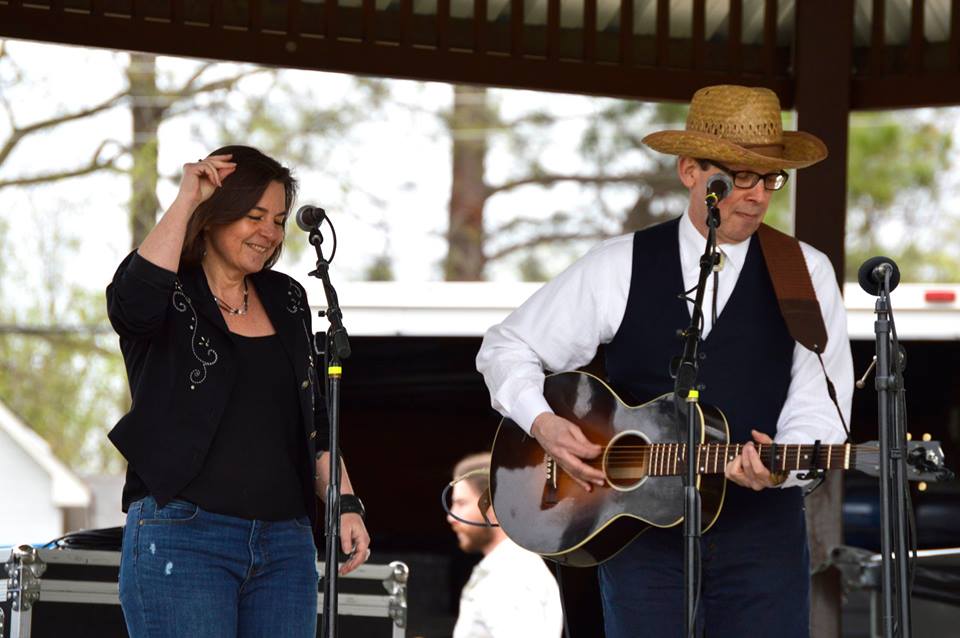
Liz Wilkinson and A.J. Schleber, singer-songwriters of the band Wilkinson James, performed Americana music for the crowd. The band hails from Minneapolis, Minnesota.

Fifemastor Sharde Thomas

Shardé Thomas, leader of the Rising Star Fife and Drum Band, plays a homemade cane fife in the vanishing fife-and-drum blues tradition. This style of country blues was integral to the African American community in the Delta.

The Arkansas Brothers

The Arkansas Brothers closed out the festival. Their original songs reflect their experiences within the state.

Lawmakers Take Stances on Shooting

Sculpted sundial by Curtis Steele at Westside Middle School Memorial Garden

by Tucker Crain
Delta Digital News Service

JONESBORO – Arkansas lawmakers weighed in on the 20th anniversary of the Westside Middle School shooting, occurring March 24.

Gun violence and school safety continue to be prominent issues across the nation, particularly in light of the recent school shooting at Marjory Stoneman Douglas High School in Parkland, Florida.

Similar tragedy struck Arkansas in 1998 with the shooting at Westside Middle School in Jonesboro.

U.S. Rep. Rick Crawford represents Arkansas’ 1st Congressional District, which contains Jonesboro. In an interview with KASU News Director Johnathan Reaves, Crawford said a school-safety commission was established almost immediately after the tragedy in Parkland, and the commission resembled the style of the commission formed after 9/11.

Crawford said he took the time recently to meet with people involved with the tragedy at Westside to find solutions that do not require congressional action.

“What we do know is we’re not going to wait around for that legislation to appear,” Crawford said.

Crawford’s office did not respond to requests for comment regarding further legislative solutions the congressman may be working on in terms of gun violence and school safety.

Meanwhile, the 3rd Congressional District’s U.S. Rep. Steve Womack’s press secretary Heather Neilson said Womack is not looking to add new laws regarding gun safety.

“Rather than searching for new, more stringent ways to go against Second Amendment rights, (Womack) wants us to enforce our current laws more forcefully,” Neilson said.

Neilson said tragedy causes debate over the Second Amendment, but Womack does not believe new restrictions hold the answer.

U.S. Sen. John Boozman also participated in an interview with Reaves. Boozman said the Health Insurance Portability and Accountability Act of 1996 created issues for law enforcement.

Boozman said HIPPA laws prevent mental health professionals from reporting people who hint of a desire to commit a violent act to law enforcement.

“I think that’s something that we need to look at, and those are the kind of things that Congress will be looking at,” Boozman said. “Those are the kinds of things that the states can be looking at.”

Boozman’s office did not respond to requests for comment regarding any legislative actions the congressman may be taking regarding gun violence and school safety.

The office of Arkansas’ other U.S. Senator, Tom Cotton, said although Cotton has made no comments regarding gun violence and school safety, any future statements and announcements will be posted to his website and sent to email subscribers.

The office of U.S. Rep. French Hill, who represents the 2nd Congressional District, did not respond to requests for comments. Similarly, the office of the 4th Congressional District’s U.S. Rep. Bruce Westerman declined to comment when asked for comments regarding gun violence and school safety.


Featured photo by Miranda Reynolds

Heritage Festival Honors Johnny Cash

By Kayce Wilson
Delta Digital News Service

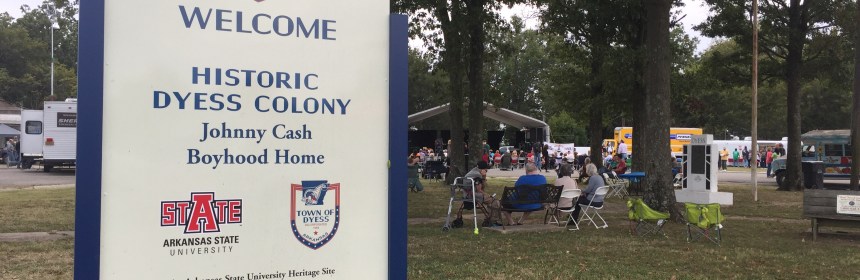
DYESS, Arkansas – The Arkansas State University Heritage Studies Center hosted the inaugural Johnny Cash Heritage Festival in the town center of Dyess.

During the three-day festival, people from all over the country came to celebrate the history of the Dyess Colony, where award-winning American musician Johnny Cash grew up.

In an excerpt from the program, Roseanne Cash said she was thrilled to present the festival, which “goes beyond regional and world-class music to include educational programs, exhibits, local crafts and an oral history project.”

Funds from this festival targeted the re-creation of the barn, smokehouse, chicken coop and privy that once were a part of the Cash farmstead.

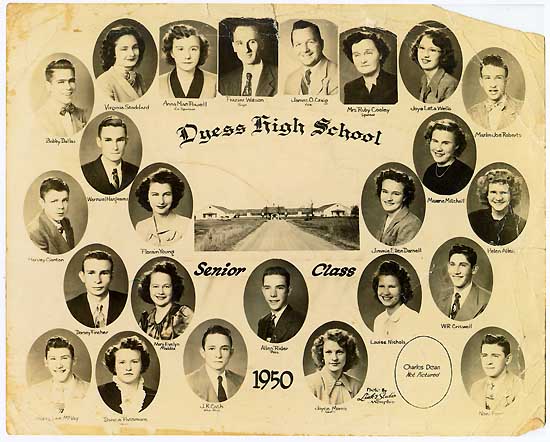
Dyess High School Senior Class of 1950

Dyess High School Senior Class. J.R. Cash can be seen to the left of the year, 1950. Photo courtesy of the family of Wanda Lawrence, sister of Warnuel Hargraves, pictured.

He Was Just Plain J.R.

“He Was Just Plain J.R.,” moderated by KASU’s Michael Doyle, featured a panel of alumni from the Dyess Class of 1950. A.J. Henson, a friend of Cash’s, told stories of their friend group – J.R., A.J. and J.E. – that ran around Dyess together in the 1940s.

“We went to school together since first grade and went to the same church,” Henson said. “We (Cash and Henson) were automatically friends. We went to Wilson or Lepanto for a midnight on Saturdays.”

The panel members said Cash always wrote poems and was an above-average student. Henson told a story about the time Cash wrote a poem for him, quoting it in its entirety. Classmate Louise Nichols echoed Henson’s recollection of Cash’s writing prowess.

“He would always think and talk about things up in the air compared to what we talked about. He liked being up front and being recognized,” Nichols said.

Delta Themes in the Music of Johnny Cash

Aaron Miller, Ivy Tech Community College associate professor of history, analyzed the motif of the Mississippi River plain in Cash’s songs in his presentation, “Cultivating the Fabulous Johnny Cash: The Environment and the American Artist.” Miller’s analysis of Cash’s Southern roots compared Cash’s writing to Mark Twain and B.B. King.

Area historian and Marion Evening Times newspaper reporter Mark Randall discussed “Jesus Was Our Savior and Cotton Was Our King,” based on the song by Cash. Throughout the presentation, Randall highlighted the mention of cotton in Cash’s songs and how his Southern upbringing formed Cash. He quoted Cash’s 1997 autobiography and said, “Back in Arkansas, a way of life produced a certain a certain kind of music.”

Randall then played a handful of Cash’s songs about cotton: “Busted,” “Pick a Bale O Cotton,” “Pickin Time” and “I Never Picked Cotton.”

Becoming Johnny Cash

Historian Colin Woodward looked at the father and son dynamic within the Cash family in his presentation titled “Ray and Johnny: How Cash’s Father Influenced His Life and Career.” Woodward said the dynamic in the 2005 movie, “Walk The Line,” may not have been an accurate portrayal as little information exists on Ray and Johnny’s relationship other than the movie.

Cash’s personal historian and friend, Mark Stielper, analyzed the turning times of Cash’s life in his presentation “Fifty Years After Folsom” from his early days in the spotlight until his awakening in the 1960s. Stielper spent time with Cash, and mentioned Cash’s autobiographies, “Man In Black” and “Man In White.”

“In 1967, Johnny had the No. 1 album after ‘Folsom Prison Blues’ but his life was in shambles,” Stielper said. “A man lost in the dark could see the light.”

Stielper spoke of Cash’s opioid abuse and how the lowest point of his life was when he wrecked his car in the rain and landed himself in jail. The sheriff of the station gave Cash a long speech about how he needed to turn his life around. Cash’s life then began to change for the better when he sang at the White House in 1968. From that moment, Stielper said Cash spent the next 50 years of his life making music as a better man.