Tag Archives: Politics

Copenhaver addresses City Stars concerns

Story by DDNS Reporter Jerry Don Burton

February 4, 2026
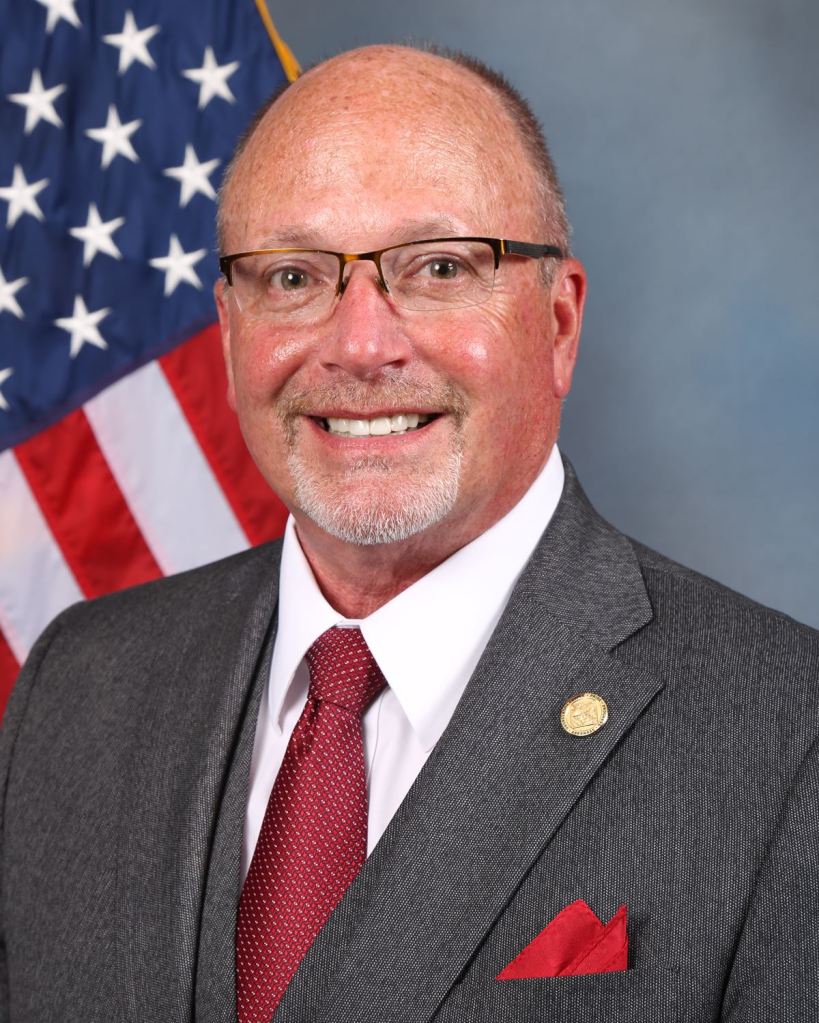
Jonesboro Mayor Harold Copenhaver.

 Jonesboro Mayor Harold Copenhaver addressed previous concerns and responded to new complaints about the City Stars booster club during the City Council meeting.

Public and council interest in City Stars remained high at the Tuesday, Feb. 3 city council meeting. Discussion began with Copenhaver’s response to Public Facilities Board Chairman Matt Modelevsky’s presentation at the last meeting.

Copenhaver’s response

“ My responsibility as mayor is to administer city-operated programs, which City Stars was not, in accordance with city council-approved budgets,” Copenhaver said. “I presented verifiable facts, not feelings, not understandings or beliefs like many of the documents presented at the previous city council meeting contained.”

At the previous meeting, Modelevsky said Copenhaver failed to respond to past concerns he raised about City Stars and Danny Kapales, the now-resigned parks director who ran the program.

The City Stars booster club, a youth sports program, was created in 2001. Copenhaver said the original agreement between Jonesboro and the booster club was approved by the council in 2004. He said this contract established mutual agreements, such as the shared goal of providing athletics at no cost for Jonesboro youth.

Despite a shared vision for youth athletics in Jonesboro, Copenhaver said City Stars operated independently.

“Their revenue was their money, their business, not the city’s,” Copenhaver said. “ Fiduciary duties fall to the boards and management of private nonprofit organizations and cannot be delegated, giving them full and exclusive authority over their own money and how it is handled and how their chart of accounts is organized and how their accounting entries are made. Look it up.”

Copenhaver said he asked the management of City Stars to voluntarily undergo an audit, to which they agreed. The Thomas Speight and Noble firm completed the audit and presented it in June 2025. 

“ The independent auditor’s report expressed the opinion that the City Stars financial statements present fairly in all material respects and assets, liabilities, net assets of the City Stars Booster Club,” Copenhaver said. “ In other words, clean audit.”

On Dec. 5, 2025, the City Stars board announced the club will cease operations as a private, 501(c)(3) nonprofit and will transfer operational responsibilities, including banking accounts, funds and sports equipment, to the city of Jonesboro.

Copenhaver said now should be an exciting time for the program and the upcoming generations who will make use of City Stars. 

“Moving forward means moving beyond the past, and now we need to focus,” Copenhaver said.

However, in the public comments that followed, several citizens expressed a desire to stay on the topic of City Stars. 

Public comments

Jeremy Terrell, who ran for Jonesboro mayor in 2024, addressed Copenhaver and said he does not understand why some act like the investigation is not a big deal. He said the mayor has the responsibility to ensure taxpayer money goes to organizations that act in the best interest of the public.

“This is about the responsibility that you hold and that the city council hold to make sure that taxpayer’s money is being dealt with in a manner that is proper and legal,” Terrell said. “So those of us that are asking questions, we deserve answers, period.”

Bill Campbell, who previously served as the mayor’s communication director, said citizens should exercise patience and not jump to conclusions during a federal investigation. 

“I don’t know what the answers are. I do know that you have a mayor who has had clean audits every time,” Campbell said. “So I think I would lean on that and we can’t pretend we know something different.”

Dean Macdonald, a Jonesboro native, said he agrees with Terrell that any allegations of misconduct are serious and should be investigated. However, he said some of the discourse surrounding the investigation has broken down recently. 

Following comments from the public, many city council members voiced support for Copenhaver, but agreed communication must be improved.

Council member comments

LJ Bryant, Ward 5, Position 1 council member, said the public clearly cares and the situation should not be dismissed as something minor. 

“Despite any of the gaslighting going on tonight, the FBI didn’t show up for no reason. So we’re in a very serious situation and as the stewards of the taxpayer’s resources, I feel like we have to take action,” Bryant said.

Joe Hafner, Ward 5, Position 2 council member, said while he supports Copenhaver, the mayor should not have let concerns go unresolved for so long.

“I think that’s one thing that definitely needs to be improved and that’s let something fester, it turned from a little snowball into a big avalanche,” Hafner said. “And now that we got the public here with eroded public trust, just frustrated, the problems have escalated. I don’t take that lightly.”

Ward 2, Position 2 City Council Member Chris Moore said many issues would be absent today if Copenhaver addressed concerns sooner. He said trust should be restored between the council, mayor and community.

Hafner said the relationship between the mayor and council is built on trust. He said they must be transparent with each other.

Copenhaver said he understands many people had honest questions about the City Stars operation. He said while he never meant to come off as dismissive of these questions, the city council never had the answers. 

“Those questions should be properly directed to its own officers and board of directors, which had the full fiduciary responsibilities and duties. The mayor’s office did not have answers about the accounting or handling of money of City Stars,” Copenhaver said. “Part of all the confusion has come from people asking questions or emailing or texting complaints and concerns about City Stars to the wrong place.”

Anthony Coleman, Ward 6, Position 1 council member, said while he appreciated Copenhaver sharing his side at the meeting, he believes the council does have a responsibility to ask questions and look into City Stars. 

“ Maybe not handling a lot of it fiduciarily, but we do have a responsibility to share, to talk, to ask questions, to make certain that we are doing what’s right for our children,” Coleman said.

Chris Gibson, Ward 3, Position 2 council member, said the council has a good platform to build on moving forward and the future is optimistic.

Copenhaver said he appreciated the input from the council and is always up for constructive criticism.

“I apologize to this city council because the last thing I ever want to do is draw a wedge between us because that does not benefit our community,” Copenhaver said. 

Looking ahead, Copenhaver said he is excited for the future of City Stars under the leadership of Jim Stearns, interim director of parks and recreation. 

Other business

In other business, Copenhaver announced InnovAsian Cuisine Enterprise Inc. will construct a frozen food manufacturing facility in Jonesboro. He said this development will create about 200 jobs.

The council also read the following ordinances:

  • On first reading:
    • Ordinance 26:004 would amend a zoning ordinance providing for changes in zoning boundaries from R-1 to RS-7 for a property at 1306 Charles Drive. 
  • On second reading:
    • Ordinance 26:001 would change the zoning boundaries from R-1 to C-3 general commercial district for a property at 2620 Alexander Drive.
    • Ordinance 26:002 requested approval of a private club permit for Monarca’s Mexican restaurant.
    • Ordinance 26:003 requested approval of a private club permit for Walk-On’s Sports Bistreaux.

The Jonesboro City Council meets at 5:30 p.m. on the first and third Tuesdays of each month at the Jonesboro Municipal Center. Meetings are also livestreamed on the City of Jonesboro Facebook page.

Jonesboro woman says father buried in wrong grave, raising oversight concerns

Story by DDNS Reporter Benjamin McDowell

JONESBORO, Ark. — A Jonesboro woman told city leaders her father was buried in the wrong grave, raising concerns about oversight and recordkeeping at a municipal cemetery.

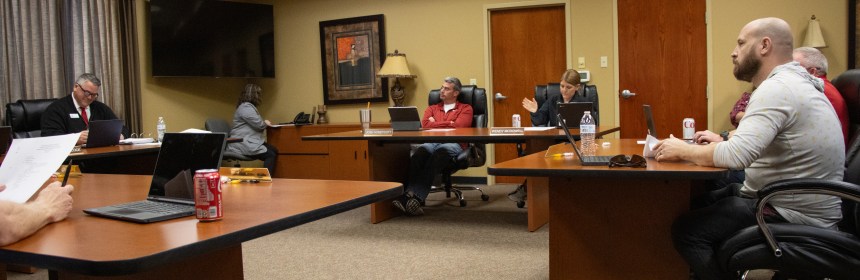
During public comment, LaToya Yarber told Council members her father was buried in the wrong grave at Oakland Cemetery and must now be exhumed and reburied.

“How do you expect me to trust you,” Yarber asked, “when my father lies in a grave that does not belong to him?”

Yarber said the mistake disrupted her family’s ability to grieve.

“For the last week of my life, where I was supposed to be grieving my father, has been disrupted,” she said. “It is unfair to my 81-year-old mama to have to be going through this .”

City officials said they have met with the family and aim to correct the burial mistake, including covering the full cost of exhumation, raising questions about how cemetery records are maintained.

“If you want to do something for the city of Jonesboro, get the records together so that we will know where our people are or where they’re supposed to be,” Yarber said.

Other public comments surrounded concerns about city operations. Patty Lapp said she worried about a lack of financial reporting from a volleyball tournament.

“We don’t really know where those numbers are,” Lapp said. “It needs to be crystal clear what is spent and what is taken in.”

Linda Wright said she is concerned about supervision at sports events, saying children should always be protected.

“I’m just wondering why we are spending money on these tickets,” Wright said. “I just wonder what kind of supervision is going on out there.”

Eugene Holloway, of Marshall Street, said housing conditions are deteriorating and urged the council to take action.

“People are living in terrible conditions,” Holloway said. “We’ve got to do something here.”

Despite concerns raised, the council continued its routine business. Members approved resolutions requesting City Water and Light provide free utility services at 423 W. Huntington Ave. and 6106 Southwest Drive. The resolutions allow utilities to be provided at no cost for projects serving a public or governmental purpose, a common practice for city infrastructure such as lighting and municipal facilities.

Several zoning ordinances advanced, including a request to rezone property at 1601 Granger Drive to allow it to be split for two single-family homes.

A new ordinance, 26013, would establish a Sports Advisory Committee, outlining its membership, purpose and duties. The measure received its first reading and will return for further consideration. Other ordinances concerned traffic signage and zoning changes.

During council reports, Anthony Colman, (Ward 6, Position 1), highlighted growth in Jonesboro but raised concerns about east-side infrastructure and speeding.

“There’s a lot of traffic, and there’s a lot of speeding going on,” Colman said. “I’d like for us to consider another study.”

Mayor Harold Copenhaver highlighted ongoing projects, including a six-month downtown traffic pilot program.

“We’ve had a lot of input – most of it is very positive,” Copenhaver said of the Main Street project, noting the evaluation of Washington Avenue will involve public surveys and comments.

Officials also continued work on Plan Jonesboro, a long-term development strategy focused on growth, infrastructure and quality-of-life improvements.

“Please visit PlanJonesboro.com to ensure your voice is heard,” Copenhaver said. He also noted recent meetings in Washington, D.C., with federal officials to discuss funding for public safety, infrastructure and economic development projects.

The council recognized City Clerk April Leggett for her 10 years of service, praising her support in maintaining city records. While the meeting covered routine business, Yarber’s comments highlighted a deeper issue of human impact and public trust. City officials said they will continue reviewing the cemetery issue as questions remain.

-30-

Hispanic Center Addresses Fear as Immigration Concerns Rise in Jonesboro

Story by DDNS Reporter Benjamin McDowell

Staff members from the Hispanic Center pose outside their facility in Jonesboro, highlighting the organization’s role in supporting local families amid growing community concerns. Photo courtesy of The Hispanic Center via Facebook.

JONESBORO, Ark. — As immigration enforcement concerns grow in Jonesboro and across the country, leaders at the Hispanic Center say fear keeps some families from going to school, seeking medical care or accessing basic services. Immigration enforcement policies and increased activity by Immigration and Customs Enforcement have created uncertainty for many immigrant families, including those in northeast Arkansas.

The Hispanic Center is a nonprofit organization that serves the Hispanic community in Jonesboro, as well as others in need. The center offers services such as after-school programs, interpretation, translation, English classes, computer training and health fairs. The center also provides legal consultations, mental health sessions, and community events, while assisting families with food, transportation and housing support.

Carolina Elmore, assistant director at the Hispanic Center, said, “We serve the Hispanic community primarily, but we help anyone in need regardless of ethnicity, religion or race.”

Elmore said the Hispanic Center is a place she wants people to feel they could depend on anytime.

“We provide interpretation in hospitals, schools and legal settings so people who don’t speak English can still access essential services. Language is one of the biggest barriers, and we try to bridge that gap every day,” Elmore said.

Elmore said the Hispanic Center acts as a bridge between schools, the Hispanic community and local institutions. The center partners with local universities and organizations to provide students with educational support and expose them to career opportunities.

Elmore said one of the biggest challenges for the Hispanic Center has been increased activity by Immigration and Customs Enforcement.

“A lot of people are afraid to seek services because of immigration concerns. Some parents are even scared to send their kids to school or go to the doctor. We try to create a safe space where families feel supported despite those fears,” Elmore said.

Due to concerns about ICE, many community members are afraid to seek help or services at the Hispanic Center out of fear of being detained. That fear reflects what many immigrant communities are experiencing across the country, where enforcement actions can affect access to education, health care and other essential services. The center often works with churches and community partners to provide safe spaces and trusted environments for families.

“We help families with everything, from enrolling their kids in school to making doctor’s appointments. Sometimes it’s as simple as helping fill out a form, but that can change everything for a family,” Elmore said.

Elmore said she wants to continue serving her community during challenging times tied to immigration enforcement.

“Everything we do is about helping families feel supported, connected and valued in this community,” Elmore said.

Leo Hernández, program coordinator, helps facilitate the after-school program, which allows children to catch up on homework and receive tutoring.

“La Escuelita is here to support kids from kindergarten through ninth grade with their homework and academics. A lot of parents can’t help their kids with schoolwork, so we step in to guide them,” Hernández said.

La Escuelita runs Monday through Thursday during the school year and is divided into groups by age, allowing younger and older students to receive the support they need. Students work on subjects such as math, reading, writing, Spanish and public speaking, while also building communication and teamwork skills. The program also includes a summer component that helps students stay on track in a more engaging environment.

Hernández said the Hispanic Center also has a program called HELP, which gives high school students opportunities to explore life after high school. He said the program allows students to complete community service hours while visiting college campuses and local institutions.

“We’re not just helping with homework, we’re giving kids opportunities they might not have otherwise. It’s about building a foundation for their future,” Hernández said.

Hernández said education and guidance are some of the biggest needs in the Hispanic community, especially for students who struggle with English and need additional support.

Hernández said he wants the community to feel like a safe place where families can feel at home and that many people simply need direction.

“What’s happening with immigration affects families, especially the kids. We always encourage people to seek legal advice and handle things the right way. At the end of the day, we’re here to help people grow and succeed,” Hernández said.

Yesenia Dixon serves as a front desk receptionist, interpreter and after-school teacher at the Hispanic Center.

Dixon said many children struggle to express their emotions, and the center helps them build communication skills.

“It’s rewarding to see their faces light up when they realize they can do something,” Dixon said.

Dixon said she enjoys interpreting people but she also knows it is serious because she serves as the voice for others.

“I’m usually the first person people see, and they come in upset or needing help. I try to calm them down and let them know they’re in a safe place,” Dixon said.

Dixon said increased ICE activity has heightened fear in the Hispanic community, with some people choosing to handle everything virtually.

“During stressful times, we focus on giving people factual information so they don’t panic. There’s a lot of fear, so it’s important we don’t spread misinformation,” Dixon said.

Dixon said even if she does not have an immediate answer, she works to help people find one.

“We’re not just a place for handouts, we’re here to support people. We want to be known as a place where people can come without feeling judged,” Dixon said.

.

-30-

Jonesboro Mayor Gives State of City, Hears Criticism over City Stars

Story by DDNS Reporter Mia Young

JONESBORO, Ark.- Mayor Harold Copenhaver gave his sixth State of the City address to the Jonesboro City Council on Tuesday evening, featuring major growth in the economy, finances and infrastructure, lower crime rates, and a bright future for the city.

Amid the city’s acquisition of CityStars’ finances, Copenhaver highlighted the 15 consecutive audits. He said Jonesboro is thriving and, at the end of 2025, had $28.1 million in reserves and $15 million in capital improvements.

He mentioned the growth in nearly every aspect of the city, including the 150 businesses that opened last year, 10% more calls firefighters responded to, and numerous projects ready to start. Not only projects “built for wheels,” but for pedestrians. Funds awarded to Jonesboro through the Transportation Alternatives Program will go toward new pedestrian infrastructure on the Marion Berry overpass. This will not only make the overpass safer and more walkable but will also help connect Arkansas State to the rest of Jonesboro.

“Jonesboro’s future is bright, but we’d better prepare for it now,” Copenhaver said.

He highlighted that even with the large population growth over the last decade, statistics recently released by the FBI show that violent crime is the lowest it has been in at least a decade.

More than 100,000calls were answered by dispatchers through the city’s emergency medical dispatch program. Seven calls helped guide people through CPR, and one even helped deliver a baby. Copenhaver also noted that 63% of firefighters’ and 52% of police officers’ salaries have increased.

The city also won three Trendsetter awards for Jonesboro connecting efforts, emergency medical dispatch, and the city park ranger program, and was also named Volunteer City of the Year. Copenhaver knew the council was not the only one responsible for helping win these awards; the public was a big help. He called upon citizens to make an effort to get involved and help craft a blueprint for a better city.

“But all those numbers can add up to an overall total of one. One goal, one responsibility to make Jonesboro the best city,” Copenhaver said to close his address. 

After the State of the City address, business continued as usual. A few Council members raised additional concerns regarding the handling of CityStars. Questions were raised regarding Freedom of Information Act (FOIA) requests, missing paperwork and invoices for individuals working the tournaments, and making sure all aspects of taking over CityStars’ finances were done legally.

Efforts are underway to move toward partial- or fully cashless events in youth sports. IT is making strides to handle this issue. The first phase of this process is to assess the cost of the required infrastructure and ensure that locations have the Wi-Fi capabilities needed to run the program.

Matt Daniel, former executive director of the Arkansas Revolution Soccer Club, spoke during public comment. He stated during the Feb. 3 City Council meeting, Copenhaver directly named him and incorrectly quoted both his CityStars resignation letter, which did not mention anyone by name, and his proposal. Daniel went on to correct Copenhaver and state what he actually said in his letter. He stated the city has maintained that CityStars operated independently, but contracts, payroll involvement, event insurance filings, and more “show a far more entangled relationship,” and people deserve to know the truth.

“Mayor Copenhaver, I have lost all confidence in your leadership for our city,” Daniel said, after stating the aforementioned documents were not any type of confidential record but documents he was a part of.

Daniel closed his public comment, giving a call to action to the council, saying, “If you have confidence in this administration, say so. If you do not, say so. Jonesboro deserves clarity.”

-30-

Second ‘No Kings’ protest to be held in Northeast Arkansas

Story by DDNS Reporter Jerry Don Burton

Demonstrators protest in Jonesboro at the June 14 No Kings protest, organized by the Coalition for Change of Northeast Arkansas (CCNEA). The second protest, also organized by the CCNEA, is scheduled from 10 a.m. to 1 p.m. Saturday, Oct. 18.
Photo Courtesy of the Democratic Party of Craighead County Facebook Page.

JONESBORO – The Coalition for Change of Northeast Arkansas (CCNEA) will hold a second No Kings protest from 10 a.m. to 1 p.m. Saturday, Oct. 18, in Jonesboro at the intersection of Highland and Red Wolf, next to the Turtle Creek Mall.


One of 13 others scheduled in Arkansas and more than 2,500 worldwide as of Oct. 10, the demonstrations aim to protest against policies and alleged authoritarian actions from President Donald Trump and his administration.
Carol Davis, CCNEA member, said those who attend the No Kings protests are rallying together over a variety of concerns and causes. She cited government overreach and concerns about community safety as reasons for her expected presence at the protest.


“If what it takes is large amounts of people continually coming out and saying and showing that they disapprove, that they’re concerned, that there are issues, then the hope is that they’ll listen,” Davis said. “And if they won’t listen, then the hope is that we can encourage people to vote with their conscience and with their interests.”


Jayne Schack, another member of the CCNEA, said Trump’s deployment of the National Guard in specific cities across the United States also highlights the need for another No Kings protest. Schack noted her participation in the first No Kings protest, held June 14, was a singular experience.


“The kind of ‘high’ that I had from attending the June 14 protest is like nothing else that ever happened,” Schack said. “There was such a bond of solidarity of ‘We are people who believe in our democracy, we are people who believe in our Constitution, and we are not going to let it change into something else.’ That’s what the No Kings is about.”


Nationally, the first No Kings protests saw a turnout between 4-6 million, according to data journalist G. Elliot Morris. Schack said more than 400 attended the rally in Jonesboro, far exceeding the CCNEA’s expectations.


Davis said while the CCNEA is comprised of people from a wide variety of beliefs, what binds the group together is a desire to see their community get involved and succeed. The CCNEA started in Paragould, Arkansas, in response to the 2024 presidential election results. Schack said she attended her first CCNEA meeting in December 2024.


“We are a grassroots organization. We are nonpartisan. We want to empower individuals to take action and make a difference in their communities,” Schack said.


The CCNEA is an offshoot of Indivisible, a progressive movement that started in 2016. According to their website, Indivisible is committed to nonviolence and rejects all forms of political violence and intimidation.


Schack and Davis said the CCNEA shares these values and has taken measures to ensure all attendees stay safe at the upcoming protest. Although it was not mentioned, any form of violence has been an issue in the past; therefore, it is strictly prohibited at the protest.


Davis said the CCNEA hosts training sessions for members, educating them on safety and their rights as protesters. The CCNEA will also designate trained safety marshals for use in the protest. Schack said safety marshals maintain peace, de-escalate conflicts, and help wherever needed.


Davis said those attending should take care of themselves by staying hydrated, wearing sunscreen, and taking breaks as needed. She says the CCNEA will be ready to help anyone who has any questions or concerns during the protest.


“It’s a serious subject and it’s an important thing, but ultimately, you should feel like you’re enjoying the company of the people around you,” Davis said. “It’s a fun thing to be able to have that opportunity, to have that right and to exercise it.”

Protesters present signs to passing vehicles at the Turtle Creek Mall during the first No Kings protest on June 14. Photo courtesy of the Craighead County Democratic Party Facebook page.
Schack said counter-protesters have as much of a right to assemble as the CCNEA. Still, she said they will not engage with any counter-protesters and all attendees should act in a non-confrontational manner.

“It takes work to keep a democracy, it takes understanding, it takes compassion. You have the right to say what you think. I have the right to think something different. It’s fine, that doesn’t mean we have to hate each other,” Schack said.

Despite disagreeing with the message of the No Kings protests, Arkansas Sen. Dan Sullivan said he wholeheartedly supports allowing diverse voices to challenge perceived power structures without fear of reprisal.

“I also recognize the irony of the protesters’ claims,” Sullivan said. “That if we truly lived in the authoritarian regime that they decry, their public demonstration of dissent would be swiftly suppressed. Thus, their very ability to rally is a testament to the freedoms they claim lost.”

Others voice stronger opposition.

House Speaker Mike Johnson said the No Kings protests are outrageous gatherings for outrageous purposes.
“This ‘Hate America’ rally that they have coming up for October 18th, the Antifa crowd and the pro-Hamas crowd and the Marxists, they’re all gonna gather at the (National) Mall,” Johnson said.

The No Kings coalition issued a response following Johnson’s statements, writing that Johnson is running out of excuses for keeping the government shut down and that the protesters are committed to nonviolence.

“Instead of reopening the government, preserving affordable healthcare, or lowering costs for working families, he’s attacking millions of Americans who are peacefully coming together to say that America belongs to its people, not to kings,” the statement read. “All No Kings events adhere to a shared commitment to nonviolent protest and community safety.

Schack said protesters are still people and should not be demonized, nor should their opposers.

“We’re all just people. Nothing special about us. We’re not demons. People who disagree with us are not demons,” Schack said. “Most of us are patriotic for our country and what it stands for. We differ in our views on what the future might be and how we see it. But there’s no reason why we can’t be respectful.”

Arkansas 1st District Rep. Rick Crawford did not respond to statement requests before publication.

Davis questions whether the rhetoric surrounding protests as inherently violent and ineffective, especially in the Arkansas Delta, will discourage people from attending. She said the CCNEA would love anyone interested to participate in it if they feel safe to do so, but understands that it’s not for everyone.

“I think the important thing about demonstrations, especially in this area, is first and foremost to encourage other people who are similarly concerned,” Davis said. “When I went to the first No Kings demonstration, I didn’t expect a tremendous amount of support. So to see so many people in my community motivated and concerned was really encouraging.”

Davis said she hopes those who attend the protest are encouraged to continue their activism. Whether through civil disobedience or running for office, Davis said she hopes the protest motivates people to continue demanding to be heard.

Schack said the CCNEA will host an event at an undetermined date after the protest to receive feedback from attendees and discuss improvements for future demonstrations.

“If you want to be involved in an organization that is going to foster your ability as an individual to engage and mobilize and promote social justice, this is it,” Schack said.

More information about the CCNEA, No Kings, and Indivisible can be found at ccnea.org, nokings.org, and indivisible.org.
-30-

Jonesboro Mayor Harold Copenhaver Provides State of the City

Story by DDNS Reporter Shailey Wooldridge.

Jonesboro Mayor Harold Copenhaver.

During the annual meeting, Jonesboro Mayor Harold Copenhaver addressed plans to grow the city’s population to 100,000 people, the city’s strong financial health, and projected 2025 projects and revenues.

The mayor spoke for around 30 minutes to a packed crowd at Embassy Suites.

“The state of the city of Jonesboro, Arkansas is strong. It’s filled with potential because of the people it’s filled with,” Copehaver said. “Jonesboro is anything but static.”

Copenhaver said the city has $33 million in reserves and projected 2025 revenues of $93 million. Its achievements in 2024 include a 106-ton neighborhood cleanup, a revived glass recycling program, and numerous park and infrastructure improvements.

He said preparing for 100,000 people will require constant effort to maintain the city’s growth and prosperity.

This month, Jonesboro will break ground on the $70 million Sportsplex, which Copenhaver said will increase revenue for Jonesboro businesses.

Additionally, he said plans for repairing and adding miscellaneous streets, sidewalks, and road overlay projects will cost another seven figures.

“Among the most critical projects that need funding is extensive work on South Caraway Road and the associated pedestrian accommodations,” Coperhaver said.

The city will fund foundational pieces of the master parks plan, provide new vehicles and equipment for the police and fire departments, and update the Jonesboro E-911 center.

 He said community engagement is necessary to address crime, provide opportunities for youth, and support local nonprofits and businesses.

Copenhaver said quality of life for parents is knowing their kids can safely cross streets, call 911 in an emergency, and receive a kind and experienced dispatcher on the other end.

“We all love to think big, but we can’t overlook the basic responsibility as leaders of this community. I believe, like you, we have a moral responsibility, a moral mandate, to prioritize projects that will save lives,” Copenhaver said. “Kids can’t be it if they can’t see it.”

Arkansas Farmers Face Significant Challenges This Season

This report from DDNS Reporter Shailey Wooldridge

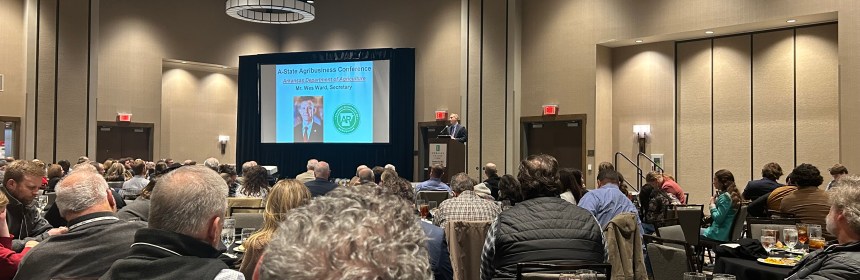
Keynote speaker, Arkansas Department of Agriculture secretary, Wes Wardaddresses water infrastructure, food insecurity and trade initiatives at the Agribusiness Conference. Photo by DDNS Reporter Shailey Wooldridge.

Agriculture officials at Arkansas State University predict a challenging year for Arkansas agriculture. Farmers are expected to face difficulties in three areas: farm economy, agricultural and trade policy, and commodity markets.

Bert Greenwalt is a professor of agricultural economics at Arkansas State University. He said Arkansas agriculture is facing headwinds this year as farmers struggle with commodity prices decreasing over past years while farm input prices have declined very little.

“Farmers are in a cost-price squeeze situation, as it’s referred to, low profitability, struggling to make ends meet and looking to government, farm policy, the farm bill for some assistance,” Greenwalt said. “Unfortunately, our Farm Bill expired a couple of years ago and Congress has yet to address updates in the farm bill that would address the current situation.”

The Farm Bill is federal legislation passed by Congress governing various agricultural and food policies. It’s passed approximately every five years and covers a wide range of topics, from farm subsidies to food assistance programs. The bill affects farmers, ranchers, rural communities, consumers, and the environment.

“Agriculture is a cyclical business. Historically, there are ups and downs, like in some other businesses, and so we’re going through that downturn down cycle right now,” Greenwalt said. “Agriculture will continue to be an important industry in the United States and globally, but not all producers will remain in the industry over time.”

Greenwalt said one of the factors contributing to uncertainty in the agricultural economy today is the shifting trade policy in Washington. Since U.S. agriculture relies heavily on export markets, any disruptions, such as tariffs or trade wars, that affect trade or access to global markets are a significant concern for the industry.

“Farmers this time of year are making many plans for the coming year, what to plant, how to renew their lines of credit with lenders. So hopefully, some of this information will be useful to them as they complete their business planning for the season,” Greenwalt said.

Greenwalt is the co-founder and director of the annual Agribusiness Conference at Arkansas State University, which was held earlier in February. Keynote speaker at the conference Wes Ward addressed water infrastructure, food insecurity, and trade initiatives.

The Arkansas Department of Agriculture (ADA) secretary highlighted problems with water and wastewater systems across the state, including broken systems that have made it hard for people to access clean water.

He also addressed a decline in groundwater levels and the importance of ensuring enough water for irrigation in agriculture, which is crucial for the state’s economy.

“In August last year, we signed an executive order to update the state water plan. The deal is a comprehensive way to look at the needs for water resources throughout the state, both short term and long term,” Ward said. “Right now, there’s about $13 billion in water and wastewater infrastructure needs that impact every single one of us throughout the entire state.”

To address this, he said the state is working on two large irrigation projects to shift water use from groundwater to surface water for agriculture in eastern Arkansas. This will help ensure farmers have the water they need to grow crops.

In 2023, the USDA ranked Arkansas the worst state for food insecurity. Ward said the ADA staff is working to address this.

“A lot of what we’re focusing on this legislative session is just efficiency. We are working a lot about ensuring we’re working on food insecurity issues, but more so trying to identify and correct inefficiencies in government,” Ward said. “I would just ask if people are aware of issues on the state level, if there are things that we can do differently from an agriculture department, please don’t hesitate to visit us.”

Ward said there have been discussions about improving trade relations and access to markets for U.S. agricultural products. The ADA is working with NASDA and USDA to overcome barriers in international trade.

In January, a group from several U.S. states, including Arkansas, Montana, South Dakota, and Connecticut, traveled to India. Ward said the trip aimed to help open markets for U.S. agriculture, tackle trade challenges, and advocate for U.S. farmers.

“We can have a long conversation about India and what that might mean, but India’s the most populated country in the world; hopefully, in the future, there will be some good market opportunities, “ Ward said.

Haleigh Jackson, a graduate student majoring in Agriculture Business and Economics from Leachville, Arkansas, said staying current on agricultural issues and policy is crucial because they affect everyone in the farm sector.

“Agriculture touches everything,” Jackson said. “I think it’s good for everybody to come and learn about the things they use in everyday life.”

Scott Adams, land manager for Adams Land Company in Leachville, Arkansas, and owner of Buffalo Island Farms in Manila, Arkansas, has attended this conference for the past 19 years.

“The major take from it is, we’re going to have to get creative on restructuring entities, market, our crop during rallies, watch our inputs, where we can watch our inputs and just mind the situation and do our best to weather the storm if this is what we’re going to continue to try o do,” Adams said. “My biggest concern is the family farmer going away, smaller farms being dissolved into bigger farms, and it affecting our direct economy.”

######


Arkansas State University hosts U.S. House Debate, minus Crawford

This report is from DDNS reporter Shailey Wooldridge.

 Arkansas State University’s School of Media and Journalism hosted the first live broadcast debate of this 2024 election season with running candidates for U.S. Representative District 1 Oct. 3 at six p.m.

ASU-TV, The Herald, KLEK-FM, KASU-FM, and Red Wolf Radio sponsored the first of three political debates scheduled for this month, beginning on Oct. 3 at 6 p.m. at the ASU-TV studio.

Debate panelists included Brandon Tabor, KASU News Director; LaGanzie Kale, KLEK General Manager; and Jerry Don Burton, Editor-in-Chief of A-State’s The Herald.

The debate was filmed live from the ASU-TV studio as part of the class video production II taught by Galen Perkins.

Perkins, an instructor of creative media production, said it is important to have student involvement in our elections as many of the topics addressed affect students.

Having it here on campus, we’re inviting these politicians to our local turf so that they get to know the students and they get to know different people from the community that they might not otherwise get a chance to interact with,” Perkins said.

Democratic candidate Rodney Govens and libertarian candidate Steven Parsons participated in this debate. In their opening remarks, both candidates said the system is not working.

Parsons said that in the two-party system, both had failed his family. Govens said he believes the time for change has come.

Parsons’ platform includes advocating for immigration reform to reduce bureaucracy.

“First we have to change the work visa and Green Card rule so that you can bring workers into this country legally,” Parsons’ said. “Let’s change the policy so that there is a meaningful legal mechanism to bring immigrants into this country. One of the second ones would be, if you think you’re going to build a wall, then we can build a wall around the safety net program and welfare.”

Goven’s platform includes expanding access to healthcare in rural areas and expanding broadband infrastructure.

“Our population is going down because we can’t keep them healthy. That’s one issue. The second issue is infrastructure. In many counties across this state, we still don’t have adequate broadband infrastructure,” Govens said. “You should have every resource to be successful, no matter where you live.”

Govens supports policy initiatives such as updating the Farm Bill and creating fair labor policies for farmers. He aims to address income inequality. He promotes criminal justice reform, affordable housing, investment in education, environmental sustainability, and student loan forgiveness. He also privatizes cybersecurity for public schools, veterans’ support, health care, and mental health services. He focuses on creating economic stability, promoting small business, and reforming the foster care system.

Parsons’ platform focuses on reducing inflation by eliminating trade tariffs, cutting federal regulations, and lowering federal spending. He advocates for immigration reform. He supports prison reform, particularly for nonviolent offenses, and opposes high military spending and student loan forgiveness. His economic approach centers on limiting federal intervention and creating clearer paths to residency for immigrants.

Republican incumbent Rick Crawford was invited to the debate but did not respond in a timely manner.

Govens said the incumbent, Crawford, feels he is untouchable because he did not attend the debate.

We need to go ahead and help Mr. Crawford secure some fruitful employment because currently, he is suing the American taxpayer, everybody within earshot of my voice,” Givens said. “He is suing you because he doesn’t think he makes enough money.”

Parsons said he was disappointed that incumbent Rick Crawford did not show up and would have preferred he had been there.

When incumbents across the board in US Congress win 97% of the time, and he’s been an incumbent for 14 years in a super red district in some sense, it’s easy for him, it’s easy for anybody, to understand why he feels like he doesn’t need to come to the debate. He feels like he’s going to win anyway,” Parsons said.

The next political debate will be on Oct. 10 at 6 p.m. between AR Senate District 20 candidates Dan Sullivan and Erika Askeland.

                                                                        -30-

Despite Political Divides, Students Call for Bipartisan Engagement

Report from Delta Digital News Reporter Jerry Burton.

Despite political contrast, civic engagement remains a priority for students.

America is often cited as being more divided than ever. With the presidential election drawing near, political discourse is heating up, and it may seem like neither party can agree on anything. Despite this apparent schism, Arkansas State University students across the political divide agree that civic engagement is vital, irrespective of political affiliation.

Hunter Redburn, a junior radiologic sciences major from Saint James, Missouri, said everyone who can vote should vote, regardless of where their vote goes.

“I will never tell somebody that you can’t or shouldn’t vote because I think regardless of who you support or what you do, voting is your right, and I will never try to take that right away from you,” Hunter Redburn said.

Chris Smith, a senior history and communications studies double major from Cabot, Arkansas, agreed with Redburn.

“I definitely value civic engagement, voting, researching, and learning about candidates more than just party loyalty,” Smith said. “Truly, I’m just happy when people vote, regardless of how they vote, I’m just happy they do it.”

Redburn is the president of Students For Life, an anti-abortion student organization. He said his morals most closely align with the Republican party. Smith is the president of the A-State Young Democrats. She said she most closely aligns with the Democrat party. These two students are opposed politically, but both agree that voting, one of the most active forms of civic engagement, is imperative.

Cameron Wimpy, an associate professor of political science, said these students’ encouraging people to vote, regardless of who they vote for, is an interesting situation that challenges common media coverage.

“There are a lot of discussions out there about one side wanting to get more people to vote and the other side wanting to get fewer people to vote; specifically, Democrats want to have, for example, undocumented migrants voting, and Republicans want it to be more strict. That’s the argument the media often makes,” Wimpy said. “Here you have student groups who advocate for issues, but above that, they’re participating and being part of the process, irrespective of what position you take, because they don’t know how you’re going to vote.”

Lily Redburn, vice president of Students For Life, said she does not want anyone to discourage her from voting, so she won’t put anyone else in a similar position.


“I think it has to go both ways. If a Democrat saw me voting Republican, would I want them to somehow discourage or prevent me from voting? Absolutely not,” Lily Redburn said. “I should not impede somebody’s ability to vote one way or the other. That’s the beauty of this country; we all get to have our own ideas.”


Students outside political student organizations also agree that civic engagement is a priority.


Jaden Holley, a sophomore social work major from Brooklyn, said civic engagement is important because it allows citizens to influence the direction of their country.


“Some people vote for Trump, some vote for Kamala, and it determines our future. It ultimately solidifies our rights and our process towards equality,” Holley said. “It is one of the most important things we can do as United States citizens.”


Isaiah Wallis, a first-year musical theater major from Harrison, Arkansas, said civic engagement is especially important among students because they tend to vote less than older adults.


“The majority of voters, especially on the local level, tend to be on the older side of life, like middle-aged and elderly,” Wallis said. “Because of that, you do not get the voice of younger generations, which is very important, especially regarding how quickly technology and culture is changing.”

Leaders from both the A-State Young Democrats and Students For Life organizations criticized party allegiance. Smith said remaining strictly loyal to a party stifles research into other candidates who may have better policies.

“If you just stick to your party, you’re not engaging civically; you’re just staying loyal to a party that will tell you what to do instead of encouraging you to learn about other candidates,” Smith said.


Hunter Redburn said he doesn’t think pledging allegiance to a particular party is productive. “I think many people are almost obsessed with party allegiance,” Hunter said. “You actually need to do your research on candidates, on party stances and make your decision based off that.”


Hunter Redburn and Lily Redburn said they vote according to the candidate or issue that aligns closest to their morals, derived primarily from religion.

“My moral compass is the Bible, and either it aligns with that, or it doesn’t,” Lily Redburn said. “Other people may not have that moral compass, but they still base their morals in something else.”


Smith said collectivism is a value she considers when going to the polls. When someone votes, they are not only voting for themselves but also their community.


“When you go into the polls, I think not only should you think for yourself and what you’re aligned with but think about your neighbor, the dude who lives across the street from you and the guy who lives 10 minutes away from you.”


Hunter Redburn, Lily Redburn, and Smith have different morals when considering how to vote. Nonetheless, they agree that morals play a major role in voting and respect that other people may not share their same values. While they don’t value civic engagement in all the same ways, all three students agree that disagreements are healthy. Hunter said he thinks citizens have lost the ability to have civil debates with people or groups with opposing views.


“I think that dialogue is never a bad thing. I think disagreement fuels progress, and without disagreement, we would never get anywhere,” Hunter said. “There have to be two sides to every story.”


Although Smith also said the lack of civility in politics is a problem, she said it is not new. The Vietnam War, the civil rights movement, and the 2000 presidential election are examples of periods when the country was divided and civic discussion was low.

While Lily Redburn and Smith agreed civic disagreements can be productive, they said compromises cannot always be reached. Lily Redburn said she feels strongly about abortion and doesn’t see an avenue where she could compromise without betraying her morals, while Smith said she is not flexible in her stance toward transgender rights. Even so, Smith said people should interact with others they oppose. She said difficult conversations are the most important and lead to a more informed population.


“If I have one idea and everyone agrees with me, how do I know if my idea has a flaw? If someone isn’t there to point that out and disagree with my idea, then nothing would ever get done,” Smith said.


Hunter Redburn said that even though someone might strongly disagree or even hate another’s stance, they should still treat them respectfully and kindly.


“I hate abortion, I think abortion is evil, and I think that what you stand for could be evil, but that doesn’t change the way I view or treat you as a human being,” Hunter Redburn said. “I think having a civil conversation is ultimately way more important than anything else.”


Wimpy said civil disagreement is a part of participating in a healthy democracy.


“We should be able to agree that we win some, we lose some, we come up with better ideas, better candidates, and do better next time,” Wimpy said.


Students from both organizations also had similar strategies for increasing civic engagement. Hunter Redburn said candidates or representatives engaging in civil debate allows potential voters to engage with both parties or sides of an issue equally and make an informed decision.


“I think it is much more productive and effective when you can watch these two ideas go head to head and, with logic and reason, you can see which one makes more logical sense with how we want to move forward in the country,” Hunter Redburn said.


Wimpy said education and cultivating interest are necessary to increase young adults’ civic engagement.

“I think more programming around what’s going on in the world would help, and that can’t just come from political science classes,” Wimpy said. “It needs to be things that students organize, whether guest speakers or voter registration drives.”


Smith said increasing civic engagement requires showing that engagement works and can be productive. She said showing productive political conversations, such as the recent vice presidential debate between JD Vance and Tim Walz, lets citizens know that politics isn’t supposed to be filled with disrespectful fights and constant bickering.


“Because that idea has circulated so much now, a lot of people have started to have large screaming matches of their own,” Smith said. “So if we shine light on productive conversations actually happening and we highlight those more then the media starts to encourage it more and then we find that the people themselves are doing it more.“

-30-

ASU Feminist Union to host women’s rights rally

Delta Digital News Service

Friday, Mar. 29, 2024

By Avery Jones | Editor

JONESBORO, Ark. – The Feminist Union at Arkansas State University in Jonesboro will be hosting their first women’s rights rally this Saturday. It will be held from noon to 3 PM in the courtyard of the Craighead County Courthouse.

The event is open to the community, and those who attend can choose to sign for the Arkansas Abortion Amendment and Period Tax Petition. They will also hear from several female speakers who are important figures in the community. 

“Essentially, this rally is to…celebrate the advancement of women’s rights across the years but also to celebrate the women now who are making basically their mark on history, specifically women’s history,” said Christina Smith, the president of the Feminist Union and a student at ASU Jonesboro.

The Arkansas Right to Abortion Initiative–more popularly known as the Arkansas Abortion Amendment–is a movement that aims to get the amendment on the ballot for 2024 as a constitutional amendment in Arkansas. If instated, the amendment would allow abortion within 18 weeks of conception; in the cases of rape, incest, or fatal anomalies; or when the life of the mother is in danger.

The movement was started by Arkansans for Limited Government, a nonprofit organization that advocates for personal liberties and limiting government involvement, especially in regards to healthcare. They must collect at least 90,000 signatures by this July 5 in order for the amendment to be placed on the November 2024 ballot.

An Act to Exempt Feminine Hygiene Products and Diapers from Sales and Use Tax is being spearheaded by the Arkansas Period Poverty Project, which aims to increase access to feminine hygiene products in Arkansas, especially for those in poverty, by ending sales tax on feminine hygiene products and getting free menstrual products in public schools. They need 72,500 signatures by this July in order to make it on the November 2024 ballot.

Those are the two main movements that the Feminist Union is currently promoting, but Smith said there may be other causes represented at the rally. The speakers at the rally will be talking in general about women’s rights, but they also will most likely promote their own causes.

There will be four speakers: State Senate candidate Erika Askeland, who is running for District 20; Young Democrats of Arkansas president Allison Sweatman; Alison Guthrie, a community advocate from Little Rock; and another community advocate, Rebekah Pruitt, from Jonesboro.

Specifically, Askeland will probably speak about her campaign. Sweatman will most likely speak about the importance of voting, especially for women. Guthrie stated that she would be talking about disability rights. Pruitt, as a transgender woman, will most likely speak on transgender rights.

While it’s their first rally, Smith said that it wasn’t difficult to arrange. Since the courthouse’s courtyard is public property, she just had to call the courthouse to ask permission to use it and make sure no one else was using it at that time. Then she started promoting the event.

As for the speakers, Smith already had connections to them. She reached out to Guthrie and Pruitt and asked them specifically to speak. Meanwhile, Askeland and Sweatman volunteered when they heard about the event.

“I reached out to Alison Guthrie and Rebekah Pruitt because I’m a very big fan of their work within their own communities,” Smith said.

Smith works on Askeland’s campaign, so when Askeland heard of the rally, she offered to speak. Similarly, Smith is the president for the Jonesboro chapter of the Young Democrats of Arkansas, so when she mentioned the event to Sweatman, Sweatman also volunteered.

The ASU Feminist Union itself has only recently become active again. It was first established in 2018 but shut down due to the COVID-19 pandemic. Inactivity after the campus opened again caused the organization to die out. 

However, in fall 2023, Smith wanted to revive the Feminist Union. She had to register it again as a student organization and then recruit more members. Currently, the Union has around 60 to 70 members, but only about 10 to 15 members regularly attend meetings and activities.

“The hardest part was getting members…active members,” Smith said.

They have meetings every two weeks on Wednesdays and events every month. They have hosted panel events, in which they invite community advocates, elected officials, or female candidates for discussion; readings and movie nights about feminism; and tabling events where they hand out free condoms. Next semester, they’re also planning to start handing out emergency contraceptives.

-30-


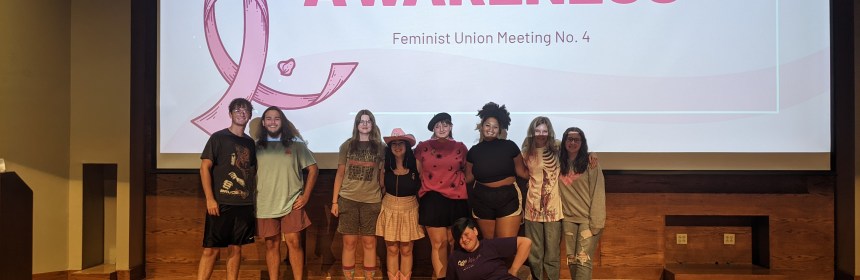
Note: Featured image is from one of the Feminist Union’s previous events.

Paragould School District Approves Vehicle Purchase

Delta Digital News Service

Friday, March 15, 2024

By Shelby Russom | Contributor

PARAGOULD, ARK. — The Paragould School District voted to approve the purchase of a new vehicle.

A 2019 GMC Sierra will replace the superintendent’s current vehicle, a 2014 GMC Acadia. The district will then transfer the previous vehicle to a different department within the school district for professional development, and the vehicle currently used for that purpose will go to the maintenance department. 

“We’ve got to be able to get our people around the district,” Superintendent Nicholas Jankoviak said. “With multiple vehicles, we’re able to divide and conquer.” 

It is the district’s responsibility to provide a vehicle for the superintendent’s business and personal use according to the PSD superintendent’s contract. The district will also assume all expenses related to this vehicle’s use, including insurance, fuel, maintenance, etc. 

During the March 11 meeting, the school board voted to purchase the vehicle. The vehicle, with just over 28,000 miles, combined with a six-year or 120,000-mile warranty, will cost the district $48,828.

Michael McBryde, senior vice president of Stephens Inc., presented a plan to the board concerning the district’s plan to sell their bonds and the next steps the district should take now since the bond restructure passed March 5. 

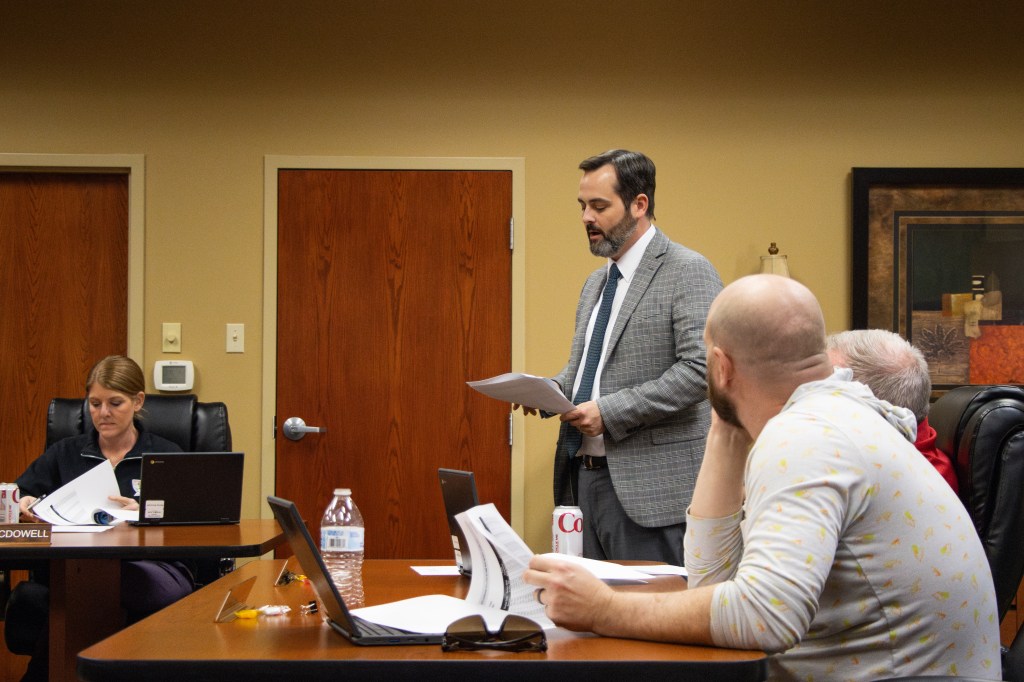
Michael McBryde, senior vice president of Stephens Inc., presented the board with a plan to sell the district’s bonds.
Shelby Russom | Delta Digital News Service

McBryde said it is important to have one final meeting with the school board before selling the bonds to ensure everyone is on the same page. 

“It’s just kinda always one of those things,” he said. “Before you sell a couple million dollars worth of bonds, it’s always nice to have a little touch-in meeting.” 

McBryde said he believes if the district sells its bonds in the current market, it will have a better interest rate.

 “That means you’ll get your $17 million and actually reduce your total annual payment,” he said.

Josh Honeycutt, school board secretary, said the proposal is fantastic and will save the district $3 million over 30 years. 

The bond sale will begin with the state-required publishing of the sale in the local newspapers. Currently, the bond sale will take place April 9. 

PSD school board motioned to approve an alternate calendar based on hours, not days. A traditional academic calendar requires a minimum of 178 instructional days. The board-approved alternate calendar requires the district to have 1,068 instructional hours, allowing them to save additional time for days off, such as inclement weather. 

Currently, the district is banking 1,101.42 hours, meaning the district will have 33.42 hours to bank. 

“We can bank over five six-hour days,” Jankoviak said. “So, what will happen is if we get bad weather, we can allow the students to stay home five times without having them make up any days at the end of the school year.” 

The district will utilize the extra days for professional learning communities (PLC), which act as teacher collaboration days. Jankoviak said this year, the district really focused on incorporating PLC days and believes they will help improve the district. 

He said PSD currently employs two of the only high-impact teachers in northeast Arkansas, and he believes allowing them to collaborate with their colleagues will help improve the district. 

Oak Grove’s principal, Jamie Dial, stated the academic achievement of the students of Oak Grove Middle School (OGMS). The school’s current enrollment is 503, with 234 fifth and 269 sixth-grade students. The average attendance is 91%. The school employs 32 certified teachers, with 22 having over six years of teaching experience in the district. 

“Our staff is strong,” Dial said. “They’re doing a great job; we’re doing everything we can for the kids.” 

Dial said the teachers within OGMS have gone above and beyond in grasping PLCs with math, science and language arts. 

Within the OGMS math department, the PLC meets every week to discuss remediation pathways from previous testing data. Dial said both sixth-grade math teachers show growth as high as 17% with their students’ ACT Aspire test scores. 

OGMS began Imagine Math Small Group on Demand Tutoring. This year-long virtual program will help 56 high-risk students bridge the gap in their math skills. 

In other business:

  • The school board elected Jeremy Hancock as president and disbursing officer, Teresa Hill as vice president and Josh Honeycutt as secretary. The remaining board members were elected as secondary disbursing officers. 
  • Due to law changes, the board approved policy updates from the Arkansas School Board Association effective July 1, 2024. 
  • The board expelled a 10th-grade student for the remainder of the 2023-24 school year for actions that violated student policies 4.18, 4.20, 4.21 and 4.22 and student rule two in the Paragould High School Student Policies Handbook. 

-30-


NOTE: Feature photo of Paragould School District School Board meeting by Shelby Russom.

Bill Clinton Speaks at A-State

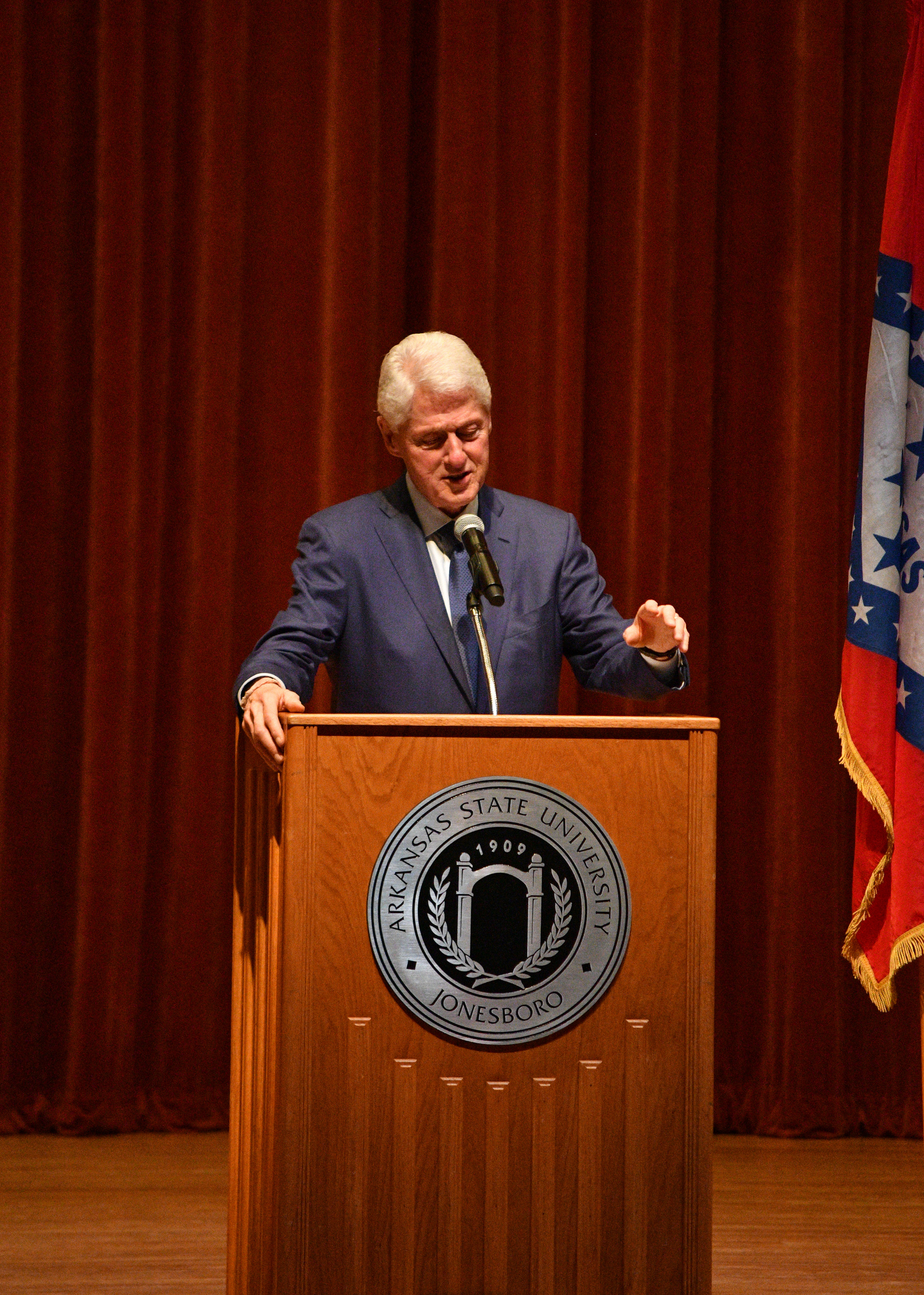
President Bill Clinton

by Chase Gage
Delta Digital News Service

JONESBORO – Former President Bill Clinton spoke to a near-capacity crowd at the Fowler Center Monday night. The man from Hope delivered a speech about hope for the future.

At a time when America is arguably more politically divided than ever, Clinton urged listeners to love one another like human beings, not opposition. He drove home the message of treating people like people and getting rid of resentment and anger towards others.

Arkansas State University Chancellor Kelly Damphousse introduced the 42nd president to approximately 950 people.

“If you live in resentment and anger, it disempowers you. You want to be empowered,” Clinton said. “You have to open your heart and ears before you can open new doors. You’ll waste a lot of your life living in resentment and anger.”

Clinton, founder of the Clinton Foundation, said the current political discourse does not lay the foundation for citizens to have the types of conversations they need to be having. Instead of discussing economic inequality and how to fix it, or the emergence of artificial intelligence (an advancement that may kill more jobs than it creates), people are more worried about tearing each other down.

He proposed Americans should be more concerned about their grandchildren’s future instead of winning the next fight on a television talk show. People in disagreement are still people, and sometimes that is forgotten.

Bryant Moy, a graduate political science student at Washington University in St. Louis, said before the event that he hoped to hear the former president speak on civil discourse in the United States. He got his wish.

“He talked about trying to treat people as people. You can still have these deeply held, strong beliefs and resentment, but you have to cooperate with one another. I loved it. It was exactly what I wanted,” Moy said after the event.

Kaylee Bauman, a medical student at New York Institute of Technology from Michigan, said the speech was refreshing.

“(Clinton) talked about bringing everyone together, and then seeing all the different types of people in the room, it was great. I wasn’t sure what to expect, but I thought his overall message was something that could apply to everyone in the room. I found it fascinating,” Bauman said.

President Bill Clinton

President Bill Clinton spoke for about an hour Feb. 11 to more than 900 people in Riceland Hall at Arkansas State University as part of the “Riceland Distinguished Presentation Series.” The 42nd U.S. President previously spoke at A-State on three different occasions. (Photos by Ammar Taqi)

Monday night was not the first time Clinton spoke in Jonesboro. He recounted the story of when he spoke at the Arkansas State University Commencement ceremony in the late 1970s while he was Attorney General of the state. Due to rainy conditions, the ceremony was moved into the field house, where Clinton cut his speech off after only six minutes due to the hot, humid conditions. He most recently visited the university during the 2014 election cycle while campaigning on behalf of Mike Ross for the Arkansas gubernatorial election. He also dedicated the Dean B. Ellis Library in 1995 while in office as president.

Clinton told many stories that showcased examples of people treating others with love and respect. One such story involved fellow former president, George W. Bush and how the duo was able to put partisanship aside to work on creating a better world for the American people. Another story told of how Clinton’s grandfather would give food to those in need. The differences between the two examples demonstrated how respect for others can work on any level, in any situation.

“If you want America to lead the world to a better and more peaceful place, we have to think about empowering people, not putting them down,” Clinton said. “This is not a (partisan) issue. This is not a racial issue. This is a challenge.”

His message of a hopeful tomorrow rang throughout the hour-long speech. The future is up for grabs, for whoever wants to take it.

“We all have our resentments and regrets, but all we really have is tomorrow. You only become old when the weight of all your yesterdays outweigh your hope for tomorrow,” Clinton said. “There will never be a time free of problems. We have possibilities, but you have to face them and the problems they present not with resentment, but with an open hand, a listening ear and a loving heart.”

Listen to the full speech, courtesy of KASU’s Johnathan Reaves: