Monthly Archives: June 2019

Nonprofits play pivotal role in helping homeless

By Brooke Buckner
Delta Digital News Service

JONESBORO — Nonprofits provide resources for the increasing homeless community.

The Salvation Army is the only homeless shelter in Jonesboro, but there are many other resources for the homeless.

United Way of Northeast Arkansas and The Hub help the homeless community, but don’t house them.
33855969068_5ecd1bb8ef_k

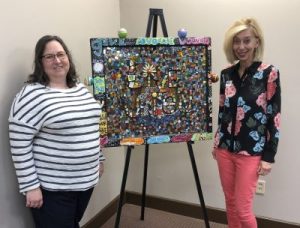
Nanette Heard and Shaila Creekmore at United Way of NEA. (photo by Brooke Buckner)

United Way helps the working people and serves eight counties. They provide a backpack program for kids in need of food with the Food Bank of Northeast Arkansas and fund a program called Homeless to Self-Sufficient with Mission Outreach of Northeast Arkansas.

Nanette Heard, executive director of United Way, said, “A lot of what we do is raise funds for programs. Unfortunately, there aren’t a lot of shelters in our area.”

UWNA helps people get back to work by providing work clothing, boots, childcare and transportation. Most of their programs are geared toward kids.

Gwendolyn Zugarek, executive director of The Hub, said the 2-year-old resource center provides a 90-day program for the homeless. The first step to helping people is tracking down their birth certificate or getting them an ID so that they can move forward from there.
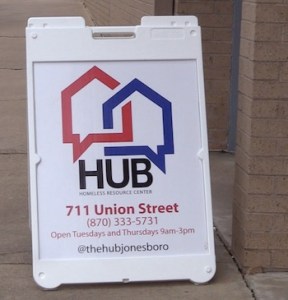
HUB“The main thing that we do is we sit down with our guests and we talk to them about what is going on in their life,” Zugarek said.

The Hub offers a bike program allowing guests who don’t have transportation to ride a bike to their job. The guest’s responsibility is to buy the bike lock.

Currently, the Hub is a community-funded organization. They usually see an estimated 40 new homeless individuals every month and they helped 532 individuals in their first year of being open. Their mail center helps the less fortunate receive benefits.

Shelters Outside of Jonesboro

Shelters in Blytheville and Paragould provide help year-round for the homeless.

Blytheville’s Mississippi Union County Mission helps women, children and men. Most of the children who come in are 17 to 18 years of age. The majority of residents are single.

There’s no time restraint for living at the Mission, but the average time is three to four months.

Mission Outreach of Northeast Arkansas in Paragould takes all ages and people can live there for up to two years. Director Cheri Peters said she sees more single people coming into the shelter. In 2018, Mission Outreach of NEA provided shelter for 452 people.

The Mission houses 55 and Mission Outreach houses 58 people. Both of these shelters house increasing numbers during the winter and summer.

In addition to housing and feeding residents, Mission Outreach helps residents with birth certificates, employment and insurance.

Lisa Willard, executive director of The Mission, said they offer a work program consisting of yard work or odd jobs. The charge for the community is $10 per hour and the workers get paid $8.50 per hour.

Similarly, Mission Outreach offers jobs and provides transportation for their working residents like United Way does.

Both of these shelters feed the less fortunate by serving food boxes. The Mission serves 100 food boxes per week.

Mission Outreach’s food pantry feeds low-to-moderate income families. These families can come once a month to get food boxes. They also have a soup kitchen that prepares three meals per day.

“For the food box, you have to be a Greene County resident,” Peters said.

Willard and Peters said they enjoy working at these shelters because they watch lives transform.

The community can help each of these organizations by volunteering or donating toiletry items, canned goods, blankets and furniture.

NEARK Confronts the Homeless Issue

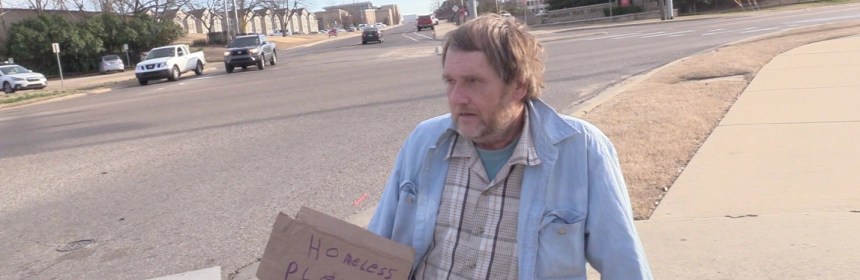
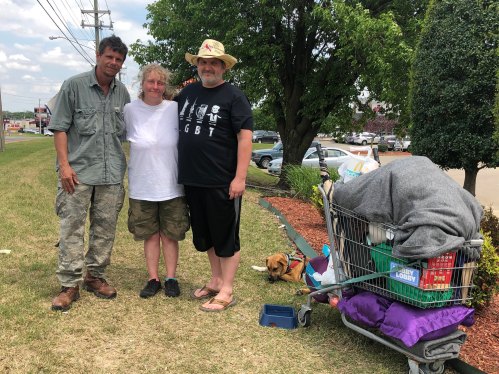
Charles Haven seeks assistance on Red Wolf Boulevard. (Photo by Jessica Ladd)

Students from the Multimedia Reporting course investigated homelessness in the Delta.

  • Jessica Ladd details the lives of a homeless couple coming through Jonesboro.
  • Chloe Short examines plans for a Veterans Village in Jonesboro.
  • Brooke Buckner details services and shelters for Northeast Arkansas’ homeless population.
  • Yu Bai examines food banks providing sustenance to the homeless.
  • Colby Sigears notes how governments in the Delta approach the homeless issue.


Homelessness Grows in the Delta

By Colby Sigears
Delta Digital News Service

JONESBORO — Poverty and homelessness impact the Delta area, keeping people under the poverty line.

Hillary Starnes, an employee of the Jonesboro Grant Department, said approximately 1,800 homeless people live within Craighead County.

“We’re getting a homeless task force to help be resources for the people in the community to get them back on their feet,” Starnes said.

A preliminary meeting of the task force in mid-September discussed potential resources for the homeless. Limited resources contribute to homelessness in the area because people do not have jobs; some do not have a driver’s license. Starnes said the task force will help once they get a homeless shelter built; that way it will keep the homeless off the streets.

Todd Stovall, chief of police in Paragould, said the city does not have a lot of homelessness because of the community effort such as churches helping with the homeless with free meals.

“The mission outreach keeps a lot of people off our streets and other people in the community provide resources for the homeless,” Stovall said.

Lack of affordable housing in Arkansas for people with low incomes and secondary causes such as physical illness, substance abuse, lack of incentive to work, poor work ethic and lack of appropriate education also contribute to the homeless problem in the Delta.

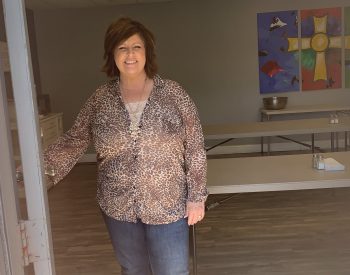
Lisa Williard, director at Mississippi County Union Mission in Blytheville photo by Colby Sigears

Lisa Willard, director of the Mississippi County Union Mission, said it’s a broken system. People with mental illness get left behind because people don’t want to deal with them anymore, e.g. women being dependent and leaving their husbands without any resources or even men with children but no jobs.

“We get people their benefits when they check in such as Medicaid benefits, food stamps and driver’s license,” Willard said. “If they stay here, they must have a job and half their checks go to their savings. We provide other side jobs in the community to make extra money.”

MCUM provides a food pantry and clothing for people at the shelter, as well as help with people having trouble with water and light bills. Willard noted MCUM gives out food boxes to Mississippi County residents at 1 p.m. on Mondays, Wednesdays and Fridays. The food box program runs under the income-based guidelines of the U.S. Department of Agriculture.

A lot of homelessness occurs in the Jonesboro area because it is the center for most of the Delta. There are 600 known within the city. Places such as The HUB and Salvation Army provide resources in the community. Also, the food bank is the biggest in the area and sends help to places such as Mississippi County Union Mission.

“Volunteering in the community and help from government resources and getting jobs for people will help lower homelessness in the area,” Willard said.

Couple Makes Best of Tough Situation

By Jessica Ladd
Delta Digital News Service

JONESBORO — In America, 553,000 people experienced homelessness in 2018. Of those, 2,712 lived in Arkansas.

The homelessness issue in America continues to rise due to a lack of housing options for those with a low income. Without housing options, people face eviction, instability and homelessness. Low-income households don’t make enough money to pay for food, clothes or a home.

In recent years, Jonesboro took steps to reduce its homeless population. Mayor Harold Perrin enacted a task force to end homelessness. The HUB, a homeless resource center, opened in 2017 and the city has multiple food pantries available to help those in need. These services help, but people are still falling through the cracks.

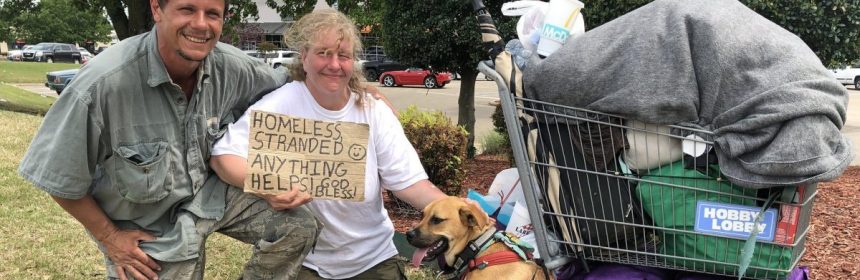
Patricia Eggers and Allen Wheelis married 15 years ago. The two fight and argue like most couples, but they love each other more than anything. They own a registered service dog named Prints. A devoted Christian, Eggers carries a Bible with her everywhere. Wheelis enjoys playing the guitar and singing. The pair also suffer from homelessness.

32790971757_2f96d25cb7_k

Eggers’ service dog, Prints (photo by Jessica Ladd)

“I don’t wish it on anybody,” Wheelis said. “Once we get back to square one, we get knocked down again.”

The couple came through Jonesboro in the spring and said they’ve been homeless for over a year and a half. Eggers worked at a Save-A-Lot but lost her job. A few months later, Wheelis lost his job, too. They didn’t know what to do. Wheelis’ sister lives in Missouri. She told them they could stay with her. She called them to cancel while they were driving through Louisiana. They didn’t know where to go or what to do.

Their car broke down in Louisiana. The two couldn’t afford to have it towed, so they left it behind. Now, they hitchhike or travel on foot. The pair have been all over Louisiana, Texas, Missouri and Arkansas.

Hurricane Harvey flooded the woods they were sleeping in. They lost most of their stuff.  Another time, a levee broke and flooded their campsite. Eggers said she later went back and waded through knee-deep water for her Bible.

Through all the hardships, Eggers kept her faith. She served five months at Phelps County Jail in Missouri. During that time, she was all alone. She said it was the hardest thing she’s ever gone through. She turned to God for support. Eggers said God is watching over them and everything happens for a reason.

They carry all their belongings in a Hobby Lobby shopping cart. The pair came to Jonesboro in April. During the day, they tried to panhandle money. Wheelis said he didn’t want to panhandle, but they need money for food and shelter. He couldn’t find a job. Employers want an address, driver’s license or birth certificate. Neither one of them possesses a valid form of identification.

Eggers said her identification was stolen. She was walking along a road late at night in Lafayette, Louisiana. A man offered her a ride. She accepted. Eggers asked him to stop so she could use the bathroom. Once she got out of the car, he drove off, taking her purse with him. She lost the little money she had, her ID and important family photos she can never replace.

The couple said people treat them differently because they’re homeless. Eggers has been embarrassed more times than she can count.

“I had one guy tell me to go out and sell my body,” she said. “For you to sit there and say that to me— I’d rather sit here holding a sign than sell my body.”

They’ve been kicked out of gas stations, restaurants and even Walmart. One McDonald’s told them they were taking up space and needed to leave. They are constantly refused service. Once, they were arrested for sitting on church property.

Wheelis said most people assume they’re hooked on drugs or alcohol. When people hand him money, they’ll tell him not to spend it on the substances. Eggers said people don’t trust others nowadays. Eggers blames individuals who panhandle and don’t need the extra help. She said it hurts the people who actually need it and makes people less likely to help.

47734384711_116cfaea4c_k

Allen Wheelis, Patricia Eggers and Nick Bennett stand outside the Walmart Super Center on Highland Drive. (photo by Jessica Ladd)

However, good people still exist who will lend a helping hand. Nick Bennett, a Jonesboro resident, saw Eggers and Wheelis sitting outside the Walmart Super Center on Highland Drive. Instead of giving them money, he gave them time and compassion. Bennett stopped and spoke with the couple for about 45 minutes. He said sometimes people just want someone to speak with.

“I’m here because I care. They’ve told me about the harassment they’ve gone through. It’s a disgrace — having water thrown on them. There’s no call for that,” Bennett said.

Bennett returned later with some clothes for Wheelis. He said he knows they’re just down on their luck. He called them genuine, down-to-earth people.

Eggers has a 23-year-old son from a previous marriage. She maintained contact with him but he isn’t financially stable enough to help them. The rest of her family and friends, she said, didn’t bother to check up on her. To her, that’s what hurts the most. Wheelis has a daughter from a previous relationship and they don’t talk much. None of his family offered to help either.

Wheelis said their situation is only temporary. He wants to get both of them valid forms of ID. Then he wants to get a job. Eggers suffers from PTSD and she has very bad anxiety. She said that’s why they could never stay at homeless shelters. The shelters always wanted to split them up. Wheelis agreed. He said he wasn’t going to sleep without his wife. They hope to get Eggers started on disability soon.

Both managed to keep a positive outlook on life. These two endured so much. They still try to smile at people and thank them for the help. Wheelis said he’s had people give him as little as 20 cents. He said it doesn’t matter the contribution, just as long as it from the heart. They said the key is staying humble and not letting pride get in the way.

Free Food Transfer Hub for the Homeless

by Yu Bai
Delta Digital News Service

JONESBORO — About 48,000 homeless people live in Arkansas: 8.5% of them are veterans and 20% of them have a serious mental illness. People who suffer homelessness are also struggling with a serious problem: hunger.

Many factors are contributing to this problem. Homeless people in the age group of 60 to 65 in Arkansas are mostly African-American or Hispanic and they lack transportation to the food vendors, so they are more susceptible to food deprivation.

“I don’t think there is anything that directly contributes to homelessness other than the circle of poverty. People cannot buy food without money. The most difficult problem I have to face is about getting fresh food,” said Vonte Benjamin, who has been homeless since 2018.

Food Bank of Northeast Arkansas

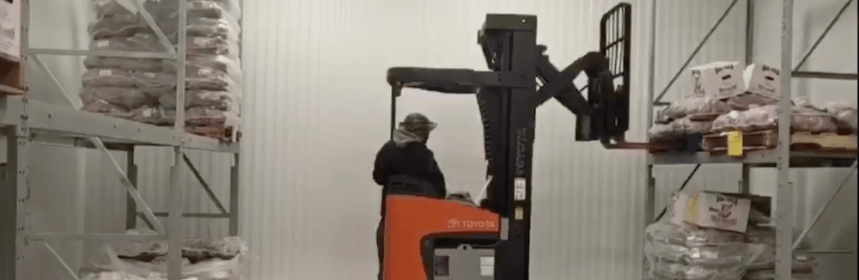
The Food Bank of Northeast Arkansas started in Jonesboro in November 2012. This organization distributes food to people in need through nonprofit agencies and networks.

“We are a member of Feeding America. We have served more than 30 million pounds of food to homeless and the poor since we established,” Corporate Partnerships coordinator Amber Horton said.

Living in an agricultural state, FBNA makes every effort to ensure it provides the freshest and safest food. Local and national manufacturers, retailers and growers supply the food sources. Otherwise, people who work in the Department of Food Security will destroy other unidentified food.

Benjamin said the place he has been living has no kitchen to cook in so he went to the food bank to find fresh food.

The organization runs its work with a mature industrial chain. It distributes four-to-five kinds of food to 20 locations in 12 different counties each year. People must check a schedule list before they go to the designated location to get food.

Homeless people have a chance to get an emergency box that includes sufficient food once a year. It is the only special program requiring them to show their identification.

“In recent years, we provided about 2.5 million pounds of fresh produce through the support from grower partners; it’s equivalent to 62 tractor-trailers’ load capacity,” said Jennifer Hannah, FBNA outreach coordinator.

Competition and Cooperation with Arkansas Foodbank

As the distribution center, FBNA works with more than 100 organizations, including the Arkansas Foodbank, which located in Little Rock.

The Arkansas Foodbank started in January 1984, and it is the foundation in the fight against hunger. It forms an important food hub with FBNA for providing fresh food supplies to nearly 34,000 people in 12 counties.

These organizations feature the same programs, such as food pantries, soup kitchens and shelters for homeless people.

Compared with FBNA, the Arkansas Foodbank can access other partner organizations in big cities such as Houston, Texas because of its central location.

“Both of our food banks play a special role as warehousing and distribution facility, and it is more in the sense of complements rather than competes,” FBNA Compliance and Facilities manager Jeff Fielder said.

However, there is a program unique to the Arkansas Foodbank — it has a partnership with the Arkansas Rice Depot.

Rice farmers in Arkansas realized they had a surplus crop and many hungry neighbors in 1982. They tried to improve the lives of hungry Arkansans with the establishment of Arkansas Rice Depot.

Arkansas Foodbank depends on the food source of Rice Depot, and the Rice Depot needs the food bank as a shipment center to help it transport food to other places.

The food bank constantly is looking for better and more efficient ways to deliver much-needed food to people. It is a vital organization to help solve the food shortage and security problems of the homeless.