Monthly Archives: December 2019

Local downtowns experience a business renaissance
By Tristan Bennett
Delta Digital News Service

PARAGOULD – Downtowns in the Delta undergo a renaissance thanks to local businesses.

Paragould’s Main Street houses many local businesses. Photo by Tristan Bennett

The resurgence of boutique-style shopping led to a growth in the downtown areas of Jonesboro and Paragould. They became destinations for both local and national businesses that work together to attract customers to the area. Lindsey Wingo, Downtown Jonesboro Alliance executive director, assists downtown business owners by promoting them to the public.

She said, “Downtown is the heart of Jonesboro, in my opinion. Five years ago, the main thing was shopping malls and different things like that, and really you see downtown on the uphill trend of things.”

In both cities, local owners occupy almost all of the downtown buildings; Only one Dollar General sits on the outskirts of downtown Paragould. Gina Jarrett, Main Street Paragould executive director, said local businesses occupied downtown since its beginning.

“Downtown started when Paragould started, and there weren’t franchises then,” Jarrett said. “We’ve always been mom-and-pops.”

While many of downtown Paragould’s businesses continue to survive after decades and ownership changes, Jonesboro’s downtown just flourished in the past 10 years. Many of the businesses followed Gearhead Outfitters and other developers into the area.
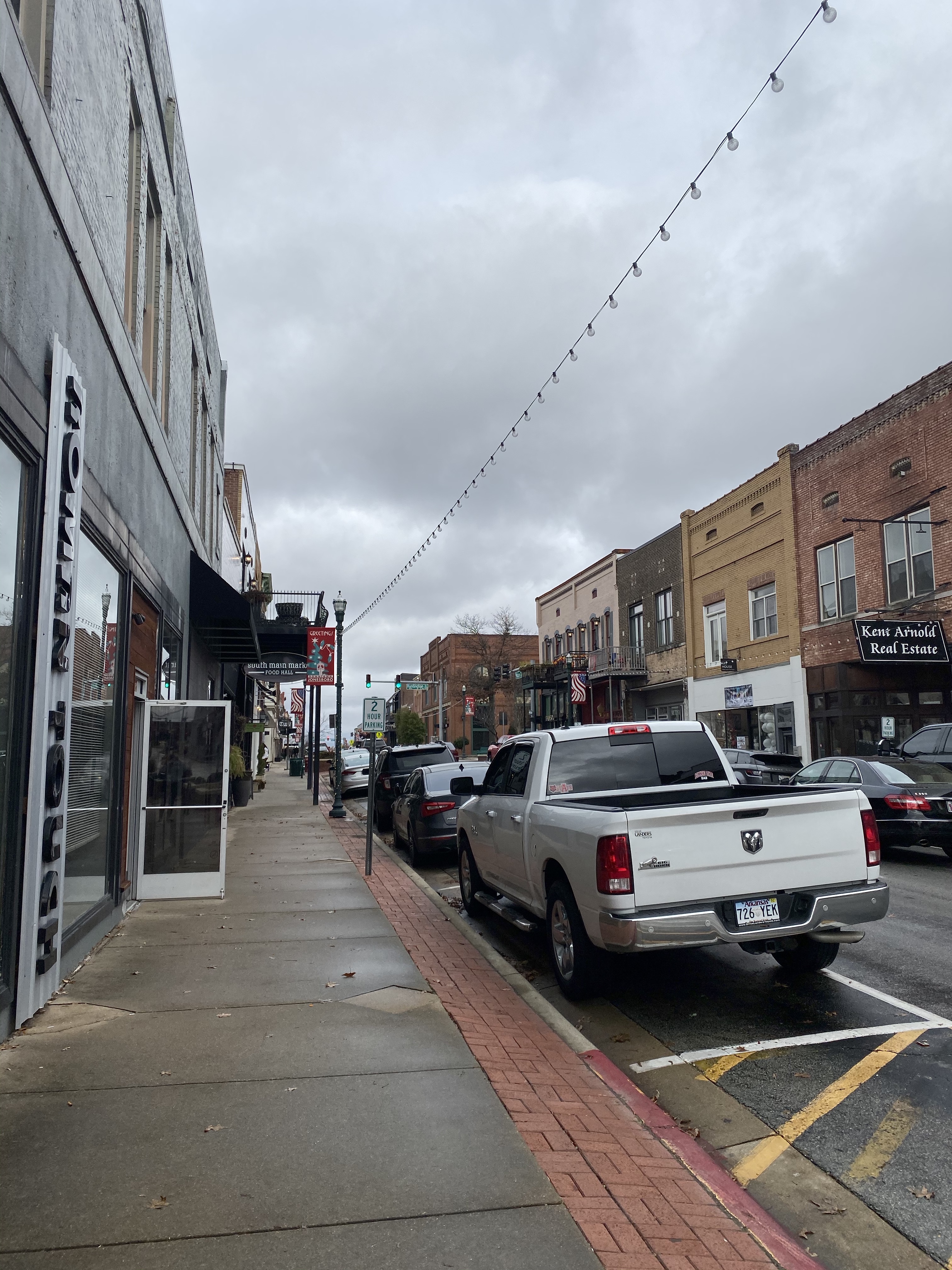
Jonesboro’s Main Street became a destination about 10 years ago. Photo by Tristan Bennett

From its humble beginnings in Jonesboro, Gearhead owner Ted Herget grew his company into a regional company quickly, and recently, the company bought Rock/Creek Outfitters and Uncle Dan’s Outdoor Store to further expand their reach to Chicagoland, Illinois.

Gearhead marketing director Whitney Eldridge said, “Downtown businesses and the boutique retail format have made a resurgence in recent years. The environment tends to be more personalized and close-knit. While we try to provide this environment whether in a mall setting or not, a downtown or neighborhood business tends to have a more pronounced presence in the community, which contributes to the neighborly and warmer feel that a mall store may not be able to provide.”

National businesses in downtown spaces can be helpful to small businesses. They possess the potential to draw more customers to the area, and hopefully, to the stores around them.

Wingo said, “All of the places that are down here, just like any other business started in a local community. It’s so important to not see people as competition always but also as help.”

Even with all the help chains bring, local downtown owners feel the effects of national business in their stores. Cynthia Allison Jones owns Addie’s Soul Food & Grill located in downtown Jonesboro. She said she sees chain restaurants negatively affecting her business

“I think they take business away from us,” Jones said. “It’s hard, but I’ve cut down on staff and hours of operation.”

Kayla Gramling, owner of The Tiny Twig Boutique, sells homemade gifts and offers services such as flower preservation in her downtown Paragould shop. National businesses caused her to adjust her pricing strategy.

“We charge what we have to have but try to keep it as low as we can, too, and we try to offer different stuff that you can’t find anywhere else,” Gramling said.

Creating an environment like a downtown takes planning and hard work. The DJA and Main Street Paragould exist to ensure these areas continue to draw customers to the businesses there. Walkability and catering to pedestrians continues to be a crucial of a part of the downtown experience.

Jarrett said, “Because downtown is walkable, everything is brought down to the pedestrian’s level. The signage, the window displays, everything is for the pedestrian, and that’s what people want nowadays. They want that comfortable, strolling feel.”

Customers cannot have that comfortable feeling without feeling safe. Recently, Wingo and the JDA took part in an initiative to add lighting to downtown Jonesboro so customers could feel more relaxed while in the area at night.

“We felt like there was definitely a stigma that downtown wasn’t safe,” Wingo said. “We felt that the reason people thought that was because it was dark down here, and when things are dark people don’t feel safe.”

In the past two years, over $20,000 worth of lights came to the downtown Jonesboro area because of the JDA along with $60,000 more from the city of Jonesboro.

The JDA and Main Street Paragould offer a way for owners to work together to promote the area and drive traffic to businesses downtown by planning events to take place in the downtown areas.

Gramling said, “There’s a lot of different events that are held downtown, so that kind of gives us an advantage. People walk around more than if you were just a free-standing building out in the middle of town.”

Both cities belong to the Main Street Arkansas organization, so downtown business owners can take advantage of an interior and exterior designer and small business consultant at any time. Both also receive grant money to help with improvements to the area and certain businesses.

Jarrett said, “We can mini-grant out that grant funding to help people make improvements in their buildings. It’s for what you can see: exterior improvements, and we go as far as the inside of the storefront windows.”

Improvements happening in both downtowns work to preserve the areas’ history. This revitalization of the downtown couples with a revitalization of the two cities’ histories. Downtowns once served as the only marketplace in small towns across the Delta, and this seems to be becoming more common again.

Wingo said, “Whenever you visit somewhere, you want to know what their downtown is like. That’s where the history of the city is, it’s the heart of the town, and in my opinion, for it to be a vibrant community there needs to be a vibrant downtown.”

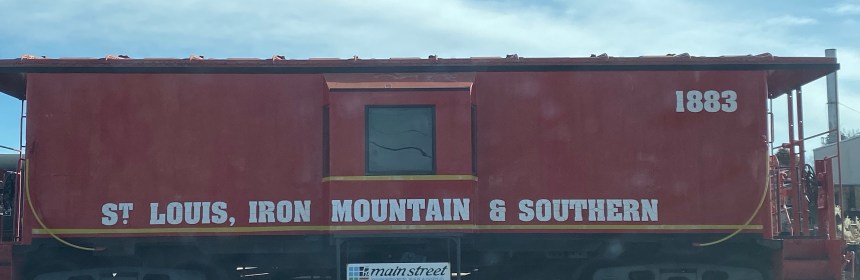
Editor’s Note: Feature Photo – Main Street Paragould operates out of an old train caboose. Photo by Tristan Bennett

Local coffee shops raise the bar

Delta Digital News Service

JONESBORO – In a time when craft and speciality coffee seems to be a major trend, a variety of passionately run local coffee shops conduct business in Jonesboro and beyond throughout the Delta. 

   As a consumer, one’s options prove numerous when deciding what coffee to pick up on a morning drive to work or on an afternoon study break. The consumer might choose a coffee giant like Starbucks, but the consumer might also know of a place in town that feels just like home. 

   Brian Nobles took over operations of the Edge Coffee House in August. The Edge sits right off the edge of Arkansas State University’s campus and the shop actually used to be a residential home. 

   “An experience,” Nobles said. “It’s really about the experience that you get from a mom and pop type shop. The charm and the quality and the characteristics of an old actual house turned into a coffee shop gives it all the unique characteristics.”

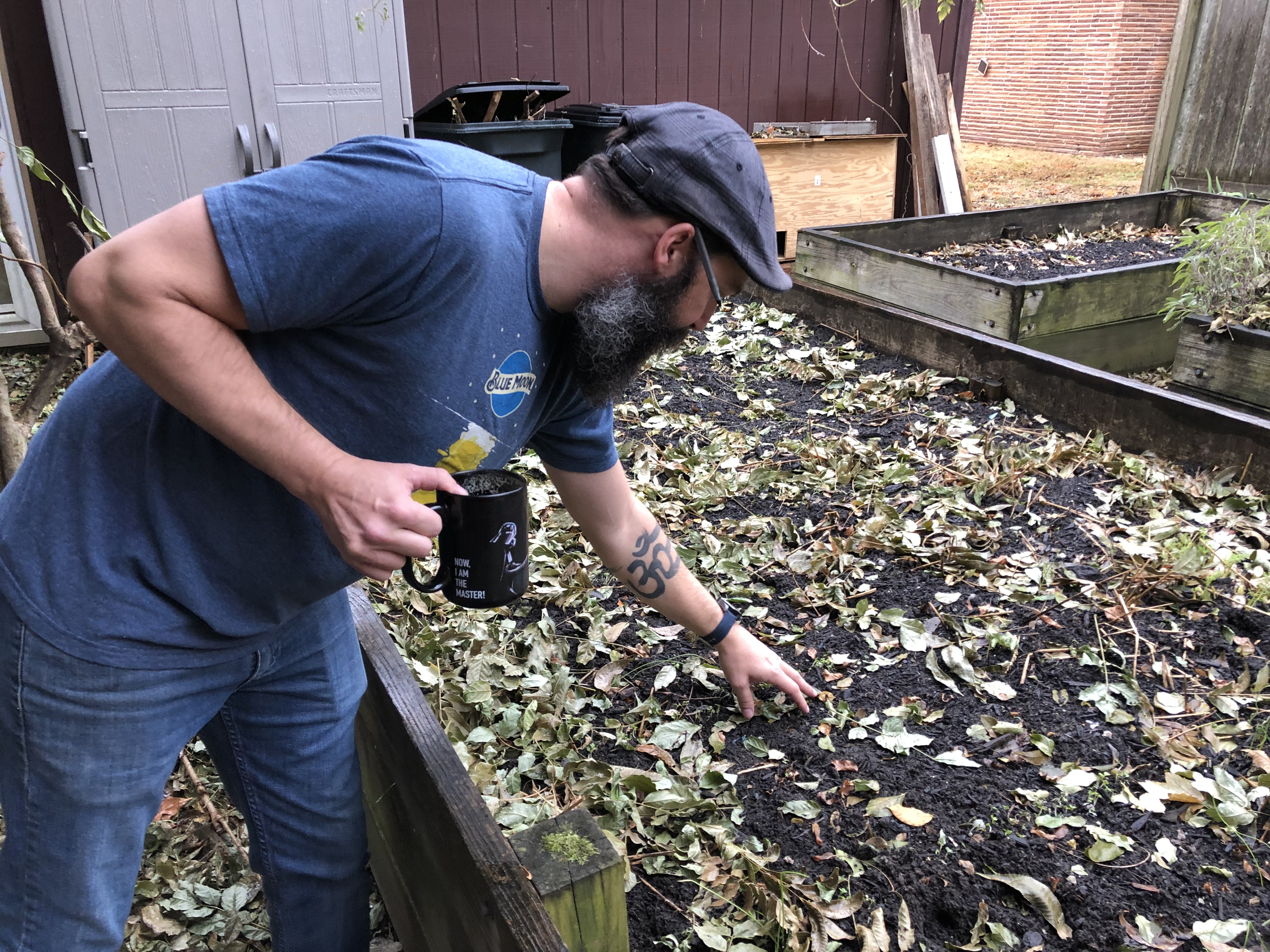
The Edge Coffee House owner Brian Nobles examines his shop’s gardens. Items grown in the gardens will be used for dishes at the Edge.

   The Recovery Room, in downtown Jonesboro, also boasts an atmosphere that is welcoming to people of all backgrounds. Since the Recovery Room is a small locally owned shop, employees do many different things to help out the shop. 

   Pat Warren, a woman of many trades at the shop (which includes making the pastries), said some customers first assume the Recovery Room is too fancy of an establishment for the everyday coffee drinker. But in reality, the shop opens its doors to anyone of any background.

   Warren describes the Recovery Room as a home for students and businessmen alike, and really anyone who enjoys a good cup of coffee or a great meal. 

   “Downtown Jonesboro has its own unique atmosphere,” Warren said. “You’ve got the old buildings. We get a lot of students that like to come in and study. We have the nice soft seating, the sofas and we have Wi-Fi. We’ll have students that come in first thing in the morning and maybe sit here most of the day and sit here and study while drinking coffee.”

   The culture and atmosphere represents one aspect of a local coffee shop, but the product has to be good too. A lot of local coffee shops also use locally roasted coffee;  the Edge is no exception. 

   “We use local, local as in Arkansas. We use an Arkansas based company out of Eureka Springs,” Nobles said. “They’re called Mountain Bird Coffee. They’re really great, nice people. They’re fair trade, they’ve got a great product and we’re proud to be able to use something from Arkansas.”

   The Recovery Room also fits the bill of a shop that uses local coffee. Warren said that just because coffee is locally roasted does not mean it automatically becomes good tasting coffee. The fact that locally roasted coffee can be great-which she said the Recovery Room’s coffee is excellent-truly makes the idea of locally roasted coffee so special. 

   Also based in Jonesboro, the Coffee Gallery prides its use of Westrock Coffee. The Coffee Gallery’s owner Nicole Townsend holds family ties to Westrock. Westrock’s owners use to own Alltel, which was based in Little Rock. Townsend’s dad worked for Alltel and a connection was born. 

   “We were really excited to partner with a local coffee roaster that also has ties with my family,” Townsend said. “We’ve known them since before I was born. We have a really close connection with the owners of Westrock. Their coffee is just wonderful. It’s roasted in west Little Rock. They bring it right up to us so everyone gets fresh roasted coffee.”

   While the main attraction of many local coffee shops might be the coffee itself, a lot of shops put a major emphasis on food. The quality food just adds another level to the overall offerings of a locally run coffee business. For the Edge, the food aspect came naturally. 

   “For my partner, my wife, that’s her realm,” Nobles said. “That’s her forte. That’s what she does and she does it really good. We want to ramp up the other areas of this restaurant that makes it more appealing to a broader audience. So we’ll have the coffee and we want to make the food something that makes it stand out by itself.”

   The Edge takes food to another level when it comes to the idea of local. The Edge boasts multiple gardens in the back, growing a wide array of foods including mushrooms and lettuce to use in dishes made in the kitchen. 

   The Edge also plans to put a bar in the upstairs section of the house. Nobles’ background comes from the restaurant and bar industry; adding a bar to the Edge just adds something else to attract a broader consumer spectrum.

    Mugs Cafe, a coffee shop based in the historic downtown area of North Little Rock known as Argenta, serves breakfast and lunch all day. Owner Michael Hickmon commented on just how important food is to Mugs. Hickmon said food stands as a way to differentiate coffee shops in the market and provide something else than just coffee. Mugs hosts an event every Saturday and only on Saturdays where customers can purchase all you can eat pancakes for $6. Most Saturdays, customers also find a special flavor of pancakes available like cinnamon roll pancakes or many others. 

   “We wanted something, especially on a Saturday, a special something that is unlimited,” Hickmon said. “(We wanted) something you can only get once a week and you can only get it here. It creates an excitement we feel like with customers.”

    The Recovery Room also puts an emphasis on food. 

   “We have an award winning chef,” Warren said. “At 5 p.m. we turn into fine dining. We have excellent food. It’s needed. We serve duck here. We have a great Sunday brunch here with crepes. You have to be skilled to call yourself a fine dining restaurant.”

   Involvement in the community represents another aspect that makes local shops stand out from national chains. 

   “We’re really involved in the community,” Townsend said. “For example, we have a Santa Claus coming to let the kids take free pictures. On top of that, we do a lot of donations. We donate to a lot of the charities, the marathons, the golf tournaments, the local schools, the football programs and everything like that.”

   Hickmon said just simply shopping local also supports the local community. 

   “In just kind of the movement of shopping local is (the fact) that you’re supporting your local community,” Hickmon said. “When you get a national chain, the coffee is not crafted locally. It’s crafted in some other state and shipped here. That was a big thing for us. From the actual coffee roasting side, we’re creating quite a few jobs here locally. There’s a huge difference between craft coffee and coffee you would get from a really large chain. We put a lot of tender, love, and care into all of our processes from coffee selection, from the bean selection to roasting it.”

   While many of the shops spoken to did not really see Starbucks or national chains as a major threat due to the different niches of a national grab-and-go chain compared to a local coffee house, many did acknowledge the power of advertising and reputation Starbucks boasts. Townsend said the Coffee Gallery makes coffee better than Starbucks, but the Coffee Gallery just cannot spend tons of money to make a commercial about its products. 

   Hickmon noted how Starbucks basically owns convenience in coffee, but how there are many other niches to be filled.

   “I wouldn’t call them a threat because they can’t compete with what we do as far as our relationships with customers,” Townsend said. “But, of course, whenever I drive by and see a big line around Starbucks, it makes me wonder why are they not trying us out.”

   Warren said people sometimes just do not realize what a local coffee shop has to offer. Starbucks boasts a worldwide reputation built over years and years, which makes people build habits of visiting chains. 

   “They don’t really try anything new,” Warren said. “But once people try our coffee and come in and catch our vibe here, they’re hooked.”

   While both local and national coffee shops have their advantages and disadvantages, Nobles said it’s all about the love when it comes to the local shop. 

   “I think with just like food and anything else that comes down to somebody hand making things with recipes and stuff like that, it comes down to love,” Nobles said. “You put a little love in it and you can taste all the difference.”

Editor’s Note: Photos by Krishnan Collins

Christmas trees bring holiday fire hazards

By Tristan Bennett
Delta Digital News Service

LONOKE – With the holiday season upon us, large fire hazards enter homes across America in the form of festive decorations.

The tradition of the Christmas tree dates back to the 16th century, and many still prefer a live tree over today’s artificial models. Truth is, both could be a hazard in homes. Jennifer Winchell, a Little Rock firefighter, experiences many fires each year due to holiday decorations.

She said, “Christmas tree fires are a huge issue because most people consider them to be safe and do not educate themselves about the dangers.”

Read on for some tips from the pros on how to stay safe this holiday season.

Hydrate your tree

   Live trees need near-constant watering. Patty Hibbs’ husband owns Schilling’s Family Christmas Tree Farm in Lonoke, and she works in their office. She said they work all year to ensure the freshness of each tree on the lot.

“It’s a year-round job. We have to water them, fertilize them; my husband has to sheer them three times a year,” Hibbs said.

After cutting the tree from its roots, the job becomes much harder. Hibbs said cutting causes the sap in trees to seal the trunk, making it more difficult to get water in.

Get your tree in water as soon as possible to keep it from sealing and drying out. The drier the branches become, the higher the chance of a fire. Most purchase tree stands that hold water to help with this, but the owner must remember to keep the stand filled with fresh water. Pets may also get into a tree’s water supply, so be sure to keep an eye on them.

Becky Smith and her family purchase a live tree each year from Schilling’s.

“We keep it watered. Sometimes I put Sprite in the water,” she said. “It gets dry by the end of the year, but we’ve never had any problems with it.”

The citric acid and sugar in Sprite may help preserve the tree longer, and it is not harmful to pets.

Be sure to dispose of the tree properly as soon as possible after the holidays.

Keep away from heat sources

The traditional picture of the Christmas tree next to a crackling fireplace may be the cause of many holiday fires. According to the National Fire Protection Association, one in four holiday fires occurs because of a heat source too close to a tree.

One stray ember could send the whole tree up in flames, so make sure to leave adequate room between any fire, including candles and the tree.

Hibbs recommends not placing your tree under a heating vent as well. Hot air dries out branches as it heats, making the chances of a fire increase.

Winchell said, “If you’re using a space heater, try to buy one with an automatic shut-off or tip over feature. Keep it at least three to four feet away from anything that could catch fire.”

She also said blowing out candles and unplugging lights when going to sleep or traveling helps to prevent overheating, which may cause fires.

Look for electrical hazards

The holidays often lead to crowded houses full of loved ones, but never crowd outlets. Circuits within those outlets only hold so much electricity, so plugging in one too many strings of lights may cause overheating in the wires. As the insulation on the wire melts, sparks may appear.

If the spark happens near a Christmas tree, whether live or artificial, it could ignite.

Winchell said, “It is very important to never overload a wall outlet or an outlet strip. Less is best!”

The NFPA recommends immediately replacing strings of lights with worn or broken cords or loose bulb connections and only connecting the number of strands recommended by the manufacturer of the lights.

Consider flocking

Flocking not only helps achieve the look of a snowy Christmas tree indoors, but it also protects against fires when done with the correct products.

Hibbs said, “It’s not like the spray can you get. It’s a commercial based flocking we use, and it does have a flame retardant in it.”

Schilling’s charges $9 per foot to flock a tree with their high-quality materials, but if someone wants to do it on their own, they should look for a product with a flame retardant included.

Be prepared

Christmas tree fires prove damaging nearly every time and sometimes even deadly. If something goes wrong, stay calm.

Winchell said, “If there is a fire, immediately remove anything you can (outside is best), and always have a charged fire extinguisher in reach.”

She also said look at batteries in remotes and light strings to check for corrosion.

The NFPA recommends regularly checking smoke detectors and sharing an escape plan with holiday guests. Ask guests who smoke to step outside and keep their materials on them and out of reach from children as well.

Note: Feature photo shows Schilling’s Family Christmas Tree Farm. The farm has been operated by the family for over 33 years. Photo by Tristan Bennett