Monthly Archives: December 2019

‘THE ROOST’ PROVIDES COMPETITION FOR CHAIN STORES

By Christine Miyawa
Delta Digital News Service

POCAHONTAS – Walking into The Roost, one may mistake the furnishings on sale as brand new. The touch of snow-white color exudes the ambiance of a rich country with a splash of Bohemian flavor.

The merchandise may look new, but most of the furnishings are from a different era. An era when quality and functionality trampled the mere aesthetic value. Quality quite elusive in most of today’s house furnishing. But don’t be mistaken, the store refurbished all the furnishings.

From a hobby to a full-time occupation, Kimberly Jo Chaffin started refurbishing and selling furnishings while still in college. She did it for five years while in business school. Chaffin taught herself from watching videos.  She began by painting her furniture.

“I had junk furniture and did not have a lot of money, so I painted it to make it look nice. I would disassemble the furniture and play around with the pieces to create a new pattern. It takes practice and patience,” she said.

It wasn’t until a year later when she could paint a profitable furnishing.

“I look back at the furniture I did when I started and say, ‘Geez, did I do that?’”

After attaining her degree from business school, she worked in the public school system for eight years. Chaffin said she felt she needed a more flexible schedule to cope with family demand.  She decided to revisit her old hobby, rented a booth in a store in Walnut Ridge and engrossed herself into refurbishing.

In 2016, she moved the business to Pocahontas. She opened her store in 2,200 sq. Feet building across the road from the Pocahontas Municipal Airport along Highway 67.

By the seventh month after the store opened, the business expanded so fast she needed more space. She moved the store to its current location in 7,000 sq. Feet building along Highway 62. She named the store “The Roost”.

Chaffin said the name ‘The Roost’ started with the coming to Pocahontas of Peco Foods Company a chicken processing plant.

She said Peco made a big difference in the economy of Randolph County and they wanted a throwback to Peco.

“I affiliate the name “Roost” with chicken and since our store theme is a farmhouse, we thought, why not use the name “The Roost,” she said.

Chaffin buys used furniture, mostly made of wood like hickory and White Oak. She refurbishes and re-sells them.

“All the furnishings in the store are mostly real wood,” she said.

Chaffin said most of her buyers like the looks of the items. The piece may remind them of their childhood. The store focuses on the farmhouse look, which most locals like. The store custom paints too.

She said to buy a dresser in a store chain, one would pay over $1,000. Whereas one can come to the Roost and find something trendy, midcentury look or farmhouse look for a fraction of that cost. Sometimes a third of the cost.

Recently, a refurbished hardwood dresser at The Roost went for the price of a new vanity dresser with a similar design at Bed Bath and Beyond, a chain store for furnishings and housewares.

“We are not a flea market. We are an upscale resale store. We base our prices on what we paid for the item,” Chaffin said.

In setting her price point, she factors in the cost of hiring someone to run the store while she moves around sourcing for items.

She sources furnishings from Texas, Illinois and upper western Arkansas. Sometimes people call them or send them messages on their Facebook page to pick up items for re-sale.

“A lady I sold to a piece of furniture two years ago and she wanted to re-sell it again, so I went, looked at it and saw it was still in good shape. Bought it and resold it a few days after,” she said.

Chaffin said her business extends to the states of Missouri, Tennessee and most parts of Arkansas. She markets her goods on Facebook and receives customers from as far as South Dakota.

“A customer was sending children to Williams Baptist College and arranged to have a two-sitter glider set shipped from The Roost to South Dakota,” she said

Myra Alexander, a frequent customer at The Roost, said she likes shopping there because the store sells authentic items.

“They are livable; they are comfortable with my grandkids. They have good stuff,” she said.

She said the store calls her when they bring in items she may like.

“I couldn’t find something for less than 1,500 at Hesner, so I called The Roost, told them what I wanted, and they went looking for it and called me. They are personable with me,” Alexander said.

She said her living room contains a modern section and she uses items from the Roost to blend her furnishings. Alexander said the art of painting furniture also inspires one to get creative and do something beautiful to their old furniture.

She said she likes shopping at places like Bed Bath and Beyond, but their products are too commercial looking, and they produce many pieces of the same thing.

“The Roost sells authentic and different items you won’t see anyone where else. If you see something at The Roost, you better get it because next time it won’t be there and it’s not like you can get the same kind at Walmart or Bed Bath and Beyond,” Alexander said.

Chef Donald Smith moved to Pocahontas from New Orleans six weeks ago to work as the new executive chef of Rolling Hills Country Club in Pocahontas.

Moving into a new town, Smith needed furnishings for his new house.  He first bumped into the Roost by chance as he walked across the road from a nearby supermarket.

“I’m the type of guy that likes antique stuff, so I don’t mind if it’s refurbished.  If it’s nice, I buy it and the price point at the Roost is good. Some of their prices are not expensive at all, but I didn’t find what I wanted,” Smith said.

Smith wanted a TV stand and not finding one at the Roost, he decided to look at Walmart. He said even though he did not find the TV stand at the Roost, he will go back there to look for other stuff.

Human resource manager at Walmart, Sherley Ringo said she knows there are other stores out there, but she is confident about the products Walmart offers.

“Walmart stocks a variety of items to meet higher demand,” Ringo said.

If spoilt for choice on a place to shop for furnishings, Smith said, “I prefer buying at the Roost because it’s local and the money stays within the community.  If I buy in stores like Walmart, the money won’t stay here in the community.”

Chaffin said the benefit of shopping at a re-sale, refurbished shop like The Roost can replicate looks at a fraction of the cost.

So far, two individuals approached her and asked if she would consider opening a branch of The Roost in Missouri. The second one offered to run the store three days a week if she would open a branch in Paragould. But Chaffin said the present store takes all her energy and leaves no time to spare nor desire to open branches.

She does not consider franchising either because she did not patent the name “The Roost.”

She said her goal is to give customers pleasant shopping experience. She wants to help them get what they want without looking through a bunch of junk to get it or spending so much money on a low-quality item at a chain store.

Chaffin said her main challenge is to keep the right attitude when running behind on a customized item. She said working with family member poses its kind of problem, especially when dealing with illness in the family. However, the store allows her flexibility to take care of her ill mother.

The popularity of her refurbished goods continues to drive up the cost of the materials she uses for refurbishing, which in turn, raises the price of the items. But the niche market for her kind of goods continues to snowball.

A-State African Students Association gives a hand to the homeless

By Christine Miyawa
Delta Digital News Service

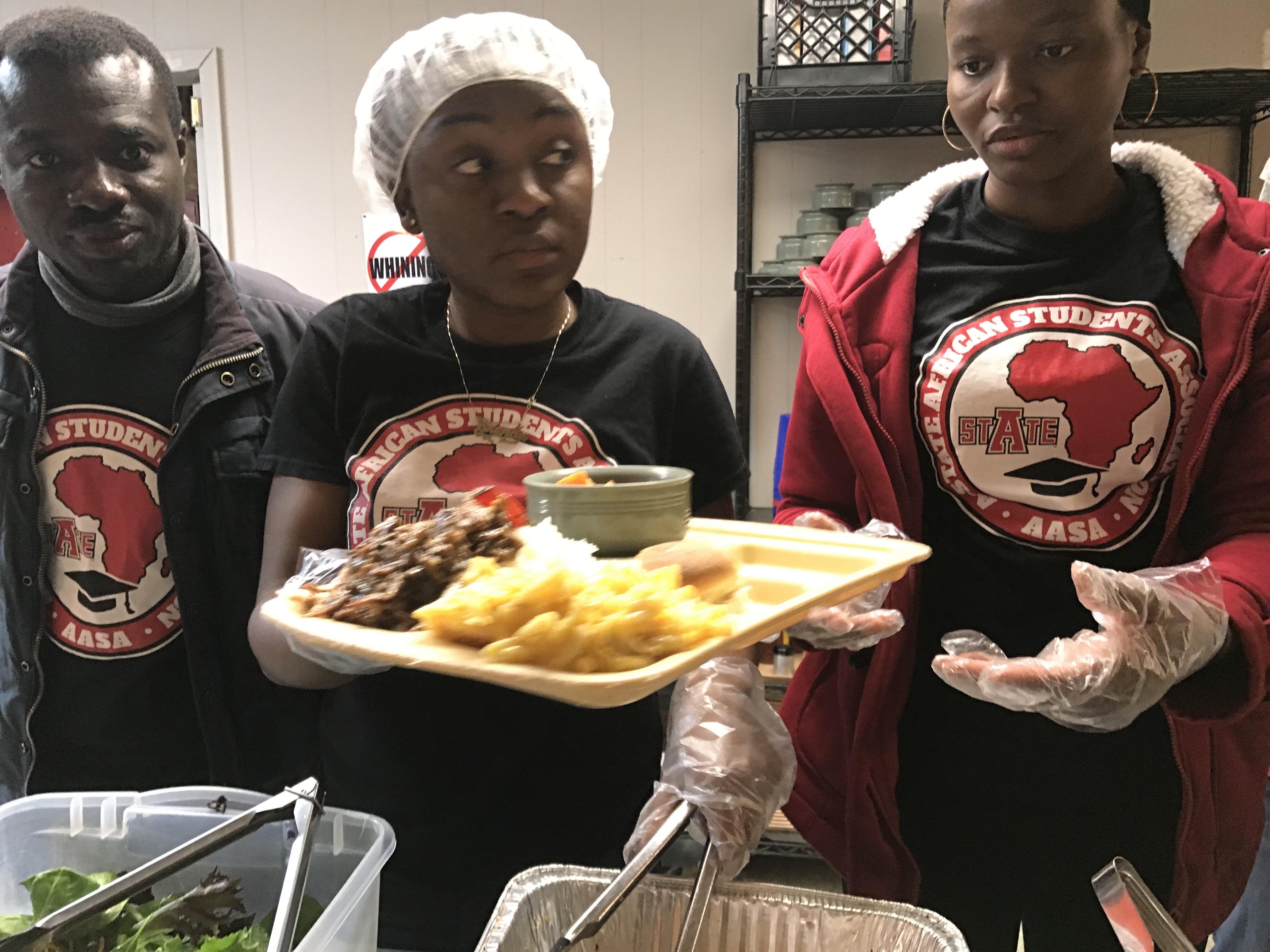
PARAGOULD – The A-State African Student Association visited the Mission Outreach of Northeast Arkansas, a homeless shelter based in Paragould, to donate consumables, which included; disinfectant wipes, detergent, tissue paper and paper towels.

In 2018, the first time when the AASA students visited the same shelter, they prepared African dishes and brought to feed the homeless people at the Shelter.

The outgoing president of AASA Samuel Noi said the purpose of the visit was part of AASA’s community outreach program.

“Coming here today is about giving back to society. It’s not only about being students but, being compassionate, fulfilling the needs of others who are less privileged. We called before coming and they told us what they needed and that’s what we brought,” Noi said.

About the Shelter. 

Cheri Peters, the executive director of MONEA, said the shelter is the largest homeless shelter in Northeast Arkansas. She said it holds 58 beds and houses men, women, children and families.

The shelter contains three family dorms. Currently, 11 children are at home.

Peters said helping homeless people get back on their feet is the purpose of the shelter.

They assist homeless people with employment, transportation and health insurance.

Management requires residents at the shelter who have jobs to save 75% of their earnings once they start working.  Teaching them how to save and budget so they can stand on their own once they leave the shelter.

Peters said the shelter offers benevolent services.

She said they have a food pantry open to the public and a soup kitchen that serves three meals every day.

People come from all over Arkansas for the shelter’s services.

Peters said Jonesboro has the Salvation Army which only has 14 beds. Because the shelter is located in the ‘boot heel’ of Missouri, they get a lot of people from the state of Missouri, too.

She said most of the people are referred; few are walk-ins.

“We have a website and get phone calls every day for placements. Many people who come to the shelter are experiencing drug addiction, meth and mental illness. We have a therapist here at the shelter and recommend that anyone who comes to the shelter receives counseling services,” Peters said.

She said those who come to the shelter seeking help could live at the shelter for up to two years.

“When someone is homeless, and all they have is clothes on their back, you can’t get them to be where they need to be in life in 90 days. They have to get a job, get a vehicle and decided to move out and those things take time,” Peters said.

She said if the residents at the shelter follow the rules and goals set, they can stay for up two years.

“We have repeated, but we don’t want to enable people,” Peters said.

The management carries out random alcohol and drug tests on residents.  Once someone has come and stayed at the shelter three times, they must pass a drug test to come back in.

The program doesn’t work for some people. They must be ready to change their lives for it to work.

Peters said 60% of their support comes from residents of Greene County in the form of donations and 40% is from grants.

“Providing paper towels for over 50 people gets very expensive. And so, we rely on donations like what the AASA students gave,” Peters said.

The majority of the volunteers lived at the shelter at some point. They want to come back to give back.

This year marks the sixth year since Peters’ started working at the shelter. She says it’s a blessing but a challenging job.

“It’s not a job you can leave at work when you go home. You take it home with you. When you see people struggling with addiction or mental illness and when you see children in need, it doesn’t leave your mind when you go home,” Peters said.

Peters comes from Mississippi. She worked for a hospice and nursing home before moving to work at the homeless shelter.

“I like working with people and helping people. It’s a rewarding job,” Peters said.

She said the mission outreach is 37 years old and she hopes that they can add more dorms to enable them to accommodate more people.

Peters said the shelter received a grant of $200,000 from the Arkansas Developmental Council to carry out renovations in the toilets, bathrooms and dormitories.

“Every day is a challenge when you work here. We are not just here for the people who live in the shelter, but we are for people on the street too. We have people walking in and say, ‘can you help me get on rehab.’ We have molested children and victims of domestic violence,” Peters said.

She said they take them to doctor’s appointments.

Peters said all the local churches in Greene County are so involved in helping the shelter. The majority come to serve and people will be coming to serve during Thanksgiving and Christmas.

“Some of our children here, this will be the best Christmas they ever have,” Peters said.

Peters said her dream is there would be so many mission outreaches out there because it works. She said if it didn’t, the shelter wouldn’t be here for 37 years. She wished there was an outreach like this in all the communities that needed it.

‘If there was an outreach like this in every community that needed it, we could solve this problem,” Peters said.

Meet Ashley Smith- A resident at the shelter.

Ashley Smith, one of the residents at the shelter, came from Kennett, Missouri. She lost custody of her children while in Missouri. Smith said the state of Missouri took the children when a neighbor called in to alert them of children left at home alone. Smith said she left the children at home without adult supervision whenever she went to work.

She said she initially moved to Missouri from Memphis to get away from people using drugs around her and to be somewhere no one knew her who would want to give her drugs.

Smith said she started experimenting with marijuana when she was 11 years old.  She said she was adopted, grew up in foster care and lost her foster mom when she was 20. She said she did not have anybody and turned to the streets to cope with the pain she was experiencing.

“I just wanted to fill an empty spot in my heart, so I started popping pills, doing cocaine and drinking and it just got awful and that’s how I ended up in Missouri,” Smith said.

She said while in Missouri, she did not have any support with the children. Smith has four children.

She said she was off drugs for a year while in Missouri before the state took her children, after which she relapsed.

“So, during summertime, I left my children at home as I go to work. I felt I would check on them. That’s how the state took them,” She said.

Smith said the father of two of her children is deceased, another’s father is not a part of her life and another’s father was convicted for sex trafficking and is serving 55 years in prison.

Smith said Peters and Jana Burnett, the resident case manager, went with her to her court date scheduled approximately three weeks at the time she arrived at the shelter. She said the two helped her get back custody of her children and they currently live with her in the dormitory at the shelter.

“I feel like the shelter has terrific people. They are not doing it just for doing it. If I didn’t come to this shelter, I would still be living in hotels mixing with the wrong people, drinking heavily and doing cocaine because it was within my reach, right in my fingertips,” Smith said. “I  was lost without my children. I become delusional. I just thought everyone was out to get me. I was crazy and paranoid. I was under depression. If you had met me then, you would say, ‘ is this girl crazy? What’s wrong with her?’ My mind was not right,” Smith said.

Smith said the shelter helped her find a good job. She said she thought of going to settle for a job at a fast-food restaurant like McDonald’s, but she works at the American Railcar Industries making $14 an hour. She said she is saving her money and plans to get a house for her and her children when she gets out of the program.

She said she stayed in a shelter before and did not get much help but, the shelter at Mission Outreach is in touch with what the residents are doing and try to lead them in the right way.

When she is not at her regular job working, she volunteers at the soup kitchen in the shelter.

Burnett said she does the intake of new arrivals. She assesses the need, set goals for them. If they need identification cards, birth certificates, or if they are disabled. She meets with the residents regularly and follows upon them to ensure they are doing what they need to be doing.

She said the shelter does not take people in a wheelchair because the accommodation has two flights of stairs and no ramp. She said they do not accept sex offenders either or violent felons because of the presence of the children and the safety of the children is their priority.

She said the soup kitchen is open three times a week and anybody can come in and eat. She said the shelter is part of Feed America and gets their food supply from Walmart and Kum and Go.

Cassie Grant’s Story

Cassie Grant, 32, of Marked Tree, Arkansas, also received help from the shelter. Following her release from a hospital admission in Jonesboro after a short illness, she went to the Salvation Army to find shelter. Because the shelter did not take her in, a man brought her to Mission Outreach. Grant was on the streets for a while before she went seeking help. She was doing drugs. Grant was 25 when she started using drugs.

She moved to New York, where she met a friend who influenced her into drinking and using drugs. For her, it was peer pressure. She got sick a lot and got tired. She said she used to “pin handle,” which is standing at a gas station and request to pump a customer’s gas for change. She would then spend the money on drugs.

“I just felt like the black sheep of the family. I didn’t care about life; I didn’t know which way to turn, so I turned to drink and using drugs. I felt like the family disowned me. I felt like nothing; I felt like I was all alone with no one to turn. I felt loved in the drinking and dragging, yet after I drunk, everything went wrong,” she said.

Grant said she grew up in the church.

“I’m a Christian. I want better things in life. So even deep after drinking, I got tired of doing it, it got old,” she said.

Grant said she looks at other families and other people not on drugs, dressed up and looking good and she said she wants. She said because they are dressed-up does not mean they have no problems, but when drinking and drugging everything goes wrong, nothing good comes of it.

She said some family members understood her and did not judge her while others laughed at her and disowned her. She said even when she tried to get help, it did not matter.

“The people who helped me prayed for me, spoke positive words, they gave me money and support,” Grant said.

She said she loves the Lord. And the Lord brought her through the darkest moments.

Grant said there are plenty of times she just wanted to give up in life. She said some people showed up and gave her hope. They told her, regardless of what she is doing in the streets, they were there for her if she wanted someone with whom to talk.

Grants say when she gets out of the program, she plans to get herself an apartment, come back to the shelter to volunteer. She wants to join a missionary church, go to Africa and other countries and volunteer, help feed the hungry and build churches. She said she wants to help people.

She said she doesn’t hold any grudges towards her family members. Now she knows she doesn’t have to prove a point to anybody; her heavenly father is her best friend.

Grant said she is in a place where she gets the needed help and has faith; she is going to do better. She said she would love her family from a distance.

Grant goes to True Life Church in Paragould. She was 7 years old when she got baptized at St. Johns Baptist Church in Marked Tree, Arkansas.

She said she is taking a day at a time. She plans to leave the shelter in a month.

She would like to advise people out there dealing with drug addiction not to give up.

“If you’re running from your problems, know there is someone out there who loves you and when you feel like you are alone, there is your heavenly father by your side. Stand on your own two feet as a woman and a man and take one day at a time. Keep faith, hope and believe and know that anything is possible if you keep your mind to it,” she said.

Joseph Cox’s story

It’s four years since Joseph Cox become homeless. He said he battles paranoia and schizophrenia’.

He thought people were out to get him.

He said he is tired of living in the street and would like to start a different life.

At the age of 3, Cox joined the foster care system and when he was 6 years old, he got adopted.  When he turned 17 years old, he wanted to visit his biological mother, but the court terminated his mother’s rights to see him. His adoptive parents took him to Searcy, where his mother worked at a restaurant. He stayed with his mother for three months until he turned 18 years old.

Cox said he found out that his family has relations with outlaws and gangsters and he did not want to be part of it and because of schizophrenia so, he left home and started hitchhiking to Texarkana, Texas, where he lived in the street.

His mother came for him in Texarkana and brought him and his adopted brother to their adopted dads’ home in Jonesboro.

He said at his adopted dad’s home, his other adopted brother and adopted dad did not like them, so he and his adopted brother moved to live in a friend’s house but his friend offered them an insulated doghouse to live in instead. At that point, they met a man who brought them to the Mission outreach.

He said he hopes the shelter will help him obtain documents like social security numbers to enable him to find work. He said someone pickpocketed him and stole his social security card.

He said the shelter promised to enroll him in medical insurance to enable him access treatment for Schizophrenia and Paranoia.

Cox said he found Jesus hitchhiking through the desert. He was so tired and almost passing out when he saw Jesus and said, “bring water my way,” two Hispanics appeared from nowhere with two bottles of water. He remembers when hitchhiking to Texarkana, he was tired and almost giving up when he picked a rubber band on the side of the road written “press on” and after just three miles someone came along and offered him a ride to Texarkana

Cox said no matter what someone is going through; God is always going to be by their side.

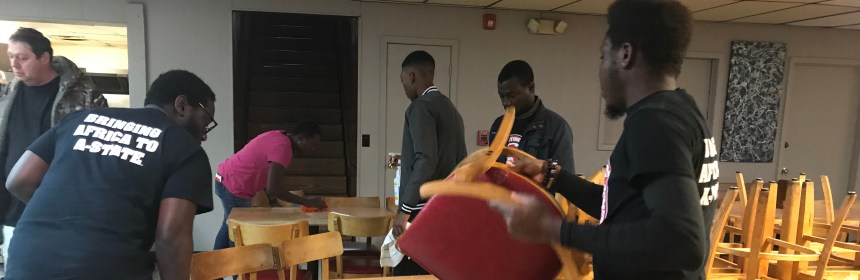
Victor Omowonuola, the incoming president of the association, joined other female members of the association in serving food. When dinner was over, the male members of the association cleaned up the cafeteria.

Peters and Burnett thank the AASA for their kind gesture.

Lawrence Yawson, the vice-president and events co-ordinator of AASA, said the shelter is welcoming and he looks forward to the association coming more often to Mission Outreach to help the homeless people.

Waste and Recycling – Recycling Systems

By Melissa A. Palumbo
Delta Digital News Service

CRAIGHEAD COUNTY – Arkansas recycles more than average thanks to extensive programs implemented to make recycling clean and easy.

Of about 254 million tons of solid waste generated in the United States every year, 34% gets recycled, according to the Environmental Protection Agency; on average, Arkansas recycles about 45% of waste produced.

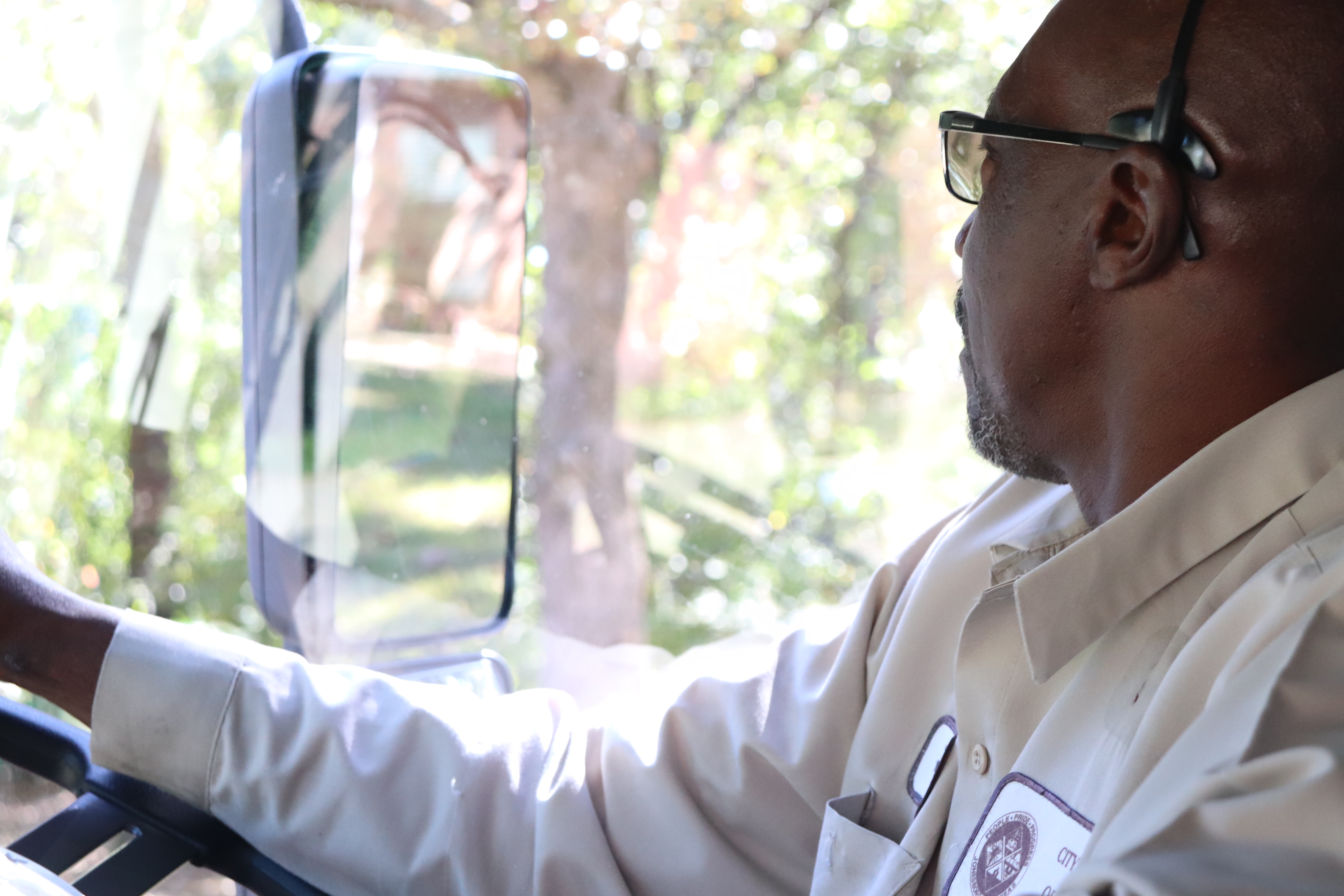
In many regions, third-party companies chiefly manage recycling. For Jonesboro, the Sanitation Department handles all curbside garbage and recycling, according to Cindy Schweitzer, supervisor of Jonesboro Sanitation. 

“We take garbage and recycling cans,” Schweitzer said. “Trash goes to Legacy Landfill to be buried that day, and recycling goes to Abilities Unlimited to be sorted.”

Both companies work directly with Jonesboro Sanitation — and other cities in the county — to ensure proper management of waste.

Any recycling brought to the Abilities Unlimited Recycling Center goes through a sorting process to separate different materials, which are then packaged for shipment.

Other companies can buy the raw recycled products to make new products while using less energy and producing less waste. 

Items that can be recycled include plastic bottles and containers, metals, cardboard and newspaper. Glass can not be placed in cans or dumpsters, but can be brought directly to the Abilities Unlimited Recycling Center. 

Legacy Landfill, the only landfill in Craighead County, also promotes recycling. Old or broken electronics are stripped of recyclable materials, and tires are collected for repurposing as well. 

Angela Sparks, deputy director for Legacy Landfill, said the landfill donates to Jonesboro and public schools for recycling services.

“We give about $2,000 dollars each month to local schools for recycling,” Sparks said.

Even with these efforts toward recycling, the Jonesboro Sanitation Department pays over $1 million in fees involving disposing of waste at the landfill. Schweitzer said if more people utilized recycling as a form of waste disposal, this amount “would be cut down remarkably.” 

Two years ago, the Jonesboro Sanitation Department switched from blue bag recycling to a can recycling system. The blue recycling cans get picked up on a schedule like grey garbage cans, usually every other week. 

The problem, Schweitzer said, lies with the separation of trash and recycling. While the department sees more participation from the curbside can pickup, apartment complexes face issues with residents treating the blue recycling dumpsters as garbage dumpsters. 

“It’s blue for a reason,” Schweitzer said. 

Superintendent of the Jonesboro Sanitation Department Donny Gibson said less people participated in recycling after the switch to cans. 

“It’s not up to what it used to be when we first started,” he said. When the city first started offering recycling services, about one-third of the Sanitation Department’s 30,000 customers recycled. “We’re at about 8,000 now,” Gibson said. 

Recycling not only reduces the amount of waste in the county landfill, but also cuts costs for individuals. Additional new curbside trash cans cost $75 – recycling cans cost $25.

Schweitzer said they require all trash to be inside the container for curbside pickup. “If there’s a house with a lot of loose trash,” she said, “we do suggest to them start recycling. Those bottles take up a lot of room, you don’t realize it until you don’t have them anymore.” 

Gibson encourages customers to recycle more. 

“In my household,” he said, “we bought a recycle container and my trash service has gone down by two-thirds.” 

Editor’s Note: Photos by Melissa Palumbo

Waste and Recycling – How Waste Works

By Melissa A. Palumbo
Delta Digital News Service

CRAIGHEAD COUNTY – An almost inevitable part of everyday life, garbage takes a long journey from a kitchen bin to a landfill.

Larger corporations hire independent sanitation companies to remove waste. For most people, whether it is put into a curbside trash bin or an apartment dumpster, waste gets taken away by the city sanitation department.

The sanitation department in Jonesboro services about 30,000 people, according to Cindy Schweitzer, supervisor of the Jonesboro Sanitation Department.

“We have seven to eight trucks that pick up residential and three smaller trucks for rear-door and disabled services,” Schweitzer said. They use different types of trucks for different needs. “We also have two rear-load, one front-load and one side-load truck for the apartment dumpsters,” she said.

The operators for the trucks drive different routes each day of the week, according to Jerry Murrell, operator one for Jonesboro Sanitation 

Once completing the garbage pickup routes throughout the city, the Jonesboro Sanitation Department takes all of the waste directly to Legacy Landfill. Their trucks sometimes make two-to-three trips to the landfill a day, Schweitzer said.

Arkansas is divided into 18 regional solid waste management districts, and waste generated in each district must be disposed of in that district, according to Angela Sparks, deputy director of Legacy Landfill in Craighead County. 

Districts vary in size, with some spanning as many as six counties. Craighead County, however, is a single-county district. Incorporated in 1985, most garbage in Craighead County goes to Legacy Landfill.

The landfill can’t take everything, though. Different types of permits allow for waste disposal; Legacy Landfill attained a class one permit, Sparks said. A class one landfill is the only class that is allowed to take residential trash, but it can also be used for disposal by businesses. 

The landfill in Craighead County won’t take any waste that is flammable, corrosive, ignitable or radioactive. Fire being a hazard for landfills, they can not accept any grass clippings, leaves or small tree limbs — those are brought to an incinerator at the Sanitation Department.

The landfill also won’t take large amounts of liquids to reduce leaching. 

Leaching results from waste disposal and, if it isn’t done properly, can cause damage to the environment. Toxicants and harmful liquids, like bleach or other chemicals, can seep into the ground and poison vital groundwater, as well as harm ecosystems.

Legacy Landfill’s system redirects any leaching into tanks outside of the landfill, which is then transported to a water treatment facility.

“We use PVC pipes at the bottom with gravel over the top to catch liquids that seep through,” Sparks said. 

Under the pipes, two feet of compacted clay and a thick layer of plastic further ensure protection.  

According to Sparks, the landfill is large enough to last “another 100 years,” but she said there’s a good chance we won’t need it for that long. 

“That’s assuming waste is disposed of the same way from now on as it is right now,” Sparks said. “Waste is not disposed of the same way now as it was 50 years ago, so there’s no reason to think that 50 years from now it’ll be the same. It’s going to change.”

With more green-conscious thinking and the emergence of the zero-waste lifestyle, people are trying to reduce the amount of waste that goes into landfills. 

An environmental concern about landfills is the production of methane, a greenhouse gas that can contribute to global warming. It comes from the decomposition of organic materials, like food scraps, when there is a lack of oxygen. 

Not only is methane a danger to the atmosphere, but it can be ignitible and explosive. Because the gas is colorless and odorless, this can be very dangerous and hard to detect. 

Legacy Landfill has implemented a gas collection system – a series of tubes that removes all the methane – to be flared off in what Sparks called “the eternal flame.” This reduces the risk of fire as well as cuts down on the landfill’s impact on the environment tremendously. 

Sparks said the landfill is working with the energy company Integrity to find a way to use the excess methane as a source of renewable energy. 

“Integrity did a survey on the area, and they think we’ll be able to use the gas as an energy project,”  Sparks said. “We’re hoping to get that up in the next couple of years.”

As one of about 2,000 operating landfills in America, Legacy Landfill is working toward reducing the harm waste does to the environment. 

Editor’s Note: Photos by Melissa Palumbo

Tuckerman organization takes students above and beyond

By Krishnan Collins
Delta Digital News Service

TUCKERMAN – Behind the guidance of an extremely hardworking and passionate woman, an organization brought Tuckerman schools’ report cards to an A grade and provides support for communities in the Delta. 

   Jan Paschal’s organization, Every Child is Ours, provides support for students in Tuckerman and also helps people in the community get the amount of food they need. 

Jan Paschal stands with Nelson Mandela. Paschal worked with leaders around the world like Mandela and President Bill Clinton to help students gain a better education worldwide.

   Paschal aims to help less fortunate students succeed in the classroom. Paschal said she believes every student can obtain an education; some students just do not have the same opportunities as others.

   “I think we have different expectations for poor children than we do for rich,” Paschal said. “I think that’s wrong on every level. I think rich and poor children can all succeed if they have equal footing. I think we as Americans need to look at education in that way.”

   Paschal worked with people like Bill Clinton and Nelson Mandela as she helped students gain an educational footing all around the world. Despite Paschal’s ability to reach different corners of the world, she moved back to Tuckerman and made an impact. 

   One of Paschal’s main points she emphasizes allows students to feel like they are loved and to feel like they are believed in. In Tuckerman, ECIO puts on multiple events for students of all ages to show they are loved and to let students get involved in the community. 

   Perhaps one of the most moving of those events is the bunny cake event. Students in fourth grade individually bake bunny shaped cakes after an important state mandated test every year. After they bake those cakes and decorate the cakes themselves, they write a letter to the person who has helped them the most in education. 

   “The letters are incredibile,” Paschal said. “Maybe you don’t even know that the grandma has come over and read to this child forever. We had one little boy who graduated and went to Lyon College. His grandmother helped him because his mom had a drug problem. He had to be outside under the steps. That’s where he was all the time, under the steps of his house. That little boy was an honor graduate of this school.”

   One annual event that truly represents what ECIO and Paschal are all about. Tuckerman High School principal Michael Holland noted many of the events ECIO puts on in Tuckerman, but he only called one the main event. 

   While a lot of schools may schedule a day off for Martin Luther King Jr. Day, Tuckerman schools do not schedule the holiday off. However, that day is seen as a day of service with ECIO as students prepare meals including soups, chili and sandwiches. Students deliver the meals to elderly residents in the community. 

   “When those kiddos, I drive the bus, those kids get off the bus and knock on the door,” Holland said. “Sometimes those kids will come back to the bus with a tear in their eye. I say ‘Hey is everything OK?’ and they say ‘Yes that was wonderful.’”

   Holland said the day of service stands as his favorite day of the school year and he is proud to be a part of the event. 

   Arkansas State University also participates in the day of service. Gina Hogue, an associate professor at A-State, said the impact of the day of service was so major on a student that the student told Hogue she still remembered her trip to Tuckerman and getting to work with Paschal from two years ago. 

   “I am so inspired by the work she’s doing and providing food and clothing and encouragement for students,” Hogue said. “When Jan walks into a classroom and introduces herself and looks in the eyes of every single student in the class, they know they’re special. She tells them that they’re special. She encourages them to become the very best student they can be.”

   With Paschal’s work in Tuckerman, an expectation of college or some form of higher education is placed on students. Paschal, of course, has a way to encourage that expectation. 

   ECIO brought A-State students to Tuckerman schools and had the students talk about what it was like to be in college. Athletes and student government members alike talked to Tuckerman students and Paschal pointed out the athletes did not talk about their ability on the field, they talked about what life was like in the classroom. 

   According to Paschal, the student government members from A-State received the same amount of love just as the athletes. Young Tuckerman students just wanted to know what it was like to be in college. 

   Hogue, a first-generation college student from the Delta herself, knew the importance of A-State students sharing their college experiences. 

   “I’m a first generation college student from Bay, Arkansas,” Hogue said. “My parents encouraged my sister and I to get a college education. But a lot of the students we grew up with, did not have that family support. They didn’t know they were really capable of going to college.” 

   After teaching and just being in the Delta, Hogue said she realized a lot of students had never thought of the idea of going to college. She called Pascal’s work of encouraging students to get a higher education “critical work.”

   Bringing multiple Tuckerman schools to an A rating took work from everyone in the community. Paschal noted ECIO worked like the glue of everything that was going on to increase students’ productivity. 

   “We have so many kids who have substance abuse problems,” Paschal said. “Not them but people in their homes. (We have) poverty and we don’t even have a grocery store here. What we’ve almost become is the glue. We’re what holds everybody together.”

   Holland acknowledged this glue effect and praised his own faculty and staff at Tuckerman High School. 

   “If a student is lacking in food at home and they have to come to school hungry, I just think it helps and works hand in hand,” Holland said referring to ECIO’s side. “If we can help provide them with food, it’s only going to help their learning.”

Holland talked about his faculty and staff next.

   “I really feel like it’s a one word answer: family,” Holland said about what makes his staff so successful. “I feel like this is the best overall staff I’ve had in place since I’ve been here.”

    Another aspect of Paschal’s work includes encouraging teamwork and kindness. With the help of Dillards at Tuckerman’s Middle School campus, Dillards built a boutique where students can buy clothes. The twist happens when students earn special currency that can be spent at the store by just being kind to one another and then informing the act of kindness to their teachers. Paschal said it is hard to open a door for yourself at the middle school because everyone is working so hard to be kind. 

   ECIO even provided McDonalds meals as a treat to every student in a class if everyone completed all the tasks given to them on a checklist in an event before Christmas break. This taught accountability and teamwork as students made sure everyone completed their tasks so they could receive a tasty treat. 

   From widening students’ worldviews by having them talk to students in overseas countries like Jordan, to encouraging high school students to help older people in the community by unloading food at the food pantry, it seems like Paschal never runs out of innovative ideas to transform a community. Her passion for education flows into the community and the people around her.

   “Children everywhere can learn if they have the right conditions and the right books and all the things that we try to give to ours,” Paschal said. “We need to make sure that in the USA every child is valued. I don’t care what that child’s problems are, what color their skin is or what their religion is. We should as Americans have the standard that every child matters. That’s the name of our organization, Every Child is Ours.” 

Editor’s Note: Feature photo courtesy of ECIO: Jan Paschal stands with the students after the annual Bunny Cake event. After the cakes are made, students write a letter to the person who helped them the most in their education.

Brooke Caraway to head to Miss Arkansas

By Maddison Smith
Delta Digital News Service

BLYTHEVILLE – Miss contestant competes in 17 prelims before winning a title. 

   Brooke Caraway is the winner of the Miss Lights of the Delta pageant. She received the Talent award and the Claudio Raffo “Dreamer Award.” 

   Brooke Caraway also won $6,700 of scholarship money and will be competing in the Miss Arkansas pageant June 13 through the 20 of 2020 in Little Rock, Arkansas. 

   Director of the Miss Lights of the Delta, Miss Northeast Arkansas and Miss River Delta Denise Holdaway said she wants someone that will proudly represent the lights and the Delta. 

   “What matters is that she is passionate about her platform and has an understanding of how they are representing the community,” Holdaway said. 

   “She nailed her interview and I thought her onstage talent was very creative,” judge Tiffany Hoskins said, “Her private interview went very well, and she was an overall great contestant.” 

   Caraway’s talent was a speed painting to a “Patriotic Melody.” 

   Caraway said this was the 17th prelim that she has competed in and she is excited to serve the Blytheville community.

  Caraway’s platform is foster care. “I’m looking forward to getting plugged into organizations throughout the state and see more foster kids find their home.” Caraway said. 

   Caraway will have her own lights display in the Lights of the Delta as well. 

   First runner up and other awards include: 

  • Katherine Beasley; First Runner Up, $500 scholarship prize and sponsorship into next year’s MLOD, MNA and MRD.
  • Apple Dennie; Second Runner UP, $200 scholarship prize
  • Apple Dennie; Evening Wear/Social Impact statement, $50 scholarship prize.
  • Katherine Beasley; Izzy Baughn Leadership Award, $100 scholarship prize. 

Editor’s Note: Feature photo courtesy of Susan Smith Photography