Tag Archives: history

A-State Museum more than just a museum
Story by DDNS Reporter Mia Young
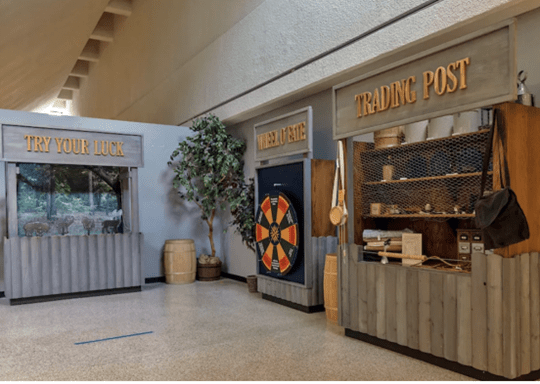
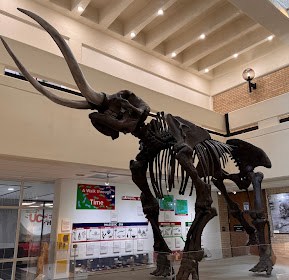
Photo courtesy of Arkansas State University.

JONESBORO, Ark. – The Arkansas State University Museum is not only a place where people can see parts of history, but also an educational resource for teachers, professors and students.

Many students spend four or more years at A-State without visiting the museum, missing a valuable interactive educational experience that could help them better understand what they learn in history classes. The museum focuses not only on Arkansas history, but also on preserving and showcasing the history of northeast Arkansas and the Delta region.

The museum serves as an informal learning environment, according to Elisabeth Engel, director of the A-State Museum.

“You don’t have to be here. It’s not like class,” Engel said. “So, you know, we value the people that come through because they’ve made an effort to come see us. We hope that they walk away feeling like that effort to brave campus, find a parking spot, and all of those kinds of things, in our particular environment, was well worth it.”

Students, faculty, staff and Jonesboro residents can visit the museum on their own or book a tour with Jill Kary, curator of education at the museum. For teachers and professors, the experience can be especially valuable.

Lillie Fears, professor and interim director in the School of Media and Journalism, brings her classes to the museum every semester to help students understand historical events in ways a textbook cannot.

“My favorite part about taking students to the museum is seeing their reactions when they see something old that we’ve talked about in class, or that is mentioned in our book or in a documentary. These types of experiences can allow them to step out of present-mindedness and to realize how the tools and technology they use in modern times evolved at different eras in U.S. and world history,” Fears said.

Many groups, Engel said, visit the museum with a specific purpose. For some groups, Engel pulls artifacts from storage and creates a “mini exhibit” tailored to their interests.

Fears prefers tours focused on communication history and artifacts, so Engel often brings out old newspapers, cameras and photographs for her students.

“I really appreciate how the director, Elisabeth Engel, is always willing to bring out old artifacts that pertain to mass communications and provide us with special lectures on the history of these media tools. A textbook or video could never do what she and Jill Kary, education coordinator, do for my classes,”

For some students, a focused tour helps them better understand what they have been learning in class.

“It made a lot of the concepts feel more real. In class, we talk about the history of media, but actually seeing the artifacts and examples in person helped me connect everything more clearly, especially how media has evolved and impacted society,” Kaysen Lomax, a junior creative media production major from Jonesboro, said.

For other students, seeing everything the museum offers gives them a perspective they otherwise might not have considered.

“Yes, I did thoroughly enjoy the tour Dr. Fears took us on. Seeing how passionate Jill Kary was about the black business district was inspirational. I enjoyed looking at all the old pictures of old businesses and equipment/technology, and find it crazy to see how much those things have changed,” Alexander Riggs, a junior creative media major from Forrest City, Arkansas, said.

While the museum serves as a tool for professors on campus, teachers in surrounding school districts also can use it as a resource.
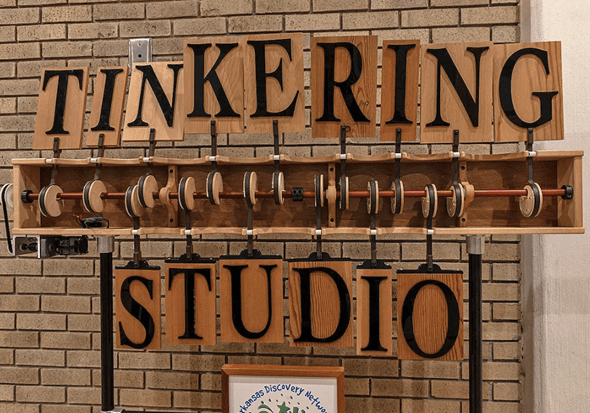
Photo courtesy of Arkansas State University.

Traveling suitcase exhibits are smaller exhibits teachers can check out for two weeks at a time. They offer hands-on materials, visual aids and lesson plans for each exhibit. Teachers can choose from five options, including Pioneer Living, Portals of the Soul: Native American Culture, World War II on the Arkansas Homefront and more.

“All of them are linked to the educational standards that are dictated by the state,” Kary said.

Visitors can also explore the tinkering studio to test whether they have the same innovation skills as people on the Arkansas frontier.

“If the kids have been paying attention, in every gallery they’re seeing innovation happen,” Kary said. “So they are told to invent things, make something, and if it doesn’t work, tweak it, fix it.”

Learning does not just happen in the classroom; it can happen in many places, including the museum. And learning is not just for students. Anyone who visits the museum is welcome, whether for a specific purpose or simply for fun.

-30-

West Memphis Three attorneys participate in panel discussion

DDNS Story by Jerry Don Burton

(From left) Jeff Rosenzweig and Paul Ford listen as Dan Stidham speaks during the West Memphis Three panel discussion. All three men were attorneys involved in the defense of the West Memphis Three and were invited by the Arkansas State University Sociology and Criminology Association to attend the panel. Photo by Jerry Don Burton.

JONESBORO – Attorneys who defended three freed men convicted as teenagers, known as the West Memphis Three, spoke in a panel discussion at Arkansas State University to share insight, advice, and theories regarding the case.

The highly publicized and controversial case originated from the murders of three boys in West Memphis, Arkansas, in 1993. Damien Echols, Jessie Miskelley Jr., and Jason Baldwin were convicted of the murders, despite questionable evidence.

The A-State Sociology and Criminology Association (SCA) hosted the public panel on Thursday, Nov. 6, in the Reng Student Union Auditorium.

Stacy Dewald, faculty co-adviser for the SCA, said she wanted the event to bring attention that the criminal justice system is flawed, show wrongful convictions exist and offer new perspectives for those who still think the West Memphis Three are guilty. She said she believes the panel discussion achieved this goal.

The three attorneys who participated in the panel, Jeff Rosenzweig, Paul Ford, and Dan Stidham, began the discussion by detailing their connection to the case. Rosenzweig was on the team responsible for releasing the West Memphis Three in 2011, Ford was on the original defense team for Baldwin, and Stidham represented Miskelley as an attorney.
Ford said this case highlights the power of confirmation bias.

“Once you have this notion, all new information is going to be sorted to reaffirm whatever that notion is. If your first notion is ‘they’re guilty,’ you’re going to hold on to that,” Ford said. “So when you meet people who are less than 40 years of age and their first involvement in this proceeding was to watch the HBO documentaries, they can’t believe they were convicted. Because that was the first story that they heard, but that was not the first story that people heard in 1993.”

Ford said the citizens of West Memphis needed somebody to blame so they could feel their community was safe.
The existence of multiple potential suspects other than the West Memphis Three contributes to the controversial nature of the case and is the topic of many ongoing debates.

The three panelists said they are confident the West Memphis Three are innocent and have their own theories as to who committed the murders.

Rosenzweig said one valid suspect is “Mr.Bojangles,” referring to a bleeding man who was seen entering the nearby Bojangles restaurant about two hours after the boys were reported missing. Witnesses said the man was mentally disoriented and entered the women’s restroom. The next day, police took blood samples from the restroom that were later lost.

Ford said he has always been suspicious of Chris Morgan, a teenager who unexpectedly traveled to California with Brian Holland, another teenager, four days after the bodies were found. During questioning, Morgan said he had a history of drug and alcohol use and experienced blackouts and memory lapses. He said he might have killed the victims, but recanted this statement. This recanted statement was debated in the trial, but was found inadmissible as evidence.

Stidham said he has a suspect, a serial killer, whom he can place in the vicinity of the murders. He said he will explore the lead further and hopefully have more information to present before he retires.

Prevalent media coverage represents another element that generated controversy for the case.

Ford said national attention in the case, specifically from the media, was a double-edged sword.

“To have a CNN truck pull up outside of the courthouse in Corning, Arkansas, that’s like finding Bigfoot,” Ford said. “It was a big deal. Everywhere you went, there were reporters, cameras, people wanting interviews, producers from talk shows.”

Ford said if he could do anything differently in the trial, he would trust the media less. However, without a relationship with the media, he said, there would never have been a documentary and the West Memphis Three would still be in prison.

Dewald said the 1996 HBO documentary, “Paradise Lost: The Child Murders at Robin Hood Hills,” saved Echol’s life. Echols was the only teenager sentenced to death in the trial.

The case is also associated with the Satanic panic, due to the prosecution’s assertion that the children were murdered as part of a Satanic ritual. The Satanic panic was a social panic that began in the 1980s and continued throughout the late 1990s, involving widespread cases and accusations of Satanic ritual abuse.

Rosenzweig said some still believe the West Memphis Three are guilty for a number of reasons, ranging from having personal connections to being ill-informed.

“You’re never going to convince everyone, no matter what,” Rosenzweig said. “You just have to move on and go to the next person.”

Stidham said the use of the Alford Plea in the case is a common source of confusion that many people struggle to understand.

In 2011, the West Memphis Three entered an Alford Plea, meaning they pleaded guilty while maintaining their innocence. Judge David Laser accepted the plea, which simultaneously freed the men after serving 18 years in prison and put the case to rest.

Rosenzweig said he agrees with Stidham that the Alford Plea is a confusing part of the case and is controversial in its own right. Rosenzweig said if the state really thought the West Memphis Three killed the boys, they would still be in prison.

Ford said if the prosecution felt the teenagers actually killed the three eight-year-old boys, they should feel ashamed for letting them go free.

“Why would you ever agree to let people you think killed eight-year-olds walk free?” Ford said. “That, to me, is the greatest evidence that they really didn’t believe it.”

Scott Ellington, the prosecuting attorney at the time, said he recognized the compromise was not ideal. Still, he said, it gave the state the guilty plea it wanted and the defendants the ability to continue asserting their innocence.

“It certainly was not a perfect resolution to the case for the state, but it was much better than having three trials, trying to convince 36 jurors of the defendants’ guilt using old evidence, failed memories, changed minds, dead witnesses and the parents of two of the victims who now say they believe the defendants are innocent of the crimes,” Ellington said in a 2011 article from the Thomas Jefferson School of Law.

Rosenzweig said procedural mechanisms, which are rules designed to secure a fair and consistent application of due process, have not improved in Arkansas since the original West Memphis Three trial. He said forensic advancements make scientific evidence much more precise, but misunderstandings still persist and proliferate on social media.

Stidham said documenting is important, and interrogations should be recorded in their entirety. Ford said what he found egregious about the case was that adolescents were questioned by law enforcement without a parent present or knowledge.

The discussion ended after the panelists advised the audience on what to do if they are ever falsely accused of a crime. Stidham and Ford said to stay quiet and get a good lawyer, and Rosenzweig said to recognize that the exoneration process takes time.

Dewald, who is also an assistant professor of criminology, said planning for the event began in August, when A-State students Lesleigh Sullivan and Anna Hartley expressed an interest in the West Memphis Three for their honors project.
Dewald said she feels a connection to the West Memphis Three because she grew up around the same time and shared similar interests in music and books.

“I kind of felt connected to them, but what was different is they grew up in the South, I grew up in the North,” Dewald said. “So it wasn’t so frowned upon in the North to like Metallica and Stephen King.”

The assistant professor of criminology said the case remains nationally relevant because DNA evidence remains to be tested and many questions remain unanswered. She said community interest endures because many people feel a local connection to the case.

Stidham said interest in the case will persist for many years.

“People are going to be talking about this case in 300 years, like we talked about the Salem witch trials,” Stidham said. “It’s essentially the same thing.”

Dewald said she didn’t think the panel would draw as many attendees as it did. Nevertheless, she said she appreciates the interest and hopes the event raises awareness and helps dispel some myths surrounding the West Memphis Three and the criminal justice system.

On Aug. 1, 2025, new DNA testing for evidence from the original crime scene was ordered by Crittenden County Circuit Court Judge Tonya Alexander. At the time of writing, however, no other updates have been announced.


-30-

A-State to Host Civil Rights Trail Photography Exhibit

Story by DDNS Reporter Jerry Don Burton

JONESBORO – KASU is welcoming photographer Art Meripol to Arkansas State University with a reception and “art talk” for his photo exhibit, “We Shall Overcome.”

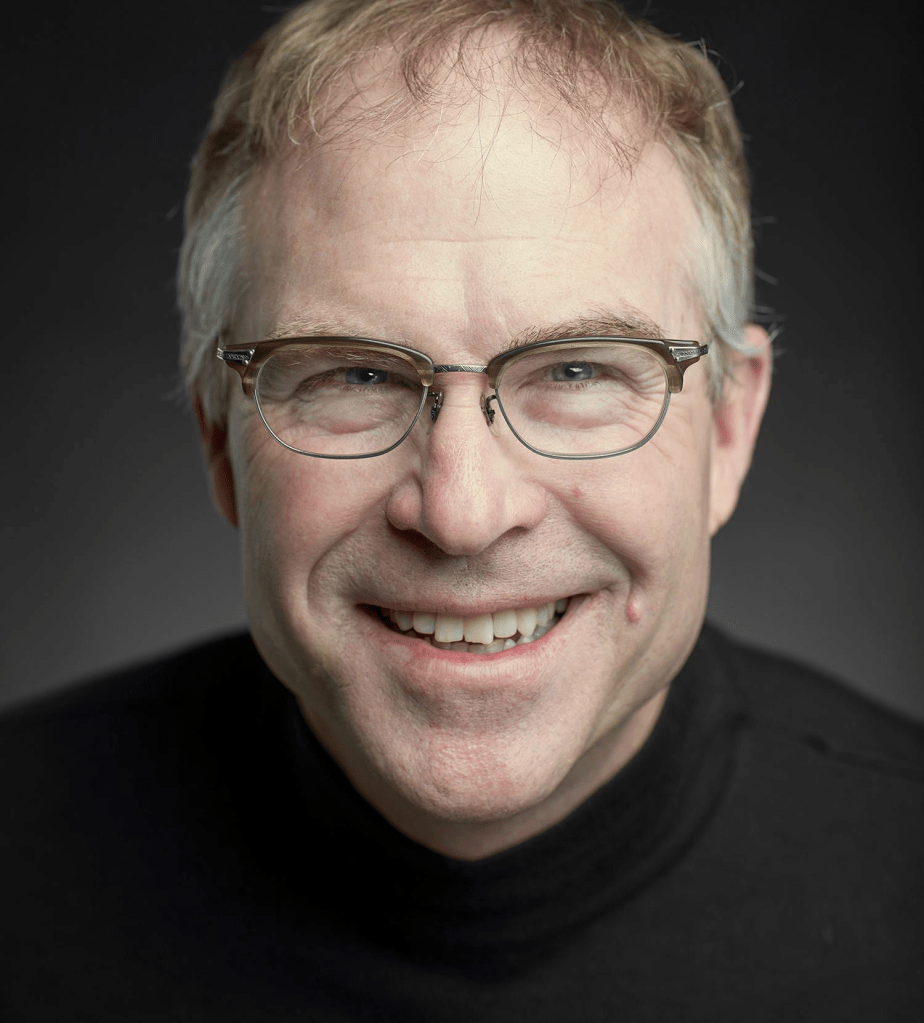
Headshot photo of Art Meripol. Photo courtesy of Art Meripol


The reception, hosted by KASU, will be held from 5:30 p.m. to 7:30 p.m., Oct. 29, in the Humanities and Social Sciences building atrium.

The photo exhibit, also located in the humanities building and presented by KASU, comprises 25 photographs of various landmarks along the Civil Rights Trail. The exhibit opened to the public June 13. Meripol said his Civil Rights Trail photography is some of his most rewarding work.

“I’ve had a 50-year career and I’m more proud of this work than probably anything I’ve done in those 50 years, and I wanted to share it,” Meripol said.

LaDawn Lee Fuhr, KASU corporate relations specialist, said Meripol’s background in journalism, passion for history and skill in photography will be of interest to a wide range of people at the “art talk” and reception.

“We feel like bringing this history and this art together is great for the overall community,” Fuhr said. “We’re hoping that people will come out and see it and meet Art, talk to him, and understand his process.”

Audio story by DDNS Reporter Jerry Don Burton
Mosaic Templars Cultural Center. Meripol said he woke up at 4:30 a.m. to capture the center in pre-dawn light. Photo courtesy of Art Meripol.


Fuhr was a major force in bringing Meripol’s photography to A-State. She said the concept of the exhibit and reception blossomed from a conversation between her and Meripol.

After not having seen each other for decades, Fuhr and Meripol reconnected at the Old State House Museum in Little Rock on July 12, 2024. Fuhr said she was impressed by his photography work on “The Official United States Civil Rights Trail: What Happened Here Changed the World,” a book published in 2021 by Alabama tourism director Lee Sentell, and wanted to create an exhibit of his Civil Rights Trail photographs.

Meripol said he knew the project would be worthwhile, but was initially daunted by the work, time and logistics it would take to complete such an exhibit.

“Once I got started, I got pretty excited about the possibilities to go through all the work I did on the U.S. Civil Rights Trail and narrow it down,” Meripol said. “I think that was what intimidated me more than anything was trying to pick 20 or 25 pictures out of all that.”

A majority of the photos featured in the exhibit were taken in 2017, when Meripol said he traveled to 10 states in 12 days to expand coverage of the Civil Rights Trail. Starting in Alabama, where he is based currently, Meripol covered sites in Louisiana, Mississippi, Arkansas, Kansas, Washington, D.C., Virginia, North Carolina, South Carolina, Georgia and Tennessee.

Landmarks photographed in the exhibit include Little Rock Central High School, Mosaic Templars Cultural Center, Edmund Pettus Bridge, Medgar Evers’ home, and Martin Luther King Jr. Memorial.

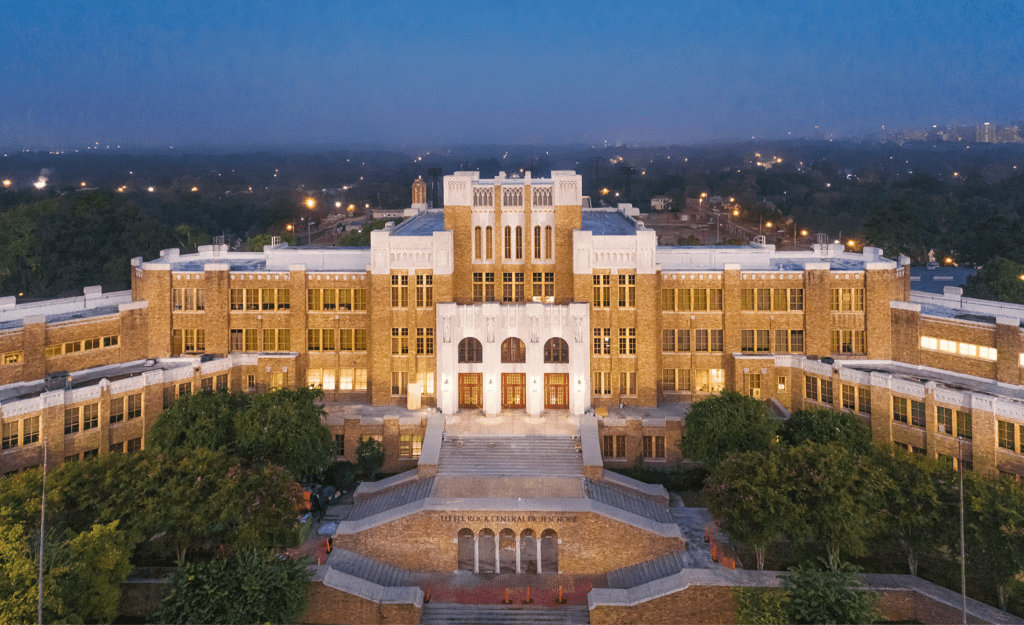
Little Rock Central High School. In 1957, nine teens known as the “Little Rock Nine” were the first African American students to enter the school following the 1954 Brown v. Board of Education Supreme Court ruling that made segregated schools illegal. Photo courtesy of Art Meripol.

Meripol said some of his favorite career experiences came from his work photographing the Civil Rights Trail.

Meripol said one such experience was his visit to Medgar Evers’ home. Evers, a civil rights activist and the first NAACP field secretary in Mississippi, was assassinated in the driveway of his home in 1963.

Prior to his arrival, Meripol said the caretaker of the home did not know he was coming to take photos. He said she was suspicious at first, but they ended up having a wonderful time together.

“We ended up sitting at the kitchen table at Medgar Evers’ home with her, and she was telling stories of when she was in high school and how they all adored Medgar Evers,” Meripol said. “Just seeing her face as her mind went back to that time and her memories was just magic.”

Evers’ home was designated a National Historic Landmark in 2017.

Medgar Evers’ home. Evers was dedicated to ending racial segregation at the University of Mississippi, enforcing voting rights and expanding opportunities for African Americans prior to his assassination in 1963. Photo courtesy of Art Meripol.

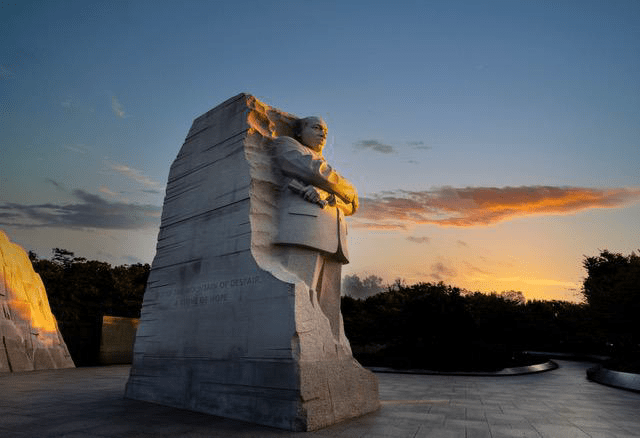
Meripol said another particularly memorable experience was his time in Washington photographing the Martin Luther King Jr. and Lincoln memorials.

Due to flight delays caused by storms, Meripol didn’t arrive in Washington until midnight. He took an Uber at 4 a.m. to the memorial to capture it before sunrise. He said he could not have asked for better lighting and was so inspired in fact, he decided to walk to the nearby Lincoln Memorial.

Martin Luther King Jr. Memorial, located in Washington, D.C. Photo courtesy of Art Meripol.

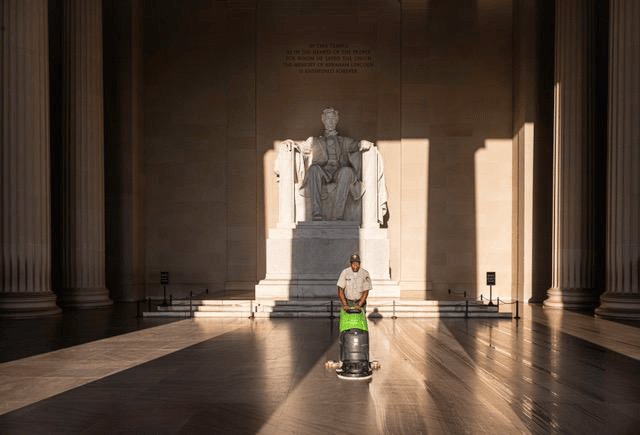
The Lincoln Memorial is typically a high-traffic tourist attraction, making it hard to photograph. But, due to the storms, Meripol said the memorial was empty, save for one employee.

“A U.S. government employee, an older Black man, was polishing the floors in front of Abraham Lincoln with the morning lights streaming through the columns and lighting him up,” Meripol said. “And I shot maybe one of my single favorite pictures of my life.”

Lincoln Memorial. Photo courtesy of Art Meripol.

Meripol said he hopes his work inspires viewers to visit the historic landmarks in his photos.

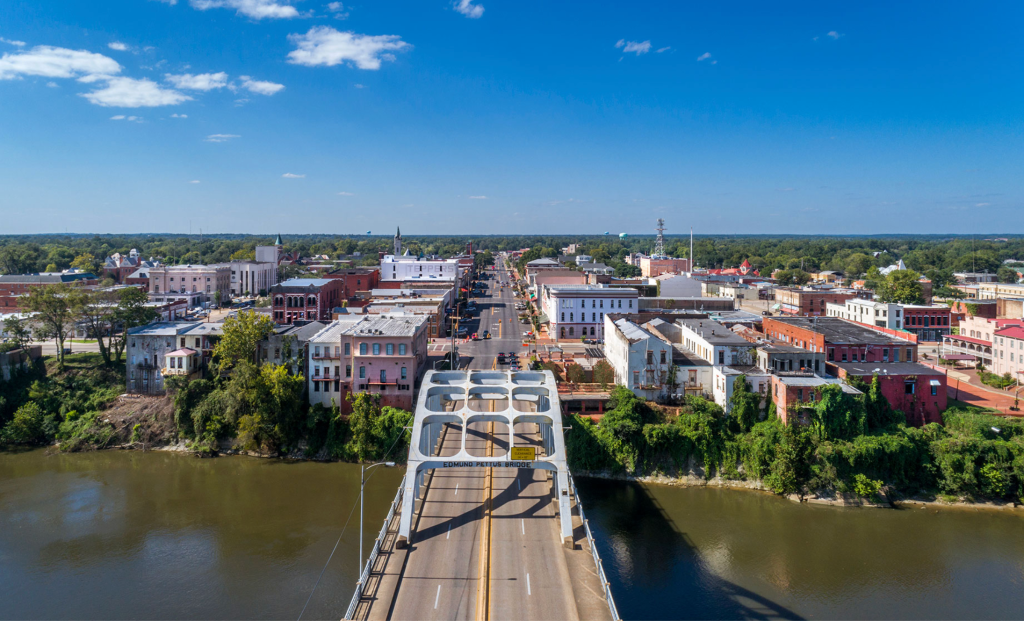
“I have a picture of the Edmund Pettus Bridge where the Bloody Sunday marches happened for voting rights,” Meripol said. “I hope they see that picture and want to go experience the bridge themselves. If they do, they’ll walk over the bridge as the marchers did back in the early sixties.”

Edmund Pettus Bridge, located in Selma, Alabama. The bridge was the site of Bloody Sunday, a conflict on March 7, 1965, when police attacked civil rights demonstrators as they were marching to the state capital. Photo courtesy of Art Meripol.

Fuhr said Meripol’s photography is important for preserving and highlighting the history of the United States.

“It’s a trite statement, but it’s true. If we don’t know our history, we’re doomed to repeat it,” Fuhr said. “I think any of us have a connection to the history that made this country. I feel it’s important to be seen in such a beautiful way. Because there was such pain, but it’s presented in such an appealing, beautiful way that people can appreciate.”

Meripol said the United States has always acknowledged its failures, but the current political climate is leading to the burial of some history.

“When we start hiding those failures, then you don’t know what needs to be paid attention to,” Meripol said.

In March, President Donald Trump signed an executive order targeting funding for programs that “degrade shared American values, divide Americans based on race, or promote programs or ideologies inconsistent with federal law and policy.” A few months later, in August, the Wall Street Journal reported that the White House ordered a review of exhibits at the Smithsonian Museum to align with Trump’s interpretation of American history.

Civil rights leaders, advocates and historians have criticized these moves as singling out content on slavery and civil rights in an effort to minimize the contributions of Black Americans.

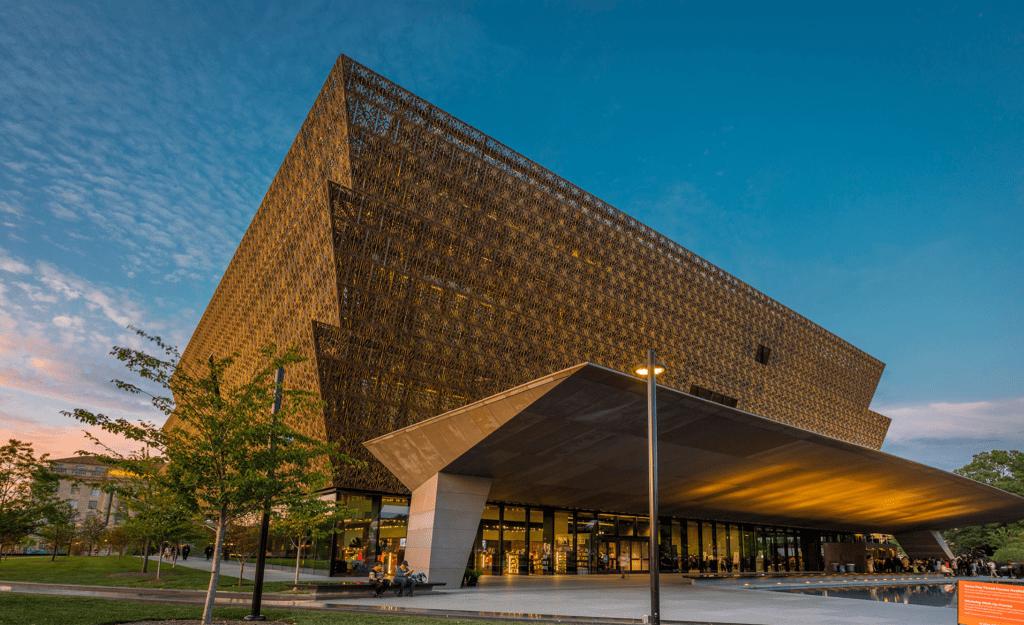
National Museum of African American History. Photo Courtesy of Art Meripol.

“There is an effort to try to hide those things, hiding Black history, which is American history. It hurts to see it happen,” Meripol said. “I’m hoping this exhibit will keep people discussing these things and finding ways to move forward.”

Fuhr said KASU’s involvement in creating the exhibit and reception aligns with the non-commercial public radio station’s mission to be a resource for the community.

“This is the kind of thing that public radio does that others don’t really do, which is to go deeper in the world and be able to bring this to the community.”

Mark Smith, KASU station manager, said the radio station is excited to bring Meripol’s photographs to the community. He said viewers will be immersed in the rich history and the craftsmanship on display.

Fuhr said bringing the exhibit to A-State was a joint effort between many individuals, both within and outside of A-State.

The event is sponsored by the A-State Office of the Provost, A-State College of Liberal Arts and Communication, Mosaic Templars Cultural Center and Arisa Health.

Kendall Moody, interior/exterior team leader for facilities management project services at A-State, was responsible for much of the physical preparation regarding the exhibit. Fuhr said his contributions were integral in ensuring the photos were placed properly without damaging the walls and columns of the humanities building.

Fuhr said the exhibit is planned to stay up until early 2026, but is interested in presenting the photos at other venues as a traveling exhibit.

“Each time I look at a photograph, I get a different sense of it, and so I want it up long enough for people to really appreciate it and really feel it,” Fuhr said.

More information on Meripol and KASU can be found at https://artmeripol.com/ and https://www.kasu.org/, respectively.

New I-55 Bridge Named after Local Legends

Information from the Tennessee Department of Transportation

MEMPHIS, TENNESSEE—In a powerful celebration of culture and history, the Tennessee Department of Transportation (TDOT) and the Arkansas Department of Transportation (ARDOT) proudly announce that the new iconic Interstate 55 (I-55) bridge spanning the Mississippi River between Memphis, Tennessee, and West Memphis, Arkansas, will now be known as Kings’ Crossing.

This new name, officially adopted by the Tennessee General Assembly and the Arkansas Highway Commission, honors three transformative figures known as “Kings”: Dr. Martin Luther King, Jr.; B.B. King; and Elvis Presley.

“Kings’ Crossing is more than just a piece of infrastructure; it is a symbol of our collective history, heritage, and the enduring spirit of unity that defines this region,” said TDOT Commissioner Will Reid. “Naming this bridge in honor of these gentlemen pays tribute to their extraordinary legacies – individuals who transcended barriers, fostered cultural exchange, and used their talents to build bridges between people.”

“It’s only fitting to name this vital crossing after three historic figures from this region,” said ARDOT Director Jared Wiley. “We’re grateful for the partnership and collaboration with TDOT on this project. It truly is the result of a regional effort that will benefit industry across this national corridor and the thousands of individuals who depend on this connection each day.”

In July 2024, the U.S. Department of Transportation awarded a landmark federal investment in Tennessee and Arkansas of nearly $400 million toward half the cost of replacing the I-55 Bridge over the Mississippi River. In addition to the nearly $400 million from the Rebuilding American Infrastructure with Sustainability and Equity (RAISE) program, TDOT, utilizing a state general fund allocation provided through the Transportation Modernization Act, and the Arkansas Department of Transportation (ARDOT) have each committed up to $200 million, demonstrating a collaborative effort to fund this bridge replacement. This marks the single-largest transportation investment in Tennessee and Arkansas’ state history.

The I-55 Bridge, a vital link for national commerce, is set to undergo a comprehensive overhaul to add capacity, improve safety standards, ensure route resiliency, and maintain optimal operational conditions. The existing bridge, which has served travelers for 75 years since its construction, will be replaced with a larger structure designed to meet modern seismic codes, as it sits on the New Madrid fault line.

The environmental process is wrapping up on the I-55 Bridge Replacement project. Design is underway, and Right-of-Way coordination should begin later this year. Construction is estimated to start in fiscal year 2026. TDOT and ARDOT are partnering to design and construct the bridge utilizing the Construction Manager/General Contractor (CM/GC) project delivery method. CM/GC is used for complex projects, aligning technical direction, organizational structure, and budgets with the department’s strategic vision.

For more information about the proposed project, visit TDOT’s website.

Jonesboro Mayor Harold Copenhaver Provides State of the City

Story by DDNS Reporter Shailey Wooldridge.

Jonesboro Mayor Harold Copenhaver.

During the annual meeting, Jonesboro Mayor Harold Copenhaver addressed plans to grow the city’s population to 100,000 people, the city’s strong financial health, and projected 2025 projects and revenues.

The mayor spoke for around 30 minutes to a packed crowd at Embassy Suites.

“The state of the city of Jonesboro, Arkansas is strong. It’s filled with potential because of the people it’s filled with,” Copehaver said. “Jonesboro is anything but static.”

Copenhaver said the city has $33 million in reserves and projected 2025 revenues of $93 million. Its achievements in 2024 include a 106-ton neighborhood cleanup, a revived glass recycling program, and numerous park and infrastructure improvements.

He said preparing for 100,000 people will require constant effort to maintain the city’s growth and prosperity.

This month, Jonesboro will break ground on the $70 million Sportsplex, which Copenhaver said will increase revenue for Jonesboro businesses.

Additionally, he said plans for repairing and adding miscellaneous streets, sidewalks, and road overlay projects will cost another seven figures.

“Among the most critical projects that need funding is extensive work on South Caraway Road and the associated pedestrian accommodations,” Coperhaver said.

The city will fund foundational pieces of the master parks plan, provide new vehicles and equipment for the police and fire departments, and update the Jonesboro E-911 center.

 He said community engagement is necessary to address crime, provide opportunities for youth, and support local nonprofits and businesses.

Copenhaver said quality of life for parents is knowing their kids can safely cross streets, call 911 in an emergency, and receive a kind and experienced dispatcher on the other end.

“We all love to think big, but we can’t overlook the basic responsibility as leaders of this community. I believe, like you, we have a moral responsibility, a moral mandate, to prioritize projects that will save lives,” Copenhaver said. “Kids can’t be it if they can’t see it.”

Carole Farmer Appointed to ASU System Board of Trustees

Carole Farmer, ASU System Board of Trustees. Image courtesy of the ASU System.

LITTLE ROCK — Gov. Sarah Huckabee Sanders has appointed Carole Farmer of Fayetteville to a seven-year term on the Arkansas State University System Board of Trustees.


Farmer succeeds immediate past board chair Christy Clark of Little Rock, who served seven years after being appointed by Gov. Asa Hutchinson in 2018 and reappointed by Gov. Sanders in 2023.

ASU System President Brendan Kelly said he welcomes Farmer to the board.


“Carole Farmer will be an outstanding addition to our Board of Trustees,” Kelly said. “Her experiences in health care, management and finance will be welcome on the board and in the ASU System. We look forward to working with her in the years ahead.”


“I’m also grateful to Christy Clark for her service during the past seven years,” Kelly added. “She has been part of many significant achievements in the ASU System, and I worked closely with her as board chair during the last six months as I came on board as president. She’s been a tremendous resource and asset to the ASU System.”

Farmer is a Certified Medical Practice Executive (CMPE) and owns Arkansas Medical Management Consulting, LLC, a medical consulting firm that provides support for physician-owned practices. She worked 17 years for the largest multi-specialty physician medical clinic in northeast Arkansas. Her last seven years, she served as the clinic’s administrator and managed more than 120 employees.

She served for five years on the Board of Directors for Arkansas Medical Group Managers Association, her last year as chair of the organization.  Prior to her medical management career, she worked in the banking industry focusing on internal auditing and regulatory compliance. She is a member of the board of directors of Farmer Enterprises Inc.

“First, I want to thank Governor Sanders for her confidence in me,” Farmer said. “I look forward to working with President Kelly and the other trustees to improve educational and workforce opportunities for our students and all Arkansans.” 

Farmer is a graduate of Arkansas State University with both her bachelor’s degree in accounting (2005) and master’s in business administration (2008). She also served as an adjunct professor of accounting at A-State for two years, primarily focused on managerial accounting. 

A native of Palestine, she is married to Alec Farmer, a 1986 Arkansas State University graduate.  They are 1924 Sustaining Life Members of the A-State Alumni Association and endowed the Dalton A. Farmer Family Scholarship in 2015.

Together they have four adult daughters. Emily, their youngest daughter, is an A-State graduate. The ASU System, based in Little Rock, serves 35,000 students annually through on-site and online options. Member institutions include Arkansas State University in Jonesboro with an additional campus in Queretaro, Mexico; ASU-Beebe, with additional campuses in Heber Springs and Searcy and an instructional site at the Little Rock Air Force Base; ASU-Mountain Home; ASU-Newport, with additional campuses in Jonesboro and Marked Tree; ASU Mid-South in West Memphis; ASU Three Rivers in Malvern; and Henderson State University in Arkadelphia. For more information about the ASU System, visit ASUSystem.edu or follow on X @ASUSystem.

Technology Summit Coming to Arkansas This Year

The Arkansas Dr. Martin Luther King Junior Commission partners with the Dr. Martin Luther King Junior Commission in Nevada. This partnership bridges the most active commission in the nation (Arkansas) and the world’s largest Dr. Martin Luther King Junior parade in Las Vegas. The parade in Las Vegas started in 1981 and has attracted commissions from across the nation to Las Vegas for the parade.

            As part of the work done in Nevada around the celebration of the late Dr. Martin Luther King Junior, a technology summit is held annually to inform freshman through high school seniors about job opportunities. The technology summit was started seven years ago by Duana Malone, known as the Tech Queen.

            “We wanted to serve by letting students know about the technology opportunities available,” says Malone. “This was especially important for outreach to go toward students who are in underserved and underrepresented communities. Back then, students did not know about high-tech opportunities, robotics, and other areas. We want to ensure that today’s students know about all available technological opportunities”.  

            Malone said that when the community started learning about the technology summit, it grew exponentially. One challenge was finding a space large enough to hold it. The Friday summit was held at Las Vegas City Hall in the city council chambers, which was large enough to hold a couple hundred students from area high schools to learn about technology and jobs.

            The Arkansas Dr. Martin Luthe King Junior Commission is one of the most active commissions in the nation. Executive Director of the Commission Dushun Scarbrough has been excited about the partnership between Arkansas and Nevada.

            “We have one of the largest days of service on Dr. Martin Luther King, Junior’s Day, and we participate in over 70 activities statewide through the year,” says Scarbrough. Scarbrough has been grateful for the partnership and says the Technology Summit coming to Arkansas will be a game changer. “Just as this did for Nevada, we are going to do the same thing in Arkansas and positively impact the children in Arkansas.”

            Malone expects to be in Arkansas later this year to help with the establishment of a technology summit in Arkansas. More details on the technology summit in Arkansas will be released as soon as everything is finalized.

Martin Luther King Junior Day Events Slated for Sunday, Monday

JONESBORO –  Several events will take place around Jonesboro and the Arkansas State University campus to honor the life and legacy of Dr. Martin Luther King Jr. as part of the annual NEA Dr. Martin Luther King Jr. celebrations. 

The NEA Dr. Martin Luther King Jr. Day Parade Committee will host a youth program kickoff at 4 p.m. Sunday, Jan. 19, at the Jonesboro High School Performing Arts Center, 301 Hurricane Drive.

“This program will highlight the voices and talents of our youth, fostering the next generation of leaders inspired by Dr. King’s values,” said Ashley Wilson, committee co-chairman.

The community is invited to attend and celebrate the legacy of the civil rights leader. 

The festivities will begin at 10 a.m. on Monday, Jan. 20, with the annual Martin Luther King Jr. Day Parade. The parade will start at the Lt. Col. Frederick Turner Jr. Military Science Building on the A-State campus. 

It will depart the military science building, travel up Marion Berry Parkway to Johnson Avenue, proceed down University Loop, and conclude at the Fowler Center.

Performances from the Forrest City High School Band, Osceola High School Band, Jonesboro High School Steppers, and Drumline will be featured during the parade. 

“We encourage community organizations to bring banners and participate in the parade to showcase their commitment to Dr. King’s vision of freedom, justice and democracy,” said Wilson.  

Following the parade, the public is encouraged to gather at noon at Fowler Center, 201 Olympic Drive, for the 23rd annual Dr. Martin Luther King Jr. Day celebration. 

The theme for the program this year is “Mission Possible: Protecting Freedom, Justice & Democracy in the Spirit of Nonviolence.”

Jonesboro native Jervonne Newsome will serve as the keynote speaker for the event.

“As a licensed attorney, minister and community advocate, Elder Newsome will deliver an empowering and thought-provoking message aligned with Dr. King’s mission of unity and social justice,” said Wilson. “The program will also feature inspiring performances, reflections on Dr. King’s legacy, and a call to action for continued community activism.” 

Jonesboro Mayor Harold Copenhaver and A-State leadership will also speak during the program. 

Dr. Carlitta Moore, vice chancellor for access and institutional engagement, says it’s a time to unite, reflect and carry on Dr. King’s vision. 
 
“We are thrilled to be able to embark on this wonderful opportunity bringing together our community in partnership with Arkansas State University while honoring and celebrating the enduring legacy of Dr. Martin Luther King Jr. This event not only serves as a chance to gather and strengthen bonds, but to reflect on the vision of Dr. King. Together, we look forward to creating a meaningful and inspiring experience which will continue to realize his ideals and ignite our shared values,” said Moore.

Arkansas Dr. Martin Luther King Junior Commission to be Honored in Las Vegas

Officials with the Arkansas Martin Luther King Junior Commission will celebrate the King Holiday in both Las Vegas and Arkansas, honoring the legacy of the late Dr. Martin Luther King, Jr.  The Arkansas Martin Luther King, Jr. Commission is recognized as one of the most active commissions in the nation. In recognition of the service of the Arkansas Commission, an invitation was extended for the Arkansas Commission to come to Las Vegas to participate in the world’s largest King Holiday Parade, which occurs on Monday, January 20.

            The national partnership will bring the MLK Tech Summit to Arkansas, introducing high school students to technology careers. The Las Vegas City Council will also honor the Arkansas Martin Luther King Junior Commission for its work, with a special salute from the city of North Las Vegas and a presentation of the city’s key.

            Some of the events that will occur in Las Vegas involving the Arkansas Martin Luther King Junior Commission include:

  • The Ultimate Measure of a Man at the West Las Vegas Library on Thursday, January 16
  • The 7th Annual MLK Tech Summit at the Las Vegas City Hall on Friday, January 17
  • The Interfaith Service at the Nehemiah Ministries Christian Church in Las Vegas on Friday, January 17
  • 43rd annual Dr. Martin Luther King, Junior Scholarship Banquet at the Orleans Hotel and Casino, Las Vegas, Friday, January 17
  • 43rd annual Dr. Martin Luther King Junior Parade in Downtown Las Vegas on January 20

Additionally, the Executive Director of the Arkansas Martin Luther King Junior Commission, Dushun Scarbrough, will be recognized for his work with the commission. KASU and DDNS will cover these events from Las Vegas across multiple platforms starting Friday, January 17th, and running through Monday, January 20th.

This year’s events theme is “Living the Dream: Honoring the Past, Embracing the Future.”

The 2nd annual “African-Americans and the Arts” planned for this weekend

Delta Digital News Service

Friday, Feb. 23, 2024

By Avery Jones | Editor

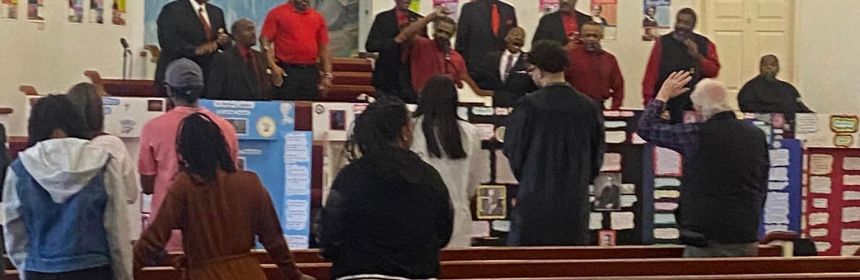
The theme of 2023’s Black History Month celebration.

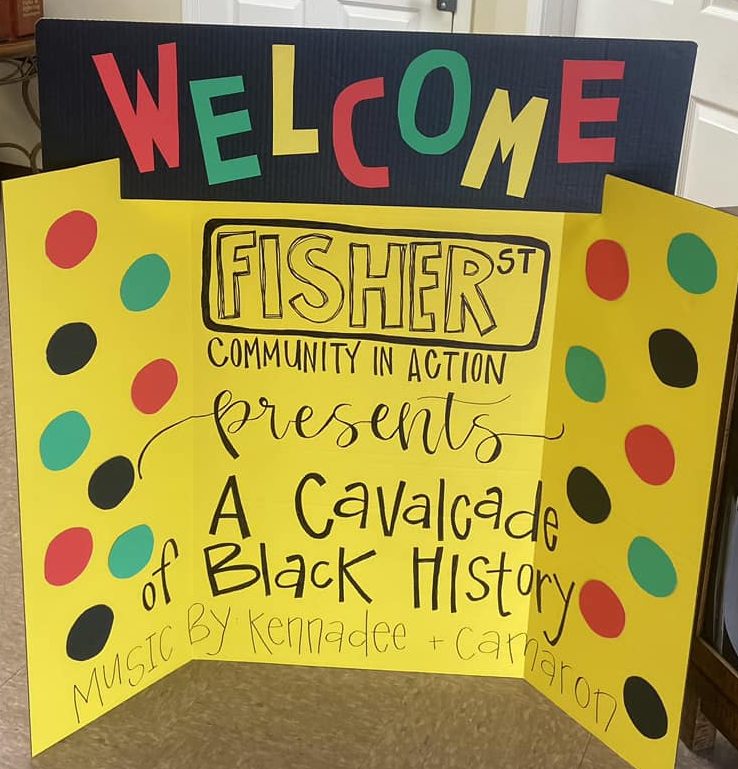
JONESBORO, Ark. – Jonesboro nonprofit Fisher Street Community in Action will host the 2nd annual “African American and The Arts” event in recognition of Black History Month from 3 p.m. to 5 p.m. on Saturday, February 24. Last year, they had about 50 attendees and hope to have more this year. 

According to event organizer Ruby McKinley, event participants will portray various African-American actors, both alive and deceased as attendees guess which famous person is being portrayed. Refreshments will be provided.

“The purpose of the activity is to get the community involved in Black history and to inform them of Black history then and now as to how things have evolved from slavery to now,” McKinley said. 

The event will also feature Dr. Lonnie Williams as its guest speaker. Williams, who is the vice-chancellor of diversity, inclusion, and community engagement at Arkansas State University in Jonesboro, will discuss the history and impact of African-Americans in the arts.

Alongside Williams, other guests will be in attendance including Jonesboro Mayor Harold Copenhaver, who plans to give a proclamation during the festivity. 

FSCIA was started by Rev. Dr. Charles Coleman, who operates as its CEO. The organization’s goal was to get the students from the Success Achievement Academy involved in gardening, an alternative learning program, in the organization’s community garden.

“The first year we did that, we had a group of students that was so excited about the garden…they chose the type of vegetables that they wanted to plant and they had their own space,” McKinley said.

FSCIA is funded by donations and has been providing help in the community for 13 years. The organization participates in the Toys for Tots program, conducts its own toy giveaway, provide community clean-up services twice a year and hosts the “National Night Out” every year, where they inform and spread awareness about community programs and services, provide free food, games, and more.

-30-


NOTE: Feature photo is of 2023’s Black History Month celebration from the FSCIA.