Monthly Archives: September 2016

Sexual Predators Often Avoid Prosecution

by Kirsten May
Courtesy of A-State Department of Media

Out of every 1,000 rapes, very few ever lead to a conviction. That is partly because less than 350 are reported, leading to an average of 63 arrests, according to the Rape, Abuse and Incest National Network. Of those, only 20 percent of cases are referred to a prosecutor. ASU TV’s Kirsten May spoke with a prosecuting attorney to find out why those numbers are so low.

JONESBORO, Ark. — When a victim of sexual assault comes forward, they face many questions. If an arrest is made, the victim must decide with law enforcement if they want to press charges.

The prosecuting attorney for the second judicial district of Arkansas, Scott Ellington said that is not always a straightforward process.

“When it is a forcible rape where there is an unknown perpetrator, those are easier to prosecute. Because it’s a foreign situation,” he said.

Ellington said things can get more complicated when it is assault by a friend or acquaintance.

“Where is the level of consent? That is the primary issue is where is the level of consent. And those issues are looked at closely,” the prosecuting attorney said.

He said victims can decide not to press charges for various reasons, including the fear of going public with such a private violation.

“We do have cases where victims decide they would prefer not to prosecute, and understandably so, because generally they make a report and they maintain pretty much anonymity,” Ellington said.

A licensed professional counselor in administration at Mid-South Health Systems, Matthew Knight said some victims just cannot stand to keep retelling their story to lawyers, judges and jurors because they are just trying to move forward in their life.

“‘And I don’t think I want to go through the public part of this again, I will just heal with myself,'” he said victims tell themselves.

But Knight said, in his experience, those victims often get stronger and decide they do want to tell somebody.

“They don’t want that person who has been the perpetrator to continue to do that with other people,” he said.

Whether or not a person decides to follow through with charges, Ellington said there is one important thing to do as soon as you discover the assault.

“Collect the evidence, collect anything that might have DNA on it,” he said.

Ellington said time is very important because if a victim changes their mind a few days later, that evidence might already be gone.

***

Ellington also said he understand victims are often scared or nervous while going through the prosecution process, so his office does have a designated victim-witness coordinator who visits with victims and helps them through the process.

Learn more about how the system helps sexual assault victims in this previous installment.

Journalist, Artist Pass Through on Western Trek

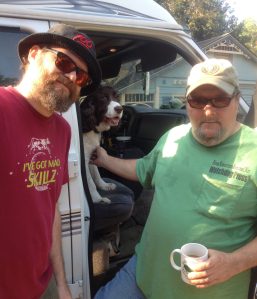
Artist Walter Simon, Jefferson the English Springer Spaniel, and Glynn Wilson of the New American Journal.

Artist Walter Simon, Jefferson the English Springer Spaniel, and Glynn Wilson of the New American Journal.

JONESBORO, Ark. – A journalist and artist team from Alabama stopped through Jonesboro during their quest to bring public attention to problems with privatization of the national parks.

Loosely traveling the same path Capt. Meriwether Louis and 2nd Lt. William Clark took in 1804, Glynn Wilson and Walter Simon of Alabama plan to travel to St. Louis next on their way west. While Louis and Clark originally traveled this path to explore new found territory and blaze a trail westward, Wilson and Simon hope to raise the public’s awareness on important issues.  Wilson said he hopes he can simply make a difference.

“I have a long history of making a difference on stories where science, politics, the law and the environment meet,” Wilson said.

Wilson calls it watchdog journalism. He said he believes holding those in power accountable stands to be more important than making money.

Privatization of the National Parks

Wilson said the commercialization of the National Park System compelled him to make the trip. NPS celebrates its centennial this year.

“The story about the commercialization and privatization of the national parks is not really being covered at all,” Wilson said. “That’s where we can come in and make a difference.”

In “What the National Press and the Park Service Won’t Tell You on the 100th Anniversary of NPS,” Wilson claims the problem isn’t the lack of visitors to the national parks. The issue lies in the lack of government-provided funding needed for maintenance.

Washington Post environmental reporter Darryl Fears previously wrote no one questions the natural beauty of the national parks, it’s the human elements – the restrooms and roads – that are in dire need of repair.

SA 838 approved by Congress in March 2015 with a vote of 51-49, would allow for the privatization of our national parks. While Sen. Maria Cantwell (D-Wash.) introduced the National Park Service Centennial Act — which would provide much-needed repairs and maintenance to national parks — to Congress in November 2015, it remains in committee.

Wilson said the parks already generate the money needed for maintenance. However, the money gets diverted to private companies already contracted to provide lodging and food, among other services designed to attract tourists.

Having worked in journalism since the 1980s, Wilson began his career working in various newspapers in Alabama. More recently, he worked as a freelance contributor to several large media outlets, such as The New York Times. He started New American Journal in February 2014.

Wilson said he designed New American Journal to be an independent mobile journalism news site that relies on contributions and site advertisements to survive. Wilson said this keeps it independent compared to other, more mainstream media outlets.

An artist, Simon said he plans on capturing much of the vivid scenery on canvas. He said he will contribute to the art of the National Parks System, created a century ago with the help of different American artists such as Thomas Moran, whose art helped contribute to the creation of Yellowstone National Park in Wyoming.

“I go in that same romantic spirit to renew the specialness of these parks in the public mind before they are broken up and destroyed by fossil-fuel industrialists and other irresponsible private enterprises,” Simon said.

You can learn more about Simon’s art by following his Facebook page, or by his 100th Anniversary National Park painting and photography tour.

Native American Protest

As they travel West, Wilson and Simon will also travel to the Standing Rock Sioux reservation in North Dakota. Native Americans have gathered there to protest the Dakota Access pipeline, a proposed 1,170-mile system that would take crude oil from North Dakota Bakken region to Illinois.

Wilson said now after the occurrence of physical conflict, the mainstream media jumped aboard to cover this issue.

“So the issue there is not just to go there and cover a story that is not being covered,” Wilson said. “It is being covered, but I still think we can do something original and better than most by being on the ground.”

Read more about the pipeline here.

Oil Transported by Train

Wilson said while some media attention focuses on the protest, the same Canadian tar sands oil, already in transport to the Gulf Coast, remains essentially ignored the mainstream media outlets. He said companies use trains for transport due to the lack of pipelines.

Wilson wrote of a community meeting in Mobile held in January 2015, during which citizens expressed their concerns for two proposed giant petrochemical storage tank farms, holding millions of gallons of oil that would be built on the riverfront. Wilson said the Canadian National Railroad plans to increase the volume of the present oil transport if larger storage tanks are approved by the government. Read more about the potential risks such a storage facility could hold for the community here.

Wilson said letting the American People know the true story remains the compelling reason for this trek. He said he plans to produce a series of stories with photos, videos, paintings and illustrations to accomplish this goal.

“This full story is not being covered by the corporate media,” Wilson said.

To learn more about Wilson and Simon’s trip, or to help, visit the Go Fund Me page here.

***
EDITOR’S NOTE: Glynn Wilson worked with DDNS adviser Ron Sitton on The Southerner during the late 1990s.

System Helps Sexual Assault Victims

by Kirsten May
Courtesy of A-State Department of Media

A person is sexually assaulted every two minutes in the United States, which means an average of 288,820 victims face rape or sexual assault. A sexual assault occurred on Arkansas State’s main campus earlier this month. ASU TV News’s Kirsten May investigates how a sexual assault affects mental health.

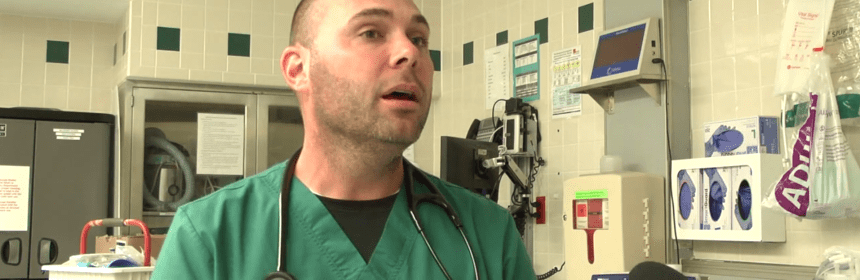
JONESBORO, Ark. — Many sexual assault victims first end up in an emergency room where Dr. Brandon Lane works.

“First, as a physician, we will assess the patient from a physical standpoint to make sure they have no injuries,” Lane said.

Then, as long as the patient consents, St. Bernards Regional Medical Center Emergency Room doctors will begin the process of collecting evidence that could be used in a later criminal case.

“And then we will go ahead and take that evidence to the appropriate law enforcement agency,” Lane said. “If the patient wants us to, not by law. If the patient is agreeable to that. That’s the sticky point sometimes that we see here in the emergency room.”

Although doctors cannot always give evidence to police though Lane said they often want to, physicians can ensure the patient gets any other help he or she might need, like a referral to a therapist.

“Especially if the patient is by him or herself, so that we can get them to be supported early on in their care,” he said. “I think the main thing is to know that they are supported.”

Matthew Knight is a licensed professional counselor who is now in administration at Midsouth Health Systems. He said conveying “someone is there” is the most important thing to do for any trauma victim.

“That someone believes their story. That someone is in a sense in their corner or at least is listening to what they have to say,” he said.

Knight said for many victims, there are thoughts of guilt and self-doubt about what they could have done differently. He wants them to know this assault is not their fault and they don’t have to try and heal by themselves.

“There are probably a lot of woman who deal with this alone, who never told anybody else and just went home,” Knight said. “So I think that there are probably woman who this becomes their secret and secrets have so much power, particularly secrets that are kept about trauma.”

Knight said another difficult thing for victims to do is decide whether or not they want to press charges against the perpetrator.

***

How difficult is it to prosecute sexual assault cases? Prosecuting Attorney Scott Ellington speaks with Kirsten May next week on ASU TV News.

N. Jonesboro Residents Disagree with Critics

by Kirsten May
Courtesy A-State Department of Media

Using the Arts to Change Lives

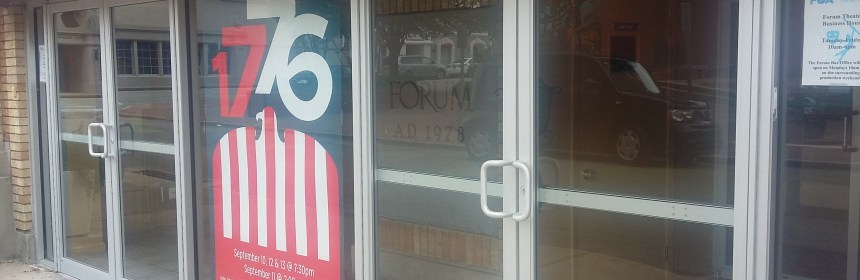
JONESBORO, Ark. – Premiering on Broadway in 1969, the musical “1776” showcases important events in American history. But even after the success of its latest show, members of the Foundation of Arts for Northeast Arkansas still consider bringing the community together to be its greatest endeavor.

FOA creative and artistic director Kristi Pulliam said “1776” draws the audience due to its humanization of heroes from American history. Set in the weeks leading up to the signing of the Declaration of Independence, “1776” shows the struggle in Congress as they prepare to declare independence.

While the musical features John Adams, Benjamin Franklin and Thomas Jefferson, there are actually 22 male characters total.

“I don’t know if we’ve ever had a show with that many men,” Pulliam said. “We only have three ladies in the cast.”

Pulliam said two cast members from two competing radio station performed together in this production. She said she found that interesting because it shows what the FOA does best: they bring people from all walks of life together.

LeeAnn King was 8 years old when she first came to the Foundation of Arts for Northeast Arkansas. Although dance was one of King’s passions, her family could not afford lessons. FOA’s scholarship assistance program allowed her to take a class. Later, as she rose through the classes, she became an assistant teacher.

“I was 14 and I assisted in my first class,” King said. “I was helping the 3-year-olds and all we did was run to the potty, but I was hooked.”

She became a dance teacher, and after three years became FOA’s education program manager. She said she would never be able to accomplish any of her dreams without the FOA. Now she dedicates her life to helping her “kiddos” accomplish their dreams.

The Foundation of Arts for Northeast Arkansas formed when three of Jonesboro’s artistic organizations united in 1983. Today, the root goal of the FOA remains the same: to educate and to change the lives of their students.

Pulliam said the central belief of the FOA encourages everyone to come, take part and give of themselves. One’s financial status, religion and race do not matter.

“We do art, but from my standpoint, it’s a conduit for making better people,” Pulliam said.

A love of people drew Pulliam to the FOA, not her love of theater. Pulliam said many are drawn to theater first, and then to people who can help them in the craft. She finds the opposite to be true for her. 

Pulliam uses the theater for its storytelling capabilities. She said a theater production shows the audience, not only the story of the play but the stories of all those brought together by the production.

That provides the root of culture, Pulliam said. Lives are changed through each other’s stories. She said she feels everyone’s stories are intermingling and intersecting. That is how people change and grow, she said.

Pulliam said by putting everyone from completely different walks of life together, everyone walks away, no only with a renewed sense of what they can do, but also with new thoughts of what they can accomplish with their lives.

“That’s the beauty of having so many people from so many different walks of life,” Pulliam said. “We try to help everyone find a place.”

The FOA strives to provide educational opportunities for everyone, regardless of their ability to pay for classes. King said she estimates about 45 of the 250 students enrolled receive their classes for free. Even more receive some type of assistance.

Pulliam said all of the students work together to create, regardless of their ability to pay. The FOA turns no one away, and no one is singled out. She said only the staff knows who is on assistance.

The FOA benefits many in the Jonesboro community. It offers programs such as Learning Expressions through Art Programming. L.E.A.P. is available to those also enrolled in the Abilities Unlimited program that assists adults with disabilities.

Fine Arts and Me also greatly impacts the Jonesboro community. F.A.M.E., with the assistance of The United Way, reaches out to children with special needs.

According to FOA’s website, F.A.M.E. helps special-needs children become more confident through their exposure to art classes.

The FOA community also experiences great impact. As the mother of three daughters enrolled in classes, Jenny Box sees many effects on her daughters. She says she sees the biggest change in her eldest daughter.

Enrolled in dance classes since the age of 4, Box’s now 12-year-old daughter currently assists dance teachers in classes. FOA helps increase her daughter’s confidence, Box said.

“She is getting to see that she has the knowledge base and the capability to do what seems so huge for her,” Box said. “Now she is getting to be the leader and mentor.”

Describing her younger daughter as “full of confidence,” Box said the FOA provides her younger daughter a creative outlet. She can grow and learn in a safe place.

The FOA strives to provide a safe place for students to learn. They provide a place without competition.

“All (art) is about the expression of truth and beauty, and how we best can express that,” Pulliam said.

Pulliam said she believes something is lost in the competition.  Many forget the submissions of others are also valid.

The sense of community draws Box in. She said she remembers a time where a child missed her cue. The FOA community rallied around her, calmed her down and got her back on stage. Box said she doesn’t feel as if the child would have come back for another show if the “FOA family” had not been there for her.

“It is kind of like a second family. There are people that know my children. I know other people’s children,” Box said. “It’s nice to just have that feeling of belonging.”

Multiple studies have shown test scores will improve and students are more likely to take more difficult courses. For more information on the benefits of an art education, you can visit National Endowment for the Arts

FOA students also learn the discipline of following through on their commitments. This opens many more doors of opportunity to them, Pulliam said. Pulliam’s greatest joy comes when a student learns they are capable of anything.

“(A student) Choosing to go into medicine because they met someone here that showed them that they could,” she said.

King said she loves all the little things about FOA. Children stand up and say their name just a little bit louder. They learn a sense of belonging.

“That’s why I come back. I get to see the faces of the kiddos that I get to see every week,” King said. “Even when they’re wearing me out, even when we have to keep going over a step that that just can’t seem to get, I love spending time with them.

For more information on future productions in the upcoming season or to buy tickets, check out the FOA’s website.


***
Editor’s Note: A previous version of this article incorrectly labeled the arts organization as the Jonesboro Foundation of Arts. 

Stop When the School Bus Stops

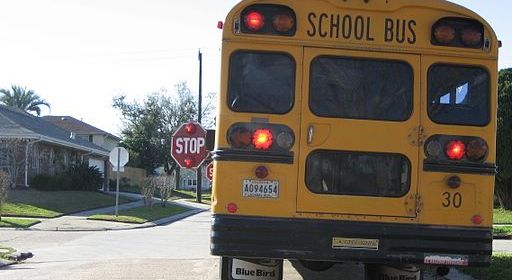
A school bus stops, via Wikimedia Commons

A school bus stops and warns drivers not to pass. But some drivers fail to pay attention. Photo by Infrogmation [CC BY 2.5], via Wikimedia Commons

JONESBORO, Ark. – Every day thousands of area school children board school buses. However, many drivers do not stop when the school bus stops.

Jonesboro Police Department’s public information officer Paul Holmes said the city issued 23 citations in the past 12 months to drivers caught passing stopped school buses. He said the penalties often shock drivers.

According to Arkansas state law, the fines range from $250 to $1,000. The penalty also affects your motor vehicle report similarly as reckless driving and driving under the influence. A driver’s motor vehicle report also directly affects insurance rates.

Jonesboro Police Department Sgt. Doug Formon said those who will pass a stopped school bus often amazes him.

“I’ve stopped several school teachers, not only locally from here, but from other school districts,” Formon said. “I’ve stopped a school bus driver one day who was off work from Missouri.”

Formon said when he follows a school bus, drivers attempting to pass the stopped bus will often pass him first. He said many drivers claim to not have seen the bus while others simply did not pay attention. Formon said after the passing of no-texting laws, many drivers now look down at their phones as an attempt to keep them hidden, which he believes also contributes to a rise of violations.

A lack of education causes many drivers to pass stopped school buses. Formon said many drivers he stops thought they didn’t have to stop due to them traveling in the opposite direction, i.e. many said they believed they don’t have to stop because of the two lanes and an additional passing lane divide them and the stopped school bus.

Arkansas state law 27-51-2004 states, “When a school bus stops and displays its alternating red warning lights for the purpose of loading or unloading passengers, every operator of a motor vehicle or motorcycle meeting or overtaking the school bus from any direction shall bring the motor vehicle or motorcycle to a complete stop before reaching the school bus. The operator of the motor vehicle or motorcycle shall not start up or attempt to pass in any direction until the school bus vehicle has finished receiving or discharging its passengers and is in motion again.” You can read the state laws regarding school buses in their entirety here.

Formon said all drivers on all of Jonesboro’s roads must always stop for school buses with no exception. He said he can only catch one per bus, but more than 20 vehicles often pass.

Forman said he remembers a time they took more officers out to follow school buses, and they stopped over 30 vehicles because enough officers patrolled that day.

Jonesboro School District transportation director Mickey Long said be believes the problem also lies with the parents of the bus riders. He said while dropping their children off at the bus stop, many parents will stop long enough to watch their children board the bus, and then pass the bus illegally.

Long said this remains a chronic problem. He said he turns in at least three reports from bus drivers a week. He said he believes simply holding people accountable will help bring awareness. His department works closely with Jonesboro police to combat this ongoing issue.

Long said it’s not uncommon to see several officers come to the bus yard and follow the drivers on their routes. Holmes said they remain in constant communication with the transportation department to find problem areas.

Long said he hears reports of drivers passing stopped buses from his drivers every day. He said many times the drivers said they believe if the children did not pay attention, they would have been hit.

Long said the wind blowing a dropped piece of paper into traffic could potentially cause a tragedy, i.e. some children will give chase without stopping to consider if everyone will stop.

“The risk and reward are not there because the risk is you’re going to run over a kid,” Long said.

Holmes said they try to educate the public through the media and also social media. He said they try to do everything they can to better educate the public. Formon said they placed an electronic billboard at the beginning of every school year.

The Arkansas State Board of Education annually holds a Flashing Red. Kids Ahead. campaign, designed to educate Arkansas drivers on school bus safety. 

“ADE encourages students and schools to get involved in the campaign by sharing videos and pictures of why school bus safety is important,” ADE’s Kimberly Friedman said. “Videos and pictures can be posted to social media using #2016Flashing Red”

Long said he doesn’t want to get anyone in trouble. He said he simply believes prosecution of drivers who do not stop brings awareness to the problem.

Holmes said the best thing would be for drivers simply to comply. He said he hopes the public will become better educated because eventually they will be caught.

“They’ll get educated when you say, ‘Sign here,'” he said.

Long said one driver can make a difference in protecting the children.

“It just takes that one person to stop,” Long said. “You stop for the bus and everyone behind you is going to stop.”

PLWC Helps Paragould Students Start Year

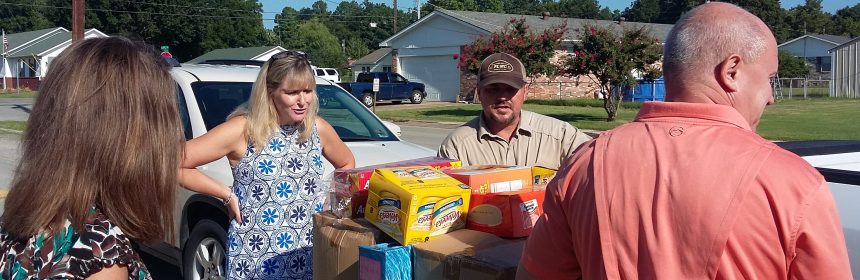
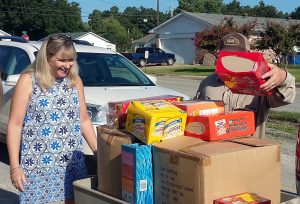
Kristie Ford, counselor of Paragoulds Baldwin Elementary School, reacts to the donated supplies. PLWC's Volunteerism Committee makes an annual donation of backpacks and food for local children in need. (Photo by Kimberely Blackburn)

Kristie Ford, counselor of Paragoulds Baldwin Elementary School, reacts to the donated supplies. PLWC’s Volunteerism Committee makes an annual donation of backpacks and food for local children in need. (Photo by Kimberely Blackburn)

by Todd Kelley
Community Journalist

   The Paragould Light Water and Cable (PLWC) Company’s Volunteerism committee provided food and school supplies donated by employees to help area students start the 2016 school year.

   PLWC’s Environmental Services manager Lisa Ellington along with committee members Michael Sims and Greg Adams delivered 108 backpacks and various food items to both Greene County Tech and Paragould School Districts. The items will be dispersed among all students in the district; from kindergarten through 12th grade.

   Greene County Tech Junior High social worker Leslie Stallcup said the teacher-referral process allows targeted help on an as-needed basis. The process allows students and parents to receive the food and school supplies they need, in a way that minimizes the possible discomfort that parents and students may feel.

   “We feed a family and it helps eliminate some of the child’s stress. Kids have enough stress as it is, and you learn better when you are focused on learning,” Stallcup said.

   Ellington said the PLWC Volunteerism Committee has many projects that help feed the hungry. Projects include feeding children in local schools, helping people with meals during the holidays, and helping others in general.

   “It is important that everyone know that the committee is made up of company employees. We receive our funding directly from them, and they set the pace for our charity work. Although more community involvement would be welcome,” Ellington said.

   Anyone interested in volunteering or donating should contact Ellington at(870) 239-7700.