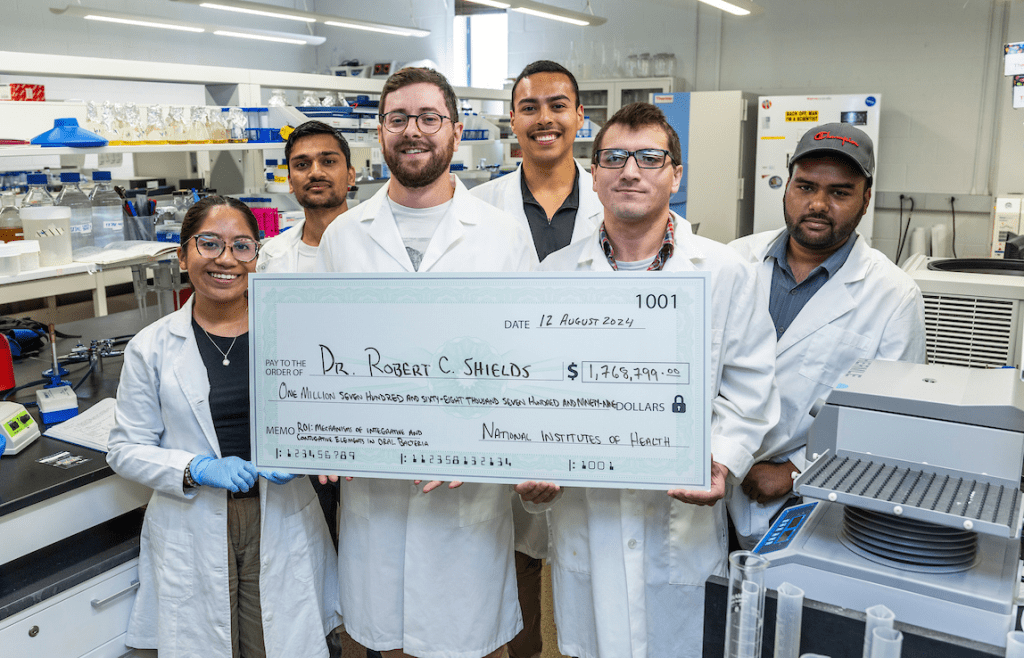
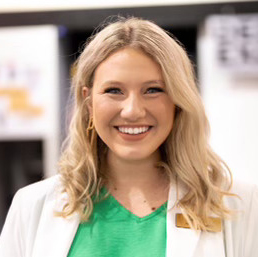
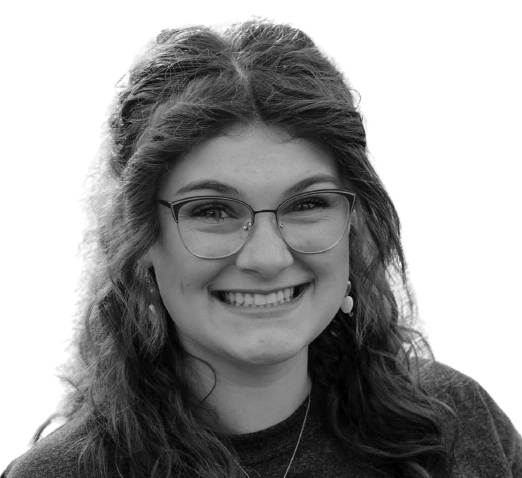
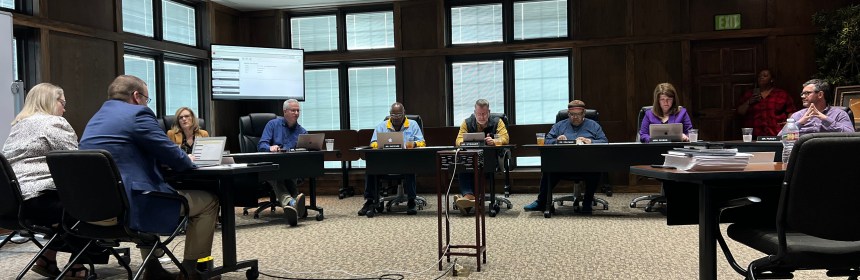
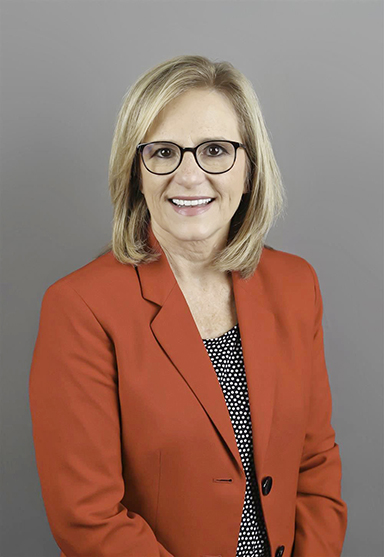
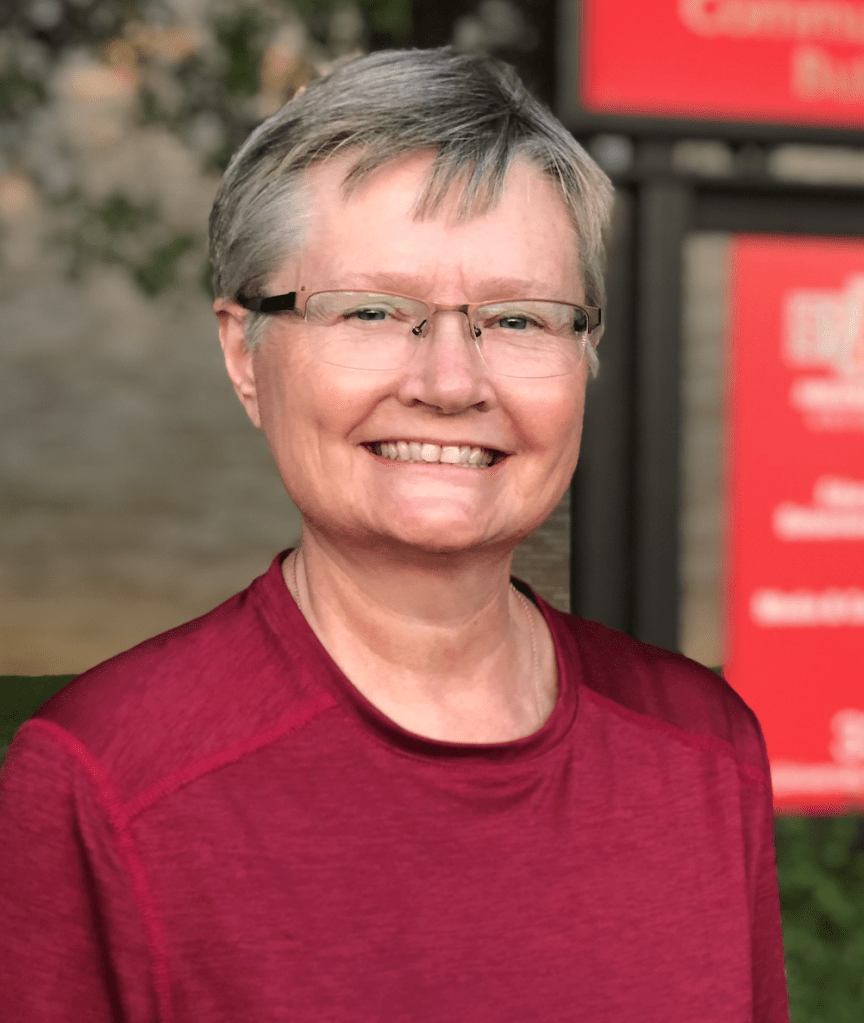
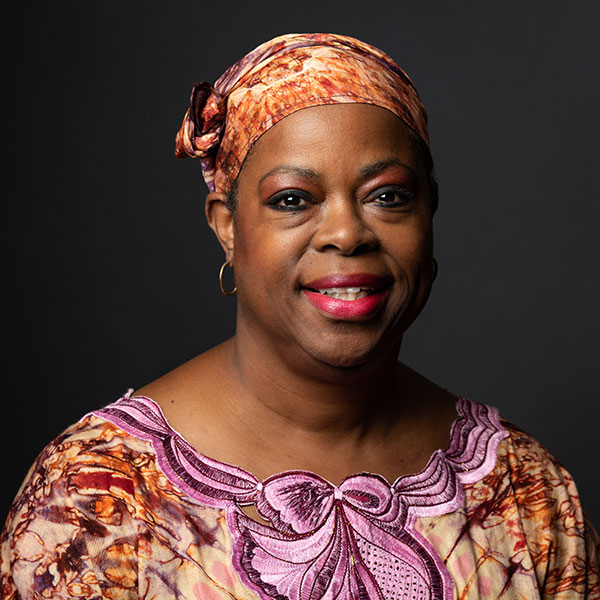
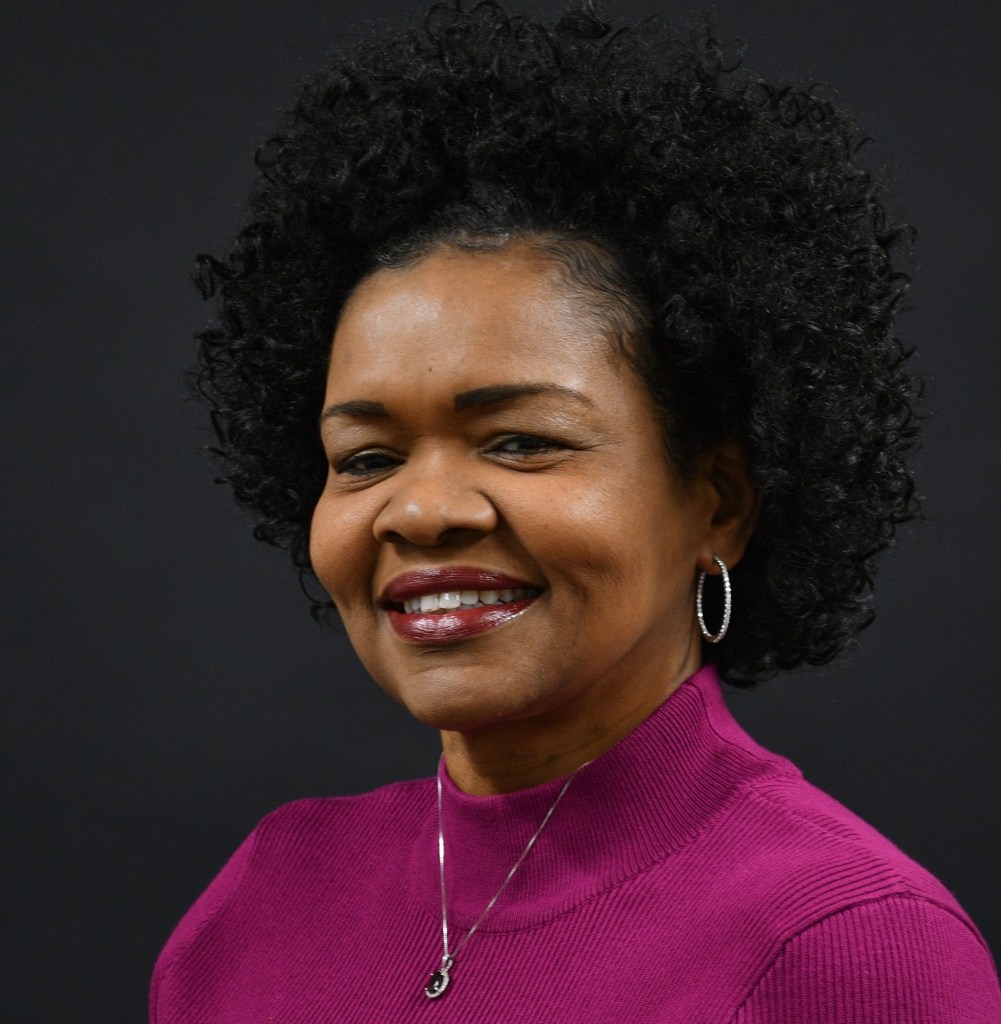
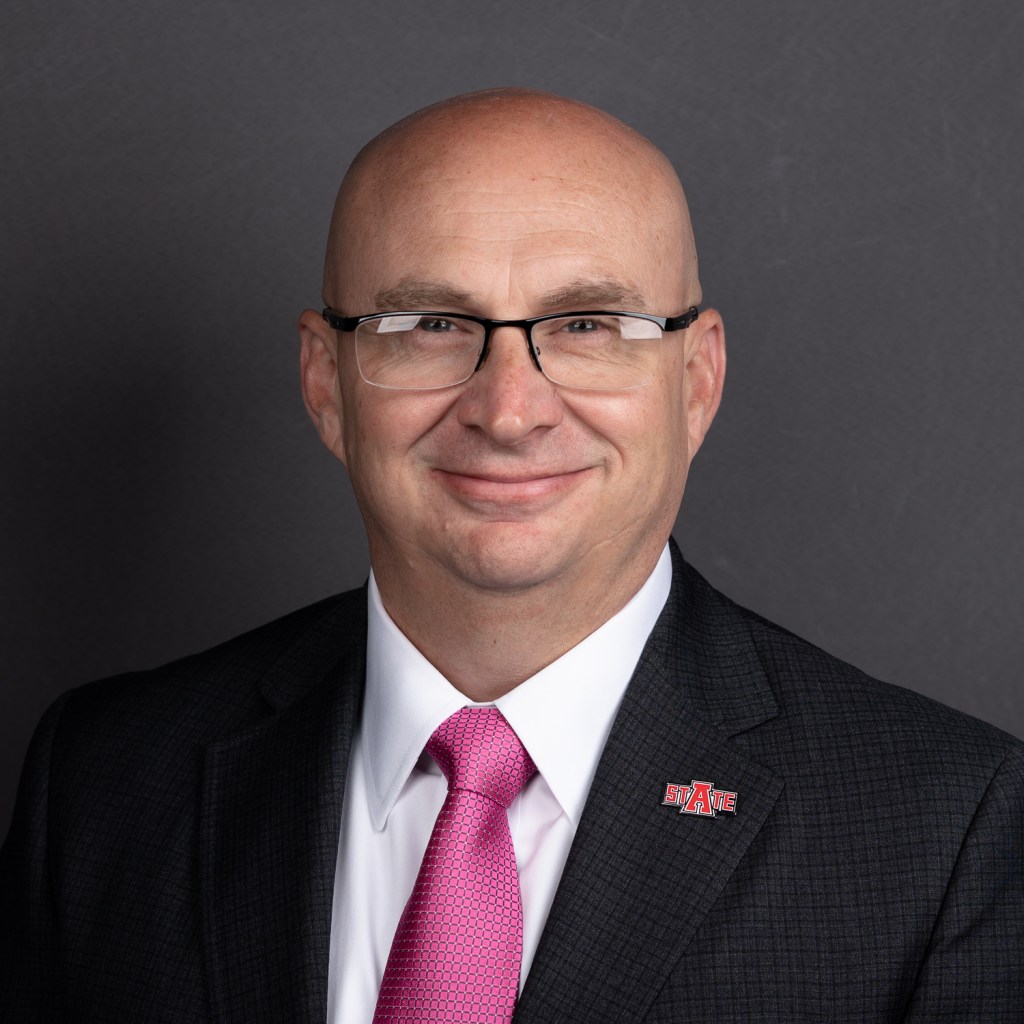
The team that will be leading the research includes (from left) Ana Karen Solano Morales, master’s student in biology; Sangam Chudal, biotechnology major; Dr. Robert Shields, principal investigator; Emanuel Cazano, biological sciences major, pre-professional program; Shawn King, lab manager; and Bikash Kumar Dwivedi, doctoral student in molecular biosciences. Image courtesy of Arkansas State University.
JONESBORO – While most people know that tooth decay can result in an unsightly smile, the impact of this disease has serious implications for one’s overall health.
A faculty member in Arkansas State University’s Beck College of Sciences and Mathematics has secured a federal grant to conduct extensive research into the problem with the goal of better understanding the causes and effects.
Dr. Robert Shields, assistant professor of microbiology in the Department of Biological Sciences and principal investigator for the grant, sought the funding through the National Institute of Dental and Craniofacial Research, a division of the National Institutes of Health (NIH).
“Tooth decay is one of the most common diseases affecting people,” he added. “It has a significant health and economic burden on the U.S. population.”
Shields will guide a team of faculty members, doctoral degree candidates, student researchers, and lab professionals who will delve into the intricate molecular mechanisms underlying tooth decay pathogens.
The research team also includes Dr. Lisa McLellan at Purdue University – Fort Wayne who is a molecular microbiology expert with her own research lab.
“In this study, we will investigate the movement of genetic information between bacteria, a process that spreads antibiotic resistance and fuels pathogen evolution,” Shields explained. “We will focus our studies on understanding this process in the oral cavity and determining the role it plays in assisting in the development of tooth decay.”
The $1.77 million grant over a five-year period will support the work of the research team and provide a supply of chemical reagents, travel expenses to present results at scholarly conferences, and other expenses associated with their work.“
Dr. Robert Shields’ grant is an exciting opportunity to enhance his research in oral health,” stated Dr. Jennifer Bouldin, dean of the Beck College of Sciences and Mathematics. “This highly competitive NIH R01 grant supports health-related research by an investigator in their area of expertise. The Beck College is excited to see Dr. Shields receive this prestigious award and further his research in this important topic.”
Dr. Travis Marsico, vice provost for research, innovation and discovery, and executive director of Arkansas Biosciences Institute at A-State, noted this grant, the NIH R01, is the premier funding mechanism for those researching human health. The NIH R01 is the gold standard because it supports important hypothesis-driven research that is backed by preliminary data; recent funding rates are just over 21% of applications received nationwide.
“I am thrilled that Dr. Rob Shields has secured an NIH R01 award for his work on dental decay bacteria,” he stated. “The discoveries that will result from his team’s work have important basic science and human health implications for the people of Arkansas.”
This new grant represents only the second R01 and only the eighth NIH award in A-State history. It is also the largest NIH grant in the university’s history, he said.
“With our recent emphasis on expanding research development, the goal of the Research and Technology Transfer team is to help make these kinds of awards a regularity on campus.”
A related development with A-State’s blossoming research enterprise will get underway early next year.“As part of our expansion of NIH-funded programs, A-State has been selected in a new program called Engagement and Access for Research-Active Institutions (EARA), which will assist campus researchers with identifying appropriate funding opportunities from NIH,” Marsico continued. “The program should begin in February 2025. Fourteen faculty members have expressed interest, and Dr. Shields has agreed to mentor faculty pursuing NIH funding. His efforts have been successful, and he has built a strong relationship with his NIH program director.”
NEWPORT, AR — Arkansas State University Newport (ASUN) has been selected to receive a $200,000 award from the U.S. Department of Energy (DOE) as part of the DOE’s Industrial Training and Assessment Centers(ITAC) program. This funding will support the development of an Industrial Controls Technician Registered Apprenticeship and an Industrial Maintenance apprenticeship readiness program, aimed at enhancing technical education and economic prosperity in the Northeast Arkansas Delta region.
The ITAC Planning Project at ASUN will create new pathways for incumbent workers at small and medium-sized manufacturers (SMMs) to gain valuable skills and improve their workplace efficiency and productivity. By collaborating with local manufacturers, the program will provide hands-on training that addresses the growing demand for skilled technicians in the clean energy and industrial sectors.
Dr. Typhanie Myers, Provost and Vice Chancellor for Academic and Student Affairs at ASUN, expressed enthusiasm about the initiative: “This grant represents a significant step forward for ASUN and our community. It not only provides essential training opportunities for our local workforce but also supports the broader goal of enhancing industrial efficiency and sustainability. We’re excited to partner with local manufacturers and provide high-quality education that will help our region thrive in the evolving economic landscape.”
The ITAC program, managed by DOE’s Office of Manufacturing and Energy Supply Chains, aims to reduce barriers to decarbonization and promote clean energy jobs that do not necessarily require a four-year degree. The initiative is part of the Biden-Harris Administration’s Investing in America agenda, which seeks to bolster workforce training opportunities and support union labor.
ASUN’s project is one of 21 selected projects across 20 states, supported by a total of $24 million in funding. These projects will help train over 4,000 students, apprentices, and incumbent manufacturing workers, preparing them for quality careers in emerging sectors like advanced manufacturing, clean energy, and more.
Courtesy of the City of Jonesboro/Johnathan Reaves, Delta Digital News Service
Copenhaver said the funding would provide additional resources to prevent and fight crime in the city and keep Jonesboro on the leading edge of incorporating technology into its policing efforts. “When we talk about improving Jonesboro, public safety is a top priority,” he said. “This is reinforcement that we are on the right track, and I thank Senator Boozman for his efforts and for the hours he and his staff have dedicated to meeting with our Jonesboro team to discuss the wins and benefits of the system. He believes in it, and it shows.”
Jonesboro’s innovative Real-Time Crime and Intelligence Center now boasts more than 700 cameras strategically positioned around the area and has been referenced more than 600 times in cases this year alone. Data collected and retained also provides a valuable resource in building evidence to close cases, helping resolve accident disputes and identifying needed traffic and safety improvements, according to Jonesboro Police Chief Rick Elliott, “Our system provides officers and detectives with critical information that saves lives, immediately alerts us when a vehicle of interest enters the region and provides helpful information on the scene of an active incident or operation. The technology investment in policing is making a difference, and it shows.”
Craighead County Sheriff Marty Boyd talked about the importance of information sharing between agencies, “We work closely with the City of Jonesboro and share 911 facilities. Quickly transferring data, license plate alerts and video information is a huge benefit toward the safety of our area.”
JONESBORO, Ark.- With only a few programs similar to it in the state of Arkansas, CityYouth Ministries plays an important role in the Jonesboro community and in the lives of the children who attend.
Located just inside downtown Jonesboro, CityYouth Ministries, is an after-school program for underprivileged children in first through sixth grade in surrounding school districts, with the hope to soon open their doors to the kindergarten center. Through various grants, partnerships from local churches, individual donations, and more, the program is able to be offered to the children and their families at no cost, which is unlike most other programs in Northeast Arkansas as they require families to pay to attend.
From left to right: Brooklyn Givans seven-years-old (first grade) and Ca’Linda Mucherson seven-years-old (first grade) paint some pictures for the upcoming Art With Heart Fundraiser (April 11th) Photo By Shamara Pittman
Though CityYouth is an after-school program they are also a ministry, which means Jesus is at the center of everything they do. Although many in the community may think it, CityYouth is not just a community center. It’s a place where the kids are exposed daily and possibly introduced to the Gospel.
“One of my favorite things about working at CityYouth is the worship and devotion time. A lot of these kids just haven’t heard the gospel, so it’s great to see them doing that every day,” Kelsie Harris, administrative assistant said.
While at the program the kids participate in a multitude of different academic and extracurricular activities including tutoring, speech therapy, yoga, arts and crafts, outside play, worship, and many more.
“My favorite thing is art because we get to make stuff… my favorite thing was the penguin we made at Christmas,” Karter King, an eight-year-old second grader, said.
The activities are chosen based on what season it is, when the weather is warmer the kids play tennis but once it gets colder they switch to a more appropriate activity.
Kelsie Harris
“My favorite thing to do at CityYouth is to go outside, I like to talk to all of my friends,” A’miyah McCauley, an 11-year-old sixth grader, said.
No two days look the exact same, but one thing that stays consistent is the worship and deviation time at the beginning of each day. Every day, all the kids arrive by 3:30 p.m. and they immediately have dinner. Once dinner is finished everyone, group leaders included, sing two to three worship songs, then grades split off to do a small devotional lesson. At 5:30 p.m. all the kids are picked up and group leaders clean up and get ready to do it all again the next day.
One of CityYouths biggest supporters is the community. It takes about $30,000 a month to keep CityYouth up and running and they’re able to continue their ministry through the abundant community support. Not only do different community members and organizations donate money so the program is free for the children, but they also donate their time and items CityYouth might need including Lysol wipes, toilet paper, band-aids, hand soap, etc.
Hannah Caddy
“The community is our backbone, we’re so thankful to have a community that rallies together, ” Hannah Caddy, Executive Director of CityYouth, said.
Some local businesses also donate meals for the kids. Once a week Lost Pizza Co. donates multiple cheese and pepperoni pizzas and a salad for dinner. Every Thursday, since October 2023 each kid, who signs up, gets to take home a drawstring bag full of food donated and packaged by the Alpha Kappa Alpha Sorority, Incorporated, and every Thursday before the bags arrive at CityYouth at least one kid asks “do we get a green bag today?”
“The food is purchased by sorority members or donated to the sorority by community partners, and then members of the sorority pack the bags on the weekends,” Tiffany Mosley, co-chair of the Empower our Families initiative at the sorority, said.
CityYouth began from an idea between several church and community leaders that believed Jonesboro could benefit from having a youth center. Since opening their doors in 1999 CityYouth has been able to impact not only the 95 kids on the roster today, but the thousands of kids who have attended in the past 25 years.
Amelia Young is a Multimedia Journalism major in the School of Media and Journalism at Arkansas State University in Jonesboro. She can be reached at amelia.young1@smail.astate.edu
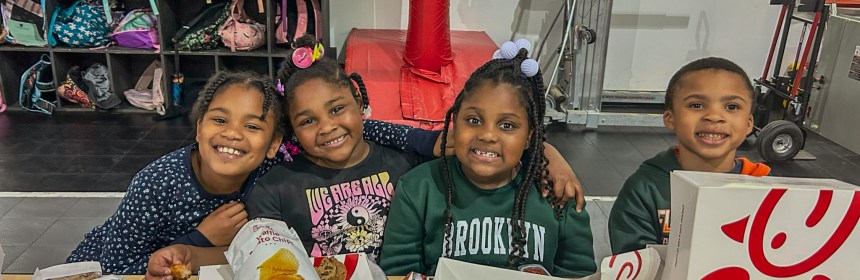
NOTE: Feature Photo: From left to right: Makaylee Brisco-Ellis, 7, (first grade), Audree McCray, 7, (first grade), Brooklyn Siggers, 6, (first grade), and Judah Mhoon, 7, (first grade) eating Chick-Fil-A donated by Centennial Bank. Photo by Ashtyn Kimble
JONESBORO, Ark. – The Jonesboro Public School Board approved the purchase of tablet computers for food services and Apple iPads and MacBook Air laptop computers for staff and students Tuesday night.
The school board approved the purchase of 790 Apple MacBook Air laptop computers, 1,317 Apple iPads and 1,117 rugged iPad cases. The total cost is $1,151,607.15.
Students at The Academics at Jonesboro High School will use 560 of the Apple Air laptop computers, including a three-year AppleCare+ warranty. Staff members will use 230 of the computers, including a four-year AppleCare+ warranty. All 1,317 Apple iPads will be used at K-6 campuses. All purchases come from Title I funds, ESA funds and ARP ESSER funds. The 44 Dell Latitude 7230 food service tablets cost $117,106.22.
Jonesboro Public Schools Superintendent Kim Wilbanks shares details on the software needed for the tablets and computers.
“This is not a very high-end software that requires a lot of oomph to the computer. Even though the food service employee doesn’t include Aramark, they are responsible for the delivery of the meal. We hold responsibilities in terms of the service of the food or delivery of the food,” Wilbanks said.
Jonesboro Public Schools Superintendent Kim Wilbanks
The tablets and computers will be ready for use in Fall 2024. There is not a set date of when the tablets and computers will be delivered, but Jonesboro School District federal programs director Kris Williams said, “Apple is pretty quick on shipping. They will probably be in late April at the latest. That will give staff enough time to prepare for next school year.”
In other parts of the meeting, the school board approved moving the non-student day/non-contracted day from April 19 to April 8, which is Eclipse Day. The total solar eclipse will attract more than two million additional people in Arkansas and 750,000 additional automobiles, estimated by the Arkansas Department of Transportation.
The Academies at Jonesboro High School counselors presented the 2024 Pathway of Study. The pathways include health and human services (HHS), business, communication arts and law (BCAL) and science, technology, engineering and math (STEM).
HHS provides the medical science pathway, family and consumer science, navy national defense cadet corps, educational training, nursing and culinary arts.
BCAL provides the pre-law pathway, visual arts, journalism, banking, criminal justice, office administration, digital marketing, automobile collision repair, automobile service technology, digital cinema productions and advertising and graphic design.
STEM provides the advanced mathematics pathway, engineering, industrial technology, computer networking and cyber security, pre-professional sciences, construction-HVAC technology, advanced manufacturing, robotics/mechanical engineering, computer science and programming, welding technology and unmanned aerial systems.
Jonesboro high school counselor Charles Gabe shared information on the increase in STEM students over the past couple years and the impact the welding class has made on students.
“Many months ago we started the STEM academy capped at 200 students because we only had 200 computers to give to students. We’ve built on that, worked on that over the years and now we’re up to 450 students. Welding is probably our most popular class. We’re getting more females who want to be welders so that’s exciting as well,” Gabe said.
…Welding is probably our most popular class. We’re getting more females who want to be welders so that’s exciting as well,” Gabe said.
Charles Gabe, Jonesboro High School Counselor
With recognition at the beginning of the meeting, the school board recognized Terrance Brown for top scholar 7A athlete of the year and Trey Harding for 6A athletic director of the year. Brown played football and basketball for Jonesboro, finishing his high school career with a 4.25 grade point average.
Brayden Morse is a multimedia journalism major in the School of Media and Journalism at Arkansas State University in Jonesboro. He can be reached at brayden.morse@smail.astate.edu.
Jonesboro Chinese Baptist Church holds annual Chinese New Year celebration
Delta Digital News Service
Saturday, Feb. 10, 2024
By Atsuki Ohbuchi 大渕 純暉 | Staff Photographer
JONESBORO, Ark. – Congregants, friends and guests attend the Jonesboro Chinese Baptist Church‘s Chinese New Year celebration at the Baptist Collegiate Ministry on Saturday, Feb. 10, 2024. According to chinesenewyear.net, the Chinese New Year 2024 falls on Saturday, February 10th, 2024, and celebrations culminate with the Lantern Festival on February 24th, 2024. Celebrations last up to 16 days, but only the first 7 days are considered a public holiday (February 10th–February 16th, 2024). The event also marks the transition between zodiac signs with this year being the year of the dragon.
Tony Tsui, left, and Grace Liouh of the Jonesboro Baptist Church speak during the Chinese New Year Celebration on Saturday, Feb. 10, 2024. Photo Atsuki Ohbuchi 大渕 純暉
PHOTO GALLERY
-30-
Atsuki Ohbuchi | 大渕 純暉
Atsuki Ohbuchi | 大渕 純暉 is a junior in the Neil Griffin College of Business at Arkansas State University in Jonesboro. He can be reached at: atsuki.ohbuchi@smail.astate.edu
NOTE: Feature photo shows members of the Chinese Baptist Church’s Children’s Ministry performance.
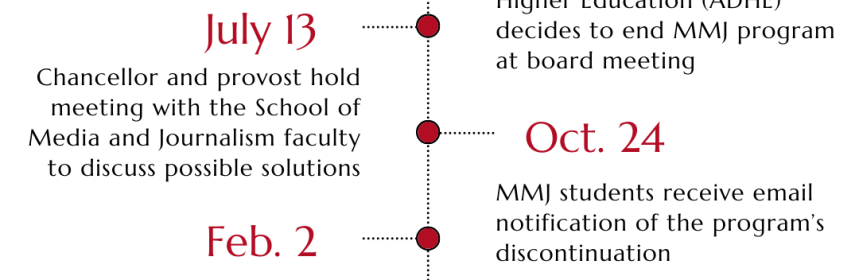
JONESBORO, Ark. – Faculty Senate met with Chancellor Todd Shields, Ph.D., and other faculty to discuss the deletion of the bachelor of science in multimedia journalism (MMJ) degree and how to prevent similar situations in the future.
“I will not be here and not have a journalism program,” Shields said.
Todd Shields, Arkansas State University Chancellor
“I will not be here and not have a journalism program,” Shields said.
Todd Shields, Arkansas State University Chancellor
The Arkansas Department of Higher Education (ADHE) decided to discontinue the MMJ program at an April 28 meeting. Interim Dean of the College of Liberal Arts and Communication Brad Rawlins, Ph.D., sent an email to students informing them about the decision Oct. 24.
Gary Edwards, Ph.D., associate professor of history, prepared a document regarding the circumstances of the discontinuation of the MMJ program to be reviewed during the meeting last Friday.
“We failed multimedia journalism,” Edwards said.
Gary Edwards, Ph.D, Associate Professor of History
“We failed multimedia journalism,” Edwards said.
Gary Edwards, Ph.D, Associate Professor of History
Those in attendance discussed what led to the end of the MMJ program, including ADHE policy, communication issues, internal strife between MMJ and creative media production (CMP) faculty and curriculum issues.
ADHE POLICY
According to Arkansas Higher Education Coordinating Board (AHECB) policy, a bachelor’s degree program must have an average of six graduates per year for three years to meet viability standards. Otherwise, the program will be cut. Only 4.3 MMJ students graduated during the review period.
Shields said he prepared to defend the MMJ program to the AHECB, but the board would not hear arguments.
“I went ‘What the hell was that?’ That had never happened since I’ve been doing that since 1994,” Shields said.
COMMUNICATION ISSUES
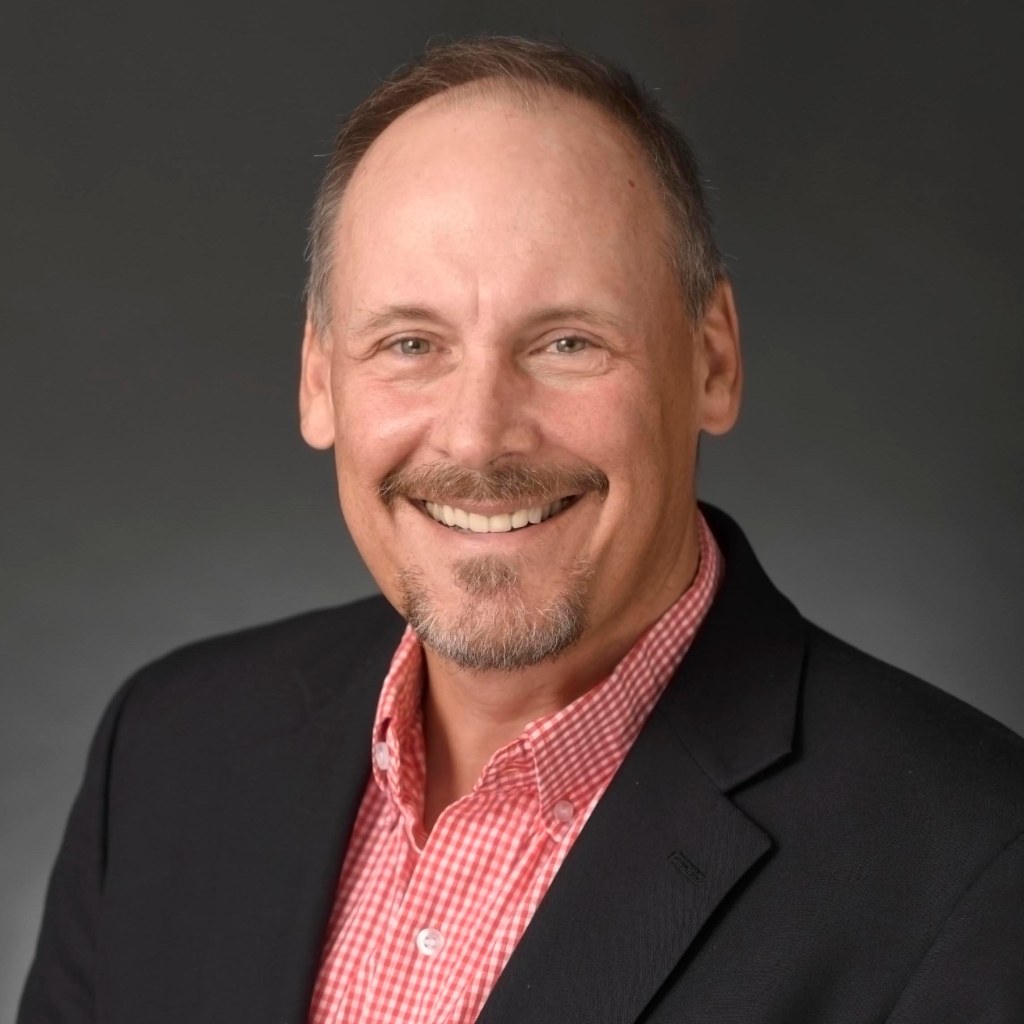
In addition to declining numbers, Rawlins, who formerly served as the director of the School of Media and Journalism, said the MMJ department was not properly informed about the possible cut of the program. He said if the department had been made aware, they would have addressed the issue much quicker and more vigorously.
“I’ve done a deep search with all my emails and talked to people, it’s just not there,” Rawlins said.
Brad Rawlins, Interim Dean of the College of Liberal Arts
“I’ve done a deep search with all my emails and talked to people, it’s just not there,” Rawlins said.
Brad Rawlins, Interim Dean of the College of Liberal Arts
Shields said he does not know why the department was not notified. He said communication should be improved, but each department should monitor its own enrollment and address issues before the ADHE notifies them.
“ADHE is no longer the one we talk to,” Shields said. “They’re the ones that dictate to us.”
INTERNAL STRIFE
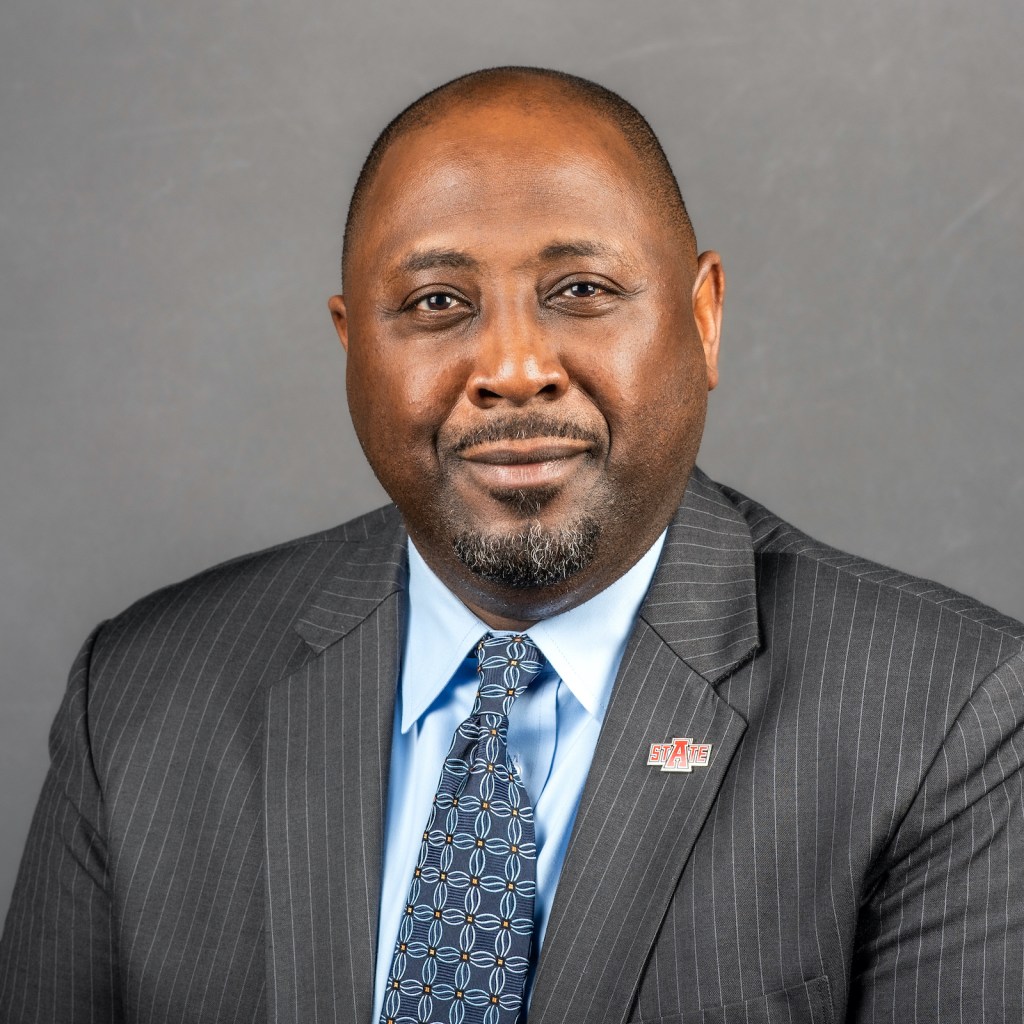
Calvin White, Ph.D, Provost and Executive Vice Chancellor
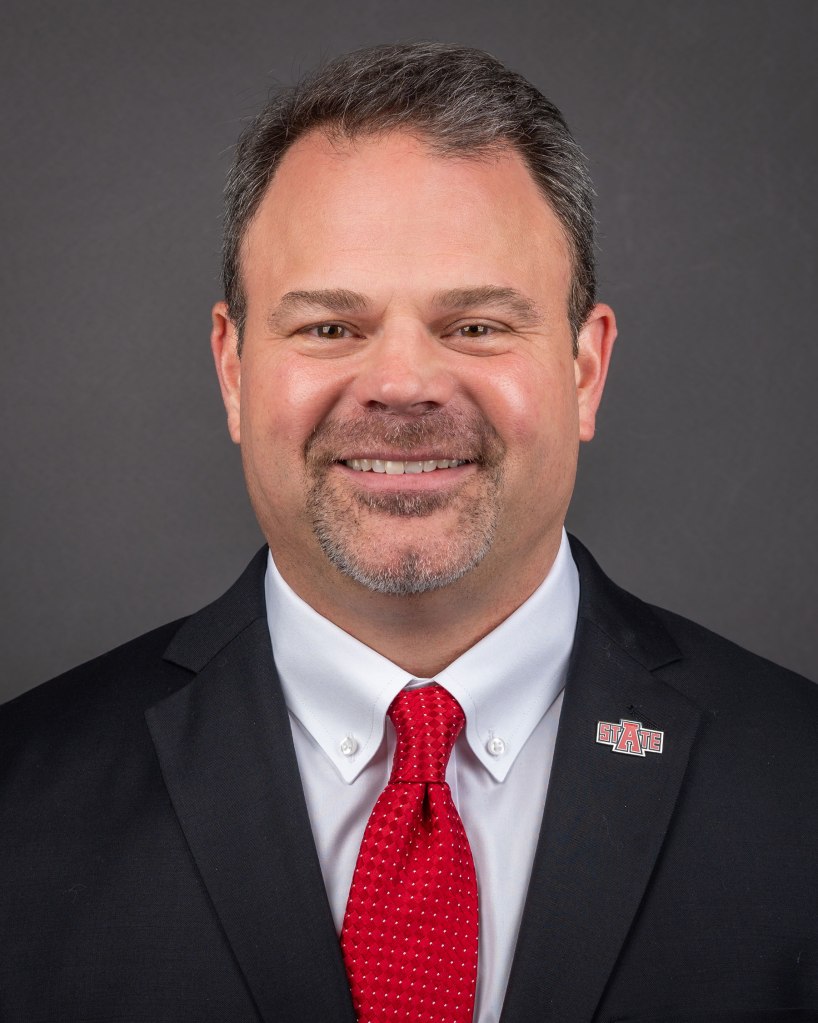
The chancellor and provost, Calvin White, Ph.D., met with MMJ and CMP faculty July 13 and proposed the two programs combine to keep journalism at A-State. Shields said he hoped the programs would be revised over the fall semester.
“That did not happen. In fact, I was told ‘We’re not working together,’” Shields said,
After that meeting, Mary Jackson-Pitts, Ph.D., program coordinator of CMP, sent an email to Gina Hogue, Ph.D., interim director of the School of Media and Journalism saying, “We are not willing to reimagine or launch a new journalism curriculum with the existing MMJ faculty. We have a proposal to establish a broadcast journalism emphasis under the creative media production program.”
“We are not willing to reimagine or launch a new journalism curriculum with the existing MMJ faculty. We have a proposal to establish a broadcast journalism emphasis under the creative media production program.”
Mary Jackson-Pitts, Creative Media Program Coordinator
The cause of the issues between the departments was not discussed at the senate meeting.
“I don’t know the history,” Shields said. “I don’t necessarily want to relive all that, whatever it is. I kind of don’t care. It’s ‘Do you want to work together and have jobs or do you not?’ Do you pull together for the benefit of the students and the campus, or do you not?”
Shields said he still hopes the MMJ and CMP faculty will work things out and revise the programs to be combined.
“It surprises me, in fact almost maybe hurts me in a way that is hard to describe. That’s not the A-State that I’ve seen anyplace else,” Shields said. “If people are being uncollegial to the point of hurting students in the program, that has to be dealt with.”
Shields said if the MMJ and CMP programs cannot work together, he will consider removing the program from faculty control and giving control to someone with experience in revising programs.
CURRICULUM ISSUES
Pitts, a professor of creative media production, formerly taught journalism for 27 years. She said she finds issues with the current curriculum MMJ teaches.
She said the curriculum focuses on writing, but students need to learn other skills such as coding, web design and audio and video production.
“To prepare that student to only work in print journalism is not fair,” Pitts said. “It is imperative that we look to what happens in the future for journalism and the best way to prepare them. It is not just about writing, it is about all the ways that you guys consume news now and how you will consume it in the next few years.”
According to the MMJ description on the A-State website, the program prepares students to work in broadcast, digital, print and photojournalism.
“Through hands-on instruction, practical workplace experience and conceptual coursework, students learn how to create and distribute content for print, radio, television, digital, interactive, social and mobile media,” the description read.
Sandra Combs, associate professor of multimedia journalism and adviser to The Herald, said in the meeting she does not expect any reconciliation between the departments.
“The four of us in MMJ have been working since summer of 2023 to come up with a minor for MMJ, to come up with core curriculum ideas for MMJ. Aside from that, we are met with opposition that has been in writing from those who do not support journalism because it’s not creative,” Combs said.
Sandra Combs, Associate Professor of Multimedia Journalism
“The four of us in MMJ have been working since summer of 2023 to come up with a minor for MMJ, to come up with core curriculum ideas for MMJ. Aside from that, we are met with opposition that has been in writing from those who do not support journalism because it’s not creative,”
Sandra Combs, Associate Professor of Multimedia Journalism
The CMP program coordinator said journalists should have skills in audio and video production to succeed in the industry today. She said the current MMJ curriculum does not meet these standards.
Lillie Fears, Ph.D, Professor of Multimedia Journalism & Multimedia Journalism Program Coordinator
Lillie Fears, Ph.D., MMJ program coordinator, said she thinks the MMJ curriculum provides students with multimedia skills, especially in classes such as multimedia reporting and digital media production.
She said the MMJ program previously taught broadcast journalism but has not offered any courses since the previous instructor, Larz Roberts, left A-State.
Roberts left after the 2021/2022 academic year to teach at the University of Mississippi, with the position unfilled since his departure.
“The year that Larz Roberts left, I was in a position to hire an adjunct faculty that teaches in those broadcast journalism areas. I went to every journalism class and tried to recruit students to register for those classes and the enrollment was so low that I could not justify hiring an adjunct faculty member to teach those classes,” Rawlins said.
Rawlins said he is unsure if the position will be filled in the future, due to uncertainty with the curriculum.
“It would be a position that would teach both in creative media production and in journalism. But in order to make that position work, it needed to have a curriculum that matched the needs of that particular position”
EFFECTS ON OTHER PROGRAMS
William McLean, Ph.D, Senior Vice Provost for Academic Affairs & Associate Professor of Political Science
William McLean, senior vice provost for academic affairs, said emphasizing how good a program is for the community does not work when defending low viability programs to the AHECB. He said the AHECB is not interested in why a program cannot reach viability standards, they only look at the numbers.
Pitts said the Faculty Senate should ask for transparency from the administration regarding program viability and specific data required to stay viable.
“If we are not, as faculty, supplied with the exact number that is being submitted to somewhere at ADHE related to graduation numbers, then everybody will be surprised when it happens to any of your programs,” Pitts said.
Pitts said there are inconsistencies regarding the data available to her and the data used to determine program viability.
Faculty Senate president Ed Salo said communication was lost somewhere along the way. He said he wanted faculty to write a resolution to ensure “the ball doesn’t get dropped again.”
Associate professor of chemistry John Hershberger, associate professor of English Khem Aryal and Edwards volunteered to write the resolution that will be presented at the next Faculty Senate meeting, Feb. 16.
This story will be updated as more information becomes available.
-30-
NOTE: Feature image shows a timeline of the MMJ program deletion process at A-State. (Graphic by Caroline Averitt | The Herald Life Editor)
JONESBORO, Ark. – The Arkansas State Red Wolves women basketball team played against South Alabama as the men went up against Southern Miss. during a mid-week home double header at First National Bank Arena in Jonesboro on Wednesday, January 31. The women beat the Jaguars 73-61 along with the men winning against the Golden Eagles, 78-71. The women will place Old Dominion Monarchs on Saturday, while the men will play against the ULM Warhawks during another weekend double header.
A-State’s Caleb Fields (0) looks for an opening to pass the ball during the game against Southern Miss. on Wednesday, Jan. 31, 2024. The Red Wolves beat the Monarchs, 78-71. Photo by Caleb Gullahorn
Photo Gallery
-30-
NOTE: Caleb Gullahorn is senior in the Creative Media program in the School of Media and Journalism at Arkansas State University.
Jonesboro, Ark. – Verb Bookstore reopened yesterday after being closed for the past two weeks for renovations. The newly renovated business now includes a coffee bar.
Last month, the bookstore announced via social media that it would merge with Story Coffee House to become Verb Bookstore & Café.
Owner Sari Harlow said she hopes this change will help create a hub for the community.
Sari Harlow, owner of Verb Bookstore and Café works the register during the business reopening yesterday. The new business, a merger of Verb Bookstore and Story Coffee House reopened after recent renovations.
“Books and coffee, they go hand in hand,” Harlow said. “But there are definitely customers from Story that maybe wouldn’t have just walked into Verb on their own, and vice-versa. So, I think we’re going to be able to really grow and expand our community.”
She said the space will still be open to customers who want to study or work.
“We still have free Wi-Fi. We’ve still got quite a bit of seating but we’ve kind of cozied things up. So now, there’s some more couches, some more cozy sitting areas, but then we do still have some of the tables and chairs as well,” she said.
“We still have free Wi-Fi. We’ve still got quite a bit of seating but we’ve kind of cozied things up. So now, there’s some more couches, some more cozy sitting areas, but then we do still have some of the tables and chairs as well.”
Owner Sari Harlow
Harlow said the menu for the coffee bar will be similar to Story’s menu with reduced food items at first, but she hopes to tweak the menu to offer a wider selection in the future.
Bethany Davis, former co-owner of Story Coffee House, said when she and co-owner, Lindsey Spencer, were ready to step away, Harlow was wanting to expand.
“It was just the perfect full circle moment for her to take over,” Davis said.
She said there are many things she will miss about owning Story, but she can still enjoy her favorite parts about it, like drinking coffee and talking to people.
“The original goal of (Story) was for it to be sustainable on its own and for Lindsey and I to step away, and so we got that. I mean, it’s different, but it’s still there,” Davis said. “The menu is what I created, the bar is what we created, the space is what we had originally created. So, it’s a little bit different, but it still has those aspects of Story.”
The bookstore kept any Story Coffee House employee who wished to continue working after the merger.
Braden Ross, a barista at Verb, said he wanted to stay after the change because he enjoys seeing regular customers and wants to see them enjoy the new space.
“(Harlow) really put an emphasis on keeping the same sort of vibes (from Story Coffee House), just with the addition of lots and lots and lots of books,” Ross said. “She’s just so focused on keeping that sense of community and that safe space in Jonesboro the same and recultivating it a bit to include even more people, to include book nerds, as we like to call ourselves, and customers.”
Shelly Gage, an employee of Verb, said she feels like she has a lot more space after the change.
“As the person who buys the books, I can meet a lot more needs than I could next door because we had such a tiny space. Especially with our new built-in shelves, I can just kind of go crazy with book buying,” Gage said.
Verb opened in 2020 as a pop-up store in which Harlow sold books at local festivals and businesses. In 2022, Harlow began renting Suite A at 801 S. Gee St.
Now, Verb is located in Suite C, which formerly hosted Story Coffee House. The business also includes a meeting or event space in Suite B and a storage area in Suite A.
Harlow said there are still changes that need to be made, but she wanted the reopening to be a gradual transition.
“We wanted to be able to get back to serving our customers and the community as quickly as possible. So, what we’re focused on is, ‘Let’s get up and running’ and then we can kind of polish it up as we go,” she said.
Harlow said independent businesses make up the heart of a community and she hopes Verb can be a unique business that gives back.
“Our mission is to read books, share stories, and connect communities, and we believe love is a verb,” Harlow said.
-30-
Caroline Cherry Averitt
Caroline Cherry Averitt is a multimedia journalism senior in the School of Media and Journalism at Arkansas State University.
JONESBORO, Ark. – The Arkansas State University Red Wolves beat the Texas State University Bobcats on Allison Field at Centennial Bank Stadium in Jonesboro on Saturday, Nov. 18, 2023. The Red Wolves won 77-31 making them bowl eligible.
A-State running back Red Wolves Ja’Quez Cross runs the ball against Texas State Bobcats on Allison Field at Centennial Bank Stadium in Jonesboro, Ark., Saturday, Nov. 18, 2023.
PHOTO GALLERY
-30-
Atsuki Ohbuchi | 大渕 純暉 is a junior in the Neil Griffin College of Business at Arkansas State University in Jonesboro. He can be reached at: atsuki.ohbuchi@smail.astate.edu
JONESBORO, Ark. – The Red Wolves women’s basketball team play against Northern Illinois University at First National Bank Arena in Jonesboro on Thursday, November 9, 2023. The Red Wolves beat the Huskies 75-62 during the MAC-SBC Challenge.
Red Wolves’ Izzy Higginbottom (23), left, drives the ball through Huskies’ Tara Stauffacher (21) during the game at First National Bank Arena. Higginbottom piled up 31 points and eight rebounds – both career highs – and handed out six assists to one turnover with four steals. A-State (1-1) outscored the Huskies (0-1) 44-29 in the second half after being behind 33-31 at intermission.
PHOTO GALLERY
JONESBORO, Ark. – The Red Wolves women’s basketball team play against Northern Illinois University at First National Bank Arena Thursday, November 9, 2023. The Red Wolves beat the Huskies 75-62 during the MAC-SBC Challenge.Red Wolves’ Izzy Higginbottom (23), left, drives the ball through Huskies’ Tara Stauffacher (21) during the game at First National Bank Arena. Higginbottom piled up 31 points and eight rebounds – both career highs – and handed out six assists to one turnover with four steals. A-State (1-1) outscored the Huskies (0-1) 44-29 in the second half after being behind 33-31 at intermission.JONESBORO, Ark. – The Red Wolves women’s basketball team play against Northern Illinois University at First National Bank Arena Thursday, November 9, 2023. The Red Wolves beat the Huskies 75-62 during the MAC-SBC Challenge.JONESBORO, Ark. – The Red Wolves women’s basketball team play against Northern Illinois University at First National Bank Arena Thursday, November 9, 2023. The Red Wolves beat the Huskies 75-62 during the MAC-SBC Challenge.JONESBORO, Ark. – The Red Wolves women’s basketball team play against Northern Illinois University at First National Bank Arena Thursday, November 9, 2023. The Red Wolves beat the Huskies 75-62 during the MAC-SBC Challenge.JONESBORO, Ark. – The Red Wolves women’s basketball team play against Northern Illinois University at First National Bank Arena Thursday, November 9, 2023. The Red Wolves beat the Huskies 75-62 during the MAC-SBC Challenge.JONESBORO, Ark. – The Red Wolves women’s basketball team play against Northern Illinois University at First National Bank Arena Thursday, November 9, 2023. The Red Wolves beat the Huskies 75-62 during the MAC-SBC Challenge.JONESBORO, Ark. – The Red Wolves women’s basketball team play against Northern Illinois University at First National Bank Arena Thursday, November 9, 2023. The Red Wolves beat the Huskies 75-62 during the MAC-SBC Challenge.JONESBORO, Ark. – The Red Wolves women’s basketball team play against Northern Illinois University at First National Bank Arena Thursday, November 9, 2023. The Red Wolves beat the Huskies 75-62 during the MAC-SBC Challenge.JONESBORO, Ark. – The Red Wolves women’s basketball team play against Northern Illinois University at First National Bank Arena Thursday, November 9, 2023. The Red Wolves beat the Huskies 75-62 during the MAC-SBC Challenge.
-30-
Ibuki Hinohara | 日野原 伊吹
Ibuki Hinohara | 日野原 伊吹 is sophomore in the College of Engineering and Computer Science at Arkansas State University. He can be reached at ibuki.hinohara@smail.astate.edu
JONESBORO, Ark. – A-State women’s soccer squared-off against the Appalachian State Mountaineers for a matchup at A-State Soccer Park on Senior Day, Sunday, Oct. 22, 2023. The Red Wolves were defeated 2-1 during their last home match. The team will travel to Mobile, Alabama Thursday to face off against the South Alabama Jaguars for their last game of the season.
A-State Red Wolves’ Phoebe Harpole (13) moves the ball down field against the App State Mountaineers during the first half of an NCAA women’s soccer match at A-State Soccer Park in Jonesboro, Ark., Sunday, Oct. 22, 2023.
PHOTO GALLERY
-30-
Atsuki Ohbuchi | 大渕純暉
Atsuki Ohbuchi | 大渕 純暉 is a junior in the Neil Griffin College of Business at Arkansas State University in Jonesboro. He can be reached at: atsuki.ohbuchi@smail.astate.edu
JONESBORO, Ark. – The community of traditional maternal care known as midwives and doulas, is currently growing in Arkansas. Conventional maternal care, such as OBGYNs and hospital births, are the typical choices presented to expectant mothers, but the high maternal mortality rate in Arkansas along with the high costs of conventional care are causing people to seek other options.
Similar in nature, midwives and doulas differ in practice, albeit with a common goal of providing the best support for an expecting mother. Midwives are trained and licensed to offer medical advice and do examinations while doulas focus more on offering emotional support, coaching, and care. Quite naturally, the two communities often intersect.
Cassi Mason is a midwife in Fayetteville that works with a team of doulas and midwife apprentices. Nicolle Fletcher in Conway is a doula that is also Mason’s apprentice. Taylor McGinnis, Ariel Wisdom, and Dillon Harvey-Williams, all located in the Northeast Arkansas area, are doulas as well. Harvey-Williams and McGinnis are also currently in training to be midwives.
Mason works as The Rural Midwife and has been a midwife since 2017. She travels throughout Arkansas to see her clients. Fletcher, who works through her company Nurturing Arrows, has been a doula since 2009 and started her midwife apprenticeship in 2020.
Fletcher also founded Ujima, a nonprofit organization that aims to address the maternal health issues that black women face by increasing the number of black birth workers in the community. She attends speaking engagements to raise awareness, and the organization does maternal care outreach events in Arkansas.
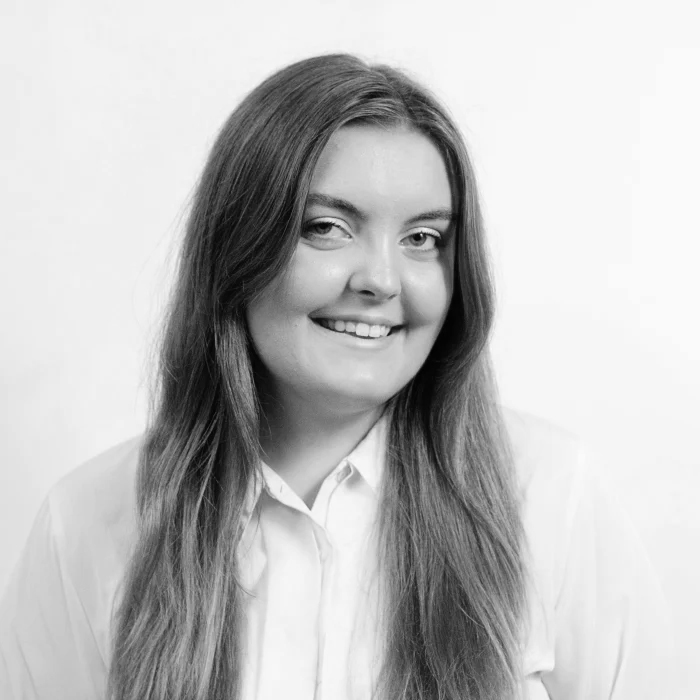
Taylor McGinnis
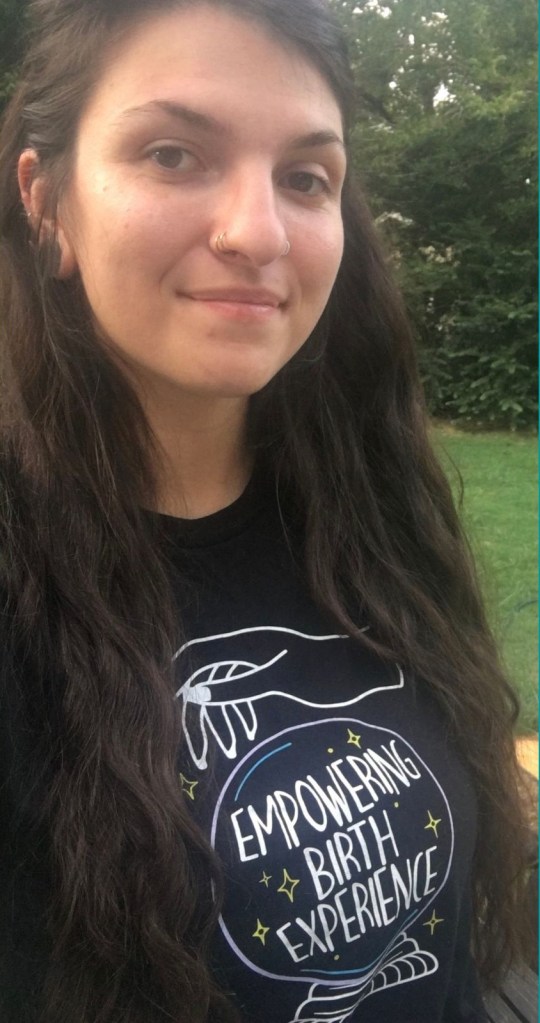
McGinnis is the owner of His Hands and Feet doula services and has been a doula since 2019. Wisdom of Womb Wisdom Doula Services has been a doula since 2022. Harvey-Williams, Taking Root Birth, has been a doula since 2017 and started training as a midwife in December 2022.
Mason was inspired to become a midwife after she experienced a home birth with a midwife herself. When she had her first child, she suffered from postpartum depression and struggled nursing. Mason decided to do a home birth for her second child and hired a midwife. She didn’t experience postpartum depression this time and fell in love with the concept of midwifery.
“I found a midwife in Northwest Arkansas, and she made my experience a hundred times better,” Mason said. “It was like a night-and-day difference, and after my experience, I just fell in love with the care that I received…you see one person throughout your entire pregnancy, and we really got to know each other, and I just honestly felt safe.”
“I found a midwife in Northwest Arkansas, and she made my experience a hundred times better.”
– Cassi Mason
Nicholle Fletcher
Fletcher originally wanted to be a midwife, but there were no midwife training programs at the time, so she decided to become a doula first. She felt that it was what she was made to do.
“My objective is to be a part of the solution to the problem which is maternal mortality,” Fletcher said.
McGinnis wanted to become a doula after the birth of her fifth child. It was her first VBAC (vaginal birth after caesarean), and she felt underprepared and under supported. She wished that her provider had explained the situation to her more thoroughly.
“I left that birth with quite a lot of birth trauma,” McGinnis said. “In my heart, I was feeling like, if I’m struggling with this, if I had this experience, then I know I’m not the only one.”
In a similar way, Wisdom wanted to become a doula so that women like her would have a better birth experience than she did. For Harvey-Williams, the more she learned about how the medical system treats mothers, the more she realized that being a doula was her calling.
Most doulas go through either Birth Arts International or DONA (Doulas of North America) International for their training. McGinnis and Harvey-Williams went through Birth Arts while Wisdom enrolled in DONA. Both programs are similar in that the students do assignments online, read textbooks, write papers, and attend a certain number of births before they’re certified.
The standard education that most midwives take is the PEP (Portfolio Evaluation Process) established through NARM (the North American Registry of Midwives). To start, the student has to find a preceptor, which is an experienced, NARM-certified midwife, for their apprenticeship.
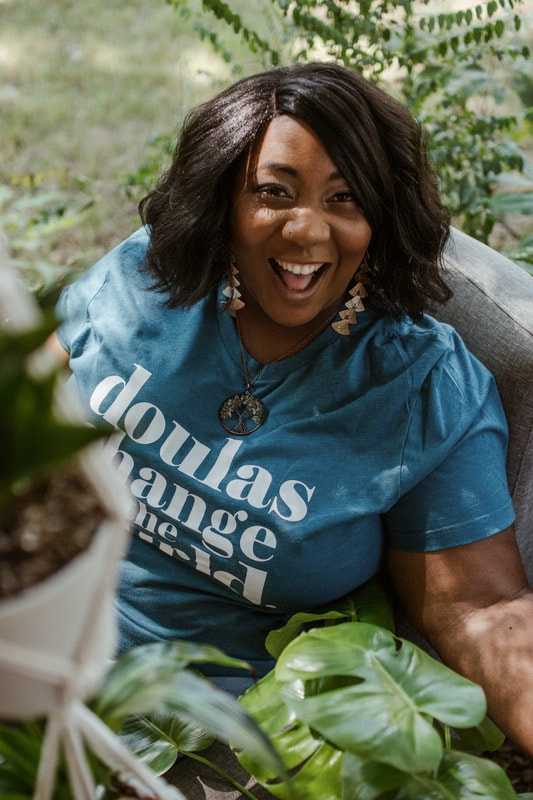
Ariel Wisdom
The student studies textbooks and shadows their preceptor to births as well as pre-natal and postpartum appointments. The preceptor decides when the apprentice had learned enough to become certified. To become officially certified, the student must pass a 300-question exam, which is taken in 2 4-hour segments.
Mason stated that she was fortunate to have a great support system during her training so that she could work and study. However, it was often difficult to connect with physicians who would treat her clients well and were willing to work with a midwife.
“You don’t want somebody to be treated badly just because they made a choice to have a baby at home,” Mason said. “I’ve actually had some people who, maybe they wanted a circumcision for their child after postpartum, and they were calling up pediatricians in different places, and they actually said, we don’t take home-birth babies. Because sometimes they’re considered dirty babies.”
It can also be difficult to connect with preceptors according to Fletcher. In the early stages of her apprenticeship, she had to train with a preceptor three hours away because there aren’t many midwives, and some midwives don’t want to train new midwives due to competition for business.
Doulas have similar problems in how it can be difficult to find clients who will trust them and to compete with medical providers who don’t want to work with doulas, according to Wisdom, Harvey-Williams, and McGinnis.
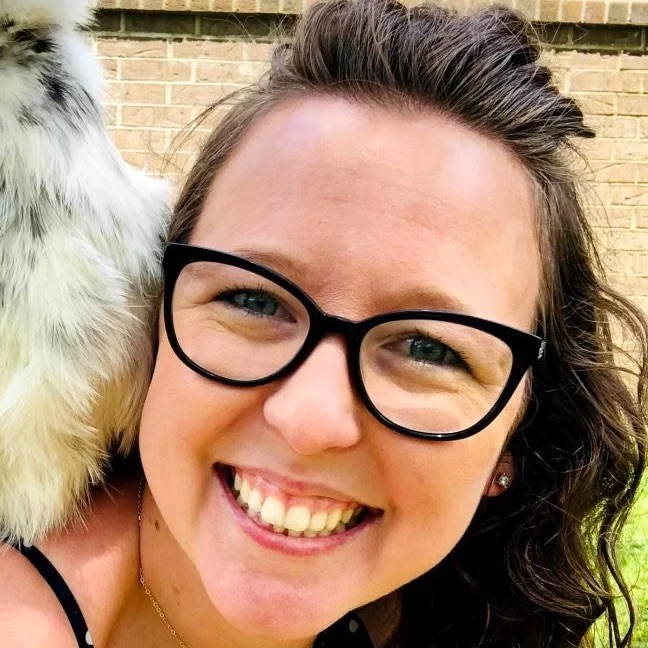
Dillon Harvey-Williams
A further complication is that in Arkansas, patients legally must have a risk assessment in the beginning and near the end of their pregnancy if they plan to work with a midwife for a home birth. They have to see a third party, either the health department or a nurse-midwife, that will look over their history to make sure that they won’t have any complications.
“It’s just like a routine prenatal that’s not needed,” Mason said. “It’s like an extra step that our patients have to do that they don’t really need because we are the ones that are assessing care. Most states don’t require that, but Arkansas does.”
Midwives and doulas offer many types of care, and they can overlap sometimes, but the two are very different. Doulas focus on emotional support and typically don’t offer medical advice or treatments, while midwives focus more on physical and medical services.
Both midwives and doulas typically offer some form of preconception, pregnancy, birth, and postpartum support. During preconception care, Mason focuses on detoxing the body, cleansing the lymphatic system, and making sure the patient’s body has the best start possible.
McGinnis offers a similar service. She does fertility support, which means she goes with her clients to fertility appointments and helps them learn how to track their cycles. Fletcher does fertility and nutrition coaching.
Mason also offers regular prenatal appointments with the patient. She does all of her patients’ labs, knows what their diet is like, knows what their family and home is like, knows if they have good support or not, knows how they react to different medications, etc. She tailors her services individually for each person.
“It’s kind of like if you have a whole team of people—the doctor, the nurses, the APRNs, the billing, all of those things—and you wrap it all into one person,” Mason said. “Also, we don’t take as many people as OBs do…whereas you would go to an OB and spend fifteen to twenty minutes in their office, we spend an hour doing our prenatals, educating and making sure that they’re not afraid and whatever their fears are, we can address…we can really tailor that to each individual person.”
Fletcher, McGinnis, Harvey-Williams, and Wisdom also offer prenatal appointments. As doulas, they provide comfort, guidance, and education regarding pregnancy and birth.
“Doulas are huge advocates,” Fletcher said. “I am having conversations that are empowering you to understand what is your baseline, what is normal for you…then you can have a leg up, and you have information, so any time you have information, you have power…the truth is, this is your body…that’s where the midwifery model of care and doula support separates from the medical model of care because it’s individualized.”
Towards the end of a patient’s pregnancy, Mason listens to the baby more, does non-stress testing to make sure the baby sounds good and blood flow is sufficient, and sends off biophysical profiles to analyze amniotic fluid levels and make sure the placenta is still doing what it should.
Mason’s clients get unlimited postpartum support, so she helps with whatever they need regarding the baby. She checks up on them to make sure they’re doing well emotionally and can get them support from a lactation specialist if need be.
McGinnis, Harvey-Williams, and Fletcher also provide postpartum support. For a certain amount of time, McGinnis and Harvey-Williams will cook small meals, care for children and pets, do household chores, or run errands to let the new mother recuperate. Fletcher is also a lactation specialist.
According to Mason, the difference between traditional maternal care and conventional maternal is choice. She makes sure to educate her patients about their body, but she doesn’t force them to do something they don’t want to do, like STD testing for example.
“A lot of my patients have said, They [doctors] made me feel stupid for my choices or they made me feel like I didn’t know what I was doing. When you are instilling fear upon somebody, fear can do a lot of different things to the brain,” Mason said. “If you think about animals, they want to go the most secluded place where they can protect their baby…if they don’t feel safe, they just won’t [go into labor] or things will not happen the way it needs to happen.”
“A lot of my patients have said, They [doctors] made me feel stupid for my choices or they made me feel like I didn’t know what I was doing. When you are instilling fear upon somebody, fear can do a lot of different things to the brain.”
– Cassi Mason
In addition, Arkansas is almost 50% maternal health care deserts according to Fletcher. What this means is there are several areas where maternal health care isn’t offered, and so a patient has to drive hours away into a bigger town. For some, this isn’t possible because they don’t have time outside of work or it’s too expensive.
Fletcher founded Ujima to address this issue and provide more maternal health care options in those areas, focusing specifically on black mothers. Midwives used to be prolific before the advent of modern medicine, especially in black communities where the “grand midwives”—mostly grandmothers—were professionals of birth, medicine, and counseling, and all of this was done in the home.
Since the shift from this mindset, the rate of black maternal mortalities has increased significantly. However, according to Fletcher, 90% of maternal mortalities—not just for black mothers but for everyone—are preventable.
The cause of higher maternal mortality rates for black women are often due to systemic racism, lower socioeconomic status, and lack of education. Within the healthcare system, the mother’s problems and preexisting conditions are sometimes brushed off because of falsities spread about black people, like they supposedly have a higher pain tolerance.
According to Wisdom, it’s been statistically proven that mothers who hire a birth worker are less likely to need a caesarean and rate their birth experiences higher. Additionally, Mason stated that birth is 80% mental, 20% medical. In other words, the more educated and emotionally prepared a mother is for birth, the smoother the birth will go. That’s where midwives and doulas come in.
Avery Jonesis a sophomore in the Department of English and Philosophy at Arkansas State University in Jonesboro. She can be reached at: avery.jones@smail.astate.edu
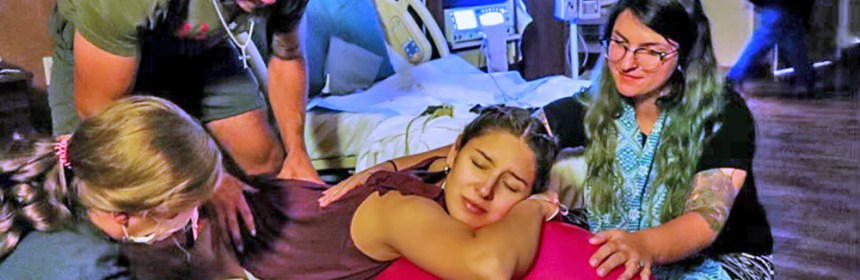
Note: Feature photo courtesy of Dillon Harvey-Williams.