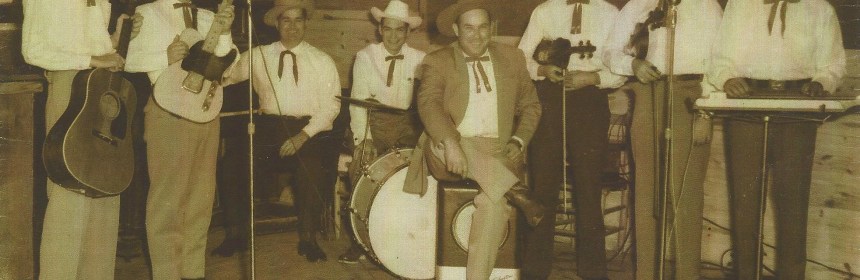
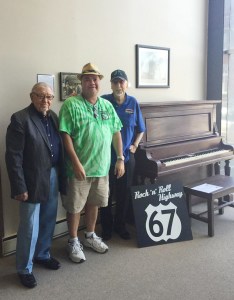
PARAGOULD, Ark. — The Trinity River Band performed May 21 in the Collins Theater as part of KASU’s Bluegrass Monday.
Known for appearing on the Duggar Mountain Show, the band started playing in 2007. Strictly Country magazine named their song, “A Sinner’s Prayer,” as Song of the Year.
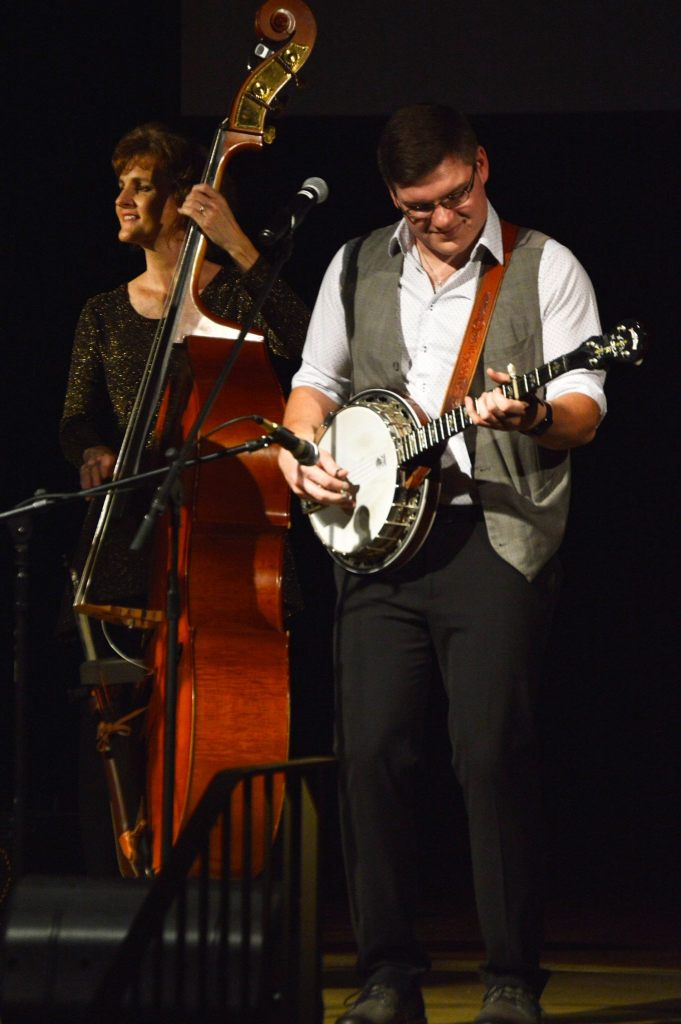
Joshua Harris leads the Trinity River Band in a song. Harris first asked his parents if he could learn the banjo at the age of 10.
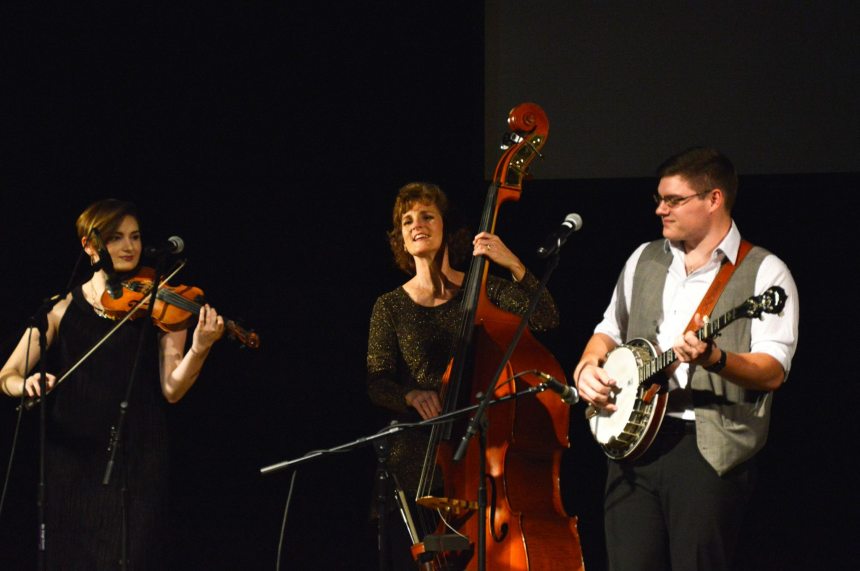
Sarah Harris sings as Brianna and Lisa Harris back her up during The Trinity River Band concert. Sarah Harris also learned to play the mandolin in 2009.
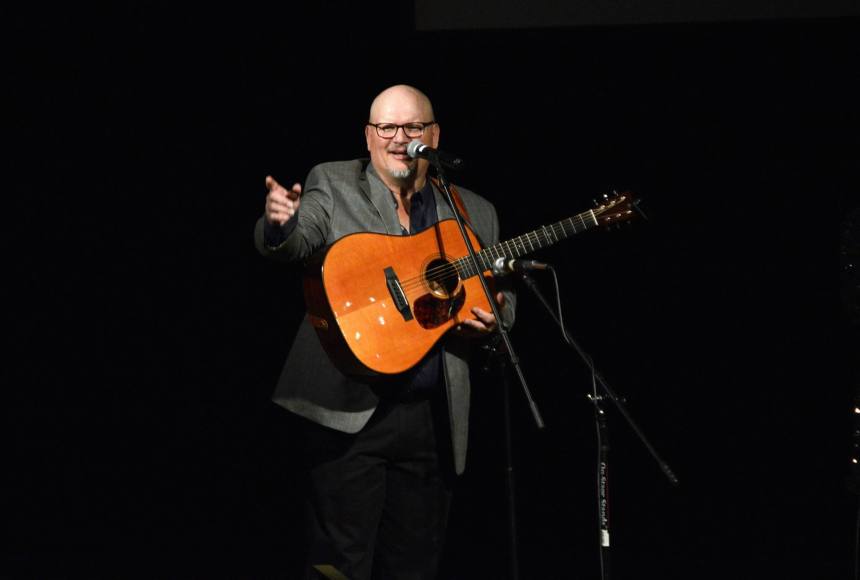
Michael Harris interacts with the audience at The Trinity River Band concert. Harris’ grandfather Herndon “Hunky” Jones taught him music at a young age.
Brianna, Lisa and Joshua Harris plays at Paragould’s Collins Theater. Brianna Harris began learning the fiddle at the age of six.
Lisa and Joshua Harris plays while performing with The Trinity River Band. Lisa Harris grew up playing music with her five siblings.
Bluegrass Monday concerts typically occur on the fourth Monday night of each month.
JONESBORO – DICE and Electronic Arts recently updated its newest entry in the fan-favorite “Star Wars” franchise.
“Star Wars Battlefront 2” marks a rather controversial entry in the long-running first and third-person shooter franchise. Players fight in single-player and multiplayer, whether on the ground or in space in some of the best battles from the “Star Wars” films.
With an underwhelming predecessor and negative press connected to it, the game started off shaky. Over the months leading up to the game’s release, critics and fans alike flamed the game for the potential “pay to win” elements found in the game during the open multiplayer beta back in October.
The game went through many changes since then, with the game developers addressing many of the problems. This comprehensive review of the single-player and multiplayer campaigns determines whether the game lives up to its ancestors.
Single-Player Campaign
The “Battlefront” franchise provides an interesting history with single-player campaigns. The first “Star Wars Battlefront” in 2004 did not have a cohesive campaign.
The sequel, 2005’s “Star Wars Battlefront 2,” offered a great, dedicated campaign following the exploits of a clone trooper in various battles from the films.
The single-player campaign for 2017’s “Star Wars Battlefront 2” bears similarity to the 2005 “Star Wars Battlefront 2.” Players control a soldier taking part in important battles between “Star Wars Episode VI: Return of the Jedi” and “Star Wars Episode VII: The Force Awakens.”
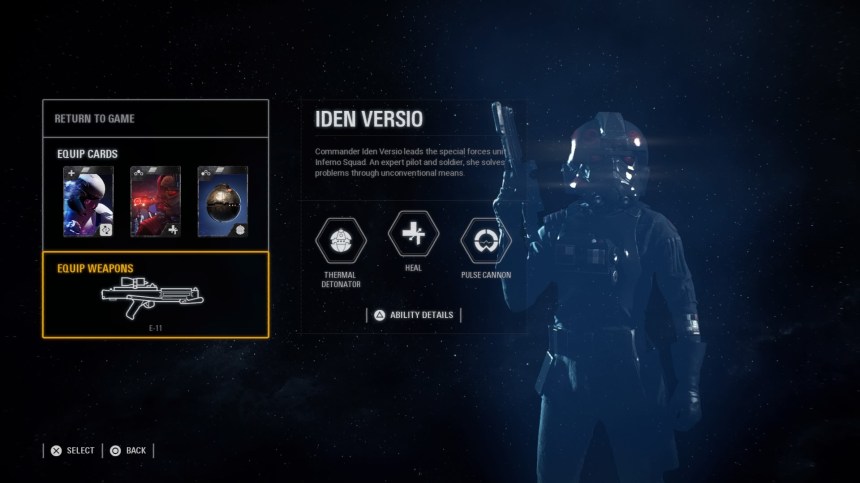
The story revolves around Iden Versio, an Imperial special forces commander, as she leads her unit, the “Inferno Squad.” The campaign follows her exploits after the destruction of the second Death Star, during the Emperor’s mysterious “Operation Cinder.”
The “Star Wars Battlefront” of 2015 lacked a single-player campaign, earning points in the sequel’s favor. The campaign pleasantly surprised me with high quality, but some flaws stuck out.
The Good
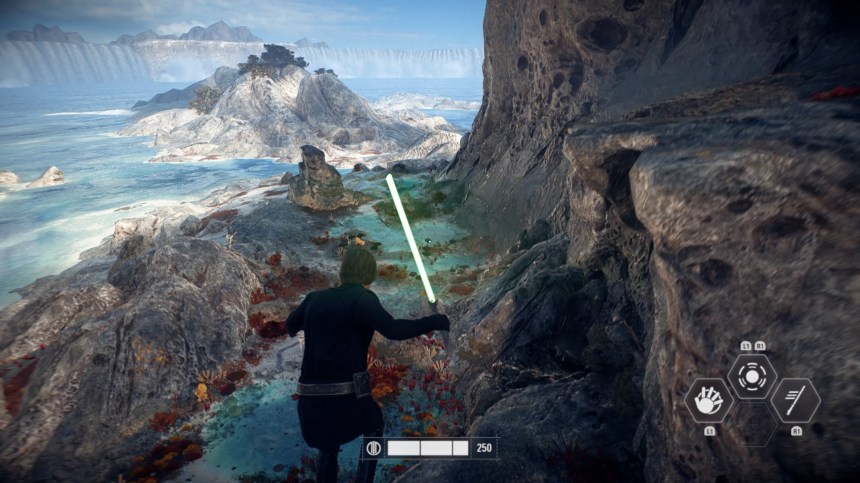
The creators designed one of the most beautiful games I ever played. From the characters to the environment, everything looks amazing and creates the feeling of actually being in a “Star Wars” film. The visuals, combined with the excellent sound design, create a truly immersive experience.
Luke Skywalker leaps into combat on a mysterious Imperial outpost. Photo by Christopher Lee
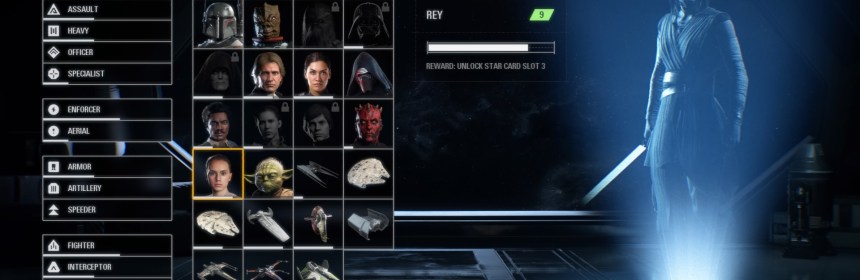
Along with Iden, players have the opportunity to play as and alongside famous “Star Wars” characters.
To avoid spoilers, this review will not go into much detail about the campaign’s story, instead focusing on the impressive campaign features.
As players travel through the campaign, they will see moments pulled straight from the “Star Wars” universe, both from films and other media like Marvel’s “Star Wars: Shattered Empire” comic series. These moments come to life from the perspective of Iden as she fights her way through memorable battles.
This brings me to one of the most impressive visual elements: character designs.
Many of the characters in this game look just like their real-world actors and actresses. Iden, portrayed by Janina Gavankar, provides one of the best examples. The motion-capture work and facial animations made her performance come to life.
Overall, the solid performances and great character chemistry round out the single-player. Misty Lee, one of my favorites, does a wonderful job filling in for the late Carrie Fisher as Princess Leia.
Great story and characters, however, do not make a game. Gameplay remains the most important part of a game, and “Star Wars Battlefront 2” does not disappoint.
A small number of Iden’s many abilities. Photo by Christopher Lee
Iden utilizes several abilities available to her as she fights her way through the smooth and fast-paced combat.
DICE uses the single-player as an opportunity to introduce players to all the sides of combat they will face in the multiplayer game option.
The single-player section involves ground and space combat connected with vehicle sections and action. All this comes together to make the gameplay both fun and cinematic.
Very few game developers can make the gameplay feel like a movie like DICE can. Players really feel the seamless gameplay as they sprint, shoot and roll to victory.
I enjoyed the single-player campaign more than I thought I would. From the characters to the settings, it all came together to form a well-structured narrative. Unfortunately, the campaign possesses noticeable, unavoidable faults.
The Bad
Almost every bad thing about the campaign comes from its length. While I enjoyed every moment of the campaign, I must mention its disappointing length.
Clocking in anywhere from four-to-six hours (depending on the difficulty setting), the campaign comes across as too short. This short length brings one of the biggest problems of the campaign to the forefront: the pacing.
This game goes way too fast. The game seems to move at breakneck speed from one location to another, and this only hurts the story overall.
Important decisions, clashing loyalties and huge game-changing events seem to fly by. Spending more time developing the characters and their motivations would have been better.
Single-player Conclusion
DICE did a fantastic job with the campaign. Even with a short length and overly-fast pace, The story’s pros outweigh the cons. The way DICE integrated Iden’s story into the established “Star Wars” canon makes it a “Star Wars” experience.
The following video showcases “Star Wars Battlefront 2” at its finest. Watch Iden fend off the rebel attack on Fondor Station.
Multiplayer
The Good
Most of the good about the multiplayer gameplay comes across as “second verse same as the first.” The fluid, fast-paced combat shines in the multiplayer, rewarding skilled players without punishing newer players.
The multiplayer shines in the maps and the game modes, an area where its 2015 predecessor failed. It appears DICE listened to the complaints.
The game came out with 11 maps and five game modes. DICE planned to add more maps later through free downloadable content and updates – a major step forward after the rather disappointing 2015 release.
The addition of free content proved to be a step in the right direction, but it resulted in one the worst criticisms towards the multiplayer.
Overall, I found myself being fully immersed in the beautiful maps as I fought in some of the most iconic locations in the films. The maps and modes vary in terms of gameplay and should keep a player invested for many hours.
This review quickly lists and describes the different game modes. It also includes gameplay for the two largest game modes: galactic assault and starfighter assault.
Galactic Assault
The bread and butter of “Star Wars Battlefront 2,” — galactic assault — offers large-scale 40-player combat. The player fights across well-known battlefields piloting different vehicles and fighting as iconic heroes or villains. Focusing on multiple-objective gameplay, this game mode allows players to truly utilize all the game offers.
See an example of galactic assault gameplay. Watch the defense and attacking phase of the planet Jakku from “Star Wars Episode VII: The Force Awakens.”
Starfighter Assault
Similar to galactic assault, players accomplish multiple objectives while piloting powerful and iconic vehicles like X-Wings and TIE Fighters.
Watch the video below to see just what Starfighter Assault offers.
Heroes vs. Villains
Finally, players can find out who would win in a fight between Yoda and Darth Vader. The game mode proved to be pretty self-explanatory.
Hero Showdown
A small-scale take on the established heroes-versus-villains format. Find a friend and fight the forces of good or evil in two-vs-two combat. P.S. Don’t split up.
Strike
This mode boils down to a smaller-scale galactic assault match. Its fast-paced combat usually revolves around capturing an objective and getting it to a location for extraction.
Blast
Standard team deathmatch: score 100 eliminations before the enemy team to win.
Ewok Hunt
They may be fuzzy but they prove to be ruthless. Join a group of stormtroopers as they try and survive, or hunt them down as one of the cute little murderers. This mode will only be available for a limited time.The multiple maps and game modes come together to form a fun, exciting experience. This may be the most fun I experienced with a shooter in some time. But, even the best experiences have flaws.
The Bad
One of the biggest problems with the game tends to be balancing. While the game designers mostly balanced the weapons and vehicles, the maps provided the main problem.
More than a few maps seem to lean heavily to one side or the other. Winning on these maps can feel far more difficult than needed. Of course, this can vary greatly depending on the map, enemy team skill level and team composition.
Consistent updates alleviate annoying balancing problems, but “Star Wars Battlefront 2” lacked in new content.
Updates to “Battlefront 2” felt slow with many content updates being separated by months of waiting. Long wait times are ok if the final product lives up to it, but updates tend to fall flat.
The first large-scale update coincided with the release of “Star Wars Episode VIII: The Last Jedi.” Since then the majority of the patches have focused on balancing heroes, rebuilding the progression system and quality of life changes. All necessary and appreciated, but content felt lacking since December. Though it appears the waiting might be over.
As of the writing of this review, the two most recent updates from April and May have included the addition of a new temporary game mode, Ewok Hunt, and a new content update to coincide with “Solo: A Star Wars Story.”
With the inclusion of new monetization options after the removal of loot boxes maybe updates like these will become the norm. That brings me to the most important part of the review.
The Ugly, or What Used to Be
The character progression system brings the biggest problem. This sentence meant something entirely different with the game’s original release. Now it summarizes many the problems “Battlefront 2” currently face.
Originally, players could equip upgrades to their favorite classes, vehicles and heroes to fit their favorite play style. These upgrades, called “star cards,” could offer anything from a few seconds off an ability timer to completely changing how the character plays. While still true today, game creators changed how players unlock these upgrades.
Example of the old progression system. Photo by Christopher Lee
The Controversy
Players unlocked star cards in one of two ways, but both ways relied on the same system.
Players earned three forms of in-game currency: credits, crystals and crafting parts. All of it revolved around the “supply crate” system.
Supply crates describe items earned in the game that gave players random in-game items. These items included emotes, victory poses, star cards and crafting parts. The last two being of most importance.
Players could earn star cards from supply crates. Each crate gave the player the possibility of earning any star card up to a certain rarity. The real problem came from how players acquire supply crates.
Players earned credits just by playing the game. Credits purchased supply crates, which carried star cards and crafting parts. Crafting parts could craft and upgrade star cards, and the best star cards could only be gained through crafting.
While confusing to newer players, it also came with another, bigger problem.
When the game first released Nov. 17, players could purchase supply crates using real-world money. This created backlash from the fans.
Fans called this a “pay-to-win” system, where players could spend real-world money for in-game advantages. DICE answered by removing the option to purchase “supply crates” with money.
After several months DICE changed the progression system entirely to focus more on linear progression. Now players earn experience points to level up their account and classes unlocking new star cards in the process.
As players level up classes they earn skill points which are spent leveling up star cards. This new system stream-lined the progression and rewarded players for playing their favorite classes.
This change brought new life into the game and turned the ugliest mechanic into the simplest.
Multiplayer Conclusion
Despite its flaws, this game provides one of the best shooters I have played in a while. The fun and immersive game play makes me feel like my skill matters during fights, as my many deaths playing as a sniper showed me.
Overall, the multiplayer left a positive impression. I think DICE fixed many of the games biggest problems and could easily fix the rest.
The legacy the unrewarding progression system left behind leaves me more emotionally conflicted than Luke Skywalker after Darth Vader said, “Luke, I am your father.” On the one hand, DICE and EA acknowledged their mistakes and took action to change them, but on the other hand, they tried implementing a clear pay-to-win system in the first place.
Newer players should enjoy the multiplayer just fine, but I wonder how many of the original playerbase like myself left because of how bad it used to be.
Final Thoughts
My time with “Star Wars Battlefront 2” proved to be pleasant and immersive. Short-but-fun single-player combined with fast-paced multiplayer creates a delightful experience.
The game shows several good ideas, but, even with the potential of the progression system, things still need some ironing out.
With the recent changes to the game and the new reduced price, I don’t see any reason to not pick it up.
Even with all of its problems, I still consider it to be one of the best “Star Wars” games I’ve ever played. I just hope DICE and Electronic Arts learned from its mistakes.
JONESBORO – “Star Wars Battlefront 2’s” new progression system breathes new life into the multiplayer experience for new and returning players.
Designed to help new players, this comprehensive guide breaks down how the progression system works and offers a few effective play style choices to get players started.
Progression
Let us start with the basics: how players progress through the game.
At launch, player progression came from three parts: player level, a class’ card level and items called “supply crates.”
Supply crates offered random in-game items including emotes, victory poses, star cards and crafting parts. Only the last two proved to be important for player progression.
This style of progression proved confusing and dissatisfying with upgrades being given out at random or through hours of grinding to earn enough crafting parts.
After backlash from fans DICE changed the progression system to focus on linear progression. Now upgrades must be earned them the old fashion way, through gameplay. This brings us to star cards, or upgrades equipped to soldier classes, vehicles and heroes.
Star cards offer players the ability to customize their classes to fit their specific play style. Whether running and gunning through enemies or taking a more passive, long-range approach.
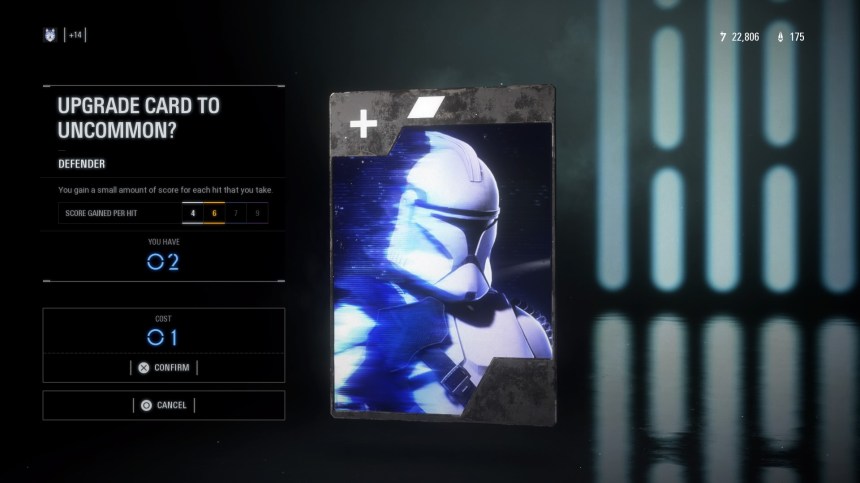
An example of how players upgrade star cards. Note the increased values from upgrading. Photo by Christopher Lee
Upgrading star cards provide better stats including reduced ability cooldown timers and new abilities or resistances.
With the changes to the progression systems, acquiring and upgrading star cards proves to be easier than ever. Now players earn experience points which level up both their account and the individual classes, vehicles and heroes.
Level up a class or hero gains a skill point. Players use skill points to unlock and level up star cards.
Unlocking and upgrading star cards also require a certain account level. This prevents individuals from acquiring powerful star cards at lower levels. However, players gain plenty of experience playing the game earning credits.
Along with gathering star cards, players acquire iconic “Star Wars” weaponry.
Weapons tie into to class progression. Earning them comes from getting kills in a specific class. Getting kills with specific weapons also unlocks attachments for them.
DICE designed the class progression is straightforward. Any needed supplies can be earned through gameplay. Players will find their progress in the “Career” tab on the main menu.
Star Cards and Weaponry
The play styles mentioned in this section offer interesting or strong options for new players, but I encourage new players to experiment with different star cards as they become familiar with the game.
First, let us start with the most straightforward class: assault.
I have two loadouts for assault. I call them “ol’ run-and-gun” and “the mid-range monster.”
“Ol’ run-and-gun” packs the CR-2 as its primary weapon. With its high rate of fire and devastatingly quick time-to-kill, this weapon will win any close-up fight.
For star cards, I went with “Recharge Vanguard” for extra close range damage. This card brings abilities back after the player gets a kill, which goes well with the other two cards.
The last two cards, “Resourceful” and “Toughen Up,” proved to be useful. “Resourceful” brings a player’s abilities up more often, and “Toughen Up” heals damage suffered by the player. I suggest unlocking “Resourceful” for every class. These cards do the most damage at close range. To deal damage at long range, I suggest my next loadout, “the mid-range monster.”
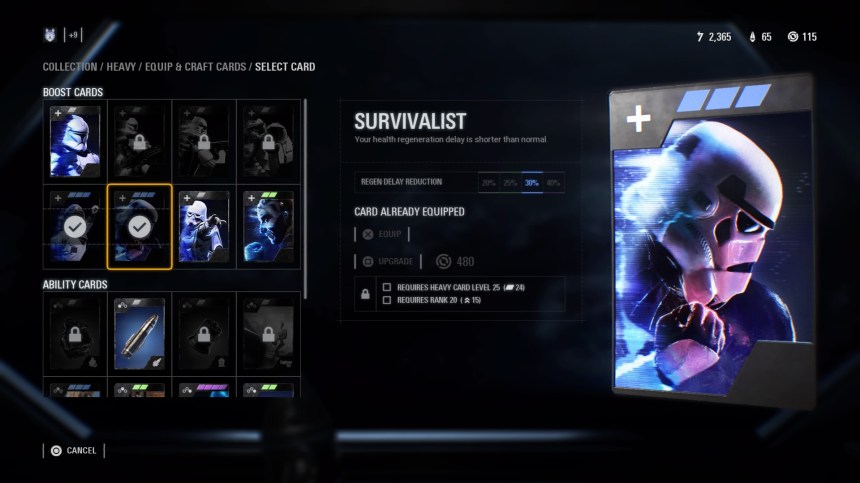
With the right weaponry, assault deals with mid-range opponents surprisingly well – the A-280 fills this niche. With a three-round burst fire mode and balanced weapons stats, it packs quite a punch close-up or far away. For cards, I suggest “Survivalist,” “Bounty Hunter” and “Resourceful.”:
“Survivalist” reduces the time required before a player’s class heals from damage taken. This means a player can get back to fighting faster after getting shot, blown up or burned.
With “Bounty Hunter” equipped, more “battle points” can be earned. With battle points, powerful reinforcements can be purchased during a multiplayer match to help in team play. If a player wishes to play as a powerful Jedi or Sith, battle points will be needed.
This loadout focuses more on team-play, making it more passive but just as lethal. I suggest this loadout on large, open maps with multiple objectives.
Next up: heavy, big guns and dealing plenty of damage.
Heavy offers two styles of weapons: high rate-of-fire with low damage and low rate-of-fire with high damage. In my time playing, I found all of the heavy guns to be rather consistent. I suggest using the most comfortable gun. For cards I suggest these:
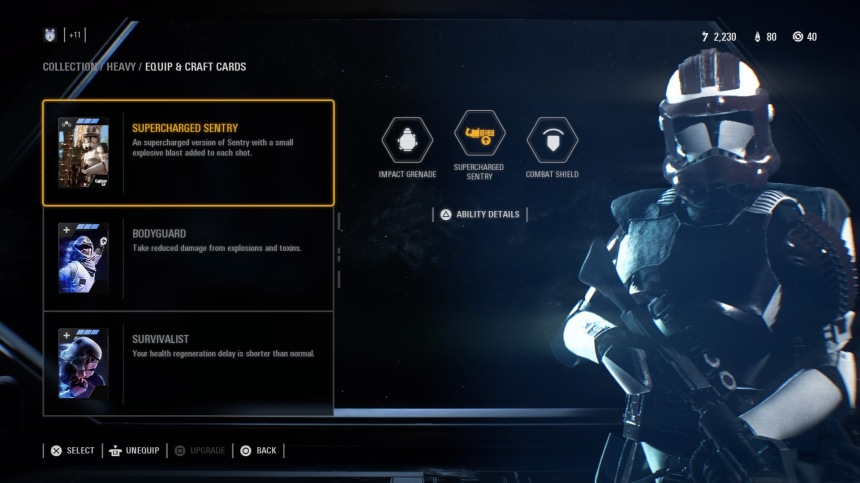
Star cards for the “heavy tank” loadout. Player preference determines the best weapon. Photo by Christopher Lee
Introducing the “heavy tank” loadout. With all the provided resistance, a player will never be blown up. I designed this loadout to solve the heavy class’s biggest weakness: getting blown up.
The heavy possesses an ability called the sentry gun, a mini-gun that does huge amounts of damage, but it makes the heavy move slowly. Because of the slow-moving play style, enemies will throw grenades. Players will need to take a few explosions to do the job, and this loadout helps with that.
“Supercharged Sentry” proves to be the bread, butter and whole kitchen; doing ridiculous damage and healing while in use. The sentry ability offers another fun feature by reducing damage from explosions. Combine this with “Bodyguard,” which does the same thing, and a player can basically “tank” a rocket at their feet.
“Survivalist” provides healing from damage quickly. I recommend this loadout for attacking or aggressive roaming. My next loadout (for defense) proved to be just as fun.
Big guns and bigger explosive guns define this play style, and it will have players yelling “fire in the hole!”
The “artillery inbound” heavy basically works around explosions and nothing else. It consists of a grenade launcher, the “Barrage” star card for general explosion needs, and an explosive sentry for when an area needs to be locked down.
Beware using the explosive sentry offensively, as it cannot move while in use and it fires slowly.
Instead of using small, rapid-fire explosive shots like the supercharged sentry, the explosive sentry sends out massive, highly-explosive rounds capable of killing an enemy with one shot. It works for locking down a hallway or small room for several seconds.
The last star card remains optional. I like “Resourceful” because it gives the sentry back faster.
Sometimes in “Star Wars Battlefront 2,” players need to lead by example and be the guiding light for teams. I have two officer loadouts just for that.
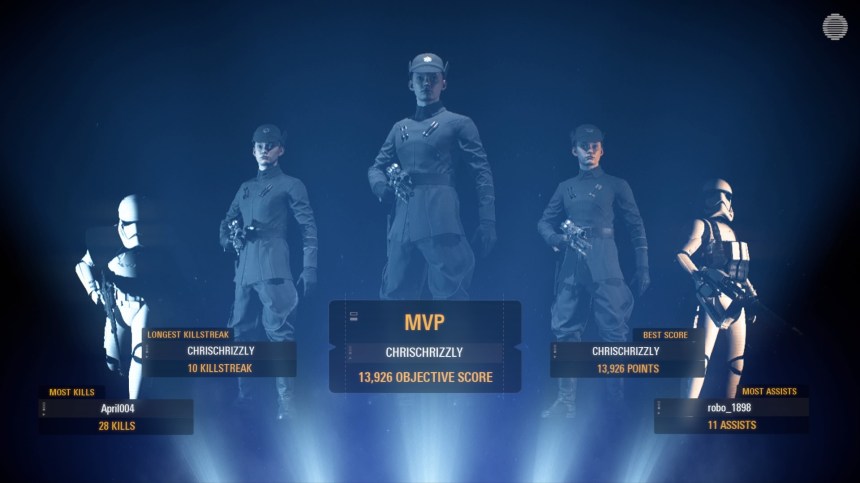
Nothing can get a player to the top of a scoreboard like an officer.
Example of officer’s ability to score big. Photo by Christopher Lee
Like the heavy, I have a hard time justifying one officer weapon over the others. Use them all and figure out which one works. But, I offer some fun cards.
I offer two powerful play styles. One leads the team from the background and the other leads by example from the front lines.
Always use “Resourceful.” Officers need their abilities at all times to defend themselves and their squads. The other two cards differ depending on the situation and play style.
For those interested in helping their team more than helping themselves, I suggest the “guiding light” loadout.
Besides “Resourceful,” players equip star cards revolving around passively supporting their team before using their improved battle command to make a push into enemy lines. The improved battle command gives a team shields and damage mitigation for a short duration, which proves to be crucial for taking objectives.
“Officer’s Presence,” allows allies to heal faster from their injuries, similar to the “Survivalist” star card. This loadout makes one a team player and gets higher scores.
On more close-quarters maps I suggest players “lead by example” with this loadout: “Resourceful,” “Bounty Hunter” and “Disruption.”
As discussed previously, “Bounty Hunter” gains more battle points, and “Resourceful” lowers cool down. “Disruption” makes a fun twist by momentarily preventing all enemies from firing their weapons. This extremely powerful ability can save lives when one “lead by example.”
Last, the specialist class offers sniper gameplay and comes with one loadout useful for every job.
The specialist possesses the lowest health of all the classes. Because of this, survival must be placed at top priority to successfully help the team.
Start with the “Survivalist” card. The specialist’s low health means they will heal the fastest with this card. It proved to be useful when dueling other snipers on the battlefield.
Next, the “Marksmen” star card restores a small amount of ammo after killing an enemy with a headshot.
The “Personal Shield” allows survival from almost any bad situation. It provides shields to absorb a large amount of damage, allowing players to scout ahead or retreat without dying instantly. It also helps when peaking over ridges to look for enemy snipers.
These loadouts should help any newer player start their games off on a strong foot. Best of luck to everyone in all their multiplayer endeavors, and may the force be with you.
JONESBORO — The 2018 Arkansas Roots Music Festival entertained Northeast Arkansas residents Saturday, April 14 at the City Water and Light Park.
The festival coincided with Arkansas State’s Delta Symposium XXIV. Musical guests comprised The Spencer Brothers, Tito Deler: The Original Harlem Slim, Side Street Steppers, Wilkinson James, Rising Star Fife and Drum Band, and the Arkansas Brothers.
KASU Station Manager Mike Doyle sings with the Spencer Brothers following their request to him. The siblings sang duets of country music’s favorite hits from the 1950s through the ’70s.
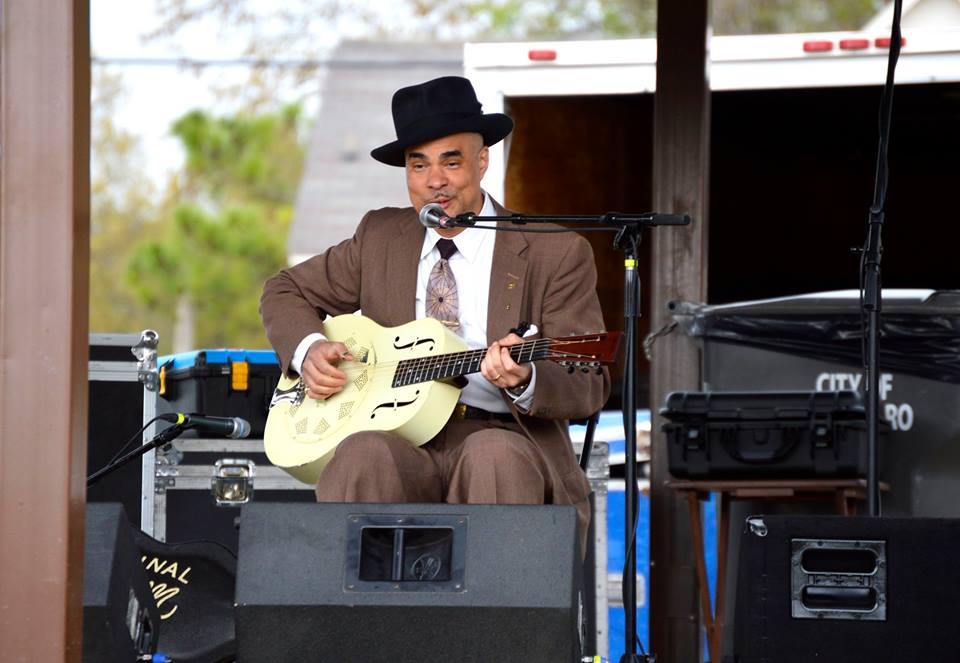
Tito Deler, the original Harlem Slim, brought his blues to Jonesboro all the way from New York. Deler would travel to Baton Rouge, Louisiana, for his next show following the festival.
Christian Stanfield sings while playing guitar with backing from bassist Ben Walsh during a performance from the Side Street Steppers. The Memphis band brought a vintage feel to the festival with its 1920s and ’30s inspired music.
Mandy Martin plays washboard while Vera Stanfield plays her “Starry Uke.” Vera’s husband, Christian, helped make the banjo uke.
Liz Wilkinson and A.J. Schleber, singer-songwriters of the band Wilkinson James, performed Americana music for the crowd. The band hails from Minneapolis, Minnesota.
Shardé Thomas, leader of the Rising Star Fife and Drum Band, plays a homemade cane fife in the vanishing fife-and-drum blues tradition. This style of country blues was integral to the African American community in the Delta.
The Arkansas Brothers closed out the festival. Their original songs reflect their experiences within the state.
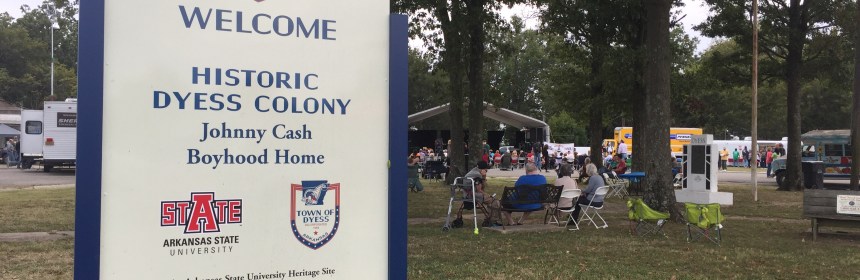
DYESS, Arkansas – The Arkansas State University Heritage Studies Center hosted the inaugural Johnny Cash Heritage Festival in the town center of Dyess.
During the three-day festival, people from all over the country came to celebrate the history of the Dyess Colony, where award-winning American musician Johnny Cash grew up.
In an excerpt from the program, Roseanne Cash said she was thrilled to present the festival, which “goes beyond regional and world-class music to include educational programs, exhibits, local crafts and an oral history project.”
Funds from this festival targeted the re-creation of the barn, smokehouse, chicken coop and privy that once were a part of the Cash farmstead.
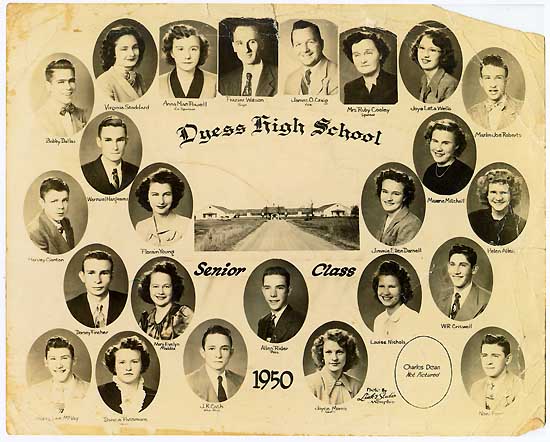
Dyess High School Senior Class. J.R. Cash can be seen to the left of the year, 1950. Photo courtesy of the family of Wanda Lawrence, sister of Warnuel Hargraves, pictured.
He Was Just Plain J.R.
“He Was Just Plain J.R.,” moderated by KASU’s Michael Doyle, featured a panel of alumni from the Dyess Class of 1950. A.J. Henson, a friend of Cash’s, told stories of their friend group – J.R., A.J. and J.E. – that ran around Dyess together in the 1940s.
“We went to school together since first grade and went to the same church,” Henson said. “We (Cash and Henson) were automatically friends. We went to Wilson or Lepanto for a midnight on Saturdays.”
The panel members said Cash always wrote poems and was an above-average student. Henson told a story about the time Cash wrote a poem for him, quoting it in its entirety. Classmate Louise Nichols echoed Henson’s recollection of Cash’s writing prowess.
“He would always think and talk about things up in the air compared to what we talked about. He liked being up front and being recognized,” Nichols said.
Delta Themes in the Music of Johnny Cash
Aaron Miller, Ivy Tech Community College associate professor of history, analyzed the motif of the Mississippi River plain in Cash’s songs in his presentation, “Cultivating the Fabulous Johnny Cash: The Environment and the American Artist.” Miller’s analysis of Cash’s Southern roots compared Cash’s writing to Mark Twain and B.B. King.
Area historian and Marion Evening Times newspaper reporter Mark Randall discussed “Jesus Was Our Savior and Cotton Was Our King,” based on the song by Cash. Throughout the presentation, Randall highlighted the mention of cotton in Cash’s songs and how his Southern upbringing formed Cash. He quoted Cash’s 1997 autobiography and said, “Back in Arkansas, a way of life produced a certain a certain kind of music.”
Randall then played a handful of Cash’s songs about cotton: “Busted,” “Pick a Bale O Cotton,” “Pickin Time” and “I Never Picked Cotton.”
Becoming Johnny Cash
Historian Colin Woodward looked at the father and son dynamic within the Cash family in his presentation titled “Ray and Johnny: How Cash’s Father Influenced His Life and Career.” Woodward said the dynamic in the 2005 movie, “Walk The Line,” may not have been an accurate portrayal as little information exists on Ray and Johnny’s relationship other than the movie.
Cash’s personal historian and friend, Mark Stielper, analyzed the turning times of Cash’s life in his presentation “Fifty Years After Folsom” from his early days in the spotlight until his awakening in the 1960s. Stielper spent time with Cash, and mentioned Cash’s autobiographies, “Man In Black” and “Man In White.”
“In 1967, Johnny had the No. 1 album after ‘Folsom Prison Blues’ but his life was in shambles,” Stielper said. “A man lost in the dark could see the light.”
Stielper spoke of Cash’s opioid abuse and how the lowest point of his life was when he wrecked his car in the rain and landed himself in jail. The sheriff of the station gave Cash a long speech about how he needed to turn his life around. Cash’s life then began to change for the better when he sang at the White House in 1968. From that moment, Stielper said Cash spent the next 50 years of his life making music as a better man.
Albert Austin “Sonny” Burgess, a 2002 Rockabilly Hall of Fame inductee, died Aug. 18. He lived 88 years.
Born May 28, 1929 to Albert and Esta Burgess in Anderson, Arkansas, Sonny learned to play guitar at an early age and started playing rhythm guitar with his uncles. A lifelong Newport resident, he graduated from Newport High School in 1948. Following a three-year enlistment in the U.S. Army, Burgess joined Johnny Ray Hubbard, Gerald Jackson and Kern Kennedy and formed the Moonlighters. The band opened for Elvis Presley during an October 1955 show at Newport’s Silver Moon Club.
Presley recommended the band record with Sam Phillips at Sun Records in Memphis. The band added Joe Lewis and Jack Nance, then changed its name to Sonny Burgess and the Pacers. Their hits included the Burgess-penned classics “We Wanna Boogie” and “Red Headed Woman,” which sold more than 90,000 copies. Razorback Records released his 1965 hit, “The Short Squashed Texan.” AVI Records released “Hitting That Jug: The Best of Sonny Burgess” in 1995.
Although contemporaries of Elvis, Johnny Cash and Roy Orbison, the band never received the same recognition. Yet a “frantic” stage act led to a degree of notoriety. The group disbanded in 1971, but gained a European following. He later toured with the Sun Rhythm Section before reforming his final band, Sonny Burgess & the Legendary Pacers.
The Rock and Roll Hall of Fame of Europe inducted Sonny in 1999. A year later, the Legendary Pacers released “Still Rockin’ and Rollin’,” voted as the best new album in the country and roots field in Europe. A 2016 documentary short entitled, “The Arkansas Wild Man,” chronicled Burgess’ trip to England to play for his fanbase.
The Arkansas Entertainers Hall of Fame inducted the band in 2007. Memphis’ Rock and Soul Museum devotes an entire wall to the Pacers. Arkansas State University bestowed an honorary doctorate of music on Burgess in 2011. Burgess co-hosted the weekly radio program “We Wanna Boogie” with June Taylor on KASU, 91.9FM in Jonesboro until his death.
Preceded in death by his son, Peyton, survivors include a son, John, and former spouse, Joann Adams.
For more information, see the Encyclopedia of Arkansas entry, the MusicianGuide biography and articles posted to the Rockabilly Hall of Fame. Sun Records promotional photograph courtesy of Sonny Burgess.
*****
(Editor’s note: Burgess was born in 1929, not 1931; this made him 88 years old.)
JONESBORO — Arkansas State University hosts the J.D. Kelly Piano Competition every year, but until this year, the competition never allowed students to participate.
Lauren Schack Clark, professor of Music at A-State and organizer of the competition, said the competition has evolved over the years. The competition’s roots started in a former summer music festival. Clark said the festival began as “really a camp for pre-college students. We started the competition as part of that festival around 2007, and the last year of the camp was 2014.”
But the time came for a change and the camp, which proved “very successful” according to Clark, drew to a close. Clark did not want the competition to end. So she retained the competition, but held it during the school year to make it more accessible for students who participate in other summer camps and family travel.
Starting last yea, Clark decided to incorporate an undergraduate division into the competition. According to Instructor of Music and annual judge Brian Henkelman, “It adds another level.”
With the addition of a new division with a larger cash prize, talented students from A-State and the entire surrounding area have the chance to win. According to the website, the competition offers cash prizes ranging from $25 to $200 for first and second place in every division.
No collegiate participants outside of Jonesboro participated this year, but Clark said she hopes that will change. The goal is to increase participation in all of the divisions by next year.
“The cash prizes are an incentive that not every competition can offer,” she said.
Those cash prizes do not come so easily. As a judge, Henkleman said, “The difference is perhaps in level of expectation.”
With the addition of the collegiate division comes a higher level of “maturity and professionalism.” Henkleman said while “the collegiate level usually offers more difficult literature … the judges are still listening for accuracy, musicality, appropriate interpretation and all of the elements of music that the students in the earliest levels are beginning to explore.”
Clark said the addition of the division serves as somewhat of a recruiting tactic.
“The competitions are designed to encourage excellence in musicianship and to give the students a goal to work toward. They are also a recruiting tool. Allowing college students to participate brings potential graduate students onto campus,” she said.
Henkleman and Clark said they agree that the incorporation of the undergraduate division is a great way to expose other students and colleges to the caliber of the music program. In addition to the college division, the competition also began to accept video entries.
The winners of this year’s undergraduate competition were Samantha Holt and Xin Ying Kong.
JONESBORO – A new entry in the long-running shooter franchise, “Battlefield 1” drops players into the boots of soldiers in the Great War.
People cower in fear as titans take to the field to decide who will be victorious by Christmas. The conflict will be bloody but only one can be the winner. But enough about the holiday game release schedule; let’s talk about its most recent recruit, “Battlefield 1.”
Released Oct. 21, “Battlefield 1” represents the newest entry in the first-person shooter franchise of the same name. In “Battlefield 1,” players take the role of soldiers in one of the bloodiest conflicts in history: World War I.
World War I provides rarely tread territory in the gaming world. Factors for this could include a lack of a clear bad guy or the relatively static combat. DICE and Electronic Arts took it upon themselves to try it anyway.
This comprehensive review of the single-player and multiplayer campaigns tells you whether or not they succeeded.
Single-player Campaign
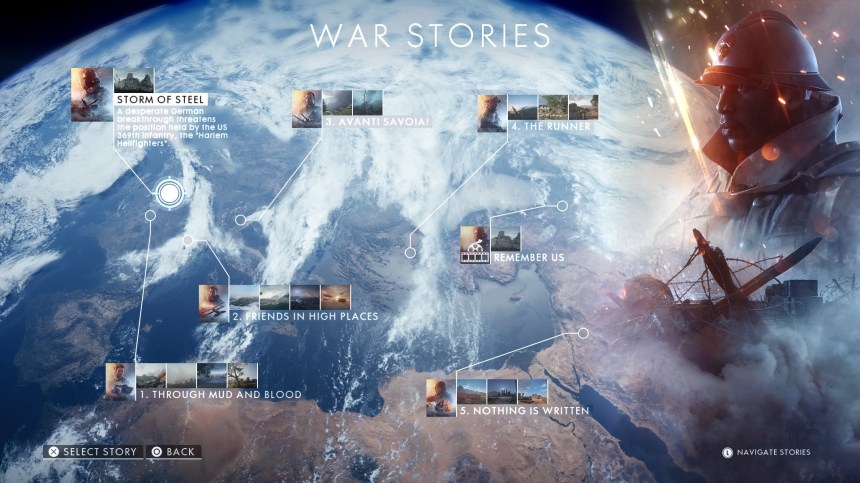
Battlefield 1 single-player menu, “War Stories.” Each story consists of multiple chapters. (Photo by Christopher Lee)
Single-player and Battlefield haven’t always had the best relationship.The lackluster Battlefield 3 and 4 campaigns to the relatively good Bad Company 1 and 2 show a hit-and-miss cycle.
For “Battlefield 1,” it seems developers at DICE focused extensively on the single-player for this entry in the franchise. “War Stories” covers the exploits of five soldiers of varying nationalities as they take part in the “war to end all wars.” From the mud of the Western Front trenches to the sun-scorched deserts of the Ottoman Empire, the campaigns provide a lot to experience.
While battlefield 1’s single-player is definitely a step in the right direction, it is not without its problems.
The Good
The good for “Battlefield 1” can be basically be determined from the writing. Each chapter is a self-contained story with it own characters and narrative. This allows each story to fully flesh out the characters.
Characters interactions are believable and their motivations are genuine. This leads players to form a connection with the characters and their efforts. Many good moments occur throughout the main campaign, but two stories stand out: Chapter 2 “Friends in High Places” and Chapter 4 “The Runner.” While I can’t go too far without spoiling them, I can say the endings will stick with you long after they’re over.
But with the good comes the bad, and Battlefield 1’s single-player is no exception.
The Bad
The majority of campaign problems can be boiled down to one fact: time.
Clocking in at anywhere between eight to 10 hours depending on difficulty and play style, Battlefield 1’s campaign is noticeably short. While this doesn’t subtract from the quality, it does leave the player wanting more.
Luckily the format DICE used for the campaign — having stories be self-contained segments — does allow for the possibility for new chapters in the form of downloadable content.
Single-player Conclusion
As a whole, the single-player gives an enjoyable and enriching experience no “Battlefield” player should go without playing. The following video provides the first 13 minutes of the single-player mode:
Multiplayer
But for many players, the most important questions lie in the multiplayer mode.
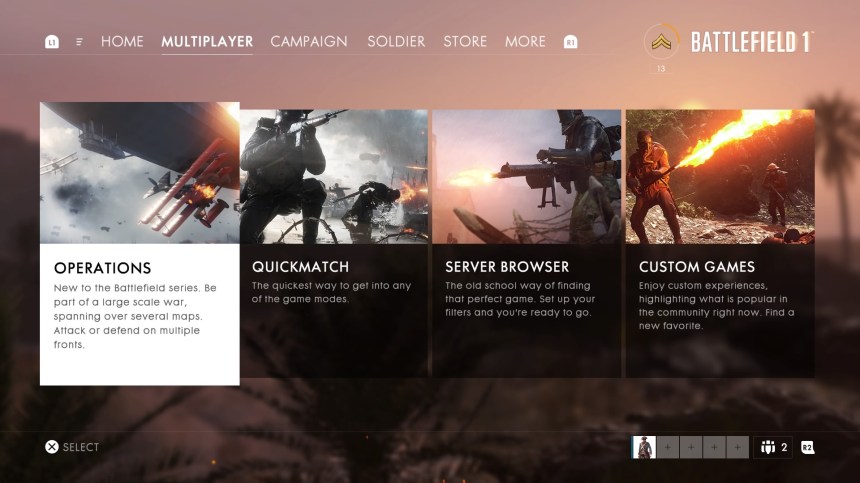
Multiplayer selection screen. Custom games are currently unavailable. (Photo by Christopher Lee)
Multiplayer provided the main selling point for the “Battlefield” franchise for years and with “Battlefield 1,” this is no different. While single-player made major advances to improve, multiplayer provides the majority of the playtime found in “Battlefield 1.”
The Good
The multiplayer mode provides the most refined of all the “Battlefield” multiplayers so far.
Players can quickly grasp the controls and the objectives of each mode as they battle in many of World War I’s greatest battlefields. Achieving rank provides access to period-appropriate weapons and gear to increase your lethality in the field.
New game mechanics and modes increase the re-playability and make each match a fast-paced arena of chaos. But it’s good chaos.
Unfortunately, the multiplayer features its fair share of problems.
The Bad
The biggest problem comes from the game balance. Some weapons and vehicles will cause players many headaches as they die repeatedly until they unlock the weapons they need to fight back.
This problem is worsened by the matchmaker. I found myself fighting players from a variety of levels sometimes having gaps as big as plus-or-minus 30 levels. This led to several unbalanced games.
Multiplayer Conclusion
While it has its problems, multiplayer produced the most fun I’ve had within a “Battlefield” in quite some time. The following video examines “Operations” from “Battlefield 1” multiplayer mode.
Final Thoughts
The romp through World War I left me in awe several times as I saw things I never expected to see brought to life in a video game. Whether a fan of the fighting or the history, “Battlefield 1” supplies plenty of enjoyable moments. I cannot wait to see what DICE and Electronic Arts has in store for the upcoming downloadable content.
JONESBORO, Ark. – The sharp smell of barbecue, the clouds of charcoal smoke, a big crowd eating meat and cheering up with concert music – the 8th annual Downtown Jonesboro BBQ Festival proved a success.
People from all over the region traveled to Northeast Arkansas to participate in the contest and enjoy what Jonesboro has to offer. The Kansas City Barbeque Society sanctioned the event.
Alderman Tim McCall said 44 teams signed up to participate in the contest. He said the contest, which started early Saturday morning, included sections for pork ribs, pork shoulder/butt, beef brisket and chicken.
The contestants could not sell their foods from the grill, which would have been deemed a health code violation. Still, they could provide free samples of their food.
“Last year, we had nearly 18,000 people coming to the festival and this year we were expecting more. Though I didn’t have the chance to get on the street, I heard it was a record-breaking crowd. We even had visitors from Nashville,” McCall said. “I believe the festival is a great chance for the local vendors to earn a good amount of money and also make a good marketing of their business. I would say, with the limited electricity in downtown, we had a great response this year.”
Visitors line up to purchase barbecue. They could also get free samples from contestants. (Photo by Myful Al Sarah)
A number of food stalls sold pork ribs, barbecue pork sandwich, barbecue chicken sandwich, nachos, popcorn, funnel cakes. Arts and craft vendors also participated to showcase and sell their work. Hijinx sponsored a children’s play area. Festival organizers also arranged a car show and a wrestling event. People from all age groups found things to enjoy.
Michael Sullivan, owner at the Sully’s in downtown, sold his popular Chicago-style food on the street in front his restaurant. He said he participated in the festival for the second time after a good experience in 2015.
“The festival is a great opportunity for us to make some money. It’s difficult to do business in the downtown most of the year,” Sullivan said. “We have already had a good start from this morning. By the time of the evening, it’s going to be crazy busy here, you will see a huge crowd.”
Poison’s former lead singer Bret Michaels performed on the NEA Baptist stage, which contributed to the crowd. The audience also enjoyed Brothers Osborne, The Greasy Tri and Flatland Funk.
Neither the events nor the concert cost anything due to sponsors including St. Bernards Healthcare, The Sun, Bartel’s, Ritter and The Fox 104.9.
Fans get early seats in front of the NEA Baptist stage. Brett Michaels, former lead singer of Poison, headlined the evening’s festivities. (Photo by Myful Al Sarah)
NEWPORT, Ark. — An old photo led to a new key to the past during this year’s Depot Days’ celebration.
More than 50 years ago, along an area of road now known as Rock ‘n’ Roll Highway 67 in Jackson County, a juke joint called Porky’s Barbeque attracted performers and audiences alike.At the time, Porky’s was merely a rooftop with an open air stage.
Henry Boyce of Newport said between 1955 and 1962, people came from Arkansas, Tennessee, Missouri and even as far as Chicago to hear the music coming from Porky’s rooftop. He said musicians also clamored to perform at Porky’s and other roadside dives along U.S. Highway 67.
Boyce said several factors made the juke joint special during the “rockabilly” days.
“We were a wet county surrounded by dry ones,” he said. “We also had about 2,000 soldiers in the area with nothing to do with their paychecks.”
These influences — along with several area clubs allowing illegal gambling — created the perfect storm for a large fan base and overnight musician sensations.
“Local law enforcement turned a blind eye, which encouraged high rollers to come in for the poker games as well as the music,” Boyce said.
Herschel “Porky” Sellers sits on an amplifier during the ’50s surrounded by his house band, The Playboys. The piano can be seen at left.
Porky’s owner Herschel Sellers provided his guest entertainers with a second-hand “house” piano that sat on the honky-tonk’s flat roof.
“Back then musicians didn’t carry around 4,000-pound pianos,” Boyce said.
Porky’s rooftop held around 100 people, Boyce said, adding that it didn’t stop crowds of people from gathering on the stairs and areas below to dance and listen to the music. “Rockabilly” artists who performed included Johnny Cash, Conway Twitty, Sonny Burgess, Ace Cannon, Billy Lee Riley … and the King.
“Elvis performed in March of 1955,” Boyce said. Elvis Presley had just released his single, “That’s Alright,” about nine months before.
Eventually, Porky’s built a cover over the rooftop and remained a popular hot spot well into the ’60s. Some years later when Porky’s closed, a local church obtained the piano. Wilma Evans, an organist at the church, managed to acquire the piano to display in her gift shop. When she closed her business five years ago, she sold the piano to a local doctor.
Dr. Nicole Lawson knew the piano had historical value and donated it to the Jackson County Historical Society. Boyce said the historical society put the piano in storage until they could figure out the best way to showcase it.
Rock ‘n Roll Highway 67 runs a little more than 100 miles through Jackson, Lawrence, Randolph, Clay and Miller counties. Its name derived from original “rockabilly” artists that performed in establishments along the route has created many venues and commemorations in its honor, including Depot Days at Newport. Held each September since 1997, the festival features two days of entertainment from local, regional and national musicians.
Boyce said over the years, entertainers and visitors to the festival often share stories and history of the past. Boyce and performer Sonny Burgess decided to preserve that history. So they created a map and pinpointed the areas that contained the venues most popular with artists in the 1955 era.
“We drove up and down searching for memorabilia,” Boyce said.
Ace Cannon, Henry Boyce and Sonny Burgess stand beside Porky’s piano during the dedication at the Rock ‘n’ Roll Museum in Newport.
Boyce found an original road sign and a few more items he was able to restore. The sign came from a popular establishment known as the King of Clubs. Owner Bob King had thrown away the sign after the building had burned. A few photos were also salvaged from the burned structure.
“We restored what we could, including the sign,” Boyce said.
Around this time, Boyce decided he needed somewhere to display the memorabilia. The Newport Chamber of Commerce gave him a room in their building to display the items. As the visitor’s list grew, donations from the “rockabilly” days began pouring in from performers and others, Boyce said. The Rock ‘n’ Roll Museum, still housed in the chamber building, has grown and expanded to a much larger area since then.
“We have acquired exhibits from all over,” Boyce said. “We recently acquired a drum kit used by a Memphis band.”
The most recent donation created a lot of interest. After finding an old photo that had Porky’s piano in it, Boyce knew the piano had found its home. A dedication ceremony was held during Depot Days as Porky’s piano now sits in Newport’s Rock ‘n’ Roll Museum.