JONESBORO, ARK – The Bradbury Art Museum is working to expand its connection with the Jonesboro community through outreach, partnerships and access to free art.
BAM Education coordinator Paden DeVita said building trust in a largely rural community has been key to the museum’s growth.
“We’ve built a lot of trust with the community. We hope to continue expanding programs while strengthening relationships we already have,” DeVita said.
The museum started as a gallery in 2001 and became a museum in 2007. It serves both Arkansas State University and the surrounding community.
The museum increased its outreach and programming in recent years, including partnering with the fine arts department on campus to showcase art, as well as expanding its reach to other colleges on the university campus. Outreach efforts expanded through summer workshops and partnerships with local organizations such as the Craighead County Public Library, offering programs and activities for students.
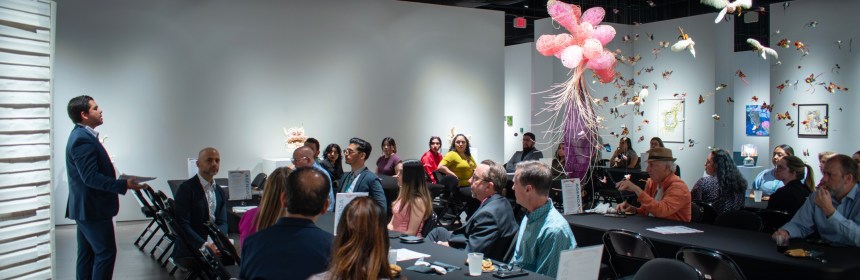
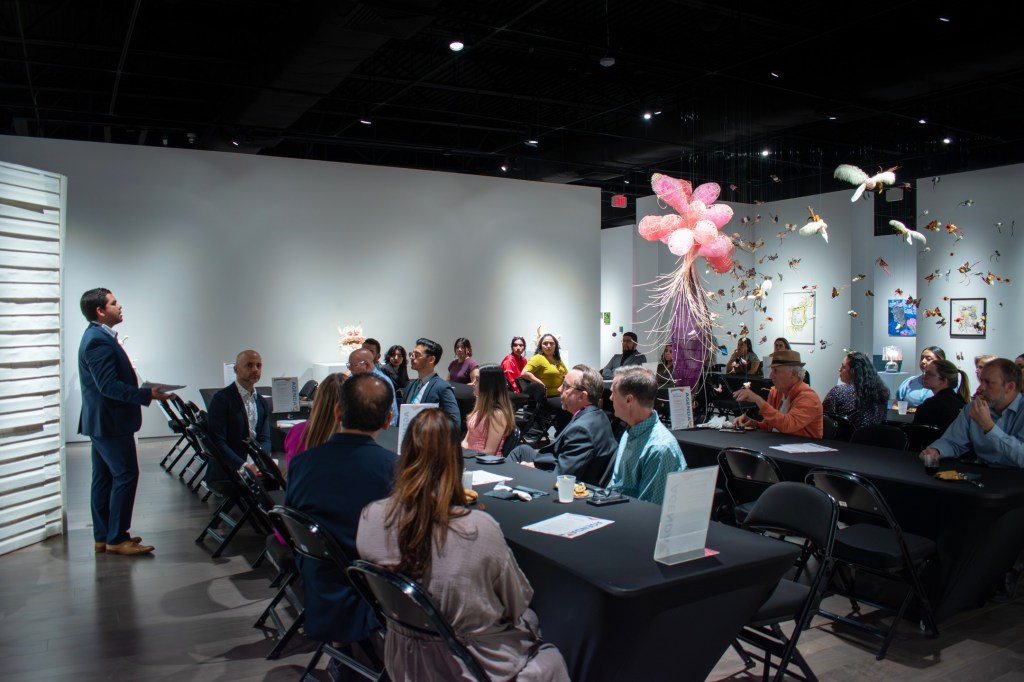
Attendees listen to a presentation at An Evening At The Museum, an event hosted by BAM and the Northeast Arkansas Hispanic Professional Network. The event, held April 23, 2026, represented a partnership between BAM and local organizations. Photo Courtesy of BAM Facebook page.
One recent workshop focused on linocut printmaking, a hands-on art form that allows students to carve designs and create prints. Museum photographer and outreach assistant Savannah Sifford said programs like these help introduce different types of art to the community.
“These workshops give people the chance to experience art in a hands-on way,” Sifford said.
Being located on a college campus, the museum draws a mix of students and local residents. Front desk manager and Graphic Designer AnnEllise Jarrett said recent visitors have included students and adults in their 20s and 30s.
Click to View!
“Recently, many have said they have found the museum through social media and online searches,” Jarrett said.
Even with increased engagement, visibility remains a challenge as the museum is tucked away on the side of the Fowler Center.
“Getting people through the door is one of the biggest challenges. We’re always trying to increase engagement,” DeVita said.
Jarret said having a museum like BAM is important, especially in rural communities, for allowing students and adults the opportunity to engage with art.
The museum plans to continue expanding its programming with additional gallery activities and partnerships aimed at increasing community engagement.
JONESBORO, Ark. — At Arkansas State University, theater productions like “Leading Ladies” depend greatly on the presence of a live audience, many of whom come from the surrounding Jonesboro community.
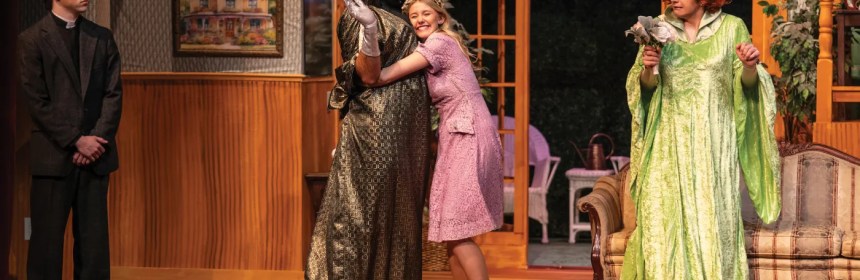
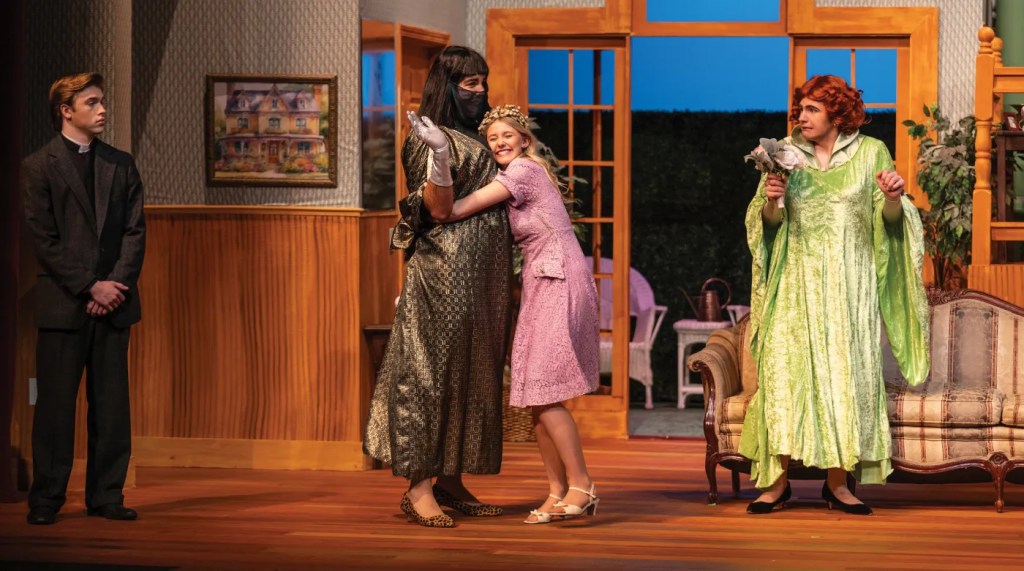
(Left) Garrett Veal, Zane Brewer, Zoey Newcomb and Donovan Walters playing Duncan, Leo, Meg and Jack, respectively, in A-State Theater’s production of “Leading Ladies.” Photo courtesy of Arkansas State University
While the Department of Theatre produces the show, students alone cannot complete the experience without a live audience. Performing in front of live audiences night after night gives the students the most authentic acting experience possible.
Assistant stage manager and A-State student Emalee Gillean said the difference is noticeable.
“When audiences are reactive, laughing and engaged, our actors can feed off of that energy and put it into our show. Without a real audience, the feel of the show is very different,” Gillean said.
Because theater is performed live, each audience brings something new to the experience.
“Each audience has their own personality,” Gillean said. “Each day, our audiences are entirely different because of the energy they bring to the performance.”
For students who are involved in the production, that interaction is part of what makes theater different from regular classroom experiences. Director DayDay Robinson said students gain valuable insights through productions like this.
“Students gain real, hands-on experience that you just can’t replicate in a classroom,” Robinson said.
That experience is not only about rehearsals, but also performing in front of others and responding to audience reactions in real time. Gillean said audiences include more than just students.
“We see a wide variety of students, professors, family members and Jonesboro community members in our audiences,” Gillean said.
That mix of audience members shows how productions bring the Jonesboro community onto campus while also giving the students a chance to perform for a wider audience. In addition to performance, visual elements also contribute to the audience’s experience. Costume designer Claire Abernathy said actors bring those elements to life on stage.
“The two actors wear the costumes with such confidence and really embrace the fun, absurd playfulness of the moment,” Abernathy said.
For many students, the opportunity to perform in front of a live audience is one of the most important parts of the process.
“We spend months building a show and creating a special experience. Getting to showcase it is the highlight of the process for many,” Gillean said.
Click to View!
For performers, that connection between the stage and the audience is what makes live theater special. Donovan Walters, a student actor who performed in the A-State Theater production, “Leading Ladies,” said theater is a communal experience.
“Theater is a shared experience that connects a tie between all the people on stage and everybody in every seat,” Walters said.
For a city like Jonesboro, this connection between community and school is valuable.
The university’s theater program depends on community members to attend performances, while those same community members benefit from access to live theater and creative work produced by the students. Both sides have an important role in the success of the school and the community.
JONESBORO, Ark. – The Arkansas State University Museum is not only a place where people can see parts of history, but also an educational resource for teachers, professors and students.
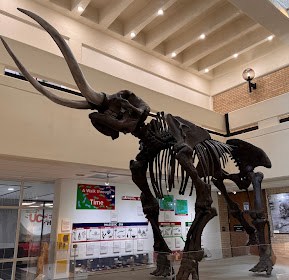
Many students spend four or more years at A-State without visiting the museum, missing a valuable interactive educational experience that could help them better understand what they learn in history classes. The museum focuses not only on Arkansas history, but also on preserving and showcasing the history of northeast Arkansas and the Delta region.
The museum serves as an informal learning environment, according to Elisabeth Engel, director of the A-State Museum.
“You don’t have to be here. It’s not like class,” Engel said. “So, you know, we value the people that come through because they’ve made an effort to come see us. We hope that they walk away feeling like that effort to brave campus, find a parking spot, and all of those kinds of things, in our particular environment, was well worth it.”
Students, faculty, staff and Jonesboro residents can visit the museum on their own or book a tour with Jill Kary, curator of education at the museum. For teachers and professors, the experience can be especially valuable.
Lillie Fears, professor and interim director in the School of Media and Journalism, brings her classes to the museum every semester to help students understand historical events in ways a textbook cannot.
“My favorite part about taking students to the museum is seeing their reactions when they see something old that we’ve talked about in class, or that is mentioned in our book or in a documentary. These types of experiences can allow them to step out of present-mindedness and to realize how the tools and technology they use in modern times evolved at different eras in U.S. and world history,” Fears said.
Many groups, Engel said, visit the museum with a specific purpose. For some groups, Engel pulls artifacts from storage and creates a “mini exhibit” tailored to their interests.
Fears prefers tours focused on communication history and artifacts, so Engel often brings out old newspapers, cameras and photographs for her students.
“I really appreciate how the director, Elisabeth Engel, is always willing to bring out old artifacts that pertain to mass communications and provide us with special lectures on the history of these media tools. A textbook or video could never do what she and Jill Kary, education coordinator, do for my classes,”
For some students, a focused tour helps them better understand what they have been learning in class.
“It made a lot of the concepts feel more real. In class, we talk about the history of media, but actually seeing the artifacts and examples in person helped me connect everything more clearly, especially how media has evolved and impacted society,” Kaysen Lomax, a junior creative media production major from Jonesboro, said.
For other students, seeing everything the museum offers gives them a perspective they otherwise might not have considered.
“Yes, I did thoroughly enjoy the tour Dr. Fears took us on. Seeing how passionate Jill Kary was about the black business district was inspirational. I enjoyed looking at all the old pictures of old businesses and equipment/technology, and find it crazy to see how much those things have changed,” Alexander Riggs, a junior creative media major from Forrest City, Arkansas, said.
While the museum serves as a tool for professors on campus, teachers in surrounding school districts also can use it as a resource.
Photo courtesy of Arkansas State University.
Traveling suitcase exhibits are smaller exhibits teachers can check out for two weeks at a time. They offer hands-on materials, visual aids and lesson plans for each exhibit. Teachers can choose from five options, including Pioneer Living, Portals of the Soul: Native American Culture, World War II on the Arkansas Homefront and more.
“All of them are linked to the educational standards that are dictated by the state,” Kary said.
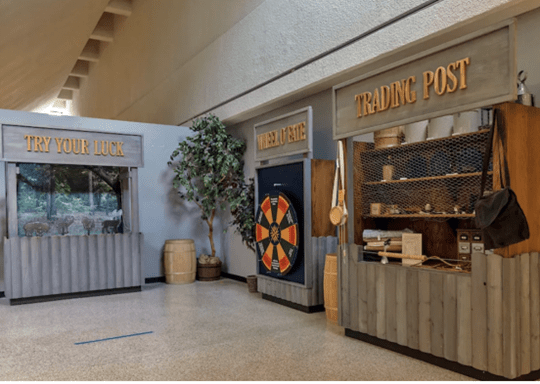
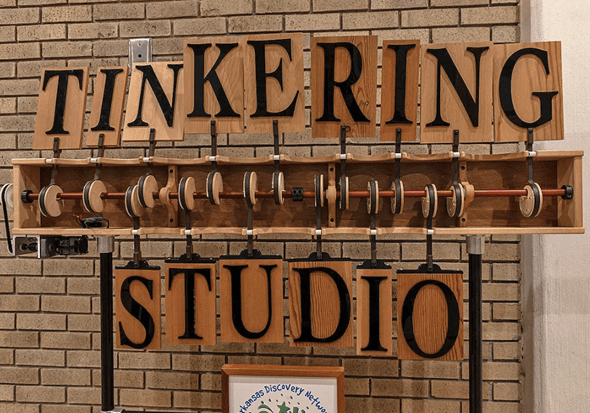
Visitors can also explore the tinkering studio to test whether they have the same innovation skills as people on the Arkansas frontier.
“If the kids have been paying attention, in every gallery they’re seeing innovation happen,” Kary said. “So they are told to invent things, make something, and if it doesn’t work, tweak it, fix it.”
Learning does not just happen in the classroom; it can happen in many places, including the museum. And learning is not just for students. Anyone who visits the museum is welcome, whether for a specific purpose or simply for fun.
JONESBORO – KASU is welcoming photographer Art Meripol to Arkansas State University with a reception and “art talk” for his photo exhibit, “We Shall Overcome.”
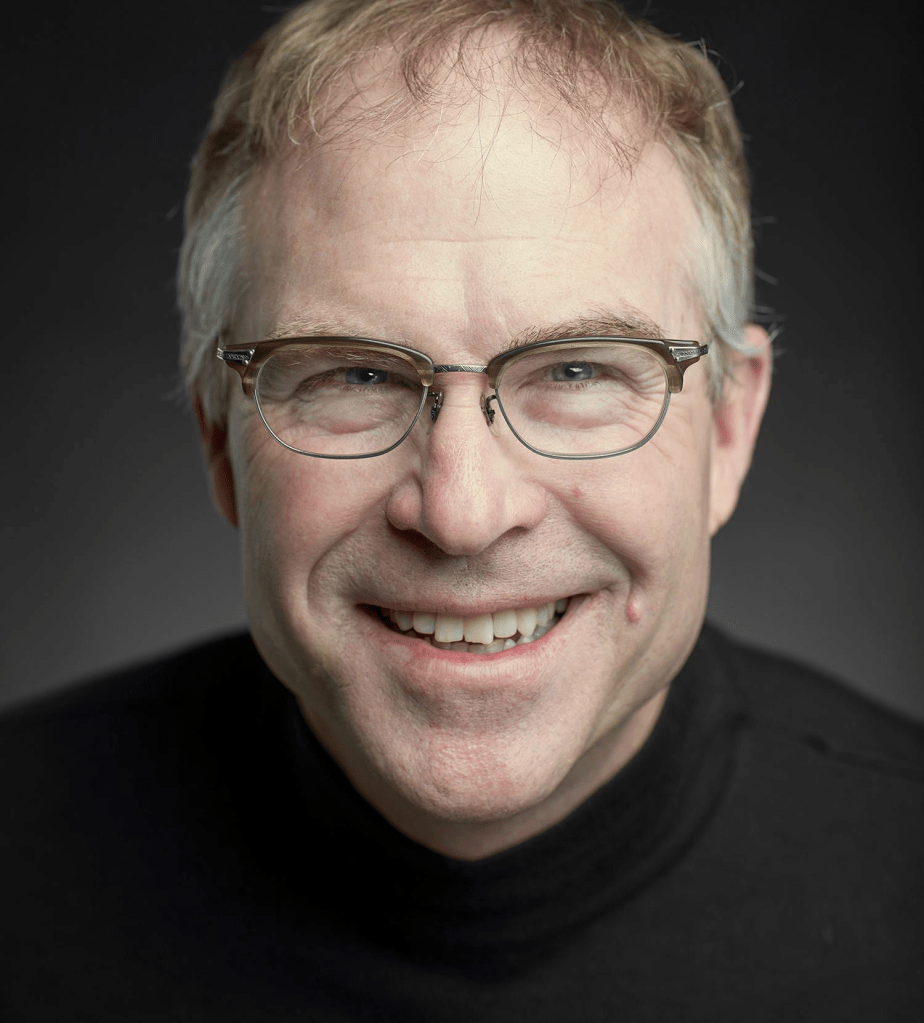
Headshot photo of Art Meripol. Photo courtesy of Art Meripol
The reception, hosted by KASU, will be held from 5:30 p.m. to 7:30 p.m., Oct. 29, in the Humanities and Social Sciences building atrium.
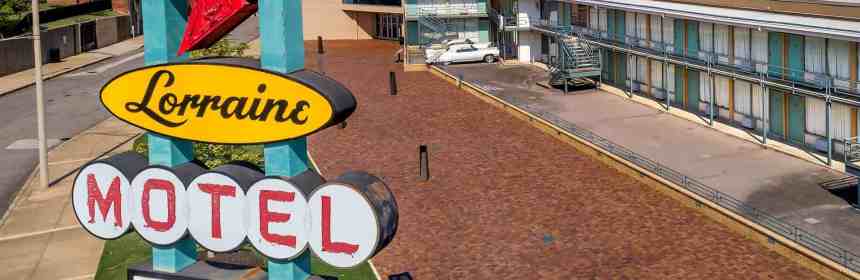
The photo exhibit, also located in the humanities building and presented by KASU, comprises 25 photographs of various landmarks along the Civil Rights Trail. The exhibit opened to the public June 13. Meripol said his Civil Rights Trail photography is some of his most rewarding work.
“I’ve had a 50-year career and I’m more proud of this work than probably anything I’ve done in those 50 years, and I wanted to share it,” Meripol said.
LaDawn Lee Fuhr, KASU corporate relations specialist, said Meripol’s background in journalism, passion for history and skill in photography will be of interest to a wide range of people at the “art talk” and reception.
“We feel like bringing this history and this art together is great for the overall community,” Fuhr said. “We’re hoping that people will come out and see it and meet Art, talk to him, and understand his process.”
Audio story by DDNS Reporter Jerry Don Burton
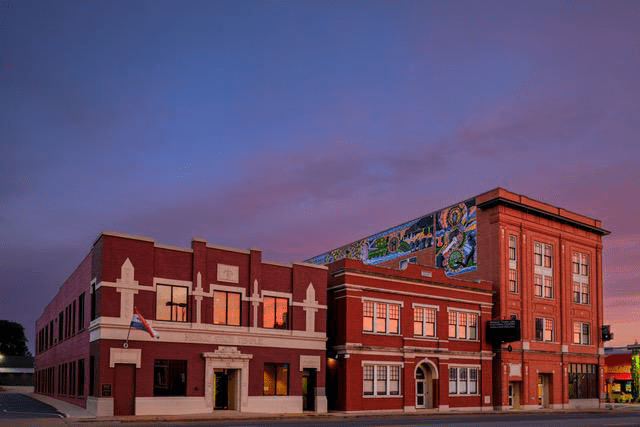
Mosaic Templars Cultural Center. Meripol said he woke up at 4:30 a.m. to capture the center in pre-dawn light. Photo courtesy of Art Meripol.
Fuhr was a major force in bringing Meripol’s photography to A-State. She said the concept of the exhibit and reception blossomed from a conversation between her and Meripol.
After not having seen each other for decades, Fuhr and Meripol reconnected at the Old State House Museum in Little Rock on July 12, 2024. Fuhr said she was impressed by his photography work on “The Official United States Civil Rights Trail: What Happened Here Changed the World,” a book published in 2021 by Alabama tourism director Lee Sentell, and wanted to create an exhibit of his Civil Rights Trail photographs.
Meripol said he knew the project would be worthwhile, but was initially daunted by the work, time and logistics it would take to complete such an exhibit.
“Once I got started, I got pretty excited about the possibilities to go through all the work I did on the U.S. Civil Rights Trail and narrow it down,” Meripol said. “I think that was what intimidated me more than anything was trying to pick 20 or 25 pictures out of all that.”
A majority of the photos featured in the exhibit were taken in 2017, when Meripol said he traveled to 10 states in 12 days to expand coverage of the Civil Rights Trail. Starting in Alabama, where he is based currently, Meripol covered sites in Louisiana, Mississippi, Arkansas, Kansas, Washington, D.C., Virginia, North Carolina, South Carolina, Georgia and Tennessee.
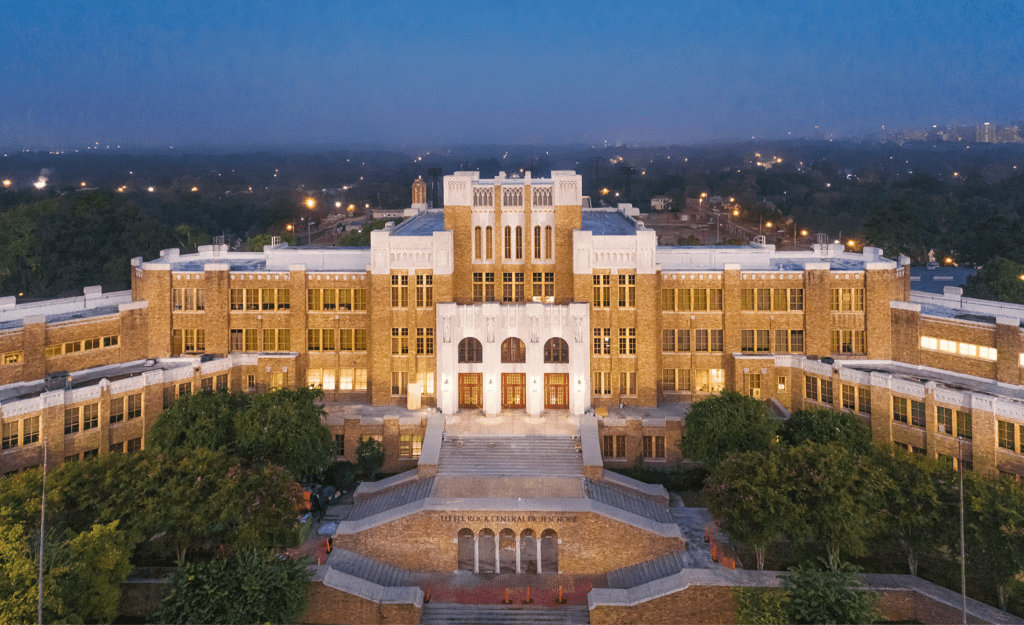
Little Rock Central High School. In 1957, nine teens known as the “Little Rock Nine” were the first African American students to enter the school following the 1954 Brown v. Board of Education Supreme Court ruling that made segregated schools illegal. Photo courtesy of Art Meripol.
Meripol said some of his favorite career experiences came from his work photographing the Civil Rights Trail.
Meripol said one such experience was his visit to Medgar Evers’ home. Evers, a civil rights activist and the first NAACP field secretary in Mississippi, was assassinated in the driveway of his home in 1963.
Prior to his arrival, Meripol said the caretaker of the home did not know he was coming to take photos. He said she was suspicious at first, but they ended up having a wonderful time together.
“We ended up sitting at the kitchen table at Medgar Evers’ home with her, and she was telling stories of when she was in high school and how they all adored Medgar Evers,” Meripol said. “Just seeing her face as her mind went back to that time and her memories was just magic.”
Evers’ home was designated a National Historic Landmark in 2017.
Medgar Evers’ home. Evers was dedicated to ending racial segregation at the University of Mississippi, enforcing voting rights and expanding opportunities for African Americans prior to his assassination in 1963. Photo courtesy of Art Meripol.
Meripol said another particularly memorable experience was his time in Washington photographing the Martin Luther King Jr. and Lincoln memorials.
Due to flight delays caused by storms, Meripol didn’t arrive in Washington until midnight. He took an Uber at 4 a.m. to the memorial to capture it before sunrise. He said he could not have asked for better lighting and was so inspired in fact, he decided to walk to the nearby Lincoln Memorial.
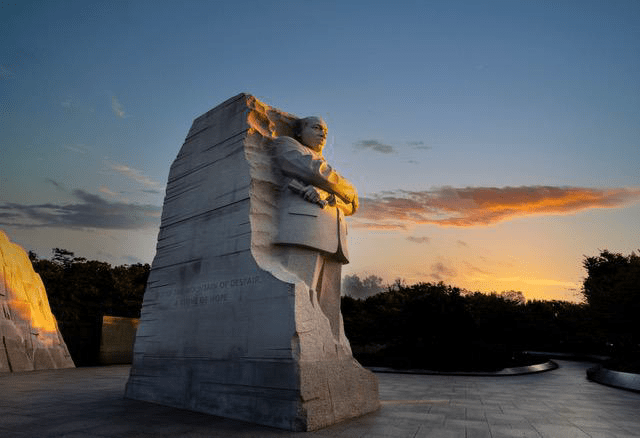
Martin Luther King Jr. Memorial, located in Washington, D.C. Photo courtesy of Art Meripol.
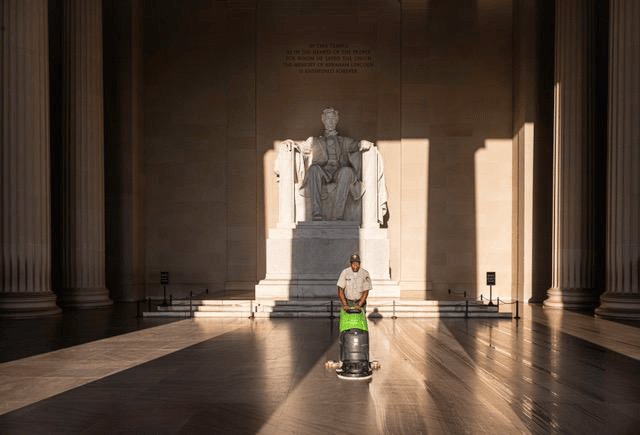
The Lincoln Memorial is typically a high-traffic tourist attraction, making it hard to photograph. But, due to the storms, Meripol said the memorial was empty, save for one employee.
“A U.S. government employee, an older Black man, was polishing the floors in front of Abraham Lincoln with the morning lights streaming through the columns and lighting him up,” Meripol said. “And I shot maybe one of my single favorite pictures of my life.”
Lincoln Memorial. Photo courtesy of Art Meripol.
Meripol said he hopes his work inspires viewers to visit the historic landmarks in his photos.
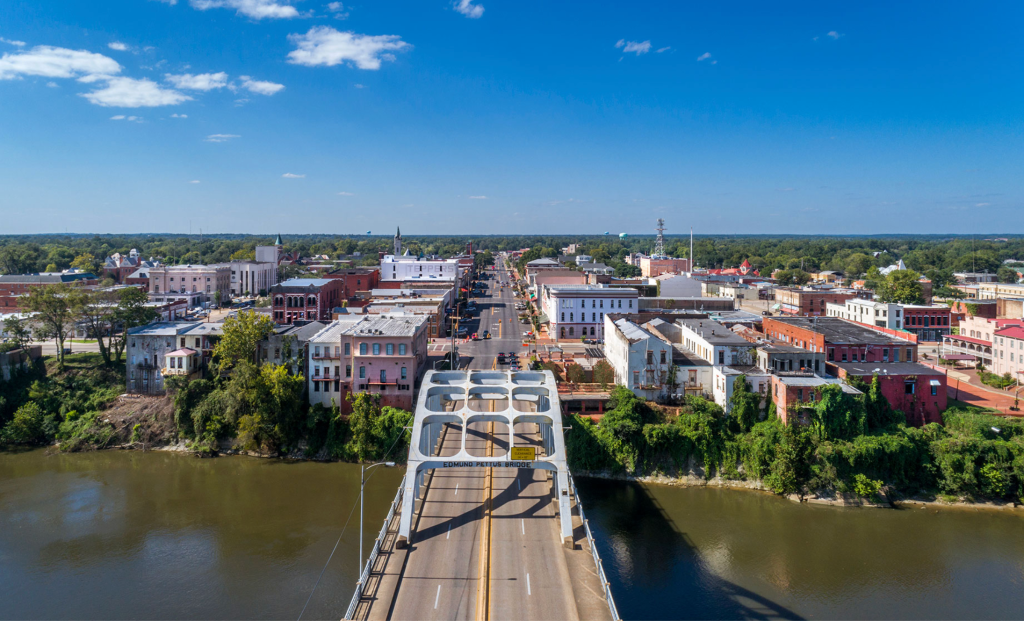
“I have a picture of the Edmund Pettus Bridge where the Bloody Sunday marches happened for voting rights,” Meripol said. “I hope they see that picture and want to go experience the bridge themselves. If they do, they’ll walk over the bridge as the marchers did back in the early sixties.”
Edmund Pettus Bridge, located in Selma, Alabama. The bridge was the site of Bloody Sunday, a conflict on March 7, 1965, when police attacked civil rights demonstrators as they were marching to the state capital. Photo courtesy of Art Meripol.
Fuhr said Meripol’s photography is important for preserving and highlighting the history of the United States.
“It’s a trite statement, but it’s true. If we don’t know our history, we’re doomed to repeat it,” Fuhr said. “I think any of us have a connection to the history that made this country. I feel it’s important to be seen in such a beautiful way. Because there was such pain, but it’s presented in such an appealing, beautiful way that people can appreciate.”
Meripol said the United States has always acknowledged its failures, but the current political climate is leading to the burial of some history.
“When we start hiding those failures, then you don’t know what needs to be paid attention to,” Meripol said.
In March, President Donald Trump signed an executive order targeting funding for programs that “degrade shared American values, divide Americans based on race, or promote programs or ideologies inconsistent with federal law and policy.” A few months later, in August, the Wall Street Journal reported that the White House ordered a review of exhibits at the Smithsonian Museum to align with Trump’s interpretation of American history.
Civil rights leaders, advocates and historians have criticized these moves as singling out content on slavery and civil rights in an effort to minimize the contributions of Black Americans.
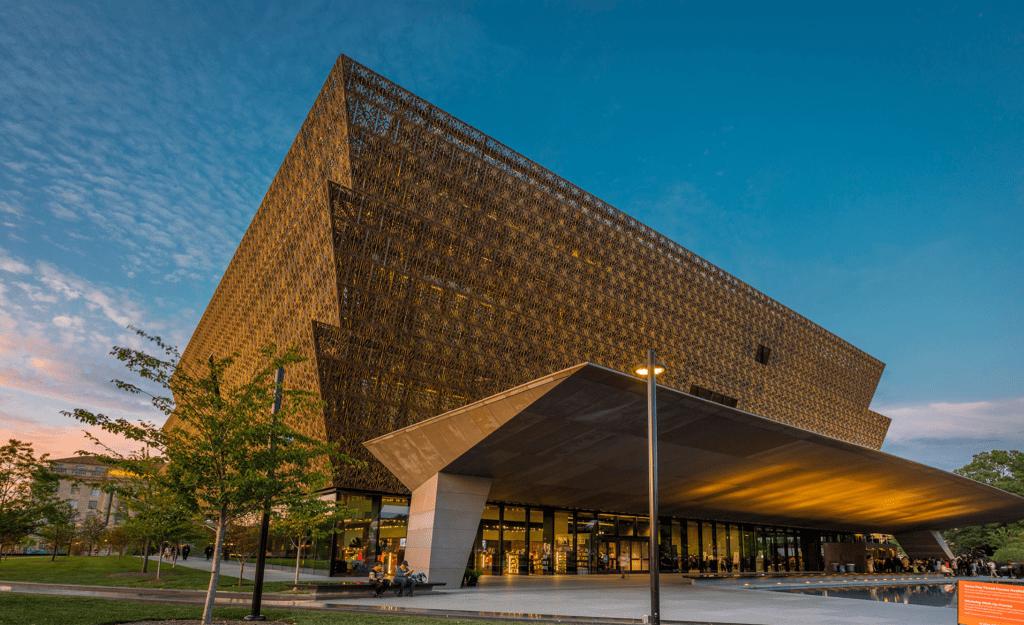
National Museum of African American History. Photo Courtesy of Art Meripol.
“There is an effort to try to hide those things, hiding Black history, which is American history. It hurts to see it happen,” Meripol said. “I’m hoping this exhibit will keep people discussing these things and finding ways to move forward.”
Fuhr said KASU’s involvement in creating the exhibit and reception aligns with the non-commercial public radio station’s mission to be a resource for the community.
“This is the kind of thing that public radio does that others don’t really do, which is to go deeper in the world and be able to bring this to the community.”
Mark Smith, KASU station manager, said the radio station is excited to bring Meripol’s photographs to the community. He said viewers will be immersed in the rich history and the craftsmanship on display.
Fuhr said bringing the exhibit to A-State was a joint effort between many individuals, both within and outside of A-State.
The event is sponsored by the A-State Office of the Provost, A-State College of Liberal Arts and Communication, Mosaic Templars Cultural Center and Arisa Health.
Kendall Moody, interior/exterior team leader for facilities management project services at A-State, was responsible for much of the physical preparation regarding the exhibit. Fuhr said his contributions were integral in ensuring the photos were placed properly without damaging the walls and columns of the humanities building.
Fuhr said the exhibit is planned to stay up until early 2026, but is interested in presenting the photos at other venues as a traveling exhibit.
“Each time I look at a photograph, I get a different sense of it, and so I want it up long enough for people to really appreciate it and really feel it,” Fuhr said.
Jonesboro, Ark. — Hidden in the midst of the Delta lies an unexpectedly thriving arts scene with a goal to enrich the community in which it resides.
Even with the addition of masks, extra disinfecting and social distancing required by the new normal of the pandemic, arts organizations around Jonesboro remain open as a haven for local artists and lovers of the arts alike.
As the pandemic drags on, so does the anxiety surrounding the still-unknowns of the coronavirus. The arts are proven to alleviate stress and calm the brain. While it is impossible to see a Broadway show right now, local organizations continue to be an outlet for the community.
Learn
A quick temperature check, a mask, a squirt of hand sanitizer and an open mind is all it takes to learn a new craft in the age of COVID.
The Foundation of Arts operates in Jonesboro as a communal space for new and experienced artists to learn and perfect their craft. Kristi Pulliam, FOA executive director, said the arts are a vital part of life.
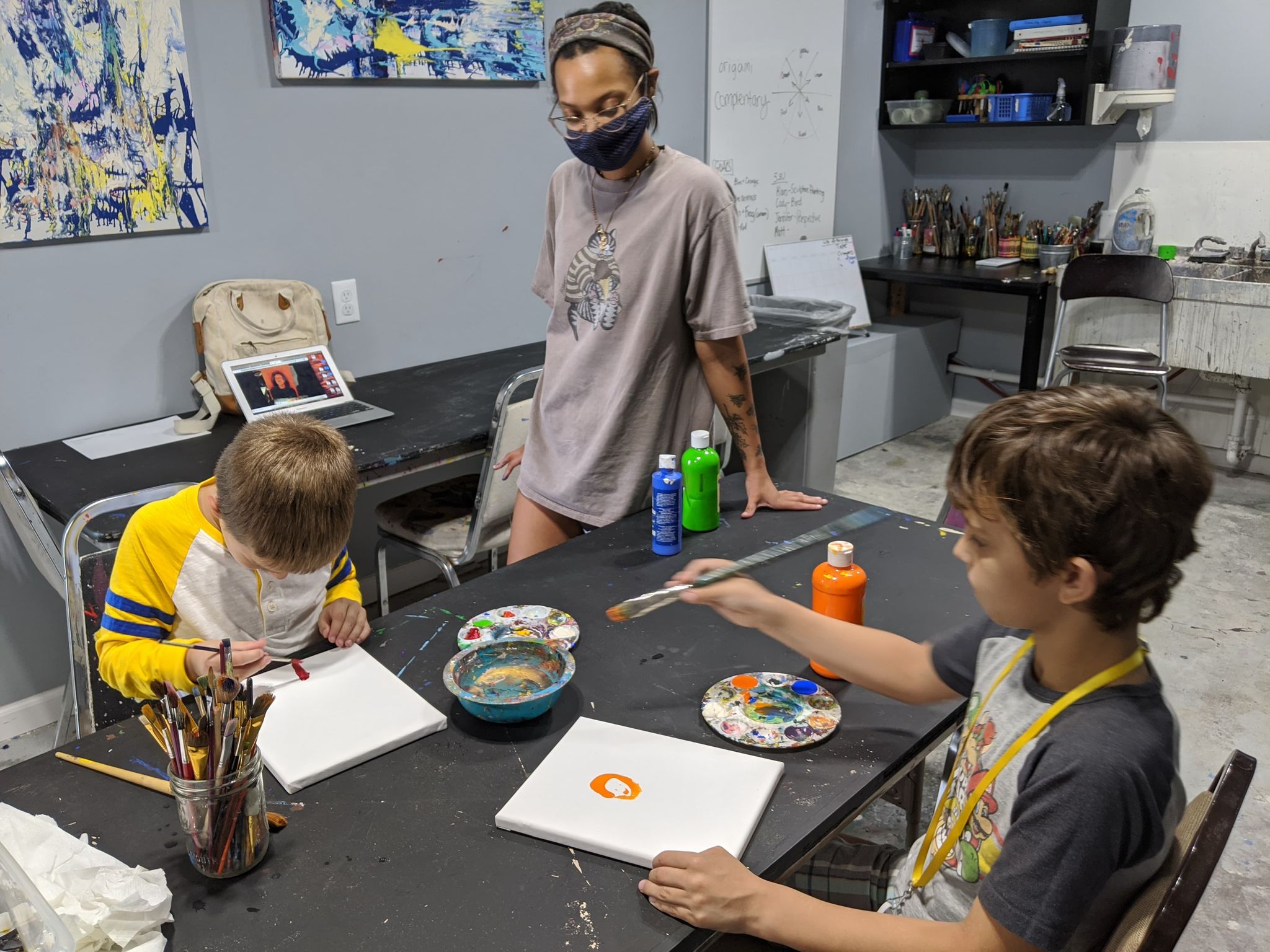
Kids participate in an FOA art class. Photo by Tristan Bennett
“The arts can improve your life in so many ways, Pulliam said. “The participation in the arts makes you better at almost every other thing you do. You’re a better communicator, you’re more self-confident, you’re more able to experiment and grow in all kinds of areas of life.”
The FOA offers classes in a wide range of arts disciplines. While learning an art may look different than in a pre-COVID world, Pulliam said the FOA staff strive for a safe environment for all their students. Enrollment numbers took a dive due to the pandemic, but classes are growing each week, and endorsement of the safety measures enacted by the Foundation.
As a space to learn, the FOA strives to improve the quality of life for everyone in Northeast Arkansas.
“The programming at the Foundation of Arts is really about people,” Pulliam said. “It starts with people, it ends with people, and it has arts all in between.”
Students of dance can learn to arabesque in ballet class, shuffle in tap or pirouette in jazz. After learning their new skills, they have the opportunity to showcase them in competitions across the region.
“It allows them to strut their stuff, and they’ll be judged against other dancers,” Pulliam said.
In addition to dance, students can train to be the next Broadway star in the FOA theatre arts classes or learn to paint like Picasso in their visual arts classes.
The FOA continues to provide opportunities for the general public to engage in the performing arts as well. Coming up, the FOA is hosting a House of Villains at their Forum theatre for Halloween, and their production of “Dreamgirls” hits the stage in November.
Immerse
There is a certain calmness that can only be achieved by visiting an art museum. Jonesboro is fortunate to have one right at its heart on the Arkansas State University campus.
The artworks that grace the walls of the Bradbury Art Museum silently serve as a cultural steward to enhance the lives of Northeast Arkansas citizens.
Even in a pandemic, people of the community can immerse themselves within the quiet elegance of the museum. Garry Holstein, BAM director, said the art museum adjusted to the new protocols with relative ease.
“We’re a fortunate space in that we’re set up for people to come and enjoy artwork by themselves or with close friends, and not to touch,” Holstein said. “We’re kind of built for a going out safe experience.”
After a temporary closure, BAM reopened with a small, socially-distant reception and a brand new exhibit.
Currently, the museum houses an exhibition entitled “Radius 1.” It showcases artwork created by artists who live and work within a 180-mile radius of BAM. The show not only gives local artists a chance to showcase their work regionally, it gives the community the opportunity to see the talent growing in their own backyard.
Holstein said, “The amazing thing about this is you have so many talented artists here. A lot of people think you have to go to New York or somewhere far away to see amazing work, but we have people that have shown in Venice in this exhibition.”
The Delta is crawling with artistic talent, and through places like BAM, the residents of the community have the opportunity to dive into prestigious art right from home.
“Creative exploration of our shared cultural dialogue is what we do,” Holstein said. “It just reinforces our role in the community and our dedication to serve as a cultural steward and collaborate to create a shared sense of place.”
The coronavirus forced BAM to limit its hours to noon to 5 p.m. on Tuesdays through Saturdays, but the artwork still waits in its regal silence for someone to come brood over the artist’s true intention.
Experience
As devastating as the pandemic could have been on the arts, it only brought more creativity into the delivery of artistic experiences. Before, no one could have ever imagined listening to a live symphony from the comfort of their couch, but current circumstances made it possible for fine music to be available outside of the auditorium.
The Delta Symphony Orchestra is rooted in heritage and strives to meet an underserved need in the community. Neale Bartee, music director and conductor, said the orchestra formed in 1975 to give professional musicians in the area a chance to perform.
“There were really strong band programs and choirs, but there were no orchestra programs, and that’s an entirely different thing with the string section,” Bartee said. “We were providing a need that had not been fulfilled at that time.”
45 years later, the music scene in Jonesboro has expanded greatly. However, orchestra music still lags behind. The Arkansas State music department focuses mainly on instruments commonly played in marching bands, but Bartee, during his time on faculty with the department, helped to create the university orchestra program. As far as professional orchestra music in the region, the Delta Symphony Orchestra still operates alone.
“There’s a whole heritage of orchestra music that goes back 300 years with Bach through Beethoven, and there is no other group that performs that,” Bartee said.
COVID-19 forced live orchestra performances to a grinding halt, but in a way, it is now easier than ever for everyone to experience symphony music. The Delta Symphony Orchestra began livestreaming their performances on Facebook, making it possible to listen to a live professional orchestra on a couch, at the dinner table or in a car.
Bartee and the orchestra even began digging through past, recorded performances in order to provide the community with music during this time.
Now, anyone in Jonesboro can experience the sounds of the orchestra on cable channel 24. Previously recorded performances are broadcast regularly on the City of Jonesboro’s channel as a service to the community.
The Delta Symphony Orchestra not only provides a historically rich music to the community, it invests in the next generation of artists.
“We’ve brought Broadway stars to Jonesboro,” Bartee said. “We brought those guest artists that did some great work coaching the kids on how to do musicals.”
Hearing the orchestra through a screen may not be the ideal experience, but it expands the opportunity to more of the community and provides a chance to the general public to broaden their horizons.
Grow
As Pulliam said, involvement in the arts is a pillar of any quality society. Whether it be learning a new craft, immersing in a visual art or experiencing an orchestra, all work to enhance the quality of life of all those who enjoy it. In the extra stressful era of COVID-19, art can serve as an escape. Many think great art lives in far off places, but Jonesboro is home to a thriving art scene just waiting for the community to join.
JONESBORO — Local artists have an avenue to profit from their craft thanks to one very busy business woman with a passion for art.
As a college freshman, Angela “Angie” Jones first declared her major as art before ultimately ending up in the healthcare field. Now a nurse practitioner, it is not surprising that her love of art stuck with her.
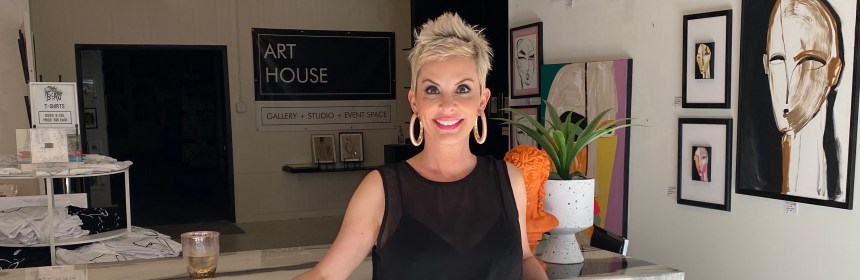
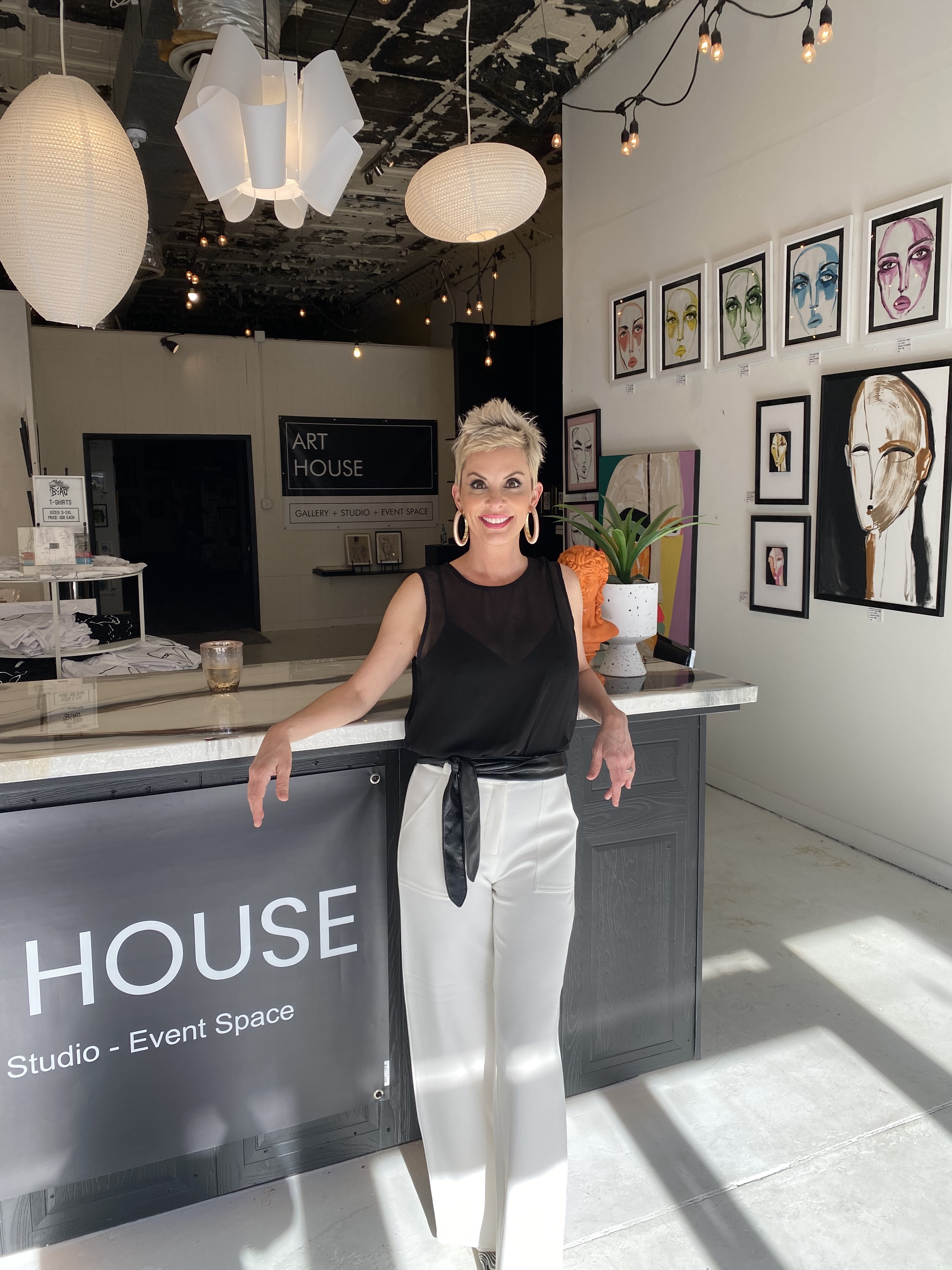
Artist Angela “Angie” Jones owns the Art House art gallery in downtown Jonesboro. Jones opened the gallery during the pandemic.
“I’ve always gone back to it,” Jones said. “Painting walls and furniture when my kids were growing up, always having a craft project.”
Now an empty-nester, Jones decided to dive back in to her love of art in the time she used to spend at ballgames, dance and choir performances. She began taking art lessons with Gussi Causey, a retired Jonesboro Public Schools art teacher, and a big problem gave her a big idea.
“She had mentioned one day that there was really nowhere for her students to exhibit their work,” Jones said. “We had just moved downtown, and we had a commercial space below us that was empty.”
In June 2019, she opened Art House, a gallery in downtown Jonesboro for local artists to showcase and sell their work.
“So what started out as being something that maybe 10 to 15 artists could use to have a random art show here and there turned into the Art House,” Jones said.
Today, Art House has hosted 11 art shows and represented over 50 local artists.
One of those artists, Braden Walls, considers himself to be a drawer. He bases his style on that of Picasso: cubism. He said his involvement with the Art House has been a great experience.
Walls said before Art House opened, other galleries operated in the area but were selective about whose art they showcased.
“Angie opened up Art House and was like, ‘Everybody come put your work in and display it,’” Walls said. “Which, nothing like that has ever happened in Jonesboro before.”
Jones gave all local artists a chance to profit from their passion, and for that, local artist Sheila Guinn is thankful.
“We’ve needed this. We have other art galleries in town, but this one seems to be targeted to everybody. Every age. Every walk of life. All kinds of art and all kinds of people” Guinn said.
When her Art House journey began, Jones was shocked at the number of artists in Jonesboro as well as the lack of opportunities those artists had to showcase their creations.
“We have a lot of resources, we just don’t have a lot of avenues for local artists to get their work out there,” Jones said. “I believe we created that avenue for people to display their work, sell it and get it in the public’s view, and for people to realize that there are talented artists.”
Even in the middle of a pandemic, Jones continued to serve Jonesboro’s artists. She shifted from hosting large public shows to online galleries and private viewings. Jones said she thinks that will expand in the future on top of the traditional shows.
Not only does Art House support local artists, but Jones used art to help her community as well. When the pandemic hit, many restaurants downtown went to curbside-only dining. This meant fewer people on the sidewalks and fewer people visiting other businesses. She assembled a team of five local artists to create murals downtown designed specifically for selfies. That team was dubbed “The Mural Squad.”
“Our goal was to get more traffic downtown, and it’s something fun for people to do when they come down here as well,” Jones said.
The murals’ success led to a contest for more artists to add their own selfie backdrop to the wall, and the Squad has more plans to paint downtown in the future.
The work Jones does for the community requires a delicate balance in her life, and she said she could not do it without her husband, Scotty.
“He will do anything I ask him to and take on any project I ask,” Jones said. “He has been there to hang the art, there to help me with all the other stuff and give support as well.”
Her efforts do not go unseen by the artists she represents.
“She’s doing what a lot of people have wanted to do but just didn’t,” Guinn said. “It takes a lot of effort to do what she does, and we all really admire her for doing this.”
Jones is in the midst of moving the Art House to a new space downtown and plans to continue to advocate for local artists as well as bring art into the Jonesboro community.
One of the oldest forms of expression, art comes in many different forms and can be found in just about any corner of the world.
Many artists in the United States work independently, with one-third being self-employed according to a study done by National Endowment for the Arts; half work with private companies and studios.
Jonesboro-based artist Jacquelyn Nicole Young said art can be vital in the development of a community.
“It brings people together,” Young said. “People who would never speak to each other or give more than a moment’s glance suddenly have something big in common.”
Companies like Hobby Lobby sell ready-made art available in large quantities, so people who want to enjoy art at a low cost are able to do so. David Green, store manager of Hobby Lobby in Jonesboro, as well as the corporate office, had no comment on this.
The industrialization of art, beginning in the 1800s, led to wider, easier access to art for anyone to have in their homes. Because prints can be duplicated quickly at little cost, more people are able to obtain art in the 21st century than any other time in history, according to a paper done by J.N. Nielsen, an author that studies the politics of art.
On the flip side, though, the mass production and growing industry mean a decline in employment and commission opportunities for local and independent artists.
Jonesboro brought art back to the roots of the city, though, with businesses making efforts to present and display the works, sounds and creations of local artists.
The Edge Coffee House, located near the Arkansas State University campus in Jonesboro, rotates art done by local artists regularly. Sculptures, paintings, prints and much more can be found within the coffee shop.
The Edge buys art from the community of artists to display in the coffee shop as well as to display for sale. They plan to expand their art scene and allow artists to post their work for commissions once renovations are complete.
“Local art gives culture, plain and simple,” Brian Nobles, co-owner and operator for The Edge, said.
Artists who choose to sell their work through galleries and displays create the piece first. Then, if a person wants to purchase that piece, both the artist and the business may get a cut of the profit. Commission-based jobs allow artists to work with clients to create something new and original.
“Local art stimulates the economy and defines a community more than corporate,” Nobles said.
Many businesses in Jonesboro support the local art scene by showcasing undiscovered artists – not just for fine arts, but also for musicians, singers and bands.
Creegan’s Irish Pub, a bar in downtown Jonesboro, hosts live, local bands.
“Almost every night of the week we have live music here, that’s what we shoot for,” Danny Nanney, a bartender for Creegan’s, said. “It was $2 bottles and tacos when I started here — now people come in every night expecting good music, and we deliver.”
Arkansas-based bands and artists can perform live for the community and get their name out, Nanney said.
“A lot of folks here consider us the music capital of Northeast Arkansas,” he said. “But there’s a difference between supporting local music and shitty music, so you have to be good to play here.”
The bar has hosted a number of locally-famous bands, including Shugar Pills and Bera Bera, as well as individual singers, guitarists and performers. Nanney also said the crowd turnout goes up when local bands play live at the bar, especially on the weekends.
Nathan Smith, a vocalist and bassist, performs with Conway-based band Bera Bera. He began playing music at 6 years old, and he said local music pulls communities together.
“When a local band is touring the area, there’s a really big turnout for those businesses,” Smith said. “People come out to see their friends, support local art and have a good time.”
Bera Bera has performed at Creegan’s as well as White Water Tavern in Little Rock, Backspace in Fayetteville and Bearden in Conway, as well as other venues around Arkansas.
“It feels like we’re all together in this,” Smith said.
Another local musician, Jo Fore of Harrisburg, said local art flourishing shows signs of a community doing “something right.” Fore has performed covers of many genres, from rock to jazz, all around the state, including at Arkansas State University in Jonesboro.
“Local artists showcase their unique talents cultivated by their hometown and bring a sense of elevated culture as well as revenue to the table,” she said. “As long as art has been around, it has been used to inspire and bring people together.”
Because art comes in many sounds, shapes, colors and feelings, strangers can find a common ground on which to stand and communicate. According to Young, no two artists see the world in the same light, which offers more perspectives in a community.
“Art brings people to a bigger picture – seeing something as a whole instead of just one perspective,” Young said. “I think that can really help sculpt a community.”