Tag Archives: News

Jonesboro Public Schools Board President Harrell recognized for service

This report from DDNS reporter Brayden Morse.

JONESBORO—The Jonesboro Public School Board president, Chris Harrell, received a 12-year service plaque at Tuesday’s meeting. He will be stepping down next year.

Superintendent Dr. Kim Wilbanks shared her thoughts on Harrell’s time on the board and expressed her gratitude for him.

“I could say a lot of sappy things, but I’ll skip those. Mr. Harrell has been a loyal board member. He has led through many different opportunities that he had, and it’s been my pleasure to work beside Mr. Harrell. We greatly appreciate your service to the Jonesboro Public Schools,” Wilbanks said.

Brock Ferguson of Zone 5 will replace Harrell as president in the upcoming school year. Harrell explained the importance of the school board and how it brings the community together.

“The church is the hope of the world and I think second place goes to the school. I think the work that the school does is vitally important and life-changing. It’s been a real honor and privilege to work with these folks (school board). I’m excited for Brock, he’s going to do a great job. We do our best and don’t always get it right, because we’re human. These folks labor over decisions for the sake of the district,” Harrell said.

Later in the agenda, the district’s enrollment numbers and financial construction numbers on newly built buildings were released.

The district enrolled 6,451 students in 2024-25, which was 31 less than last year. The 13 school campuses include 816 employees, with 530 of them being licensed and 206 being classified.

“You can see that we’re slightly down from the previous year. We’re seeing pretty good growth, and since COVID, our numbers are similar to those seen in other districts. We still have not totally rebounded from those years when students were virtual and choosing other education options. We’re currently very full in the 7th through 12th grade with large classes in each of those grades,” Wilbanks said.

Later in the meeting, three students were denied legal transfers due to large enrollment throughout their desired grades. Also, none of the student’s parents showed up for representation at the meeting.

Disbursing officer Tim Stewart said the board should deny all three students, with the rest of the school board agreeing.

Arkansas State University hosts U.S. House Debate, minus Crawford

This report is from DDNS reporter Shailey Wooldridge.

 Arkansas State University’s School of Media and Journalism hosted the first live broadcast debate of this 2024 election season with running candidates for U.S. Representative District 1 Oct. 3 at six p.m.

ASU-TV, The Herald, KLEK-FM, KASU-FM, and Red Wolf Radio sponsored the first of three political debates scheduled for this month, beginning on Oct. 3 at 6 p.m. at the ASU-TV studio.

Debate panelists included Brandon Tabor, KASU News Director; LaGanzie Kale, KLEK General Manager; and Jerry Don Burton, Editor-in-Chief of A-State’s The Herald.

The debate was filmed live from the ASU-TV studio as part of the class video production II taught by Galen Perkins.

Perkins, an instructor of creative media production, said it is important to have student involvement in our elections as many of the topics addressed affect students.

Having it here on campus, we’re inviting these politicians to our local turf so that they get to know the students and they get to know different people from the community that they might not otherwise get a chance to interact with,” Perkins said.

Democratic candidate Rodney Govens and libertarian candidate Steven Parsons participated in this debate. In their opening remarks, both candidates said the system is not working.

Parsons said that in the two-party system, both had failed his family. Govens said he believes the time for change has come.

Parsons’ platform includes advocating for immigration reform to reduce bureaucracy.

“First we have to change the work visa and Green Card rule so that you can bring workers into this country legally,” Parsons’ said. “Let’s change the policy so that there is a meaningful legal mechanism to bring immigrants into this country. One of the second ones would be, if you think you’re going to build a wall, then we can build a wall around the safety net program and welfare.”

Goven’s platform includes expanding access to healthcare in rural areas and expanding broadband infrastructure.

“Our population is going down because we can’t keep them healthy. That’s one issue. The second issue is infrastructure. In many counties across this state, we still don’t have adequate broadband infrastructure,” Govens said. “You should have every resource to be successful, no matter where you live.”

Govens supports policy initiatives such as updating the Farm Bill and creating fair labor policies for farmers. He aims to address income inequality. He promotes criminal justice reform, affordable housing, investment in education, environmental sustainability, and student loan forgiveness. He also privatizes cybersecurity for public schools, veterans’ support, health care, and mental health services. He focuses on creating economic stability, promoting small business, and reforming the foster care system.

Parsons’ platform focuses on reducing inflation by eliminating trade tariffs, cutting federal regulations, and lowering federal spending. He advocates for immigration reform. He supports prison reform, particularly for nonviolent offenses, and opposes high military spending and student loan forgiveness. His economic approach centers on limiting federal intervention and creating clearer paths to residency for immigrants.

Republican incumbent Rick Crawford was invited to the debate but did not respond in a timely manner.

Govens said the incumbent, Crawford, feels he is untouchable because he did not attend the debate.

We need to go ahead and help Mr. Crawford secure some fruitful employment because currently, he is suing the American taxpayer, everybody within earshot of my voice,” Givens said. “He is suing you because he doesn’t think he makes enough money.”

Parsons said he was disappointed that incumbent Rick Crawford did not show up and would have preferred he had been there.

When incumbents across the board in US Congress win 97% of the time, and he’s been an incumbent for 14 years in a super red district in some sense, it’s easy for him, it’s easy for anybody, to understand why he feels like he doesn’t need to come to the debate. He feels like he’s going to win anyway,” Parsons said.

The next political debate will be on Oct. 10 at 6 p.m. between AR Senate District 20 candidates Dan Sullivan and Erika Askeland.

                                                                        -30-

Despite Political Divides, Students Call for Bipartisan Engagement

Report from Delta Digital News Reporter Jerry Burton.

Despite political contrast, civic engagement remains a priority for students.

America is often cited as being more divided than ever. With the presidential election drawing near, political discourse is heating up, and it may seem like neither party can agree on anything. Despite this apparent schism, Arkansas State University students across the political divide agree that civic engagement is vital, irrespective of political affiliation.

Hunter Redburn, a junior radiologic sciences major from Saint James, Missouri, said everyone who can vote should vote, regardless of where their vote goes.

“I will never tell somebody that you can’t or shouldn’t vote because I think regardless of who you support or what you do, voting is your right, and I will never try to take that right away from you,” Hunter Redburn said.

Chris Smith, a senior history and communications studies double major from Cabot, Arkansas, agreed with Redburn.

“I definitely value civic engagement, voting, researching, and learning about candidates more than just party loyalty,” Smith said. “Truly, I’m just happy when people vote, regardless of how they vote, I’m just happy they do it.”

Redburn is the president of Students For Life, an anti-abortion student organization. He said his morals most closely align with the Republican party. Smith is the president of the A-State Young Democrats. She said she most closely aligns with the Democrat party. These two students are opposed politically, but both agree that voting, one of the most active forms of civic engagement, is imperative.

Cameron Wimpy, an associate professor of political science, said these students’ encouraging people to vote, regardless of who they vote for, is an interesting situation that challenges common media coverage.

“There are a lot of discussions out there about one side wanting to get more people to vote and the other side wanting to get fewer people to vote; specifically, Democrats want to have, for example, undocumented migrants voting, and Republicans want it to be more strict. That’s the argument the media often makes,” Wimpy said. “Here you have student groups who advocate for issues, but above that, they’re participating and being part of the process, irrespective of what position you take, because they don’t know how you’re going to vote.”

Lily Redburn, vice president of Students For Life, said she does not want anyone to discourage her from voting, so she won’t put anyone else in a similar position.


“I think it has to go both ways. If a Democrat saw me voting Republican, would I want them to somehow discourage or prevent me from voting? Absolutely not,” Lily Redburn said. “I should not impede somebody’s ability to vote one way or the other. That’s the beauty of this country; we all get to have our own ideas.”


Students outside political student organizations also agree that civic engagement is a priority.


Jaden Holley, a sophomore social work major from Brooklyn, said civic engagement is important because it allows citizens to influence the direction of their country.


“Some people vote for Trump, some vote for Kamala, and it determines our future. It ultimately solidifies our rights and our process towards equality,” Holley said. “It is one of the most important things we can do as United States citizens.”


Isaiah Wallis, a first-year musical theater major from Harrison, Arkansas, said civic engagement is especially important among students because they tend to vote less than older adults.


“The majority of voters, especially on the local level, tend to be on the older side of life, like middle-aged and elderly,” Wallis said. “Because of that, you do not get the voice of younger generations, which is very important, especially regarding how quickly technology and culture is changing.”

Leaders from both the A-State Young Democrats and Students For Life organizations criticized party allegiance. Smith said remaining strictly loyal to a party stifles research into other candidates who may have better policies.

“If you just stick to your party, you’re not engaging civically; you’re just staying loyal to a party that will tell you what to do instead of encouraging you to learn about other candidates,” Smith said.


Hunter Redburn said he doesn’t think pledging allegiance to a particular party is productive. “I think many people are almost obsessed with party allegiance,” Hunter said. “You actually need to do your research on candidates, on party stances and make your decision based off that.”


Hunter Redburn and Lily Redburn said they vote according to the candidate or issue that aligns closest to their morals, derived primarily from religion.

“My moral compass is the Bible, and either it aligns with that, or it doesn’t,” Lily Redburn said. “Other people may not have that moral compass, but they still base their morals in something else.”


Smith said collectivism is a value she considers when going to the polls. When someone votes, they are not only voting for themselves but also their community.


“When you go into the polls, I think not only should you think for yourself and what you’re aligned with but think about your neighbor, the dude who lives across the street from you and the guy who lives 10 minutes away from you.”


Hunter Redburn, Lily Redburn, and Smith have different morals when considering how to vote. Nonetheless, they agree that morals play a major role in voting and respect that other people may not share their same values. While they don’t value civic engagement in all the same ways, all three students agree that disagreements are healthy. Hunter said he thinks citizens have lost the ability to have civil debates with people or groups with opposing views.


“I think that dialogue is never a bad thing. I think disagreement fuels progress, and without disagreement, we would never get anywhere,” Hunter said. “There have to be two sides to every story.”


Although Smith also said the lack of civility in politics is a problem, she said it is not new. The Vietnam War, the civil rights movement, and the 2000 presidential election are examples of periods when the country was divided and civic discussion was low.

While Lily Redburn and Smith agreed civic disagreements can be productive, they said compromises cannot always be reached. Lily Redburn said she feels strongly about abortion and doesn’t see an avenue where she could compromise without betraying her morals, while Smith said she is not flexible in her stance toward transgender rights. Even so, Smith said people should interact with others they oppose. She said difficult conversations are the most important and lead to a more informed population.


“If I have one idea and everyone agrees with me, how do I know if my idea has a flaw? If someone isn’t there to point that out and disagree with my idea, then nothing would ever get done,” Smith said.


Hunter Redburn said that even though someone might strongly disagree or even hate another’s stance, they should still treat them respectfully and kindly.


“I hate abortion, I think abortion is evil, and I think that what you stand for could be evil, but that doesn’t change the way I view or treat you as a human being,” Hunter Redburn said. “I think having a civil conversation is ultimately way more important than anything else.”


Wimpy said civil disagreement is a part of participating in a healthy democracy.


“We should be able to agree that we win some, we lose some, we come up with better ideas, better candidates, and do better next time,” Wimpy said.


Students from both organizations also had similar strategies for increasing civic engagement. Hunter Redburn said candidates or representatives engaging in civil debate allows potential voters to engage with both parties or sides of an issue equally and make an informed decision.


“I think it is much more productive and effective when you can watch these two ideas go head to head and, with logic and reason, you can see which one makes more logical sense with how we want to move forward in the country,” Hunter Redburn said.


Wimpy said education and cultivating interest are necessary to increase young adults’ civic engagement.

“I think more programming around what’s going on in the world would help, and that can’t just come from political science classes,” Wimpy said. “It needs to be things that students organize, whether guest speakers or voter registration drives.”


Smith said increasing civic engagement requires showing that engagement works and can be productive. She said showing productive political conversations, such as the recent vice presidential debate between JD Vance and Tim Walz, lets citizens know that politics isn’t supposed to be filled with disrespectful fights and constant bickering.


“Because that idea has circulated so much now, a lot of people have started to have large screaming matches of their own,” Smith said. “So if we shine light on productive conversations actually happening and we highlight those more then the media starts to encourage it more and then we find that the people themselves are doing it more.“

-30-

A-State receives HEED Award

JONESBORO – INSIGHT Into Diversity magazine has recognized Arkansas State University as a winner of the Higher Education Excellence in Diversity (HEED) Award. 

“Arkansas State University is dedicated to educating all students, and ensuring they have a home away from home. As we strive and continue to cultivate an environment where everyone belongs and thrives together, we must remember it starts with us,” said Dr. Carlitta Moore, vice chancellor for access and institutional engagement. 

Nationwide, 114 higher education institutions, including A-State, are recipients of the HEED Award. The HEED Award is the only national honor highlighting U.S. colleges and universities that demonstrate an outstanding commitment to creating a diverse and inclusive campus environment. 

The impact is felt across the university, according to Moore.  

“We have seen under the leadership of Chancellor Todd Shields an increase in the number and diversity of students, as well as in leadership,” she said. “This award signals to prospective students, faculty and staff an academic community which values everyone, and can lead to improved retention rates, higher engagement and academic success. Additionally, it serves as both a symbol of progress and a motivator for continued work in a thriving environment.” 

It marks the seventh consecutive year A-State will take home the award. 

Moore says it was an honor to hear the university received the HEED Award again as it is the only institution on the list to represent the Natural State. 

“I was excited to know A-State is continuing to carry the legacy and remain the only school in Arkansas to hold this designation, a uniqueness which sets A-State apart and indicates we are leading by example,” according to Moore. “This honor reinforces we are genuinely committed to creating a welcoming environment, and the continuous efforts made over time.”

The HEED Award is a testament to the work taking place at A-State to foster a welcoming campus for students and the university community. 

“Our stakeholders take pride in fostering collaborations, enhancing partnerships with local, nation and international communities which benefit students, alumni, faculty and staff alike,” said Moore. “It is a representation of us actively taking steps towards making a real impact on the campus culture. It reflects successful efforts in fostering a sense of belonging, ensuring everyone has equitable access to resources, opportunities, and support systems.” 

A-State will be featured in the November/December issue of INSIGHT Into Diversity magazine, the nation’s largest and oldest publication dedicated to diversity, equity, and inclusion in higher education. One can learn more about INSIGHT Into Diversity or the recipients online.

City of Jonesboro receives $1M grant for Community Park

The City of Jonesboro has been awarded a $1,000,000 grant from the United States Department of the Interior’s National Park Services, through the Outdoor Recreation Legacy Program. This significant award will be administered by the State of Arkansas Department of Parks, Heritage, and Tourism. Jonesboro City Council previously approved a local match of $1,129,675 which is represented in the 2024 Annual Budget. The Junior Auxiliary of Jonesboro has also committed $100,000 toward the development of this project.

“This is exciting news for our city and reinforces the great work of our Grants, Parks and Engineering departments who put together a great application for a long overdue park in Northeast Jonesboro,” said Jonesboro Mayor Copenhaver. “This park is a key investment in the well-being and quality of life for residents of Northeast Jonesboro. We are grateful to the National Park Service, the State of Arkansas, Junior Auxiliary, and both Cornerstone and Journey Churches for their partnership in making this vision a reality.”

The funds will be allocated to the creation of a new community park in Northeast Jonesboro, at the end of Disciple Drive. The park will cover at least 13 acres, with potential to expand to 23 acres, contingent on further land acquisition. Planned features will include:

  • A fully accessible adventure playground
  • Walking and biking trails
  • Tennis Courts
  • Pickleball Courts
  • A Dog Park
  • Multiuse Sports fields
  • An expanded entrance road
  • Parking lot
  • An abundance of natural greenspace

“When we first met with Mayor Copenhaver about how we could help improve Jonesboro, his pitch for a park in east Jonesboro was an immediate ‘yes’ as it lined up perfectly with our mission to improve lives for local youth. We are so proud to be a part of this wonderful project,” commented Junior Auxiliary President, Jessica Baker.

The City of Jonesboro’s Parks and Recreation Director Danny Kapales stated, “As the Master Parks Plan indicated, this location was lacking in park space and was a priority. This grant and future park represent what is possible to achieve as a collective group.”

This project aligns with the Social Determinants of Health Plan, with plans for the new park to be fully accessible to residents of all abilities. Notably, there is currently no city park within one and a half miles of the project site, making this development a resource for the surrounding community. Thousands of residents who live and work near the project area will have better access to outdoor recreation.

“This project is a culmination of more than two years of coordination between the City, the State of Arkansas, and the National Parks Service. We are excited any time we win a grant, but to secure the largest parks grant the City of Jonesboro has ever received is special and personal for our hard-working staff,” commented Jeremy Biggs, Director of Grants for the City of Jonesboro.

Next, the Jonesboro City Council will hear a resolution to accept the grant and purchase the property, to be presented to the Public Services Committee later this week. After approval from Public Services Committee, full council will consider next week. If approved, construction will begin in the Summer of 2025.

Ridgefield Christian School Basketball Series Continued

This week’s story includes two different interviews discussing the loss of their one and
only senior last year and how they expect the season to go after losing such a valuable player.
We are joined by Head Coach Morgan Colburn and Assistant Coach Dustin Ellenburg.

Garrett Finnicum: Hello everyone, my name is Garrett Finnicum, today we are joined
by head coach Morgan Colburn and assistant coach Dustin Ellenburg. We are getting some
insights as to how the team has progressed since last season as they only lost 1 senior last
year in Sam Ellenburg. Starting with Coach Colburn.


Coach Morgan Colburn: Yeah, so we lost a very valuable player last year, Sam
Ellenburg, and the stats don’t always talk about how much of an impact he had with just his
leadership. He consistently worked hard, never backed down from challenges, and was the
model of what you would want in a captain. So, we lost a good player last year, but one thing he
did for us is he set us up to do well this year because guys saw his leadership and how he was
encouraging. He was quick to laugh, did all the right things, so it was a big loss losing Sam, but
he set us up well with his character. Now, as for what we are bringing back, we bring back a lot
of good players, and I just feel like we understand each other better this year. We’re also
bringing in some really strong tenth graders, and I feel like there are six tenth graders that can
play high school basketball this year at the 1A varsity level. So, I think we will be much deeper,
and some of the seniors have really stepped up in their leadership. It really helps to only lose
one, but having lost Sam is really tough.

Assistant Coach Dustin Ellenburg: That’s a great question. So, Sam Ellenburg was
our only senior last year, and going into last year, the majority of our team had been together
since 3rd or 4th grade. We’ve seen groups come through Ridgefield. We had one when you
guys were coming through junior high, and sophomores, juniors, and seniors were successful.
This was back a few years ago. We could kind of see that if we could keep everyone together,
this would be the year to make that next little jump. We made a jump last year, made it to
regionals—of course, we lost in the first round—but this year, having most, or the majority, of
our players back, we have some sophomores this year that were on the junior high district
runner-up team that are talented and can play. I think with that mixture, I feel like this season
has a chance to be very successful. It’s going to be as successful as the kids want to make it. I
think with Coach Colburn leading them, they have a shot to have a great year.

LISTEN: Students have a new food delivery service option this semester: Kiwibots.

Audio and story by Jerry Don Burton

The cube-shaped robots on wheels autonomously deliver from Godfather’s Pizza, Einstein Bros Bagels and Freshens to over 60 locations on campus. The Kiwibots also deliver food from virtual dining services including Mr. Beast Burger and AQ BBQ.

Richard Matthews, Sodexo interim general manager, said Arkansas State University is the first college in Arkansas to use the Kiwibot service.

“This was the technology that Sodexo suggested that might benefit the campus,” Matthews said. “We want to make sure this is something that is not only utilized but something that you guys want here.”

Around 300 Kiwibot deliveries have been completed since the semester began. Matthews said A-State’s current fleet of 15 Kiwibots could comfortably handle 500 to 700 deliveries every day.

Luke Caldwell, a senior history major from Conway, Arkansas, used the Kiwibot service during the first week of school.

“I heard about it, I downloaded the app and I gave it a shot,” Caldwell said. “It was fairly user friendly.”

Orders are placed using the Everyday app. From the app, users can select a delivery location, arrange a time for pickup and choose a payment method. The Everyday app accepts payment via Flex dollars.

Caldwell said his order was cheaper than he anticipated. He said his order cost the same as it would if he had ordered in person because there was no delivery fee.

Justin Lewandowski, retail operations manager for Sodexo, said Sodexo uses Everyday as their food hub app. Kiwibots cannot deliver food from Chick-Fil-A and Starbucks because they partner with Grub Hub, a competitor food delivery app.

Caldwell said his experience ordering with Kiwibot was pleasant overall, but the wait time was slower than expected.

“I think the estimated time was 15 or 20 minutes. An hour and a half later, it had not even left the Union yet,” Caldwell said.

Matthews said Kiwibots may encounter issues in very cloudy conditions or when the network is busy or slow. He said they ordered network boosters to increase the effectiveness of Kiwibots in areas that may see disruptions.

Caldwell said he submitted a support ticket concerning his delayed order. He said a Kiwibot customer employee messaged him apologizing for the wait and offered free orders as compensation.

He said when he received his order, the Kiwibot stopped at a designated location outside his dorm at North Park Quads. Caldwell said he scanned a QR code on the Kiwibot to open the chassis and retrieve his food.

Caldwell said he will keep using the Kiwibot service, but would like to see more accurate wait times in the app.

According to Kiwibot’s website, the bots can detect people, cars, and other bots. Kiwibots utilize GPS, artificial intelligence, cameras and sensors to travel autonomously, plan routes and avoid obstructions.

Matthews said Kiwi Campus, the company that owns the Kiwibot service, sent an employee to A-State for two weeks over the summer to help create routes for the Kiwibots. He said they utilized geo-mapping to plot out optimal pickup locations and delivery routes.

Sodexo employees underwent training over the summer to learn how to use the Kiwibots. Matthews said there are also two Kiwi Campus employees stationed at A-State.

“Each employee has been trained on how to load it, how to accept the orders, how to open the bot and load the food in,” Matthews said.

Lewandowski said employees use a tablet to accept orders and open the Kiwibot. Employees then load the order, close the bot and the rest of the process is hands-off.

Matthews said Sodexo is looking to promote the Kiwibots across campus. He said he wants to raise awareness by having the Kiwibots participate in events like football games and hosting giveaways.

“We are going to make things fun with Kiwi. This October, coming up, you should start seeing more,” Matthews said. “We are going to have you guys name the robots so instead of them having a number they would have a name and they can respond to their name.”

Lewandowski said they run their ideas and plans through Kiwi Campus. He said the two Kiwi Campus employees at A-State also help with planning.

Lewandowski said he wants Kiwibot to become another member of the A-State community.

“We really want it to be a part of this campus where it is a reliable resource for the students,” Lewandowski said. “This is a partnership with Kiwi that we want to see grow and expand in the future.”

Dr. Brendan Kelly Begins Tenure as New President of Arkansas State University System

LITTLE ROCK – Dr. Brendan Kelly today officially began his appointment as only the third president of the Arkansas State University System. The ASU System Board of Trustees voted to hire Kelly, who had served as president of the University of West Georgia since 2020, on June 5. He succeeds interim president Dr. Robin Myers and the second system president, Dr. Chuck Welch, who left the system in January after nearly 13 years to become president and CEO of the American Association of State Colleges & Universities (AASCU) in Washington, D.C.

“The ASU System is open for business and will expand the state’s economy by improving lives and opportunities – starting with our students and their families,” Kelly said. “I believe strongly that if we do what’s right for a student, and then we make it work for the institution, we’ll never go wrong. The energy that exists in most communities emanates from institutions like the ones that we represent. I’m excited that the ASU System comprises not only seven outstanding campuses, but also some terrific communities in Arkansas.

“We have the opportunity to galvanize communities, look to the future to ensure the ASU System is ready to meet it and work to expand the impact of higher education within Arkansas and beyond,” he added. “From cutting-edge research initiatives to skilled workforce training, I’m confident the ASU System has the ability to meet the demands of our rapidly evolving economy.”

Kelly said the ASU System role appealed to him “because it represents one of a handful of roles in the United States in which one has the ability to influence and shape higher education throughout an entire state. I am grateful to each member of the ASU Board of Trustees for their faith in me to offer leadership to a university system that has the capacity to provide access to high quality, higher education to the vast majority of Arkansans and many more beyond the state borders. This is an opportunity to support the economic evolution of the state at large.”

Prior to joining UWG, Kelly was chancellor at the University of South Carolina Upstate in Spartanburg and Greenville from 2017-2020 and was appointed as interim president of the University of South Carolina in 2019. He was vice president of university advancement and president of the UWF Foundation, Inc., at the University of West Florida in Pensacola from 2013-2017, where he led a successful $50 million capital campaign. His teaching career spanned 13 years in Florida and Michigan in communication arts.

His focus at UWG has been innovative programming both inside and outside the classroom with an emphasis on creating valuable life and career outcomes for students, with a commitment to launch and advance student careers upon graduation. He served on the board of directors of multiple regional and state economic development entities, as well as the Atlanta Regional Higher Education Consortium.

While leading and implementing the “Becoming UWG” Institutional Strategic Plan, Kelly has led UWG to record-breaking fund-raising efforts, including the largest gift in institutional history, and oversaw an enrollment resurgence. The UWG campuses in Carrollton, Newnan and Douglasville have a combined 12,769 students and are expected to exceed 14,000 this fall.  Its spring enrollment was 11.4% higher than last year, while its graduate enrollment surged 41%. UWG recently completed a move in athletics from the NCAA Division II Gulf South Conference to the Division I Atlantic Sun Conference.

“We’re thrilled to have Dr. Kelly officially beginning his leadership of the ASU System,” Board Chair Christy Clark said. “I know he is eager to get busy, and our board is eager to support him and his vision for the System and our campuses. We look forward to a smooth transition as he leads our experienced System team and chancellors.”

Trustee Price Gardner, who chaired the search on behalf of the board, said: “We are excited to welcome Brendan Kelly as our new System president. We believe Dr. Kelly’s experience and outstanding record of achievement throughout his career will continue the growth and development of our System and lead us in addressing the ever-changing challenges facing higher education and our focus on student success. He has been described as a visionary, talented communicator and a person with the ability to elevate the reputation of the institution and further its mission. Our board looks forward to the opportunity to work with him.”

Kelly is a member of the AASCU board of directors and was named “One of the Most Influential Georgians” by Georgia Trend magazine and James Magazine. He was active with the National Forensic Association (NFA) and speech/debate competitions for many years and was honored as a NFA Hall of Fame inductee and with the NFA Eddie Myers Distinguished Service Award.

He received a Bachelor of Science degree in public relations and a Master of Arts degree in communication at Eastern Michigan University and his Doctor of Philosophy in rhetoric and political communication at Wayne State University.

Kelly and his wife, Dr. Tressa Kelly, have three children – Bree Luckey (married to Drew Luckey), Liam and Kieran.

$3.5 Million in Federal Funding for Jonesboro Advances in U.S. Senate

Courtesy of the City of Jonesboro/Johnathan Reaves, Delta Digital News Service

Copenhaver said the funding would provide additional resources to prevent and fight crime in the city and keep Jonesboro on the leading edge of incorporating technology into its policing efforts.  “When we talk about improving Jonesboro, public safety is a top priority,” he said. “This is reinforcement that we are on the right track, and I thank Senator Boozman for his efforts and for the hours he and his staff have dedicated to meeting with our Jonesboro team to discuss the wins and benefits of the system. He believes in it, and it shows.”

Jonesboro’s innovative Real-Time Crime and Intelligence Center now boasts more than 700 cameras strategically positioned around the area and has been referenced more than 600 times in cases this year alone. Data collected and retained also provides a valuable resource in building evidence to close cases, helping resolve accident disputes and identifying needed traffic and safety improvements, according to Jonesboro Police Chief Rick Elliott, “Our system provides officers and detectives with critical information that saves lives, immediately alerts us when a vehicle of interest enters the region and provides helpful information on the scene of an active incident or operation. The technology investment in policing is making a difference, and it shows.”

Craighead County Sheriff Marty Boyd talked about the importance of information sharing between agencies, “We work closely with the City of Jonesboro and share 911 facilities. Quickly transferring data, license plate alerts and video information is a huge benefit toward the safety of our area.”

######

New football teams coming to NEA

Delta Digital News Service

Monday, July 29, 2024

By Avery Jones | Editor

BLYTHEVILLE and PARAGOULD, Ark. — Joshua Hall, a store manager in Blytheville and semi-professional football player, is bringing a new semi-professional football team to Northeast Arkansas. Called the NEA Knights, the team will help represent the Northeast Arkansas region in the Triumph Football League.

The Triumph Football League is a group of semi-professional football teams that encompasses the tri-state area of Arkansas, Louisiana, and Texas. It was established in 2018 by Pat Patterson. However, teams in the league often change as they drop out or switch to another league.

According to Hall, he played in other semi-pro football teams for five years before becoming inspired to start his own. He wanted to bring a team to his own area.

Joshua Hall, owner of NEA Knights.

“I know there’s a lot of talent that goes unnoticed, and there’s a lot of talent that can be brought from this area to do even greater things,” Hall stated.

More specifically, a semi-pro football team could be a stepping stone for players to join college teams, a bigger league, or even professional teams. Joining a semi-pro team could also just be for fun and bringing together the community.

“Why not just try to bring that locally and try to push the talent that’s out here to make them succeed in the long run and let them know there’s still people out here that care and maybe eventually help you get to that next level,” Hall said.

Hall started playing football in the Missco Junior Football League in high school and then moved on to semi-pro teams as an adult. He has also coached Little League.

Tryouts for the team begin on August 3 from 2 PM to 5 PM at the Missco League Field in Blytheville. There might also be a second tryout which is to be determined. Experience isn’t needed, and all who want to play are welcome, from those just out of high school to veteran players.

Tryouts will consist of various drills, including position drills to determine what position in the team would fit best. Preferred position and experience will be taken into account. Drills will include a 40-yard dash, a 100-yard dash, shuttle runs, etc.

The team also currently hiring for leadership positions like head coach, offensive coordinator, defensive coordinator, position coaches, and more. Hall is currently working by himself, but has had help from others with experience, including the owner of the Arkansas Punishers who has reached out with encouragement and advice.

The league’s season starts in April 2025 and will most likely run until mid-summer. Both practices and home games are on Saturday nights and will be at the Missco League Field. Practices will be from 2 PM to 5 PM.

The team will largely be funded by donations and sponsorships. Players need to pay a $25 fee to join and need to pay for their jersey as well. They’re encouraged to bring their own shoulder pads and helmet. Opportunities for sponsorships will soon be available.

Another team known as the NEA Galaxy, which was established last year, will also be participating in the Triumph Football League for the upcoming season. The NEA Galaxy was started in Paragould by co-owners Kristopher Moss and Cody Boyd.

Moss and Boyd played football together in high school and had the opportunity to do college football but turned it down. Moss has been playing football since he was five. In 2015, he started playing on semi-professional teams but stopped in 2020.

Kristopher Moss, co-owner of NEA Galaxy.

Both Moss and Boyd later decided they wanted to play again, but at the time, there were no semi-pro teams near them. The idea of starting their own team began as a joke but as they discussed it more, they started taking it seriously.

“Semi-pro minor league…exists for the purpose of giving young adult athletes and sometimes even older adult athletes a second chance in playing the sport…” Moss said. “One of the goals that we want to use it for is to help…the younger adult athletes that want to pursue a career in football…”

Moss said that they not only want to have fun, they can also help adult athletes who may not have gotten enough notoriety in high school by reaching out to colleges on their behalf to get them on a roster. They can also help players out of college who want to go pro by working on their football resume and reaching out to scouts.

The size of the team each season can be unpredictable; in Moss’s experience, he’s seen teams that have as few as fifteen players to as many as fifty. According to the league rules, however, they can have no more than sixty players. Currently, the NEA Galaxy has forty-four players, but this is subject to change.

The team started tryouts in March and are considering doing another tryout closer to the fall. Prospective players have to be at least eighteen and graduated from high school. Tryouts consist of agility drills, position drills, a forty-yard dash and shuttle runs.

There is a fee to join, but currently Moss is working on ways to allow people to join for free. He wants to be able to provide equipment and uniforms at no cost. Right now, players have to provide their own equipment and a fee which pays for their uniform.

However, the rest of the cost of the team comes of Moss’s and Boyd’s pockets. They also are a registered nonprofit organization and just got their first team sponsorship. They’re currently looking for more sponsors. They also plan to sell their own merchandise at some point for more revenue.

The team usually practices on Saturdays starting at 6 PM at the old Harmon football field in Paragould. The location of home games is still up in the air, however. Moss is currently talking with both the Paragould and Jonesboro Parks and Recreation departments as well as local schools to find a new field.

Currently, the team staff consists of head coach Jordan Hightower and a defensive line coach. Moss is taking the position of offensive coordinator this season, and they’re looking to fill other leadership positions.

“We’re wanting to bring a new atmosphere to Northeast Arkansas,” Moss said. “There’s not a lot of adult activities around here…there’s not much stuff for young adults to participate in…We’re doing it because of our passion for the sport and to help these young adult athletes out.”

He wants to put their name out there in the community, arrange some community activities, and do some fundraising. Not only is he looking to invest in his team, he also wants to invest in the community and help bring people together.

NEA celebrates local diversity with cultural expo

Delta Digital News Service

Thursday, May 23, 2024

By Avery Jones | Editor

JONESBORO, Ark. — On Saturday, May 18, the local nonprofit organization Research Solutions hosted their first NEA Cultural Expo. The event lasted from 10 AM to 7 PM at the Centennial Plaza in downtown Jonesboro and was free to attend.

The event featured crafts, food, and other goods from various local vendors and small businesses as well as live music. According to the executive director of Research Solutions, the purpose of the event was to display the variety of different cultures thriving in Northeast Arkansas.

“We have so many people from around the country and around the world who live in this area, and we all bring something that contributes to the community but we don’t interact a lot,” stated Lisa Perry. “I’d like to see something that celebrates all that everyone brings to the area.”

Although this was only the first time this event has happened, they’re hoping that they’ll be able to arrange it next year as well and are already making plans to do so. Perry used to live in another city–Columbus, Indiana–that hosted a cultural expo every year, which is how she came up with the idea.

When Perry moved here to Jonesboro, she noticed that this area has just as much diversity as Columbus, but there was no similar event. In her last city, the cultural expo was a great way to connect people of different backgrounds, ethnicities, and religions.

“We really don’t have anything that kind of tries to bridge that gap, and having the other city as an example of something that was working, I thought, why not try it here?” Perry said.

Their hope is that although the expo was instigated by Research Solutions and they plan to remain involved, it will eventually become a community-led event. However, even though this first event was mainly run by Research Solutions, there were many people in the community who did help, such as sponsorship from local businesses.

Research Solutions, established in 2022, does research on social sciences and public services. They work primarily on substance abuse and overdose prevention. They’re the fiscal agent for the Arkansas HOPE Coalition, a group of organizations that supports programs for underprivileged youth.

Some of the cultures that were to be represented at the Cultural Expo included Southern, Hawaiian, African-American, Muslim, Mexican, Filipino, and others. There were at least thirty vendors slated to be there.

One of the many culturally diverse vendors at the event was NowaraCo, a scarf and hijab company owned by Dr. Nora Bouzihay. It’s the first hijab company in Arkansas and was established in 2018.

Dr. Bouzihay, who has a doctorate in education, currently works at Southeast Missouri State University. Her grandmother used to call her “Nowara,” which means flower in Arabic. This is how her company got its name.

All of the scarves are handmade, and the fabric is imported from Morocco. For every three scarves sold, NowaraCo donates a scarf to a refugee in the Middle East. NowaraCo also sells no-snag magnets as a substitute for safety pins.

Bouzihay started wearing a hijab herself in 2016. She says that she never felt “beautiful” until she started wearing it. Additionally, after her grandmother passed away, she wanted a way to keep her legacy alive.

“Because I felt so beautiful with scarves, I thought what better way to bring all women and young girls together and feel beauty through scarves in all forms?” Bouzihay said. 

Although the scarves are frequently bought as hijabs, they can be used for any purpose, says Bouzihay. Women who are suffering from hair loss also enjoy these scarves, and of course, they can be used as neck scarves as well.

Bouzihay is originally from Morocco but grew up in Jonesboro. During college, she studied abroad in Dubai and Morocco, which is what inspired her to assist women in the Middle East.

Another vendor at the expo was KO Treats: Taste of the Valley, an independent candy company ran by duo Kiara Riojas and Oliver Quiroz. It was first established in 2022. 

KO Treats sells chamoy-covered candy. Chamoy is a type of sauce often used in Mexican cuisine, made from pickled fruit and blended with chili peppers, lime, and spices. 

When she moved to Jonesboro from South Texas, Riojas found herself missing all of the authentic Mexican snacks that could easily be found in any convenience store down there. Riojas decided to remedy this problem herself and sell her own Mexican snacks, bringing the unique flavor of the Rio Grande Valley to Jonesboro.

Riojas and Quiroz currently sell the candy from home in Lake City, but they provide delivery for Jonesboro and surrounding areas. They also frequently sell at events in Jonesboro similar to the expo.

Graceful Threads, an inspirational apparel business owned by Ninmah Wallace, was also at the expo. The shop sells clothing featuring Christian and inspirational quotes.

Wallace is originally from Chicago. She has a bachelor’s degree in business management. 

Wallace started her business in 2020; she loved designing faith-based apparel for herself, so this business was the natural next step for her. Additionally, she’s a Christian, so she prays and feels inspired about what to design.

“It was something I knew that I wanted to do because I love to create and design different apparel,” Wallace said. “It’s just something that I was inspired to do…just to be able to support and provide something for families to wear.”

She has another similar business called SheMadeYaLook, of which Graceful Threads is an extension. SheMadeYaLook is a personal styling service that helps people to find pieces that suit them, match their personal taste, and look good together. Wallace puts together a “StyleBox” and delivers it to the client.

Graceful Threads sells online and ships the purchases. New designs are released every season. 

There were several other small businesses featured at the Cultural Expo, including the food truck Filipino Chow, Wise Women Crafts, Vaughn’s Pit Stop BBQ, the bakery Delightful Bites, and much more.

-30-


‘I will not be here and not have a journalism program at A-State’!

Note: Article originally published on Wed., Feb. 7 in The Herald.

Thursday, Feb. 8, 2024

By A-State Herald | Contributor

JONESBORO, Ark. – Faculty Senate met with Chancellor Todd Shields, Ph.D., and other faculty to discuss the deletion of the bachelor of science in multimedia journalism (MMJ) degree and how to prevent similar situations in the future. 

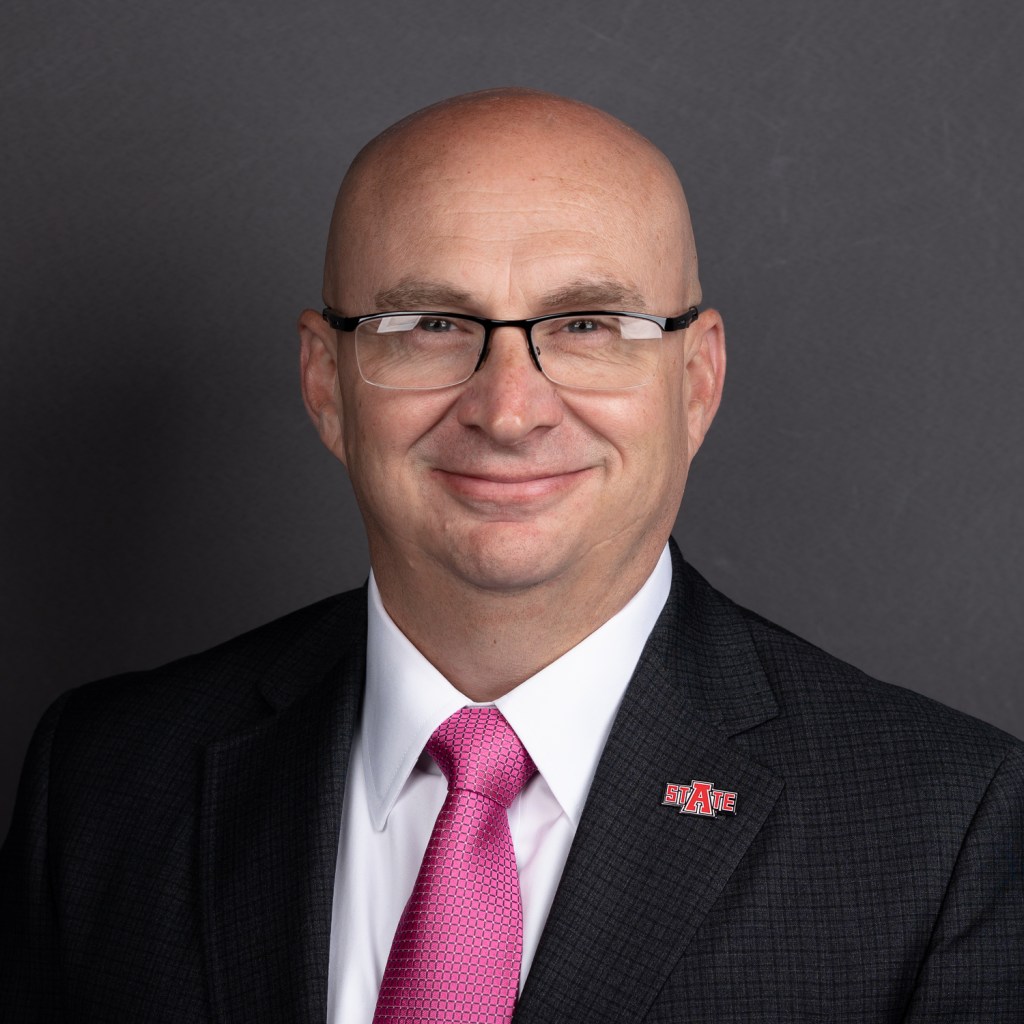
“I will not be here and not have a journalism program,” Shields said.

Todd Shields, Arkansas State University Chancellor

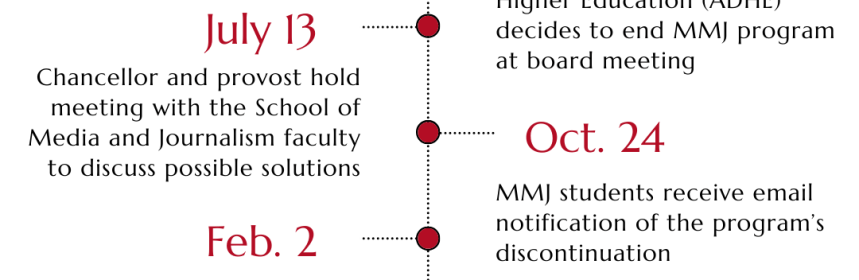
The Arkansas Department of Higher Education (ADHE) decided to discontinue the MMJ program at an April 28 meeting. Interim Dean of the College of Liberal Arts and Communication Brad Rawlins, Ph.D., sent an email to students informing them about the decision Oct. 24. 

Gary Edwards, Ph.D., associate professor of history, prepared a document regarding the circumstances of the discontinuation of the MMJ program to be reviewed during the meeting last Friday. 

“We failed multimedia journalism,” Edwards said. 

Gary Edwards, Ph.D, Associate Professor of History

Those in attendance discussed what led to the end of the MMJ program, including ADHE policy, communication issues, internal strife between MMJ and creative media production (CMP) faculty and curriculum issues. 

According to Arkansas Higher Education Coordinating Board (AHECB) policy, a bachelor’s degree program must have an average of six graduates per year for three years to meet viability standards. Otherwise, the program will be cut. Only 4.3 MMJ students graduated during the review period. 

Shields said he prepared to defend the MMJ program to the AHECB, but the board would not hear arguments.  

“I went ‘What the hell was that?’ That had never happened since I’ve been doing that since 1994,” Shields said. 

In addition to declining numbers, Rawlins, who formerly served as the director of the School of Media and Journalism, said the MMJ department was not properly informed about the possible cut of the program. He said if the department had been made aware, they would have addressed the issue much quicker and more vigorously. 

“I’ve done a deep search with all my emails and talked to people, it’s just not there,” Rawlins said.

Brad Rawlins, Interim Dean of the College of Liberal Arts

Shields said he does not know why the department was not notified. He said communication should be improved, but each department should monitor its own enrollment and address issues before the ADHE notifies them.

“ADHE is no longer the one we talk to,” Shields said. “They’re the ones that dictate to us.”

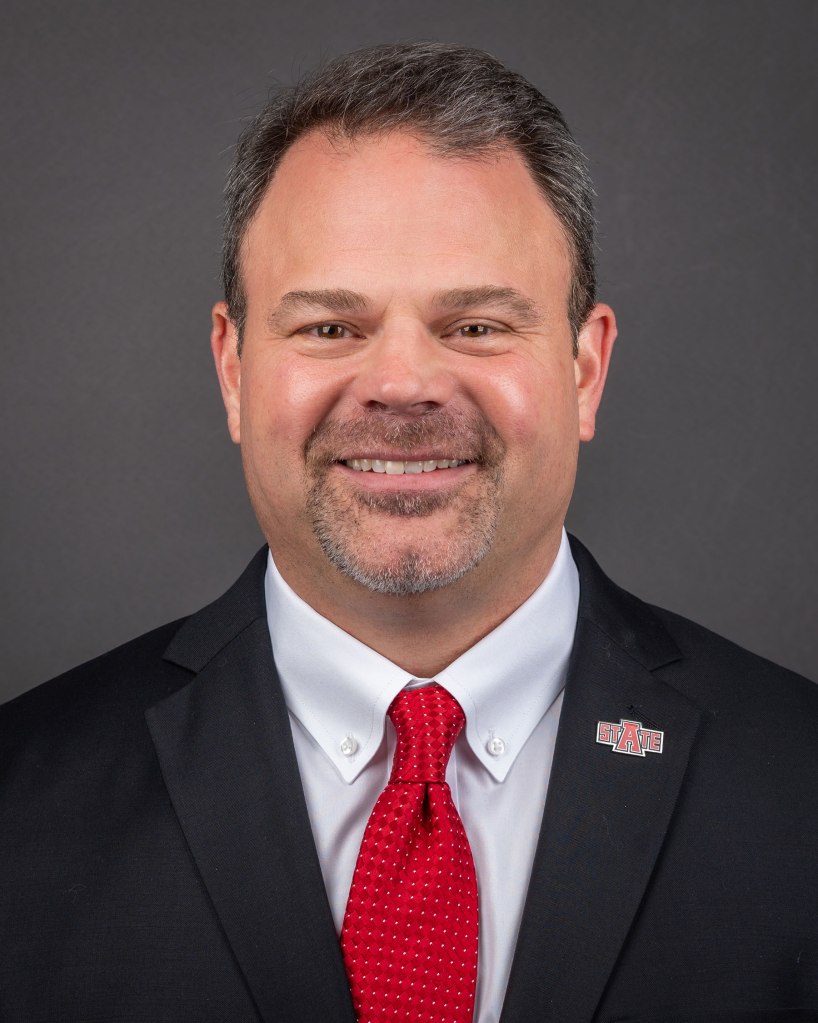
Calvin White, Ph.D, Provost and Executive Vice Chancellor

The chancellor and provost, Calvin White, Ph.D., met with MMJ and CMP faculty July 13 and proposed the two programs combine to keep journalism at A-State. Shields said he hoped the programs would be revised over the fall semester. 

“That did not happen. In fact, I was told ‘We’re not working together,’” Shields said, 

After that meeting, Mary Jackson-Pitts, Ph.D., program coordinator of CMP, sent an email to Gina Hogue, Ph.D., interim director of the School of Media and Journalism saying, “We are not willing to reimagine or launch a new journalism curriculum with the existing MMJ faculty. We have a proposal to establish a broadcast journalism emphasis under the creative media production program.”


The cause of the issues between the departments was not discussed at the senate meeting. 

“I don’t know the history,” Shields said. “I don’t necessarily want to relive all that, whatever it is. I kind of don’t care. It’s ‘Do you want to work together and have jobs or do you not?’ Do you pull together for the benefit of the students and the campus, or do you not?” 

Shields said he still hopes the MMJ and CMP faculty will work things out and revise the programs to be combined. 

“It surprises me, in fact almost maybe hurts me in a way that is hard to describe. That’s not the A-State that I’ve seen anyplace else,” Shields said. “If people are being uncollegial to the point of hurting students in the program, that has to be dealt with.”

Shields said if the MMJ and CMP programs cannot work together, he will consider removing the program from faculty control and giving control to someone with experience in revising programs. 

Pitts, a professor of creative media production, formerly taught journalism for 27 years. She said she finds issues with the current curriculum MMJ teaches. 

She said the curriculum focuses on writing, but students need to learn other skills such as coding, web design and audio and video production. 

“To prepare that student to only work in print journalism is not fair,” Pitts said. “It is imperative that we look to what happens in the future for journalism and the best way to prepare them. It is not just about writing, it is about all the ways that you guys consume news now and how you will consume it in the next few years.” 

According to the MMJ description on the A-State website, the program prepares students to work in broadcast, digital, print and photojournalism. 

“Through hands-on instruction, practical workplace experience and conceptual coursework, students learn how to create and distribute content for print, radio, television, digital, interactive, social and mobile media,” the description read. 

Sandra Combs, associate professor of multimedia journalism and adviser to The Herald, said in the meeting she does not expect any reconciliation between the departments. 

“The four of us in MMJ have been working since summer of 2023 to come up with a minor for MMJ, to come up with core curriculum ideas for MMJ. Aside from that, we are met with opposition that has been in writing from those who do not support journalism because it’s not creative,” Combs said.

Sandra Combs, Associate Professor of Multimedia Journalism

The CMP program coordinator said journalists should have skills in audio and video production to succeed in the industry today. She said the current MMJ curriculum does not meet these standards.

Lillie Fears, Ph.D, Professor of Multimedia Journalism & Multimedia Journalism Program Coordinator

Lillie Fears, Ph.D., MMJ program coordinator, said she thinks the MMJ curriculum provides students with multimedia skills, especially in classes such as multimedia reporting and digital media production. 

She said the MMJ program previously taught broadcast journalism but has not offered any courses since the previous instructor, Larz Roberts, left A-State.

Roberts left after the 2021/2022 academic year to teach at the University of Mississippi, with the position unfilled since his departure.  

“The year that Larz Roberts left, I was in a position to hire an adjunct faculty that teaches in those broadcast journalism areas. I went to every journalism class and tried to recruit students to register for those classes and the enrollment was so low that I could not justify hiring an adjunct faculty member to teach those classes,” Rawlins said. 

Rawlins said he is unsure if the position will be filled in the future, due to uncertainty with the curriculum.

“It would be a position that would teach both in creative media production and in journalism. But in order to make that position work, it needed to have a curriculum that matched the needs of that particular position”

William McLean, Ph.D, Senior Vice Provost for Academic Affairs & Associate Professor of Political Science

William McLean, senior vice provost for academic affairs, said emphasizing how good a program is for the community does not work when defending low viability programs to the AHECB. He said the AHECB is not interested in why a program cannot reach viability standards, they only look at the numbers. 

Pitts said the Faculty Senate should ask for transparency from the administration regarding program viability and specific data required to stay viable. 

“If we are not, as faculty, supplied with the exact number that is being submitted to somewhere at ADHE related to graduation numbers, then everybody will be surprised when it happens to any of your programs,” Pitts said. 

Pitts said there are inconsistencies regarding the data available to her and the data used to determine program viability. 

Faculty Senate president Ed Salo said communication was lost somewhere along the way. He said he wanted faculty to write a resolution to ensure “the ball doesn’t get dropped again.”

Associate professor of chemistry John Hershberger, associate professor of English Khem Aryal and Edwards volunteered to write the resolution that will be presented at the next Faculty Senate meeting, Feb. 16. 

This story will be updated as more information becomes available.

-30-


NOTE: Feature image shows a timeline of the MMJ program deletion process at A-State. (Graphic by Caroline Averitt | The Herald Life Editor)

Day 1 – The 38th annual Barry Pruitt Hurricane Classic

Delta Digital News Service

Thursday, Nov. 30, 2023

Brayden Morse | Sports Editor

JONESBORO, Ark. – Day one of the 38th annual Barry Pruitt Hurricane Classic is complete, with wins from Jonesboro, Rossview, Bartlett and Fayetteville on Thursday night at Don Riggs Hurricane Gymnasium to move on to the winner’s bracket.

Cedar Ridge’s Kyle Provence (3) tries to stop Jonesboro guard Caleb Chew (15) during the first round of the 38th annual Barry Pruitt Hurricane Classic basketball tournament in Jonesboro, Thursday, November 30, 2023. Photo by Atsuki Ohbuchi

The Jonesboro Golden Hurricane defeated the Cedar Ridge Timberwolves 61-27. 

Jonesboro guard Chris Stacy led the team in scoring with 14 points, and led the team with three, three-pointers in the third quarter. Two of the three-pointers were on back-to-back possessions to increase the Golden Hurricanes’ lead.

Jonesboro head coach Wes Swift shared his thoughts on Stacy’s performance.

“He’s a knock down shooter. We need him to stretch the floor. He played a nice role in that third quarter,” Swift said.

The score was 23-14 at halftime, with the Golden Hurricane leading. Coach Swift felt like the score was too close of a margin and needed to play better on both sides of the ball.

“With the score at halftime, we can work on the offense against the one-three-one. We didn’t have a lot of points at halftime and they (Cedar Ridge) do a really good job on their one-three-one. We wanted to play inside out and they did a good job of allowing us to get the ball in the paint,” Swift said. 

Swift also had some comments about his defense in the first half.

“We didn’t press and we thought we could press them. We felt like we needed to, to get some easy buckets and try to stretch that lead out a little bit. I thought we had a really good third quarter once we turned the heat up a little bit,” Swift said. 

The Golden Hurricane play the Rossview Hawks (Rossview, TN) on Friday night at 7 p.m. while Cedar Ridge plays the Nettleton Raiders on Friday at 4 p.m.

The Hawks defeated the Nettleton Raiders 54-53, as the Raiders shot a buzzer-beater three-pointer and hoped for a foul for an and-one.

Nettleton fought hard all game, while being down by eight points with two minutes left in the game and coming back. The Raiders would of course minimize that lead with a couple three-pointers and fouls, but failed to make all of their free-throws. 

Nettleton head coach Bubba Deaton expressed his thoughts on the loss and some positive and negative takeaways.

“We did some good things. We’ve got a lot of things to improve on. We didn’t play very well in the first half offensively. Didn’t get stops in the second half. To be down eight with two minutes left and give ourselves a chance, shows some grit. Probably should’ve gone to the press a little earlier. We shared the ball and we missed some shots that we normally take,” Deaton said. 

The Bartlett Bulldogs (Bartlett, TN) defeated the Osceola Seminoles 78-34. Bartlett guard and Arkansas State signee R’Chaun King scored nine points in the win.

The Fayetteville Bulldogs beat the West Memphis Blue Devils 71-43. The Bulldogs will play Bartlett on Friday night at 8:30 p.m. Osceola will play West Memphis on Friday at 5:30 p.m.

-30-


Note: Photos by DDNS Staff Photographer Atsuki Ohbuchi

« Older Entries Recent Entries »