JONESBORO — For one group of people in Jonesboro, the past 20 years remains a time of healing from wounds that never seem to close.
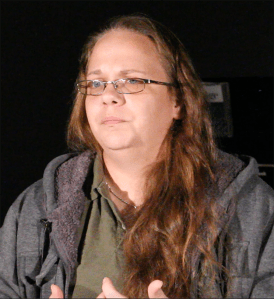
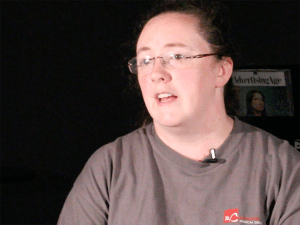
Valerie Grass (photo by Seth Cleveland)
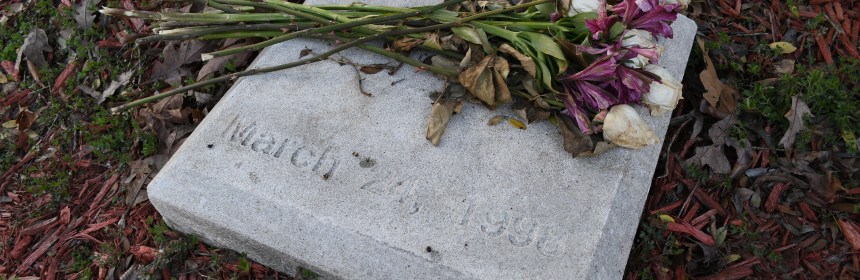
By all accounts, March 24, 1998 began as a pretty average day. The students of Westside Middle School started fifth period. The teachers began the lesson. Then two middle-school students pulled the fire alarm, went up on a hill and began shooting, killing four students and a teacher, and wounding 10 more.
“No time for questions. It was just run and take cover,” said Valerie Grass, a student at Westside at the time of the shooting.
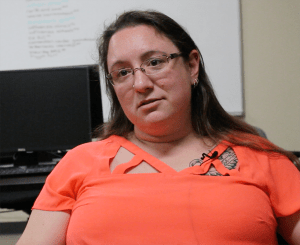
Brandy Myatt said she remembers hearing, “Don’t walk, run!” on that day.
“We just took off helter-skelter, and right as soon as we got to the gym, I noticed my friend holding her arm,” she said.
Brandy Myatt (photo by Seth Cleveland)
Myatt started piecing together what happened. And, she said, things began to change. From there began a long and arduous healing process.
That’s the truth for many people who have experienced similar events. Those who have experienced these atrocities must learn to move on.
The Westside survivors want to aid in the healing process of other survivors.
“We usually try to offer something to say, ‘You’re not alone in this,'” Myatt said.
After every school shooting since 1998, the Westside survivors have gotten together and figured out a way to help. After the Sandy Hook Elementary School shootings in Newtown, Connecticut, the Westside survivors sent the children stuffed animals like they received. In other cases, the Westside survivors have gone to school to talk to the students.
For many of the Westside shooting survivors, Parkland felt different. The similarities between the shootings, the approaching 20-year anniversary and the helplessness — it all opened the wounds of the past.
“This most recent shooting has just flooded so many memories back,” Grass said.
Others in the group agreed.
“As soon as we heard about Parkland, we all got on our Facebook group … and the first thing that I asked is ‘What are we going to do?'” Myatt said.
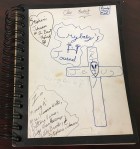
Myatt’s journal (click photo to enlarge)
Their idea stemmed from something the survivors did after the shooting.
Ferncliff, a camp in Little Rock, offered the survivors a getaway from the media coverage the summer after the shooting. The survivors learned journaling as a way to cope.
“From that came a lot of healing,” Grass said. “When we got there they had a starter backpack with a flashlight, a journal and a teddy bear.”
Jennifer Roshto, a Westside survivor, appreciated the journals.
Jennifer Roshto (photo by Seth Cleveland)
“It gave me a place to say all these things and put all these things down, without having somebody tell me, ‘Well, you need to get over it,'” she said.
The Westside survivors want to gather 3,400 journals to send to Parkland survivors so that every high school student can have one.
“We’ve had several donations already, but I still feel that we’re very shy of what we need,” Roshto said.
Northeast Arkansas residents can donate until April 1 at several Journal Donation Locations around Jonesboro.
They also offer up their advice. “Take it day by day,” Myatt said.
Students from the Spring 2018 Advanced Reporting and Reporting for Electronic Media courses investigated the 20th anniversary of the Westside Middle School shootings and the ramifications of Arkansas’ soon-to-be-implemented college campus concealed-carry law.
Miranda Reynolds details remembrances from the Westside School Board, a student and a former A-State faculty member.
Seth Cleveland examines how Westside survivors continue to help other victims of school shootings.
Katie Woodall examines how the Westside shootings changed active-shooter procedures.
Tucker Crain details Arkansas’ Congressional leaders’ stances on gun violence and school safety.
Christopher Lee examines contention at Arkansas State over the new campus concealed-carry law.
DDNS Editor-in-Chief Kimberely Blackburn examines regional reactions to the campus concealed-carry law.
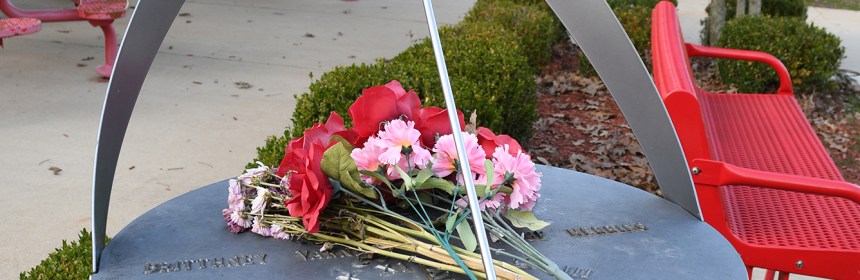
Ammar Taqi of the Advanced Photography class provided featured pictures of the Westside Middle School Memorial Garden. View the full pictures below.
JONESBORO — New interests in school safety have emerged with the mass shooting at Parkland, Florida, and the Westside Shooting’s 20th anniversary fresh on everyone’s mind.
In light of the Parkland shooting, President Donald Trump advocated for arming teachers in the hopes of preventing more mass shootings in a tweet.
Armed Educators (and trusted people who work within a school) love our students and will protect them. Very smart people. Must be firearms adept & have annual training. Should get yearly bonus. Shootings will not happen again – a big & very inexpensive deterrent. Up to States.
The debate of having firearms on campus is not isolated to public schools; it provides a point of contention for colleges and universities as well.
According to the National Conference of State Legislatures, 10 states including Arkansas currently have provisions allowing concealed carry on postsecondary campuses. Provided a person has passed the required courses — including the standard concealed-carry courses and the specialty enhanced-carry courses — gun owners may legally carry their weapon on college grounds.
Dr. Michael McDaniel, A-State Faculty Senate chair (photo by Christopher Lee)
Arkansas State University Faculty Senate chair Michael McDaniel explained how A-State’s Faculty Senate reacted to the new law.
“It’s hard to speak for the entire faculty. About the only thing I feel comfortable saying is that I believe that the faculty were reasonably comfortable with the situation we had prior to this new law,” McDaniel said.
Prior to House Bill 1249, now Act 562, colleges could opt out of allowing concealed carry on their premises, but with the passing of Act 562 this is no longer an option.
“With the new law we lost that option, so now we can’t opt out. It is the rule and it is the law,” McDaniel continued.
Bill Smith, A-State’s associate vice chancellor for marketing and communications, echoed the idea in a short but strong statement.
“The law is the law and we can’t change that,” Smith said.
Even though the law has officially gone in effect, understanding faculty and student opinions about the new conceal carry law is important for gaining insight into how the law and its implementation are perceived.
Some faculty members like associate professor of political science Richard Wang said they feel they were ignored.
“As you know, the university said, ‘No, we’ll opt not to have concealed carry on our campus.’ Joining with A-State are all the other universities in this state, plus junior colleges, plus the campus police forces, plus the local police, the county police and county sheriff offices all around the state, joining … It’s a coalition, and they all said, ‘No, we want to keep the local option, the option here,” Wang said.
Wang has taught at Arkansas State University for 31 years. He said he was surprised to hear the law passed. You can hear more of Wang’s opinions about the concealed carry law by watching the video below:
Dr. Brandon Kemp, interim Dean of associate engineering programs (photo by Christopher Lee)
Brandon Kemp, A-State’s interim associate dean of engineering programs, echoed this sentiment when he heard the new concealed carry law had gone into effect.
“My first opinion was that it was ridiculous. As a faculty we have voiced our opinions over and over again that we don’t want guns on campus,” Kemp said.
A Jonesboro native who has worked at Arkansas State University for over seven years, Kemp said allowing guns on campus added unnecessary risk to the campus. He said it also adds confusion to first responders during an active-shooter threat.
“If we have an active-shooter situation and we have people on campus — whether it be faculty or students — who are pulling out their firearms to combat the situation, then the first responders — the police and SWAT — now they have a much more difficult situation,” Kemp said.
Dr. Erik Gilbert, professor of history (photo courtesy of Arkansas State)
While concerns about increased gun violence with more guns on campus is rational, Erik Gilbert, professor of history at A-State, has already written two articles about the topic of concealed carry on college campuses.
Gilbert cited his articles as his opinion of the new concealed carry law.
In the article, Gilbert encouraged faculty to relax about the idea of guns being on campus.
I can almost guarantee that if you have a few semesters of teaching under your belt, at some point there have been students with guns in your classroom. If those illegally armed students were not moved to violence by the content of your course or the statements of their fellow students, it seems highly improbable that a new group of legally armed students will prove to be more volatile or violence-prone than their scofflaw peers.
Gilbert ended the article by stating, “Don’t worry about the presence of legally carried guns in your classrooms. If you are going to worry, worry about someone illegally bringing a gun on campus with the intention of causing mayhem, not someone who legally carries a gun in the hope of protecting himself from harm.”
In his second article, “Campus Carry Is Not About Preventing Mass Shootings,” Gilbert argued the choice to allow concealed carry on campus is less about the ability to stop mass shootings and more about letting individuals choose how they wish to defend themselves.
Gilbert wrote, “If you happen to be locked down in a classroom during a mass shooting, wouldn’t you rather be able to shoot back if the shooter comes through the door? If you would rather resort to throwing coffee cups or iPads, as some campus police might advise, that’s a valid choice and I would not try to dissuade you.”
The article, published by Inside Higher Ed in 2017, cites many sources to show how concealed carry has affected mass shootings in states where it is allowed, and how concealed carry benefits students.
College Republicans Rep. Chandler Jones (photo by Christopher Lee)
Members of both the College Republicans of A-State and the Young Democrats discussed their opinions on the topic of concealed carry on campus.
“I’m thankful for the state of Arkansas legislature to pass this because it shows that they think of us as humans, they think of us so that we’re allowed to protect ourselves,” College Republicans Rep. Chandler Jones, a pre-professional biology major, said. “I’m thankful and I do think it will be more of a preventative measure; someone who is mentally ill would know that they’re also going to be met with force.”
Jones said he sees the new law as an opportunity, ensuring students have the right to defend themselves if necessary during a mass shooting. You can listen to more of his points below.
Dominique Phillips and Anthony Sumlin of A-State’s Young Democrats discussed the organization’s opinion of the law.
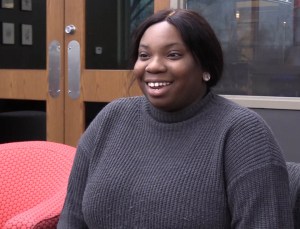
Young Democrats Rep. Dominique Phillips (photo by Christopher Lee)
Phillips also serves as president of student diversity and recruitment.
“I feel like I speak not only for myself but for my party when I say that I feel like the new laws might cause a bit of a problem,” she said. “In general, you can’t fight violence with violence, you can’t fight fire with fire. You’re allowing guns to be on campus now, even going throughout the so many courses that you have. That doesn’t change when a person has a mental breakdown or a mental issue.
“As far as someone acting as a guardian, it’s a little tricky because I see that and I can see the positive side of how they will be able to fight back,” Phillips said. “But at the same time, is it guaranteed that someone will be able to muster up enough courage to go out and shoot someone back?”
While the College Republicans and Young Democrats sit on opposite sides of the concealed carry on campus debate, both parties agreed mental health reform is necessary to prevent mass shootings like Westside and Parkland.
“I feel that not only in public schools — in high schools and elementary, middle schools — but also in colleges there needs to be a more open discussion about mental health awareness,” Phillips said.
A-State’s Young Democrats Anthony Sumlin, a biology and chemistry major, echoed Phillips’ opinion.
“I think the response should not be, ‘Oh well, let’s give more people guns to hide on themselves.’ Personally I feel like we should do more with educating teachers on how to spot mental health issues and really getting rid of that stigma that mental health is something to be ashamed of,” Sumlin said.
You can listen to more of Sumlin’s statements below.
Jones also said he believes mental health reform provides the key to stopping mass shootings.
“Restricting buying guns now really isn’t going to slow down someone who wants to get a weapon from getting it cause they’re on the streets, they’re sold illegally. So I think it needs to be more mental health,” he said. “Screening these people, getting more help for these people, more … maybe facilities. More money distributed there, I think that’s what needs to be our first step.”
The new conceal carry law has clearly struck a nerve with faculty and students alike, but it is unclear how it will affect the educational climate of colleges and universities. Even with the division the new law has caused, what is clear is the law will continue to create debates about campus safety.
JONESBORO – Arkansas lawmakers weighed in on the 20th anniversary of the Westside Middle School shooting, occurring March 24.
Gun violence and school safety continue to be prominent issues across the nation, particularly in light of the recent school shooting at Marjory Stoneman Douglas High School in Parkland, Florida.
Similar tragedy struck Arkansas in 1998 with the shooting at Westside Middle School in Jonesboro.
U.S. Rep. Rick Crawford represents Arkansas’ 1st Congressional District, which contains Jonesboro. In an interview with KASU News Director Johnathan Reaves, Crawford said a school-safety commission was established almost immediately after the tragedy in Parkland, and the commission resembled the style of the commission formed after 9/11.
Crawford said he took the time recently to meet with people involved with the tragedy at Westside to find solutions that do not require congressional action.
“What we do know is we’re not going to wait around for that legislation to appear,” Crawford said.
Crawford’s office did not respond to requests for comment regarding further legislative solutions the congressman may be working on in terms of gun violence and school safety.
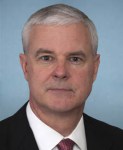
Meanwhile, the 3rd Congressional District’s U.S. Rep. Steve Womack’s press secretary Heather Neilson said Womack is not looking to add new laws regarding gun safety.
“Rather than searching for new, more stringent ways to go against Second Amendment rights, (Womack) wants us to enforce our current laws more forcefully,” Neilson said.
Neilson said tragedy causes debate over the Second Amendment, but Womack does not believe new restrictions hold the answer.
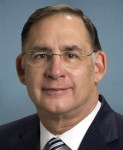
Boozman said HIPPA laws prevent mental health professionals from reporting people who hint of a desire to commit a violent act to law enforcement.
“I think that’s something that we need to look at, and those are the kind of things that Congress will be looking at,” Boozman said. “Those are the kinds of things that the states can be looking at.”
Boozman’s office did not respond to requests for comment regarding any legislative actions the congressman may be taking regarding gun violence and school safety.
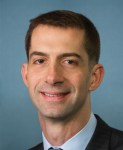
The office of Arkansas’ other U.S. Senator, Tom Cotton, said although Cotton has made no comments regarding gun violence and school safety, any future statements and announcements will be posted to his website and sent to email subscribers.
The office of U.S. Rep. French Hill, who represents the 2nd Congressional District, did not respond to requests for comments. Similarly, the office of the 4th Congressional District’s U.S. Rep. Bruce Westerman declined to comment when asked for comments regarding gun violence and school safety.
JONESBORO – School shootings continue to bombard America; for some schools, it serves as a reminder of the past.
Westside Middle School experienced a school shooting March 24, 1998. This month marks the 20-year anniversary of the tragedy that killed five people.
Natalie Brooks, 11
Paige Herring, 12
Stephanie Johnson, 12
Brittheny Varner, 11
Shannon Williams Wright
The anniversary of the shooting remained in the Westside Consolidated School Board members’ thoughts in the February meeting. Vice President Darren Harpole addressed the board and audience with information regarding the Florida school shooting.
“We are working on this as a district. Our security team, we looked over our procedures. We talked about ways we can tighten stuff up so that we don’t leave anything out there,” Harpole said.
In further discussion of the topic, Harpole said the school strives to keep students safe.
Brandy Myatt, a student of Westside Middle School at the time of the shooting, remembers the day vividly.
She said talking her experiences through with friends and family proved to be difficult.
“With them not being there that day, they honestly don’t understand fully what we were going through,” Myatt said.
Myatt did not begin coping with the experience until the following summer.
Myatt does not support guns in school as a protection of students.
She said many ways exist to help those trying to coping.
“Take their time. Don’t rush the healing process, honestly. That’s where the ‘take their time’ comes in. Talk it out, if they can. If they can’t talk to their parents, then talk to their peers. If they can’t talk to their peers, then seek help. Get help any way that they can,” Myatt said.
Richard Carvell, retired department chair of Arkansas State University’s Radio and TV Department, worked from 1971 to 2008 in various positions. Carvell and his students stayed very hands on during the Westside Middle School shooting media coverage.
One of the more vivid memories Carvell explained dealt with the aftermath of the shooting.
As school shootings continue to occur, Carvell said he reacts in three ways.
“Of course I’m saddened at the loss of life and then I get angry. I think to myself and sometimes I say out loud, ‘Why aren’t we doing something to help the people who are going off the deep end and take out their frustration?’ We just don’t know enough to help those with mental problems,” Carvell said.
MONTICELLO, Ark. – Arkansas’ new weapons’ policy brings up memories of the past for one faculty member.[1]
An assistant professor at the University of Arkansas at Monticello said gaining a tenure-track job excited her. However, after she moved, she learned of the new weapons’ policy.
“I want to teach certain books, I want to teach certain things and I’m having to censor myself,” she said. “I’m having to pull back on what I would do in the classroom normally because I’m scared.”
The new weapons’ policy triggers memories of a previous shooting at Virginia Tech. While doing post-graduate work at a nearby university, she learned a former classmate, Seung-Hui Cho, killed 32 people and wounded another 17 in two separate attacks before turning the gun on himself.
Blaming the tragedy partially on herself, she said the attack changed the way she conducts her classes. Remembering behavior she said she will not allow in her classes, she said classmates and professors teased Cho mercilessly. She said the teasing came from his struggle with the English language.
Dr. Richard Wang, associate professor of political science (photo by Christopher Lee)
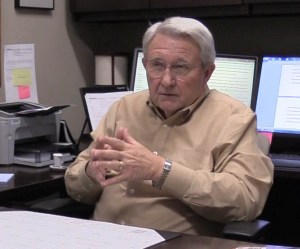
Richard Wang, Arkansas State University associate professor of political science, said the new law changes the climate of his campus. His immediate concerns include the safety of the staff, his students and the faculty, many of whom he counts as friends.
“The law, now in effect, denies me the right to control my work environment,” he said. “I’m not allowed to prevent, to get in the way, to ban concealed weapons carry from my classrooms or my office or anywhere else.”
The assistant professor agreed and said learning by its very nature makes people uncomfortable. Some people display violence when uncomfortable. She said she believes no one truly addressed the reason behind campus gun violence.
Although legislation passed by Arkansas lawmakers took effect Sept. 1, 2017, instructors just received the necessary training to teach the needed classes. The law still prohibits the carrying of weapons in campus childcare centers, athletic events and disciplinary meetings.
Brad Phelps, A-State’s general counsel, said each campus will need to designate a specific area for disciplinary meetings. The area must be cordoned off and there must be 9-hour notice given. He said the new signage, once fully installed, will answer all questions on where guns can and cannot be carried.
The legal offices in Arkansas university system offices worked together to interpret the new legislation. Phelps said they did so in order to ensure all campuses applied the law consistently. Interested parties can read the frequently asked questions on how the new legislation impacts ASU campuses.
Mark Rushing, University of Arkansas’s assistant vice chancellor for university relations, said they held four public forums asking for feedback from the campus community. He said the U of A System considers the law fully implemented on its campuses. Read more on U of A’s frequently asked questions here.
Both Wang and the assistant professor said they considered forms of protest. She said she thought about wearing a bulletproof vest to class. Wang said he considered wearing a helmet or flak jacket. He said he might use humor in his protest because of the absurdity of this law.
The assistant professor said universities spend a lot of time creating emotional support for students. They also need to spend time giving educators the right frame of mind, so they can teach. She said this situation impacts her essence of ethics.
“Do you jeopardize your own standards, do you jeopardize your own morals to keep employment?” she asked. “Do you lower your standards for your students to stay alive?”
1. The UAM faculty member requested anonymity due to concerns about the interview’s effects on potential tenure status.