POCAHONTAS – The Pocahontas School District to close March 17, amid fears of the Covid-19 catching the students, faculty and staff.
“The division of Elementary and Secondary Education instructed the Pocahontas School District to close beginning Tuesday, March 17 to Friday, March 27,” the Superintendent, Jerry Martens, said on the school district website.
The closure includes all academic and extracurricular activities.
So far, no report of anyone testing positive for coronavirus reported in Pocahontas.
The school gave the students Alternative Methods of Instruction (AMI) packages to guide in their studies at home.
Martens said the school would resume classes Monday, March 30.
“No student is allowed on campus for any reason as per the request of the commissioner of education and the governor of Arkansas,” Martens said.
He said students would be able to contact their teachers through email for questions concerning AMI assignments.
POCAHONTAS – The demographic in Pocahontas has changed tremendously in the past five years, as new businesses mushroom to cater to a growing populace of diverse cultures.
Until 2016, the town consisted of 93.6% Caucasian and 0.0% Pacific Islander. In 2015 plans to construct a chicken plant in Pocahontas began, setting in motion the wheel for economic growth the town currently enjoys.
In the beginning, many locals protested the construction of the chicken plant claiming it would open the town to foreigners. Local business owners feared it would cause minimum wage to rise, posing competition for the limited workforce. The city council went through great lengths to educate the locals about diversity and tolerance and how beneficial the chicken plant would be to the town’s economy. After several town hall meetings to convince the locals and business owners, Peco, the chicken processing plant, finally opened its doors in the Spring of 2016. Located along Highway 67 at the border of downtown Pocahontas and Lawrence County.
“Since Peco opened in 2016, our company has recruited 3,879 workers,” said Joie Saienni, the branch manager of Onin Staffing Company that recruits staff for Peco.
The plant hired many locals from management staff to track drivers and sanitation workers. Many locals found jobs in the hatchery, live processing, de-bone unit, evisceration unit and packaging section in quality assurance department, raising the local hourly wages from a minimum of $8.25 to $22 an hour for those working in the live processing.
Initially, the plant hired only locals from Pocahontas and nearby towns within Randolph and Lawrence Counties, but have since replaced them with workers from as far as the Marshall Island, in the Pacific.
With the opening of Peco, the demographic of Pocahontas began to change. The 2010 census shows a population of 6,608, and as of July 2018, the population had risen to 6,644. The 2020 census will tell how much the number has grown since. However, evidence shows a shift in the race composition and growth in new businesses. From 93.6% white, consisting of an older generation above 18 years old, according to the 2010 census, to young Micronesian families from the Marshall Islands.
Many Marshallese have enrolled their children in the Pocahontas Public School system. The superintendent of the Pocahontas School District, Jerry Martens, said Pocahontas School District has 250 new pupils from the Marshall Island.
In 2017 the Pocahontas School District began plans to build a new elementary school to cater to the growing population. The former Pocahontas School District Superintendent Daryl Blaxton predicted in 2017 a rise in the number of new students from 200 – 500 students by 2018. The new elementary school project is underway.
Because of the population shift, several new businesses mushroomed, adding to the growth of the city’s economy.
The city reported steady growth in the past few years with 2019, seeing a rise in revenue of 11%.
Paula Thorpe, who works for the Pocahontas Water and Sewer Company, said that in the past five years, she saw a rise in new water customers from 440 in 2015 to 500 in 2019.
Several businesses, including the grocery chain store Harps, opened in Feb. 15, 2017, giving competition to Walmart Superstore. Harps added to its services, a butchery, providing custom beef cuts and pork cuts.
Soon after the construction of Harps grocery store and a gas station was completed, the First National Bank built a second branch next to Harps, along Highland Boulevard, offering banking opportunities to newcomers and new businesses.
Among its customers is Herman Lopez, who owns a Mexican restaurant in Pocahontas. He has been through the lows of business. A shoe factory, which was a primary employer in the city outsourced when the government signed NAFTA, and with its move, most of the mom and pop businesses in town died. The town square had been left with a few stores as most shops closed down. For more than seven years, Lopez runs his Mexican restaurant, one of the only two Mexican restaurants in town.
Two years ago, he expanded his business, opening a mini-market grocery adjacent to his restaurant to cater to the needs of the Marshallese customers who have moved in town.
The mini-market called Mercadito Latino contains exotic food ranging from Fufu flour-a special kind of flour made from Plantain or Cassava to potteries and house deco. Lopez imports his groceries from far and wide, including Mexico. Lopez says business is booming.
Across the road from Lopez’s store, a new convenience chain store, Jordan’s Kwik Stop 52, a gas station and a travel center opened November 2019. Adding to the growth of the economy of the city. Jordan’s Travel Center is the only travel center in Randolph County along Highway 67.
With many new people in town from different places, the city, which was within a dry county for a good number of years, finally managed to gather enough votes to pass a liquor ordinance. And, as from fall 2019, Walmart, the biggest supermarket in town, began stocking liquor. Pocahontas has since seen its first bar in many years. Located across the road from the Randolph County Chamber of Commerce.
The city has also started work in 2018 to expand its court and jail size.
With the progress the city made due to the change in demographic, there are fears the scourge of the coronavirus outbreak may pose significant setbacks to the progress made over the past few years. But there is faith in the city’s capacity to handle the situation, especially with the merger of St. Bernards Medical Center and the Five Rivers Medical Center in Pocahontas in 2019 to improve services.
JONESBORO — The City of Jonesboro held a joint meeting with Suddenlink Thursday night to address numerous complaints by citizens. The St. Bernards Auditorium was at capacity; in fact, it was standing-room-only for disgruntled residents.
Hundreds of Jonesboro residents showed up to voice their complaints to media giant Suddenlink. Complaints ranged from wrongful charges to lack of competent service and were never in short supply.
“Our company has not delivered as it should. I want to apologize that it’s come to this. The crowd is evidence of how serious it is,” Brad Ayers — senior director of governmental affairs for Altice USA, the company that owns Suddenlink — said.
Hundreds filled the St. Bernard’s Auditorium for the meeting. Photo by Chase Gage.
Representatives from both Jonesboro and Suddenlink were available from 6 p.m. to 8 p.m. to answer questions and complaints submitted by customers. Ayers “promised” the company would address every complaint “within a week” of the meeting. Jonesboro’s communications director Bill Campbell read several of the complaints to the crowd.
The majority of the meeting consisted of Suddenlink representatives attempting to answer specific questions by residents, though they often received “corporate” answers instead of legitimate solutions. The crowd tried their best not to let the company off the hook.
Perhaps the loudest reaction of the night came when the company reluctantly revealed one of their call centers was located in South Africa; multiple complaints included call center employees not speaking fluent English.
“I can never get a real person on the phone, and when I do, they’re foreign and I can’t understand them,” Campbell read from a submitted complaint.
Further unrest ensued when a customer proclaimed “if you’re billing for services that aren’t provided, that’s a problem.” The statement was met with applause and a very audible “amen” from the back of the room.
“I’ve gotten your calls and emails. This (crowd) is evidence of what’s going on.” – Jonesboro Mayor Harold Perrin
State Senator John Cooper was in attendance as well to address his constituents and their frustrations.
“It looks to me like you’re trying to handle this with management. Personally, I would like to see highly trained people here to take care of this. It’s probably a little bigger than what you have here at this meeting tonight,” Cooper said to the Suddenlink representatives.
Cooper suggested a “task force” approach to solving the problems Jonesboro residents are facing.
“You’re welcome to contact me at any time over these issues. I will work with this company to improve the service,” Cooper said. Cooper can be contacted by phone at 870-761-0130 or by email at john.cooper@senate.ar.gov.
An upset customer voiced their opinion on Suddenlink during the meeting Thursday night. Photo by Chase Gage.
Jonesboro Mayor Harold Perrin arranged the town-hall-style meeting after a Nov. 7 meeting with Suddenlink representatives. Prior to the initial meeting, Perrin receiving numerous calls and emails complaining about the company and “immediately” got on the phone to fix them. Perrin assured citizens that their voices were being heard and their issues would be addressed.
Perrin also made sure to point out Suddenlink does not have a franchise with the City of Jonesboro and that any claims otherwise are misinformation. Instead, Suddenlink has a franchise with the state of Arkansas. There are multiple cable and internet providers in the city, though Suddenlink serves the majority of the area.
“Send any unanswered questions to my office. This is a serious issue we need to resolve,” Jonesboro Mayor Harold Perrin said to open the meeting. “I’ve gotten your calls and emails. This (crowd) is evidence of what’s going on.”
The Jonesboro Mayor’s Office is located at 300 S. Church St. and can be contacted by phone at 870-932-1052 and via email at hperrin@jonesboro.org.
In the end, the meeting did little to resolve any issues despite the best efforts of the Suddenlink representatives. However, if their promise is fulfilled, the residents of Jonesboro will be taken care of in the near future.
“We’ve heard you loud and clear,” Ayers said in his closing statement. Whether or not they listened, though, is yet to be determined.
POCAHONTAS – The school board of the Pocahontas School District voted March 16, to open a new checking account for the new elementary school amid reports of fraudulent activity on the current checking account.
“There has not been any money lost by the district at this time, Jerry Martens, the superintendent said.
The board is yet to file a police report as per the audit request. Martens said the bank suggested the board close the current account and open a new one. The bank also required minutes of the school board meeting approving the changes to open a new account.
During the executive session, the six- member-board agreed to increase the grade 7 cheerleader stipend to $1538, paid in the remainder of the 2019-2020 school year.
The board hired Amy Story as grade 7 cheer sponsor, Junior assistant cheer sponsor and senior citizen cheer sponsor for a stipend of $1400 for the school year 2020-2021.
The board also voted to hire a new cafeteria worker for the Junior high.
On a separate note, Martens said a couple of boys requested to transfer from Pocahontas School District to Sloan Hendricks School District.
He told the board, the Sloan Hendricks superintendent declined the request saying, the school would not be able to accommodate the boys because grade 9 is full and he would have to hire a new teacher should he take the boys.
JONESBORO – The U.S. Census has occurred without fail since 1790 despite obstacles like war, natural disaster, and now, a pandemic.
The United States conducts a census every 10 years to get an accurate count of residents. In 2020, it is once again time for gather information from around the nation.
Article I, Section 2 of the United States Constitution mandates the count and legally requires residents in all 50 states and five territories to respond. The U.S. Census Bureau makes it fairly simple to fulfill the requirement.
According to the Bureau’s website, invitations to respond have already been sent to homes around the country. This year, anyone can respond by mail, phone or online by the April 1 deadline. After that, census takers may be dispatched to collect answers.
The survey asks a few simple questions about who lives in the home and how they are related as well as their races and sexes. There is no question about American citizenship.
These questions may seem simple to some, but Kade Holliday, Craighead County clerk, said they hold a great importance to the city and county.
“The U.S. Census is one of the biggest ways that federal money is dispersed out,” Holliday said. “You want the most people to be counted so that your area gets more of those tax dollars.”
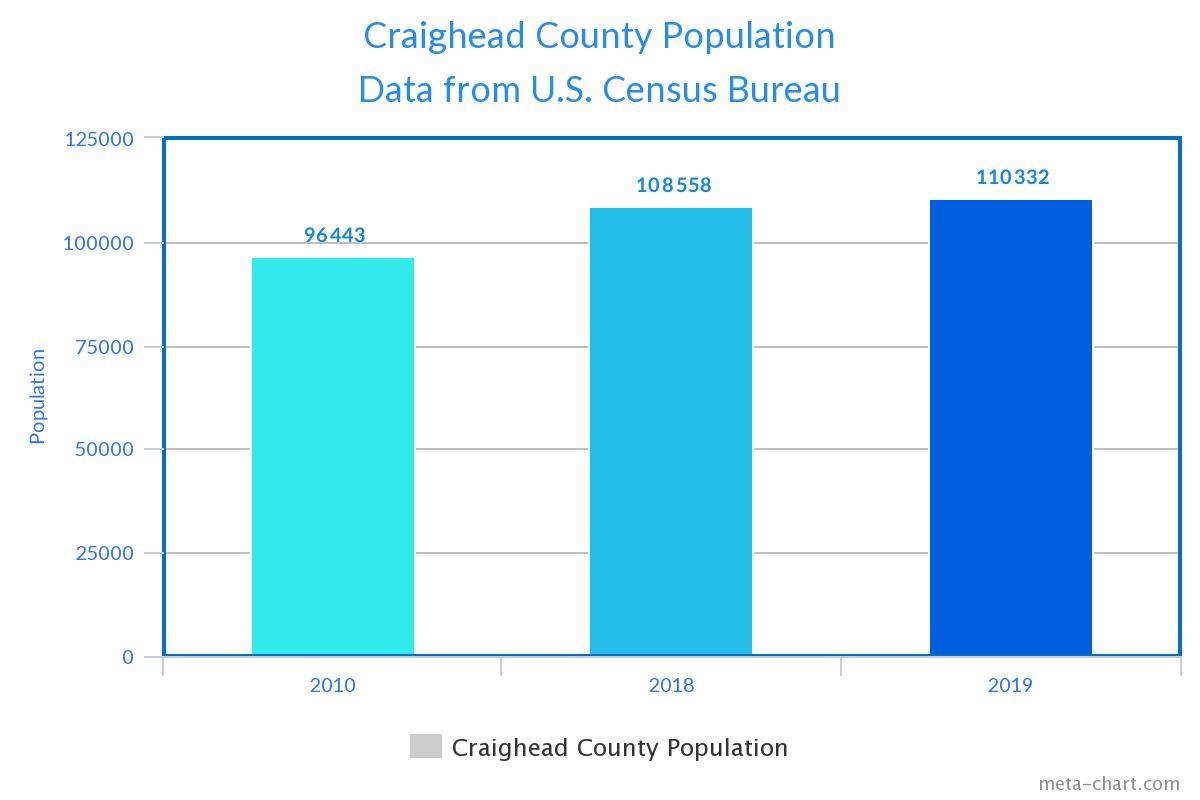
Holliday said because Jonesboro experienced a population boom since the last census in 2010, the city can expect a significant jump in federal funds, and that money will be used to build parks, bridges and roads as well as add to the police, fire and sanitation departments.
An accurate count is also important for elected officials. Shifts in population or growth can significantly change areas they represent.
“Let’s say there’s a situation where in Arkansas we picked up a fifth (congressman), or we lost one because the population went up so greatly in another part of the country. We would have to redraw the lines to create those districts to make sure they were equal in population, so one district doesn’t have more people in it than another,” Holliday said.
While some may be hesitant to give information to a government agency, Title 13 of the U.S. Code strictly prohibits the Census Bureau from sharing personal information. Responses can only be used to produce statistics, and no information can be used against the responder. The Supreme Court has even ruled that the Patriot Act does not override the law of confidentiality on the census, and addresses cannot be discovered through the Freedom of Information Act.
JONESBORO – With the 2020 census on the horizon, the Hispanic community faces an ever present and mounting number of challenges while trying to get as many people to complete the census as possible.
Challenges like technological issues, misconceptions, the political climate and the coronavirus all represent a hurdle for the Hispanic community, said Gina Gomez, executive director of the Hispanic Center in Jonesboro.
Most of these challenges were expected, but the coronavirus situation presented new challenges and dampened plans that Gomez and others had been working on for a while.
“Even though we have been planning this work with the census for months now, we didn’t expect this was going to happen,” Gomez. “Every activity that we had planned, like door-to-door canvassing and going out to events where we were going to promote the census have been canceled. That’s a big challenge. Right now we are looking into ways we can continue promoting the census using online resources and social media.”
Gomez emphasized in the current political climate there are many misconceptions on what will be done with the information given by families in the census. The community is working on educating families that information given will not be used against them or given to law enforcement agencies and informants.
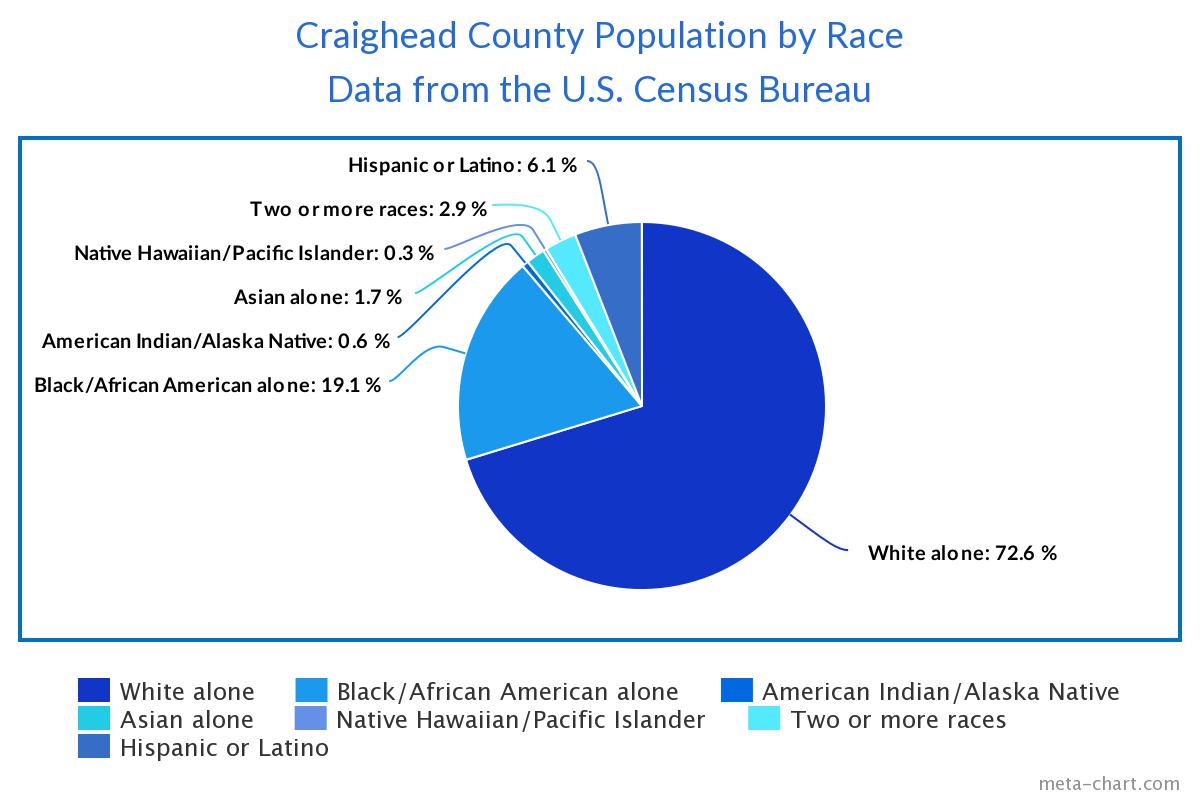
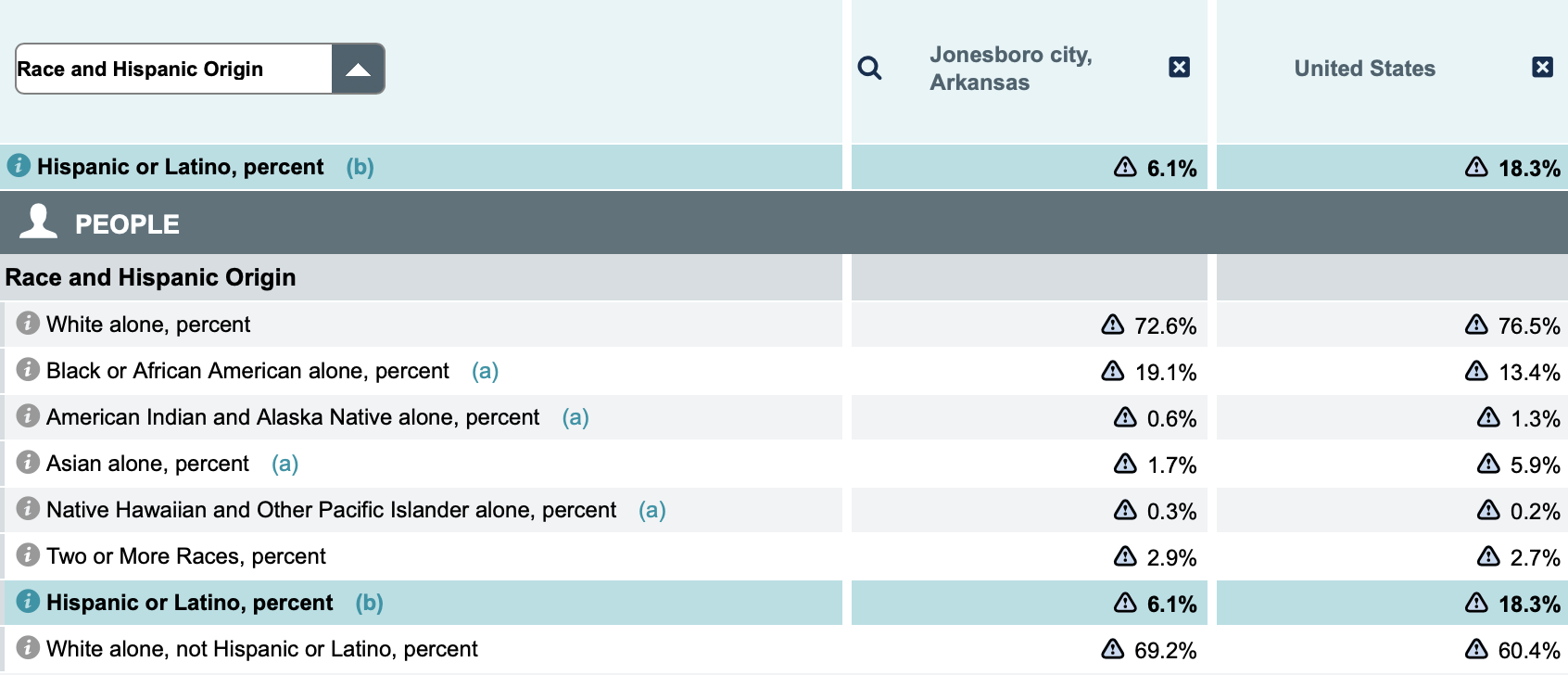
This graphic from Census.gov shows the percentages of various ethnic groups in Jonesboro and the United States.
“Our people are afraid to provide information to the census,” Gomez said. “There’s been an educational phase where we have been trying to inform people about what the census is, how the census impacts them and also that there is not any risk by providing the information.”
According to the census, counting children is a tough challenge for all families, no matter what ethnicity or race.
“Children under 5 years old are among population groups historically undercounted in the census,” a Census Bureau press release said.
Gomez said counting children in Hispanic families is a problem too. Gomez highlighted that many families completed a census in their home country, but once these families move to the United States they question whether they need to do the census or not.
“Many families don’t understand what the impact the census has on your family or kids,” Gomez said. “If they don’t see the importance of bringing those funds to our city in order to have better schools, access to healthcare providers, improving our roads, it’s difficult to have people participating. A lot of this is education related. We need to educate our community.”
This is the first year families can complete the census online. This makes it easier on some, but can also be a problem for others.
“For some of our families, they don’t have computer access, online access, they don’t have internet or they just don’t have the knowledge of how to do it,” Gomez said. “They can do it on a computer, an iPad or cellphone. It’s a little complicated for some of our people, especially for ones living in more rural areas. That’s one of the areas that we as the Hispanic Center were trying to work really hard on.”
With the coronavirus dampening many ways to advertise the census, Gomez and the community have put a lot of emphasis on social media. Gomez noted just how important it is for Hispanic families to do the census as those families will see benefits moving forward.
“We hope by demonstrating the number of Hispanics we have in the area and in general the state, because we are part of the state coalition, we’ll be able to assure based on the percentage of Hispanics there are specific needs to target this minority in Arkansas by providing language services when it comes to healthcare or schools,” Gomez said. “But, if we are not able to demonstrate by how many people we have, the need will not be as evident even though we have the people here.”
The coronavirus was not the only thing that affected the push towards the census. On March 28, an EF-3 tornado tore through Jonesboro. Homes and businesses were destroyed throughout the city.
“Now, more than ever, we need to bring funds to our city to help rebuild it,” a post on the Hispanic Center’s Facebook said. “You can help us with this, completing Census 2020.”
Gomez worked with the Hispanic community in 2010 to complete the census but she said then the effort was not as widespread and did not have as many people involved.
“In 2010 Arkansas was really undercounted,” Gomez said. “We want to assure we are counting as many people as we can around the state this time so we are not letting those funds go.”
According to the census, the Hispanic population makes up an estimated 6.1% of the total population in Jonesboro. The estimated total population in Jonesboro reads 76,990.
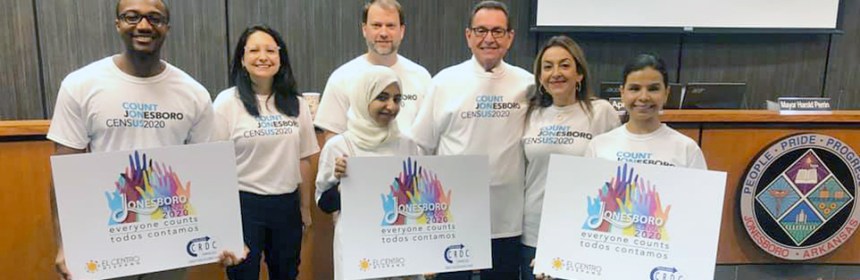
This time around the Hispanic Center created its own campaign with the city of Jonesboro and also created its own logo. There is also a state coalition called Arkansas Counts to spread the word about the census and efforts surrounding the census are more structured now.
“When I moved here to this country, I didn’t understand why it was that important for me to fill out the census,” Gomez said. “But now that I have been educated on the topic I can educate others.”
Editor’s Note: Feature photo courtesy of the Jonesboro Hispanic Center: Members of the Hispanic Center and Jonesboro community work together to spread the message about the 2020 census.