Tag Archives: Jonesboro Police Department

Local emergency services in need of Spanish speakers
Large local Spanish-speaking population requires that emergency services utilize translators

Delta Digital News Service

Friday, Dec. 1, 2023

By Avery Jones | Editor

Emergency services, such as police departments, fire departments, and ambulances, often require foreign language resources at hand if they need to help someone who speaks little to no English. Bilingual employees can be highly valuable as a result.

In Jonesboro, this is especially relevant because of the large Hispanic population. While many Hispanic people can speak English fluently, there are also many who don’t. 

The Jonesboro Police Department works most directly with Spanish speakers. According to Mary Oliver, who works in the records division, many people come to request a copy of their report or file a report, including Hispanics. 

The records division deals with all of the paperwork that comes through, including accident reports, arrest reports, and tickets. Belinda Rodriguez, a translator who speaks fluently in both English and Spanish, helps those who need translation to communicate when they come to request or file a report.

“With the language barrier with the rest of the clerks, sometimes it’s hard to figure out their need, what they’re requesting, and so she fills that gap for us,” Oliver said.

They rarely get witness statements in Spanish since there’s usually an English speaker there who can translate for them if needed. However, on the occasions that this does happen, Rodriguez will translate the document for them when there’s a need.

Additionally, the criminal investigation division sometimes interviews people who only speak Spanish, so in those cases, Rodriguez translates for them during the interview.     

“We have a large need here. We’re here Monday through Friday, eight to five…I would say daily, she is translating for us in some form or fashion,” Oliver said. 

Before Rodriguez was hired in July 2022, the records division worked for several years without a translator. According to Fodor, it was a struggle, and they had to reach out to other resources in order to get the translation they needed.

Rodriguez is Hispanic and grew up in the U.S. learning Spanish alongside English. Even before she worked as a translator, she found herself translating wherever there was a need. 

For example, she has helped people to communicate at the ER, the revenue office, and in a former job as a dental assistant. The first two instances weren’t in a professional capacity; Rodriguez says it’s in her nature to help where she sees it’s necessary.

“My mother struggled a lot growing up, so I know firsthand what it’s like to be in that situation,” she said.

Additionally, many Hispanic people are scared to file reports, according to Rodriguez, because they think that nobody will be able to understand them or even fear getting deported. She hopes to help bring in more Hispanic people, especially women who need to report domestic violence.

The police department also has two bilingual police officers who speak both English and Spanish fluently. One such officer is Corey Obregon. He has worked with the department for almost five years.

He grew up in El Paso, Texas, and only spoke Spanish in his household, so he’s fluent in conversational Spanish. In the field, he mostly speaks Spanish when dealing with DUI (driving under the influence) and domestic violence cases. 

“I’m pretty much one of the people they call quite often,” Obregon said.

The other bilingual officer in the department is Homero Gonzalez. He’s been working with the JPD for nearly two years. 

Gonzalez believes there’s definitely a need for Spanish speakers in the department. He’s been called to many different parts of the city to help translate and has assisted detectives with translation as well. 

He meets people who speak little to no English at least once or twice during his work week. It’s usually during the evening when people are going home from work and mostly cases of thefts, accidents, and domestic violence.

“I find Hispanic subjects are more willing to give me information due to me being able to communicate in their native tongue,” Gonzalez said. “I can always see the relief on people’s faces when they find out I speak Spanish. It’s just one less thing to worry about.”

Usually, the only foreign language the department works with frequently is Spanish. However, they have occasionally encountered others, such as Romanian, Nepali, and Marshallese.

The department has a variety of resources they can use when confronting a language barrier. There are translators they can contact for help communicating, and some officers like Gonzalez use Google Translate.

There’s currently an incentive program in the works for officers who speak a second language. There used to be an incentive program in place but after officers tried to fight for a pay raise, it was taken away in 2015. 

However, after the recent fight for a pay raise in the department over the summer, a new incentive program is being established. According to Obregon, it will be incorporated next year.

The Jonesboro Fire Department also occasionally needs to communicate with Spanish speakers. According to Martin Hamrick, the fire chief, they sometimes have to use basic phrases and questions when doing EMS calls, wrecks, and fires, and it can be difficult to communicate.

In cases where the individual speaks little to no English, the department has been able to get assistance with translation from the police or from another person there who can speak both languages. Mostly, the only foreign language they encounter is Spanish, but they have dealt with some Asian languages on occasion.

“But it’s definitely better if we speak one-to-one, we get a faster response that way,” Hamrick said.

None of the firefighters are bilingual, but some know basic phrases. El Centro Hispano, the Hispanic center of Jonesboro, offers a basic Spanish class, and some of the firefighters have taken it.

Because the fire department has to follow the civil service guidelines set by the state, they don’t offer any incentives for bilingual firefighters nor is it considered a requirement or advantage when hiring. 

Emerson, a local ambulance service, also occasionally helps people who speak little to no English. In these cases, the EMTs usually communicate with others on the scene who speak English or use Google Translate, according to Eric White, who’s an EMT at Emerson and also works in public relations there.

The EMTs can also use a chart using symbols that the patient can point to indicate how they’re feeling. As a last resort, they have a number they can contact for translations. 

Once at the hospital, there’s usually translators on-site who can help both the EMTs and the patient once the ambulance arrives. Besides Spanish, other foreign languages Emerson has encountered include German and Russian.

There are a couple of EMTs at Emerson who can speak Spanish to a certain extent. Having a second language as an EMT does come in handy, according to White, and is a standout skill on a resume when they’re hiring.

-30-


Note: Feature photo by Matt Popovich on Unsplash.

Medical Marijuana Forces Law Enforcement Changes

by Chase Gage
Delta Digital News Service

JONESBORO — The Arkansas Medical Marijuana Amendment passed during the 2016 election cycle. With implementation beginning, law enforcement agencies are shuffling to prepare for the changes they will soon experience.

In Arkansas, the medical use of marijuana is legal. However, the use, possession and distribution of marijuana for any purpose still remains illegal at the federal level in the United States. That alone causes issues for the legal implementation of medical cannabis.

“It’s still illegal federally and we don’t have it (recreationally) legal at the state level so we’ll continue to enforce the laws until they change,” said Jonesboro Chief of Police Rick Elliott. “You’re going to have to have your medical card with you if you get caught with it. If you’re medically qualified and all documentation is in order, you’ll be fine.”

Elliott said if a person has a medical card, they will face no issues if caught with legally obtained marijuana. However, impaired drivers will face repercussions, just as they would with other drugs or alcohol.

In simpler terms, don’t drive high, even with a prescription.

“We’re bringing the officers up to speed on recognizing driving while high. There’s technology being developed similar to the breathalyzer that can detect THC levels,” Elliott said. “These new strains are very high in THC content, which is impairing. We expect an increase in traffic accidents because of it.”

Currently, prescribed patients cannot legally possess marijuana. Patients must purchase the drug at a dispensary within the state of Arkansas for it to be legal. Two Hot Springs dispensaries have opened since May, selling 169 pounds of medical marijuana and earning more than $1 million in the first month of business. A Northeast Arkansas dispensary isn’t open for business yet.

13999431743_9854e1cab1_k

A cannabis prescription is just like any other prescription. Arkansans voted to legalize the plant medicinally in 2016. (Photo by Kyle Butler licensed under CC BY 2.0)

Corey Seats, Coordinator and Deputy Prosecuting Attorney for the 2nd Judicial District Drug Task Force, said the opening of the dispensaries, and thus the beginning of legal marijuana, will pose several issues for law enforcement.

“Normally you can search (a vehicle) if you smell marijuana,” Seats said. “If someone is pulled over and the officer smells marijuana inside the vehicle, his first question will be, ‘Do you have a medical marijuana card?’ If they say yes, can you search? How is that going to impact probable cause?”

Drug dogs and K-9 units will face similar problems. Drug dogs are trained to detect illegal controlled substances, but now marijuana will be legal in certain situations.

Seats said law enforcement officers run into similar problems with prescription pain medication such as hydrocodone.

“If you have a marijuana card, as long as you have less than 2.5 ounces, it’s not illegal to possess. How do you train a dog not to smell less than 2.5 ounces of marijuana? You can’t,” Seats said.

At the federal level, marijuana legalization is — for lack of a better term — a mess.

The Obama administration was rather hands-off on the subject, letting states decide how to regulate both medicinal and recreational marijuana through the Cole memoranda. However, in January 2018, Attorney General Jeff Sessions issued a new memo on marijuana enforcement that essentially gave the federal government the ability to intervene in any situation involving the sale or possession of marijuana, despite the legality at the state level.

Current Attorney General William Barr has a different tone toward the cannabis industry. Barr said he did not think it was appropriate to upset the legally licensed cannabis businesses just because the federal government could.

“I’m not going to go after companies that have relied on the Cole memoranda,” Barr said during his Senate confirmation hearing.

Special Agent Stephen Cupp from the FBI’s field office in Jonesboro declined to comment on the issue due to the ever-changing political climate.

Patients with medical marijuana cards cannot freely smoke the drug as they please. There are several rules in place for the usage of the substance.

For Arkansas residents, there are currently 19 “debilitating medical conditions” listed that qualify an individual for a marijuana prescription, including AIDS, cancer, Alzheimers, intractable pain and more. Over 7,000 Arkansans currently possess medical marijuana cards.

Use of medical cannabis will be prohibited in most non-private areas. Examples include all public areas, school grounds, correctional facilities, motor vehicles, health care facilities, private residences used for licensed child care and any other place where smoking is prohibited.

In Arkansas, possession of marijuana less than 4 ounces is a Class A misdemeanor with a maximum sentence of one year in jail and up to a $2,500 fine for a first offense. Any subsequent offense is a Class D felony, which carries a maximum of six years in jail and up to a $10,000 fine. Possession of between 4 ounces and 10 pounds carries a mandatory minimum of three years in jail.

Marijuana is legal medicinally in Arkansas, but recreational use or possession is still against the law. Medicate responsibly.

EDITOR’S NOTE: Featured photo of “pre ’98 bubba” by Mark is licensed under CC BY 2.0

Active Shooter Procedures Changed After Westside

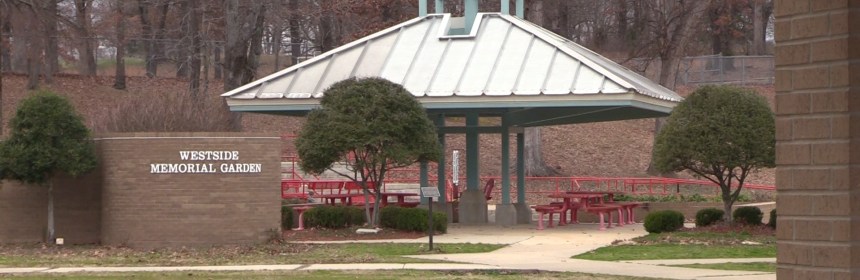
Westside Middle School Memorial Garden


Westside from Katie Woodall

by Katie Woodall
Delta Digital News Service

JONESBORO – Twenty years have passed since the shooting that changed the lives of so many in Northeast Arkansas.

On March 24, 1988, two middle school students shot and killed four classmates and one teacher. It still haunts the people of Jonesboro. Westside Superintendent Scott Gaunt said the threat of violence serves as a worry for superintendents everywhere.

“Any superintendent will tell you that’s a nightmare that all of us have. Bad people have bad intentions; they’re going to do bad things,” Gaunt said. You know, we can only hope that we can put protocols in place that can stop it.”

One thing that can be taken from tragedies like Westside’s involves how law enforcement handles active-shooter situations. Sgt. Lyle Waterworth, Jonesboro Police Department’s community outreach and recruiting coordinator, said 20 years ago police officials waited for special forces, a policy that changed after the Columbine school shooting. The Columbine shooting happened a year after the Westside shooting, and also involved two minors shooting and killing their classmates and one teacher.

In the last 20 years, officials placed active-threat procedures in place in schools all over the nation. Many schools put in place precautions like student resource officers and civilian response courses.

“It’s important for people to know that they can defend themselves,” Waterworth said.

Whether it’s a course like the one taught to incoming freshman at Arkansas State University or the training Jonesboro Police go through with local schools, current training procedures include the same basic concepts.

“Different programs use different names, but they all kind of break down to this: run, hide or fight,” said Bill Smith, A-State’s associate vice chancellor for marketing and communications.

Something Smith said improved over last 20 years include the willingness to create training programs and talk openly about what people need to do in active-shooter situations.

“I think one of the things that over time we’ve seen as a change in the response to active threats is more of a response toward the aggression,” Smith said.

The anniversary of the Westside shooting arrives with painful memories for Jonesboro residents, but it also brings with it valuable lessons and advances in procedures to prevent active threats in the future.


Featured photo by Christopher Lee

Undocumented Women Fear to Report Abuse

by Kimberely Blackburn
Delta Digital News Service

JONESBORO – Immigration and Customs Enforcement detained a woman inside a courthouse to obtain a protective order against her allegedly abusive boyfriend earlier this year in Texas.

This, along with reports of increased immigration investigations, results in many undocumented women being afraid to report abuse. In trying to remedy the situation, many organizations strive to help those undocumented victims of domestic violence.

“It’s complicated because there aren’t any specific solutions,” said Marium Durrani, public policy attorney for the National Network to End Domestic Violence. “There is a bill in the House and the Senate that protects them in community locations like courthouses, rape crisis centers and medical service providers, from immigration forces.”

Current Fears

This year, seven national abuse advocacy organizations performed a survey to help better understand how current immigration policies affect such immigrants.

Sixty-two percent of respondents reported an increase to the question, “Is your agency observing a change in the number of immigration-related questions from survivors?” Feedback sent with the survey reported many abuse survivors simply question how to plan under the new immigration policies. Some question if they should apply to immigration under the Violence Against Women Act.

When asked, “Are immigrant survivors sharing with your agency that they have concerns about contacting police?” 78 percent responded yes.

One respondent said: “Clients are afraid of calling the police because they believe that they will be deported if they do, especially if their abuser is a U.S. citizen. They think law enforcement will listen to someone who is a citizen of this country more than an undocumented person.”

When asked, “Are survivors reporting to your agency that they have concerns about going to court for a matter related to the abuser/offended?” three out of four answered yes.  Some respondents said that after media outlets reported a woman’s deportation while filing for an order of protection, many clients feared the same.

Forty-three percent responded yes when asked, “Are you or your organization working with immigrant survivors in your community who have decided to drop civil or criminal cases because they are fearful to continue with their cases?”

Durrani said some women find themselves in this situation after being brought to the country under false pretenses. Some come under a fiancée visa with the promise they will have help in obtaining citizenship. She said many abusers then withhold vital documentation and the women find themselves stuck after their visa expires.

Durrani said these undocumented victims often need special protection. A woman may look for work to escape her abuser but cannot work legally. Some employers, Durrani said, will take advantage of her status and pay a much lower wage. Other abusers will file other charges against their victim.

For these reasons, in addition to reports of victims being arrested after reporting their abuser, many stay silent.

Help Available

Rebekah Stewart, program communications associate with Tahirih Justice Center, said organizations exist to help those suffering from abuse to apply for protections under the law, including:

  • Gender-based asylum for those who suffer or may suffer violence in their home countries.
  • Violence Against Women’s Act Petitions for spouses, parents or children enduring abuse.
  • T Visas for those surviving being brought to the United States for human trafficking.
  • U Visas for those surviving crimes involving mental and physical abuse in the United States.
  • Special Immigrant Juvenile Status for abused, abandoned or neglected children.

Protecting yourself when asking for help

Durrani said she believes the protections came from Congress understanding the control abusers have over their victims.

“Congress has understood that sometimes people are not brought here under their own  volition and that doesn’t mean they should be disregarded under the protections of the law,” Durrani said.

However, obtaining these documented statuses often proves difficult.  Stewart said Tarihi Justice Center provides legal assistance for those seeking these protections, as well as social services assistance.

Working with legal assistance continues to be very important. Durrani said obtaining these statuses remains complicated. She said women can be declined from these protections for a variety of reasons.

The U Visa, for example, require women to work with police. Thus putting themselves at risk, especially if immigration enforcement considers them to be a priority.

Durrani said this fear often impacts the community as well. If a victim fears to work with law enforcement, more crimes affecting others often go unreported.

Assistance in NEA

Many victim assistance programs exist in Northeast Arkansas. Nanette Heard, executive director of The United Way of Northeast Arkansas, said such programs include everything from shelters to support groups. Organizations exist that provide monetary assistance as well.

David McDaniel, public information officer for the Jonesboro Police Department, said helping the victim remains the priority for JPD. After 20 years of service, he said he cannot remember a single time immigration investigated a victim in a domestic violence case.

McDaniel said protecting the victim, no matter their immigration status, continues to be JPD’s concern.

“If you’re here illegally, if you’re here on a visa, that makes no difference to us,” McDaniel said. “You’re not supposed to live that way. No one deserves to live that way.”

Editor’s Note: Featured photo by Jeffrey [CC BY-SA 2.0]

Confronting Arkansas’ Opioid Crisis

Opioid Crisis

The Multimedia Reporting course (Spring 2017) investigated the Opioid Crisis in the Delta:

  • Destini Lattimore examines how regional rehabilitation centers help those with dependency.
  • Meagen Matuszyk details the Jonesboro Police Department’s response to the issue.
  • Madison Gomez examines three high schools’ efforts to confront the issue.
  • Seth Cleveland examines how pharmacists are approaching the issue.
  • Jama Domerese discusses the politics behind the issue.

Banner made by adapting frankieleon’s “pop life” [CC BY-SA 2.0]

Law Enforcement Addresses Opioid Crisis


by Meagen Matuszyk
Delta Digital News Service

Opioid Crisis

Click the picture to view special topic index.

JONESBORO — A national crisis makes its way to Jonesboro as an influx in opioid addiction moves through the Delta region.

Most commonly found in painkillers, opioids act as pain relievers, and are most commonly found in heroin and prescription drugs such as hydrocodone and oxycodone. Jonesboro Police Department’s Sgt. Cassie Brandon said the rate of controlled substance charges for the area is steadily increasing.

“It is against the law to possess a controlled prescription medication if you don’t have a prescription for it,” Brandon said.

In 2015 more than a million Americans were arrested for possession of a controlled substance.

“We have officers within the department that are specifically trained to do some evaluations or assessments with people to determine what it is that they are under the influence of,” Brandon said.

According to the Centers for Disease Control and Prevention, drug overdoses killed more than 50,000 Americans during 2015. Dr. Mark Sifford of the St. Bernard’s Medical Center said introducing unfamiliar drugs to your body can slow down your breathing, lower your blood pressure and alter your level of consciousness.

“They will neglect their own health just to pursue what they have to do to get the medicine they’re addicted to now,” Sifford said.

Sifford said it’s no surprise that the use of heroin is growing in popularity since it is a cheaper alternative to morphine and pain relievers.

“That’ll develop a physical dependence on it where they’re hooked and essentially have to take the medicine or they’ll have problems coming off of it,” Sifford said.

Some prescription pain relievers such as hydrocodone can develop dependencies in as early as three weeks.

“It may be to the point where they’re no longer needing pain relief, they’re just getting the euphoria from it and your brain can’t separate that out,” Sifford said.

The use of narcotics and opioids in the presence of children can be especially dangerous, often requiring involvement from the Department of Human Services. Brandon said if abuse of a prescribed or an unprescribed drug is detected, DHS should be contacted immediately.

“You just don’t need to expose children to that,” Brandon said.

The Jonesboro Police Department is actively working to help diminish the abuse of opioids in the area and asks others to do their part in assisting the fight to end the national epidemic.

Vigorous Training Benefits K-9s, Handlers, Community

By Jorge Quiquivix
Delta Digital News Service

JONESBORO, Ark.- K-9s are part of several law enforcement agencies in the Delta. These animals even have a presence in smaller police departments.

Jonesboro Police Sgt. Cassandra Brandon spent five years as a canine handler and says these dogs help them sniff out drugs.

Her K-9’s name was Mick and she quickly found out this assignment was going to be different than being a patrol officer. Unlike patrol officers, canine handlers go home but they are technically still working.

“I had to pay not only attention to what was going on out there, but I had to pay attention to him too and make sure he was okay. That he was comfortable. That he didn’t need to go potty or anything like that. It’s just a lot of extra responsibility as a K-9 handler,” Brandon said.

She also had to train constantly as required by Case Law, which is what the police world operates by. Among the requirements is 16 hours of training a month.

“If there was not a whole lot going on, me and him would go out and we’d just train on our own,” she said. “Mainly that was for him to keep him fresh. Especially for the drugs. I know where they are. I just need to see where they could find him.”

Blake Bristow owns BlueStreak K9, a business where he trains and sells dogs to Delta police departments. He helps set up some of the training required by Case Law.

“Some of these agencies don’t have the time and manpower to be able to train all the time,” Bristow said. “They don’t have the people there that can help them so they come to us.”

One of the handlers struggled during the training, which he says happens when the K-9 and officer are not used to each other yet.

“They’re new. The dog’s good. The handler is figuring things out but we got to get them working together. So that’s what this is for. It’s a team deal,” Bristow said.

He also stressed how crucial the training is and what it means for hard-working citizens if these K-9 handlers don’t do what they are supposed to.

“When they go to court, it’s going to be hard to win that case,” he said. “The more they practice, the better they’re going to deploy in the streets and in a real-lifetime situation. So you know it could save the officer’s life.”

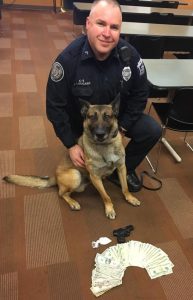
Officer Heath Loggains and his K-9 partner, Cash, pose with bounty from an arrest. (photo courtesy of Jonesboro PD)

The Jonesboro Police Department understands the importance of these dogs. Most of their K-9s sniff out drugs only, but they also have a bomb sniffing K-9. Brandon says she cannot overstate what the K-9s mean to the officers.

“They can go to a house we don’t want to send an officer into, or a building, or in the woods, or wherever they can go in and try to find a person. If we didn’t have the dogs, we would have to send a person and put that person in harm’s way,” she said.

Bristow said he agrees with Brandon.

Despite knowing they’re a tool for the department, these officers have developed a relationship with their canines.

“Of all the jobs I’ve done, this is one of the most rewarding to be able to see your dog come out and perform when it’s supposed to,” Bristow said.

“We know that’s what they are doing for us. That alone makes having the canine program worth having,” Brandon said.

BlueStreak K9 can be found on Facebook for anyone interested in purchasing a K-9.

Distracted Driving Affects Everyone

By Katie Woodall
Delta Digital News Service

JONESBORO, Ark. – The National Safety Council observes April as Distracted Driving Awareness month in an effort to educate drivers and create awareness about the dangers of distracted driving.

Distracted driving can be any form of driving while engaging in another activity, but the most commonly thought of form is texting and driving. Currently, 46 states feature a texting and driving law with all but five having primary enforcement.

The Arkansas Legislature enacted Paul’s Law in 2009 after a Jonesboro man died in a texting-and-driving related accident. The friends and family of Paul Davidson pushed the legislation in an attempt to educate others about the dangers of texting and driving.

Matt Roberson played a key part in working on Paul’s Law and said it was created in an attempt to deter texting and driving more than anything.

“If there was ever anything positive about this situation, we felt creating a law that might save others and remembering Paul would be the best way to do it. While it was difficult and tragic at the time, we can look back on it all now and know that we did something that might help someone from experiencing the same tragedy,” Roberson said.

While the law hasn’t had the preferred deterring effect, Roberson said he believes people are more aware of the dangers now because of all the organizations dedicated to educating people about it.

“The more awareness there is, the more likely people will listen and stop. Unfortunately, it just takes time for people to learn and sometimes it takes learning the hard way,” Roberson said.

Paul Holmes, a public information specialist for the Jonesboro Police Department, said teaching motorists the laws and what qualifies as distracted driving could help with the texting and driving incidents in Jonesboro.

“Distracted driving can mean anything from looking for a song to listen to while going down the highway, to sitting at a red light and checking a message. It’s the driver’s responsibility to themselves as well as other motorists to be safe,” Holmes said.

Last year, in an effort to reduce the number of distracted-driving accidents in Jonesboro, JPD set up traffic stops at Red Wolf Boulevard and Caraway Road and actually walked through traffic during red lights, ticketing drivers who were on their phones.

“We did see a reduction in accidents fairly quickly after doing the traffic stop. It may be something we do again in the future,” Holmes said.

The Jonesboro Police Department documented 164 car crashes involving texting and driving specifically over the past three years.

Becca Studebaker has experience on both ends of a texting and driving accident. Her first accident happened when she was driving distracted in a construction zone.

“I looked down to my phone for one second and then all the sudden I was hitting signs,” Studebaker said.

While she was ticketed for distracted driving, Studebaker said she’s thankful only her car was hurt in the accident and she learned her lesson when it comes to texting and driving.

Yet just because Studebaker said she doesn’t text and drive anymore, that doesn’t make other drivers follow the law.

Last month, Studebaker was involved in another texting and driving accident, this time being rear-ended by another driver who was distracted. Studebaker said she suffered a concussion and whiplash, and her car was totaled in the accident.

Ultimately, Studebaker said she hopes the person that rear-ended her learned the same lesson about texting and driving that she did.

“You think it’s OK; you’re fine the majority of the time you think, but there’s that one time that you could end up hurting yourself or someone else,” Studebaker said.

(Editor’s Note: Photo of texting and driving by Intel Free Press [CC BY-SA 2.0 (http://creativecommons.org/licenses/by-sa/2.0)%5D, via Wikimedia Commons)