Tag Archives: Paragould

Brookland spoils Paragould’s senior celebtration with 21-6 victory

Story by DDNS reporter Benjamin McDowell

The Paragould Rams hosted the Brookland Bearcats on Friday night in their final home game of the regular season. It was an emotional evening for the Rams as the senior players took the field one last time in front of their home crowd.

Brookland entered the matchup determined to rebound from a narrow 24-21 loss to Batesville the week before. The Bearcats wasted no time setting the tone, leaning heavily on their running game led by tailback Elijah Hammon. Their early persistence paid off with a 1-yard touchdown run midway through the first quarter, giving Brookland an early 7-0 lead.

The Bearcats’ defense quickly followed suit, forcing multiple three-and-outs and stalling Paragould’s offensive rhythm. Late in the first quarter, Brookland stopped the Rams on a key 4th-and-6 attempt, keeping momentum on their side. The Bearcats continued to pound the ball on the ground, finding consistent yardage through Hammon and fellow back Nathan Murray.

Murray capped off a steady second-quarter drive with an 8-yard rushing touchdown, extending Brookland’s advantage to 14-0 before halftime. The Rams struggled to find offensive consistency, as Brookland’s defense clogged running lanes and pressured quarterback Reid Phillips throughout the half.

Paragould opened the third quarter hoping to climb back into the game but was plagued by costly mistakes. A mishandled snap on 3rd-and-1 ended a promising drive, and penalties—including a sideline warning, holding call, and unsportsmanlike conduct flag—further set the Rams back. Brookland capitalized by controlling time of possession and wearing down the defense with long, clock-draining drives.

In the fourth quarter, Brookland delivered a backbreaking score as Murray broke free for a 10-yard touchdown run on 4th-and-12, pushing the lead to 21-0. Paragould showed fight late, as Phillips connected with Austin Burdin on a 41-yard completion and later punched in a 2-yard touchdown run to put the Rams on the board.

Despite the late push, the Bearcats held strong to secure a 21-6 victory.

After the game, Rams head coach Randy Phillips praised his team’s effort and perseverance.
“Our kids kept fighting,” Phillips said. “That’s what we talk about every week—never quitting, no matter the score. We just had some missed assignments and mistakes that cost us, but I’m proud of how they kept battling.”

Phillips also reflected on his senior class.

“This group means a lot to me,” he said. “They were sophomores when I first got here, and I’ve seen them grow into strong young men and leaders. They’ve made a real impact on this program.”

Brookland head coach Mark Hindsley credited his team’s focus and resilience for the win.

“Our message this week was about improvement,” Hindsley said. “We wanted to play hard and finish the season the right way. The record doesn’t show how much growth we’ve had, but tonight our kids earned it.”

Hindsley added that closing out the season with his senior class makes the win even more meaningful.

“This group has been with me since their freshman year,” he said. “To see their development and character over time—it means a lot. I’m proud of them.”

Agee delivers the State of the City address during council meeting

Delta Digital News Service

Wednesday, February 28, 2024

By Laila Casiano  | Contributor 

PARAGOULD, Ark. — Paragould Mayor Josh Agee delivered the State of the City address during Monday’s city council meeting. The speech commended the city’s growth and progress by focused on the community, improvements and future policy agendas for 2024-2025.

    Before Agee delivered the speech, the council approved the 2023 Amended Annual Budget, where estimated revenues and bank balances totaled $56.62 million dollars, appropriation figures (expenditures and transfers out) totaled $31.89 million dollars and unappropriated funds totaled to $24.73 million dollars.

     The department expenditures and totals were as follows: Airport ($1.237 million); emergency 911 ($1.625 million); fire department ($4.065 million); police ($5.331 million); sanitation ($2.435 million); jail ($36,844); mosquito control ($171,074.92); parks and recreation ($2.975 million) and the administration and miscellaneous department (health office, insurance, postage, radio expenses, uniforms, utilities, etc.) expenditures totaled to $7.253 million.

      General fund totaled $16.65 million and street fund totaled $8.42 million. Most expenditures went to Paragould’s public safety, enchanting Agee’s sentiment on the city’s growth, progress, and development.

     “As the city of Paragould embraces the start of a new year, the momentum of 2023 has set the stage for continued growth and prosperity,” Agee said. “We will continue to meet challenges head-on and work diligently to improve our future with a spirit of community and a commitment to progress.”

     The address highlighted Paragould’s economic landscape in 2023, noting significant strides in infrastructure developments. Key projects such as the Community Pavilion, the fire and police training facility, the workforce development center named The G.I.N and the “largest” public/private partnership powered by the First National Bank, called The Station, enhanced the community landscape and growth.

    The contribution of new residents moving to Paragould impacted the city’s median income (the highest recorded in history according to the Census Bureau).

     Agee spoke about Paragould’s Code Enforcement, highlighting 1,214 worked cases and 1,153 property clean-ups, including 51 junk vehicles and 35 property condemnation cases. The Code Enforcement showed a renewed focus on unlicensed salvage yards and the creation of a land bank commission last year, establishing three areas known as the Overlay Districts, which aimed to revitalize existing legacy neighborhoods.

     Street infrastructures, managed by the Public Works Department, are dedicated to maintaining and improving essential infrastructure to ensure safety, functionality and quality of life for Paragould residents.

     In 2023, Paragould’s fire department made critical advancements and contributions to public safety by acquiring a new 107-foot aerial truck and adding a 3,840 square-foot fire/police training facility for training exercises, drills and simulation. The fire department achieved excellence in emergency response, community engagement and improvements in service delivery despite being understaffed by 24 personnel, according to the National Fire Protection Association’s standards.

     The State of the City address also covered other areas such as the police department, 911 center, planning and development offices, the airport, parks and recreation, downtown revitalization and economic development.

     Additionally, Agee praised the contributions made by department heads who handle Paragould’s community and development. Paragould City Clerk Andrea Williams expressed pride in the proactive nature of department heads.

     “Every department head is very proactive. They are all very financially sound and make it a priority to make the city the best that they can, not just financially, but for the quality of life for our citizens,” Williams said.

     Mark Rowland, Ward 1 Position 1, expressed gratitude towards the financial heads of the department for their work in 2023.

     “We’ve done a good job managing finances. I think the mayor has done a good job taking care of what the mayor takes care of,” Rowland said.

     Paragould’s State of the City reflected dedication to progress. 

In other business, the city council members:

  • Approved a resolution to declare a building and/or structure within the corporate limit of the city of Paragould
  • Approved a resolution to condemn a building located at 303 N. 15th Ave.

-30-


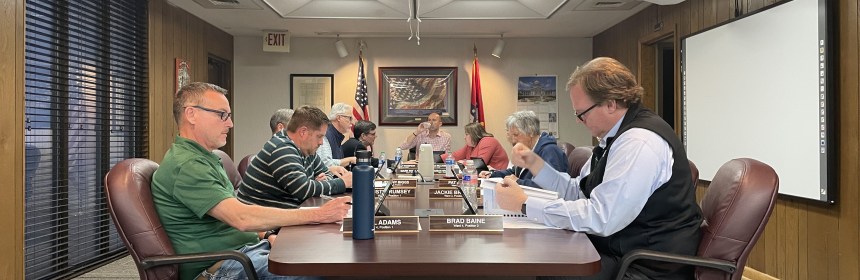
NOTE: Feature photo shows from left, Ward 4, Position 1 Neal Adams; Ward 2, Position 1 Dustin Ramsey; Ward 2, Position 1 Jeremy Biggs; Ward 1, Position 1 Mark Rowland; City Attorney Robert Thompson; Mayor Josh Agee; City Clerk Andrea Williams; Ward 2, Position 2 Susan Williams; Ward 2, Position 2 Pat Austin; Ward 3, Position 2 Jackie Branch; Ward 4, Position 2 Brad Baine.

GCT participates in new testing program

Delta Digital News Service

Friday, February 16, 2024

By Shelby Russom | Contributor

PARAGOULD, ARK – The Greene County Technical School District decided to participate in a new type of optional interim testing for the 2023-2024 school year.

The new testing program, the Arkansas Teaching and Learning Assessment System (ATLAS), interim testing acts as a way to track how students are performing and how to help them improve. The system offers classroom, summative and end-of-the-year assessments for grades third through 10th.

“We opted into practicing with the interims, and I’m so glad we did because the kids will be better prepared for the summative,” said Assistant Superintendent Kodie Potter during the Feb. 15 meeting.

Caroline Schenk, district administrator of instructional programs, said this differs from any testing GCT has undergone because the testing is more difficult. Still, she said she is hopeful the students will succeed.

The science portion is the only ATLAS interim testing available since the program is still new. The tests will eventually cover multiple subjects including math, reading, writing, etc. Scheck said the district hopes to implement every interim testing as it becomes available next year. 

When given the science interim test, GCT’s students showcased skills from six points above the state average of 89 at the fifth-grade level to four points below the state average of 64 at the third-grade level. 

“We have work to do,” Schenk said. “We are not happy with being below the state average. We would like to excel, so we will keep working.”

Along with the testing, Greene County Tech will put together “gold documents.” These documents detail how well each student is doing in a particular area and include test scores and lists of teachers’ expectations for their grade level. Lead teachers can edit and refer to these forms as the year progresses to monitor each student’s performance and show other teachers what the district expects their students to understand by a certain point in their academic career.

“We are so proud of our staff, our teachers. They are working so hard, and they are knocking this out,” Schenk said. “We never dreamed we’d be as far as we are with all of this.”

Greene County Technical School District reported at the end of January 2024, its operating account had an ending cash balance of about $14.8 million, of which $868,000 remains in special projects. The district is restricting $500,000 for construction, and about $5.6 million remains in the July 22 bond proceeds fund. The current budget leaves about $7.8 million for operating.

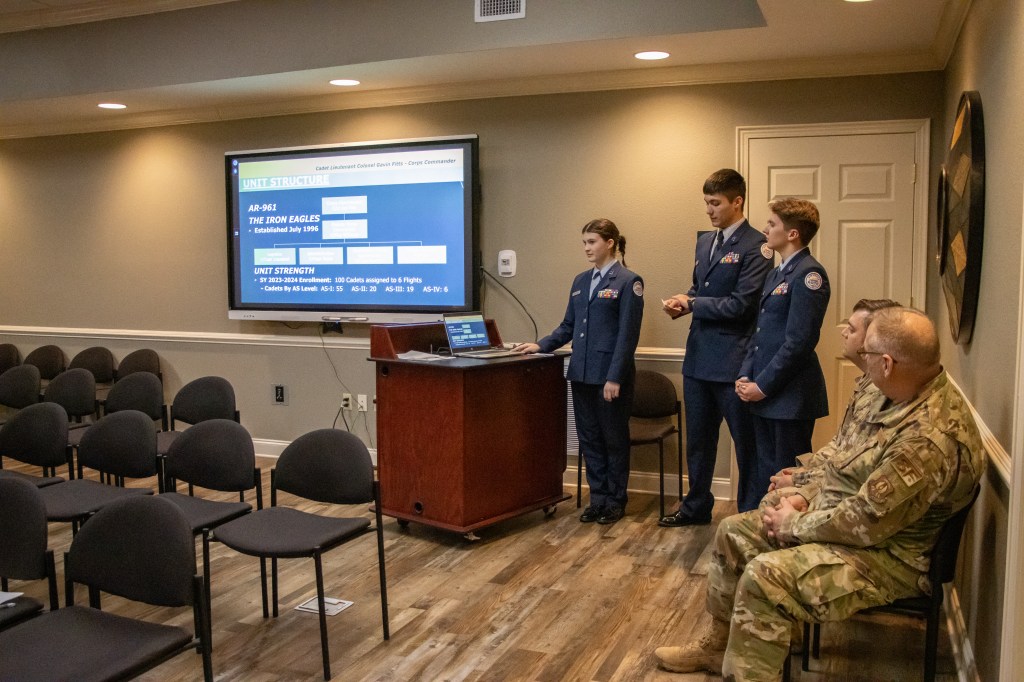
Three cadets from GCT’s Junior Reserve Officers’ Training Corps (JROTC) presented to the school board members detailing their organization’s 2023-2024 school year successes.

JROTC set school impact goals for the program over the next school year. The first goal was for 75% of cadets to receive at least a 2.0 GPA in regular education classes and a 3.0 GPA in the JROTC class. Deputy Corps Commander Cadet Bailee Williams said they are on track and expect to meet that goal by the end of the school year. The second goal of the program is to reach a 75% participation rate in non-mandatory activities for the 2023-2024 school year, of which they have passed with a participation rate of 97%. JROTC also wants to recruit at least 75 first-year students during their GCT Junior High School recruitment events while maintaining 70% of the corps.

Cadets from GCT give a presentation on their JROTC program on Feb. 15, 2024.

“Our unit is currently maintaining 87.5% of the corps for the upcoming spring semester,” Williams said. “We also have 80.6% of the corps expressing interest in reenrolling into JROTC next year.”

JROTC also set goals for the earning of community service hours. Currently, the unit earned 1,732 hours with an average of 17.32 hours per cadet.

Throughout the fall and spring semesters, JROTC raised $5,925 selling peanuts and bath bombs and $5,170 selling digital coupons and discount cards. JROTC will donate $700 to the family of a GCT student diagnosed with cancer and $500 to the family of an eighth grader who was involved in a car accident.

Superintendent Scott Gerrish said he appreciates the work Sgt. Scott Burlingame has put into JROTC and believes the program is worth all the effort. 

  • In the meeting, the board also:
  • Reviewed how teachers feel about the implementation of the alternate calendar and early start.
  • Approved a second read of classified and licensed personnel policies.
  • Approved incoming and outgoing student transfer petitions.
  • Approved a resolution authorizing the district to request a waiver.
  • Approved a special education data system.
  • and renewed the district’s ASBA Worker’s Compensation Trust.

– 30 –


Greene County Tech district switches to alternate calendar

Delta Digital News Service

Thursday, February 1, 2024

By Shelby Russom | Contributor

PARAGOULD, Ark. – Greene County Technical School Board approved a waiver to revise the 2023-2024 school year calendar in a special school board meeting yesterday.

            The Greene County Technical School administration recommended the school board approve a waiver from the state department allowing the district to change the school year calendar from a traditional to an alternate calendar to make up for school days lost to inclement weather.

            The waiver would allow the district to count the instructional minutes on the first day of school, Aug. 14, 2023, and count to the end of the calendar school year, May 24, 2024. The district has already been gathering extra instructional minutes throughout the school year but could not bank those minutes under a traditional calendar. Currently, the high school banks 365 instructional minutes daily, five minutes over the daily minimum. With the alternate calendar, the district can bank those extra five minutes a day and put them towards covering for inclement weather.

            “By approving this waiver, we’ve banked enough time that out of the three snow days we missed this year, we can take two off and only be needing to make up one snow day,” GCT’s Supt. Scott Gerrish said.

            The board voted to approve the waiver, which will remedy the school’s inability to use alternative methods of instruction, or AMI, days, due to the Arkansas Learns Act. The approval of this will mean the school now expects students to attend school Feb. 19, 2024, making up for instructional time lost during inclement weather. The school plans to announce the change through social media as early as Thursday, Feb. 1, 2024. Going forward, the state will expect the school board to revote on the alternate calendar each school year. President of the school board Tim Roswell said since there are no longer AMI days, banking extra instructional hours seems like the most logical way to make up for lost time and keep students from having to attend school in the last week of May 2024.

            After time spent in executive session, the school board voted to suspend the expulsion of a student for the remainder of the 2023-2024 school year for breaking rule 10 of the GCT Junior High Handbook. Rule 10 prohibits students from possessing, receiving, huffing/inhaling or dispensing a controlled substance.

            According to Tony Boyd, assistant principal of GCT Junior High School, he caught the student in question with a controlled substance Jan. 19. Once Boyd and the Student Resource Officer on duty confiscated the substance and had it tested, the substance came back positive for Tetrahydrocannabinol (THC). The Junior High School recommended the school board consider the student for suspended expulsion. Boyd said alternative school for one semester may be the best option for the student.

“I think that is going to be his best avenue. He deserves to at least have that shot,” Boyd said.

            Suspended expulsion allows the student to still attend school but in a location of the school board’s choice. This option will stand as long as both the student and guardian comply with the rules set for suspended expulsion, which may include but are not limited to receiving school-based mental health counseling services, referral to Narcotics Anonymous or Alcoholics Anonymous programs, drug testing, passing classes and so on.       

             Christi Sims, GCT administrative assistant, said, “Not all schools do the suspended expulsion. It’s just something we do to give our students another chance.”

            The guardian of the student initially intended to read an apology letter the student wrote to the school board but was unable to attend the meeting due to personal reasons.

           In other business:

  • The board read the first revisions of Licensed and Classified Personnel Policies, which did not require the board to take action.
  • The board also approved an annual trip to St. Louis, Missouri, for GCT’s gifted and talented program, PACE.
  • The board approved outgoing student transfer petitions and a personnel list.

-30-


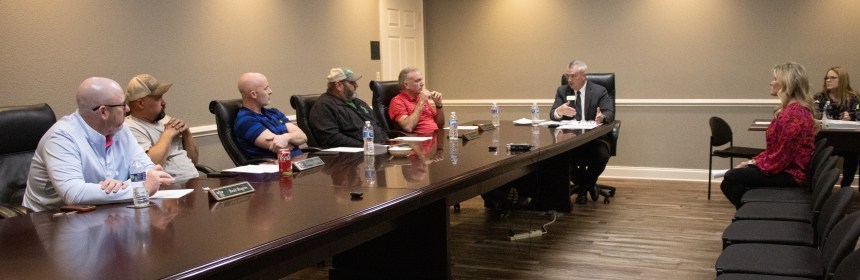
NOTE: Feature Photo of Greene County Tech School Board meeting by Shelby Russom.

Author Profile:

Youth proves no obstacle for Paragould historian and author Erik J. Wright

Historian researches century-old murder case in book

By Avery Jones | Editor

Delta Digital News Service

April 14, 2023

PARAGOULD, Ark. – On March 25, local historian Erik J. Wright signed copies of his 2016 book, “Main Street Mayhem”, at Weber’s Book House in Paragould. The book investigates the 1909 murder case of local resident Charles Gragg and the 1911 disappearance of suspect James Trammell.

 Wright has been an independent historian for more than 15 years. He’s 38 and currently lives in Paragould with a wife and two children. He’s originally from Tucson, Arizona, and was raised in Texas. 

He studied in an archaeology program from Pima College in Tucson, but decided not to finish since he was already working in archaeology without the degree. 

“I thought I was too good for it,” Wright said. “At that time, archaeology, and I was doing it, and so I thought, what do I need college for?”

He worked with various organizations to conduct archaeological surveys and provide public education. At one point, he was a safety manager for a geophysical company. He worked in this field in Arizona until the 2008 recession killed the local industry.

In 2014, he moved to Paragould where he started working with the local newspaper. Now, along with his independent work as a historian, he’s the director for the Greene County Office of Emergency Management.

Wright became interested in writing on Paragould’s history after locals started to ask him about it. They knew he was a historian and wanted him to write about local history. He was skeptical at first, but after doing some research, he discovered what would become the topic of his book. 

“They kept bugging me about, well, why don’t you do something local?” Wright said. “And I thought, just, like what? And they kept pestering me and pestering me, and finally, I started digging into Paragould’s history…and that’s when I started finding a lot of the violent episodes, and that was kind of the genesis of that book.”

“They kept bugging me about, well, why don’t you do something local?” …they kept pestering me and pestering me, and finally, I started digging into Paragould’s history…and that’s when I started finding a lot of the violent episodes…”

– Erik J. Wright, author & historian

Wright first became interested in history as a child. His father read books about Western history, so that’s what Wright liked to read as well. He also had good history teachers. When he was a teenager, his parents took him to Tombstone, Arizona, where he met the town historian.

“I was encouraged by my parents to go talk to him,” Wright said. “He learned I was from the Dallas-Fort Worth area, and he was like, if this is something you’re interested in, why don’t you go back and research some aspect of this story back in Dallas-Fort Worth?”

The historian told Wright that he should do some research on a story if he was interested. A year later, he published his first article in True West magazine about Doc Holliday and his history with Dallas, Texas.

He was 16 years old at the time and enjoyed the feeling of being published. He went on to say that his favorite part about being a historian is the research.

“Writing is a consequence of the research,” Wright said. “The research is fun…when you’re able to flesh out an event or a person that happened that people either have forgotten about or didn’t know about that adds to the contextual story of the Western movement, I think that’s a big deal.”

…“The research is fun…when you’re able to flesh out an event or a person that happened that people either have forgotten about or didn’t know about that adds to the contextual story of the Western movement, I think that’s a big deal.

– Erik J. Wright, author & historian

He had good mentors at True West who taught him how to do research and that he has to take into consideration global factors and how they motivate people in past eras. According to Wright, a lot of researchers who write about history make the mistake of not taking into account the events that are driving people’s decisions.

“I was fortunate to have some very good mentors,” Wright said. “They took me under their wing and showed me the right sources and taught me that if you want to understand ‘X’, you also have to understand everything around it. So I spent a long time not just focusing on this over here, but globally, what was going on to motivate the people I was writing about.”

His mentors recommended books that were important to read, and Wright built an extensive library. In addition, at the time, someone had populated the Wyatt Earp research with false documents, so all of that had to be rewritten. Wright’s reputation was made on writing about Earp and the Apache Wars.

“I came into the field in an era when…there was a gentleman around that time roughly…who had populated a lot of the Earp stuff with false documents,” Wright said. “When I came into it, they had just realized that this had happened, and everything had to be basically rewritten.”

Due to his youth and inexperience, Wright faced some struggles that other historians usually don’t have to deal with. Most of his peers were much older than him.

“While I had a lot of good mentors…there were some people that saw me as…a 20-something-year-old kid that doesn’t know what he’s doing, and that was a challenge,” Wright said. “I never had any formal writing classes, so I’ve kind of had to be self-taught with everything.”

“While I had a lot of good mentors…there were some people that saw me as…a 20-something-year-old kid that doesn’t know what he’s doing, and that was a challenge,” Wright said. “I never had any formal writing classes, so I’ve kind of had to be self-taught with everything.”

– Erik J. Wright, author & historian

He was never interested in teaching history or going back to school to get his degree because he’d already found success without it. In addition, he’s more interested in independence than being restricted by the world of academia, and his interests are too varied for teaching.

Today, Wright is the assistant editor of the “Tombstone Epitaph” and a contributing editor for “True West”. He mostly writes book reviews, contacts publishers, interviews other historians, helps other historians with their research, along with doing his own research.

However, even though his work with these publications is nearly ideal for him, he doesn’t get as much time as he’d like to work on independent projects. Right now, he’s interested in violence and how justice was served on the Oregon and California trails, and also the Mountain Meadows Massacre. 

According to The Church of Jesus Christ of Latter Day Saints, in September 1857, a branch of territorial militia in southern Utah composed entirely of Latter-day Saints, along with some American Indians they recruited, laid siege to a wagon train of emigrants traveling from Arkansas to California. The militiamen carried out a deliberate massacre, killing 120 men, women, and children in a valley known as Mountain Meadows. Only 17 small children—those believed to be too young to be able to tell what had happened there—were spared. This event is perhaps the most tragic episode in the history of the Church.

Wright said that in his research, one thing leads to another. He becomes interested in something because he’s researching something else, and he discovers another topic that connects to it. What he writes about might not have been his original area of interest, but something he found a lot of material about along the way.

“I could be researching the history of lemons, and then that leads me to the history of limes, which leads me to the history of oranges,” Wright said. “I’ve had numerous articles that have come out that have been just a chain reaction of looking into this guy, then, oh, I’ve got a lot on this guy, and now I’ve got a lot on this guy.”

His work as a historian can be frustrating when encountering misinformation about Western history in the media. According to Wright, most easily accessible sources, such as Wikipedia articles, are usually inaccurate. Views on the “Wild West” tend to be rather mythological.

However, Wright also said that forms of media like movies aren’t meant to be historically accurate. He believes that if it gets somebody interested enough in a historical event to go and do research of their own, that’s great. 

“If it gets some young kid out there interested in whatever historical event…and it makes him think and maybe go to the library and get a book on that subject, I think that’s fantastic,” Wright said.

“If it gets some young kid out there interested in whatever historical event…and it makes him think and maybe go to the library and get a book on that subject, I think that’s fantastic.”

– Erik J. Wright, author & historian

He said that there aren’t many people his age who are historians and interested in his area of expertise. When he goes to Western history conventions, most people there are much older than him. According to Wright, it’s vital that more young people get interested in history.

Wright believes that most people are bored by history because they had negligible history teachers in high school. He doesn’t want people to discredit history just because of this.

“You don’t have to just be crazy about history,” Wright said. “But if you can go and stand where something happened and have somebody credible explain that to you, I think that that’s a huge thing.”


Avery Jones is a sophomore in the Department of English and Philosophy at Arkansas State University in Jonesboro. She can be reached at avery.jones@smail.astate.edu


Paragould voters speak out on election day

By Courtney Edwards
Delta Digital News Service

PARAGOULD, Ark. — Voting in this year’s presidential election was unlike anything the nation had ever seen before during the COVID-19 pandemic.

Photo by Courtney Edwards

There was a record number in absentee ballots cast. Some voters in Paragould said that it made it easier for those who did show up at the polls on election day.

“This is the easiest I’ve ever voted before,” Paragould voter J.J. Qualls said. “Normally, there’s lines and lines and it takes an hour or two, but I walked right in and came out five minutes later. I don’t know if it’s been like this all day or what, but it’s amazing.”

Although the pandemic may have made the line at the polls shorter, the nation’s voter turnout has increased by over 2% compared to the 2016 general election, according to the Washington Post. Out of the voting eligible population, 62.4% voted in the 2020 election as of Nov. 4, compared to 60.1% from 2016.

President Donald Trump won the state of Arkansas in the 2020 presidential election with 62.6% of votes. However, former Vice President Joe Biden won the presidential election with 290 electoral votes as of Nov. 7, according to the Associated Press.

Arkansas’s results may have been disappointing for Paragould voter, Wilburn McCracken, but the national results were still in his favor.

“We definitely need a change. The one we have is just too rambunctious and too radical,” McCracken said.  “He doesn’t have sensibility for the little man, and we need somebody who will represent everybody.”

Mayoral candidate, Josh Agee was recently elected as Mayor of Paragould on Nov. 3. Jonathan Walker, a voter from Paragould, said he was excited to see the results of the mayoral election.

“I liked [Agee’s] energy and I liked how prepared he was for everything, so we’ll see how he does,” Walker said.

Along with the presidential election, Arkansas ballots included three proposed constitutional amendments to decide:

Issue 1: 0.5% permanent sales tax for state highways, country roads, city streets, bridges, and other surface transportations.


Issue 2: Arkansas term limits amendment to eliminate life-time term limits and prohibit legislators from serving more than 12 years in a row but allow them to serve for 12 more after four years have passed.


Issue 3: Change the date when voter signatures are due for statewide ballot measures from four months ahead of the election to Jan. 15 of the election year, increase the number of counties where voter signatures must be collected from 15 to 45, establish Apr. 15 of the election year as the deadline for filing lawsuits challenging statewide ballot measures, and eliminate the cure period for local ballot measures if the first found of signatures does not meet the threshold.

Issue 1 and 2 were approved on Nov. 3, but Issue 3 was not approved.

Residents in Paragould generally were not worried about disturbances from the public after the election results were announced, but nationally no one knows what could happen. Retailers all over the nation have been preparing for unrest after the election since October.

“I’m not so much worried here, in our little, small town, but throughout the United States, I’m scared there are going to be some bad things that happen,” Kelly Gibson, a voter from Paragould, said.

In Little Rock, police said they had an operation plan in place with how they would respond if civil unrest took place. Portland, Philadelphia, and Minneapolis are among cities which have already seen unrest as of Nov. 4, before the election results were even released. Fox News reported that many of the protests were being led by Black Lives Matter movements.

“The past several presidencies have really caused a lot of tension from right and left,” Walker said. “But I think here in Arkansas everybody seems to get along for the most part.”

Note: Featured photo by Courtney Edwards

Local downtowns experience a business renaissance

By Tristan Bennett
Delta Digital News Service

PARAGOULD – Downtowns in the Delta undergo a renaissance thanks to local businesses.

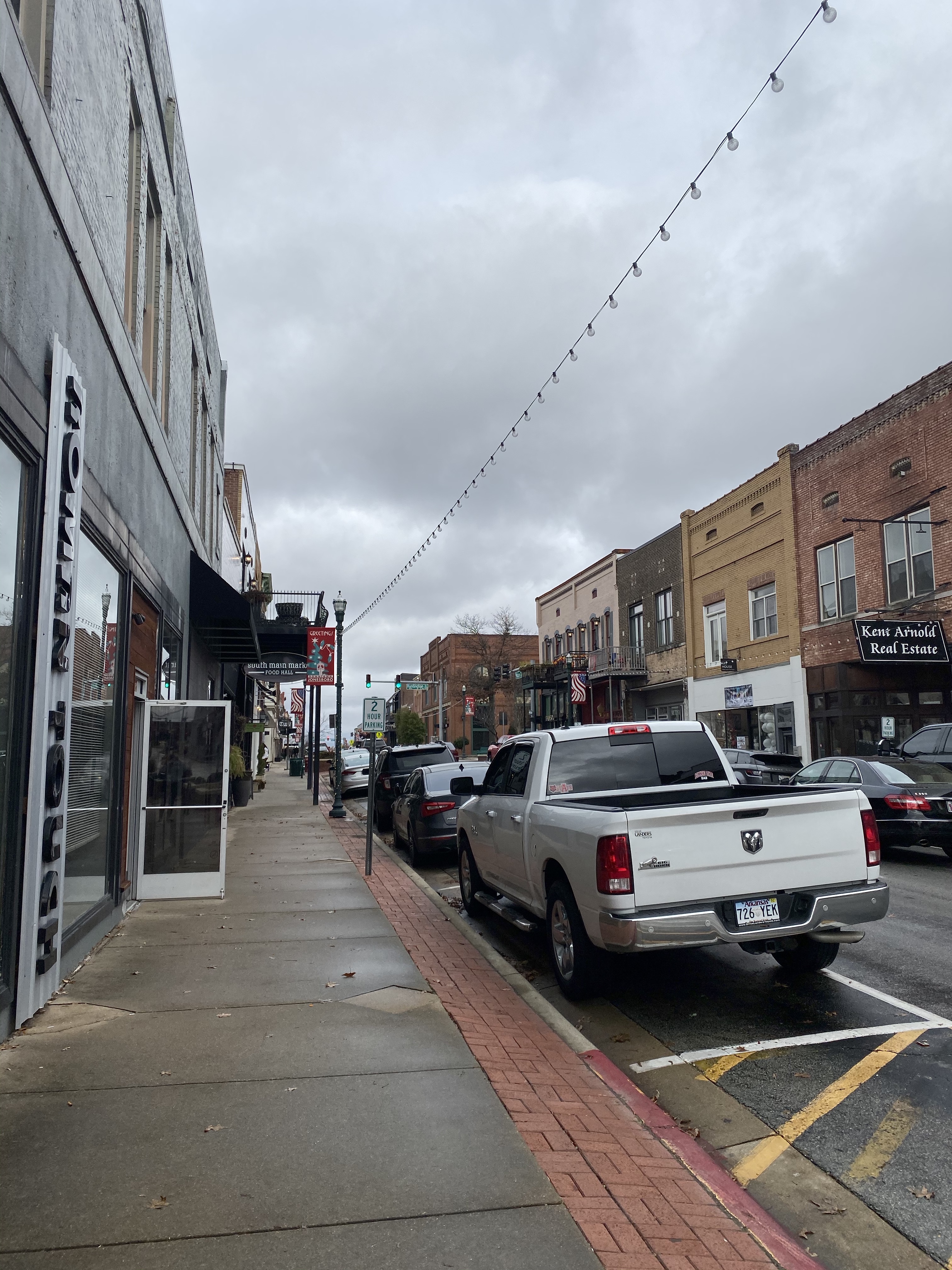
Paragould’s Main Street houses many local businesses. Photo by Tristan Bennett

The resurgence of boutique-style shopping led to a growth in the downtown areas of Jonesboro and Paragould. They became destinations for both local and national businesses that work together to attract customers to the area. Lindsey Wingo, Downtown Jonesboro Alliance executive director, assists downtown business owners by promoting them to the public.

She said, “Downtown is the heart of Jonesboro, in my opinion. Five years ago, the main thing was shopping malls and different things like that, and really you see downtown on the uphill trend of things.”

In both cities, local owners occupy almost all of the downtown buildings; Only one Dollar General sits on the outskirts of downtown Paragould. Gina Jarrett, Main Street Paragould executive director, said local businesses occupied downtown since its beginning.

“Downtown started when Paragould started, and there weren’t franchises then,” Jarrett said. “We’ve always been mom-and-pops.”

While many of downtown Paragould’s businesses continue to survive after decades and ownership changes, Jonesboro’s downtown just flourished in the past 10 years. Many of the businesses followed Gearhead Outfitters and other developers into the area.

Jonesboro’s Main Street became a destination about 10 years ago. Photo by Tristan Bennett

From its humble beginnings in Jonesboro, Gearhead owner Ted Herget grew his company into a regional company quickly, and recently, the company bought Rock/Creek Outfitters and Uncle Dan’s Outdoor Store to further expand their reach to Chicagoland, Illinois.

Gearhead marketing director Whitney Eldridge said, “Downtown businesses and the boutique retail format have made a resurgence in recent years. The environment tends to be more personalized and close-knit. While we try to provide this environment whether in a mall setting or not, a downtown or neighborhood business tends to have a more pronounced presence in the community, which contributes to the neighborly and warmer feel that a mall store may not be able to provide.”

National businesses in downtown spaces can be helpful to small businesses. They possess the potential to draw more customers to the area, and hopefully, to the stores around them.

Wingo said, “All of the places that are down here, just like any other business started in a local community. It’s so important to not see people as competition always but also as help.”

Even with all the help chains bring, local downtown owners feel the effects of national business in their stores. Cynthia Allison Jones owns Addie’s Soul Food & Grill located in downtown Jonesboro. She said she sees chain restaurants negatively affecting her business

“I think they take business away from us,” Jones said. “It’s hard, but I’ve cut down on staff and hours of operation.”

Kayla Gramling, owner of The Tiny Twig Boutique, sells homemade gifts and offers services such as flower preservation in her downtown Paragould shop. National businesses caused her to adjust her pricing strategy.

“We charge what we have to have but try to keep it as low as we can, too, and we try to offer different stuff that you can’t find anywhere else,” Gramling said.

Creating an environment like a downtown takes planning and hard work. The DJA and Main Street Paragould exist to ensure these areas continue to draw customers to the businesses there. Walkability and catering to pedestrians continues to be a crucial of a part of the downtown experience.

Jarrett said, “Because downtown is walkable, everything is brought down to the pedestrian’s level. The signage, the window displays, everything is for the pedestrian, and that’s what people want nowadays. They want that comfortable, strolling feel.”

Customers cannot have that comfortable feeling without feeling safe. Recently, Wingo and the JDA took part in an initiative to add lighting to downtown Jonesboro so customers could feel more relaxed while in the area at night.

“We felt like there was definitely a stigma that downtown wasn’t safe,” Wingo said. “We felt that the reason people thought that was because it was dark down here, and when things are dark people don’t feel safe.”

In the past two years, over $20,000 worth of lights came to the downtown Jonesboro area because of the JDA along with $60,000 more from the city of Jonesboro.

The JDA and Main Street Paragould offer a way for owners to work together to promote the area and drive traffic to businesses downtown by planning events to take place in the downtown areas.

Gramling said, “There’s a lot of different events that are held downtown, so that kind of gives us an advantage. People walk around more than if you were just a free-standing building out in the middle of town.”

Both cities belong to the Main Street Arkansas organization, so downtown business owners can take advantage of an interior and exterior designer and small business consultant at any time. Both also receive grant money to help with improvements to the area and certain businesses.

Jarrett said, “We can mini-grant out that grant funding to help people make improvements in their buildings. It’s for what you can see: exterior improvements, and we go as far as the inside of the storefront windows.”

Improvements happening in both downtowns work to preserve the areas’ history. This revitalization of the downtown couples with a revitalization of the two cities’ histories. Downtowns once served as the only marketplace in small towns across the Delta, and this seems to be becoming more common again.

Wingo said, “Whenever you visit somewhere, you want to know what their downtown is like. That’s where the history of the city is, it’s the heart of the town, and in my opinion, for it to be a vibrant community there needs to be a vibrant downtown.”

Editor’s Note: Feature Photo – Main Street Paragould operates out of an old train caboose. Photo by Tristan Bennett

A-State African Students Association gives a hand to the homeless

By Christine Miyawa
Delta Digital News Service

PARAGOULD – The A-State African Student Association visited the Mission Outreach of Northeast Arkansas, a homeless shelter based in Paragould, to donate consumables, which included; disinfectant wipes, detergent, tissue paper and paper towels.

In 2018, the first time when the AASA students visited the same shelter, they prepared African dishes and brought to feed the homeless people at the Shelter.
The outgoing president of AASA Samuel Noi said the purpose of the visit was part of AASA’s community outreach program.

“Coming here today is about giving back to society. It’s not only about being students but, being compassionate, fulfilling the needs of others who are less privileged. We called before coming and they told us what they needed and that’s what we brought,” Noi said.

About the Shelter. 

Cheri Peters, the executive director of MONEA, said the shelter is the largest homeless shelter in Northeast Arkansas. She said it holds 58 beds and houses men, women, children and families.

The shelter contains three family dorms. Currently, 11 children are at home.

Peters said helping homeless people get back on their feet is the purpose of the shelter.

They assist homeless people with employment, transportation and health insurance.

Management requires residents at the shelter who have jobs to save 75% of their earnings once they start working.  Teaching them how to save and budget so they can stand on their own once they leave the shelter.

Peters said the shelter offers benevolent services.

She said they have a food pantry open to the public and a soup kitchen that serves three meals every day.

People come from all over Arkansas for the shelter’s services.

Peters said Jonesboro has the Salvation Army which only has 14 beds. Because the shelter is located in the ‘boot heel’ of Missouri, they get a lot of people from the state of Missouri, too.

She said most of the people are referred; few are walk-ins.

“We have a website and get phone calls every day for placements. Many people who come to the shelter are experiencing drug addiction, meth and mental illness. We have a therapist here at the shelter and recommend that anyone who comes to the shelter receives counseling services,” Peters said.

She said those who come to the shelter seeking help could live at the shelter for up to two years.

“When someone is homeless, and all they have is clothes on their back, you can’t get them to be where they need to be in life in 90 days. They have to get a job, get a vehicle and decided to move out and those things take time,” Peters said.

She said if the residents at the shelter follow the rules and goals set, they can stay for up two years.

“We have repeated, but we don’t want to enable people,” Peters said.

The management carries out random alcohol and drug tests on residents.  Once someone has come and stayed at the shelter three times, they must pass a drug test to come back in.

The program doesn’t work for some people. They must be ready to change their lives for it to work.

Peters said 60% of their support comes from residents of Greene County in the form of donations and 40% is from grants.

“Providing paper towels for over 50 people gets very expensive. And so, we rely on donations like what the AASA students gave,” Peters said.

The majority of the volunteers lived at the shelter at some point. They want to come back to give back.

This year marks the sixth year since Peters’ started working at the shelter. She says it’s a blessing but a challenging job.

“It’s not a job you can leave at work when you go home. You take it home with you. When you see people struggling with addiction or mental illness and when you see children in need, it doesn’t leave your mind when you go home,” Peters said.

Peters comes from Mississippi. She worked for a hospice and nursing home before moving to work at the homeless shelter.

“I like working with people and helping people. It’s a rewarding job,” Peters said.

She said the mission outreach is 37 years old and she hopes that they can add more dorms to enable them to accommodate more people.

Peters said the shelter received a grant of $200,000 from the Arkansas Developmental Council to carry out renovations in the toilets, bathrooms and dormitories.

“Every day is a challenge when you work here. We are not just here for the people who live in the shelter, but we are for people on the street too. We have people walking in and say, ‘can you help me get on rehab.’ We have molested children and victims of domestic violence,” Peters said.

She said they take them to doctor’s appointments.

Peters said all the local churches in Greene County are so involved in helping the shelter. The majority come to serve and people will be coming to serve during Thanksgiving and Christmas.

“Some of our children here, this will be the best Christmas they ever have,” Peters said.

Peters said her dream is there would be so many mission outreaches out there because it works. She said if it didn’t, the shelter wouldn’t be here for 37 years. She wished there was an outreach like this in all the communities that needed it.

‘If there was an outreach like this in every community that needed it, we could solve this problem,” Peters said.

Meet Ashley Smith- A resident at the shelter.

Ashley Smith, one of the residents at the shelter, came from Kennett, Missouri. She lost custody of her children while in Missouri. Smith said the state of Missouri took the children when a neighbor called in to alert them of children left at home alone. Smith said she left the children at home without adult supervision whenever she went to work.

She said she initially moved to Missouri from Memphis to get away from people using drugs around her and to be somewhere no one knew her who would want to give her drugs.

Smith said she started experimenting with marijuana when she was 11 years old.  She said she was adopted, grew up in foster care and lost her foster mom when she was 20. She said she did not have anybody and turned to the streets to cope with the pain she was experiencing.

“I just wanted to fill an empty spot in my heart, so I started popping pills, doing cocaine and drinking and it just got awful and that’s how I ended up in Missouri,” Smith said.

She said while in Missouri, she did not have any support with the children. Smith has four children.

She said she was off drugs for a year while in Missouri before the state took her children, after which she relapsed.

“So, during summertime, I left my children at home as I go to work. I felt I would check on them. That’s how the state took them,” She said.

Smith said the father of two of her children is deceased, another’s father is not a part of her life and another’s father was convicted for sex trafficking and is serving 55 years in prison.

Smith said Peters and Jana Burnett, the resident case manager, went with her to her court date scheduled approximately three weeks at the time she arrived at the shelter. She said the two helped her get back custody of her children and they currently live with her in the dormitory at the shelter.

“I feel like the shelter has terrific people. They are not doing it just for doing it. If I didn’t come to this shelter, I would still be living in hotels mixing with the wrong people, drinking heavily and doing cocaine because it was within my reach, right in my fingertips,” Smith said. “I  was lost without my children. I become delusional. I just thought everyone was out to get me. I was crazy and paranoid. I was under depression. If you had met me then, you would say, ‘ is this girl crazy? What’s wrong with her?’ My mind was not right,” Smith said.

Smith said the shelter helped her find a good job. She said she thought of going to settle for a job at a fast-food restaurant like McDonald’s, but she works at the American Railcar Industries making $14 an hour. She said she is saving her money and plans to get a house for her and her children when she gets out of the program.

She said she stayed in a shelter before and did not get much help but, the shelter at Mission Outreach is in touch with what the residents are doing and try to lead them in the right way.

When she is not at her regular job working, she volunteers at the soup kitchen in the shelter.

Burnett said she does the intake of new arrivals. She assesses the need, set goals for them. If they need identification cards, birth certificates, or if they are disabled. She meets with the residents regularly and follows upon them to ensure they are doing what they need to be doing.

She said the shelter does not take people in a wheelchair because the accommodation has two flights of stairs and no ramp. She said they do not accept sex offenders either or violent felons because of the presence of the children and the safety of the children is their priority.

She said the soup kitchen is open three times a week and anybody can come in and eat. She said the shelter is part of Feed America and gets their food supply from Walmart and Kum and Go.

Cassie Grant’s Story

Cassie Grant, 32, of Marked Tree, Arkansas, also received help from the shelter. Following her release from a hospital admission in Jonesboro after a short illness, she went to the Salvation Army to find shelter. Because the shelter did not take her in, a man brought her to Mission Outreach. Grant was on the streets for a while before she went seeking help. She was doing drugs. Grant was 25 when she started using drugs.

She moved to New York, where she met a friend who influenced her into drinking and using drugs. For her, it was peer pressure. She got sick a lot and got tired. She said she used to “pin handle,” which is standing at a gas station and request to pump a customer’s gas for change. She would then spend the money on drugs.

“I just felt like the black sheep of the family. I didn’t care about life; I didn’t know which way to turn, so I turned to drink and using drugs. I felt like the family disowned me. I felt like nothing; I felt like I was all alone with no one to turn. I felt loved in the drinking and dragging, yet after I drunk, everything went wrong,” she said.

Grant said she grew up in the church.

“I’m a Christian. I want better things in life. So even deep after drinking, I got tired of doing it, it got old,” she said.

Grant said she looks at other families and other people not on drugs, dressed up and looking good and she said she wants. She said because they are dressed-up does not mean they have no problems, but when drinking and drugging everything goes wrong, nothing good comes of it.

She said some family members understood her and did not judge her while others laughed at her and disowned her. She said even when she tried to get help, it did not matter.

“The people who helped me prayed for me, spoke positive words, they gave me money and support,” Grant said.

She said she loves the Lord. And the Lord brought her through the darkest moments.

Grant said there are plenty of times she just wanted to give up in life. She said some people showed up and gave her hope. They told her, regardless of what she is doing in the streets, they were there for her if she wanted someone with whom to talk.

Grants say when she gets out of the program, she plans to get herself an apartment, come back to the shelter to volunteer. She wants to join a missionary church, go to Africa and other countries and volunteer, help feed the hungry and build churches. She said she wants to help people.

She said she doesn’t hold any grudges towards her family members. Now she knows she doesn’t have to prove a point to anybody; her heavenly father is her best friend.

Grant said she is in a place where she gets the needed help and has faith; she is going to do better. She said she would love her family from a distance.

Grant goes to True Life Church in Paragould. She was 7 years old when she got baptized at St. Johns Baptist Church in Marked Tree, Arkansas.

She said she is taking a day at a time. She plans to leave the shelter in a month.

She would like to advise people out there dealing with drug addiction not to give up.

“If you’re running from your problems, know there is someone out there who loves you and when you feel like you are alone, there is your heavenly father by your side. Stand on your own two feet as a woman and a man and take one day at a time. Keep faith, hope and believe and know that anything is possible if you keep your mind to it,” she said.

Joseph Cox’s story

It’s four years since Joseph Cox become homeless. He said he battles paranoia and schizophrenia’.

He thought people were out to get him.

He said he is tired of living in the street and would like to start a different life.

At the age of 3, Cox joined the foster care system and when he was 6 years old, he got adopted.  When he turned 17 years old, he wanted to visit his biological mother, but the court terminated his mother’s rights to see him. His adoptive parents took him to Searcy, where his mother worked at a restaurant. He stayed with his mother for three months until he turned 18 years old.

Cox said he found out that his family has relations with outlaws and gangsters and he did not want to be part of it and because of schizophrenia so, he left home and started hitchhiking to Texarkana, Texas, where he lived in the street.

His mother came for him in Texarkana and brought him and his adopted brother to their adopted dads’ home in Jonesboro.

He said at his adopted dad’s home, his other adopted brother and adopted dad did not like them, so he and his adopted brother moved to live in a friend’s house but his friend offered them an insulated doghouse to live in instead. At that point, they met a man who brought them to the Mission outreach.

He said he hopes the shelter will help him obtain documents like social security numbers to enable him to find work. He said someone pickpocketed him and stole his social security card.

He said the shelter promised to enroll him in medical insurance to enable him access treatment for Schizophrenia and Paranoia.

Cox said he found Jesus hitchhiking through the desert. He was so tired and almost passing out when he saw Jesus and said, “bring water my way,” two Hispanics appeared from nowhere with two bottles of water. He remembers when hitchhiking to Texarkana, he was tired and almost giving up when he picked a rubber band on the side of the road written “press on” and after just three miles someone came along and offered him a ride to Texarkana

Cox said no matter what someone is going through; God is always going to be by their side.

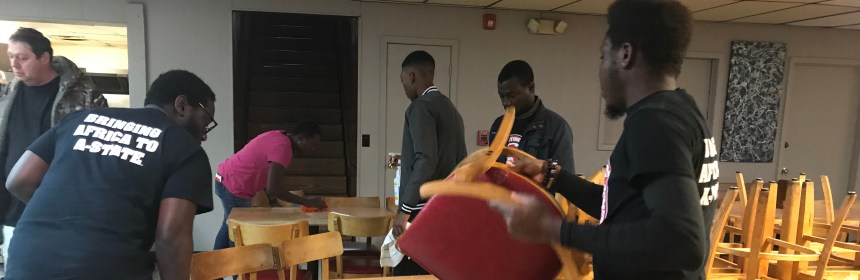
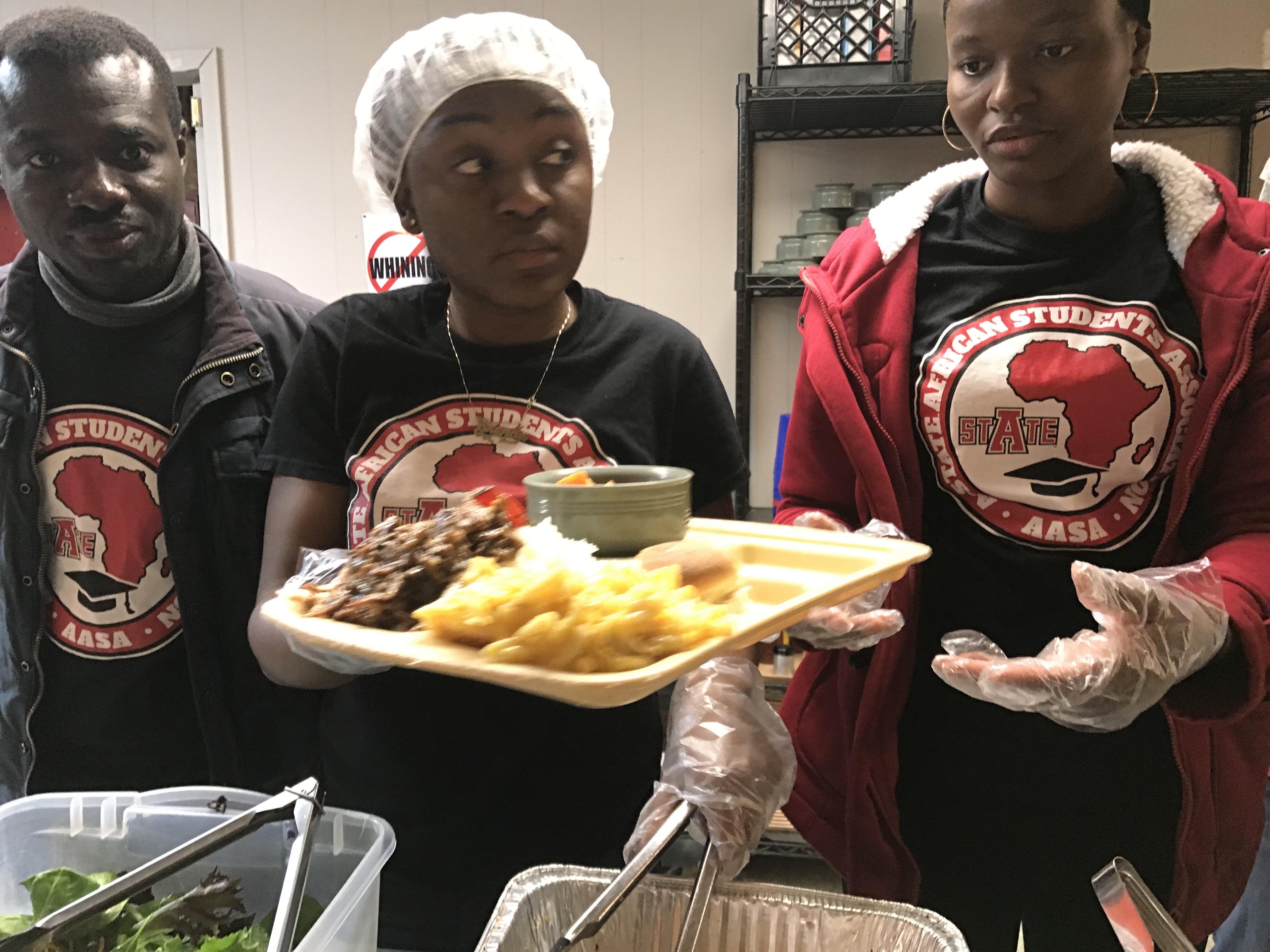
Victor Omowonuola, the incoming president of the association, joined other female members of the association in serving food. When dinner was over, the male members of the association cleaned up the cafeteria.

Peters and Burnett thank the AASA for their kind gesture.

Lawrence Yawson, the vice-president and events co-ordinator of AASA, said the shelter is welcoming and he looks forward to the association coming more often to Mission Outreach to help the homeless people.

Small businesses gear up for the holidays

By Maddison Smith
Delta Digital News Service 

JONESBORO – Small Business Saturday is a big deal for some, for others – not so much. 

   Small Business Saturday was first observed in the U.S. on November 27, 2010 and was trademarked by American Express. 

   Refinery Store Manager Amy Willhite said their company will be participating in Small Business Saturday, along with Black Friday and Cyber Monday. 

   “We want people to shop local and to keep business here in town,” Willhite said, “We want them to come into the store.” 

   On the contrary, Smoothie King Owner Linda Bradley said she did not know about Small Business Saturday and if she did, she would have participated. 

   Bradley does support shopping local. “Your helping those local businesses to stay in business,” Bradley said, “It gives a more ‘hometown’ feel. Instead of spending your money on cooperate businesses, you should shop local to help our community.” 

   Shop local supporter Jessica Blevins said she shops local because it supports the community and those who live there.

   Blevins said, “It’s about being able to communicate about small businesses and being able to put a spotlight on a few of those locations on Small Business Saturday.” 

   “Black Friday absolutely helps us, and Small Business Saturday is just an extension of that,” Willhite said, “People are still wanting to shop local, but they are also wanting a deal.” 

   Bradley said, “We can’t offer that much of a deal on Black Friday, but if there was a small shop festival, where we could get our products into consumer’s hands, that would benefit us more.” 

Willhite said that consumers should shop local because they have good customer service, people that wait on you and want to talk to you.

   Willhite said, “You’re going to get a one-on-one experience and you’re going to talk to someone who has knowledge about the products in store.” 

   American Express also holds what is called “Neighborhood Champions,” which are towns or cities who have pledged to put small businesses first. 

   Conway, Paragould, Little Rock and West Memphis, to name a few, are part of Neighborhood Champions. Jonesboro is not included in this list. 

Editor’s Note: Feature Photo taken by Maddison Smith

Gym Helps Combat Veterans

***

by Miranda Reynolds
Delta Digital News Service

PARAGOULD – Organizations across Northeast Arkansas work with veterans to get them more involved; gym memberships give some another option.

CrossFit Cathal, located in Paragould and owned by Randy Vest, reaches out to veterans in the surrounding communities to help those in need. The gym has been supportive of nonprofit organizations since opening.

CrossFit Cathal joined forces with Rivers of Recovery to reach out to more veterans. Rivers of Recovery works to take veterans on trips at no cost to the veteran. Vest and Levi Crawford, Rivers of Recovery’s marketing director, knew each other from a previous encounter.

They met in 2009 during a tour in Afghanistan. During the one-year tour, Crawford suffered serious injury from direct and indirect fire. It caused him to lose vision in one eye. This caused Crawford to become involved in Rivers of Recovery.

“Upon coming home and transitioning from military life to hospital life, to civilian life, is when I was fortunate enough to go on a trip with Rivers of Recovery.  It helped me a great deal in a very hard and uncertain time in my life. After the trip, I stayed in contact with the organization and decided that it was my duty to help the organization and provide other combat veterans with the experience and help I was to grateful to receive,” Crawford said.

Vest’s decision to join forces with Rivers of Recovery came easily to him due to the local aspect of the organization.

“The reason I chose Rivers of Recovery is because it supported local veterans. These are people that are walking around in your community, they’re actually veterans I served with,” Vest said.

CrossFit Cathal gives veterans an opportunity to work with other veterans in a more personal way, said level one instructor Caroline Jarrett.

“It’s more personal this way because every class has a coach and you find your members coming to you with issues going on in their lives whereas in a regular gym, there’s somebody probably manning the door and they’re letting you do whatever you want to do,” Jarrett said.

Post-traumatic stress disorder affects many veterans. Vest said CrossFit Cathal can be one way to battle it.

“People deal with their PTSD differently: some seek counseling, others have hobbies, some people come in here and just want to sling some weight and breathe heavy, get it out of their system. That’s their therapy,” Vest said.

The partnership between the two allows Crawford to see veterans focus on their personal health.

“A goal I am already seeing being accomplished is providing our past participants a place welcoming of veterans to socialize and focus on their physical health which plays a large role in a person’s mental health,” Crawford said.

In 2012, according to the U.S. Department of Veteran’s Affairs, a total of 252,279 veterans reside in Arkansas. CrossFit Cathal, Rivers of Recovery and numerous other organizations continue to serve veterans in the natural state.

A River of Bluegrass Runs Through Paragould

by Tristan Arquitt
Delta Digital News Service

PARAGOULD, Ark. — The Trinity River Band performed May 21 in the Collins Theater as part of KASU’s Bluegrass Monday.

Known for appearing on the Duggar Mountain Show, the band started playing in 2007. Strictly Country magazine named their song, “A Sinner’s Prayer,” as Song of the Year.

Joshua Harris leads the Trinity River Band in a song. Harris first asked his parents if he could learn the banjo at the age of 10.

Sarah Harris sings as Brianna and Lisa Harris back her up during The Trinity River Band concert. Sarah Harris also learned to play the mandolin in 2009.

Michael Harris interacts with the audience at The Trinity River Band concert. Harris’ grandfather Herndon “Hunky” Jones taught him music at a young age.

Brianna, Lisa and Joshua Harris plays at Paragould’s Collins Theater. Brianna Harris began learning the fiddle at the age of six.

Lisa and Joshua Harris plays while performing with The Trinity River Band. Lisa Harris grew up playing music with her five siblings.

Bluegrass Monday concerts typically occur on the fourth Monday night of each month.

Business Provides Pharmaceuticals Alternative

Kayce Wilson
Delta Digital News Service

BROOKLAND, Ark. – Arkansas residents may get away from pharmaceuticals because of the benefits of the cannabidiol oil derived from the hemp plant.

Many Arkansas businesses submitted their applications for a dispensary license in September 2017, but they will not receive clarification until official announcements expected sometime this year. One NEA business, Emerald’s Triangle LLC of Brookland, still awaits its results. Owner Richard Johnston said they planned to get into the medical marijuana industry once the store opened in 2016.

“I went to a convention in Los Angeles in February (2017) that was the big industry show that had to do with vape, CBD and medical marijuana. That’s where I decided to pick up my first company when it comes to CBD: Blue Moon Hemp,” Johnston said.

The store began to sell CBD products and contains CBD tinctures, topicals and powder in its selection. Buyers can purchase it in vape oil, edible and shatter form as well.

Employee Alfred Holland continually researches CBD.

“Israel has been on the forefront of CBD, and they’ve been doing research for over a decade,” Holland said. “It can be used for anything from fibromyalgia, general inflammation in all of the major parts of the body, osteoporosis, diabetes and some psychological issues like PTSD, depression, seizures and anxiety. Some even buy it for their animals.”

Emerald’s Triangle LLC continues to see a positive response from the community. Employee Zach Slater said the stigmas associated with the marijuana industry remain their main hurdle.

“The reception of the CBD has been great as more people learn the information, like what it does and doesn’t do, so some of the stigma behind the cannabinoid is kind of being dematerialized. I think that it will just grow bigger and bigger,” Slater said. “Some people need to realize that it’s not a fad dietary trend; we’re all at the very beginning of a new era.”

Emerald’s Triangle owns a closed group on Facebook where users can provide their input on CBD and find answers to their questions.

Paragould resident Hannah Foster said the use of CBD changed her life drastically.

“It helps with my insomnia, vomiting and nausea, eases the pain in my joints and bones, dulls my lisp so I can speak clearly, as in it helps slow down my talking and it helps anxiety dramatically,” Foster said. “You can put the tincture in any food or drink — I love it in my tea — or you can take it directly by mouth.”

What is CBD?

As the compound extracted from hemp plants, CBD allows the user to reap the physical benefits without the “high” associated with marijuana. CBD oil contains little to no traces of tetrahydrocannabinol, the chemical which causes the psychoactive effects associated with marijuana. You can read more information here.

CBD affects the endocannabinoid system within the body that regulate the body’s functions, such as sleep, pain, mood and autoimmune responses. The therapeutic effects happen when the cannabinol interacts with the endocannabinoid receptors located throughout the body system.

CBD helps to reduce inflammation, a condition that worsens many pre-existing health issues. The secret to seeing positive results from CBD involves figuring out the right method and amount that will suit the condition.

Dr. Betsy Hendricks of Conway works at the Arkansas Center for the Study of Integrative Medicine. The center’s mission combines the mental, spiritual and physical aspects of health to heal and relieve those of their pain.

Food and Health Study Group member Elene Murray said Hendricks does her research.

“She’s a super sleuth. She’s traditionally trained but uses supplements and knows the labs to run for food sensitivities,” Murray said. “She helps people heal as where traditional medication just runs around in circles.”

CBD

Shaman’s Reach, a CBD product line manufactured in Brookland. (photo by Kayce Wilson)

The staff at Emerald’s Triangle LLC recently released Shaman’s Reach, a line of CBD products that they manufacture in Brookland.

Shaman’s Reach combines CBD and medicinal herbs aiming to target inflammation, pain, fatigue and even allergies. The most popular form of this product is a tincture, which is to be dripped under the tongue. There are also capsules, salves, isolates and infused honey as well as smokable products, which makes the product accessible to all. Their informational website regarding medical marijuana can be accessed here.

As the uses for CBD increase, many common issues are expected to decrease. The staff at Emerald’s Triangle said there’s a change coming.

“It’s happened in many other states and now Arkansas has a chance. They’re going to see that the opioid epidemic is going to drop, the addiction problems will drop, the prescriptions will drop. The state will save tons of money on insurance,” Johnston said.

Emerald’s Triangle LLC. recently opened a store in downtown Jonesboro where shoppers can get access to CBD and its other products. For more information on Emerald’s Triangle and CBD, click here.

Mumps Outbreak Affects Public Schools

By Destiny Quinn
Delta Digital News Service

KENNETT, Mo. — An infectious viral disease continues to spread at a rapid rate in Arkansas and nearby Missouri. With 2,595 cases of mumps confirmed, the Arkansas Department of Health has a lot of work to do in the upcoming months.

Northeast Arkansas school districts impacted by the mumps include Tuckerman, Paragould, Jonesboro and Randolph County. The ADH also released information indicating two college/vocational schools impacted by the mumps as well as 31 workplaces.

Missouri has also dealt with the mumps outbreak over the past few months. At the University of Missouri’s main campus in Columbia, more than 300 mumps cases have been identified, according to the Associated Press.


School districts everywhere are taking special precautions in an effort to keep children healthy. Kennett School District’s Director of Nursing Deborah “Deb” Cook said nurses in Kennett were given materials to review regarding the signs and symptoms of mumps.

“We have not done any additional education with teachers,” she said.

Cook said the Kennett School District has not had any confirmed cases of the mumps. She also spoke of a law regarding exclusion that could affect students in Kennett.

“Parents of students with medical exemptions were notified of the mumps outbreak and the state law requiring inadequately immunized students to be excluded from school,” Cook said.  “The exclusion is a minimum of 21 days from the date of the last identified case.”

Amanda Deel, assistant dean of the New York Institute of Technology’s Osteopathic School of Medicine on the Arkansas State University campus, noted mumps vaccination comes with the measles, mumps, rubella and varicella vaccination.

“So the way that works is even with two shots, two injections, two doses of that vaccination, the efficacy of protecting against mumps is about 88 percent,” she said.

Deel said there aren’t really any vaccines that are 100 percent effective. However, she said it is important to be vaccinated in order to protect against the mumps.

Jada Hess, a registered nurse for NEA Baptist, said education provides the key to preventing the mumps.

“Educating parents on vaccinations for themselves and their children, signs and symptoms, and prevention of spreading viruses is very important,” she said.

(NOTE: Featured photo courtesy of Frankie Leon[CC BY 2.5], via Creative Commons)


« Older Entries