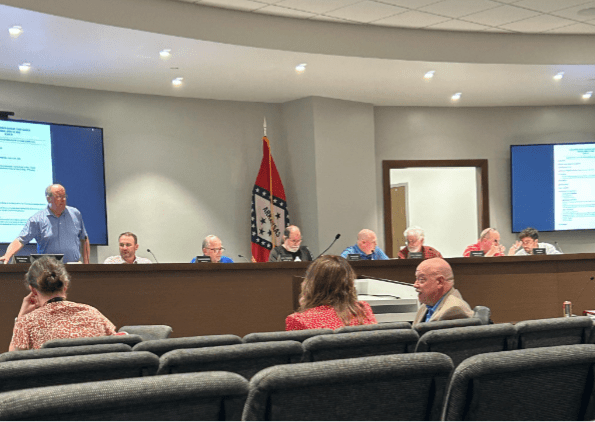
JONESBORO, Ark. — A Jonesboro woman told city leaders her father was buried in the wrong grave, raising concerns about oversight and recordkeeping at a municipal cemetery.
During public comment, LaToya Yarber told Council members her father was buried in the wrong grave at Oakland Cemetery and must now be exhumed and reburied.
“How do you expect me to trust you,” Yarber asked, “when my father lies in a grave that does not belong to him?”
Yarber said the mistake disrupted her family’s ability to grieve.
“For the last week of my life, where I was supposed to be grieving my father, has been disrupted,” she said. “It is unfair to my 81-year-old mama to have to be going through this .”
City officials said they have met with the family and aim to correct the burial mistake, including covering the full cost of exhumation, raising questions about how cemetery records are maintained.
“If you want to do something for the city of Jonesboro, get the records together so that we will know where our people are or where they’re supposed to be,” Yarber said.
Other public comments surrounded concerns about city operations. Patty Lapp said she worried about a lack of financial reporting from a volleyball tournament.
“We don’t really know where those numbers are,” Lapp said. “It needs to be crystal clear what is spent and what is taken in.”
Linda Wright said she is concerned about supervision at sports events, saying children should always be protected.
“I’m just wondering why we are spending money on these tickets,” Wright said. “I just wonder what kind of supervision is going on out there.”
Eugene Holloway, of Marshall Street, said housing conditions are deteriorating and urged the council to take action.
“People are living in terrible conditions,” Holloway said. “We’ve got to do something here.”
Despite concerns raised, the council continued its routine business. Members approved resolutions requesting City Water and Light provide free utility services at 423 W. Huntington Ave. and 6106 Southwest Drive. The resolutions allow utilities to be provided at no cost for projects serving a public or governmental purpose, a common practice for city infrastructure such as lighting and municipal facilities.
Several zoning ordinances advanced, including a request to rezone property at 1601 Granger Drive to allow it to be split for two single-family homes.
A new ordinance, 26013, would establish a Sports Advisory Committee, outlining its membership, purpose and duties. The measure received its first reading and will return for further consideration. Other ordinances concerned traffic signage and zoning changes.
During council reports, Anthony Colman, (Ward 6, Position 1), highlighted growth in Jonesboro but raised concerns about east-side infrastructure and speeding.
“There’s a lot of traffic, and there’s a lot of speeding going on,” Colman said. “I’d like for us to consider another study.”
Mayor Harold Copenhaver highlighted ongoing projects, including a six-month downtown traffic pilot program.
“We’ve had a lot of input – most of it is very positive,” Copenhaver said of the Main Street project, noting the evaluation of Washington Avenue will involve public surveys and comments.
Officials also continued work on Plan Jonesboro, a long-term development strategy focused on growth, infrastructure and quality-of-life improvements.
“Please visit PlanJonesboro.com to ensure your voice is heard,” Copenhaver said. He also noted recent meetings in Washington, D.C., with federal officials to discuss funding for public safety, infrastructure and economic development projects.
The council recognized City Clerk April Leggett for her 10 years of service, praising her support in maintaining city records. While the meeting covered routine business, Yarber’s comments highlighted a deeper issue of human impact and public trust. City officials said they will continue reviewing the cemetery issue as questions remain.
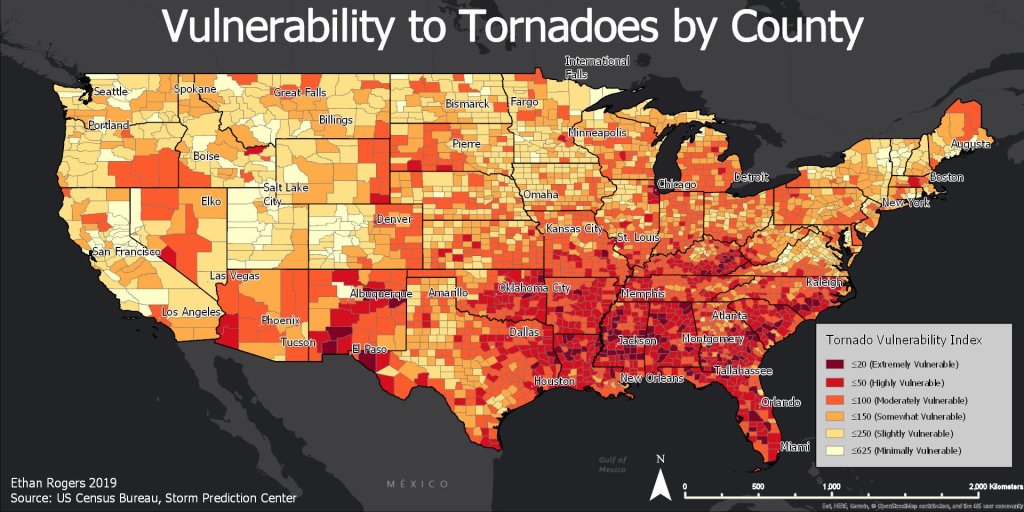
A graphic depicts the vulnerability of tornadoes in each county in the United States. Areas of greater vulnerability largely concentrate in the southeastern portion of the U.S. GRAPHIC COURTESY OF ETHAN ROGERS
Severe weather preparedness remains vital as Arkansas enters the peak of tornado season.
Kory Ward, fire chief for Wynne, Arkansas, said those who don’t take severe weather seriously are making a bad move.
“There’s people that think, ‘oh it’ll never hit here,’ and it’s been very true to hit here within the last two years,” Ward said. “I say it all the time, stay weather aware. Pay attention to the news. Pay attention to your local radio station. Don’t be surprised by it.”
How can I stay safe during tornado season?
Anthony Coy, director of the Craighead County Office of Emergency Management (OEM), said always knowing the location of a nearby safe spot is vital for tornado season preparedness.
Coy said those living in manufactured homes or mobile homes, also called trailers, should especially take advantage of these community safe rooms.
Manufactured homes are particularly susceptible to tornado damage because they are usually constructed with lighter, less durable materials.
In a 2018 research article published by the American Meteorological Society’s Weather, Climate, and Society journal, Stephen Strader and Walker Ashley found that 72% of all tornado fatalities occur in homes and 54% of these deaths occur in mobile or manufactured homes.
Amber Schlessiger, a National Weather Service (NWS) meteorologist, said overnight tornadoes are another distinct threat because they strike when most people are asleep. She said those who find themselves in the path of an overnight storm should set up multiple methods to receive warnings and be ready to wake up if a threat approaches.
Ward echoed this sentiment and said having some form of early warning system, such as phone notifications or a crank radio, is indispensable.
Coy said keeping up-to-date with the weather is always good advice.
“There are a hundred different ways you can get those weather warnings on your phone,” Coy said. “But almost every county has some sort of information platform. In Craighead County, we use CodeRED.”
CodeRED, a community emergency notification system, allows individuals to sign up for alerts on Jonesboro’s website. The CodeRED mobile app may also be downloaded on the Apple App Store and Google Play Store.
Coy also said to exercise caution when determining trusted sources. He said some severe weather information, especially on social media, may be misleading or originate from questionable sources.
The OEM director said creating and maintaining a preparedness kit is another step in staying safe.
A well-prepared kit may include the following items: Several days’ worth of food and water, a flashlight, batteries, first-aid, a change of clothes, a whistle, maps, hygiene items, prescription medicines and pet food, if applicable.
Ultimately, Coy said, even the most seasoned preppers will overlook something. Still, even small acts of preparation will make a lasting impact, he said.
“Each time you chip away at that, you’ll become more prepared than you were before,” Coy said. “Don’t ever let it become a back-burner item.”
What are the impacts of tornado season?
Tornadoes are one of the deadliest and most costly natural disasters in the United States.
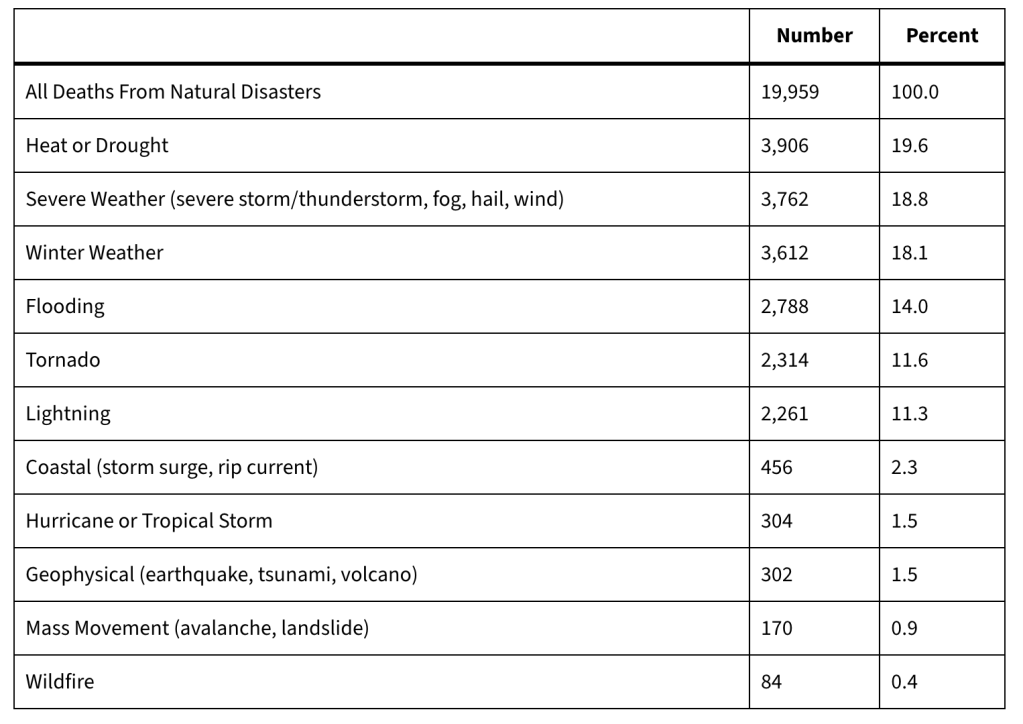
In a 2008 research article concerning patterns among natural disasters and mortality, Kevin Borden and Susan Cutter found, of 11 disasters researched, tornadoes accounted for the fifth-highest deaths in the U.S. between 1970 and 2004.
A list of natural disaster-related deaths recorded in the United States between 1970 and 2004. Tornadoes accounted for the fifth-most deaths in this list. LIST COURTESY OF KEVIN BORDEN AND SUSAN CUTTER
The article, published in the International Journal of Health Geographics, reported deaths caused by tornadoes constituted almost 12% of all natural disaster-related deaths in the U.S. during the same time.
Arkansas, in particular, shares a lengthy history with tornadoes.
From 1950 to 2024, 2,478 tornadoes hit Arkansas, killing 412 people, according to the NWS Little Rock office.
A study conducted by the National Oceanic and Atmospheric Administration (NOAA) found, from 1950 to 2025, tornadoes in Arkansas caused 5,567 direct injuries, $3.5 billion in property damage and $4 million in crop damage.
Northeast Arkansas is no stranger to lethal tornadoes either.
On March 31, 2023, an EF3 tornado tore through Wynne, Arkansas, killing 4 and causing over $150 million in property damage, according to the NWS Memphis office. The Wynne High School, which found itself directly in the center of the tornado’s path, was razed.
Three years prior, on March 28, 2020, another EF3 tornado damaged about 300 buildings, caused an estimated $300 million in damages and injured 200 people in Craighead County.
However, despite the destruction they cause, Coy said, blessings exist in every disaster.
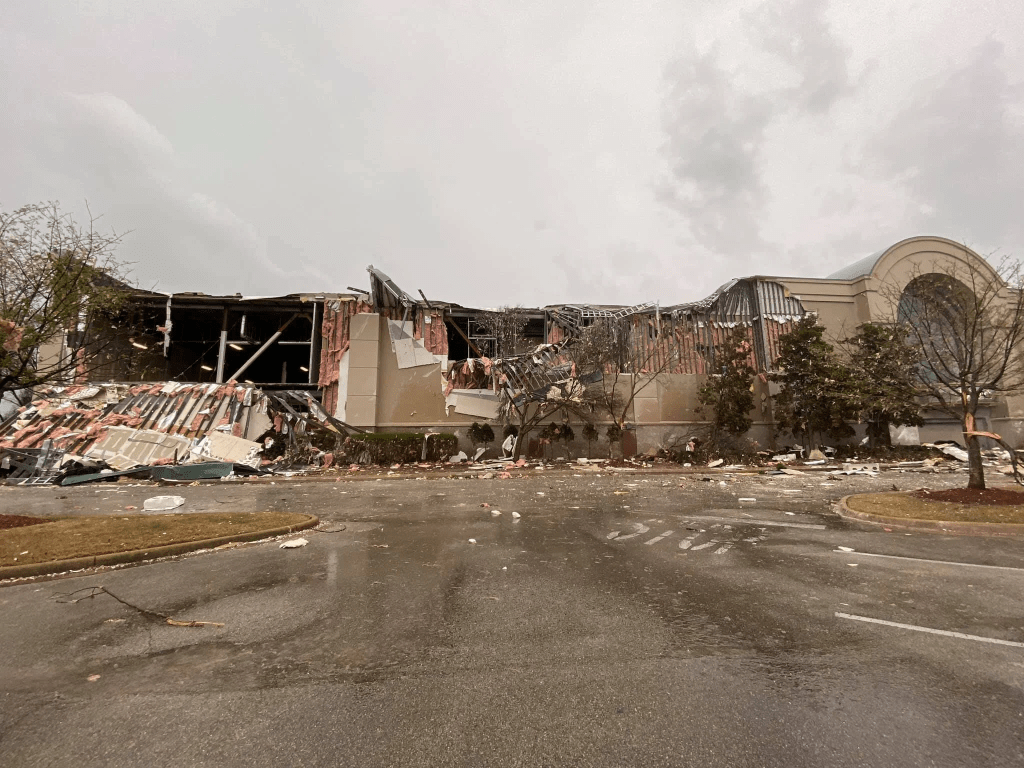
For example, Coy said the COVID-19 pandemic actually saved lives during the aforementioned 2020 tornado. He said the pandemic kept people at home rather than in commercial buildings, like The Mall at Turtle Creek in Jonesboro, which the tornado almost completely destroyed.
View of The Mall at Turtle Creek in Jonesboro after a tornado nearly destroyed the entire 73-acre plot. The tornado hit Craighead County on March 28, 2020. PHOTO COURTESY OF JONESBORO POLICE DEPARTMENT FACEBOOK
He said the tornado also taught him to have plans in place before disaster strikes.
“I was very new in the position at that time, I didn’t have my volunteer teams gathered yet, didn’t have changes to our emergency operations plan, none of that,” Coy said. “And here I am sitting at home on a Saturday and I watch a tornado drop down in the middle of Jonesboro. That’ll get your attention.”
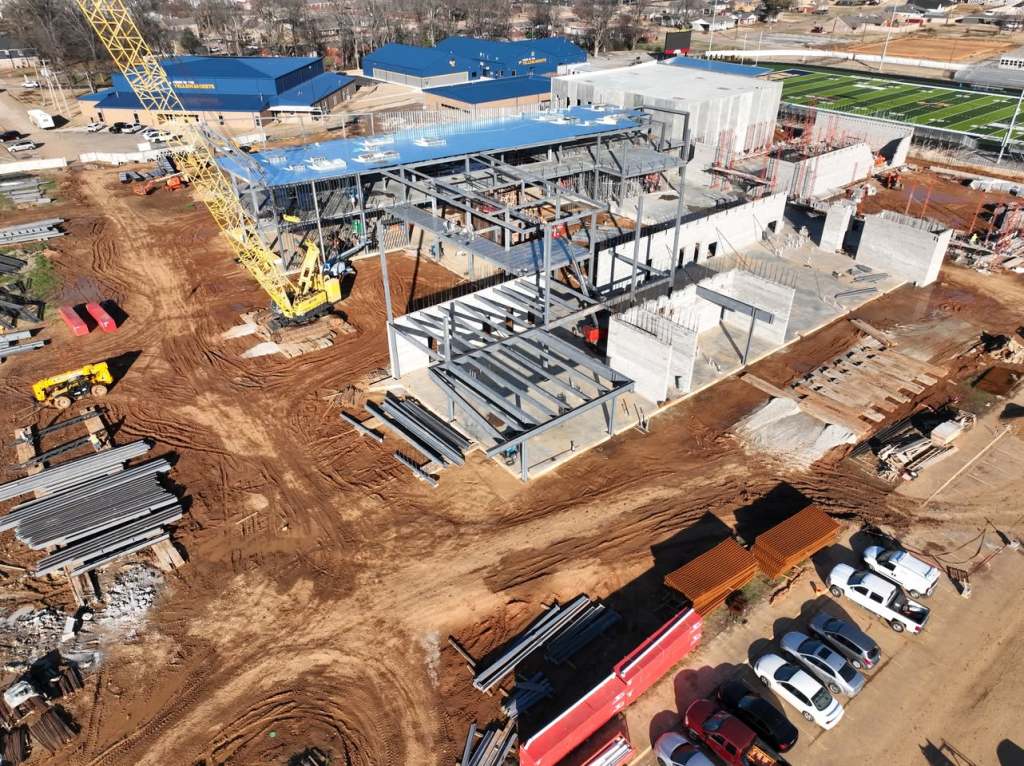
An aerial view shows ongoing construction at the site of the new Wynne High School. A tornado that struck Wynne, Arkansas on March 31, 2023, destroyed the previous high school. Nabholz Construction Corporation was contracted to lead construction on the high school. PHOTO COURTESY OF NABHOLZ CORPORATION FACEBOOK
As for Wynne, the company contracted to build a new campus for the high school, Nabholz Construction Corporation, stated in a Jan. 13 Facebook post that progress is moving steadily.
“It’s exciting to see this project transition from structure to the spaces that will soon support learning, creativity, and community,” Nabholz Corporation wrote.
Why is there a tornado season, anyway?
According to the NWS, the months of peak tornado occurrence, also known as tornado season, last from March to May in Arkansas.
As temperatures transition from colder to warmer in the spring, atmospheric instability creates conditions favorable for the formation of tornadoes. Since this transition happens at slightly different times throughout the country, tornado season varies depending on the state.
Other climate factors also play a role in creating a tornado season.
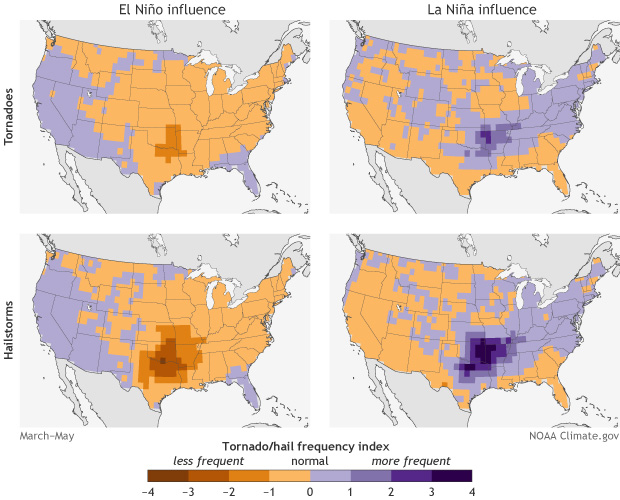
In a 2015 feature published by the NOAA, Michon Scott reported a relationship between tornado frequency and the natural weather patterns El Niño and La Niña.
Graphic depicts maps of the United States, representing the influence La Niña and El Niño have on the frequency of tornadoes and hailstorms in March and May, the peak months of tornado occurrences in Arkansas. The maps suggest La Niña increases the frequency of such severe weather in the southern U.S. GRAPHIC COURTESY OF NOAA
“Specifics vary, but in general, springtime tornadoes and hailstorms are less frequent in the southern central United States during El Niño and more frequent during La Niña,” Scott wrote.
El Niño is a natural weather pattern, usually lasting about a year, that occurs when warm water accumulates in the central and eastern Pacific Ocean. La Niña is the opposite and happens when cool water develops in the Pacific Ocean.
Coy, however, said Arkansas experiences severe weather regardless.
“The meteorologist will explain it has to do with whether you are in a El Niño or a La Nina and, I’ll be honest, they’ve explained it to me and I don’t always understand it,” Coy said. “It seems like we get severe weather regardless of which one we’re in.”
According to the NOAA’s National Severe Storms Laboratory, while tornado season denotes the period in which tornadoes are more frequent, a twister can form at any time of the year and in any location. Tornadoes occurred during all 12 months and in all 50 states.
According to a 2025 article published in the research database EBSCO, Mark Dziak wrote that “Tornado Alley” can be a misleading term because those living outside of its poorly-defined boundaries may believe they are less vulnerable to tornadoes.
Tornado Alley is a common geographic term used to define areas in the central U.S. where tornadoes are more frequent.
“Despite the focus on Tornado Alley, experts note that tornadoes can and do occur in every state, highlighting a phenomenon known as Dixie Alley in the southeastern U.S., where tornadoes may even be more frequent and damaging than in Tornado Alley,” Dziak wrote.
Is tornado season getting worse?
As of April 3, 2026, the NWS confirmed nine tornadoes in Arkansas, near the average for that time of year.
Coy said, in his time working in emergency management, he experienced increasingly frequent and deadly weather. Coy, who is also the treasurer of the Arkansas Emergency Management Association, has worked in the industry since 2006.
Research supports Coy’s experience.
The Arkansas Tornado Database, using data from all NWS offices serving Arkansas, found that between 1970 and 1999, Arkansas averaged 25 tornadoes per year.
Between 1991 and 2020, that number rose to an average of 37 tornadoes a year.
In a 2018 journal article published in the npj Climate and Atmospheric Science journal, Vittorio Gensini and Harold Brooks found while the national annual frequencies of tornado reports remained relatively constant, they documented positive trends in the Midwest and Southeast U.S.
While no definite reason exists for this increase in tornado sightings, several theories offer possible hints.
Hazards geographer and meteorologist Stephen Strader, in a 2024 interview with NPR, told host Ari Shapiro that advancements in detection technology contribute to the apparent increase in tornadoes. Strader said tornadoes – especially weaker, short-lived ones – posted on social media are sometimes added to severe weather databases, which also increases the statistics.
Strader said population growth and urban development may also be partly responsible for the increasing severity of tornadoes. Many areas once forested or used for farmland developed into dense population centers, thus increasing the likelihood of a tornado causing significant damage.
“There’s just more things to hit, which means more potential disasters,” Strader said.
A 2021 journal article published in Scientific Reports found population density and the installation of Doppler Radar systems contribute to the increasing trend of damaging tornadoes.
Another possible culprit, climate change, may offer more complex impacts on tornado season.
Climate change, a hotly politicized and controversial weather phenomenon, refers to long-term changes to Earth’s average weather patterns, according to NASA.
Strader said, while the connection between climate change and tornadoes is not fully understood, many researchers suspect tornado sightings will increase as the impacts of climate change create environments conducive to severe weather.
Data from the NOAA reports a greater risk of off-season tornadoes in a future warmer climate. However, the various intricate weather conditions at play during the formation of tornadoes make it difficult for scientists to determine the impact climate change is having or will have on tornado season.
A report from the Center for Climate and Energy Solutions (C2ES) also states factors such as limited data collection methods, high variability and the relatively small geographic size of tornadoes as challenges for attributing climate change to a worsening tornado season.
“As scientists improve their physical understanding of the processes that cause tornadoes, and as climate models are run at higher spatial resolutions, our understanding of the climate change influence on tornadoes will improve,” the C2ES report stated. “Likewise, as the observational record increases over time, trends will likely become more obvious.”
Coy said while some people debate whether climate change is to blame, he focuses more on preparation.
“Whatever reason that is, I don’t know and I don’t have to know,” Coy said. “I just need to know when’s the next one and how strong do we think it might be.”
Coy said Craighead County is due for a break from severe weather. He said every year he hopes the weather is better than the year before.
However, the OEM director said he will never suggest any particular tornado season might be less severe because that might encourage people to let their guard down.
“I don’t want to cry wolf, I’d rather people be prepared and then not need to use that preparedness as the other way around,” Coy said.
Where can I find more tornado season resources?
The Craighead County Office of Emergency Management may be called at (870) 933-4575, found online at craigheadcountyar.gov/oem, or visited in person at the Craighead County Courthouse Annex.
More local information about tornado preparedness from Craighead County may be found here.
Arkansas Weather Watchers, a digital media platform offering real-time coverage and community-driven reports from across the state, may be found here.
The Arkansas State University (ASU) System Board of Trustees named Robin Myers to return as interim president.
Myers, who previously served as ASU system interim president in 2024, was again named to the position on Dec. 12, 2025, following the previous president’s resignation. He said he was honored to return.
Jeff Hankins, ASU system vice president for strategic communications and economic development, said the chancellors and system staff were relieved by Myers’ second appointment. He said they are confident he was the best individual to step back into the interim president role.
“Dr. Myers is a calm, steady force who’s very experienced,” Hankins said.
In his role, Myers said he is responsible for enacting board policies and overseeing the operation of the system office as it interacts with each campus under the ASU system.
Regardless which campus they belong to, Myers said, students should know the ASU system works on their behalf to support and assist them.
“There is a group of people working on their behalf and I think that’s important to understand for students,” Myers said. “Unfortunately, because we are remote from the campuses, it is hard to have that interaction with students.”
Despite this limited contact, Myers said over 30 years of interactions with students in various educational positions gave him the experience needed to succeed as interim president.
Myers served as chancellor of ASU-Mountain Home for 11 years from 2012 to 2023, where he said he learned how students integrate and work together with campus operations.
“I think those are the things, just having that exposure and experience over the years, that provide me with a good background to understand what our campuses are going through on a day-to-day basis and the kinds of support and conversations that they need from me,” Myers said.
As a child, Myers said he worked closely with his dad’s business, gaining experiences and opportunities that shaped his current skill set.
The interim president said his greatest strength is his ability to listen to people and understand their perspective. He said he is not quick to judge or make decisions, but instead exhausts all information on a topic before moving forward.
However, Myers said his methodical nature is sometimes a weakness.
“I try to maybe do too much or get too involved sometimes, just because I want to help and assist,” Myers said. “Maybe I should take a step back occasionally.”
Jerry Morgan, ASU system board of trustees chair, said the board named Myers because of his previous experience as interim president and comprehension of system priorities.
Hankins said the board of trustees turning to Myers again is a significant compliment. He said he does not recall any particular challenges from Myers’ first appointment as interim president.
“If anything, we came away disappointed that he couldn’t have stayed on as president,” Hankins said.
The interim president said it’s too soon to tell if his current appointment will be different or similar to his first, although the circumstances are similar.
Myers was first named interim president in 2023, following the resignation of the second system president, Chuck Welch.
In 2024, Myers stepped down after the board completed its search for a permanent system president, naming Brendan Kelly to fill the position. However, Kelly resigned in early December 2025 upon being offered to serve as president of Eastern Michigan University, his alma mater.
Myers said he enjoyed his time working with Kelly through both transitions.
“Just an exceptional person, incredible skills and ability,” Myers said. “To be able to go back to his hometown and the school in which he graduated and be the president of that, no one can blame him.”
Hankins said the board of trustees held a special meeting to accept Kelly’s resignation. Soon after, at the next scheduled meeting, the board named Myers to be interim president.
Myers said the timing of the transition required him to pivot quickly.
“In addition to trying to transition and get an apartment and get moved to Little Rock, I had to also try to celebrate the holidays with my family,” Myers said. “It was a challenge, but it was also exciting and it worked out perfectly.”
In a statement published after Kelly’s resignation, A-State Chancellor Todd Shields said continuity of purpose is vital during system president transitions.
“As the trustees identify a new system president, our job is to stay the course and stick to the vital mission of educating tomorrow’s leaders and bridging our four-year and two-year colleges, industry and workforce needs for the ultimate good of Northeast Arkansas and the entire state,” Shields said.
Myers said he wants to be remembered as someone who cared about people, supported students and worked on behalf of everyone to find the best solutions for every issue presented to him.
“In the end, everything we do is focused on providing the best educational experience and opportunities we can for our students,” Myers said. “It is both an honor and a privilege to get to work with these folks.”
Myers will serve as interim president until the board of trustees completes its search for someone to fill the position in a long-term capacity. The board will meet again Feb. 13 to outline next steps in the search for an ASU system president.
Members of the Craighead County Quorum Court meet. Photo by DDNS Reporter Mia Young.
JONESBORO, Ark. – The Craighead County Quorum Court advanced two ordinances to their next readings to amend the county’s salary administration policy and job classifications in the County Judge’s Office during its meeting on April 13.
During old business, the court held the second reading of an ordinance amending the county’s salary administration policy to include cost-of-living increases. The ordinance proposes employees would be eligible for cost-of-living raises after one year of employment. Supervisors, however, would be able to approve the increases after 90 days based on performance. The policy would be guided by the Consumer Price Index, but not a specific rate.
The 13 justices also voted to untable a recommendation from the Job Evaluation and Salary Administration Policy committee involving the County Judge’s office, which Judge Marvin Day previously tabled. The ordinance will reclassify and restructure the Secretary Coordinator I position as an Administrative Coordinator I position.
“We’re not changing the budget. This is just going to change the position,” Day said. “If we do decide we want to change the budget, we will come to finance.”
Wendy French previously served as Administrative Coordinator I, in which she worked with elected officials and department leaders to help with daily operations and coordinate internal processes. However, officials appointed French as Craighead County Administrator in January 2026. Since leaving the position, Day said French held skills the Judge’s Office would like to mandate and look for.
The county presented the changes as part of its efforts to retain employees, recognize and support their work and improve the county as a whole. Day said if there was a possibility of hiring someone with the skills in place, he would come back and ask for a salary adjustment.
Once the court broke into committee meetings, Shannon Kee made a second attempt before the Public Service Committee to open a restaurant and obtain a liquor license after the committee rejected his previous application last year. Kee plans to open 141 Prime at Sterling Springs, 2761 County Road 766, near the Highway 141 intersection.
“Born and raised, I’m 53 years old and never had anything out there other than a gas station,” Kee said. “Nowadays, we don’t really have a gas station because all the gas stations are shut down.”
He said North Jonesboro has no restaurants and if he wants customers to choose to come to his restaurant and not just “drive right past,” they will expect a beer with their dinner. The committee, after hearing no additional public comments, voted 3-1 to advance the proposal to the full Quorum Court for a vote when it meets again on April 28.
During public comments from the full Quorum Court, Robin Martin raised the issue that a recent Freedom of Information Act request showed Day’s email was included in the list of people emailed when someone emails quorumcourtmembers@craigheadcounty.org. However, Day’s name did not appear anywhere on the list of email recipients.
“That seems a little deceptive,” Martin said.
Martin also said there is no way for citizens to email Quorum Court members individually, as the only email address provided is the group email. Day said it would be possible for him to be removed. But the role was already set up that way when he took office, and he would not commit to anything during the meeting.
Staff members from the Hispanic Center pose outside their facility in Jonesboro, highlighting the organization’s role in supporting local families amid growing community concerns. Photo courtesy of The Hispanic Center via Facebook.
JONESBORO, Ark. — As immigration enforcement concerns grow in Jonesboro and across the country, leaders at the Hispanic Center say fear keeps some families from going to school, seeking medical care or accessing basic services. Immigration enforcement policies and increased activity by Immigration and Customs Enforcement have created uncertainty for many immigrant families, including those in northeast Arkansas.
The Hispanic Center is a nonprofit organization that serves the Hispanic community in Jonesboro, as well as others in need. The center offers services such as after-school programs, interpretation, translation, English classes, computer training and health fairs. The center also provides legal consultations, mental health sessions, and community events, while assisting families with food, transportation and housing support.
Carolina Elmore, assistant director at the Hispanic Center, said, “We serve the Hispanic community primarily, but we help anyone in need regardless of ethnicity, religion or race.”
Elmore said the Hispanic Center is a place she wants people to feel they could depend on anytime.
“We provide interpretation in hospitals, schools and legal settings so people who don’t speak English can still access essential services. Language is one of the biggest barriers, and we try to bridge that gap every day,” Elmore said.
Elmore said the Hispanic Center acts as a bridge between schools, the Hispanic community and local institutions. The center partners with local universities and organizations to provide students with educational support and expose them to career opportunities.
Elmore said one of the biggest challenges for the Hispanic Center has been increased activity by Immigration and Customs Enforcement.
“A lot of people are afraid to seek services because of immigration concerns. Some parents are even scared to send their kids to school or go to the doctor. We try to create a safe space where families feel supported despite those fears,” Elmore said.
Due to concerns about ICE, many community members are afraid to seek help or services at the Hispanic Center out of fear of being detained. That fear reflects what many immigrant communities are experiencing across the country, where enforcement actions can affect access to education, health care and other essential services. The center often works with churches and community partners to provide safe spaces and trusted environments for families.
“We help families with everything, from enrolling their kids in school to making doctor’s appointments. Sometimes it’s as simple as helping fill out a form, but that can change everything for a family,” Elmore said.
Elmore said she wants to continue serving her community during challenging times tied to immigration enforcement.
“Everything we do is about helping families feel supported, connected and valued in this community,” Elmore said.
Leo Hernández, program coordinator, helps facilitate the after-school program, which allows children to catch up on homework and receive tutoring.
“La Escuelita is here to support kids from kindergarten through ninth grade with their homework and academics. A lot of parents can’t help their kids with schoolwork, so we step in to guide them,” Hernández said.
La Escuelita runs Monday through Thursday during the school year and is divided into groups by age, allowing younger and older students to receive the support they need. Students work on subjects such as math, reading, writing, Spanish and public speaking, while also building communication and teamwork skills. The program also includes a summer component that helps students stay on track in a more engaging environment.
Hernández said the Hispanic Center also has a program called HELP, which gives high school students opportunities to explore life after high school. He said the program allows students to complete community service hours while visiting college campuses and local institutions.
“We’re not just helping with homework, we’re giving kids opportunities they might not have otherwise. It’s about building a foundation for their future,” Hernández said.
Hernández said education and guidance are some of the biggest needs in the Hispanic community, especially for students who struggle with English and need additional support.
Hernández said he wants the community to feel like a safe place where families can feel at home and that many people simply need direction.
“What’s happening with immigration affects families, especially the kids. We always encourage people to seek legal advice and handle things the right way. At the end of the day, we’re here to help people grow and succeed,” Hernández said.
Yesenia Dixon serves as a front desk receptionist, interpreter and after-school teacher at the Hispanic Center.
Dixon said many children struggle to express their emotions, and the center helps them build communication skills.
“It’s rewarding to see their faces light up when they realize they can do something,” Dixon said.
Dixon said she enjoys interpreting people but she also knows it is serious because she serves as the voice for others.
“I’m usually the first person people see, and they come in upset or needing help. I try to calm them down and let them know they’re in a safe place,” Dixon said.
Dixon said increased ICE activity has heightened fear in the Hispanic community, with some people choosing to handle everything virtually.
“During stressful times, we focus on giving people factual information so they don’t panic. There’s a lot of fear, so it’s important we don’t spread misinformation,” Dixon said.
Dixon said even if she does not have an immediate answer, she works to help people find one.
“We’re not just a place for handouts, we’re here to support people. We want to be known as a place where people can come without feeling judged,” Dixon said.
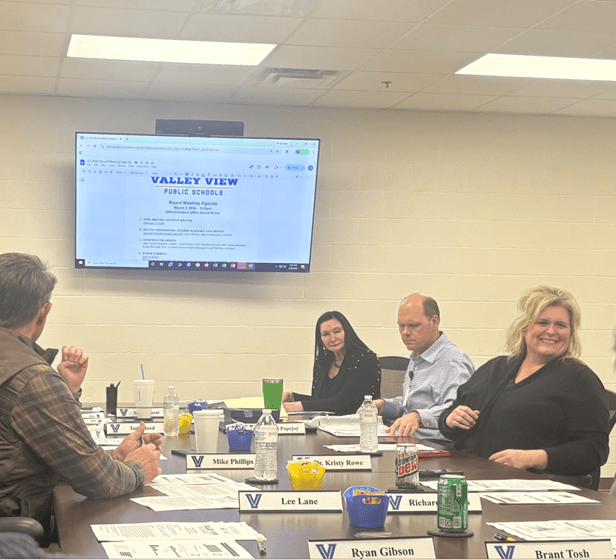
Members of the Valley View School Board, as well as Superintendent Roland Popejoy (second from right). Photo by Benjamin McDowell.
JONESBORO, Ark. — The Valley View School Board honored longtime member Richard Rogers, celebrated the success of the theater program, and approved major technology purchases during its recent meeting.
The board recognized the Valley View theater program, which took its one-act play Eurydice to competition in Russellville and earned a score of 97 out of 100. Judges selected the group as one of four schools in the state to showcase their one-act play at the State Thespian Festival in February.
Students later performed in Springdale, receiving a superior rating, along with awards for ensemble work and music design, and earned $100,000 in scholarships for theater education.
The board also heard updates on the Fine Arts Center lighting project, which improved stage and auditorium lighting for performances. The new lights allow different colors, enhancing plays, festivals, and shows.
Chromebook purchases and finances
The committee reviewed financial reports showing a $2.7 million deficit due to building project expenditures, though revenue collections are currently 51% ahead of budgeted expenses. Members approved the purchase of 750 Acer 514 Chromebooks for $373,525 and 250 Lenovo L16 Chromebooks for $223,223, citing cost-effectiveness and vendor reliability.
Superintendent Roland Popejoy discussed the Chromebook purchases and technology replacement plan.
“I have shared with you guys previously that we’ve been working on a replacement plan for laptops. That is an area where, whenever I came into this role, it was very important for me to make sure that we work toward getting a specific line item per year for technology replacement,” Popejoy said.
Popejoy emphasized that students should have access to the tools they need to succeed.
“Previously, we made really big purchases and then kind of saw how long they would last as part of our process. I really want to make sure that we have a solid replacement plan. And so that’s what we’ve been working on. We’re moving to one-to-one,” he said.
Honoring Richard Rogers
Board members recognized Richard Rogers for his 11 years of service, noting his role in overseeing several major school projects.
“He has served on our board since October of 2011, and so this will be his last meeting. Mr. Richard Rogers has played a pivotal role in multiple things in his time here. He oversaw the building of our high school while he was on the board, also the women’s field house, the additions here at the intermediate and the intermediate junior high, and now our high school addition,” Popejoy said.
He also praised Rogers’ contributions to athletic facilities.
“In addition, one thing that I think is really important is that he has played an integral role in the efforts to improve our athletic facilities, with our turf project for our football field, baseball field and softball field,” Popejoy said. “Anybody that knows this board over the years knows Richard is a voice that a lot of people reach out to. Richard is one that has a unique way of his advocacy.”
Special education and facility updates
Special education director Carol Brown provided an overview of services.
“As of December, there were 2,827 students enrolled in our district, and out of those, there are 448 receiving special education services, which is 15.85%,” Brown said.
Brown explained that the district serves students with a variety of disabilities, including specific learning disabilities and other health impairments such as ADHD, seizure disorders, and other medical conditions. She said the district provides multiple therapists and therapy options to support students academically, mentally, and medically.
Senior project manager Angie Berryhill gave an update on facility improvements.
“What I’d like to do is dwell on the path moving forward, and our message is still the same to this board and this community, that we’re going to move as expeditiously as possible. When we understand things, we will make that known, and we’re going to be here until the very end,” Berryhill said.
Berryhill added that the improvements will not cost taxpayers extra money.
“We have processes and procedures in place now that are going to prevent things like this from happening again,” she said.
Courtesy of Jonesboro Public Schools Facebook Page
JONESBORO, Ark. – Jonesboro Public Schools launched a new counselor website and approved additional compensation for teachers who teach more than 150 students per day and more during its monthly school board meeting on March 10.
Mandy Zipful, district school improvement specialist, presented the new counselor website, highlighting the new and improved course catalog for Jonesboro High School. The JPS School Counselors’ website provides a hub for connecting students with counselors, finding mental health resources, booking appointments, accessing grades and graduation requirements, and viewing a detailed course catalog. While the site is live, the district is working to connect the site to each school’s tab.
“This is a great tool for the students and parents,” Zipful said. “We’re super proud of this work.”
Zipful highlighted the new “Academics at Jonesboro High” course catalog, noting that the old version was just a Word document, while the new one lists every course offered and includes a detailed description. The new catalog also makes it easier to find graduation requirements, concurrent credit courses at both Arkansas State University and Black River Technical College, Success-Ready Pathways, and more.
“What would it look like to be more supported socially and emotionally?” Superintendent Misty Doyle asked students. Students said to be able to better get in touch with their counselor.
The website helps students easily book appointments with their counselor in 30-minute increments. Students can schedule an appointment by going to the JPS School Counselors website, clicking “Academics at JHS,” clicking the “Counselor Appointment” tab, selecting the counselor they wish to meet with and choosing a time that works best for them. Doyle even gave an example of how a student had an appointment scheduled for 9 a.m. and was surprised to actually be called out of class on time.
During the superintendent’s report, Doyle asked Von McDaniel, director of student health services to give an update on mental health.
“As of today, we’ve had 167 student contacts for this school year. Some of them we spend a lot of time with, and some of those we don’t,” McDaniel said.
Counselors meet with and contact students for a variety of behavioral and mental health concerns. Students can meet with counselors as many or as few times as needed. While some students have the resources needed to head in the right direction, others don’t and the district recognizes that.
Photo courtesy of JPS School Counselors website. (Left) Lene Pierce, Jonesboro High School Health and Human Services counselor, and Emily Aycock, Visual and Performing Arts Magnet school counselor.
The board passed the motion to approve additional compensation for teachers teaching more than 150 students per day for the first semester in the 2025-26 school year. The JPS finance office recommended six teachers, including two from JHS, two from Douglas MacArthur Junior High School and two from Annie Camp Junior High School, for the supplemental teacher contract pay.
“A teacher is not required to teach more than the maximum number of students permitted per day under the Standards for Accreditation of Arkansas Public Schools and School Districts, but a teacher may agree to teach more than the maximum number of students permitted per day,” according to Arkansas Code § 6-17-812 (2024).
The district will pay the teachers an additional amount in addition to their regular salary, proportionate to the additional number of students they taught.
The board also passed the motion to approve the purchase of a new $153,054 77-passenger school bus.
JONESBORO, Ark.- Mayor Harold Copenhaver gave his sixth State of the City address to the Jonesboro City Council on Tuesday evening, featuring major growth in the economy, finances and infrastructure, lower crime rates, and a bright future for the city.
Amid the city’s acquisition of CityStars’ finances, Copenhaver highlighted the 15 consecutive audits. He said Jonesboro is thriving and, at the end of 2025, had $28.1 million in reserves and $15 million in capital improvements.
He mentioned the growth in nearly every aspect of the city, including the 150 businesses that opened last year, 10% more calls firefighters responded to, and numerous projects ready to start. Not only projects “built for wheels,” but for pedestrians. Funds awarded to Jonesboro through the Transportation Alternatives Program will go toward new pedestrian infrastructure on the Marion Berry overpass. This will not only make the overpass safer and more walkable but will also help connect Arkansas State to the rest of Jonesboro.
“Jonesboro’s future is bright, but we’d better prepare for it now,” Copenhaver said.
He highlighted that even with the large population growth over the last decade, statistics recently released by the FBI show that violent crime is the lowest it has been in at least a decade.
More than 100,000calls were answered by dispatchers through the city’s emergency medical dispatch program. Seven calls helped guide people through CPR, and one even helped deliver a baby. Copenhaver also noted that 63% of firefighters’ and 52% of police officers’ salaries have increased.
The city also won three Trendsetter awards for Jonesboro connecting efforts, emergency medical dispatch, and the city park ranger program, and was also named Volunteer City of the Year. Copenhaver knew the council was not the only one responsible for helping win these awards; the public was a big help. He called upon citizens to make an effort to get involved and help craft a blueprint for a better city.
“But all those numbers can add up to an overall total of one. One goal, one responsibility to make Jonesboro the best city,” Copenhaver said to close his address.
After the State of the City address, business continued as usual. A few Council members raised additional concerns regarding the handling of CityStars. Questions were raised regarding Freedom of Information Act (FOIA) requests, missing paperwork and invoices for individuals working the tournaments, and making sure all aspects of taking over CityStars’ finances were done legally.
Efforts are underway to move toward partial- or fully cashless events in youth sports. IT is making strides to handle this issue. The first phase of this process is to assess the cost of the required infrastructure and ensure that locations have the Wi-Fi capabilities needed to run the program.
Matt Daniel, former executive director of the Arkansas Revolution Soccer Club, spoke during public comment. He stated during the Feb. 3 City Council meeting, Copenhaver directly named him and incorrectly quoted both his CityStars resignation letter, which did not mention anyone by name, and his proposal. Daniel went on to correct Copenhaver and state what he actually said in his letter. He stated the city has maintained that CityStars operated independently, but contracts, payroll involvement, event insurance filings, and more “show a far more entangled relationship,” and people deserve to know the truth.
“Mayor Copenhaver, I have lost all confidence in your leadership for our city,” Daniel said, after stating the aforementioned documents were not any type of confidential record but documents he was a part of.
Daniel closed his public comment, giving a call to action to the council, saying, “If you have confidence in this administration, say so. If you do not, say so. Jonesboro deserves clarity.”
JONESBORO – Following the government shutdown and with the holiday season approaching, food insecurity in Northeast Arkansas (NEA) remains a challenge for food banks.
Arkansas faces the highest rate of food insecurity in the nation, according to a since-discontinued annual report published in 2024 from the U.S. Department of Agriculture (USDA). The USDA defines food insecurity as a household-level economic and social condition of limited or uncertain access to adequate food.
Terry Austin, development officer at the Food Bank of NEA, said the rural nature of Northeast Arkansas contributes to the high rates of food insecurity. Many areas of Arkansas are also classified as food deserts.
Food deserts are areas where access to affordable, healthy food is restricted or nonexistent due to the absence of grocery stories within convenient distances, as defined by Food Empowerment Project.
“Statistically speaking, 21% of Northeast Arkansas citizens are in food insecure households,” Austin said. “Which is a staggering statistic to me.”
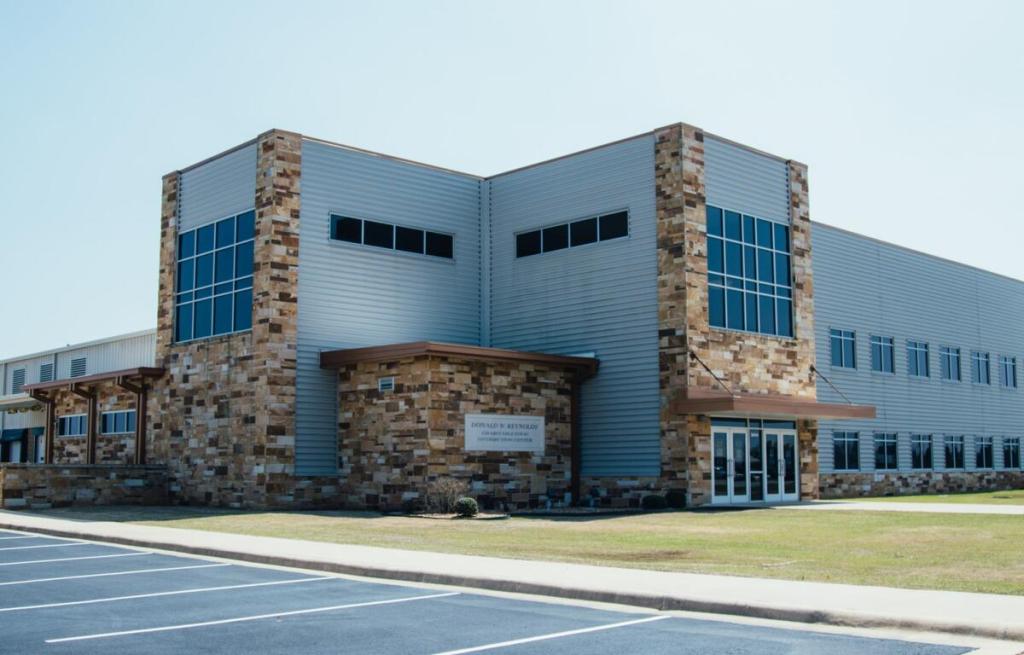
The Food Bank of NEA entrance, located at 3414 One Place in Jonesboro. Photo courtesy of Food Bank of NEA Facebook.
Food deserts are not the only elements worsening food security in NEA, though. National factors have further increased demand for food banks.
Lingering Impacts of Government Shutdown Austin said the latest government shutdown, which lasted from Oct. 1 to Nov. 12 put a spotlight on food insecurity. He said those who depend on food assistance, such as the Supplemental Nutrition Assistance Program (SNAP) and federal employees, were particularly impacted.
The Food Bank of NEA saw a 16% increase in SNAP recipients who received food assistance during the shutdown compared to that same period in 2024. 8% of those served were new households that had never received assistance from the Food Bank of NEA before.
The One Big Beautiful Bill Act, signed into law by President Donald Trump on July 4, is also expected to impact food security nationwide.
President Donald Trump displays the One Big Beautiful Bill Act, after signing it. Photo Courtesy of Leah Millis, Reuters.
“[The act] is estimated to reduce the number of meals for SNAP beneficiaries in the nation by some six billion meals year to year over the next 10 years,” Austin said. “We’re gonna see that kind of cut in food assistance and that’s going to mean a very steady rise in demand.”
Another factor influencing the increased pressure on food banks is the approaching holiday season.
Holiday Season Challenges “Regardless of what your family’s financial picture may be, you still want to have those holiday gatherings,” Austin said. “You want to have a table of food to share with your loved ones.”
The holiday season further contributes to an increase in demand because, since many children will be on break, they’ll miss out on school-provided meals. One in three children are at risk for hunger in NEA.
Austin said the Food Bank of NEA orders traditional seasonal food during this time of year to give families in need the food to make a holiday meal. Food insecurity is not an issue limited to NEA, either.
The River Valley Regional Food Bank entrance, located a 1617 Zero Street in Fort Smith.
Food Insecurity Affects Arkansans Everywhere On the opposite side of the state, the River Valley Regional Food Bank in Fort Smith serves 140 pantries across eight counties in Western Arkansas.
Hattie Hamilton, interim food bank director and operations manager for the River Valley Regional Food Bank, said they have reached out to Feeding America for extra food. She said the additional product will help the food bank better supply the pantries as need increases.
Feeding America is a non-profit network of food banks nationwide that helps feed more than 46 million people.
“Our battle here to help fight against it is just to get the food in to help get to the neighbors in need,” Hamilton said.
State Funding Support In an effort to combat SNAP cuts and relieve pressure on food banks, state funds have provided support to food banks across Arkansas.
On Oct. 31, Arkansas Governor Sarah Sanders directed $500,000 to be split among the six Feeding America partnered food banks in the state. On Nov. 9, with the shutdown still in effect, Sanders assigned $500,000 more to food banks.
“As the shutdown continues, my administration will stand with our partners in the legislature, at churches and in food banks to help Arkansans stay fed,” Sanders said.
Back in NEA, Austin said their food bank received about $83,000 from the state. He said the Food Bank of NEA priortized buying protein products with the funds.
“Protein is a critical part of a diet and it’s also part of a diet that’s hard for us to provide enough of in our distributions,” Austin said. “We get a lot of canned goods and a lot of dry goods. Protein can be tricky to fit into that parameter, so that’s why we focused using those dollars on protein purchases.”
Austin said he wants to stress that the food bank is grateful for the money, but more help is needed to meet the rising need.
Demand Rising in Northeast Arkansas One of six food banks in Arkansas, the Food Bank of NEA serves a 12-county area in the northeast region of the state, serving about 8,000 square miles.
Austin said the Food Bank of NEA primarily raises money and food and then distributes products to 176 partner agencies. These agencies include churches, schools, food pantries and homeless shelters.
In 2024, the Food Bank of NEA distributed 8.2 million pounds of food to those facing food insecurity. 25% of that food was fresh products like meat, vegetables and fruit.
A Food Bank of NEA delivery truck, parked in the loading dock of the Food Bank of NEA. Photo Courtesy of the Food Bank of NEA website.
In addition to distributing food to partner agencies, Austin said the Food Bank of NEA travels to each of the 12 counties as least four times a year to hold a mobile distribution.
Through these distributions, Austin said the food bank arrives to a central location and hands out food themselves. He said the increased demand is felt even in these mobile distributions.
During a mobile distribution held in Craighead County in early October, Austin said the food bank brought 24 more boxes of food than normal and still had to turn away about 30 households because they ran out of food. Similarly, during a distribution in Lawrence County, Austin said they brought 64 additional boxes of food and had to turn away 42 households.
“We simply ran out of food,” Austin said. “The demand has definitely spiked and it spiked in part because of the shutdown, but honestly, the demand was already beginning to climb.”
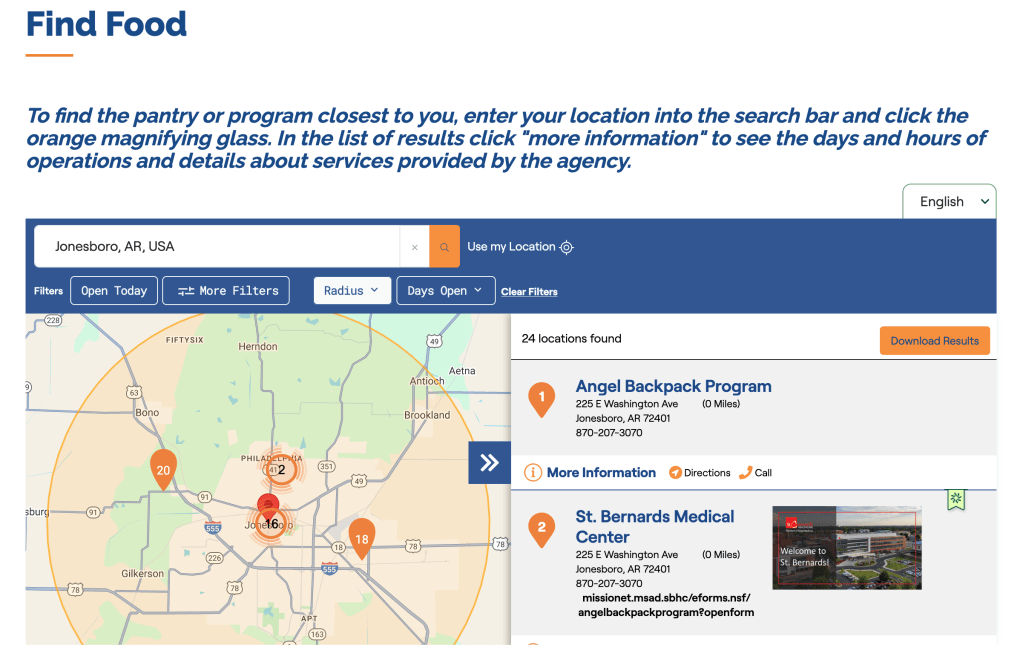
How to Receive Assistance and Offer Support For those in need of food assistance, Austin said one of the best resources they offer is an interactive map on their website that allows users to find what food distributors in NEA are closest to them. Phone numbers, addresses and more information is included in the map to help guide users to help they need.
A screenshot of the Food Bank of NEA interactive map. The map allows users to search for food distributors in their location. Screenshot retrieved from the Food Bank of NEA website.
“We have done this a long time and we know all the ins and outs and the best way, the most efficient ways to get food to people who need it,” Austin said. “We stand ready to help if we need to.”
The Food Bank of NEA also has links under the “How to Help” section of their website for those interested in donating or volunteering. 1,157 volunteers donated 3,847 hours in 2024 to support the Food Bank of NEA.
Some of the most needed food items include peanut butter, canned soups, pasta, cereal, boxed meals, canned meats, and canned fruits and vegetables.
Austin said fresh food is always a challenge, so shelf-stable products are preferred. He also said popular foods that are flexible in meal prep are favored, such as spaghetti, corn, green beans and macaroni and cheese.
More than food, though, Austin said the Food Bank of NEA–and most food banks in general–actually prefer money donations.
Austin said donating money directly would serve the food bank more than canned goods, as the food bank buys product in bulk at reduced prices. “We typically say that $1 donated can provide up to three meals,” Austin said. “We’re able to really stretch those dollars a long way.”
Austin said money donations can be used to pay for freight costs and other fees needed to keep the food bank running, too.
Still, Austin said any form of support–food donations, money donations, volunteer work or otherwise–is greatly appreciated.
The Food Bank of NEA is open from 8 a.m. to 5 p.m. weekdays and is located at 3414 One Place in Jonesboro. The food bank can also be reached by phone by calling 870-932-3663. -30-
(From left) Jeff Rosenzweig and Paul Ford listen as Dan Stidham speaks during the West Memphis Three panel discussion. All three men were attorneys involved in the defense of the West Memphis Three and were invited by the Arkansas State University Sociology and Criminology Association to attend the panel. Photo by Jerry Don Burton.
JONESBORO – Attorneys who defended three freed men convicted as teenagers, known as the West Memphis Three, spoke in a panel discussion at Arkansas State University to share insight, advice, and theories regarding the case.
The highly publicized and controversial case originated from the murders of three boys in West Memphis, Arkansas, in 1993. Damien Echols, Jessie Miskelley Jr., and Jason Baldwin were convicted of the murders, despite questionable evidence.
The A-State Sociology and Criminology Association (SCA) hosted the public panel on Thursday, Nov. 6, in the Reng Student Union Auditorium.
Stacy Dewald, faculty co-adviser for the SCA, said she wanted the event to bring attention that the criminal justice system is flawed, show wrongful convictions exist and offer new perspectives for those who still think the West Memphis Three are guilty. She said she believes the panel discussion achieved this goal.
The three attorneys who participated in the panel, Jeff Rosenzweig, Paul Ford, and Dan Stidham, began the discussion by detailing their connection to the case. Rosenzweig was on the team responsible for releasing the West Memphis Three in 2011, Ford was on the original defense team for Baldwin, and Stidham represented Miskelley as an attorney. Ford said this case highlights the power of confirmation bias.
“Once you have this notion, all new information is going to be sorted to reaffirm whatever that notion is. If your first notion is ‘they’re guilty,’ you’re going to hold on to that,” Ford said. “So when you meet people who are less than 40 years of age and their first involvement in this proceeding was to watch the HBO documentaries, they can’t believe they were convicted. Because that was the first story that they heard, but that was not the first story that people heard in 1993.”
Ford said the citizens of West Memphis needed somebody to blame so they could feel their community was safe. The existence of multiple potential suspects other than the West Memphis Three contributes to the controversial nature of the case and is the topic of many ongoing debates.
The three panelists said they are confident the West Memphis Three are innocent and have their own theories as to who committed the murders.
Rosenzweig said one valid suspect is “Mr.Bojangles,” referring to a bleeding man who was seen entering the nearby Bojangles restaurant about two hours after the boys were reported missing. Witnesses said the man was mentally disoriented and entered the women’s restroom. The next day, police took blood samples from the restroom that were later lost.
Ford said he has always been suspicious of Chris Morgan, a teenager who unexpectedly traveled to California with Brian Holland, another teenager, four days after the bodies were found. During questioning, Morgan said he had a history of drug and alcohol use and experienced blackouts and memory lapses. He said he might have killed the victims, but recanted this statement. This recanted statement was debated in the trial, but was found inadmissible as evidence.
Stidham said he has a suspect, a serial killer, whom he can place in the vicinity of the murders. He said he will explore the lead further and hopefully have more information to present before he retires.
Prevalent media coverage represents another element that generated controversy for the case.
Ford said national attention in the case, specifically from the media, was a double-edged sword.
“To have a CNN truck pull up outside of the courthouse in Corning, Arkansas, that’s like finding Bigfoot,” Ford said. “It was a big deal. Everywhere you went, there were reporters, cameras, people wanting interviews, producers from talk shows.”
Ford said if he could do anything differently in the trial, he would trust the media less. However, without a relationship with the media, he said, there would never have been a documentary and the West Memphis Three would still be in prison.
Dewald said the 1996 HBO documentary, “Paradise Lost: The Child Murders at Robin Hood Hills,” saved Echol’s life. Echols was the only teenager sentenced to death in the trial.
The case is also associated with the Satanic panic, due to the prosecution’s assertion that the children were murdered as part of a Satanic ritual. The Satanic panic was a social panic that began in the 1980s and continued throughout the late 1990s, involving widespread cases and accusations of Satanic ritual abuse.
Rosenzweig said some still believe the West Memphis Three are guilty for a number of reasons, ranging from having personal connections to being ill-informed.
“You’re never going to convince everyone, no matter what,” Rosenzweig said. “You just have to move on and go to the next person.”
Stidham said the use of the Alford Plea in the case is a common source of confusion that many people struggle to understand.
In 2011, the West Memphis Three entered an Alford Plea, meaning they pleaded guilty while maintaining their innocence. Judge David Laser accepted the plea, which simultaneously freed the men after serving 18 years in prison and put the case to rest.
Rosenzweig said he agrees with Stidham that the Alford Plea is a confusing part of the case and is controversial in its own right. Rosenzweig said if the state really thought the West Memphis Three killed the boys, they would still be in prison.
Ford said if the prosecution felt the teenagers actually killed the three eight-year-old boys, they should feel ashamed for letting them go free.
“Why would you ever agree to let people you think killed eight-year-olds walk free?” Ford said. “That, to me, is the greatest evidence that they really didn’t believe it.”
Scott Ellington, the prosecuting attorney at the time, said he recognized the compromise was not ideal. Still, he said, it gave the state the guilty plea it wanted and the defendants the ability to continue asserting their innocence.
“It certainly was not a perfect resolution to the case for the state, but it was much better than having three trials, trying to convince 36 jurors of the defendants’ guilt using old evidence, failed memories, changed minds, dead witnesses and the parents of two of the victims who now say they believe the defendants are innocent of the crimes,” Ellington said in a 2011 article from the Thomas Jefferson School of Law.
Rosenzweig said procedural mechanisms, which are rules designed to secure a fair and consistent application of due process, have not improved in Arkansas since the original West Memphis Three trial. He said forensic advancements make scientific evidence much more precise, but misunderstandings still persist and proliferate on social media.
Stidham said documenting is important, and interrogations should be recorded in their entirety. Ford said what he found egregious about the case was that adolescents were questioned by law enforcement without a parent present or knowledge.
The discussion ended after the panelists advised the audience on what to do if they are ever falsely accused of a crime. Stidham and Ford said to stay quiet and get a good lawyer, and Rosenzweig said to recognize that the exoneration process takes time.
Dewald, who is also an assistant professor of criminology, said planning for the event began in August, when A-State students Lesleigh Sullivan and Anna Hartley expressed an interest in the West Memphis Three for their honors project. Dewald said she feels a connection to the West Memphis Three because she grew up around the same time and shared similar interests in music and books.
“I kind of felt connected to them, but what was different is they grew up in the South, I grew up in the North,” Dewald said. “So it wasn’t so frowned upon in the North to like Metallica and Stephen King.”
The assistant professor of criminology said the case remains nationally relevant because DNA evidence remains to be tested and many questions remain unanswered. She said community interest endures because many people feel a local connection to the case.
Stidham said interest in the case will persist for many years.
“People are going to be talking about this case in 300 years, like we talked about the Salem witch trials,” Stidham said. “It’s essentially the same thing.”
Dewald said she didn’t think the panel would draw as many attendees as it did. Nevertheless, she said she appreciates the interest and hopes the event raises awareness and helps dispel some myths surrounding the West Memphis Three and the criminal justice system.
On Aug. 1, 2025, new DNA testing for evidence from the original crime scene was ordered by Crittenden County Circuit Court Judge Tonya Alexander. At the time of writing, however, no other updates have been announced.
On November 8th, 2025, the Sun Belt West Division will be on the line as the Southern Miss Golden Eagles will travel to Jonesboro to take on a red-hot Arkansas State Red Wolves. The Golden Eagles of Hattiesburg, Mississippi, enters the matchup coming off its bye week, while the Red Wolves of Jonesboro, Arkansas, are coming off a dominant defense performance with a 23-10 victory over Troy last week. This game has West Division title implications as the teams are currently 1st and 2nd in the West Division. If Southern Miss wins this game, it will win the West. If Arkansas State wins this game, they will win the West Division as they would have the head-to-head tie breakers with both Troy and Southern Miss.
Arkansas State head coach butch jones and Southern Miss head coach Charles Huff were asked about the Sun Belt West Division showdown on Monday during the Sun Belt weekly Zoom press conference.
“Well, just, you know, not giving up explosive plays, and they force you to execute. They force you to play in space. They force you to tackle a quarterback who is a dynamic player, deserving of all his honors, deserving of all the expectations in terms of preseason conference Player of the Year. They do a great job in terms of getting their skill players, their hands on the ball, and creating space, and really putting the ball in play. I think that the whole key is the ability of the quarterback to put the ball in play, and they’re big up front. So again, they’re extremely talented, and then defensively, you know, as good a defense that we’ve faced all year. Therefore, it will be a challenge,” said Arkansas state head coach Butch Jones.
“We have to go play a really good Arkansas State football team, you know, arguably the hottest team in the country over the last month. And that’s a fact. I mean, they’ve been able to go on the road and win games. They’ve been able to win close games, and that’s what good teams do: good teams find a way to win games, bad teams find a way to lose them. Obviously, they’re playing at a really high level with a lot of confidence. I have known Coach Jones for a long time. His process is set up for them to be playing well at the back end of the season, you know, at this level, sometimes our schedule doesn’t allow, you know, for the miraculous runs in the beginning of the season with the P4s that you have to play and those types of things. But people remember what you do in November, and they are setting themselves up for a really good run. Planned a really high level. I think their quarterback is arguably the best in the conference. I can’t judge my guy cause I see him every day, but as an opponent, he creates a lot of issues. Defensively, they give you a lot of looks. We’re going to an environment that’ll be different than the environment we went to, we plant at a different time as far as kickoff. We play a completely different team. I think we have learned throughout the course of the season, the key to all of it is preparation and mental disposition, whether you’re playing at home or away. I think when you play on the road, you’ve got to have a little more intentional focus. When the game time adjusts and you are adjusting, you have to have a little bit of awareness of that. We anticipate a really good game day environment. You know, you got a team that’s playing really well with a community and fan base that truly supports. So, we’re expecting a very hostile environment, obviously, with the kick time and location and all those things, we’ve got to make some adjustments in our schedule,” said Southern Miss head coach Charles Huff.
Both Coach Jones and Coach Huff were asked about the Sun Belt West Division showdown on Tuesday during their weekly press conferences.
“And now we’ve got to get prepared for a really good Arkansas State football team that’s playing extremely well, arguably, the hottest team in the conference right now on the four-game win streak. Doing a really good job of finding ways to have gritty wins. I truly believe good teams find ways to win games; bad teams find ways to lose them. Over the last month, Arkansas State has done a really good job of finding ways to win games. Coach Butch Jones does a phenomenal job. You can see the culture, you can see the process that they have, how they go about it. I think they play extremely hard on both sides of the ball. I think their quarterback is arguably the best in the conference. I can’t rate hours because obviously I’m a little bit biased, but the kid’s dangerous. He can make all the throws. Obviously, he can activate his legs. I think he’s taking a step in growth from last year to this year, or from when he was a freshman and we played him at the other place. He’s not just pulling the ball down to run now. He’s pulling it down and still keeping his eyes downfield, which creates another whole set of issues. I think their O-line does a really good job of finishing blocks. Probably the best group of receivers as a cord that we faced all year. Offensively, they stress you with different formations, and they play with tempo. You always have to have a quarterback player with eyes on the quarterback, probably two quarterback players because of his ability, which takes guys out of coverage or out of your run fits, or they have dual responsibilities. They got to run fit and a quarterback responsibility, which is extremely tough defensively; they’re defensive line probably plays as hard as any group we’ve seen. They play with a high motor, a lot of effort. The back end stresses you with a lot of different coverages. I think you’re doing a really good job of mixing up different looks to formations. So, it’s going to be a challenge. I expect a really hostile environment. Their fans do a really good job of supporting. So, I expect you know the 11 o’clock kickoff to be rocking down there in their stadium. I’ve never been there, but I’ve heard it’s one of the nicer stadiums and setups in the conference. They’ve done a really good job over the history of their time in this league of improving facilities and improving their profile. So, it’s going to be a challenge for us by no means, are we overlooking them? Truly, the word appropriate fear comes into play, probably for the head coach here. It’s a little bit more of true fear. When you watch these guys play, even when you watch games in the beginning of the season, when they were, battling the schedule of P4 teams and those type of teams, they were in the games, and one or two plays here didn’t go their way the last four games, those plays have gone their way, but they’ve never been out of a game. They’ve never been blown out, if that makes sense. Arkansas is probably the biggest score differential that they’ve had, even against Iowa State. They’re in the game. They’re competing. A couple plays here or there, even games where they get behind Texas State, Georgia Southern. Kennesaw State, even though they lost that game, battled back. At the very end. So, they’re definitely a scary team. We’ve got a lot of work to do to focus on what we can control and how we play. It starts with how we prepare. I thought we had a really good day yesterday, even over the break, you know, our leaders had guys watching film, Braylon, Chris Jones, those guys were in the group text, making sure guys were watching the game, even though we were off that week. When they came on Sunday, they came in with a really good knowledge base, a little bit further ahead than some of our opponents. So, we’ve got a chance to rest this week, and then we’ve got to go play really well. Does it matter how much attention you put on the team if you don’t go out and execute? So, our players are fully understanding what we’re walking into,” said Coach Huff
“This is as good a team that’s been in the Sun Belt since we’ve been here. And I know Coach Huff, you know, tries to play the game and God love him, but they’re a really talented football team, you know, and it’s the age of college football. We’re playing the defending champion. You look at their starting defense, seven of those 11 came from Marshall. And then the quarterback, who is as good a quarterback as I’ve seen. And I think the thing about him is he can throw the deep ball exceptionally well. He’s big, he’s physical, he can make all the throws. He’s impressive. The receiving core is probably as good a receiving core as anybody in the group of six. You know, they have tall guys, they have mid-range guys, they all can run, they all have good ranges that catch the football. I think their tight ends are really, really talented. Running backs are hard to bring down offensive line is big and imposing. I mean, there’s a reason other record is the way they are, and they know how to win, and then defensively, their defensive front is violent. They’re physical, probably the best back end of any team we’ve faced all year. Their break and drive, their ability to drive routes is really, really impressive. Special teams. So when you really look at this football team, they’re the defending champion. Their players know how to win. I think it’s. Kind of the circumstances that surround college football. Who would ever have thought that four or five years ago, you would take a championship team on their coach, and be displaced, and go to another school in your conference, and everybody follows, and they kind of pick up where they left off at their previous school? I think, you know, that’s if there’s ever an indication or a definition of where we’re at in the profession, and, you know, Coach Huff has done a great job there. But they’re as talented a team as we’ll face. I definitely have my respect. The more videos I watch, the more impressive they are, and then, you know, every game is about the style, you know, the Style of fights dictates how you’re going to play, and you know, they play differently. They do a really good job offensively. They go really fast. They do a great job with their cadence. They get a lot of gimmes and a lot of free plays because they’re such good at what they do in their cadence, they control the tempo, they can run the ball, they can push the ball down the field. So that style of play is going to be different, very similar to summer, regards to Kennesaw, but there are a lot of differences as well, and then defensively, really, really good at all three levels of their defense. Like I said, there’s the secondaries elite. Their defense is elite. So it’s going to take a great effort of complimentary football, and it’s going to take winning the process and you know, how do we prepare day in and day out and just working to win the day and then just stack days and, you know, these games are always great to see and kind of roll the ball out and play at 11 a.m. and kind of see how you how you face off and try to give your players, you know, every competitive advantage you can. And you have to search for them because they have no weaknesses. They’re a really good football team. And, you know, I’ve been up here and told you like it is, I’ve been very complimentary of our opponents, but I don’t think you’ve ever heard me this complimentary of a football team before, because they’re really a complete team in all three phases,” said Coach Jones.
New for the 2025 season, the Sun Belt Conference announced that they are doing weekly football availability reports for all 14 teams that are playing conference games. It is similar to the NFL’s injury report, but the availability reports don’t say what kind of injury the player has, unlike the NFL’s injury report. The report will have players listed as available, questionable, doubtful, probable, or out, and will have the same say game time decision on the reports that are listed on gamedays. The first initial report will be announced three days before each conference game, which will be on Wednesday. Another update to the availability reports will happen on gamedays at 10:30 EST/9:30 CST. Both Arkansas State and Southern Miss submitted their availability reports on Wednesday night. The players on the list for Southern Miss are OL Jahmir Davis (out) and DB Ishmael Ibraheem (out). The players on the list for Arkansas state are WR Nazeviah Burris (out), TE Jabari Bush (out), RB JaQuez Cross (out), DB Malik McConnico (out), OL Tristan Smith (out), DL Quincey Wright(out), TE Tyler Little (questionable), and DB Brandon Greil (questionable).
Young: Arkansas State University and the NYIT College of Osteopathic Medicine are working together to make the path to becoming a doctor a little bit smoother for Arkansas State students. The Freshman to Physician Pathway is a new partnership this year between A-State and NYITCOM that lets qualified students secure early admission to medical school while they are still undergraduates. Jennifer Wharton, media contact for the program, knows the ins and outs of the program and how it can help students. [0:31]
Wharton: Our goal is to help students who are interested in going into healthcare, specifically becoming a physician, become more confident and a more competitive applicant for medical school. We’re seeing a lot of need in the delta region for students who not just have an education, but have a quality education. And one of the things we know about medical education is that students who are from an area, who are able to stay in that area and go to school are going to be more likely to in turn, practice medicine in that area. [0:34]
Young: Students in the pathway will major in biological sciences with a pre-professional emphasis. If they maintain at least a 3.5 GPA, complete the required coursework, and pass an interview, they will earn a spot in NYITCOM after graduation. Program leaders say the collaboration between the two schools will give students extra mentoring, academic support, and confidence, along with peace of mind about their medical future. Jamie Howell is a prospective student for the Freshman to Physician pathway. [0:30]
Howell: I would like to do this program because it provides me with a quicker opportunity to pursue my dream of becoming a doctor. I also believe, if I understand the program correctly, that it can help you get into med school without taking the Mcat. This can be beneficial to me because I typically struggle with test anxiety and tend to not do as well as I should or as well as I believe my knowledge permits. [0:23]
For more information about the program go to AState.edu/FreshmanToPhysician. I’m Mia Young and you’re listening to KASU. [0:09]
Demonstrators protest in Jonesboro at the June 14 No Kings protest, organized by the Coalition for Change of Northeast Arkansas (CCNEA). The second protest, also organized by the CCNEA, is scheduled from 10 a.m. to 1 p.m. Saturday, Oct. 18. Photo Courtesy of the Democratic Party of Craighead County Facebook Page.
JONESBORO – The Coalition for Change of Northeast Arkansas (CCNEA) will hold a second No Kings protest from 10 a.m. to 1 p.m. Saturday, Oct. 18, in Jonesboro at the intersection of Highland and Red Wolf, next to the Turtle Creek Mall.
One of 13 others scheduled in Arkansas and more than 2,500 worldwide as of Oct. 10, the demonstrations aim to protest against policies and alleged authoritarian actions from President Donald Trump and his administration. Carol Davis, CCNEA member, said those who attend the No Kings protests are rallying together over a variety of concerns and causes. She cited government overreach and concerns about community safety as reasons for her expected presence at the protest.
“If what it takes is large amounts of people continually coming out and saying and showing that they disapprove, that they’re concerned, that there are issues, then the hope is that they’ll listen,” Davis said. “And if they won’t listen, then the hope is that we can encourage people to vote with their conscience and with their interests.”
Jayne Schack, another member of the CCNEA, said Trump’s deployment of the National Guard in specific cities across the United States also highlights the need for another No Kings protest. Schack noted her participation in the first No Kings protest, held June 14, was a singular experience.
“The kind of ‘high’ that I had from attending the June 14 protest is like nothing else that ever happened,” Schack said. “There was such a bond of solidarity of ‘We are people who believe in our democracy, we are people who believe in our Constitution, and we are not going to let it change into something else.’ That’s what the No Kings is about.”
Nationally, the first No Kings protests saw a turnout between 4-6 million, according to data journalist G. Elliot Morris. Schack said more than 400 attended the rally in Jonesboro, far exceeding the CCNEA’s expectations.
Davis said while the CCNEA is comprised of people from a wide variety of beliefs, what binds the group together is a desire to see their community get involved and succeed. The CCNEA started in Paragould, Arkansas, in response to the 2024 presidential election results. Schack said she attended her first CCNEA meeting in December 2024.
“We are a grassroots organization. We are nonpartisan. We want to empower individuals to take action and make a difference in their communities,” Schack said.
The CCNEA is an offshoot of Indivisible, a progressive movement that started in 2016. According to their website, Indivisible is committed to nonviolence and rejects all forms of political violence and intimidation.
Schack and Davis said the CCNEA shares these values and has taken measures to ensure all attendees stay safe at the upcoming protest. Although it was not mentioned, any form of violence has been an issue in the past; therefore, it is strictly prohibited at the protest.
Davis said the CCNEA hosts training sessions for members, educating them on safety and their rights as protesters. The CCNEA will also designate trained safety marshals for use in the protest. Schack said safety marshals maintain peace, de-escalate conflicts, and help wherever needed.
Davis said those attending should take care of themselves by staying hydrated, wearing sunscreen, and taking breaks as needed. She says the CCNEA will be ready to help anyone who has any questions or concerns during the protest.
“It’s a serious subject and it’s an important thing, but ultimately, you should feel like you’re enjoying the company of the people around you,” Davis said. “It’s a fun thing to be able to have that opportunity, to have that right and to exercise it.”
Protesters present signs to passing vehicles at the Turtle Creek Mall during the first No Kings protest on June 14. Photo courtesy of the Craighead County Democratic Party Facebook page.
Schack said counter-protesters have as much of a right to assemble as the CCNEA. Still, she said they will not engage with any counter-protesters and all attendees should act in a non-confrontational manner.
“It takes work to keep a democracy, it takes understanding, it takes compassion. You have the right to say what you think. I have the right to think something different. It’s fine, that doesn’t mean we have to hate each other,” Schack said.
Despite disagreeing with the message of the No Kings protests, Arkansas Sen. Dan Sullivan said he wholeheartedly supports allowing diverse voices to challenge perceived power structures without fear of reprisal.
“I also recognize the irony of the protesters’ claims,” Sullivan said. “That if we truly lived in the authoritarian regime that they decry, their public demonstration of dissent would be swiftly suppressed. Thus, their very ability to rally is a testament to the freedoms they claim lost.”
Others voice stronger opposition.
House Speaker Mike Johnson said the No Kings protests are outrageous gatherings for outrageous purposes. “This ‘Hate America’ rally that they have coming up for October 18th, the Antifa crowd and the pro-Hamas crowd and the Marxists, they’re all gonna gather at the (National) Mall,” Johnson said.
The No Kings coalition issued a response following Johnson’s statements, writing that Johnson is running out of excuses for keeping the government shut down and that the protesters are committed to nonviolence.
“Instead of reopening the government, preserving affordable healthcare, or lowering costs for working families, he’s attacking millions of Americans who are peacefully coming together to say that America belongs to its people, not to kings,” the statement read. “All No Kings events adhere to a shared commitment to nonviolent protest and community safety.
Schack said protesters are still people and should not be demonized, nor should their opposers.
“We’re all just people. Nothing special about us. We’re not demons. People who disagree with us are not demons,” Schack said. “Most of us are patriotic for our country and what it stands for. We differ in our views on what the future might be and how we see it. But there’s no reason why we can’t be respectful.”
Arkansas 1st District Rep. Rick Crawford did not respond to statement requests before publication.
Davis questions whether the rhetoric surrounding protests as inherently violent and ineffective, especially in the Arkansas Delta, will discourage people from attending. She said the CCNEA would love anyone interested to participate in it if they feel safe to do so, but understands that it’s not for everyone.
“I think the important thing about demonstrations, especially in this area, is first and foremost to encourage other people who are similarly concerned,” Davis said. “When I went to the first No Kings demonstration, I didn’t expect a tremendous amount of support. So to see so many people in my community motivated and concerned was really encouraging.”
Davis said she hopes those who attend the protest are encouraged to continue their activism. Whether through civil disobedience or running for office, Davis said she hopes the protest motivates people to continue demanding to be heard.
Schack said the CCNEA will host an event at an undetermined date after the protest to receive feedback from attendees and discuss improvements for future demonstrations.
“If you want to be involved in an organization that is going to foster your ability as an individual to engage and mobilize and promote social justice, this is it,” Schack said.
More information about the CCNEA, No Kings, and Indivisible can be found at ccnea.org, nokings.org, and indivisible.org. -30-