Monthly Archives: February 2019

Red Wolves Bowl Over the Competition
by Denton Postlewait
Delta Digital News Service

JONESBORO — Arkansas State’s Women’s Bowling may be the best team in Jonesboro.

A-State picked up its first title in Dallas at the Prairie View A&M Invitational Feb. 3. The Red Wolves knocked off SEC foe Vanderbilt University 4-2 (171-130, 213-176, 194-189, 182-161, 181-167, 223-216). Prior to the win, A-State finished sixth and third, respectively in the fall semester. Since then, they bowled for the championship in four of the last five tournaments. At the most recent tournament in Dallas, the Red Wolves took sixth place. 

 A-State returned only three athletes after finishing fifth at the NCAA Championships in St. Louis last season. With such a high turnover rate, head coach Justin Kostick said it took some time for the team to mesh.

“As the season has gone on, we’ve gotten better and better and better and better. I’ve had a new team this year. I have seven new players and only three returning,” he said. “It took us a little while to get going.”

Sophomore Leah Glazer of Henderson, Nevada, said the team grew together and gathered momentum heading into the home stretch of the season.

“It’s motivating to know that with such a young team we are able to accomplish so much,” she said. “I have no doubt that we will be bowling for a national championship.”

Julia Huren, a junior from Westlake, Michigan, said the work the team puts in outside of scheduled practice sets them apart.

“We work really hard,” she said. “Even when we don’t have practice, we come in on our own and put the time in. That’s going to pay off in the long run and at nationals.”

A-State Bowling will compete in two tournaments to close the regular season: March 1-3 in Lincoln, Nebraska and March 15-17 in Symara, Tennessee. Following these tournaments, A-State will travel back to Dallas for the Southland Bowling League Championships March 22-24 and then to the NCAA Tournament in Cleveland, Ohio on April 11-13.

To stay up to date with all things A-State Bowling, go to www.astateredwolves.com, click on the Sports Tab and select “Bowling” under Women’s Sports.

***
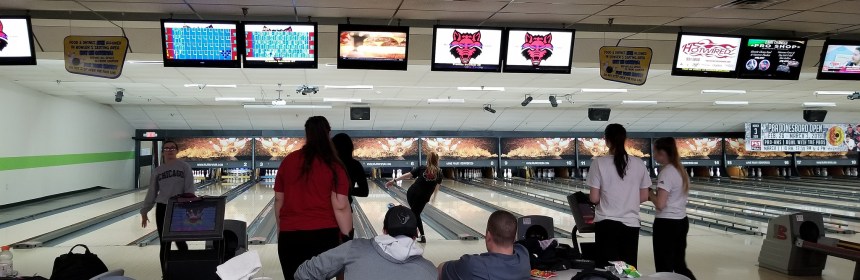
Editor’s Note: Featured photo shows head coach Justin Kostick (center, right) and assistant coach Tanner Seal (center, left) look on while the team practices. The Red Wolves practice at Hijinx Family Entertainment Center. (photo by Denton Postlewait)

A-State Grants Target Bike and Pedestrian Pathway

By Jessica Ladd
Delta Digital News Service

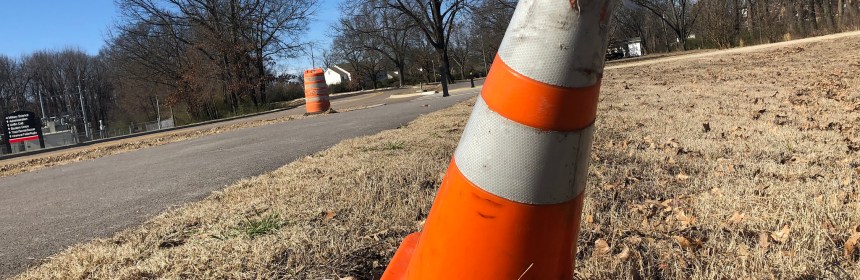
JONESBORO— A new bike and pedestrian pathway will be built on Arkansas State University’s campus. The pathway will improve safety and connectivity across campus.

This new pathway comes as a breath of fresh air to some university students.

A-State student Christina Huynh said, “It is a good thing since we did have that accident recently here. I think anything we do to help make things safer, will make things safer.”

She also said she won’t feel completely safe on campus until drivers start obeying the university’s traffic laws.

The latest pathway project consists of two phases. According to Bill Smith, the associate vice chancellor for marketing and communication at A-State, the university received a $450,000 grant from the Arkansas Department of Transportation for the first phase. ARDOT will provide an additional $370,000, possibly $390,000, for the second phase of the project.

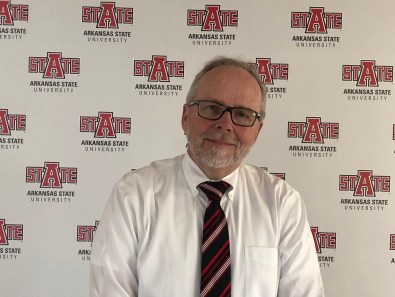
Bill Smith

Bill Smith, the associate vice chancellor for marketing and communication (photo by Jessica Ladd)

Phase one will create a multi-use path for pedestrians and bicycle riders along Aggie Road on the western side of campus. The path will also continue under Marion Berry Parkway along University Loop West. Construction on phase one began in February 2018 and finished in July 2018.

Phase two will extend the path from behind the library and continue east. It will then turn north to circle back to Aggie Road. Once completed, students will be able to make a loop around campus. The second phase is approaching the design and bid. The university hopes to start on phase two in the late spring and summer of this year. However, bid results and weather could cause delays.

Smith said these pathways are part of a master plan to link campus together. It will be easier for pedestrians and cyclist to get around. Eventually, the university wants to add more trails to connect the east side of campus to the farming area located on the other side of Red Wolf Boulevard. Smith said he hopes Jonesboro will connect its pedestrian pathways with A-State’s in the future. This will multiply the pathways for the city.

These grants come from the Transportation Alternatives Program. The money goes directly into the project and is used for engineering, materials and construction. These grants work as matching 80/20 grants: ARDOT will provide 80 percent of the funds and ASU will cover the other 20 percent. On the $450,000 dollar grant, ASU paid $120,000. The same arrangement will be applied to the grant for the second phase.

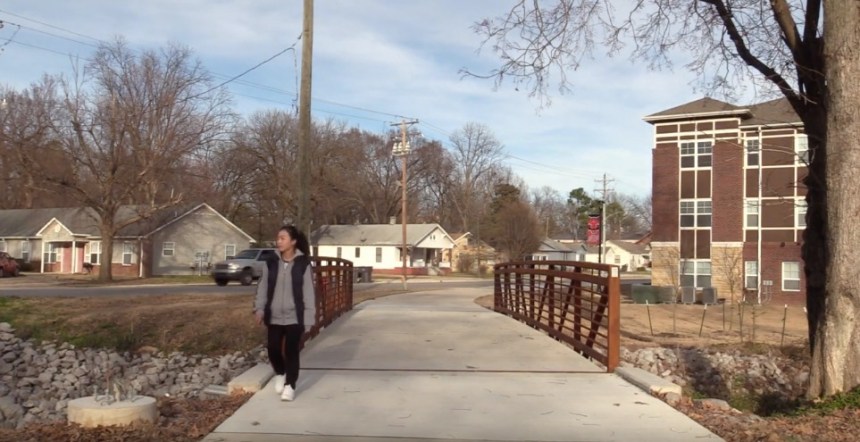
Aggie Road Bridge

Aggie Road Bridge — An Arkansas State University student uses the new portion of the pathway along Aggie Road. (photo by Jessica Ladd)

Aaron Vowell, a resident engineer for ARDOT, said his job is to oversee construction, bids to contractors and the building plans in Jonesboro. Every couple of weeks, he receives a payment request from the University. He then reviews it to ensure the work listed has been completed. Once he has inspected the request, he sends it on to the corporate office in Little Rock, where the grant process is handled.

Although the pathway isn’t completed, many students still enjoy it.

A-State student Latoya Taylor said, “I think it is a good project because you don’t want to be in the road so close to traffic,” she said.

The University is installing lights on the dark western side of campus along the completed portion of the path. Smith predicted the path will have more foot traffic then, especially at night. Smith said he knows what it is like to maneuver around campus without with pathway.

“I’ve lived west of campus and I ride to work almost every day,” he said. “Having that new path has allowed me to step off of the road and have fewer incidents with traffic.”

He said in the past, drivers have not been willing to give him 3 feet of the road. Smith said safety must be a top priority. Drivers must stop at crosswalks. Drivers should also pay attention to the speed limit. He urged pedestrians to make sure the driver sees them before crossing at a crosswalk; they should never assume a driver will see them and stop. Smith said the new pathway will be designed to give pedestrians the right of way with the streets it intersects.

Upcoming Release: Music to Motivate

by Marvin Davis
Delta Digital News Service

SHERWOOD — If your first love for something doesn’t work out, keep going until you find what works.

Marcus Tyler Williams always loved music but didn’t realize how much until his junior year of college.

“When I stopped playing basketball at Lyon College, I knew I wanted to be great in something else,” Williams said. “I used to freestyle all the time with my friends in high school but never realized how far I could go with it.”

Williams took his talent, his bachelor degree in mathematics and minor in economics to another level, and started his own art business called Urban Art Enterprise LLC.

“With this business, I host events to give exposure to local artists,” Williams said. “It ranges from music performances, listening and previewing parties for new music and also community events in which people get to know different artists on a personal level.”

More than just a business owner, Williams acts as manager, artist, producer and engineer.

His latest single project, called “F.A.I.T.H.,” will release this year. The personal project aims to motivate people.

“The ‘F.A.I.T.H.’ project was created to motivate and to reassure me that I’m on the right path,” Williams said. “Also, it was designed to make me focus and invest in a process that required me to trust wholeheartedly.”

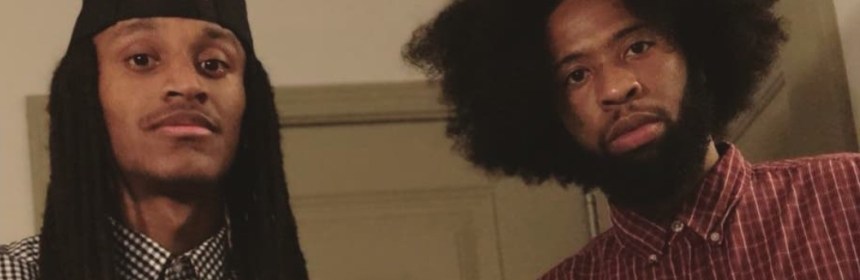
His first released project was “L.O.O.K.,” composed with Jaquan Terry in a group called “90z Made.” Each acronym holds a deeper meaning: “F.A.I.T.H.” stands for Focus and Invest the Heart and “L.O.O.K.” stands for Last of Our Kind.

“This project was created to establish that ’90z Made’ is two of the last true emcees in our generation. Our concept was to produce a contemporary piece of work that could resonate with all ages,” Terry said.

Williams’ cousin, Ken Seward, said, “I remember listening to Marcus play around with instruments at a young age and he was really good. Now, he has his business going and I can see him making a major impact.”

Meet the Unsung Heroes of A-State Baseball

By Denton Postlewait
Delta Digital News Service

JONESBORO — Baseball fields ignite nostalgia. The crisply painted lines, clean-cut outfield and raked dirt take anyone who has ever picked up a ball glove back in time.

Some people forget about the crew that puts it all together. Arkansas State baseball managers, aka the unsung heroes of the team. They put in hours behind the scenes to make sure the field and the team stay ready for game day.

“We’re normally here three or four hours before a game,” said Brandon Little, a sophomore manager from Pocahontas. “The first thing we do is batting practice. Then we put the bases in, drag and water the field, and bring out the baseballs for pregame and the game.”

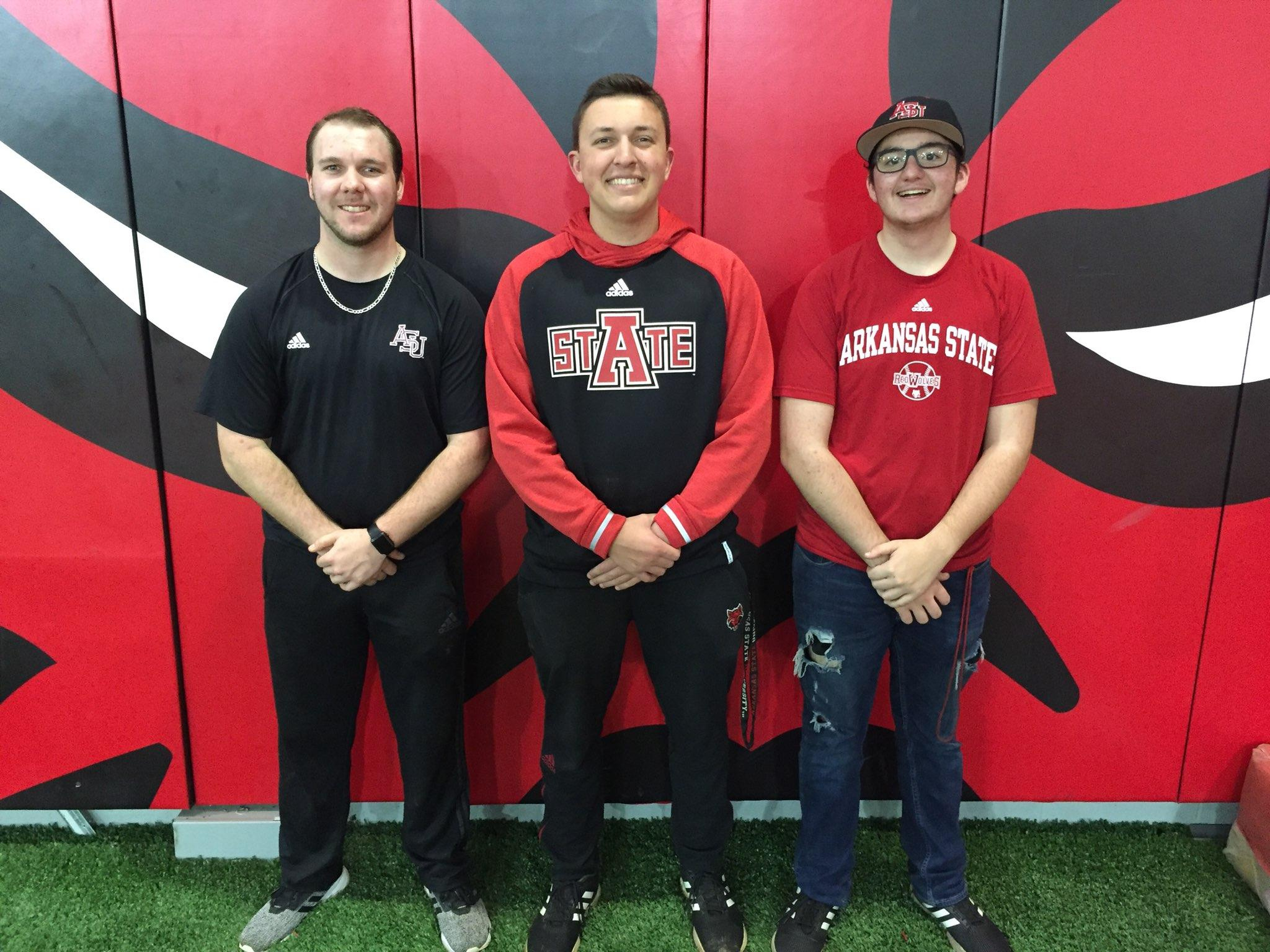
Little, along with Dylan Owens, a sophomore from Cabot and Tristan Thompson, a freshman from Pocahontas, make up the managers for the A-State Baseball team. They balance their school and social lives around a sport that they love. They do more than just make the field look pretty, though.

A-State baseball managers

A-State baseball managers (from left) Brandon Little, Dylan Owens and Tristan Thompson (Photo by Jesse Kutzke)

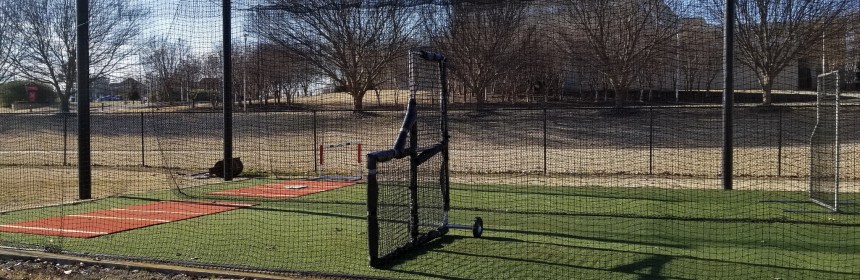
“We set up the L-Screens in the batting cages to protect the person running the drill. We set up the ‘Turtle’ for batting practice and our biggest job is making sure the infield is properly managed,” Owens said. The “Turtle” — a large, shell-like cage — does not allow foul balls to go up or outside of the batter’s box.

Another part of the managers’ job involves what Little called “dirt maintenance.” This entailed adding a substance to the field to absorb the excess water. However, if the field is extremely wet, they use another method.

“We have sponges … that’s fun. We love that,” he said.

Most of the time, the managers and players will tarp the field to make sure the dirt does not get soaked. The spring, also known as “tarp season” and the managers will tarp the field several times a week. Tarping is a team effort, especially when it rains a lot.

To get the tarp off the infield with water on it, the managers and players make a funnel. Players and managers drag the tarp and the water down the first base line. Once everyone is in position, they all hold the tarp up and the water runs down towards the drains behind home plate. Then, one person gets under the tarp and pushes up to get the water off the tarp. This responsibility goes to Noah Stone, aka “The Lion,” according to the managers.   

When the team travels, the managers do not get a break. They also travel with the team to away games to ensure the team can fully focus on the opponent. During home games, the managers also handle the opposing team’s laundry and they coordinate their weightlifting schedule on campus.

A lot of work goes into preparing everything, but the hardest part: laundry and “hula-hoeing.”

“Laundry takes the longest and it is the worst,” Thompson said. “Louisiana made me rewash their uniforms. They complained that it was wrinkled or something. Most of the time teams are not specific, so we do it the same way we maintain our uniforms. I guess they didn’t like it.”

Owens said hula-hoeing cuts weeds. According to www.planetnatural.com, the hula hoe “slices away weeds and other undesirable growth, without displacing topsoil.”

“If you go into the outfield, it’s a disaster because we weren’t here to maintain it during the break. It’s hours of work to get the weeds out,” he said.

Being a manager requires a lot of hard work and dedication. Little, Owens and Thompson said the best part of being a manager is being with the team.

“We’re all pretty good friends at this point. They don’t throw things at us too often,” he said. “They’re really good guys and it adds a lot to the job.”

Although the managers do not play, their love for the game keeps them close to the sport.

It may seem like the managers do a ton of work, but they love the sport. As the saying goes, “Do what you love and you’ll never work a day in your life.”  Laundry, hula-hoeing and waking up early for practice may tough, but the managers love America’s game. When driving past a baseball field, take a second and think about those who prepare it. Being a manager requires a balancing act, but A-State baseball would not be the same without theirs.

Bill Clinton Speaks at A-State

President Bill Clinton

by Chase Gage
Delta Digital News Service

JONESBORO – Former President Bill Clinton spoke to a near-capacity crowd at the Fowler Center Monday night. The man from Hope delivered a speech about hope for the future.

At a time when America is arguably more politically divided than ever, Clinton urged listeners to love one another like human beings, not opposition. He drove home the message of treating people like people and getting rid of resentment and anger towards others.

Arkansas State University Chancellor Kelly Damphousse introduced the 42nd president to approximately 950 people.

“If you live in resentment and anger, it disempowers you. You want to be empowered,” Clinton said. “You have to open your heart and ears before you can open new doors. You’ll waste a lot of your life living in resentment and anger.”

Clinton, founder of the Clinton Foundation, said the current political discourse does not lay the foundation for citizens to have the types of conversations they need to be having. Instead of discussing economic inequality and how to fix it, or the emergence of artificial intelligence (an advancement that may kill more jobs than it creates), people are more worried about tearing each other down.

He proposed Americans should be more concerned about their grandchildren’s future instead of winning the next fight on a television talk show. People in disagreement are still people, and sometimes that is forgotten.

Bryant Moy, a graduate political science student at Washington University in St. Louis, said before the event that he hoped to hear the former president speak on civil discourse in the United States. He got his wish.

“He talked about trying to treat people as people. You can still have these deeply held, strong beliefs and resentment, but you have to cooperate with one another. I loved it. It was exactly what I wanted,” Moy said after the event.

Kaylee Bauman, a medical student at New York Institute of Technology from Michigan, said the speech was refreshing.

“(Clinton) talked about bringing everyone together, and then seeing all the different types of people in the room, it was great. I wasn’t sure what to expect, but I thought his overall message was something that could apply to everyone in the room. I found it fascinating,” Bauman said.

President Bill Clinton

President Bill Clinton spoke for about an hour Feb. 11 to more than 900 people in Riceland Hall at Arkansas State University as part of the “Riceland Distinguished Presentation Series.” The 42nd U.S. President previously spoke at A-State on three different occasions. (Photos by Ammar Taqi)

Monday night was not the first time Clinton spoke in Jonesboro. He recounted the story of when he spoke at the Arkansas State University Commencement ceremony in the late 1970s while he was Attorney General of the state. Due to rainy conditions, the ceremony was moved into the field house, where Clinton cut his speech off after only six minutes due to the hot, humid conditions. He most recently visited the university during the 2014 election cycle while campaigning on behalf of Mike Ross for the Arkansas gubernatorial election. He also dedicated the Dean B. Ellis Library in 1995 while in office as president.

Clinton told many stories that showcased examples of people treating others with love and respect. One such story involved fellow former president, George W. Bush and how the duo was able to put partisanship aside to work on creating a better world for the American people. Another story told of how Clinton’s grandfather would give food to those in need. The differences between the two examples demonstrated how respect for others can work on any level, in any situation.

“If you want America to lead the world to a better and more peaceful place, we have to think about empowering people, not putting them down,” Clinton said. “This is not a (partisan) issue. This is not a racial issue. This is a challenge.”

His message of a hopeful tomorrow rang throughout the hour-long speech. The future is up for grabs, for whoever wants to take it.

“We all have our resentments and regrets, but all we really have is tomorrow. You only become old when the weight of all your yesterdays outweigh your hope for tomorrow,” Clinton said. “There will never be a time free of problems. We have possibilities, but you have to face them and the problems they present not with resentment, but with an open hand, a listening ear and a loving heart.”

Listen to the full speech, courtesy of KASU’s Johnathan Reaves:

Save Pets From Frigid Temps

By Chase Gage
Delta Digital News Service

JONESBORO – Frigid temperatures may be inconvenient for humans but pets have a tougher time combating the weather.

When temperatures plummet into the teens and single digits, commuters don extra layers of warm clothing such as scarves and mittens to stay warm. But pets do not have the same options.

The Humane Society changes much of its routine when temperatures get so harsh.

“It’s definitely an issue,” said Kelly Pickering, kennel manager at the NEA Humane Society. “On Jan. 31, it was 18 degrees with a windchill of 8, so we couldn’t even take out two rows of animals at a time. We would only take out about two dogs apiece, clean two kennels, get them dry and bring those two back in. They weren’t outside more than 15 minutes.”

Weather permitting, these animals typically stay outside from breakfast to lunch (around 1:30 p.m.) while their kennels get cleaned. The cold weather forces the process to speed up and keeps the animals caged longer than normal.

Some dogs have the luxury of taking human-like precautions, but they need a bit of assistance.

cagedPups

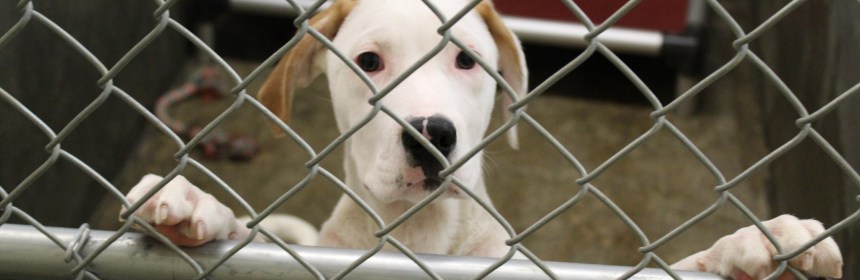
Caged puppies wanting attention during the polar vortex. Too young to be put with the general population, they got a cage all to themselves. (Photo by Chase Gage)

“With some of our smaller or malnutrition dogs, we put sweaters and jackets on them. I’ve never had a crew that likes to dress dogs up as much as our current crew. It’s not a chore to them. They thoroughly enjoy it,” Pickering said.

Homeless pets may be regulated during these conditions, but pets with homes face similar dangers. Depending on the breed of the dog, warm and cool temperatures will affect them differently.

“Any time the weather gets below freezing, there should be some serious consideration on bringing your dogs inside,” said Ancel Jines, a local dog trainer. “It varies based on what breed of dog you have and how acclimated it is to the weather.”

Jines said some breeds, such as huskies and German shepherds, have multi-layered coats that keep them warm during harsh conditions. However, dogs such as beagles and dachshunds have single-layered coats that aren’t much longer than a human eyelash. These animals struggle to stay warm in the cold, especially when it gets below freezing.

The weather itself is of great concern to pets, but diseases during cold weather may be more dangerous. The polar vortex itself may not cause direct harm to animals in the region, but its effects very well could.

“The key to animal health is cleanliness,”” Pickering said. “We have to be really cautious about overcrowding. When we have a large population and they’re not getting out and just being confined, that’s when you’re set up for an outbreak of disease. We just have to watch out for abnormal behavior. At the first sign of anything unusual we get them to our medical team.”

Melissa Grigsby, a veterinary kinesiologist at Hilltop Veterinary Hospital, said there have been no reported cases cold-related injury but claims the weather is still very much a concern.

“We haven’t had any specific cases recently (directly attributed to the cold weather). However, due to the rain and the cold, we have had a lot of parvo cases come up,” Grigsby said. “Just because we haven’t seen any cases yet doesn’t mean they’re not out there. We would worry about shelter, water being frozen, stuff like that if they’re outside.”

During harsh weather, make sure to take care of loved ones, especially the four-pawed kind that cannot care for themselves.