More than half of 18-24 year-olds in the United States live with their parents and will be counted in the 2020 Census, but the other 45% of young adults do not live with their parents which makes it harder to include them in the Census.
Many young and mobile people between the ages 18 and 24 are the youngest members of the millennial group or older members of Generation Z who were born after 1996.
Photo credit: Bullitt County Public Schools
More than 39% say they are not familiar with the 2020 Census and over 18% say they are unlikely to respond, according to the United States Census Bureau.
Demographer for the Arkansas Economic and Development Institute, Diego Caraballo, said “what you want to keep in mind is you’re going to be counted wherever you expect to be for most of the year.”
This can apply to college students who live in dorms on campus. They will still be counted through the University instead of their parents’ household.
The Census is more important than the young and mobile people realize because communities depend on it. The Census Bureau is recruiting applicants on college campuses across the United States to fill up 500,000 temporary positions to help count everyone in the country.
In regards to being counted in the Census, Caraballo said, “It helps everyone around you even if you feel it doesn’t do much for you personally.”
JONESBORO – Amid a global pandemic and the aftermath of a natural disaster, the city of Jonesboro had somewhat of a return to normalcy with a remote city council meeting Tuesday night.
The meeting was the first held since the state of Arkansas declared a national emergency regarding COVID-19, also known as the coronavirus. It was also the first meeting held since an EF3 tornado tore through Jonesboro on March 28.
“Before we get started, I’d like to take a moment to praise the people of Jonesboro and the workers for the City of Jonesboro. We’ve been through a lot as a citizenry and a government,” Jonesboro Mayor Harold Perrin said in his opening statement. “The citizens of Jonesboro have been strong and come to each other’s rescue. We are a loving people.”
The Jonesboro City Council held their meeting virtually amid the COVID-19 pandemic. The new format led to a unique viewer experience, though. it had its faults as well. Screenshot by Chase Gage.
It was far from a typical city council meeting, though, as the members were forced to meet online via video chat in response to social distancing policies in effect across the state and nation. The meeting was then broadcast on local television and Facebook Live so citizens could attend and participate from home.
Residents had several communication options for the meeting, including a special phone line and email address to contact as well as live comments on Facebook during the meeting.
The shift came with a handful of downfalls, as technical difficulties plagued some segments of the meeting. Resident participation was also relatively limited compared to in-person participation, but the council seemingly did the best they could with their available options.
“The coronavirus and tornado have created a new landscape, and our duty is to adjust. I ask for patience as we do so. This is not a new future, it is simply a temporary fix,” Perrin said on the shift to online meetings. “It isn’t going to be perfect. Any change this drastic is going to have glitches, so please be kind and patient.”
Councilman Gene Vance said several improvements needed to be made for the council to continue to hold online meetings, adding that he struggled to hear other members even with his volume cranked up.
Virtually all members of the council were adamant in praising the emergency response of both city employees and the public in the aftermath of the tornado that struck just over a week before the meeting. Miraculously, there were only 22 injuries and no deaths due to the storm.
“The citizens of Jonesboro have been strong and come to each other’s rescue. We are a loving people.”
Jonesboro Mayor Harold Perrin
Perhaps the most impactful topic of the night dealt with the mayor’s power to enact a city-wide curfew in times of declared state emergencies. Previously, a curfew could only be enacted for 48 before the city council had to meet to approve any extension.
However, the members voted unanimously to overturn that precedent, allowing the mayor to enact a curfew for up to 120 days — or until the next scheduled meeting — the maximum number of days allowed under state law.
As a direct result of the motion passing, Perrin will meet with city officials including Chief of Police Rick Elliot and Jonesboro Chief of Staff Mike Downing on Wednesday to iron out the details of a forthcoming curfew. Perrin said a curfew is “coming soon,” and that citizens should be prepared to follow it during the COVID-19 pandemic.
“I want everyone to wear a mask. Protect yourselves and your loved ones. This is no time to worry about appearances. You look better with a mask. Please help your city by being responsible,” Perrin said.
Ironically, the first order of business was to pass a motion allowing the online meeting to happen, overturning an in-person requirement in times of a state emergency. Of course, the motion passed unanimously.
Several other issues brought up were related to re-zoning, but most were postponed to be discussed at a later date. Councilman David McClain insisted suspending a vote on ORD-20:010 until citizens could participate in person to discuss the details.
Unlike typical meetings, resident interactions were very few throughout the evening. There was one call-in and only a handful of emails and Facebook comments.
The viewer count peaked around 100, but dipped as low as 50 viewers toward the end of the meeting, likely much lower than in-person attendance would have been under normal circumstances.
A decent number of comments related to how well the city has handled not one, but two emergency situations in the past month.
“I appreciate that the city is continuing to operate in this fashion. Different and dark times require creative solutions,” Jonesboro resident Scott McDaniel commented on the live stream. “Keep it up.”
JONESBORO – The Jonesboro city council showered the mayor, first responders and residences with praises in the wake of the EF-3 tornado and amid the COVID-19 outbreak.
The council held their first virtual meeting on April 7, 2020, in order to comply with social distancing guidelines. Councilmembers and residents alike shared their praises to the Jonesboro community for its resilience in these unprecedented times.
Councilmember John Street said, “The response from our neighbors in Northeast Arkansas was just unbelievable, overwhelming, and the spirit of the people in this city is not to be matched anywhere.”
Mayor Herald Perrin said in his mayor’s report that he has spoken with AML insurance adjusters about the condition of city property. It was determined that the flight station building, several traffic signals and a few vehicles were considered “total losses.”
The council along with the mayor’s office continue to work to provide support for residents following the March 28 tornado.
“There are a few homes in one section of the tornado area that did not have insurance on their homes, and we will be picking that debris up as well for public safety, peace, safety and health,” Perrin said. “Also, when they get ready to build and come back on that there will be no fee for the permits to get going on the property.”
The Arkansas Department of Environmental Quality approved a new landfill site on Strawfloor Road to help the city dispose of the debris from the storm. Jonesboro will be receiving $362,524 from the CARE Act, and Perrin has asked the Arkansas Economic Development Commission for special consideration in regard to their $7.8 million fund for emergency services.
Councilmember David McClain said, “The Saturday that the tornado hit, our neighborhood was affected drastically, am I am truly grateful for everything you (Perrin) have helped us with as far as getting extra patrols out here and whatever we asked. I think you’ve helped make us feel safe.”
Also discussed in the meeting was the rezoning of 400 E. Highland in order to build a new hardware store to be built by Ditta Enterprises. There had been opposition from the public in previous council meetings, but the parties involved came to a compromise, and many from the neighborhood expressed support for the new store.
Carolyn Ponce, a resident of the neighborhood phoned in during the meeting to share her thoughts.
She said, “I think it’s wonderful that Jonesboro is trying to bring more small businesses to the town and not big box stores, and would absolutely love to see a smaller, home business in the Highland area.”
After some discussion, the amendment to the ordinance passed unanimously.
Other issues discussed included:
Condemning the property at 304 Warner St.
The purchase of the land at 409 N. Fisher St. from the Arkansas State Land Commissioner for $2,243.36 plus closing costs
Postponing the vote on the rezoning of 1130 Greensboro Rd. for 60 days as to accommodate public comments
JONESBORO – The Jonesboro City Council passed an ordinance April 7, allowing Mayor Harold Perrin to impose a curfew of no longer than 120 days in response to the COVID -19 pandemic.
Perrin chaired the meeting with council members participating via webcam. Accompanied by City Attorney Carol Duncan, they both wore filtered face masks and practiced social distancing by seating several feet away from each other.
“This is not a time to look good, you just look good in your masks,” Mayor Perrin said as he began the meeting.
The agenda for the meeting did not contain any special presentation as members voted to postpone several items to a time when the council would meet physically.
Several members also complained that the audio system wasn’t clear enough to allow proper participation via webcam.
Dr. Charles Coleman requested the council postpone to the first meeting in June, a proposal to change the single-family residential to family residential, on a property located at 1130 Jonesboro Rd. Coleman said the postponement would allow several members of the public to physically be present at the meeting to participate in the discussion.
Members also voted to postpone other zoning codes, including the ordinance to amend Section 117 of the zoning code to the next city council meeting.
Some of the items the council passed included a unanimous vote to purchase a property at 409 North Fisher St. at $2,243 plus regular closing cost. A unanimous vote was attained to condemn property at 304 Walnut St.
Also, an ordinance to place traffic signals at determined locations as determined by the Traffic Control Commission.
Mayor Perrin said, so far, the city’s revenue exceeded expenditure, but because of the COVID-19 and the Tornado that recently swept the city, they are watching the finances for any significant deviation.
He said the city received $7.8 million for emergency services for COVID-19 and tornado damage relief and because a few homes in tornado affected areas did not have insurance, the city will clear the debris but will charge a fee for re-building.
Councilwoman Anne Williams commended KAIT 8 News for warning the public in time about the tornado.
Councilmen John Street and Joe Hafner thanked the mayor, police department and fire department for their swift action during the tornado.
“You did your best under the circumstances, no deaths,” Street said to Mayor Perrin.
Street and Hafner both said the hand of God played a role in saving the lives and properties during the tornado.
“People as far as Conway and Little Rock came to help. I see the hand of God in this- everybody, hang in there,” Hafner said.
Councilman David McClain also thanked JPD for keeping patrol around the community to ensure no looting of property.
Perrin asked members of the public to send in their comments via email through councilcomment@jonesboro.org, via phone (870) 336 7248 or via Facebook live on the city’s Facebook page.
Members of the public participated by sending messages via email and Facebook live to the meeting.
Dr. Paul Vellozo, a physician in the Jonesboro area, requested the council pass a resolution for food handlers and grocery workers to wear masks.
Several members of the public sent in requests. A woman requested to have all churches closed because a particular church in her neighborhood was still holding meetings and posing a threat to her safety. Another complained that the park equipment and basketball court were still open. Someone requested the city council to close child-care centers during the pandemic because the centers put the health of children and workers at risk for lack of social distancing and a physician requested that all Jonesboro residents wear masks in public.
The North East Arkansas Bicycle Coalition said there is an increase in the number of cyclists and pedestrians during the pandemic and requested the public through the council to increase public outreach to motorists to be aware of cyclists and pedestrians using roads.
JONESBORO –The Jonesboro City Council met April 7 in remote fashion during a time of uncertainty due to COVID-19 and the city is still healing after a tornado swept through the center of Jonesboro March 28.
The meeting diverted from the original agenda right at the start as resolution 20:044 had to be approved for the meeting to officially be able to take place remotely. Since restrictions surrounding COVID-19 limits the number of people that can be in one place, the resolution was proposed and passed.
Among many stipulations in the resolution included that members on the council must conduct meetings in ways where the media can still view due to freedom of information laws, electronic means can be used for video call or chat that is recordable and audible to all parties watching and participating in the meeting, and the mayor, city clerk, city attorney and commission chair must be physically present at the meeting place where it is being held.
Jonesboro Mayor Harold Perrin started the meeting by complementing first responders, the community and city employees as wells as reminding citizens to follow social distancing and health guidelines.
“We’ve been through a lot,” Perrin said. “Our employees in all of our departments deserve your appreciation. They have worked tirelessly and hours with a remarkable attitude. Jonesboro residents have been strong and came to one other’s rescue. We are definitely a loving people in Jonesboro. The coronavirus and tornado have created a new landscape. Our duty is to adjust. I ask for patience as we adjust with each other. This is not a new future, it is simply a temporary fix. So please be kind and be patient. We are doing the work of the city and we cannot stand still. Life doesn’t work that way. But we are not weak. COVID and the other obstacles that are ahead of us, we must be smart, and we will definitely work together.”
Perrin stressed the importance of wearing a mask when out in public.
“This is no time to worry about appearances,” Perrin said. “You look better with a mask.”
One issue on the agenda caused significant debate on the night, Ordinance 20:011.
The ordinance, submitted by Ditta Enterprises, proposed the rezoning of an area at 400 E. Highland Dr. The Ditta family wants to build a hardware store in the area. The hardware store received public support, with only a single dissent.
Janet Gehring said during a past meeting that an ordinance had been passed in 2007 that stated no business could ever be built on that plot of land except for a bank. The plot of land is in a neighborhood surrounded by residents. Gehring said she would not want to live next to a hardware store and asked what was the point of making an ordinance if it was just going to be changed later.
“And, I think, I might ask you all, would you like to live by a hardware store and call that your neighbor?” Gehring asked. “Mr. Rogers probably would. Mr. Rogers probably would say won’t you be my neighbor, but I would say, please don’t be my neighbor. Please don’t be my neighbor.”
It was pointed out that the ordinance had been passed in 2007 to stop a 24/7 fast food restaurant or convenience store from opening at the time and was argued that such an establishment would cause disturbances to residents in the neighborhood being that it would be open at all times of the night as well as the day.
It was also argued at the time a convenience store on Highland Drive would mean children would have to cross a major road to go to the restaurant or store and therefore could easily be struck by traffic.
However, it was argued at the meeting that zoning ordinances are not meant to be frozen in time and can change with the times of the city. The original ordinance was not meant to stop a local, family-run hardware store from being installed in the area.
According to Jim Gramling of Gramling Law Firm who represents Ditta enterprises, the Ditta family hosted a couple of neighborhood meetings where it invited residents who lived within 400 feet of the planned site to come and voice their objections to the family.
According to Gramling, the Ditta family made many adjustments from feedback at the first meeting and hosted a second meeting.
The ordinance was passed to allow rezoning.
Technical difficulties during the meeting along with lag times in public comment through social media, phone lines and email provided some challenges for city officials.
“It’s not going to be perfect,” Perrin said. “Any change this drastic is going to have glitches.”
JONESBORO – The Jonesboro City Council motioned to postpone a zoning request at 1130 Greensboro Rd. on April 7 and left an African-American entrepreneur waiting another 60 days for his project to get the “green light.”
The rezoning request, made by Jackson’s Construction CEO and licensed realtor Rickey Jackson, managed to garner 86 signatures on a petition causing the delay according to Councilman Charles Coleman.
Coleman said the citizens on the petition do not have any problem with the request, but they want to appear in person to voice public opinions on the matter.
“When it comes to things like that, I would rather people be in front of me to voice their opinion. If I was in that area, I would feel the same way,” Coleman said. “I’m very impressed by Mr. Jackson trying to do something with the area. I understand, but I’m only going to vote with my conscience.”
Councilman Chris Moore said he had also received considerable objections to the request. He moved to second the motion of postponement for 60 days. Restrictions because of the COVID-19 virus pandemic prevented the public from attending the meeting in-person at the time.
The council received a zoning ordinance map amendment application for the 8.84 acres of land in December. Before the application, the property sat vacant for 10 years.
Jackson has worked as a licensed residential and commercial contractor since 2006, building duplexes for private owners and investors for years. He currently holds contracts with the highway department and has plans to develop a new roundabout connecting Harrisburg and Caraway Roads.
The first property solely owned and developed by Jackson, at 1130 Greensboro Rd., is five minutes away from Arkansas State University.
“Instead of apartments, I want to build stand-alone homes that serve single individuals or small families. I only want to place 41 homes in the area. I could go up to 53, but I do not want to congest the area. I’m only asking to build variant home sizes. I only want to help the area, not hurt the area,” Jackson said.
Each all electric unit in the 41-unit housing complex will range from 1,000 to 1,300 square feet. Some of the units will have 3 bedrooms, 2 bathrooms and a garage. Fencing will be put up for privacy in backyards.
The rental cost with utilities could be between $800 and $1,000, but nothing has been set in stone. Jackson plans to break ground as soon as rezoning is approved at the third reading by city council.
“I’ll abide by what the city council decides and take it from there. It is setting me back, but I am an entrepreneur.”
POCAHONTAS – The Pocahontas School District to close March 17, amid fears of the Covid-19 catching the students, faculty and staff.
“The division of Elementary and Secondary Education instructed the Pocahontas School District to close beginning Tuesday, March 17 to Friday, March 27,” the Superintendent, Jerry Martens, said on the school district website.
The closure includes all academic and extracurricular activities.
So far, no report of anyone testing positive for coronavirus reported in Pocahontas.
The school gave the students Alternative Methods of Instruction (AMI) packages to guide in their studies at home.
Martens said the school would resume classes Monday, March 30.
“No student is allowed on campus for any reason as per the request of the commissioner of education and the governor of Arkansas,” Martens said.
He said students would be able to contact their teachers through email for questions concerning AMI assignments.
POCAHONTAS – The demographic in Pocahontas has changed tremendously in the past five years, as new businesses mushroom to cater to a growing populace of diverse cultures.
Until 2016, the town consisted of 93.6% Caucasian and 0.0% Pacific Islander. In 2015 plans to construct a chicken plant in Pocahontas began, setting in motion the wheel for economic growth the town currently enjoys.
In the beginning, many locals protested the construction of the chicken plant claiming it would open the town to foreigners. Local business owners feared it would cause minimum wage to rise, posing competition for the limited workforce. The city council went through great lengths to educate the locals about diversity and tolerance and how beneficial the chicken plant would be to the town’s economy. After several town hall meetings to convince the locals and business owners, Peco, the chicken processing plant, finally opened its doors in the Spring of 2016. Located along Highway 67 at the border of downtown Pocahontas and Lawrence County.
“Since Peco opened in 2016, our company has recruited 3,879 workers,” said Joie Saienni, the branch manager of Onin Staffing Company that recruits staff for Peco.
The plant hired many locals from management staff to track drivers and sanitation workers. Many locals found jobs in the hatchery, live processing, de-bone unit, evisceration unit and packaging section in quality assurance department, raising the local hourly wages from a minimum of $8.25 to $22 an hour for those working in the live processing.
Initially, the plant hired only locals from Pocahontas and nearby towns within Randolph and Lawrence Counties, but have since replaced them with workers from as far as the Marshall Island, in the Pacific.
With the opening of Peco, the demographic of Pocahontas began to change. The 2010 census shows a population of 6,608, and as of July 2018, the population had risen to 6,644. The 2020 census will tell how much the number has grown since. However, evidence shows a shift in the race composition and growth in new businesses. From 93.6% white, consisting of an older generation above 18 years old, according to the 2010 census, to young Micronesian families from the Marshall Islands.
Many Marshallese have enrolled their children in the Pocahontas Public School system. The superintendent of the Pocahontas School District, Jerry Martens, said Pocahontas School District has 250 new pupils from the Marshall Island.
In 2017 the Pocahontas School District began plans to build a new elementary school to cater to the growing population. The former Pocahontas School District Superintendent Daryl Blaxton predicted in 2017 a rise in the number of new students from 200 – 500 students by 2018. The new elementary school project is underway.
Because of the population shift, several new businesses mushroomed, adding to the growth of the city’s economy.
The city reported steady growth in the past few years with 2019, seeing a rise in revenue of 11%.
Paula Thorpe, who works for the Pocahontas Water and Sewer Company, said that in the past five years, she saw a rise in new water customers from 440 in 2015 to 500 in 2019.
Several businesses, including the grocery chain store Harps, opened in Feb. 15, 2017, giving competition to Walmart Superstore. Harps added to its services, a butchery, providing custom beef cuts and pork cuts.
Soon after the construction of Harps grocery store and a gas station was completed, the First National Bank built a second branch next to Harps, along Highland Boulevard, offering banking opportunities to newcomers and new businesses.
Among its customers is Herman Lopez, who owns a Mexican restaurant in Pocahontas. He has been through the lows of business. A shoe factory, which was a primary employer in the city outsourced when the government signed NAFTA, and with its move, most of the mom and pop businesses in town died. The town square had been left with a few stores as most shops closed down. For more than seven years, Lopez runs his Mexican restaurant, one of the only two Mexican restaurants in town.
Two years ago, he expanded his business, opening a mini-market grocery adjacent to his restaurant to cater to the needs of the Marshallese customers who have moved in town.
The mini-market called Mercadito Latino contains exotic food ranging from Fufu flour-a special kind of flour made from Plantain or Cassava to potteries and house deco. Lopez imports his groceries from far and wide, including Mexico. Lopez says business is booming.
Across the road from Lopez’s store, a new convenience chain store, Jordan’s Kwik Stop 52, a gas station and a travel center opened November 2019. Adding to the growth of the economy of the city. Jordan’s Travel Center is the only travel center in Randolph County along Highway 67.
With many new people in town from different places, the city, which was within a dry county for a good number of years, finally managed to gather enough votes to pass a liquor ordinance. And, as from fall 2019, Walmart, the biggest supermarket in town, began stocking liquor. Pocahontas has since seen its first bar in many years. Located across the road from the Randolph County Chamber of Commerce.
The city has also started work in 2018 to expand its court and jail size.
With the progress the city made due to the change in demographic, there are fears the scourge of the coronavirus outbreak may pose significant setbacks to the progress made over the past few years. But there is faith in the city’s capacity to handle the situation, especially with the merger of St. Bernards Medical Center and the Five Rivers Medical Center in Pocahontas in 2019 to improve services.
JONESBORO — The City of Jonesboro held a joint meeting with Suddenlink Thursday night to address numerous complaints by citizens. The St. Bernards Auditorium was at capacity; in fact, it was standing-room-only for disgruntled residents.
Hundreds of Jonesboro residents showed up to voice their complaints to media giant Suddenlink. Complaints ranged from wrongful charges to lack of competent service and were never in short supply.
“Our company has not delivered as it should. I want to apologize that it’s come to this. The crowd is evidence of how serious it is,” Brad Ayers — senior director of governmental affairs for Altice USA, the company that owns Suddenlink — said.
Hundreds filled the St. Bernard’s Auditorium for the meeting. Photo by Chase Gage.
Representatives from both Jonesboro and Suddenlink were available from 6 p.m. to 8 p.m. to answer questions and complaints submitted by customers. Ayers “promised” the company would address every complaint “within a week” of the meeting. Jonesboro’s communications director Bill Campbell read several of the complaints to the crowd.
The majority of the meeting consisted of Suddenlink representatives attempting to answer specific questions by residents, though they often received “corporate” answers instead of legitimate solutions. The crowd tried their best not to let the company off the hook.
Perhaps the loudest reaction of the night came when the company reluctantly revealed one of their call centers was located in South Africa; multiple complaints included call center employees not speaking fluent English.
“I can never get a real person on the phone, and when I do, they’re foreign and I can’t understand them,” Campbell read from a submitted complaint.
Further unrest ensued when a customer proclaimed “if you’re billing for services that aren’t provided, that’s a problem.” The statement was met with applause and a very audible “amen” from the back of the room.
“I’ve gotten your calls and emails. This (crowd) is evidence of what’s going on.” – Jonesboro Mayor Harold Perrin
State Senator John Cooper was in attendance as well to address his constituents and their frustrations.
“It looks to me like you’re trying to handle this with management. Personally, I would like to see highly trained people here to take care of this. It’s probably a little bigger than what you have here at this meeting tonight,” Cooper said to the Suddenlink representatives.
Cooper suggested a “task force” approach to solving the problems Jonesboro residents are facing.
“You’re welcome to contact me at any time over these issues. I will work with this company to improve the service,” Cooper said. Cooper can be contacted by phone at 870-761-0130 or by email at john.cooper@senate.ar.gov.
An upset customer voiced their opinion on Suddenlink during the meeting Thursday night. Photo by Chase Gage.
Jonesboro Mayor Harold Perrin arranged the town-hall-style meeting after a Nov. 7 meeting with Suddenlink representatives. Prior to the initial meeting, Perrin receiving numerous calls and emails complaining about the company and “immediately” got on the phone to fix them. Perrin assured citizens that their voices were being heard and their issues would be addressed.
Perrin also made sure to point out Suddenlink does not have a franchise with the City of Jonesboro and that any claims otherwise are misinformation. Instead, Suddenlink has a franchise with the state of Arkansas. There are multiple cable and internet providers in the city, though Suddenlink serves the majority of the area.
“Send any unanswered questions to my office. This is a serious issue we need to resolve,” Jonesboro Mayor Harold Perrin said to open the meeting. “I’ve gotten your calls and emails. This (crowd) is evidence of what’s going on.”
The Jonesboro Mayor’s Office is located at 300 S. Church St. and can be contacted by phone at 870-932-1052 and via email at hperrin@jonesboro.org.
In the end, the meeting did little to resolve any issues despite the best efforts of the Suddenlink representatives. However, if their promise is fulfilled, the residents of Jonesboro will be taken care of in the near future.
“We’ve heard you loud and clear,” Ayers said in his closing statement. Whether or not they listened, though, is yet to be determined.
POCAHONTAS – The school board of the Pocahontas School District voted March 16, to open a new checking account for the new elementary school amid reports of fraudulent activity on the current checking account.
“There has not been any money lost by the district at this time, Jerry Martens, the superintendent said.
The board is yet to file a police report as per the audit request. Martens said the bank suggested the board close the current account and open a new one. The bank also required minutes of the school board meeting approving the changes to open a new account.
During the executive session, the six- member-board agreed to increase the grade 7 cheerleader stipend to $1538, paid in the remainder of the 2019-2020 school year.
The board hired Amy Story as grade 7 cheer sponsor, Junior assistant cheer sponsor and senior citizen cheer sponsor for a stipend of $1400 for the school year 2020-2021.
The board also voted to hire a new cafeteria worker for the Junior high.
On a separate note, Martens said a couple of boys requested to transfer from Pocahontas School District to Sloan Hendricks School District.
He told the board, the Sloan Hendricks superintendent declined the request saying, the school would not be able to accommodate the boys because grade 9 is full and he would have to hire a new teacher should he take the boys.
JONESBORO – The U.S. Census has occurred without fail since 1790 despite obstacles like war, natural disaster, and now, a pandemic.
The United States conducts a census every 10 years to get an accurate count of residents. In 2020, it is once again time for gather information from around the nation.
Article I, Section 2 of the United States Constitution mandates the count and legally requires residents in all 50 states and five territories to respond. The U.S. Census Bureau makes it fairly simple to fulfill the requirement.
According to the Bureau’s website, invitations to respond have already been sent to homes around the country. This year, anyone can respond by mail, phone or online by the April 1 deadline. After that, census takers may be dispatched to collect answers.
The survey asks a few simple questions about who lives in the home and how they are related as well as their races and sexes. There is no question about American citizenship.
These questions may seem simple to some, but Kade Holliday, Craighead County clerk, said they hold a great importance to the city and county.
“The U.S. Census is one of the biggest ways that federal money is dispersed out,” Holliday said. “You want the most people to be counted so that your area gets more of those tax dollars.”
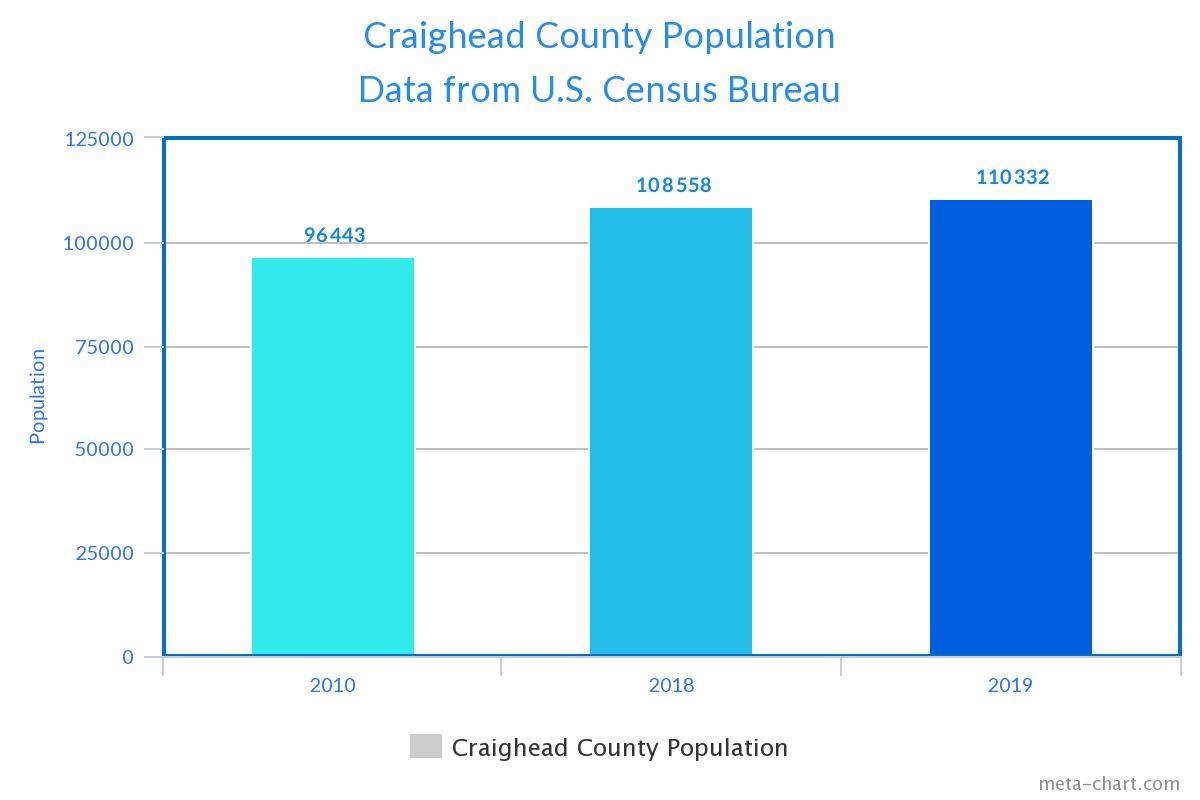
Holliday said because Jonesboro experienced a population boom since the last census in 2010, the city can expect a significant jump in federal funds, and that money will be used to build parks, bridges and roads as well as add to the police, fire and sanitation departments.
An accurate count is also important for elected officials. Shifts in population or growth can significantly change areas they represent.
“Let’s say there’s a situation where in Arkansas we picked up a fifth (congressman), or we lost one because the population went up so greatly in another part of the country. We would have to redraw the lines to create those districts to make sure they were equal in population, so one district doesn’t have more people in it than another,” Holliday said.
While some may be hesitant to give information to a government agency, Title 13 of the U.S. Code strictly prohibits the Census Bureau from sharing personal information. Responses can only be used to produce statistics, and no information can be used against the responder. The Supreme Court has even ruled that the Patriot Act does not override the law of confidentiality on the census, and addresses cannot be discovered through the Freedom of Information Act.
JONESBORO – With the 2020 census on the horizon, the Hispanic community faces an ever present and mounting number of challenges while trying to get as many people to complete the census as possible.
Challenges like technological issues, misconceptions, the political climate and the coronavirus all represent a hurdle for the Hispanic community, said Gina Gomez, executive director of the Hispanic Center in Jonesboro.
Most of these challenges were expected, but the coronavirus situation presented new challenges and dampened plans that Gomez and others had been working on for a while.
“Even though we have been planning this work with the census for months now, we didn’t expect this was going to happen,” Gomez. “Every activity that we had planned, like door-to-door canvassing and going out to events where we were going to promote the census have been canceled. That’s a big challenge. Right now we are looking into ways we can continue promoting the census using online resources and social media.”
Gomez emphasized in the current political climate there are many misconceptions on what will be done with the information given by families in the census. The community is working on educating families that information given will not be used against them or given to law enforcement agencies and informants.
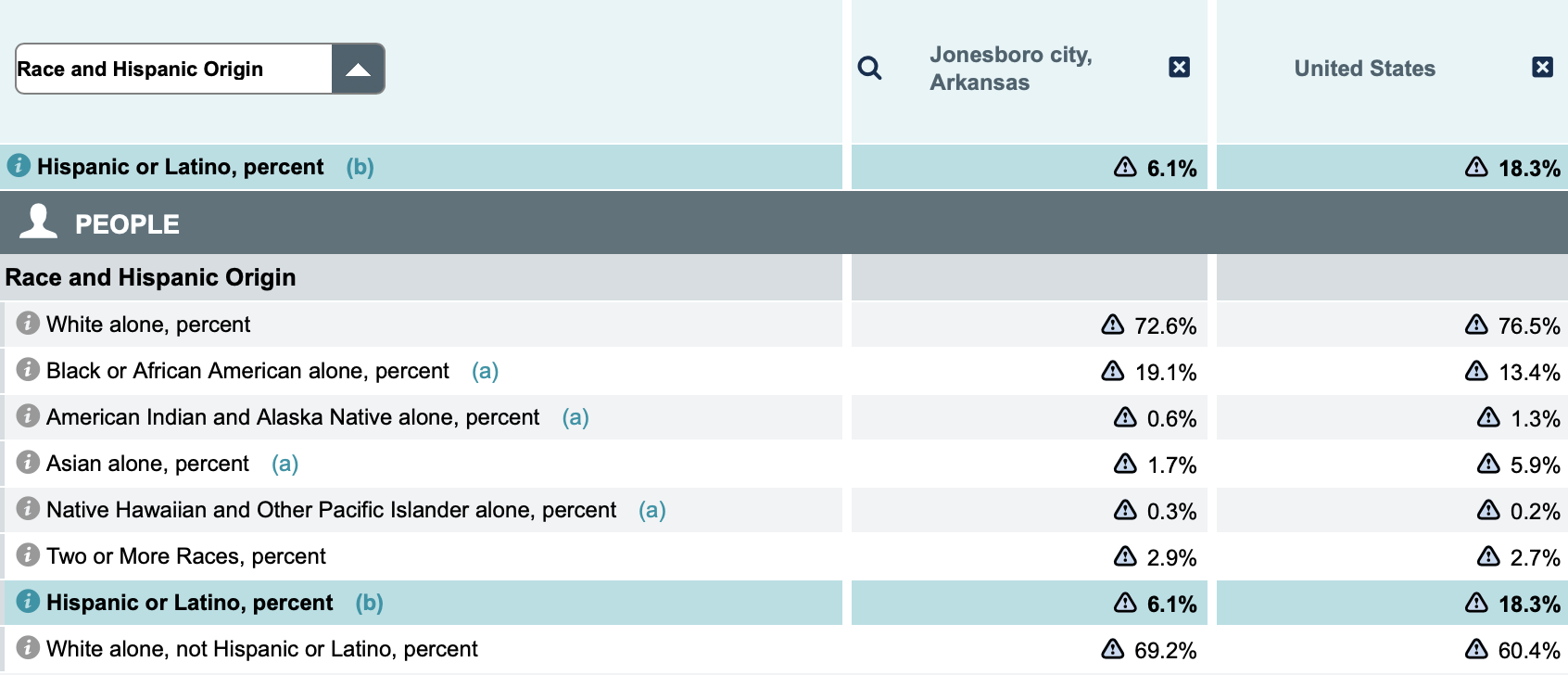
This graphic from Census.gov shows the percentages of various ethnic groups in Jonesboro and the United States.
“Our people are afraid to provide information to the census,” Gomez said. “There’s been an educational phase where we have been trying to inform people about what the census is, how the census impacts them and also that there is not any risk by providing the information.”
According to the census, counting children is a tough challenge for all families, no matter what ethnicity or race.
“Children under 5 years old are among population groups historically undercounted in the census,” a Census Bureau press release said.
Gomez said counting children in Hispanic families is a problem too. Gomez highlighted that many families completed a census in their home country, but once these families move to the United States they question whether they need to do the census or not.
“Many families don’t understand what the impact the census has on your family or kids,” Gomez said. “If they don’t see the importance of bringing those funds to our city in order to have better schools, access to healthcare providers, improving our roads, it’s difficult to have people participating. A lot of this is education related. We need to educate our community.”
This is the first year families can complete the census online. This makes it easier on some, but can also be a problem for others.
“For some of our families, they don’t have computer access, online access, they don’t have internet or they just don’t have the knowledge of how to do it,” Gomez said. “They can do it on a computer, an iPad or cellphone. It’s a little complicated for some of our people, especially for ones living in more rural areas. That’s one of the areas that we as the Hispanic Center were trying to work really hard on.”
With the coronavirus dampening many ways to advertise the census, Gomez and the community have put a lot of emphasis on social media. Gomez noted just how important it is for Hispanic families to do the census as those families will see benefits moving forward.
“We hope by demonstrating the number of Hispanics we have in the area and in general the state, because we are part of the state coalition, we’ll be able to assure based on the percentage of Hispanics there are specific needs to target this minority in Arkansas by providing language services when it comes to healthcare or schools,” Gomez said. “But, if we are not able to demonstrate by how many people we have, the need will not be as evident even though we have the people here.”
The coronavirus was not the only thing that affected the push towards the census. On March 28, an EF-3 tornado tore through Jonesboro. Homes and businesses were destroyed throughout the city.
“Now, more than ever, we need to bring funds to our city to help rebuild it,” a post on the Hispanic Center’s Facebook said. “You can help us with this, completing Census 2020.”
Gomez worked with the Hispanic community in 2010 to complete the census but she said then the effort was not as widespread and did not have as many people involved.
“In 2010 Arkansas was really undercounted,” Gomez said. “We want to assure we are counting as many people as we can around the state this time so we are not letting those funds go.”
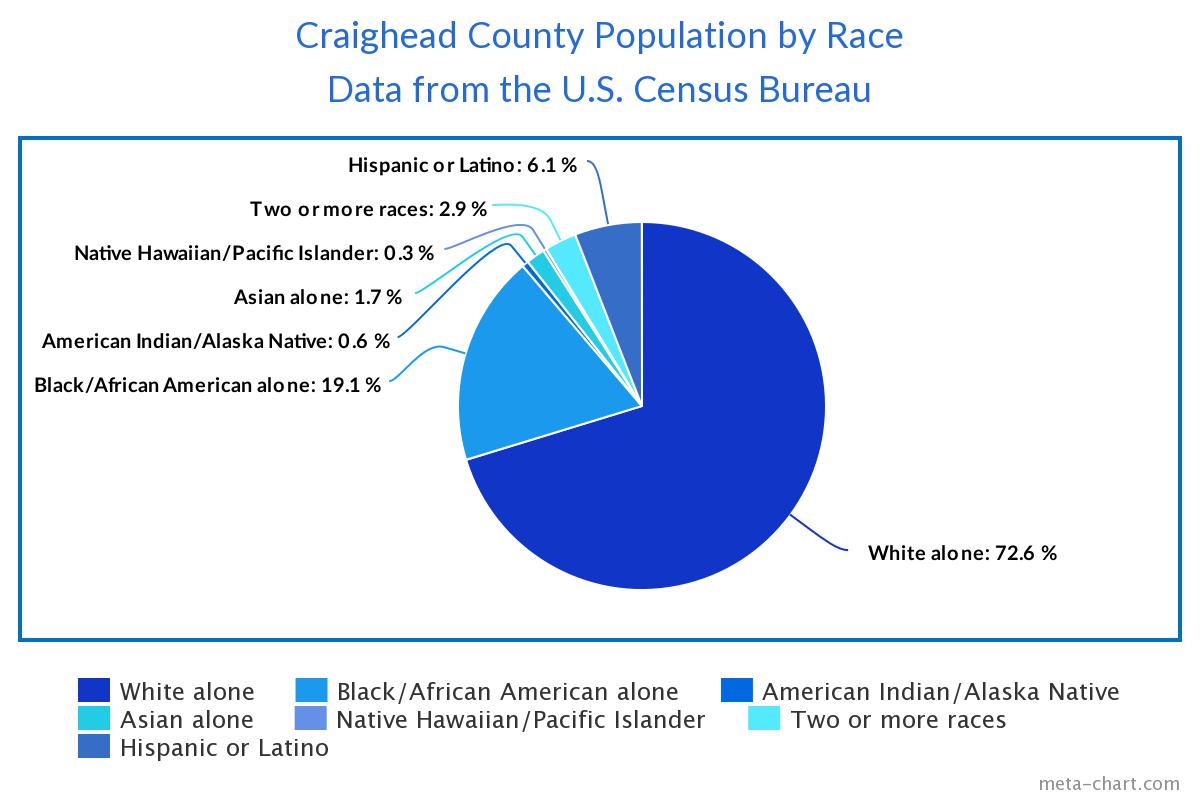
According to the census, the Hispanic population makes up an estimated 6.1% of the total population in Jonesboro. The estimated total population in Jonesboro reads 76,990.
This time around the Hispanic Center created its own campaign with the city of Jonesboro and also created its own logo. There is also a state coalition called Arkansas Counts to spread the word about the census and efforts surrounding the census are more structured now.
“When I moved here to this country, I didn’t understand why it was that important for me to fill out the census,” Gomez said. “But now that I have been educated on the topic I can educate others.”
Editor’s Note: Feature photo courtesy of the Jonesboro Hispanic Center: Members of the Hispanic Center and Jonesboro community work together to spread the message about the 2020 census.