Tag Archives: Arkansas State University

Future Housing Scholarships at Arkansas State Being Explored By Student Government Association

Story by DDNS Reporters Shailey Wooldridge and Jerry Burton

Photo by Jerry Don Burton, DDNS

In its final meeting of the semester, the Student Government Association (SGA) reflected on the work accomplished, including passing a resolution to create a committee for a housing scholarship at the Nov. 20, meeting

Micayla McGowen, SGA president and a senior marketing major from East End, Arkansas, said she is very thankful that they are finally having a good conversation about the housing scholarship.

Louis Gonzalez, a sophomore biology major from Kansas City, Missouri, said the recently passed housing scholarship committee resolution has the potential to help many people.

“I fought so hard for just the scholarship committee. I would say that out of everything I’ve done this semester, it is probably the most rewarding one because I can continue to work with that, and it can turn out to be something big,” Gonzalez said.

McGowen said SGA is still determining the right direction for the housing scholarship, but she hopes students will see more progress and impact from it next semester.

Gonzalez said he plans to continue working on the housing scholarship during the Spring semester.

“If I don’t do it, nobody else will, so I’m most definitely behind that. I’m rooting for that so it doesn’t get abolished,” Gonzalez said.

Gonzalez said students can expect progress when it comes to the housing scholarship next semester, but it probably wouldn’t be active for another year because there is a lot of foundational work that needs to be put in.

Gonzalez said the next steps will be finding donors, forming a scholarship committee, and adding a subsection on the SGA website with scholarship guidelines. He said there is no concrete plan yet on how to get donors for the scholarship, and some senators still oppose the scholarship committee.

“It’s gonna take some time to build up some confidence from the senate and the senators to have a functioning scholarship committee,” Gonzalez said. “If I’m not working on it constantly and making consistent progress, I believe it might end up like the previous housing scholarship, abolished.”

Micayla McGowen, president of SGA and a senior marketing major from East End, Arkansas, said the resolution passing is excellent news because it means SGA is moving in the right direction to make a substantial impact.

“Considering that this is something that has started, I want to say, fall of 2023, this is honestly fantastic,” McGowen said. “It’s getting to a point where we’re going to make some progress, and there’s going to be something that actually happens now.”

Gonzalez said he thinks the reason the resolution didn’t pass unanimously is that some senators believe the scholarship will be detrimental. He said this is because the former housing scholarship resolution proposed pulling from the SGA budget.

“We formed it this way, so it’s not taking anything away from SGA. Rather, it’s just giving to the student body,” Gonzalez said. “It’s a donation-based scholarship, so we’re hoping for donations from alumni and local businesses, which we can give to students.”

McGowen said the resolution was well-written when initially proposed and that Gonzalez did a great job ensuring the resolution had content that would benefit students in need.

The SGA president said she hopes the scholarship committee will help the SGA find a solution for students struggling to pay for housing. This issue has become prominent over the past year, so she is glad SGA is making progress toward helping these students.

Chauncy Betts, a sophomore strategic communications major from McGee, Arkansas, is one of the senators who helped create this resolution.

Betts said he helped Gonzalez with the resolution’s grammar and content. He said they thought a lot about how future senators would react to the resolution, and he is happy it was passed.

“We have all worked on it for a long time, but especially Louis, he’s very passionate about SGA and this scholarship resolution,” Betts said. “College can be costly, and many students now tend to continue to live on campus. So, this resolution will help decrease the amount the students will have to pay.”

LISTEN: Students have a new food delivery service option this semester: Kiwibots.

Audio and story by Jerry Don Burton

The cube-shaped robots on wheels autonomously deliver from Godfather’s Pizza, Einstein Bros Bagels and Freshens to over 60 locations on campus. The Kiwibots also deliver food from virtual dining services including Mr. Beast Burger and AQ BBQ.

Richard Matthews, Sodexo interim general manager, said Arkansas State University is the first college in Arkansas to use the Kiwibot service.

“This was the technology that Sodexo suggested that might benefit the campus,” Matthews said. “We want to make sure this is something that is not only utilized but something that you guys want here.”

Around 300 Kiwibot deliveries have been completed since the semester began. Matthews said A-State’s current fleet of 15 Kiwibots could comfortably handle 500 to 700 deliveries every day.

Luke Caldwell, a senior history major from Conway, Arkansas, used the Kiwibot service during the first week of school.

“I heard about it, I downloaded the app and I gave it a shot,” Caldwell said. “It was fairly user friendly.”

Orders are placed using the Everyday app. From the app, users can select a delivery location, arrange a time for pickup and choose a payment method. The Everyday app accepts payment via Flex dollars.

Caldwell said his order was cheaper than he anticipated. He said his order cost the same as it would if he had ordered in person because there was no delivery fee.

Justin Lewandowski, retail operations manager for Sodexo, said Sodexo uses Everyday as their food hub app. Kiwibots cannot deliver food from Chick-Fil-A and Starbucks because they partner with Grub Hub, a competitor food delivery app.

Caldwell said his experience ordering with Kiwibot was pleasant overall, but the wait time was slower than expected.

“I think the estimated time was 15 or 20 minutes. An hour and a half later, it had not even left the Union yet,” Caldwell said.

Matthews said Kiwibots may encounter issues in very cloudy conditions or when the network is busy or slow. He said they ordered network boosters to increase the effectiveness of Kiwibots in areas that may see disruptions.

Caldwell said he submitted a support ticket concerning his delayed order. He said a Kiwibot customer employee messaged him apologizing for the wait and offered free orders as compensation.

He said when he received his order, the Kiwibot stopped at a designated location outside his dorm at North Park Quads. Caldwell said he scanned a QR code on the Kiwibot to open the chassis and retrieve his food.

Caldwell said he will keep using the Kiwibot service, but would like to see more accurate wait times in the app.

According to Kiwibot’s website, the bots can detect people, cars, and other bots. Kiwibots utilize GPS, artificial intelligence, cameras and sensors to travel autonomously, plan routes and avoid obstructions.

Matthews said Kiwi Campus, the company that owns the Kiwibot service, sent an employee to A-State for two weeks over the summer to help create routes for the Kiwibots. He said they utilized geo-mapping to plot out optimal pickup locations and delivery routes.

Sodexo employees underwent training over the summer to learn how to use the Kiwibots. Matthews said there are also two Kiwi Campus employees stationed at A-State.

“Each employee has been trained on how to load it, how to accept the orders, how to open the bot and load the food in,” Matthews said.

Lewandowski said employees use a tablet to accept orders and open the Kiwibot. Employees then load the order, close the bot and the rest of the process is hands-off.

Matthews said Sodexo is looking to promote the Kiwibots across campus. He said he wants to raise awareness by having the Kiwibots participate in events like football games and hosting giveaways.

“We are going to make things fun with Kiwi. This October, coming up, you should start seeing more,” Matthews said. “We are going to have you guys name the robots so instead of them having a number they would have a name and they can respond to their name.”

Lewandowski said they run their ideas and plans through Kiwi Campus. He said the two Kiwi Campus employees at A-State also help with planning.

Lewandowski said he wants Kiwibot to become another member of the A-State community.

“We really want it to be a part of this campus where it is a reliable resource for the students,” Lewandowski said. “This is a partnership with Kiwi that we want to see grow and expand in the future.”

Walmart donates to food pantry on ASU campus

The ASU food pantry and Walmart team up to provide more to campus community

Delta Digital News Service

Friday, Dec. 1, 2023

By Avery Jones | Editor

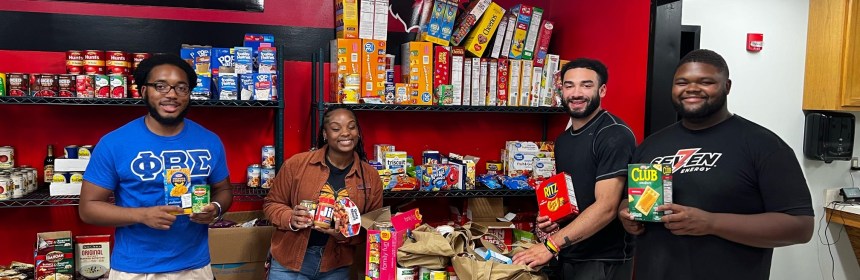
Recently, the Jonesboro Walmart on Highland has been donating to the food pantry on the Arkansas State University Jonesboro campus. The partnership was arranged by Every Child Is Ours, a nonprofit organization headquartered in Tuckerman.

Use of the food pantry is available to anyone with an ASU ID–student, faculty, or otherwise. With the large number of people in need, it can be difficult to keep up with demand, according to Jameson Archer, an ASU student and the president of the volunteer council.

Every year, the food pantry serves 3,000 to 4,000 students and employees. In July of last year, they served 700 people. Usually during summer break, that number would be around 200 since most students are off-campus at that time, so the demand has seemingly increased.

“There are a lot of times where they’re really having to strap to get people food,” said Dean MacDonald, a graduate student at ASU who also works with Every Child Is Ours.

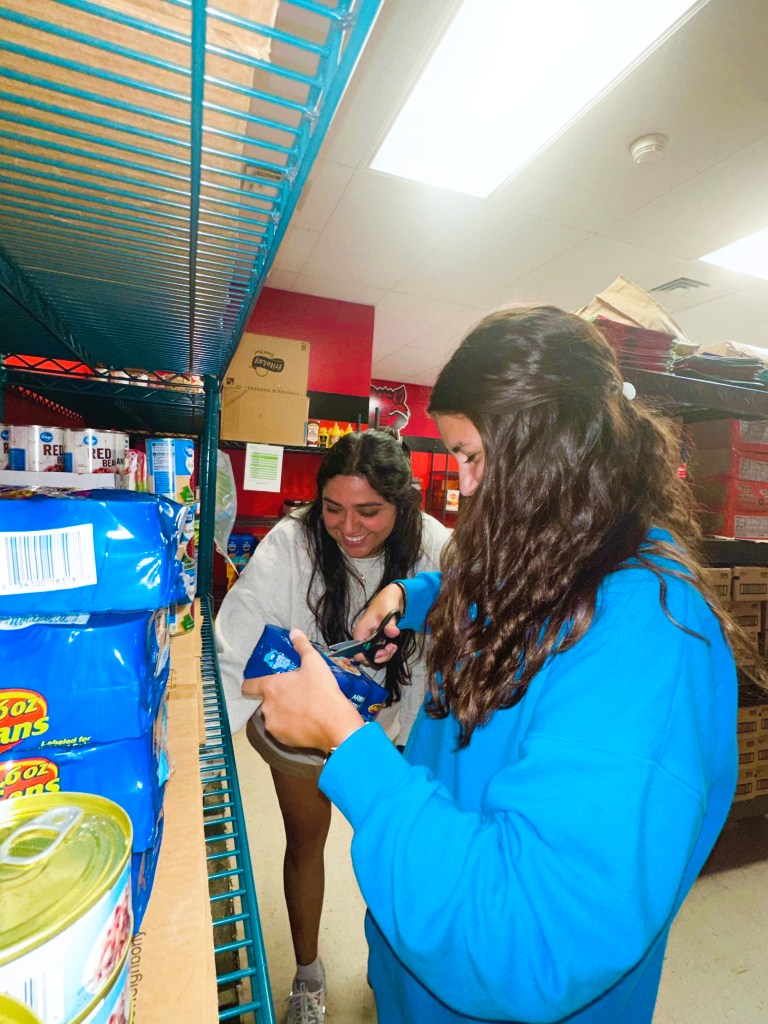
Volunteers Kennadie Hobson and Ericka Hernandez at the food pantry.

Over the summer of this year, they started developing the idea of Walmart donating to the food pantry. The pantry was in need of volunteers since most students had left for the summer. Raven Person, who works in Student Affairs, started volunteering there.

According to Person, she and Bekah Herring, the assistant director of Career Development who also manages the food pantry, started discussing the need for donations. Herring said that almost all of the pantry’s resources come from individual donations.

Both MacDonald and Person personally know Jan Paschal, the owner of Every Child Is Ours. Along with another student, a history major named Alandria Maddox, they set up a meeting with her on June 2 at the ECIO food pantry to discuss what they could do for the community.

Maddox works as an ambassador for Every Child Is Ours. She brings awareness to the cause and helps Paschal whenever she’s needed. She’s been working with them since May when she was introduced to Paschal by Person.

According to Maddox, Person came up with the idea that Walmart might donate to the food pantry on campus. Paschal had collaborated with Walmart before on other projects, and Walmart also often donates to similar causes.

“A lot of hard work was done by Dr. Hogue, Dean, Raven, and Mrs. Jan,” Maddox said.

Paschal said at the meeting that Walmart wanted to donate to ECIO, but it would be better if the donations went to ASU instead. Paschal contacted an executive at Walmart, Carolyn Hembrey, to set it up. 

Hembrey said that she has worked with Paschal many times. She approved the new project and helped to coordinate times for when the volunteers come to pick up the donations.

“I just did not realize that there was a need. I guess we just assume if they’re going to college, they must have the funds to eat, and I was just like floored at the need that there was…” Hembrey said. “I’ve really been encouraged by the participation from the volunteers and just the excitement that they’ve had about the project also.”

The donations occur once weekly. They consist of canned items and other preserved food but also fresh food, such as vegetables, fruit, meat, and dairy. These donations offer a bigger variety than what the food pantry is usually able to provide.

“It’s widened our variety,” said Archer. “It’s always nice because we’re serving so many people, it just gives us something else that we don’t have to personally buy.”

-30-


Note: Feature photo shows volunteers at the food pantry.

Public housing residents shelter in place as extreme weather pounds the region

College students enjoy the extended break

By William Blake | Delta Digital News Service

The first round of extreme weather hit Craighead County in earlier this month. The combination of ice and snow on the ground was enough to shut down the roads and other parts of the city.

   Even though extreme weather is a disturbance, people must be prepared to be shelter inside their home for a few days if they cannot drive. Carol Crawford, public housing manager for the Jonesboro Housing Authority said, “I try to get all my work done in case the weather is so bad in case we can’t come in.”  

    As a public housing manager, Crawford works with tenants and other staff to keep everything running smoothly. However, it can be hard to keep people happy when they go without power or food due to storms. 

   Crawford said, “[there are] many places that offer Hud housing in Jonesboro which have their own Hud contracts, which is where they may have a food pantry on site.”

   While some public housing may have food on site, the organization lacks the funds to supply resources like a generator or transportation to those without power who cannot leave their homes for work. This can be different from other housing options in the Jonesboro area.

   Callie Tosh works as an intern veterinarian and is a resident of Sage Meadows, a neighborhood on the east side of Jonesboro. Neighborhoods can be the worst place after a snowstorm because trucks do not come to salt the roads, which extends the melt time for ice.

   “It was so bad that I didn’t leave my house until Saturday. I didn’t trust my car to start or to make it down the driveway,” Tosh said. 

“It was so bad that I didn’t leave my house until Saturday. I didn’t trust my car to start or to make it down the driveway,” Tosh said. 

– Callie Tosh, intern veterinarian

   The extreme weather did not hit Jonesboro as hard as it hit other cities in the area. In Memphis, thousands of people lost power due to the freezing rain and ice knocking down power lines. 

   Tosh said, “Luckily we did not lose any power, but I was worried about running out of food.” 

   People first think about food when they hear a storm is coming. People flock to grocery stores and gas stations to buy anything and everything they might need. Since some public housing have a food pantry on-site, was this the best place to be during the snow?

   Jared Baltz, a junior animal science major at Arkansas State University, lives on campus in the North Park Quads. He could not leave campus due to the snow, but at the same time he enjoyed it.

   “The food options were still open, and I was able to go to the Union to get food. We also did not lose power which made it a lot more comfortable,” Baltz said. 

Essentially, everyone in the city got an extended weekend and an excuse to stay inside.

   Neither public housing, the Sage Meadows neighborhood, nor campus dorms had wide area power outages from the storms.


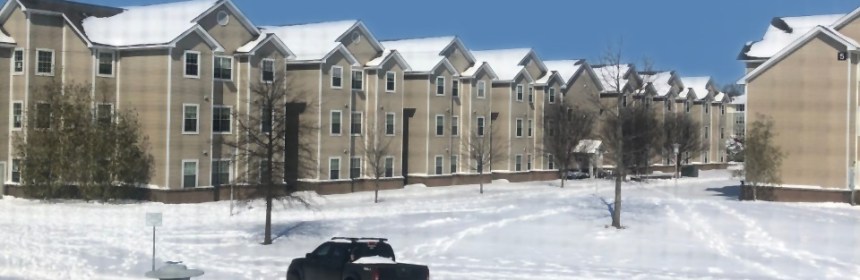
NOTE: Featured Photo: The North Park Quads on University Loop East is inundated with snow earlier this month. The dorms are comprised of five co-ed buildings which are home to first-year and upper-class students.

Pedestrian bike path nears finish line

By Chloe Short/Aspiring Reporter
Delta Digital News Service

The city comes close to finished plans for the bike path project. Residents will witness construction soon, bringing bike lanes and bridges to connect all the city. The bike pedestrian trail will make one large circle around Jonesboro to allow all areas within the city to experience different ways of traveling.

Danny Kapales, director of Parks and Recreation in Jonesboro, said plans for the bike path are close to finishing. Currently, the design and property acquisition requires completion, then plans move forward to starting construction. Kapales said the project needs scouted property for purchase and further design touches.

“We’re hoping to be starting by the end of this year with the construction or at least by the following year with construction. We should be done with at least land acquisition and design by the end of this year,”  Kapales said.

Final decisions made to design arrangements will then allow progress to finding the construction company. Kapales said when the project releases, construction companies will place bids and once finalized, the project will move to construction.

Earlier in planning, the project awaited clearance for grants to work the University Heights phase, which gives access to open the east side of Jonesboro and will allow safe travel along Aggie Road. Updates revealed the plans received clearance, Kapales said.

Bill Campbell, director of communications for Jonesboro, said the bike path proposal sits at 90% completion. The parks and recreation, engineering, and grants department received the grant money of $500,000 from the Arkansas Department of Transportation and the Transportation Alternatives Program needed to proceed with construction and to continue the bike path phases.

The project plans continued for almost two years after being released to the public. Campbell said after speaking to city Director of Engineering Craig Light, he found money as the hold up in the schedule.

“The project was slowed originally as we looked for additional funding to complete the first phase of construction.  This was ultimately obtained through a second TAP Grant from ARDOT. We just recently received a third TAP Grant from ARDOT to build the final piece of this project which will tie the trail to the A-State campus at the Marion Berry Parkway. We have opted to combine these two project phases into one single project for construction. This decision was made based on a couple of factors, the primary one being that the right-of-way acquisition and utility relocation pieces of the project are expected to take most of the year to complete anyway,” Light said.

New construction brings uncertainty to wildlife in the area, especially if tampered with. Campbell assured that with planning, The parks and recreation, engineering, and grants department must perform environmental studies anytime working with untampered land. Kapales said the bike roads will follow along roads already made, so they do not see any wildlife being interfered with.

Charles Fox, of Gearhead Cycle House, said the community will benefit from the new bike path. Fox said cycling creates a natural high that comes from physical activity, whether the activity runs light or heavy. Active lifestyles can be more conducive to happy living and overall wellness, he said.

“I feel as if it will offer people an opportunity to get out and exercise on their bicycles in a way that they might not have current access to. For a lot of people riding on the streets with automobiles isn’t the most comfortable activity and safer bike paths should give people an entry into the world of cycling,” Fox said.

https://www.jonesboro.org/DocumentCenter/View/4321/BikePedestrian-Plan?bidId=

International Agreement Concerns A-State Faculty

By Jessica Ladd
Delta Digital News Service

JONESBORO — A recent dual-program degree agreement between Arkansas State University and the American University of Malta sparked concerns amongst A-State faculty. A gap in communication could be to blame.

47743977751_8b0c0e2626_o

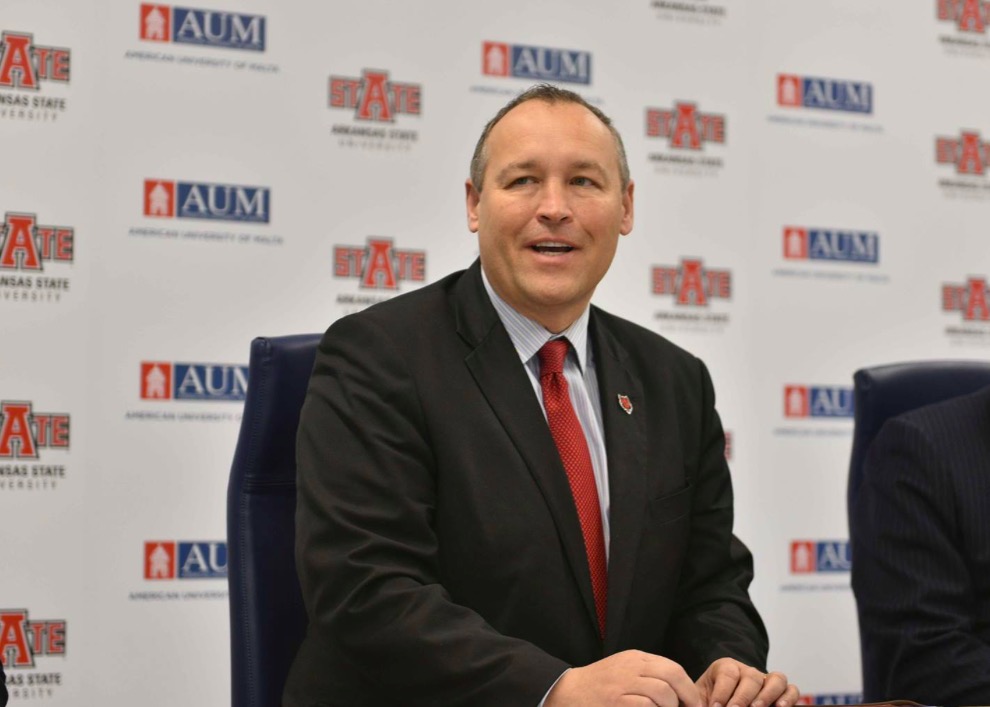
Agreement Signing-  Photo of A-State and AUM agreement signing in Malta. (from left) A-State Chancellor Kelly Damphousse, AUM President Dr. Walker and Malta’s Education and Employment Minister Evarist Bartolo. (photo from AUM’s Facebook page)

AUM, a private liberal arts college in Cospicua, Malta, signed an agreement with A-State in March 2019.  The agreement would allow students from A-State to attend AUM their sophomore and junior years, with their freshman and senior years being on the A-State campus. AUM students can take online classes through A-State for their first six semesters. Their senior year, students can attend classes on A-State’s campus full-time. Students would receive a degree from both universities.

Loretta Neal McGregor teaches psychology at A-State. She also serves as president of the Faculty Senate. McGregor said a breakdown in communication occurred and the issue of the Malta agreement didn’t come before the Senate until after it was signed.

“When the Chancellor came to the Faculty Senate, he said that he had talked to some of the deans from various colleges and department chairs from various colleges. But, the Faculty Senate is the governing body for the entire faculty. So, it was almost like there was a bypassing of the Faculty Senate to include deans and chairs. Then it was stated that since the deans and chairs are part of the faculty, their voice was representative,” McGregor said.

She said A-State considers itself a shared governance. The administration should work with the Senate to help make sure the university has policies that are beneficial to students and faculty members, and to help the university run smoothly.

McGregor said the university struggled with communication over the years. It’s important to have clear lines of communication because the faculty are the ones there day in and day out.  She said most of the faculty concerns center around the curriculum and courses students will be engaged in.

When asked why the Malta agreement wasn’t brought before the Faculty Senate beforehand, A-State Chancellor Kelly Damphousse said the Faculty Senate doesn’t have the authority to approve these agreements. The authority resides in the faculty. The administration took the issue to the faculty and they approved it.

The potential communication breakdown occurred as the administration spoke with chairs and deans, who weren’t elected to represent the whole faculty. The communication gap might not have been as big of an issue if AUM didn’t have a questionable history.

32800522547_96c45d50d7_o

AUM– Photo of the American University of Malta. (photo from AUM Facebook page)

AUM, a relatively newer university, opened in September 2017. The central Mediterranean institution managed to gather tons of publicity in its short operation. The Sadeen Group, a Jordanian construction and property development company, owns AUM. The company’s only background in education comes from its for-profit schools in Jordan. Their main developments include travel, tourism and hotels. In Malta, citizens protested the development of the university.  The two pieces of land granted to Sadeen for the development were considered valuable public property. Once the college opened, more odd events occurred.

Erik Gilbert, a history professor at A-State, said he was shocked after he conducted a quick Google search regarding AUM. He sent an email with a list of sources to all A-State faculty explaining what he found.

“There seem to be so many red flags there. They got fined for misrepresenting who they were, they seem to have mispresented their relationship with DePaul (university) and had to have that explicated. They fired all their faculty one semester into their operation and then rehired a bunch suggesting that maybe they still needed faculty, but they wanted different faculty, perhaps, cheaper faculty,” Gilbert said.

Seventeen students attended in fall 2017, a lower number than expected.  AUM fired 12 of its 13 professors in January 2018 after offering them three-year contracts. Maltese law legally allowed the firings.  At the end of their six-month probationary period, the faculty received notification of their termination. AUM claimed the firings were due to the low enrollment. AUM hired six new professors. They currently have seven faculty members including the provost.

Despite the controversy sounding AUM, Damphousse said he still sticks by his decision. He knows there is concern regarding faculty terminations there. He said, unfortunately, that happens when a university faces financial difficulty. It happens in America as well. Damphousse said he doesn’t have any concerns regarding the firings.

A lot of work goes into an agreement like this. Damphousse, Global Engagement and Outreach director Thilla Sivakumaran and Vice Chancellor of Marketing and Communications Bill Smith traveled to Malta to negotiate the agreement. Damphousse said he remains confident in A-State’s short-term study-abroad opportunities in Malta.

47743977671_59926bf6a9_o

Damphousse In Malta– A-State Chancellor at the agreement signing in Malta. (photo from AUM Facebook)

“I went there and visited the place. I met with the faculty who are there. I taught a class while I was there. I met with students who are there. So, I’m very comfortable with our decision to be partnering with AUM,” Damphousse said.

He said A-State is always looking for ways to make itself distinctive. Malta, a country rich in history, brings in students from across the globe. Most of the professors come from America and all classes are taught in English. Damphousse also said Malta can be a great European location for A-State faculty members to plan short-term study abroad and research opportunities. ASU prides itself on being diverse. This agreement would help expand that diversity. ASU has similar agreements with other universities, and they’ve been successful as well as beneficial. He also said A-State did not invest any money into the actual agreement. According to The Sun, travel expenses to and from Malta totaled $7,000.

As for the confusion among faculty regarding the agreement, Damphousse said currently a plan is in motion to keep it from happening again. The provost has been working with A-State’s international program to develop a process to ensure the faculty all have a say in determining when the university gets involved in relationships like the one with Malta. The new policy should be completed shortly.

Audit Leads to A-State Procedural Changes

by Melissa Palumbo
Delta Digital News Service

JONESBORO — Recruiting T-shirts led to a change in procedures at Arkansas State.

An Oct. 11, 2018 complaint to A-State Internal Audit concerned a large order of T-shirts placed by the Office of Recruitment.

An administrative specialist entered the requisition for the shirts to Procurement Services in July. The order, consisting of 4,000 grey “visit” T-shirts for $8,800 and 1,800 red “Pack Preview” T-shirts for $26,700, totaled over $35,000. The order was miscoded as being under $20,000.

The shirts were nonrefundable due to the different patterns and colors applied.

University regulations and Arkansas law require orders above $20,000 to be bid out to vendors in the community and to receive at least three competitive bids. However, the university only obtained one bid from Running Threads, a vendor that previously worked with the university.

Initially, contact was made with both unlicensed and out-of-state vendors, which goes against university regulations.

Special Events Coordinator Teresa Dunton, a member of recruitment, had no comment.

The purpose for bids from at least three local vendors for larger orders is to allow Jonesboro businesses the opportunity to work with the university, make money and get recognition if they do good work. Choosing to only allow one, previously commissioned vendor obtain the bid took away the chance for local businesses to grow.

The vendor asked Procurement Services if the order should be split into two separate orders. This did not meet regulations as all 5,800 T-shirts were ordered at the same time for the same purpose.

Procurement Services replied, “Two separate invoices please.”

Running Threads received about $9,000 as part of the payment for the approved T-shirts before the order was caught.

The orders were approved by Dunton and Polly Marshall, director of Admissions and Assistant Vice Chancellor for Enrollment. Katie Davis, the purchasing technician for requisition and budget, stamped the orders as approved at 2:48 p.m. on Sept. 12. Davis had no comment on the approval.

Even though the orders were separated, the order containing the red “Pack Preview” T-shirts exceeded the $20,000 limit and should not have been approved at this level.

The Purchasing Technician for Requisition and Budget incorrectly wrote in red ink that both orders were under $20,000.

Vice Chancellor of Finance and Administration Len Frey (photo by Melissa Palumbo)

Executive Vice Chancellor for Finance and Administration Len Frey said the two levels of approval failed to recognize the error potentially due to employee unfamiliarity with the policies and procedures.

Every year, recruitment orders T-shirts to be distributed during events in the fall and spring semesters. This academic year, more shirts than usual were ordered to give to potential incoming freshmen in the newly finished Welcome Center.

Because of the events that launched this audit, restructuring and other changes have taken place in the Procurement Services.

“We have been working on a number of changes in the procurement area,” Frey said. “As a result of this, there have been corrective actions taking place.”

While training for personnel in the Procurement Services previously stopped, Frey said it should not have been a reason for the mistake to have happened. However, as part of the restructuring, training will be “beefed up” not only for Procurement Services, but also in other departments including Human Resources, Information Technology and security.

At the time of the order being processed, Procurement Director Lola Langley did not report to a higher level in the organization. This caused communication challenges. As a result, the procurement office immediately had Carol Barnhill, director of contract administration and strategic sourcing, begin reporting directly to Frey.

Barnhill identified the mistake that launched the audit in October, after which Frey promoted her to the first Chief Procurement Officer to identify any potential concerns in the future. Barnhill assumed the position after an announcement made Feb. 28. In addition to her responsibilities in the procurement office, she will also oversee Contract Administration and Strategic Sourcing.

Additional changes will be made to the administrative staff and leadership, and the new staff will report directly to Russ Hannah, associate vice chancellor for business and finance.

On March 13, Chancellor Kelly Damphousse announced a new 16-member Strategic Plan Steering Committee. The committee consists of members who have been working in their position for some time, like Hannah and current Provost Lynita Cooksey, as well as newly appointed individuals such as the new Vice Chancellor for Enrollment Bryan Terry.

“Something like this should not happen again,” Frey said. “Something like this should not have happened in the first place.”

Bill Clinton Speaks at A-State

President Bill Clinton

by Chase Gage
Delta Digital News Service

JONESBORO – Former President Bill Clinton spoke to a near-capacity crowd at the Fowler Center Monday night. The man from Hope delivered a speech about hope for the future.

At a time when America is arguably more politically divided than ever, Clinton urged listeners to love one another like human beings, not opposition. He drove home the message of treating people like people and getting rid of resentment and anger towards others.

Arkansas State University Chancellor Kelly Damphousse introduced the 42nd president to approximately 950 people.

“If you live in resentment and anger, it disempowers you. You want to be empowered,” Clinton said. “You have to open your heart and ears before you can open new doors. You’ll waste a lot of your life living in resentment and anger.”

Clinton, founder of the Clinton Foundation, said the current political discourse does not lay the foundation for citizens to have the types of conversations they need to be having. Instead of discussing economic inequality and how to fix it, or the emergence of artificial intelligence (an advancement that may kill more jobs than it creates), people are more worried about tearing each other down.

He proposed Americans should be more concerned about their grandchildren’s future instead of winning the next fight on a television talk show. People in disagreement are still people, and sometimes that is forgotten.

Bryant Moy, a graduate political science student at Washington University in St. Louis, said before the event that he hoped to hear the former president speak on civil discourse in the United States. He got his wish.

“He talked about trying to treat people as people. You can still have these deeply held, strong beliefs and resentment, but you have to cooperate with one another. I loved it. It was exactly what I wanted,” Moy said after the event.

Kaylee Bauman, a medical student at New York Institute of Technology from Michigan, said the speech was refreshing.

“(Clinton) talked about bringing everyone together, and then seeing all the different types of people in the room, it was great. I wasn’t sure what to expect, but I thought his overall message was something that could apply to everyone in the room. I found it fascinating,” Bauman said.

President Bill Clinton

President Bill Clinton spoke for about an hour Feb. 11 to more than 900 people in Riceland Hall at Arkansas State University as part of the “Riceland Distinguished Presentation Series.” The 42nd U.S. President previously spoke at A-State on three different occasions. (Photos by Ammar Taqi)

Monday night was not the first time Clinton spoke in Jonesboro. He recounted the story of when he spoke at the Arkansas State University Commencement ceremony in the late 1970s while he was Attorney General of the state. Due to rainy conditions, the ceremony was moved into the field house, where Clinton cut his speech off after only six minutes due to the hot, humid conditions. He most recently visited the university during the 2014 election cycle while campaigning on behalf of Mike Ross for the Arkansas gubernatorial election. He also dedicated the Dean B. Ellis Library in 1995 while in office as president.

Clinton told many stories that showcased examples of people treating others with love and respect. One such story involved fellow former president, George W. Bush and how the duo was able to put partisanship aside to work on creating a better world for the American people. Another story told of how Clinton’s grandfather would give food to those in need. The differences between the two examples demonstrated how respect for others can work on any level, in any situation.

“If you want America to lead the world to a better and more peaceful place, we have to think about empowering people, not putting them down,” Clinton said. “This is not a (partisan) issue. This is not a racial issue. This is a challenge.”

His message of a hopeful tomorrow rang throughout the hour-long speech. The future is up for grabs, for whoever wants to take it.

“We all have our resentments and regrets, but all we really have is tomorrow. You only become old when the weight of all your yesterdays outweigh your hope for tomorrow,” Clinton said. “There will never be a time free of problems. We have possibilities, but you have to face them and the problems they present not with resentment, but with an open hand, a listening ear and a loving heart.”

Listen to the full speech, courtesy of KASU’s Johnathan Reaves:

A-State Women’s Bowling Opens Season

Taylor Davis approaches the bowling lane.

Taylor Davis approaches the lane during the 2017 season. The team begins its 2018 season in late October. (photo by Taylor Davis)

by Caleb Booker
Delta Digital News Service

JONESBORO – The Arkansas State women’s bowling team begins its 2018-19 season with a lot of fresh faces.

Five freshmen join two transfers and three returnees this season. Even though the team lost five seniors last season, members remain optimistic for the upcoming season.

“We’ll be just as successful as previous years because we still believe in the process with everything we’re doing and are working as one unit,” said sophomore Leah Glazer of Henderson, Nevada. “I can see this season potentially being one of the most successful seasons the program has seen.”

2018 Junior Gold Champion Julia Huren of Westland, Michigan, noted the team is younger, but said she believes it will still have success.

“There has been a lot of excitement for the opening tournament in October,” Huren said. “The team should be successful. I think a very big key to success is being on the same page, as in having common goals in mind and being a well-rounded team player.”

The players aren’t the only ones excited about the season. Entering his 10th season as head coach of the team, Justin Kostick shared his thoughts about the direction the team is taking this season.

“This year is an exciting year. With only three returners and seven newcomers, it is going to be interesting to see how the team gels together,” he said. “I think we can have the same success or even better.”

The season begins Oct. 26-28 in Fairview Heights, Illinois at the Bearcat Hammer Open tournament. The Red Wolves finished in fifth place in the 2017 Bearcat Hammer Open with nine wins and four losses.

***
Editor’s Note: Featured photo by Gord Webster [CC BY-SA 2.0]

Westside: 20 years later

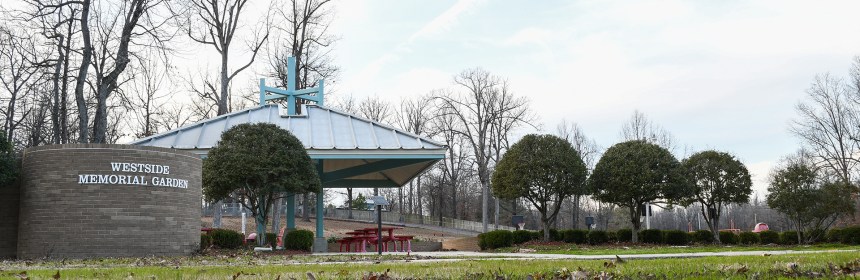
Westside Middle School Memorial Garden

Students from the Spring 2018 Advanced Reporting and Reporting for Electronic Media courses investigated the 20th anniversary of the Westside Middle School shootings and the ramifications of Arkansas’ soon-to-be-implemented college campus concealed-carry law.

  • Miranda Reynolds details remembrances from the Westside School Board, a student and a former A-State faculty member.
  • Seth Cleveland examines how Westside survivors continue to help other victims of school shootings.
  • Katie Woodall examines how the Westside shootings changed active-shooter procedures.
  • Tucker Crain details Arkansas’ Congressional leaders’ stances on gun violence and school safety.
  • Christopher Lee examines contention at Arkansas State over the new campus concealed-carry law.
  • DDNS Editor-in-Chief Kimberely Blackburn examines regional reactions to the campus concealed-carry law.

Ammar Taqi of the Advanced Photography class provided featured pictures of the Westside Middle School Memorial Garden. View the full pictures below.

This slideshow requires JavaScript.

DeltaYou: Couple’s Impact Still Resonates

By Kimberely Blackburn
Delta Digital News Service

JONESBORO – Many Northeast Arkansans feel the influence of two educators long after they retired.

The Stricklands

Herman and Maxine Strickland display “The Circle.” A-State dedicated apartment buildings to its first four black facility members, known as “The Circle.” Photo by Kimberely Blackburn

Herman Strickland Sr. taught elementary school in Blytheville and moved up to principal. He considered teaching at Arkansas State University to allow his wife to return to school.

The university made the decision easier with a simple addition to the offer: a house. Until then, the Stricklands lived in an apartment. The house and the low tuition for his wife helped prompt the move.

As A-State’s second black faculty member, Strickland said his family did not face many racial issues. History professor C. Calvin Smith faced difficulties when he came the year before. But Strickland said he believed the university worked out all the issues before he arrived. Showing his love of sports, he compared his and Smith’s journeys to those of baseball players.

“Jackie Robinson had all the problems, but they worked them out before (Roy) Campanella and Don Newcombe came,” Strickland said. “It was sort of that way before me, I think.”

Maxcine Strickland planned to study social work, but said the university did not offer that discipline at the time. She said she believed divine intervention caused her to choose elementary education. The decision, she said, remains one of the best she made in her life.

Herman served A-State as associate professor of teacher education and dean of University College. He said he never thought he would stay in higher education. After Maxcine earned her degree, they planned to return to Blytheville. He said he thought he would return to primary education.

But his students made him change his mind. Herman fell in love with higher education and decided to stay. He worked to mentor students, both in the department and in his fraternity, Alpha Phi Alpha.

Their Impact

Rickey Greer, principal of Jonesboro’s Math & Science Magnet School, said Herman and Maxcine greatly impacted his life. He still strives to pattern his life after them.

Greer learned professionalism from Herman. Greer said Herman always looks at everyone as if they had potential. Greer said Herman’s positivity struck him as well. Although Greer knew the Stricklands faced obstacles due to their race, Herman did not dwell on them.

Greer said he does not know many men like Herman.

Maxcine taught first grade in Jonesboro. Retiring after 26 years, she said her “children” still visit, bringing “grandchildren” along.

In her first year of teaching, Maxcine said she thought every child would pass — she would make sure if it. Maxcine said a wise mentor told her she could not make them learn. Instead, she could provide the information to the children and encourage them.

Although most turned out fine, the students who struggled broke her heart. She said she still wonders what she could have done differently.

Greer worked as a student teacher under Maxcine. He said her dedication to her job and her children greatly affected him.

“She felt like or treated every kid as if they were queens and kings, or they were the best, or they were (gifted and talented) kids,” Greer said. “No matter what level they were on, she treated them that way.”

Maxcine tried to treat every child the same. She set a high bar and encouraged each child to reach it. She told them to never underestimate their abilities. She said if she expected it, they did it.

The Circle

Although the Stricklands moved four houses down from the Smiths in the neighborhood now known as “The Circle,” both families left Jonesboro every weekend. They started going to each other’s homes with the university’s hire of Wilbert Gaines, emeritus associate professor of physical education. The Circle became a family following the arrival of Mossie Richmond, who became A-State interim president, vice president for student affairs and dean of University College.

Maxcine said she never expected what came from The Circle. She said they came to Jonesboro to do a job, but instead, gained nephews, nieces and friends they will love until the day they die.

Herman said he never thought A-State would dedicate buildings to them. The thought overwhelms him. He said he hopes it inspires black students to know if they work hard and find mentors, they can do anything.

Greer said he wished his students could understand how the Stricklands affected their lives. He said he hopes his students spread the positive impact forward.

Herman said he still looks ahead.

“I hope in the future it won’t make any difference about race. I’ll see you as a sister and you’ll tell me about your parent. I’ll feel your parent did a really great job with you and I’ll know you want to leave a legacy for your parent,” he said. “My parent did a great job with me, didn’t have many means, and I want to be a legacy for them.”

(Featured photo courtesy of A-State Media Relations)

A-State Board Considers Weapons Policy

by Keith Turner
Delta Digital News Service

JONESBORO — The Arkansas State University System board of trustees considered an updated weapons policy, helping transfer students and disaster preparation during its first fall meeting.

ASU System President Chuck Welch described the new weapons policy as a “reaction” to a bill passed by Arkansas legislature. The bill allows, to a degree, concealed carry on college campuses.

Welch said the Arkansas State Police have not yet completed its enhanced training program, meaning no one can legally carry a handgun on campus yet.

“We anticipate that it will be sometime in 2018 – January, February, March – sometime in that time frame before an individual will be able to legally carry a weapon on our campuses,” Welch said.

Helping Transfers

Welch and A-State Chancellor Kelly Damphousse announced a study of transfer students beginning in October or November. The goal of the study is to analyze the relationship between ASU campuses and students who transfer or wish to transfer from two-year schools.

“We have a large number of students in community colleges in the state of Arkansas. Unfortunately, we don’t have a large percentage transferring to a university,” Welch said.

Damphousse said he is passionate about transfer students.

“The next step is to make sure we get more transfer students from our sister schools to come here,” Damphousse said.

Disaster Preparedness

The board approved long-term lease agreements for ASU disaster preparedness training facilities in Walnut Ridge and Imboden. The school will seek grants and private funding for the project, which will train participants to respond to a variety of natural disasters. Fewer than 10 similar facilities exist nationwide.

Representatives of ASU and the cities of Walnut Ridge and Imboden signed 50-year leases for the facilities the following week.

In Walnut Ridge, ASU will pay $12,500 a year to rent 100 acres of land, with a 3 percent increase every five years. Walnut Ridge will pay the rent on behalf of ASU for the first two years. The Walnut Ridge site will have training zones specific to certain disasters, such as tornadoes and floods.

ASU will pay $10,000 a year to rent 183 acres in Imboden. The Imboden site will allow for “wilderness scenarios.”

Susan Hanrahan, dean of ASU-Jonesboro’s College of Nursing and Health Professions, assisted in the push for the training facilities.

“With the opportunity to have land in two different spaces, we can start working on getting funding to help build those things and bring people to our region for that type of education,” Hanrahan said.

Walnut Ridge Mayor Charles Snapp told the Jonesboro Sun this “might be the biggest economic boom” in the history of his city and Lawrence County.

System Review

Welch announced plans to hire a firm for reviewing the ASU System and campuses. The review will analyze staffing, programming and resources to determine the overall efficiency of the office.

The review should take around 12 weeks, but it could be up to six months before the results are known.

Other items considered included:

  • Celebrating the anniversaries of two ASU System campuses: ASU Beebe, now in its 90th year, and ASU Mid-South, now in its 25th year.
  • Accepting a resolution to rename the ASU-Newport criminal justice department in honor of the late Lt. Patrick Weatherford, who was killed in the line of duty in June. Weatherford worked for the Newport Police Department, and was a graduate of ASU-Newport and ASU-Jonesboro. His wife, Kristen, attended the meeting.
  • Approving restructuring amendments to the faculty handbook.
  • Approving new policies on internal controls and investments.
  • Approving a resolution to change the name of the lounge area on the third floor of the Reng Student Union to the Vaughn Student Lounge.
  • Approving a request by ASU-Newport to offer additional automotive-mechanical certificates (automotive mechanical systems, automotive transmissions and axles, engine performance, and heating and air conditioning).
  • The efficiency of the employee health care plan.

(Board of Trustees photo courtesy of A-State Media Relations)

Damphousse Seeks Community Ties

By Kimberely Blackburn
Delta Digital News Service

Damphousse Window Art

Window art featuring Kelly, Beth and Maple Leif Damphousse decorated the window of the Chancellor’s office. Damphousse became A-State’s chancellor on July 1. Photo by Kimberely Blackburn

JONESBORO – A native Canadian and Montréal Canadians fan, Arkansas State University’s new chancellor aspired to become either a goaltender for the NHL or a Mountie before coming to Northeast Arkansas by way of Oklahoma.

Chancellor Kelly Damphousse said he planned to stay at his last position as dean of the College of Arts and Sciences at the University of Oklahoma until retirement, but an email sent by A-State President Chuck Welch prompted him to apply. When he first visited the campus, Damphousse saw the challenges but viewed A-State as a diamond in the rough. He said he can impact a community as a chancellor in a much different way than he could as a dean.

“It’s important for us to have a relationship with the people on our campus. Sometimes it’s easy for someone who in administration to get removed from the reality of the world that they’re serving,” Damphousse said.

Damphousse explained why he creates relationships:

Campus and Community

Damphousse said his main concern will always be the students, faculty and staff. He said he understands he can only see a few students per day due to his position. Yet faculty and staff members interact with hundreds.

Damphousse said he wants to use his position to help bridge the gap between campus and community. He said there seems to be a strain between the two due to past events. He said he believes strains occur due to a lack of communication, meaning people do not truly know each other.

To remedy this, Damphousse said he speaks to any community club that extends an invitation, as well as local merchants and companies to see how A-State can help their business. Jonesboro Mayor Harold Perrin said he and Damphousse agreed to work together on several projects.

Perrin said he hopes to help get the word out of what A-State offers the community. He said A-State remains a driving force in the Craighead County community.

Perrin said A-State can help employers by providing both new employees and education for existing workers. Perrin said he believes A-State and the Jonesboro community can achieve this by fine-tuning programs already on campus.

“I’ve always learned in business, you build and become strong on what you have. If you’ll continue to build and to redefine what you’ve got, you’ll be highly successful,” Perrin said.

Damphousse explained his plans to keep A-State movng forward:

United Way

Damphousse recently announced on his Facebook account that The United Way of Northeast Arkansas named him and his wife, Beth, as co-chairs of Arkansas State University’s United Way Campaign.

Nanette Heard, executive director of United Way of Northeast Arkansas, said the Damphousses will encourage the A-State community to designate part of their salary to help fund projects throughout the eight-county region.

UWNEA covers residents of Clay, Craighead, Cross, Greene, Jackson, Lawrence, Poinsett and Randolph counties. Heard said the projects include shelters, after-school programs and programs that help feed the hungry.

Damphousse said the community matters to him and to A-State. Because the campus and community will always be tied together, he said if one rises, they both rise. Damphousse said he and Beth plan to be around for the long run.

He mentioned an analogy about planting trees you never get to sit under. But Damphousse said he wants to sit under the trees he plants. He said he wants to see the efforts that come from the changes he implements.

This is why, Damphousse said, the motto “Every Red Wolf Counts” truly encompasses everyone.

“Every Red Wolf Counts. That means every student, every faculty member, every staff member, every alumnus, every member of the Jonesboro community,” Damphousse said. “I see them all as Red Wolves because we’re all tied together.”

He even let students name the family dog:

Listen to the entire interview:

« Older Entries Recent Entries »