Monthly Archives: October 2017

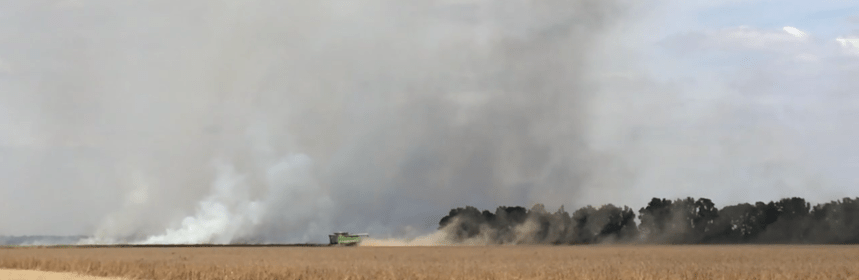
Harvest Affects Asthmatics

by Miranda Reynolds
Delta Digital News Service

Eli Norton (photo courtesy of the Norton family)

MCCRORY, Arkansas – Harvest season in the Delta creates turmoil for residents who annually suffer from asthma and allergies.

Eli Norton, age 7 of McCrory, has severe allergies requiring shots every other week. Aside from the shot, he uses nose spray and allergy medication in the mornings and at night. Lesley Norton, Eli’s mother, said she notices a change in Eli’s condition during harvest season.

“He gets more headaches and he has a more stuffy, runny nose,” she said. “Sneezing, coughing, just the typical symptoms you would have with allergies. When it’s not harvest season, we can do the shot once a month. With harvest season, we sometimes have to do it once a week depending on how severe his symptoms are.”

The farmers of rural communities in Arkansas cultivate their yields and feed its country’s residents during the fall season.

Billy Holmes, a farmer in Woodruff County, harvests about 1,600 acres of rice and soybeans. Holmes said soil types, residue, weather and the location of the fields determine whether to burn the rice stubble.

Safety is a concern for Holmes’s employees. Holmes said the employees keep themselves out of smoke as much as possible while doing the same for the neighboring farms. Laborers work mostly in tractors with cabs equipped with filtered air conditioning to protect them from dust.

Melissa Alumbaugh, advanced practiced registered nurse with ARcare, sees most of her patients suffering from allergies in the spring and fall. Alumbaugh said harvest season absolutely affects those with asthma.

Alumbaugh said preventative measures that asthma suffers can take include:

  • Avoid irritants. Use prescribed allergy medications, including antihistamines and nasal steroids.
  • Use dust mite covers on beds.
  • Use humidifiers at night.

The dust and smoke that harvest season produced may affect children, adults and the elderly.

Knowing personal conditions regarding dust and smoke can help with better preparation for this time of year. A health care provider can assist with a plan of action when harvest season occurs in Arkansas.

DeltaYou: EMTs Serve the Community

by Miranda Reynolds
Delta Digital News Service

Andrea Yates

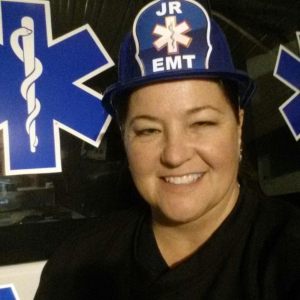
Angela Yates at work. Yates first became interested in becoming an EMT while working in Wynne. Photo courtesy of Angela Yates.

AUGUSTA, Arkansas – When medical emergencies arise in rural areas, Emergency Medical Technicians are responding to the life-threatening calls.

EMTs certifications depend on their level of education. A Basic EMT requires the least amount of schooling, whereas Intermediate EMT and a Paramedic EMT require more. Angela Yates, a Basic EMT,  received her certification at East Arkansas Community College, located in Forrest City. Yates said her certification prepared her for real-life emergencies.

“I think for the most part it did. But — also because I’m older than most people who enter this field — I did it when I was already turning 40 and most people are doing this in their 20s,” Yates said. “I had more life experience behind me already.”

Yates said paramedics and EMTs working in the Wynne hospital influenced her with their exciting stories of helping people. Yates said she believes being a woman is not a challenge in her line of work.

Yates said within rural areas, emergency airlift systems are something to consider.

“Because of my standpoint in EMS, I know it’s important to have (an emergency airlift system),” Yates said. “Being rural, we have different helicopter services available, and not everybody will accept the other’s insurance or the other’s coverage. It’s not feasible to have a membership with every service, but you never know what service you are going to get.”

Emergency Medical Technicians are vital to all communities because of their role in the emergency response chain. Yates said a patient’s medical insurance does not impact the work she does. Members of Pafford Emergency Medical Service provide emergency care while the hospital collects information; insurance comes after that.

The duties of an EMT vary among its members. Yates explained her duties to provide a full understanding of her everyday tasks.

Recertification for all EMTs is inevitable. As a Pafford EMS employee, Yates’ re-certification can be completed online by entering in her numbers, information and amount of hours taken. As far as original certification goes, members of Pafford EMS must meet in hands-on classes or groups.

Yates said prevention of accidents in emergency vehicles is important to the certification process. During an emergency that requires lights and horns to be activated, Yates is only allowed to drive 10 miles per hour over the speed limit.

Jay Atkins, police officer for Augusta and McCrory, said drivers on the highway do not pull over when meeting oncoming traffic and even drive close behind vehicles in pursuit of an emergency.

Yates said she built an endurance for coping with traumatizing calls after six years in the field. Yates’ husband, in his 25th year in the EMT field, helps her cope. Yates said having someone to confide in and someone who can relate to what she goes through is helpful.

Atkins said he finds other methods of coping.

“Separate myself from that call or if it’s ending my day … when I’m off, I’m off. I do not have a radio on, I don’t associate with this place,” Atkins said.


Media Specialist Visits A-State in Speaker Series

by Tucker Crain
Delta Digital News Service

JONESBORO – A media relations specialist returned to Arkansas State University as a speaker in the Joel Gambill Alumni Speaker Series during Homecoming Week to talk about his media experiences.

Aaron Sadler, who graduated from A-State in 1999, currently works at Ghidotti Communications in Little Rock. As a third-generation A-State graduate, Sadler said his family’s history with A-State steered him toward the university.

“I’d heard so much – as someone who had an interest in journalism – of the College of Communications, and how well-received a diploma and a degree from ASU’s College of Communications and the journalism department was across the world,” Sadler said.

Before making it to Ghidotti, Sadler worked for various attorneys general in Arkansas, Louisiana, Mississippi and Pennsylvania. During his time at these offices, Sadler came to the forefront of consumer-awareness initiatives.

Sadler’s love for all things media and communication began at a young age. When he was only 5, Sadler said he asked for a typewriter for Christmas instead of more conventional toys.

Sadler’s grandfather was a justice of the peace in Arkansas, and his influence led him to initially pursue a career in law. After coming to A-State, Sadler said his interactions with department chair at the time, Joel Gambill, led him to instead pursue a career in media.

“When I was a freshman, (Dr. Gambill) asked me why I was majoring in political science. He said journalism is a more appropriate major for you, because you learn writing,” Sadler said.

As he became more involved in the department, Sadler said he realized journalism was indeed the right path for him.

While in college, Sadler said his biggest struggles came when he would try to cram before a test. Quoting Mark Twain, Sadler said if you must “eat a frog,” you might as well do it in the morning and get it over with.

Now, as a professional who interacts with clients every day, Sadler said he looks to John Brummett for inspiration. Brummett is a political columnist based in Little Rock. In addition, Sadler said he can always look to his boss, Natalie Ghidotti, for the know-how needed for accomplishing his goals.

Since Ghidotti is located in Little Rock, most of Sadler’s clients are based in the area. He said this location influenced how he interacts with the media, looking primarily toward Little Rock- and Arkansas-based news outlets.

Sadler said the most important evolution of modern media is the decline of newspapers.

“Reporters (need) to be fundamentally sound and comfortable in additional disciplines, like broadcast media and content marketing,” Sadler said. “Being a reporter in the 21st century involves much more than a pen, a pad and an ability to write.”


Editor’s Note: Sadler, pictured in tie, spoke with a Mass Communication in Modern Society class in the featured photo.

Undocumented Women Fear to Report Abuse

by Kimberely Blackburn
Delta Digital News Service

JONESBORO – Immigration and Customs Enforcement detained a woman inside a courthouse to obtain a protective order against her allegedly abusive boyfriend earlier this year in Texas.

This, along with reports of increased immigration investigations, results in many undocumented women being afraid to report abuse. In trying to remedy the situation, many organizations strive to help those undocumented victims of domestic violence.

“It’s complicated because there aren’t any specific solutions,” said Marium Durrani, public policy attorney for the National Network to End Domestic Violence. “There is a bill in the House and the Senate that protects them in community locations like courthouses, rape crisis centers and medical service providers, from immigration forces.”

Current Fears

This year, seven national abuse advocacy organizations performed a survey to help better understand how current immigration policies affect such immigrants.

Sixty-two percent of respondents reported an increase to the question, “Is your agency observing a change in the number of immigration-related questions from survivors?” Feedback sent with the survey reported many abuse survivors simply question how to plan under the new immigration policies. Some question if they should apply to immigration under the Violence Against Women Act.

When asked, “Are immigrant survivors sharing with your agency that they have concerns about contacting police?” 78 percent responded yes.

One respondent said: “Clients are afraid of calling the police because they believe that they will be deported if they do, especially if their abuser is a U.S. citizen. They think law enforcement will listen to someone who is a citizen of this country more than an undocumented person.”

When asked, “Are survivors reporting to your agency that they have concerns about going to court for a matter related to the abuser/offended?” three out of four answered yes.  Some respondents said that after media outlets reported a woman’s deportation while filing for an order of protection, many clients feared the same.

Forty-three percent responded yes when asked, “Are you or your organization working with immigrant survivors in your community who have decided to drop civil or criminal cases because they are fearful to continue with their cases?”

Durrani said some women find themselves in this situation after being brought to the country under false pretenses. Some come under a fiancée visa with the promise they will have help in obtaining citizenship. She said many abusers then withhold vital documentation and the women find themselves stuck after their visa expires.

Durrani said these undocumented victims often need special protection. A woman may look for work to escape her abuser but cannot work legally. Some employers, Durrani said, will take advantage of her status and pay a much lower wage. Other abusers will file other charges against their victim.

For these reasons, in addition to reports of victims being arrested after reporting their abuser, many stay silent.

Help Available

Rebekah Stewart, program communications associate with Tahirih Justice Center, said organizations exist to help those suffering from abuse to apply for protections under the law, including:

  • Gender-based asylum for those who suffer or may suffer violence in their home countries.
  • Violence Against Women’s Act Petitions for spouses, parents or children enduring abuse.
  • T Visas for those surviving being brought to the United States for human trafficking.
  • U Visas for those surviving crimes involving mental and physical abuse in the United States.
  • Special Immigrant Juvenile Status for abused, abandoned or neglected children.

Protecting yourself when asking for help

Durrani said she believes the protections came from Congress understanding the control abusers have over their victims.

“Congress has understood that sometimes people are not brought here under their own  volition and that doesn’t mean they should be disregarded under the protections of the law,” Durrani said.

However, obtaining these documented statuses often proves difficult.  Stewart said Tarihi Justice Center provides legal assistance for those seeking these protections, as well as social services assistance.

Working with legal assistance continues to be very important. Durrani said obtaining these statuses remains complicated. She said women can be declined from these protections for a variety of reasons.

The U Visa, for example, require women to work with police. Thus putting themselves at risk, especially if immigration enforcement considers them to be a priority.

Durrani said this fear often impacts the community as well. If a victim fears to work with law enforcement, more crimes affecting others often go unreported.

Assistance in NEA

Many victim assistance programs exist in Northeast Arkansas. Nanette Heard, executive director of The United Way of Northeast Arkansas, said such programs include everything from shelters to support groups. Organizations exist that provide monetary assistance as well.

David McDaniel, public information officer for the Jonesboro Police Department, said helping the victim remains the priority for JPD. After 20 years of service, he said he cannot remember a single time immigration investigated a victim in a domestic violence case.

McDaniel said protecting the victim, no matter their immigration status, continues to be JPD’s concern.

“If you’re here illegally, if you’re here on a visa, that makes no difference to us,” McDaniel said. “You’re not supposed to live that way. No one deserves to live that way.”

Editor’s Note: Featured photo by Jeffrey [CC BY-SA 2.0]
Public Transit Provides Cheapest Option

by Kayce Wilson
Delta Digital News Service

JONESBORO – With transportation apps like Uber and Lyft bringing services to the Delta, pre-existing businesses may feel the need to change their operations.

Jonesboro Economical Transit System transportation supervisor Keith Michael said the company does not feel threatened by the new services.

“The difference that JET has from other transportation options is that we are able to set our fares at lower rates than other services because we are federally funded,” Michael said. “It will cost you $10 and higher to ride a local cab, UBER or Lyft one way, in comparison to $1.25 one way for JET.”

JET of Jonesboro began operating in 2006. JET’s routes reach across the Central, East, North and West regions of Jonesboro, with a hub at 713 S. Caraway Road.

Since the city runs the public transit, its maintenance department and JET employees provide maintenance. The amount of riders per day varies. Many people use this service to get to work, the grocery store and various appointments.

“I don’t believe the newer forms of transportation will affect our JET ridership. Because we can offer lower fares, this alone will keep our ridership numbers steadily growing,” Michael said.

Craighead County Cab Company was unable to comment at this time.

Edward Harthorn, a graduate assistant in history at Arkansas State, said it is important for people to know about all of the forms of Jonesboro transportation.

“While there’s a lot that I don’t know about Uber or Lyft, I am optimistic that they will quickly play an important role in local transportation,” Harthorn said. “Single-car families, international students and many other constituencies may find that ride-sharing provides a convenient alternative when running errands, traveling across town or waiting for a vehicle to be serviced. It will be interesting to see how these companies and Jonesboro’s public transit co-exist.”

(Photo courtesy of A-State Media Relations)

A Plan for Downtrodden Properties

by Miranda Reynolds
Delta Digital News Service

JONESBORO — The Jonesboro City Council recently hosted the Little Rock Land Bank Commission to learn how it can positively impact the city.

Mayor Harold Perrin said he kept up with the Little Rock Land Bank Commission for two years and thinks that it could benefit the city.

“The biggest thing is that you are trying to clean up your entire area or neighborhood and concentrating on them. That’s the key,” Perrin said.

In 2008, the city of Little Rock started the Land Bank Commission in hopes of increasing home ownership, stabilizing property values, improving the health and safety of neighborhoods, and maintaining the architectural fabric of the community. The Commission sent Doug Tapp as a representative to inform Jonesboro’s City Council of its goals.

“The goal of the Land Bank in Little Rock is to take these properties that have issues, acquire those properties, have them cleaned up and get them back on the tax rolls,” Tapp said.

Tapp said the properties the Land Bank Commission prefers to have cleaned up include those with city liens, unsafe and vacant structures, vacant lots and properties that are being cleaned by the city.

Target areas in Little Rock include blocks with several properties or lots that need attention. Targeting specific areas allows for those communities to have a better selling point for potential buyers.

Neighboring houses to Land Bank Commission properties that are scheduled for demolition are offered to neighbors in the community for $500. Tapp said adding lots together can increase property values. If the property is between two neighbors, each neighbor can buy half of the property.

Selling these properties to neighboring citizens comes with regulations. Tapp said buyers must maintain the properties once they are bought to ensure that the properties do not fall into despair again.

“When we go in and do work on homes, we see neighbors see that and start doing the same thing,” Tapp said.

Crowley’s Ridge Development Council agreed to work with Jonesboro. Perrin said further research is needed and will then be presented to the council for further discussion.


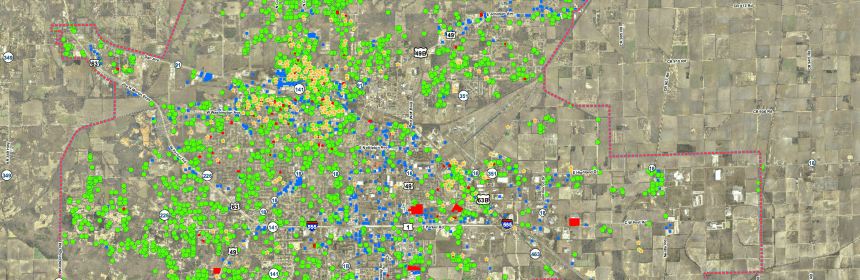
Editor’s Note: The featured photo depicts a representation of nearly 3,450 vacant commercial and residential properties in Jonesboro, based off records from Craighead County. (Courtesy of City of Jonesboro)

Volunteers Participate in Great Arkansas Cleanup

by Keith Turner
Delta Digital News Service

JACKSONPORT — All across Arkansas, volunteers are cleaning trash from state parks, roads and other public areas as part of the Great Arkansas Cleanup.

mulching

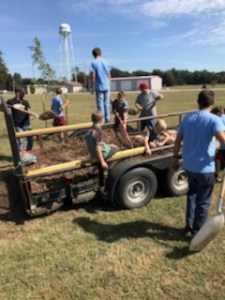
Members of Trail Life USA prepare to mulch. Volunteers spent their weekend cleaning up the park. (Photo by Tyler Yeager)

Kaleb Young, a member of Trail Life USA Batesville, spent his Saturday off from school mulching trees in his local state park.

“It’s good to serve the community and get to have some physical activity in there … learn about the outdoors and camp, stuff like that,” Young said.

Young’s activities in the park were part of the Great Arkansas Cleanup, a statewide volunteer event dedicated to removing litter and cleaning up the state’s roadways, parks and public areas sponsored by the Keep Arkansas Beautiful commission.

At Jacksonport State Park, nearly 20 volunteers assisted park staff in various clean-up projects, from mulching to trash cleanup. Mark Ballard, superintendent at the park, has worked at the park since 1990. Ballard said he estimates the park has participated in the cleanup for 25 years.

“The service work that we get out of it … they clean the community up. We all want to live in a clean community,” Ballard said.

According to the Keep Arkansas Beautiful website, over 7,000 volunteers worked across the state in the 2016 Great Arkansas Cleanup. In 2016, volunteers collected 210,582 pounds of litter. The economic value to the state was over $1.6 million.

“We get some work done that our maintenance staff doesn’t have to do,” Ballard said.

Volunteers in the cleanup receive a T-shirt, and Ballard and his staff prepared lunch for the volunteers.

Multiple groups volunteered at Jacksonport, including Trail Life, a Christian scouting program for boys in grades K-12. Chris Middleton is the Troopmaster for the Batesville group. Middleton said he brings the group out to help the park and for additional bonuses.

“They feed us hot dogs. Anytime someone feeds us, we come out,” Middleton said.

Cleanup days will continue throughout the state until Oct. 31. To find a cleanup at a park near you, visit http://keeparkansasbeautiful.com/full-event-calendar/.

Flu Shots Provide Protection

by Miranda Reynolds
Delta Digital News Service

MCCRORY, Arkansas – Doctors strongly encourage Arkansans get the flu shot to ensure their health and the health of their families.

The time for flu shots in Arkansas approaches rapidly as winter draws near. Getting an annual flu shot better protects one’s health and deters the possibility of spreading the illness to others.

Melissa Alumbaugh, advanced practice registered nurse with ARcare, said getting the flu shot decreases the risk of getting the flu. If you do get the flu, it is likely the symptoms would not be as severe. She said some older generations believe the myth that getting the flu shot gave them the flu, as patients were once vaccinated with a live strand of the influenza virus. This caused older generations to believe the myth.

The Youth

The McCrory region expects to receive flu shots at the end of October. For McCrory High School and McCrory Elementary School, this will be a busy time.

Amanda Brewer, nurse at McCrory public schools, said the Arkansas Department of Health will administer the flu shots to the students.

Brewer decides school procedure for dealing with sick students. She evaluates the student’s illness and checks for a high fever. If the student is suspected of the flu, the parents are contacted and advised to get the child a flu test by a local doctor. If parents cannot pay for testing, there are other methods of payment services available. Brewer said she recommends those who cannot afford a flu test to ask for payment assistance.

Alumbaugh said the flu shot affects everyone differently. Size, weight and how staff distribute the shot play a role. The way people absorb the shot along with exposures in their surrounding environment also play a role.

“The healthy should avoid the sick, practice good handwashing and quarantine those sick family members to help stop spreading the flu virus,” Alumbaugh said.

Alumbaugh said she advises getting flu shots in October since it takes 14 days for the vaccine to be active.

Public’s Impact

Experts anticipate the projected strain of the flu virus by the previous year’s flu virus. Alumbaugh said multiple strains of the flu exist and experts find it difficult to predict exactly what strain will be the most effective.

The flu shots Arkansans receive cover three to four different types of strains predicted to hit the region. The ARcare clinic’s flu shot in McCrory will cover these basic flu shot types.

Alumbaugh said that if projections miss the exact strain, the clinic would not administer a second dosage of flu shots to the public. If a clinic runs out of flu shots, it cannot easily receive more. However, the clinic may receive more, depending on availability.

The Elderly

Latricia Milton, director of nursing at the Woodruff County Health Center, said, “Patients at the Woodruff County Health Center will receive a mandatory flu shot.”

The Woodruff County Health Center houses 96 residents who need help with everyday life. Facility directors mandate nurses and staff receive a flu shot as well. Milton said valid reasons for denial of the flu shot include being sick, having a fever or being allergic to eggs.

In cases where patients are not of sound mind, families determine if staff members administer the vaccine. Staff separates patients who contract the influenza virus from other roommates and the doctor is notified. Milton said the doctor of the patient then decides if they should start Tamiflu or other medications.

Treatments of outbreaks of influenza in the Woodruff County Health Center begin with testing of the original patient suspected of the flu, testing surrounding neighbors and keeping identified patients separated.

Alumbaugh said flu shots in Arkansas are very much a necessity for those wishing to avoid the flu.

“A lot of people are hospitalized every year for the flu. They’re very ill, and some of them end in death,” Alumbaugh said.

Alumbaugh said she encourages doing something that can prevent a hospital stay or death. Prepare for the flu season by getting your flu shot.

Editor’s Note: Featured photo by Patrica H [CC BY-SA 2.0]