Category Archives: Education: HigherEd

A Stormy Night comes to Jonesboro

By Krishnan Collins
Delta Digital News Service

JONESBORO – The Foundation for Jonesboro Public Schools hosted the inaugural A Stormy Night event Oct. 3 to raise funds for grants for students attending the Jonesboro Public School District.

   Other events like this one existed in the past, but this was the first fundraiser of its kind in terms of the format and set up for the foundation. The foundation sold tickets at $50 each and a silent auction took place at the event. Sponsors also donated money to the cause. 

Slade Mitchell, president of the Foundation for Jonesboro Public Schools, commented on the initial ticket sales. 

 “These are going to be estimates because I haven’t seen any final numbers, but I believe we have sold somewhere around 200 tickets,” Mitchell said. “But with sponsorships and everything involved, I expect this event will raise somewhere around $30,000 for our cause.”

   The foundation hosts fundraisers like A Stormy Night because teachers in the district tend to put forward ideas of how they can educate their students in fun and creative ways. However, these teachers do not always have the means necessary to carry these plans out. 

   “We have great teachers,” Mitchell said. “They have great ideas for things they would like to do in their class: creative ways to educate their students. A lot of times with the ideas they have there’s a disconnect between the idea and the funding needed to pull that off. So what we do as a foundation is we award grants to those teachers in that situation. These types of events sustain that program.”

   Joshua Miller, a math teacher at the Success Achievement Academy in Jonesboro, benefitted from multiple separate foundation grants. Miller is a testament to the success of the fundraisers the foundation hosts. 

   Miller’s students built roller coasters, rockets and bridges all thanks to grants from the Foundation for Jonesboro Public Schools. These projects made math engaging for the students and illustrated different ways math applies in the world outside of the classroom.

   “If it weren’t for you all, the ideas and the dreams that we want to experience in our classroom would not become a reality,” Miller said in a speech to A Stormy Night attendees. “This dream of mine that I sit at home planning every once in awhile would not become a reality.”

   A Stormy Night marks the first fundraiser the foundation created as a dinner during the middle of the week. Mitchell commented on how this could change the game for foundation fundraisers. 

   “We’ve always wanted to have an event like this,” Mitchell said. “We have board members now that have experience with doing this. While we’ve wanted to do it in the past, we’ve got the team that can do it now. We’re so excited to have something like this come together. In the past, rather than an evening banquet, we have done a brunch the Saturday following homecoming.”

   The Foundation for Jonesboro Public Schools hosted the brunch for a few years, but an annual dinner has a chance to bring even more people to a fundraiser. 

   “We’ve always talked about doing an evening and doing something where we could maybe allow for more people to come,” Mitchell said. “Saturday mornings were tough because people were out of town or various things. We never really had the courage to try. This year, again, with the right board members in place, with the right team in place, we were able to pull it off.”

   Many different people attended at A Stormy Night, including faculty from the Jonesboro Public School District along with various members of the community and sponsors. 

   Felicia Johnson represented New Door Real Estate Brokerage at the event, a local real estate company. Johnson’s daughter graduated from Jonesboro Public Schools. 

   “I think Jonesboro Public Schools are amazing and I would take any opportunity to support the schools,” Johnson said. “That’s why our company is here tonight. It’s wonderful to get here tonight and be with all these people that share the same goals.”

   Johnson did four years of schooling herself with Jonesboro Public Schools and has been in Jonesboro for 32 years. She highlighted the importance a fundraiser like A Stormy Night plays in the lives of students. 

   “Oh my goodness, the funds that are raised here, can you imagine? Can you imagine the robotics team having what they need? The band having what they need? The cheerleaders? (For them) not to have to do tons and tons of fundraisers. This is amazing. We’re going to raise a lot of money to help our children.”

Editor’s Note: Feature photo shows Joshua Miller addressing attendees at A Stormy Night event. 

High School Bands perform during A-State Band Day

By Krishnan Collins
Delta Digital News Service

JONESBORO – High schools from across the Delta traveled to Arkansas State University on Sept. 21 for A-State Band Day. 

 The event provided an opportunity for high school bands to get a taste of what the next level of band is truly like. For some band members, the experience transcended their everyday high school routine. 

 “I think it’s a wonderful experience,” Margaret Teeling, band director of St. Joseph School in Conway, said. “We don’t have a football team. So, we just do basketball. That means my students get to come out here and experience what it’s like to play with a huge band.”

Since Band St. Joseph Band members do not have the opportunity to participate in a marching band, participating in A-State Band Day presents a new challenges the students.

   “Well, our high school band is a lot smaller than the college band,” Teeling said. “This is a different experience for them. College band has a lot more freedom than high school band does and I think it’s great for them to have that experience.”

   That opportunity to march means everything to St. Joseph students. Sid Davenport, a ninth grade percussion student from St. Joseph, attended his second Band Day at A-State. He last came to Jonesboro for the event as a seventh grader.

   “I look forward to the opportunity to march,” Davenport said. “Our school is so small that we don’t really get a chance to march. My first time was difficult.”

   A-State Band Day’s annual event brings students into a fast-paced afternoon of rehearsing, playing and enjoying a college game day.  

   Members of The Sound of the Natural State, the university’s band, coached the high school students and gave pointers on how to perform on a football field. The intense rehearsal prepped everyone in attendance for the halftime show. 

   Steven Riley, director of athletic bands and assistant director of bands at A-State, explained the importance of the fast-paced rehearsal. 

   “At halftime, they will all be on the field with us,” Riley said. “That’s why we got to get this rehearsal in beforehand. It’s a lot of extra people.” 

   Riley noted this was not everyone’s first band day appearance. Whether returning A-State band members or returning high school band students, some people knew ahead of time what the day entailed. 

   Dalton Austin, band director at Osceola High School, returned to his alma mater in a different role. Austin experienced band day as a member of the A-State band; now the 22-year-old teacher decided to give his students a valuable experience in his first year of teaching.

   “I’d love for my students to get involved in band after high school,” Austin said. “I want them to know they do have a place in music after high school. I think this is a great event for that.”

   Austin knows he cannot teach his students everything there is to know about band. 

   “I hope they learn that they can perform after high school,” he said. “I hope they learn things that they might not have learned from me. In high school you’re usually competing against area bands. In college it is more of an entertainment thing. I think it’s a lot more fun.” 

   Gregory Brown, one of Austin’s students, attended his second band day. Brown liked the social aspect of the event. Brown plans to be in band wherever he attends college. 

   “Band day could help me know what it’s like to march on the field in front of everybody and calm my nerves,” Brown said. “I would fight for band.”

   The Osceola student specializes in trombone but also plays some other instruments on the side. Band day gave students an opportunity to meet new people from all over the state. 

   “I look forward to meeting new people,” Brown said. “Last year was really fun and collaborative.”

   After rehearsal, both The Sound and high school students took a well deserved break. Visiting schools received black Band Day themed shirts to match the color pattern planned for Centennial Bank Stadium at the A-State Red Wolves’ football game.

   The high school band members watched The Sound perform pregame before watching the football game itself. The halftime performance wrapped up the visiting bands’ performance for Band Day and brought the event to a close.

   “There’s nothing like a college game day,” Riley said. “Especially from the perspective of a marching band member. Getting to be on the field performing for thousands and thousands of people is unlike anything else. The camaraderie and the spirit is unparalleled. Giving high school bands that opportunity is something we cherish.”


Local 4-H Clubs showcase work at fair

By Tristan Bennett
Delta Digital News Service

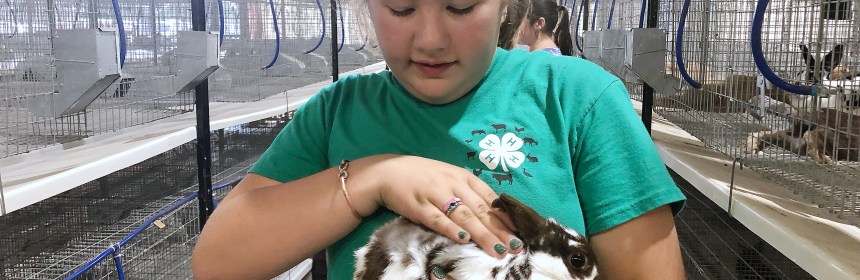
JONESBORO, Ark. – Members of local 4-H Clubs participated in animal competitions at the Northeast Arkansas District Fair. The organization uses fair shows as a way to showcase members’ hands-on projects to the public.

The University of Arkansas Cooperative Extension Service runs the 4-H program across the state. The organization encourages young people to take on societal issues and work to make their communities better. Club members choose their own projects and must take on the responsibility of the project, whether it takes weeks or years to finish.

Greene County Cooperative Extension agent Lance Blythe said, “It’s a learn by doing organization. Kids learn by project work that they do on their own time. An animal or a project is a way to teach kids life skills.”

Arkansas 4-H members can choose projects in areas such as agriculture, animal science and plant science. Many members of the Greene and Craighead County 4-H Clubs chose projects in the animal science category, and they raised animals to compete at the fair.

Members choose projects based on the time commitment they are willing to contribute as well as their financial abilities.

Blythe said, “These projects range anywhere from a few weeks along with chickens and rabbits all the way to cattle and horse projects, which can last for years. It’s a time dedication and financial as well.”

After choosing a project, members must find the animal they would like to raise. Members receive help from the club and the Cooperative Extension to find one, but many buy locally with some buying from all over the country.

Lance Blythe, Greene County Cooperative Extension agent, leads a goat to the scale for weigh-in before the showing. Photo by Tristan Bennett

Lainey Walling, a member of the Craighead County 4-H, raised a Polish rabbit for her project. She worked with her rabbit for several months before the fair.

“You have to make sure they are not shedding, and you have to brush them out,” Lainey said. “You also have to make sure that they’re not sick because that will put them out of the competition.”

Members learn how to properly care for the animal they are raising, including feeding, maintaining health and training.

“They learn about health and nutrition and train the animal to lead so they can show the animal to a judge when it comes time,” Blythe said. “They are taking care of something besides their self.”

When it comes time to showcase the animal, judges look for certain characteristics in every species and breed. Rabbits compete in classes based on breed, age and gender. Members must enter their rabbit in the correct class or it may be disqualified.

Carrie Walling, Lainey’s mother and a 4-H Club alumna said, “Each rabbit breed has its own set of expectations. For example, our rabbits are Polish, and a big characteristic is little ears and big eyes.”

As they raise their animal, members must also keep a record book. It shows their goals for the project, what they learned, how they managed their project on a daily basis and the opportunities they took to learn more about their project.

Members of 4-H show their animals at fairs as a way to showcase their work, and judging tells them how good they did. Blythe said 4-H members are not necessarily at an advantage in competition against other animals.

“The advantage comes from how well you do all the things involved in a project. Beginning with genetics. Where did you get the animal? How well did you feed it, train it, take care of it?” Blythe said.

Depending on which project they choose, members also have opportunities to go on to compete in more 4-H competitions. They can show off their projects in other ways such as 4-H O-Rama, a district and statewide program. Members who raise animals for their projects qualify for several 4-H O-Rama competitions such as the speaking contest, livestock judging and quiz bowls.

Arkansas 4-H helps more than 134,000 young people acquire new skills and develop healthy lifestyles that they will need for the rest of their lives. Members not only learn about livestock, but also have opportunities to learn about science, citizenship, leadership, public speaking and many more topics.

“They do a lot of public speaking, so I learned to get over my shyness and a love of animals,” Carrie said.

Four-H clubs in areas such as baking and dogs allow the organization to reach more young people outside of the traditional clubs. Arkansas 4-H offers free participation in all 75 state counties.

Editor’s Note: Lainey Walling, Craighead County 4-H member, demonstrates how rabbits are judged at the fair. Photo by Tristan Bennett

School Teaches Design of Art

by Yu Bai
Delta Digital News Service

JONESBORO — The Art School of Jonesboro allows people of all ages and walks of life to express their feelings and imaginations.

The Art School of Jonesboro opened its door to students in 2009, and it has grown to more than 80 artists. Artists shape the opinions of others through their work. Through the study of works by both the great masters and modern-day artists, all students are exposed to art history. Different kinds of art classes exist for people to enjoy. Drawing is the most popular; students focus on developing contour through drawing and shading. Younger students begin with a general art class, which will develop their skills for advanced classes such as digital art.

46855349714_69d0274b39_o

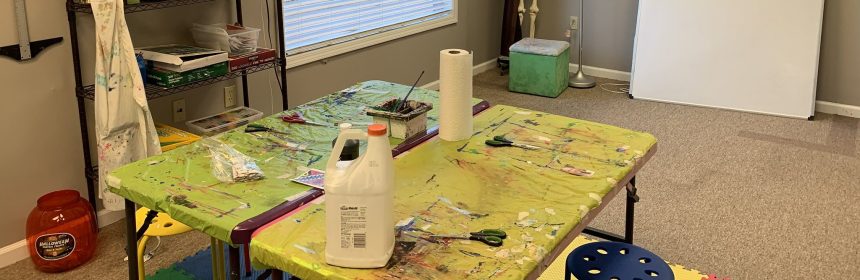
 Students practice during the painting class. (Photo by Yu Bai)

“I love teaching the kids about all kinds of arts, especially portrait art and illustration. As a freelance artist, I work in both photo-realistic and children’s illustration,” said Tanya Eddy, the proprietor of the school.

Since opening, students have successfully participated in art competitions throughout Arkansas and Tennessee, bringing home dozens of awards. Teachers base the class on art history or movement. Student skills are evaluated to place them in classes that will challenge them. For example, if a fifth-grade student can work at a senior-high level, the school provides them the opportunity to advance.

“We feel as if it is important for the students to learn from the great masters, and we use those works in our classes. We also look at artists of today and learn their techniques through observation and practice,” said Maya Eddy, a part-time art writing teacher.

The unique teaching style offered at the Art School of Jonesboro is very popular among students. Classes remain small: only six-to-eight students are allowed in per class. Teachers get to know their students and their families, and they encourage their educational endeavors outside of the studio.

“I really enjoy classes here, and it is wonderful to see people learning to create something of their own,” 18-year-old Olevia Dunman said.

Nature Center Promotes Outdoor Education

by Chase Gage
Delta Digital News Service

JONESBORO — Summer is coming and children across the nation need activities to fill their time other than cellphones and tablets. The Crowley’s Ridge Nature Center offers several educational programs for children and adults alike over the break.

In a world of technological overload, screens dominate while nature sits on the backburner. The Forrest L. Wood Crowley’s Ridge Nature center is combating this issue through various educational programs in hunting, fishing, trapping and more.

Lifelong outdoor enthusiast and Education Program Specialist Cody Walker said he hopes to spread his passion for the outdoors through programs at the nature center.

32724966407_03b063bcf5_k

One of the many animals on display at the Crowley’s Ridge Nature Center is a coyote, a canine species found in Northeast Arkansas. This display, along with several others, functions as a learning mechanism for visitors at the center. (Photo by Chase Gage)

“I didn’t have a cellphone until college. I went outside to play. My parents wouldn’t allow me to stay inside and I see that trend declining. It’s important to get kids and adults outside doing these activities not because it’s my job, but because it’s a passion for me. I like passing that (passion) on to other folks,” Walker said.

The nature center provides programs across the outdoor spectrum, from Hunter and Boating Education courses to simple fish feedings. Two programs available during the spring were the “Crankin’ Good Time” introduction to fishing course, where participants learned the basics of fishing and get to create a unique fishing lure to take home, and a “Turkey Fan Seminar” that taught hunters how to mount their trophy gobblers.  

Watching screens can be addictive. Studies conducted by Dr. Piush Mandane, associate professor of pediatrics at the University of Alberta, conclude that screen time in children can be directly linked to ADHD.

“Children should develop a healthy relationship with screens as young as 3-to-5 years of age,” Mandhane said in an interview with ABC News. “Our data suggests that between zero and 30 minutes per day is the optimal amount of screen time.”

With screens dominating American society, it can be hard to escape them. Televisions, tablets, cellphones and more have made their way into nearly every aspect of life. 

Some local parents are facing this issue head-on, using the nature center as an outlet for education and an escape from the digital world. Kalob Welch, a history teacher at Blytheville High School, took his 4-year-old daughter, Arden, to the center as a Saturday getaway.

“She loves being outside, she loves animals. I think it’s important for kids to get outside. We need a healthy balance (of outdoors and technology). It’s definitely nice to bring her out here to exert some of her energy,” Welch said.

The nature center provides several classes every Saturday and Sunday year-round.

This summer, residents of Northeast Arkansas have the opportunity to go outside and experience the beauty of the natural world around them, or to stay inside and strengthen addictions to screens.

Watch the full interview with Walker here.

The Road Ahead: A-State Prepares New Teachers

By Matthew Emery
Delta Digital News Service

JONESBORO — The second floor of the Education and Communication building on the campus of Arkansas State University features a lot of traffic. Throughout the day, hundreds of students will rest on the wooden benches that align the narrow halls and line up outside classrooms as they await the start of class.

Inside the Department of Education and Behavioral Science at A-State, the program increased enrollment from 203 to 215 students over the last school year. 

However, with teacher strikes continuing to pop up all over the nation and the number of Arkansas teachers quitting after three years in the profession trending upward, some question if A-State students are being prepared for the profession that awaits them.

“Those first few years feel like survival of the fittest, unfortunately,” said Mary Jane Bradley, dean of the College of Education and Behavioral Science at A-State.

Bradley noted a “support network” developed by the university that offers regular meetings and conferences to aid newer teachers.

“We focus on self-care, mental health, stress and so on,” she said. Bradley also mentioned a state-provided mentorship program eases the burden that may accompany a new teacher.

As for students currently in the program, Bradley is faithful that the program is sufficiently preparing future teachers. She touts a required internship program designed to be the last course most students take before graduation as a huge factor in teacher readiness for students at A-State.

The internship provides the “capstone experience,” according to Bradley and is a “hands-on, performance semester where the students act like a full-time teacher for three or four weeks” while under the supervision of local classroom teachers from schools that have partnered with the university.

On top of this internship, A-State developed a program in the late 1990s to ensure students gain experience in a range of schools. The university has three categories for partnering public schools, differentiated by the diversity of race, socioeconomic levels, language, and so on. Each student who participates will spend some time with a school in each of those categories.

“We want our students to be able to teach at any school in Arkansas,” Bradley said.

The shortage of teachers in Arkansas and in rural areas seems due in part to poor and unfortunate press coverage and a lack of excitement around the teaching profession, according to Bradley.

Educator Signing Day (Photo by Matthew Emery)

In an attempt to spread positive, exciting news about the future of teaching, A-State held a teacher signing ceremony in April, where current students attended and signed pledges to educate among their peers and administration in the education department. The ceremony was similar to athletic commitment signing days.

Sarah Palmer, an elementary education student from Bryant, was one of the dozens of students that signed the pledge. Her commitment to become an educator comes from her desire to work with children.

“I always knew I wanted to work with kids and the more I researched teaching, the more I fell in love,” she said.

While only a sophomore and solely an observer of local classrooms, Palmer said she felt like her time in A-State had been beneficial so far, saying the courses have helped her understand what and how to teach.

Palmer is from central Arkansas and went to a large school and feels a natural affinity to return to a school like that one day. However, she currently observes a smaller school and it has been an enlightening experience for her.

“It’s shown me how close the teachers are with each other and with the students. That’s awesome to me. I would be very open to teaching there,” she said.

Palmer has had a positive experience with the program at A-State, but another student who attended the signing, Sophie Rottinghaus, an English education major from Bay, offered a different perspective.

20190416_101841

Sophie Rottinghaus, a junior, signs her pledge to become an educator. (Photo by Matthew Emery)

While she has not yet had the “capstone experience” mentioned by Bradley, Rottinghaus is currently in her “field one experience,” which she described as “mostly observing.” She said she believes teachers should use time wisely with their students and give them tools they can use in life.

“I want to teach them how to learn,” Rottinghaus said. “I don’t feel prepared. I don’t think ASU, or other institutions, equip potential teachers for all the adaptations teachers must make for their students to maximize their learning capabilities.”

Rottinghaus said she believes students are exposed to teachers who lack passion, which sends a bad message to students about learning.

“It’s been a lot of content knowledge and little instruction. I would like for the university to offer more classes on instructional strategies,” Rottinghaus said.

Rottinghaus said she hopes she can help revolutionize the teaching field for a new generation of teachers and their students, stating that people simply are not as passionate about education as they should be.

Bradley echoed the need for passionate teachers.

“There’s no occupation like teaching,” she said. “You make a difference in lives that desperately need you. Every occupation needs a teacher to assist and guide them along the way.”

International Agreement Concerns A-State Faculty

By Jessica Ladd
Delta Digital News Service

JONESBORO — A recent dual-program degree agreement between Arkansas State University and the American University of Malta sparked concerns amongst A-State faculty. A gap in communication could be to blame.

47743977751_8b0c0e2626_o

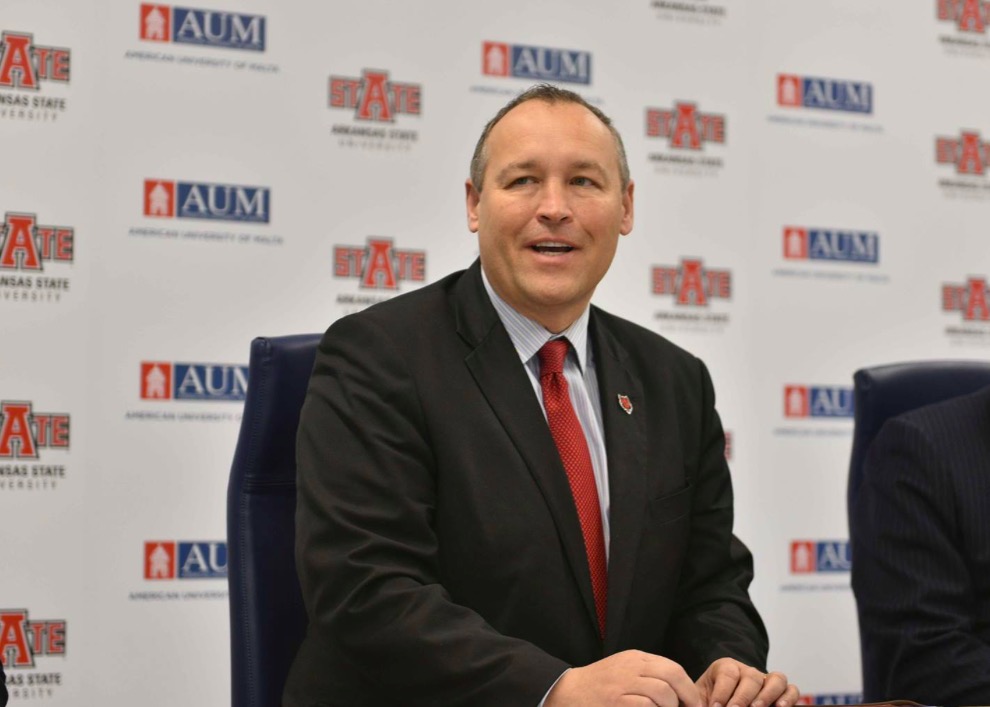
Agreement Signing-  Photo of A-State and AUM agreement signing in Malta. (from left) A-State Chancellor Kelly Damphousse, AUM President Dr. Walker and Malta’s Education and Employment Minister Evarist Bartolo. (photo from AUM’s Facebook page)

AUM, a private liberal arts college in Cospicua, Malta, signed an agreement with A-State in March 2019.  The agreement would allow students from A-State to attend AUM their sophomore and junior years, with their freshman and senior years being on the A-State campus. AUM students can take online classes through A-State for their first six semesters. Their senior year, students can attend classes on A-State’s campus full-time. Students would receive a degree from both universities.

Loretta Neal McGregor teaches psychology at A-State. She also serves as president of the Faculty Senate. McGregor said a breakdown in communication occurred and the issue of the Malta agreement didn’t come before the Senate until after it was signed.

“When the Chancellor came to the Faculty Senate, he said that he had talked to some of the deans from various colleges and department chairs from various colleges. But, the Faculty Senate is the governing body for the entire faculty. So, it was almost like there was a bypassing of the Faculty Senate to include deans and chairs. Then it was stated that since the deans and chairs are part of the faculty, their voice was representative,” McGregor said.

She said A-State considers itself a shared governance. The administration should work with the Senate to help make sure the university has policies that are beneficial to students and faculty members, and to help the university run smoothly.

McGregor said the university struggled with communication over the years. It’s important to have clear lines of communication because the faculty are the ones there day in and day out.  She said most of the faculty concerns center around the curriculum and courses students will be engaged in.
When asked why the Malta agreement wasn’t brought before the Faculty Senate beforehand, A-State Chancellor Kelly Damphousse said the Faculty Senate doesn’t have the authority to approve these agreements. The authority resides in the faculty. The administration took the issue to the faculty and they approved it.

The potential communication breakdown occurred as the administration spoke with chairs and deans, who weren’t elected to represent the whole faculty. The communication gap might not have been as big of an issue if AUM didn’t have a questionable history.

32800522547_96c45d50d7_o

AUM– Photo of the American University of Malta. (photo from AUM Facebook page)

AUM, a relatively newer university, opened in September 2017. The central Mediterranean institution managed to gather tons of publicity in its short operation. The Sadeen Group, a Jordanian construction and property development company, owns AUM. The company’s only background in education comes from its for-profit schools in Jordan. Their main developments include travel, tourism and hotels. In Malta, citizens protested the development of the university.  The two pieces of land granted to Sadeen for the development were considered valuable public property. Once the college opened, more odd events occurred.

Erik Gilbert, a history professor at A-State, said he was shocked after he conducted a quick Google search regarding AUM. He sent an email with a list of sources to all A-State faculty explaining what he found.

“There seem to be so many red flags there. They got fined for misrepresenting who they were, they seem to have mispresented their relationship with DePaul (university) and had to have that explicated. They fired all their faculty one semester into their operation and then rehired a bunch suggesting that maybe they still needed faculty, but they wanted different faculty, perhaps, cheaper faculty,” Gilbert said.

Seventeen students attended in fall 2017, a lower number than expected.  AUM fired 12 of its 13 professors in January 2018 after offering them three-year contracts. Maltese law legally allowed the firings.  At the end of their six-month probationary period, the faculty received notification of their termination. AUM claimed the firings were due to the low enrollment. AUM hired six new professors. They currently have seven faculty members including the provost.

Despite the controversy sounding AUM, Damphousse said he still sticks by his decision. He knows there is concern regarding faculty terminations there. He said, unfortunately, that happens when a university faces financial difficulty. It happens in America as well. Damphousse said he doesn’t have any concerns regarding the firings.

A lot of work goes into an agreement like this. Damphousse, Global Engagement and Outreach director Thilla Sivakumaran and Vice Chancellor of Marketing and Communications Bill Smith traveled to Malta to negotiate the agreement. Damphousse said he remains confident in A-State’s short-term study-abroad opportunities in Malta.

47743977671_59926bf6a9_o

Damphousse In Malta– A-State Chancellor at the agreement signing in Malta. (photo from AUM Facebook)

“I went there and visited the place. I met with the faculty who are there. I taught a class while I was there. I met with students who are there. So, I’m very comfortable with our decision to be partnering with AUM,” Damphousse said.

He said A-State is always looking for ways to make itself distinctive. Malta, a country rich in history, brings in students from across the globe. Most of the professors come from America and all classes are taught in English. Damphousse also said Malta can be a great European location for A-State faculty members to plan short-term study abroad and research opportunities. ASU prides itself on being diverse. This agreement would help expand that diversity. ASU has similar agreements with other universities, and they’ve been successful as well as beneficial. He also said A-State did not invest any money into the actual agreement. According to The Sun, travel expenses to and from Malta totaled $7,000.

As for the confusion among faculty regarding the agreement, Damphousse said currently a plan is in motion to keep it from happening again. The provost has been working with A-State’s international program to develop a process to ensure the faculty all have a say in determining when the university gets involved in relationships like the one with Malta. The new policy should be completed shortly.

Audit Leads to A-State Procedural Changes

by Melissa Palumbo
Delta Digital News Service

JONESBORO — Recruiting T-shirts led to a change in procedures at Arkansas State.

An Oct. 11, 2018 complaint to A-State Internal Audit concerned a large order of T-shirts placed by the Office of Recruitment.

An administrative specialist entered the requisition for the shirts to Procurement Services in July. The order, consisting of 4,000 grey “visit” T-shirts for $8,800 and 1,800 red “Pack Preview” T-shirts for $26,700, totaled over $35,000. The order was miscoded as being under $20,000.

The shirts were nonrefundable due to the different patterns and colors applied.

University regulations and Arkansas law require orders above $20,000 to be bid out to vendors in the community and to receive at least three competitive bids. However, the university only obtained one bid from Running Threads, a vendor that previously worked with the university.

Initially, contact was made with both unlicensed and out-of-state vendors, which goes against university regulations.

Special Events Coordinator Teresa Dunton, a member of recruitment, had no comment.

The purpose for bids from at least three local vendors for larger orders is to allow Jonesboro businesses the opportunity to work with the university, make money and get recognition if they do good work. Choosing to only allow one, previously commissioned vendor obtain the bid took away the chance for local businesses to grow.

The vendor asked Procurement Services if the order should be split into two separate orders. This did not meet regulations as all 5,800 T-shirts were ordered at the same time for the same purpose.

Procurement Services replied, “Two separate invoices please.”

Running Threads received about $9,000 as part of the payment for the approved T-shirts before the order was caught.

The orders were approved by Dunton and Polly Marshall, director of Admissions and Assistant Vice Chancellor for Enrollment. Katie Davis, the purchasing technician for requisition and budget, stamped the orders as approved at 2:48 p.m. on Sept. 12. Davis had no comment on the approval.

Even though the orders were separated, the order containing the red “Pack Preview” T-shirts exceeded the $20,000 limit and should not have been approved at this level.

The Purchasing Technician for Requisition and Budget incorrectly wrote in red ink that both orders were under $20,000.

Vice Chancellor of Finance and Administration Len Frey (photo by Melissa Palumbo)

Executive Vice Chancellor for Finance and Administration Len Frey said the two levels of approval failed to recognize the error potentially due to employee unfamiliarity with the policies and procedures.

Every year, recruitment orders T-shirts to be distributed during events in the fall and spring semesters. This academic year, more shirts than usual were ordered to give to potential incoming freshmen in the newly finished Welcome Center.

Because of the events that launched this audit, restructuring and other changes have taken place in the Procurement Services.

“We have been working on a number of changes in the procurement area,” Frey said. “As a result of this, there have been corrective actions taking place.”

While training for personnel in the Procurement Services previously stopped, Frey said it should not have been a reason for the mistake to have happened. However, as part of the restructuring, training will be “beefed up” not only for Procurement Services, but also in other departments including Human Resources, Information Technology and security.

At the time of the order being processed, Procurement Director Lola Langley did not report to a higher level in the organization. This caused communication challenges. As a result, the procurement office immediately had Carol Barnhill, director of contract administration and strategic sourcing, begin reporting directly to Frey.

Barnhill identified the mistake that launched the audit in October, after which Frey promoted her to the first Chief Procurement Officer to identify any potential concerns in the future. Barnhill assumed the position after an announcement made Feb. 28. In addition to her responsibilities in the procurement office, she will also oversee Contract Administration and Strategic Sourcing.

Additional changes will be made to the administrative staff and leadership, and the new staff will report directly to Russ Hannah, associate vice chancellor for business and finance.

On March 13, Chancellor Kelly Damphousse announced a new 16-member Strategic Plan Steering Committee. The committee consists of members who have been working in their position for some time, like Hannah and current Provost Lynita Cooksey, as well as newly appointed individuals such as the new Vice Chancellor for Enrollment Bryan Terry.

“Something like this should not happen again,” Frey said. “Something like this should not have happened in the first place.”

DeltaYou: A 30-Year Impact

by Jessica Ladd
Delta Digital News Service

JONESBORO— An Arkansas State University department chair announced his retirement after 30 years with the institution.

Osabuohien Amienyi became chair of the department of media in 2007. For the first 18 years of his career, he taught classes including TV Production, Communication Research and Theory of Mass Communication. Amienyi also served as head of the Faculty Senate and dean of the Department of Communication.

46615113585_916da1545c_b

Family photos on Amienyi’s desk. (Photo by Jessica Ladd)

Born in Nigeria, he produced films and did videography there. After moving to the United States, he earned a bachelor’s degree from Tennessee State University, a master’s degree from Northern Illinois University and a doctorate from Bowling Green State University. His teaching specialties include video production, media management, international communication, communication theory and research. He has worked in radio and TV, while also being a published author.

“He is supportive, patient, kind and he sees every moment as an opportunity to teach. He truly cares about his students, faculty and staff. He is an inspiration and he will be missed,” Kimberly McDaniel said.

McDaniel, the media department’s administrative specialist, works closely with Amienyi and schedules all his appointments. McDaniel began working with him a year ago. She said he is a wonderful boss. She is sad to see him go and wishes him the best of luck in retirement.

More than an academic, Amienyi enjoys helping others and serves on the board of directors for Jonesboro’s Rotary Club. He joined the club in 2007.

Lisa Golden, president of the Jonesboro Rotary Club, met Amienyi when she transferred to Jonesboro in 2014. She said she always looks forward to seeing him every week.

“He is one of the nicest, energetic and most friendly people I’ve ever met. He is quick to laugh and great to work with,” she said.

He takes most of the photos for their meetings. Golden also said he is very active in the organization. He attends meetings and is currently involved in some of their ongoing projects.

Amienyi is passionate about Rotary. He said being a part of the club is fun. The organization undertakes projects to promote peace and fight disease. They help provide clean water, save mothers and children, support education and grow local economies. Their slogan is “service above self.”

Soccer is a big part of Amienyi’s life, as well. He could talk all day about his favorite sport. He learned to play the game at a young age. There weren’t many sports in Nigeria when he was growing up. He said it was something everyone played. Soccer was like a religion to them.

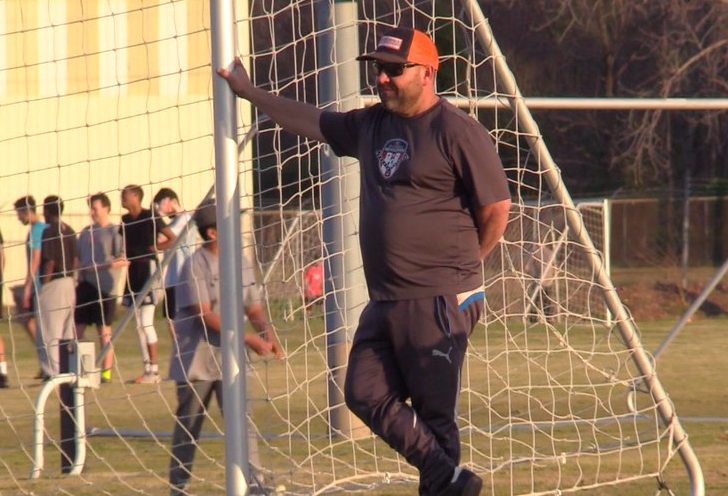
Amienyi (center) coaches during a youth soccer practice. (Photo by Jessica Ladd)

In Nigeria, he lived about three-to-four miles from the soccer stadium. He could hear the cheers from the crowd at his house. He also listened to the games on the radio. This is what sparked his interest in broadcasting.

He coaches in the Jonesboro Youth Soccer Program. Amienyi said there is a joke around the college that soccer is his full-time job and everything else he does is just for fun. He enjoys teaching young children about the game he loves. He has been coaching in the United States since 1990 after his eldest son joined the program.

He called soccer a thinking person’s game, as it’s all about problem-solving. Sometimes a person will have to try three or four different strategies before a move is successful. He is currently working with his youngest son, who hopes to play professionally one day.

Amienyi said it has been a long journey and he is excited about retirement. He’s not sure where he plans on moving yet, but everything else he has figured out. He wants to start his own soccer school where he will take 10-12 kids at a time and teach them the game. He also wants to focus more on research and even hopes to write some children’s books. He plans on spending more time with his family as well.

Assistant coach Welby Young watches practice. (Photo by Jessica Ladd)

Assistant soccer coach Welby Young met Amienyi in 2015. The two have been coaching together since. Young has great respect for Amienyi.

“It’s probably hard to put into words the impact he has had on the community. If you’re 12 or you’re 25, you’ve probably been coached by Osa or been on one of his teams or seen him play,” Young said. “I think this is his passion. It is not work for him.”

Amienyi said his favorite memory of A-State is being able to do the things he loves. He said he is leaving the department better than when he inherited it. He helped obtain more labs for media students. He was a part of creating Red Wolf Radio and Delta Digital News Service. He said he has enjoyed his time at A-State, and he will miss working with the students. He enjoyed seeing them develop themselves.

Earlier in his A-State career. (Photo courtesy of Lillie Fears)

Amienyi’s father use to say, “Always listen to the voice of experience.” This has stuck with him. He said often times people talk too much and don’t take the time to listen. He keeps an open mind and tries not to judge people. These are the keys to his success.

He would often be asked how long he planned to stay at A-State. He said he would give people what he thought to be a philosophical answer. He said there will come a day when he would outgrow the university, or the university would outgrow him.

“I couldn’t have chosen a better place to work,” he said. “I was allowed to do the things I enjoy. I could have gone to different places and not have had as much fun as I’ve had the last 30 years.”

Childhood Obesity: How One Arkansas School Fights It

***

by Miranda Reynolds
Delta Digital News Service

As childhood obesity rates rise in America, one school in the northeastern part of Arkansas actively works toward lowering the rates in their school.

Helping Hands provides to schools in need by helping financially disadvantaged students. A special committee formed in 2017 by Rector school district and Helping Hands addressed physical activity among students. Elementary principal Anthony Dowdy said Helping Hands contributes a lot to the school.

“Helping Hands is a tremendous help to our school. They give in a lot of ways, not only in volunteering their time, but they also provide extra funds when we need it,” Dowdy said.

The school’s teachers requested outdoor and indoor equipment for the students, including:

  • Basketballs
  • Hula Hoops
  • Kickballs
  • Skip-balls
  • Scooters
  • Basketballs
  • Balance Boards

Rector School District administrators knew about the high rates of obesity in Arkansas. While tackling the rates, they tried to keep the focus of the students in the classroom as well. Dyslexic Therapist Lynnette Trail said burning off energy helps the students focus.

“They’re getting up and using those large motor (skills) and developing those skills and that helps to burn off some of that energy so that when they go back to the classroom, they’re more focused,” Trail said.

For the younger grade levels, burning off energy before returning to the classroom helps the teachers, too. First grade teacher Sara Rabjohn said a break from the classroom helps.

“Once they get that brain break, you can pull them back in for a little bit longer rather than trying to do it all without a break,” Rabjohn said.

The school formed a Health and Wellness Committee to also help with obesity problems. The committee consists of a cafeteria supervisor, the elementary principal, school nurse and a few teachers.

The committee met to make plans throughout the year to address obesity and make sure the students get enough physical education, Dowdy said. Keeping the students active in the school helps see the plan through.

“We try to keep them active as much as we can. We have extracurricular activities and provide them opportunities to participate in physical education,” Dowdy said.

Schools addressing obesity in children helps redirect the outcomes for adulthood. Rector School District actively works toward keeping their students active and healthy.

Veterinarians: Pets suffer from allergies, too

Pet Allergies from Miranda Reynolds on Vimeo.

***

by Miranda Reynolds
Delta Digital News Service

JONESBORO – The changing of the seasons mess with everyone’s allergies; for furry friends, this is no exception.

Dogs and cats can be prone to allergies or sensitivities to proteins found in pet food. In Arkansas, the common allergies in the region affect pets as well. Archie Ryan, veterinarian at Southwest Drive Animal Clinic, said allergies for pets and humans can be different.

“Humans build up an immunity to some allergies over time. For dogs, they typically get worse every year,” Ryan said.

Certain breeds of dogs commonly associate with allergies, e.g.

  • Shih Tzu
  • Golden Retriever
  • Maltase
  • Labradors

“Allergies are a dysfunction in your immune system that affect all pets but allergies have a genetic component to them so you can inherit allergies from your breeding,” Ryan said.

Lauren Rhue, associate veterinarian at Jonesboro Family Pet Hospital, said keeping a regular visit for pets is key.

“We like to get them in here every four-to-six months to make sure everything is going OK,” Rhue said.

Pets can be allergic to any type of food. This can start as soon as six-to-eight weeks, Ryan said.

The most common food allergies:

–       Red Food Dye
–       Dairy Products
–       Peanut Butter
–       Beef
–       Poultry

Some cases of skin disorders vary between different breeds. Genetics prove Labradors to be more prone to skin issues.

“My family had a Labrador. She was a dermatology train wreck, poor thing. She had allergies, ear infections, the works. We had to take her to a dermatology specialist and found out what she was allergic to,” Rhue said.

Veterinarians commonly speak about the commitment owning a pet takes.

“It’s a commitment. It’s a long-term commitment because they’re a puppy now but they’ll grow up and they’re going to live 10-15 years,” Rhue said.

April Morgan owns a Miniature Dachshund and works with animals. She says commitment to owning a pet should be taken seriously.

“People don’t take it seriously sometimes. They think, ‘Oh, I want a dog.’ Well it’s a big responsibility, it’s just like a child. I have three children and she is my fourth one,” Morgan said.

Pet owners can take some preventative measures to avoid allergies and food allergies.

–       Use fresh food
–       Store food in an air-tight container
–       Never pour new food over old food
–       Rinse your dog off with cool water after playing outside
–       Do not bathe too frequently and dry out the pet’s coat

Keep in mind, one human year can be worth about seven to a dog’s life, Ryan said. Bringing in the family pet routinely can prevent serious health problems in the future for your pet.

DeltaYou: Couple’s Impact Still Resonates

By Kimberely Blackburn
Delta Digital News Service

JONESBORO – Many Northeast Arkansans feel the influence of two educators long after they retired.

The Stricklands

Herman and Maxine Strickland display “The Circle.” A-State dedicated apartment buildings to its first four black facility members, known as “The Circle.” Photo by Kimberely Blackburn

Herman Strickland Sr. taught elementary school in Blytheville and moved up to principal. He considered teaching at Arkansas State University to allow his wife to return to school.

The university made the decision easier with a simple addition to the offer: a house. Until then, the Stricklands lived in an apartment. The house and the low tuition for his wife helped prompt the move.

As A-State’s second black faculty member, Strickland said his family did not face many racial issues. History professor C. Calvin Smith faced difficulties when he came the year before. But Strickland said he believed the university worked out all the issues before he arrived. Showing his love of sports, he compared his and Smith’s journeys to those of baseball players.

“Jackie Robinson had all the problems, but they worked them out before (Roy) Campanella and Don Newcombe came,” Strickland said. “It was sort of that way before me, I think.”

Maxcine Strickland planned to study social work, but said the university did not offer that discipline at the time. She said she believed divine intervention caused her to choose elementary education. The decision, she said, remains one of the best she made in her life.

Herman served A-State as associate professor of teacher education and dean of University College. He said he never thought he would stay in higher education. After Maxcine earned her degree, they planned to return to Blytheville. He said he thought he would return to primary education.

But his students made him change his mind. Herman fell in love with higher education and decided to stay. He worked to mentor students, both in the department and in his fraternity, Alpha Phi Alpha.

Their Impact

Rickey Greer, principal of Jonesboro’s Math & Science Magnet School, said Herman and Maxcine greatly impacted his life. He still strives to pattern his life after them.

Greer learned professionalism from Herman. Greer said Herman always looks at everyone as if they had potential. Greer said Herman’s positivity struck him as well. Although Greer knew the Stricklands faced obstacles due to their race, Herman did not dwell on them.

Greer said he does not know many men like Herman.

Maxcine taught first grade in Jonesboro. Retiring after 26 years, she said her “children” still visit, bringing “grandchildren” along.

In her first year of teaching, Maxcine said she thought every child would pass — she would make sure if it. Maxcine said a wise mentor told her she could not make them learn. Instead, she could provide the information to the children and encourage them.

Although most turned out fine, the students who struggled broke her heart. She said she still wonders what she could have done differently.

Greer worked as a student teacher under Maxcine. He said her dedication to her job and her children greatly affected him.

“She felt like or treated every kid as if they were queens and kings, or they were the best, or they were (gifted and talented) kids,” Greer said. “No matter what level they were on, she treated them that way.”

Maxcine tried to treat every child the same. She set a high bar and encouraged each child to reach it. She told them to never underestimate their abilities. She said if she expected it, they did it.

The Circle

Although the Stricklands moved four houses down from the Smiths in the neighborhood now known as “The Circle,” both families left Jonesboro every weekend. They started going to each other’s homes with the university’s hire of Wilbert Gaines, emeritus associate professor of physical education. The Circle became a family following the arrival of Mossie Richmond, who became A-State interim president, vice president for student affairs and dean of University College.

Maxcine said she never expected what came from The Circle. She said they came to Jonesboro to do a job, but instead, gained nephews, nieces and friends they will love until the day they die.

Herman said he never thought A-State would dedicate buildings to them. The thought overwhelms him. He said he hopes it inspires black students to know if they work hard and find mentors, they can do anything.

Greer said he wished his students could understand how the Stricklands affected their lives. He said he hopes his students spread the positive impact forward.

Herman said he still looks ahead.

“I hope in the future it won’t make any difference about race. I’ll see you as a sister and you’ll tell me about your parent. I’ll feel your parent did a really great job with you and I’ll know you want to leave a legacy for your parent,” he said. “My parent did a great job with me, didn’t have many means, and I want to be a legacy for them.”

(Featured photo courtesy of A-State Media Relations)

Media Specialist Visits A-State in Speaker Series

by Tucker Crain
Delta Digital News Service

JONESBORO – A media relations specialist returned to Arkansas State University as a speaker in the Joel Gambill Alumni Speaker Series during Homecoming Week to talk about his media experiences.

Aaron Sadler, who graduated from A-State in 1999, currently works at Ghidotti Communications in Little Rock. As a third-generation A-State graduate, Sadler said his family’s history with A-State steered him toward the university.

“I’d heard so much – as someone who had an interest in journalism – of the College of Communications, and how well-received a diploma and a degree from ASU’s College of Communications and the journalism department was across the world,” Sadler said.

Before making it to Ghidotti, Sadler worked for various attorneys general in Arkansas, Louisiana, Mississippi and Pennsylvania. During his time at these offices, Sadler came to the forefront of consumer-awareness initiatives.

Sadler’s love for all things media and communication began at a young age. When he was only 5, Sadler said he asked for a typewriter for Christmas instead of more conventional toys.

Sadler’s grandfather was a justice of the peace in Arkansas, and his influence led him to initially pursue a career in law. After coming to A-State, Sadler said his interactions with department chair at the time, Joel Gambill, led him to instead pursue a career in media.

“When I was a freshman, (Dr. Gambill) asked me why I was majoring in political science. He said journalism is a more appropriate major for you, because you learn writing,” Sadler said.

As he became more involved in the department, Sadler said he realized journalism was indeed the right path for him.

While in college, Sadler said his biggest struggles came when he would try to cram before a test. Quoting Mark Twain, Sadler said if you must “eat a frog,” you might as well do it in the morning and get it over with.

Now, as a professional who interacts with clients every day, Sadler said he looks to John Brummett for inspiration. Brummett is a political columnist based in Little Rock. In addition, Sadler said he can always look to his boss, Natalie Ghidotti, for the know-how needed for accomplishing his goals.

Since Ghidotti is located in Little Rock, most of Sadler’s clients are based in the area. He said this location influenced how he interacts with the media, looking primarily toward Little Rock- and Arkansas-based news outlets.

Sadler said the most important evolution of modern media is the decline of newspapers.

“Reporters (need) to be fundamentally sound and comfortable in additional disciplines, like broadcast media and content marketing,” Sadler said. “Being a reporter in the 21st century involves much more than a pen, a pad and an ability to write.”


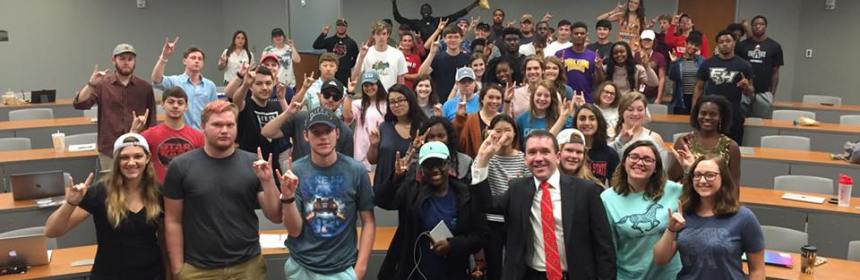
Editor’s Note: Sadler, pictured in tie, spoke with a Mass Communication in Modern Society class in the featured photo.

« Older Entries Recent Entries »