Category Archives: Video

Police Department Offers Transparency Despite Tensions
By Jorge Quiquivix
Delta Digital News Service

TRUMANN, Ark. — The tensions between police and Americans have escalated in the last couple of years and it’s something that even smaller towns in the South are having to deal with.

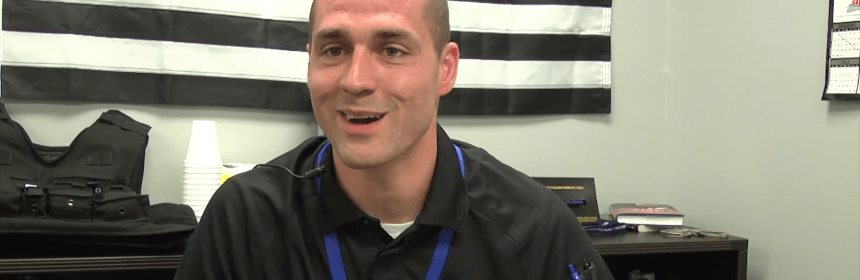
Sgt. Chad Mason works as a detective with the Trumann Police Department. He doesn’t like the way police officers are portrayed in the media recently.

“We don’t put the badge and the gun on every day just to come to work and do bad and do harm against the community and the citizens,” he said. “It’s a constant negative about law enforcement doesn’t care, they’re just there to arrest you and take you to jail, so on and so forth.”

Deadly Shootings Impact Views

A factor that plays into this negative view is the number of deadly shootings by police in the United States.

According to The Washington Post’s Fatal Force database, officers killed 963 people in 2016. The database collects data from news reports, law enforcement websites and even social media reports. The number barely decreased from 2015, when there were about 2015 killings reported. So far, there have been 284 deaths in 2017.

In Arkansas, the database reports five people died in 2015, 15 in 2016, and four by April 2017. Mason realizes where the concerns come from, but he has an issue with those concerns.

“It’s a long line of bad stuff, so that the good stuff doesn’t get seen,” he said.

Stepping Out for Change

Mason and other members of the police department have taken steps to change that perspective, at least in his community.

“Every negative thing that society may see that a police officer does, I try to turn that into a positive,” he said.

To do that, the Trumann Police Department has started community-oriented policing. That means officers take time during patrols to stop and talk to people, to find out what problems they have and try to help them out.

Trumann police officers interact with children as part of community policing. It provides an opportunity for residents to see police in a positive light. (photo courtesy of Sgt. Chad Mason)

One main audience for this approach: children.

“Kids that are growing up, they need to see that positive role model. They need to see that positive side of law enforcement in the community so that whenever they’re in need and they need help, they’ll be secure and they’ll feel like they’re secure,” Mason said.

He said he feels those kids need to see the officers as people behind the badge. During a citizen ride-along across town, Mason explained there isn’t a lot of recreational activities for children to do in Trumann.

“Some of that may or may not contribute to kids running out of stuff to do and getting in trouble,” he said.

He said he hopes their officers can show them there are better ways to spend their time.

“We try to be that mentor; we try to be that positive figure in their life,” Mason said. “Me and many officers are on a first-name basis with a lot of the kids and they see us driving around and they’re like, ‘Hey, hey Officer Mason or hey Officer Cook.'”

Another way they do it is being there for those in need. Mason said a girl once reported a bike stolen, so he and a couple of other officers pitched in to help her.

“I saw that she did everything right. She locked it down and someone still managed to get away with it,” he said.

Doubt Remains Among Residents

People in Trumann have noticed that police are taking their time to build those relationships, including 21-year-old Dee Crockett.

“I see them if kids are out playing basketball they will get out of the trucks and play a couple games or something,” Crockett said. “It makes me feel like they actually care about it.”

However, he still doesn’t trust the police and he wouldn’t give a specific reason.

“They’re kinda crooked,” Crockett said. “I mean … it’s just, I know people and I’ve seen things. And you know, once you see it, you know.”

Mason doesn’t let that critique get to him. In fact, he welcomes critiques and is willing to talk to anyone who doubts what they’re doing.

“If you don’t understand something or if you want to see kinda what we do, come up here and fill out a form for a ride-along,” he said. “I’ll be more than happy to take you for a ride-along and you can see what deal with on a day-to-day basis.”

Skate Through the New Year

by Austin Hayslip
Courtesy of A-State Department of Media

JONESBORO — “Downtown is a very happening place to be in during the holidays,” Downtown Jonesboro Association Executive Director Hailey Knight said.

The holidays in downtown Jonesboro have always been full of activities. This year, Knight said they’re adding more to the holiday experience in downtown.

“This year in addition to our Winter Wonderland, we also have this wonderful new ice skating rink that was donated by First Community Bank,” she said.

Winter Wonderland is a building full of Christmas spirit. There are booths that are set up full of Christmas décor that the community can walk through and experience. Knight said the location is what makes it so great.

Residents skate

Residents skate at the Wonderland Rink sponsored by First Community Bank. The Downtown Jonesboro Association hopes the rink will become an annual tradition.

“There’s been a lot of people down here. It’s really neat because they can visit Winter Wonderland, which is right across the street, and see the different holiday-themed booths inside Winter Wonderland, and then come right across the street after that with their friends or family and ice skate.”

All you need is $5; that will buy you 45 minutes of skate time. Knight said the community response has been overwhelming.

“It’s really cool to see all the people coming downtown. Normally about 5 p.m. when we come out of the office, we’ll see all kinds of kids over here because they’re out of school and they’re ready to ice skate,” she said.

The ice skating rink is something that Knight hopes will be a staple in the holiday traditions downtown. It will be open through Jan. 1 Monday-Friday from 4 p.m.-10 p.m.; Saturdays from 1 p.m. – 10 p.m.; and Sundays from 1 p.m.-6 p.m. To schedule a group event, call 870-933-4604.

More information can be found online or on the Downtown Jonesboro Association Facebook page.

Bus Drivers Keep Students Safe

by Austin Hayslip
Courtesy of A-State Department of Media

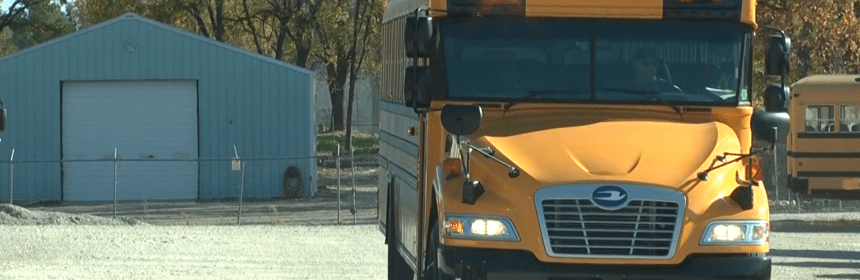
JONESBORO — “It’s a challenge. It’s a big challenge driving a school bus,” school bus driver Barney Totten said.

The most precious cargo you could ever transport. Fifty anxious kids sitting on the bus with their friends, waiting for their stop; the bus driver with one mission on his mind — getting them home safely. But before any driver is allowed behind the wheel, they go through pretty extensive training.

“You hit two cones, you fail,” Jonesboro Public Schools’ Transportation Director Mickey Long said.

After applying for the job, you immediately take a test.

“They have to take a written test, which is four parts. They have to take a general knowledge, air brakes, passenger and school bus, that’s the four sections,” Long said.

Then if you pass the test, you begin training for the district to ensure you can actually handle the bus. But before you’re allowed to drive on your own, you ride with the trainer. Then the trainer rides with you — this all before kids are even on the bus.

“Until those people feel good and the new person feels good, they’re not turned loose on their own,” Long said.

Totten said you’re doing more than just driving the bus.

“As a bus driver, you probably spend the biggest majority of your time looking at the student mirror up here in the front to see what the kids are doing in the back,” he said.

While there is a lot of attention on school bus drivers right now, Long is confident students are safe on his busses.

Digital Screens Cause Visual Consequences

by Austin Hayslip
Courtesy of A-State Department of Media

JONESBORO — “I think that we do use it in every single class, except for P.E.,” Samuel Creekmore said.

Instead of flipping the pages of a book, kids are scrolling to the next page on iPads. And that could be affecting their eyesight.

“More and more I’m seeing earlier and earlier detection of visual problems in children,” Dr. Megan Moll of Hilltop Eyecare & Optical said.

Moll said the increase in “screen time” for kids is causing some serious vision problems.

“A lot of times, it’s the increased near-point activities with the devices and increased screen time, holding things a little bit too close has shown to increase the amount of nearsightedness over time,” she said.

Mother of two Shaila Creekmore said her children had vision problems at an early age.

“Both of my boys do wear glasses. Samuel started wearing glasses in third grade; he’s now in seventh. Tyler started wearing glasses right at the beginning of third grade,” she said.

Creekmore’s children aren’t just using devices too often. Findings from VSP Vision Care suggest by the time the average American child reaches the age of 17, they’ve spent nearly six years looking at digital devices.

“Computers and devices aren’t going away; technology is excellent. It’s definitely helped a lot with schools, but some things they can do is make sure the child takes breaks — every 20 minutes do something else,” Moll said.

She also suggests using a blue-light filter for children already wearing glasses or using night mode, a setting available on the iPhone. Another excellent option: spending time outdoors.

Voters Give Officials More Time

by Kirsten May
Courtesy of A-State Department of Media

Arkansas voters passed an amendment to the Arkansas Constitution that will lengthen term limits for elected county officials from two years to four years. As Kirsten May explains, people in those positions think this will help them be more effective.

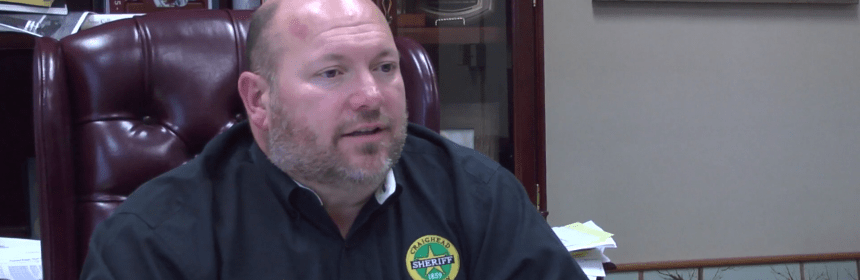
JONESBORO — Now even though the new term limits won’t go into effect until 2019, Craighead County Sheriff Marty Boyd said he is excited about what that means for the future of county officials.

“It’s going to be a great benefit to the operations of any department because you can set some long-term goals. Where in the past, just having a two-year office, it made it seem like you were always campaigning,” he said.

Boyd said he hopes the longer terms will let officials dig deeper to accomplish bigger goals, especially in a county that has a 2 percent annual growth rate. He said there are some things you just can’t get done in two years.

“Even though I know economically we can’t obtain maybe as many deputies as we want in the next 12 months, but I can look at the long-range plan and say in five years here is where we need to be,” Boyd said.

He said another benefit is being able to cut costs.

“Elections are expensive. I wish they weren’t, but in this day and time it takes a lot to run a successful campaign. Having to do that every two years, you get tired of the process and your supporters get tired of the process,” Boyd said.

There is also a better sense of job security for those in the department.

“It puts them in a better workplace knowing that they have at least four years to look at instead of two,” Boyd said.

Sheriff Boyd said there has been some concern about having an official in office that long. But he said as long as you research your candidates and know who you’re voting for before the election, that shouldn’t be a problem.

Issue 1 also states certain county officials cannot be appointed or elected to another civil office, and it allows unopposed candidates to be elected without their name appearing on the ballot.

Program Combats Dyslexia

by Kirsten May
Courtesy of A-State Department of Media

JONESBORO — City Youth Ministries is a non-profit organization that helps children in the community improve their academic achievement through a number of programs and events. And they’ve recently added to those programs. Kirsten May explains how they plan to improve student literacy.

City Youth Ministries Executive Director Denise Snider said studies show one in five people struggle with hearing sounds because of dyslexia.

Snider, a former teacher, is introducing the Orton Gillingham program called “Connections” to students at City Youth who fail a dyslexia screener.

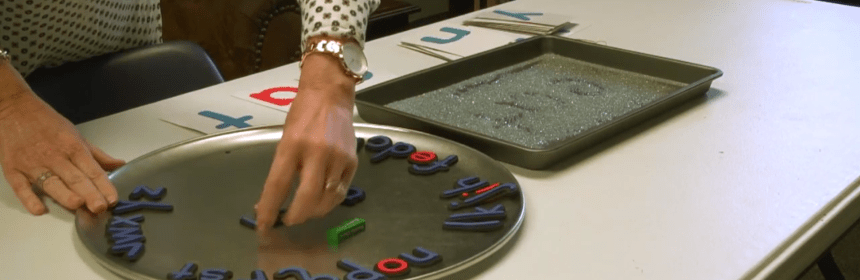
The connections curriculum moves away from paper and pencil, and helps children learn the phonetic rules using tactile or 3-D objects. Being able to finally comprehend those rules and learn to read can help children with self-esteem issues related to school.

That confidence boost has been big for 6-year-old twins Sophia and Isabella Topalian.

Kimberly Topalian said her girls thrived while in a pilot classroom where Snider taught connections to first grade students.

She said she thinks the style of teaching used in connections would be beneficial to any child.
And thanks to a grant from Nucor-Yomata Steel, City Youth Ministries will now be able to offer it, free of charge, to more kids in need.

Snider said they are still doing the screeners right now, but hope to start teaching the curriculum by the end of the year.

Topalian said Brookland Elementary does not use connections in the classroom anymore, which is something her family is fighting to bring back. Right now, her girls continue going to private therapy to improve their reading.

Maintaining a Hospital: Behind the Scenes at NEA Baptist

by Austin Hyslip

Courtesy of A-State Department of Media

550,000 square feet, over 150 beds — all taken care of by 14 guys.

“Those folks who keep the building up and running are as important as the doctors and the nurses and the other staff who are there,” patient Richard Carvell said.

He said without the people who keep NEA Baptist up and running, there would be no hospital.

“Well, the most important people in an institution like a hospital, a school are the janitors and the maintenance people,” he said.

NEA Baptist

NEA Baptist

NEA Baptist and its six stories feature a crew of 14 who work around the clock to make sure every patient is comfortable. Mark Ward, director of plant operations, said there’s a lot of things going on.

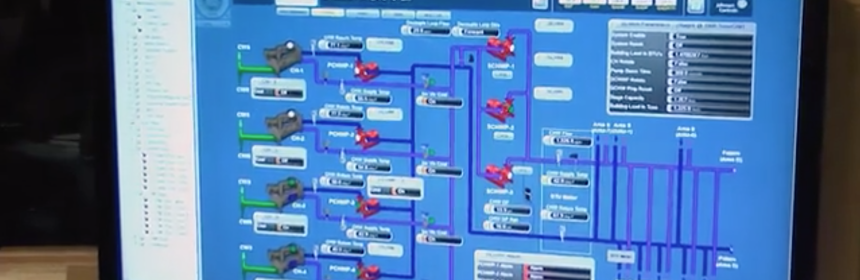
“We’re the guys who have to watch heating, cooling, water, sewer … everything that has to do with that basic function,” he said. “But then we also we also have those intricate functions of medical gases, electrical systems, pretty much any electrical system that has to do with medical equipment as well as just your normal outlets in the rooms and things like that.”

Ward said the job is never the same.

“We do everything from hanging a picture for someone in an office, to going up and checking what’s called isolation power monitors in an (operating room) suite to make sure that it’s safe providing power to that room,” he said.

NEA Baptist is prepared to handle multiple different healthcare situations. One thing most wouldn’t think of is an earthquake.

“This building is built under zone 4 earthquake standards,” he said.

All of pipes under NEA are built with braided line and sitting on rollers that allow the pipes to move without breaking. There are also shocks under all of the large appliances to allow them to absorb some of the shaking.

“The whole operation is a 24-hour, seven-day-a-week operation,” he said.

Ward and his team work every day to ensure the lights come on and the hospital is comfortable for every single guest.

Growth Brings Jobs, Citizens

by Austin Hyslip
Courtesy of A-State Department of Media

The town of Jonesboro is growing at an exponential rate. Big retail companies are moving in as well as new developments being built. Newk’s Eatery owner Wade Quinn said he has noticed the growth.

“Jonesboro is growing and they’re not a small town anymore, so with that comes opportunities,” he said.

The U.S. Census Bureau estimates the Jonesboro population has grown over 6,000 people in the last five years. Vice President of the Chamber of Commerce Cari White said it’s because people are able to find jobs in town.

“When you have people moving in to either go to school or work, whether it’s in the healthcare industry or our manufacturing industries, the housing market goes crazy as well as retail,” she said.

The market is booming and businesses are opening faster than ever. White said it’s all a domino effect.

White said another contributor is the town itself isn’t able to build large-scale buildings all on its own. The amount of workers that were needed to construct NEA Baptist caused quite the growth a couple of years ago.

“When your community gets the largest project in Arkansas being built in your community … when NEA was built, it was the No. 1 largest investment in Arkansas in one fell swoop. Now you’ve got to consider everybody who came in to work on that,” she said.

The future of Jonesboro is also on an upward trend. The Jonesboro Chamber of Commerce projects that the town will grow to around 75,000 people in 2017.

Sightings, Schools Slow Costume Sales


by Kirsten May
Courtesy of A-State Department of Media

JONESBORO — Halloween is just around the corner, but one scary figure has been getting a lot of attention for months: creepy clowns. ASU TV’s Kirsten May looked at how sightings reported across the nation might be impacting sales at a local costume shop.

“A few of them said, ‘No, I wouldn’t be a clown if my life depended on it, because I don’t want to get shot or arrested,'” Golden Grotto manager Anthony Eveland said.

Eveland said the increased attention to creepy clowns over the past few months has not been good for costume sales.

“Last year we sold all of them. This year we’ve sold a few. I don’t know if it’s because the ban of all the schools,” he said.

And it’s that ban on certain costumes — including clowns — that is frustrating to some parents. Amber Sales said buying costumes for her two sons who love scary movies is a little bit harder this year.

“He was kind of upset because he doesn’t get to do the clown. Because he can’t wear it to school, and there’s been messages put out all over Facebook and social media saying that if you’re dressed up like a clown, you’ll get arrested. So, we don’t know which parts are real and which ones aren’t, so we just aren’t going to test it,” she said.

Sales’ sons are in elementary and junior high in the Jonesboro School District.

She said a note sent home said masks and fake weapons were not allowed, which she understands. But Sales does not like the school restricting the type of costume a child can wear.

“It’s like a parent has to spend $100 per kid just to get them what they want for school and after school,” she said.

Sales also said she believes most of the reported clown sightings aren’t real, just something to get attention on social media.

In the end, Eveland said the store will do fine this Halloween regardless of how many clown costumes stay on the shelf.

“No, no, no. We don’t depend on just clowns,” he said.

‘Battlefield 1’ Packs Action, History Lesson

by Christopher Lee
Delta Digital News Service

JONESBORO – A new entry in the long-running shooter franchise, “Battlefield 1” drops players into the boots of soldiers in the Great War.

People cower in fear as titans take to the field to decide who will be victorious by Christmas. The conflict will be bloody but only one can be the winner. But enough about the holiday game release schedule; let’s talk about its most recent recruit, “Battlefield 1.”

Released Oct. 21, “Battlefield 1” represents the newest entry in the first-person shooter franchise of the same name. In “Battlefield 1,” players take the role of soldiers in one of the bloodiest conflicts in history: World War I.

World War I provides rarely tread territory in the gaming world. Factors for this could include a lack of a clear bad guy or the relatively static combat. DICE and Electronic Arts took it upon themselves to try it anyway.

This comprehensive review of the single-player and multiplayer campaigns tells you whether or not they succeeded.

Single-player Campaign

Battlefield™ 1_20161023183643

Battlefield 1 single-player menu, “War Stories.” Each story consists of multiple chapters. (Photo by Christopher Lee)

Single-player and Battlefield haven’t always had the best relationship.The lackluster Battlefield 3 and 4 campaigns to the relatively good Bad Company 1 and 2 show a hit-and-miss cycle.

For “Battlefield 1,” it seems developers at DICE focused extensively on the single-player for this entry in the franchise. “War Stories” covers the exploits of five soldiers of varying nationalities as they take part in the “war to end all wars.” From the mud of the Western Front trenches to the sun-scorched deserts of the Ottoman Empire, the campaigns provide a lot to experience.

While battlefield 1’s single-player is definitely a step in the right direction, it is not without its problems.

The Good

The good for “Battlefield 1” can be basically be determined from the writing. Each chapter is a self-contained story with it own characters and narrative. This allows each story to fully flesh out the characters.

Characters interactions are believable and their motivations are genuine. This leads players to form a connection with the characters and their efforts. Many good moments occur throughout the main campaign, but two stories stand out: Chapter 2 “Friends in High Places” and Chapter 4 “The Runner.” While I can’t go too far without spoiling them, I can say the endings will stick with you long after they’re over.

But with the good comes the bad, and Battlefield 1’s single-player is no exception.

The Bad

The majority of campaign problems can be boiled down to one fact: time.

Clocking in at anywhere between eight to 10 hours depending on difficulty and play style, Battlefield 1’s campaign is noticeably short. While this doesn’t subtract from the quality, it does leave the player wanting more.

Luckily the format DICE used for the campaign — having stories be self-contained segments — does allow for the possibility for new chapters in the form of downloadable content.

Single-player Conclusion

As a whole, the single-player gives an enjoyable and enriching experience no “Battlefield” player should go without playing. The following video provides the first 13 minutes of the single-player mode:

Multiplayer

But for many players, the most important questions lie in the multiplayer mode.

Battlefield™ 1_20161024123430

Multiplayer selection screen. Custom games are currently unavailable. (Photo by Christopher Lee)

Multiplayer provided the main selling point for the “Battlefield” franchise for years and with “Battlefield 1,” this is no different. While single-player made major advances to improve, multiplayer provides the majority of the playtime found in “Battlefield 1.”

The Good

The multiplayer mode provides the most refined of all the “Battlefield” multiplayers so far.

Players can quickly grasp the controls and the objectives of each mode as they battle in many of World War I’s greatest battlefields. Achieving rank provides access to period-appropriate weapons and gear to increase your lethality in the field.

New game mechanics and modes increase the re-playability and make each match a fast-paced arena of chaos. But it’s good chaos.

Unfortunately, the multiplayer features its fair share of problems.

The Bad

The biggest problem comes from the game balance. Some weapons and vehicles will cause players many headaches as they die repeatedly until they unlock the weapons they need to fight back.

This problem is worsened by the matchmaker. I found myself fighting players from a variety of levels sometimes having gaps as big as plus-or-minus 30 levels. This led to several unbalanced games.

Multiplayer Conclusion

While it has its problems, multiplayer produced the most fun I’ve had within a “Battlefield” in quite some time. The following video examines “Operations” from “Battlefield 1” multiplayer mode.

Final Thoughts

The romp through World War I left me in awe several times as I saw things I never expected to see brought to life in a video game. Whether a fan of the fighting or the history, “Battlefield 1” supplies plenty of enjoyable moments. I cannot wait to see what DICE and Electronic Arts has in store for the upcoming downloadable content.

Overall score: 8.5/10

UPDATE: Turnout for Cannabis Issues Doubtful

by Kirsten May
Courtesy of A-State Department of Media

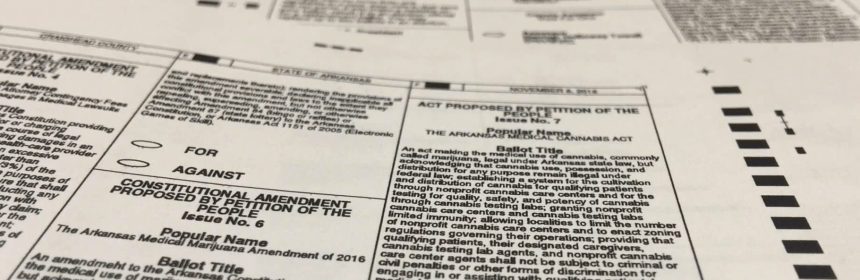
JONESBORO — Arkansas voters will see five issues on their ballot this year, including two different proposals about medical marijuana. ASU TV’s Kirsten May reports on differences in the proposals and how they might affect the state election.

Issue 6 is the Medical Marijuana Amendment. Issue 7 is the Medical Cannabis Act. They would both make marijuana legal for medicinal purposes, but political science professor William McClean said there are important differences between the two.

“Issue 6 I think probably has the better chance of passing than Issue 7. (Issue 6 is) a little more restrictive,” he said.

The Medical Marijuana Amendment allows about 20 medical conditions to be treated with cannabis, whereas Issue 7 covers nearly 60 conditions. It would also be easier to add more diagnoses to that list on Issue 7.

“You can amend an act without going back to the voters, so without amending the Constitution again,” McClean said.

There is also a provision in Issue 7 to let anyone living further than 20 miles from a dispensary to grow their own marijuana.

“People become kind of wary about the ‘Not In My Back Yard’ syndrome, I don’t want my next-door neighbor growing marijuana around my children,” he said.

This is not the first time medical marijuana has been on the ballot. Arkansans nearly passed a similar proposal four years ago.

“That was a surprising outcome as a political scientist given the conservative nature of the state, that it came as close to passing as it did,” McClean said.

Craighead County Clerk Kade Holliday thinks more people know about the cannabis proposals on the ballot this time around.

“There’s a lot of debate about, you know, the two different ones, all the differences between them. They’re definitely the most talked about,” he said.

But Holliday and McClean both agree the people most likely to vote for the proposals — young people and college students — aren’t as likely to go cast a ballot.

“We had right at 6,270 people registered in that (18-24) demographic. Now of that demographic, only about 38 percent of that demographic turn out to vote,” Holliday said.

“I think it has a low chance of passing,” McClean said. “Most of the polls show about 80 percent of Arkansans are in favor of some form of medical marijuana. However, it’s probably going to be a low turnout election. Young voters are not very excited about either presidential candidate.”

Both men say what’s important is letting your voice be heard, whichever way you vote for these issues.

McClean said if both pass, the Constitution states the issue with the most votes will take effect. (UPDATE: The Arkansas Supreme Court disqualified Issue 7 from the ballot on Oct. 27, three days after early voting started.)

Students’ Sweat Equity Benefits City, Habitat

by Austin Hayslip
Courtesy of A-State Department of Media

After a year working with Habitat for Humanity, Jonesboro High School students are getting their hands dirty. ASU TV’s Austin Hayslip reports.

“I loved it, I love the whole idea of working with your classmates to work for a common goal, and that being building a house for a Jonesboro citizen,” said high school student Mark Havdala.

High school students are building houses, not completely on their own, but with the help of Habitat for Humanity.

Habitat has been working with the Jonesboro School District for over a year now. It is a cause Jonesboro High School student Mark Havdala said is worth donating time to.

“You are working, it is a visible and legitimate donation of your time and you actually see what you doing be put to work and the best part is an actual Jonesboro citizen will actually get that house,” he said.

Jonesboro Habitat for Humanity Executive Director Michael Sullivan said it doesn’t begin or end with a house. The students play a vital role in the organization.

“They volunteer, they educate, they fundraise and they advocate on behalf of Habitat for Humanity,” he said.

Students who spent months putting together floor plans will begin putting up walls in the coming weeks.

The house being built now is the first that the Jonesboro School District has helped with.

Assistant Superintendent Sue Castleberry said the school district is including almost every campus, giving each student an opportunity to help.

“Our news crews from math and science will come do some video work, so almost every campus will take some of the things,” she said. “The woodwork things, we’ll take that back to the art teachers at the elementary to paint.”

Castleberry said the students are actually teaching her things as well.

“Last year the students taught me how to know how to measure and actually cut siding,” she said.

Habitat for Humanity and JPS have created a relationship that’s benefiting the entire community.

Bicyclist Voices Safety Concerns

by Kirsten May
Courtesy of A-State Department of Media

There are a growing number of cyclists in Jonesboro, but there are still no roads with designated bike lanes in the city and some cyclists feel there are not many safe places to ride. 
ASU TV’s Kirsten May looked into what is being done in Jonesboro to make it more bike-friendly.

JONESBORO, Ark. — “We need to wrap our heads as a community around the concept of a bicycle being part of our transportation mix.”

Bill Smith is the marketing and communications director for Arkansas State University and he is a cyclist.

Many people in Jonesboro are students or work in town who are now using a bicycle as their main form of transportation, and he said he thinks the city needs to focus on helping them ride safer.

“Certainly I think that we could see a greater commitment to bicycle infrastructure in our town, a greater commitment to a plan for how that will be moved around town, and not just in a parks and (recreation) mode,” Smith said. “I think that’s the future and I think that’s what millennials want.”

Jonesboro Parks and Recreation director Wixon Huffstetler said bike safety is a priority for the city and they are working to improve it.

“You know, the new trail obviously at Craighead Forrest that we are building that’ll connect eventually to the greenway that’s in town and we’re definitely looking at bike lanes on the outskirts of Jonesboro and on the bigger roads that we can fit them on,” he said.

Huffstetler understands cyclists want more done on the roads and said the city is looking at how to make that work.

“It’s just that Jonesboro is so grown together on the inside of the city, inner city, that it’s hard to figure out how to put bike lanes in without having to buy property or acquire ride away and stuff like that, which is a long process,” he said.

He said the city is constantly looking for grants to help improve infrastructure for bicyclists.

Both Huffstetler and Smith agree the best thing is for both riders and drivers to be aware of their surroundings and obey all traffic laws.

***

Smith said cyclists fare best when they act like drivers and are predictable.

Smith is teaching a vehicular riding course that teaches experienced cyclists how to be safer when riding in traffic. He said to message the Arkansas State University Facebook page or email him if you are interested in taking the class.

« Older Entries Recent Entries »